Best Balaclavas of 2026

A balaclava's job is to cover the one strip of skin your jacket and hat keep missing — and the moment it does that job too well, you're breathing into your own face and your glasses fog over. That's the tradeoff running through this whole category: coverage on one side, fogged lenses and a damp chin on the other. Get it right and you forget you're wearing it; get it wrong and you're yanking it down at every traffic light.

I spent a full winter in these — early dog walks, a bike commute that never cracked freezing, two ski weekends — and I've stopped trusting how thick a fabric feels in the bag. A thin wind-blocking panel over the mouth beats a fat fleece tube almost every time. My team and I tested 16 balaclavas across that same season, and the ones that stayed in rotation were the ones that got fit right, not the ones with the most fleece. The picks below are the ones I kept reaching for.

1

Best Overall

ROCKBROS Windproof Thermal Balaclava

95 /100
Angler Score Outstanding

Key details

Build
Windproof thermal fabric
Helmet
Fits under ski and bike helmets
Coverage
Full head, face, and neck
Wearing Options
Hood, chin guard, or neck layer
Check Details on Amazon

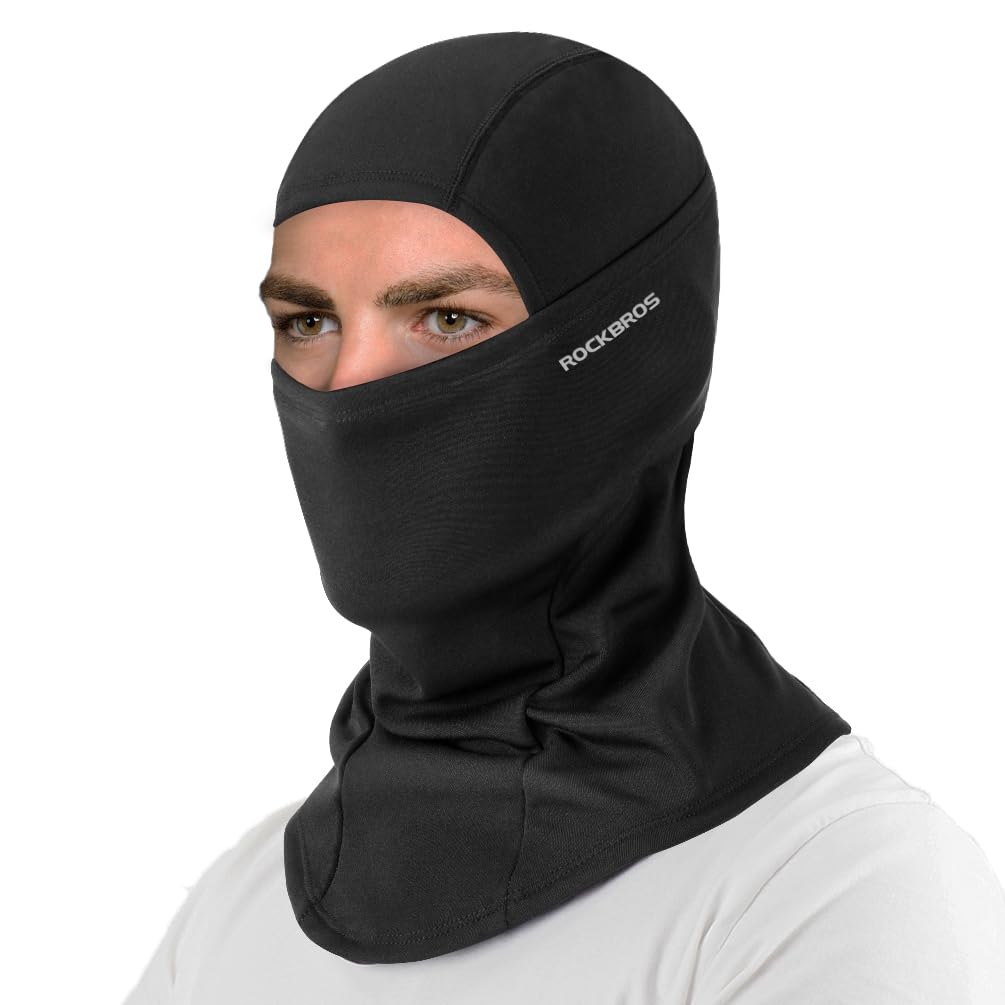
The first thing we check on any balaclava is whether it stays where we put it once a helmet goes over the top, and this one does. It sits snug at the cheeks and jaw, flat across the crown, and it does not creep up when you turn your head to check behind you. That alone puts it at the front of this group.

Warmth is what makes it the pick. The fabric is a windproof thermal layer, and the difference shows on a descent or an early ride: cold air stops at the surface instead of cutting through the way it does with a thin summer mask. It is warm without feeling stiff, which is where thick fleece usually goes wrong, and you can still turn your head and talk in it.

Versatility is the other reason it is here. Wear it as a full hood, roll the front under your chin when you warm up, or leave it as a neck layer under a jacket collar, three jobs from one piece, and it goes back into shape after each. The seams across the crown are the detail we minded; under a tight helmet you can feel them.

One small thing we kept coming back to: the front pulls down one-handed, even with gloves on, so you can eat, talk, or cool off without taking the whole thing off in the cold. That is the sort of detail that decides which balaclava ends up in a jacket pocket for the season.

Pros

  • Windproof warmth without stiffness or bulk
  • Stays put under ski and bike helmets
  • Wears three ways: hood, chin guard, neck layer

Cons

  • Crown seams felt under a tight helmet
Our verdict

The one we recommend first for cold-weather sport: windproof warmth, a stable fit under a helmet, and enough stretch to suit most heads.

Check Latest Price
2

Best for Bitter Cold

Tough Headwear Fleece Balaclava

93 /100
Angler Score Outstanding

Key details

Fit
Snug under helmets
Build
Wind-resistant fleece
Warmth
Extreme cold weather
Coverage
Head, face, and neck
Check Details on Amazon

Bitter cold is where this one separates itself from the rest of the group. The fleece is thick, the wind resistance is real, and the hood comes down far enough at the back that a jacket collar does not leave a gap at your neck, which is usually the spot where cold finds its way in.

We rate it highest for low-effort cold: shoveling, ice fishing, standing on a dock, sitting in a blind. It is the hood we reach for when the plan involves more standing than moving, and it stays comfortable through hours of that.

The inside is soft rather than scratchy, and it pulls on without a wrestling match, which is more than we can say for every mask here. Worn pulled back, it sits like a beanie with a collar attached, so it is easy to leave on when you step inside to warm up.

Pros

  • Thick fleece holds heat in bitter cold
  • Wind-resistant with a long back
  • Soft lining that pulls on easily

Cons

  • Can overheat once you are working hard
Our verdict

The warmest option in this group: thick, wind-resistant fleece for bitter days when you are outdoors but not working hard.

Check Latest Price
3

Best for Work and Hard Hats

Ergodyne 6823 Balaclava

91 /100
Angler Score Outstanding

Key details

Design
Hinged front, hard-hat compatible
Length
Long enough to tuck in
Weight
2.89 oz
Material
Fleece, 100% polyester
Check Details on Amazon

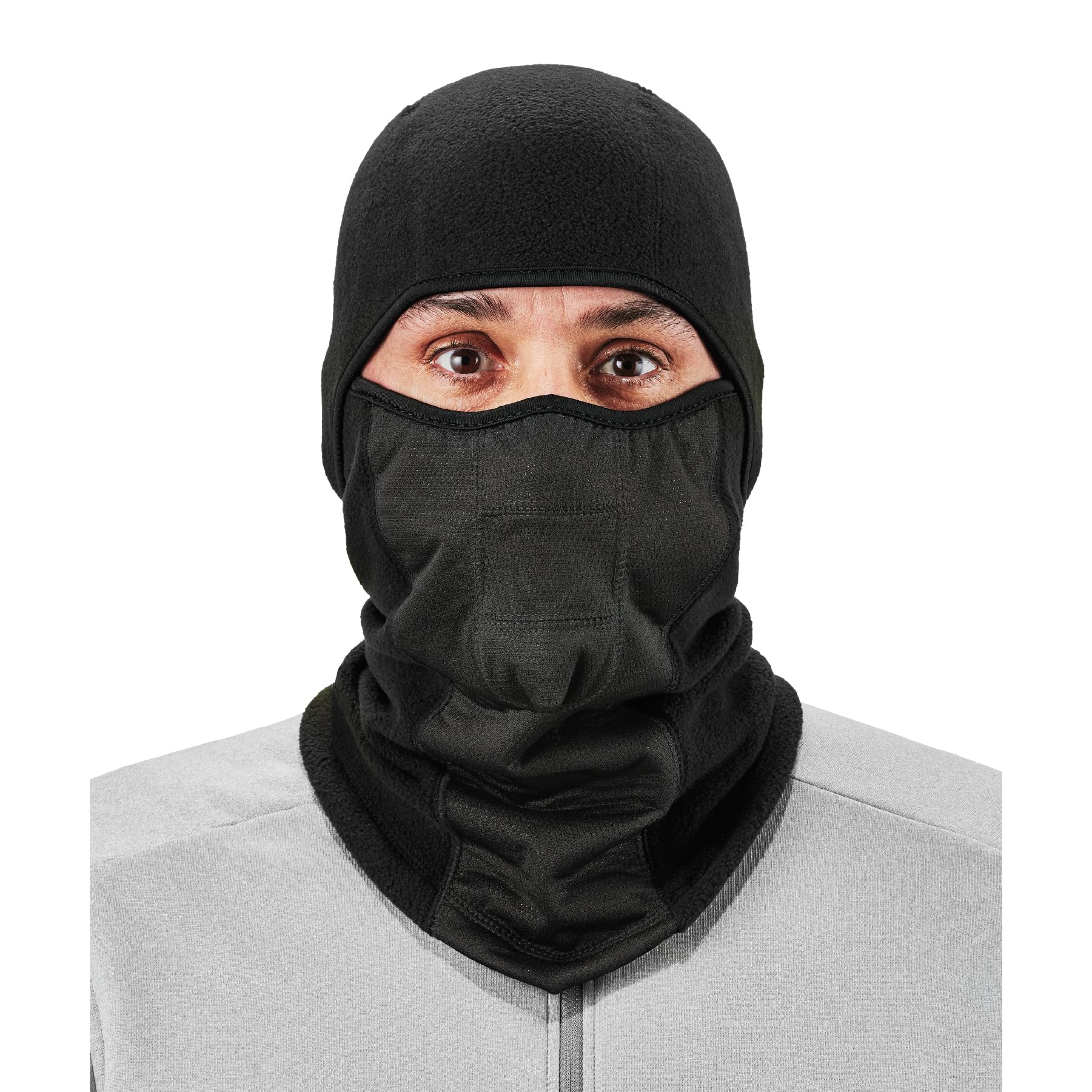
The front panel hinges down, and that single design choice is why this one stays in the rotation for anyone in a hard hat. You can uncover your mouth and nose at a counter, in a truck cab, or at a job briefing without hauling the whole mask off and letting the cold straight back in.

The long cut matters too. It tucks into a jacket collar and covers the back of the neck, the part that makes the difference between warm and warm on a lift. At 82 grams it is light enough to forget under a hard hat, and the polyester fleece holds heat well for its weight.

Fit is the part we minded. It runs snug, the nose area presses a little, and on a larger head you feel both. The trade is that it does not shift under a hard hat or goggles, and the hinged flap stays where you leave it, which is exactly what you want from workwear.

Breathability is middling. The mesh in front of the mouth helps, but this is a warm mask rather than a ventilated one, and glasses can fog when you are breathing hard. For cold-weather work, winter fishing, and snowblowing, that is a fair exchange, and the hinged front is the reason.

Pros

  • Hinged front drops without removing the mask
  • Long enough to tuck into a jacket
  • Light at 82 g and hard-hat compatible

Cons

  • Snug fit presses on the nose
Our verdict

If you wear a hard hat or spend the day outdoors in the cold, the hinged front and long neck make this the most practical mask here.

Check Latest Price
4

Best Lightweight

Nike Balaclava

95 /100
Angler Score Outstanding

Key details

Fit
Snug unisex fit
Use
Running and winter sport
Build
Lightweight knit
Coverage
Full face and neck
Check Details on Amazon

This is the premium piece in this group, and it earns the money in one specific way: there is almost no bulk to it. The knit slides under a bike or ski helmet without changing the fit, and it is warm enough for a winter run, a cold ride, or a long walk when you are moving.

The fit is snug and it stays put. We never had to haul it back down mid-run, which is the test that matters for a mask you are breathing hard in. The fabric feels denser than the cheaper knits here and the seams lie flat, so nothing rubs under a helmet strap.

The printed logo is the weak point: it is the first thing to lift, which is a strange flaw on a piece this well made. Set that aside and there is a lot to like about how little space it takes up. It layers under a cycling cap or a hood without a fight and packs down to nothing in a pocket, so it stays in the bag even when the forecast is only borderline.

Pros

  • Thin enough to leave helmet fit alone
  • Warm for its weight
  • Snug fit that stays put while moving

Cons

  • Printed logo peels early
Our verdict

The best lightweight option here for running, riding, and anyone who will not let a helmet fit change; thin, warm, and quietly well made.

Check Latest Price
5

Best for Glasses Wearers

SAITAG Fleece Balaclava

93 /100
Angler Score Outstanding

Key details

Fit
Stretch fabric
Build
Fleece with smooth outer face
Coverage
Head, face, and neck
Ventilation
Mesh panel at mouth and nose
Check Details on Amazon

The panel over your mouth and nose is a mesh, and that is the reason this one earns a place in a crowded field. Breath passes through instead of soaking the fabric in front of your face, so the mask stays drier on a long cold walk, and that is the first thing we look for now.

The rest is quietly good. The fleece has a smooth outer face that does not grab at a jacket collar, the inside is soft against skin, and the stretch is generous enough that it does not press your ears flat. Nothing about it announces itself, which is a compliment.

Glasses are the test we care about most in this category. Because the mesh sits over the nose rather than pressing across the bridge of it, there is less fabric for warm air to push through on the way out, and that geometry does more for clear lenses than any coating.

So this is the one we point to for anyone who wears glasses outdoors, and for anyone who has given up on masks because of pressure across the nose. What it is not is an expedition mask; treat it as three-season gear and it does everything you want.

Pros

  • Mesh panel keeps breath moving
  • Smooth outer face slides under a hood
  • Does not press the nose or ears

Cons

  • Mid-weight warmth only, not for deep cold
Our verdict

A fleece balaclava that keeps your breath moving and your glasses clearer, without pressing hard across the nose.

Check Latest Price
6

Best Budget Summer Pick

Fuinloth Summer Balaclava

91 /100
Angler Score Outstanding

Key details

Build
Thin cooling fabric
Season
Summer and warm weather
Sun Protection
UV protection
Wearing Options
Multiple ways
Check Details on Amazon

It is thin, and that is the design rather than a defect. This is a summer balaclava: a light cooling fabric with UV protection, built for a motorcycle helmet in July, a hot-weather ride, or a day on the water when the sun is the problem and the cold is not.

We keep one in the boat bag from May to September. It shades your ears and neck, it is breathable enough to wear all afternoon, and it takes up less room than a folded cap, and that combination is most of what you want from sun cover.

The fit is stretchy and it pulls on under a helmet without dragging. Wear it as a full hood in the sun and pull it down to your neck in the shade; that is how it gets used most. There is not much more to say about a mask this simple, and at the budget end of this group that simplicity is the appeal.

Pros

  • UV protection for face, ears, and neck
  • Breathable enough for all-day summer wear
  • Packs down smaller than a cap

Cons

  • No warmth in cold weather
Our verdict

A thin summer layer for hot-weather riding and fishing: sun cover for your ears and neck that packs smaller than a cap.

Check Latest Price
7

Warm-Weather Riding

ILM Motorcycle Balaclava

93 /100
Angler Score Outstanding

Key details

Design
Open ear tunnels
Weight
1.76 oz
Material
94% polyester, 6% spandex
Sun Protection
UPF 50+
Check Details on Amazon

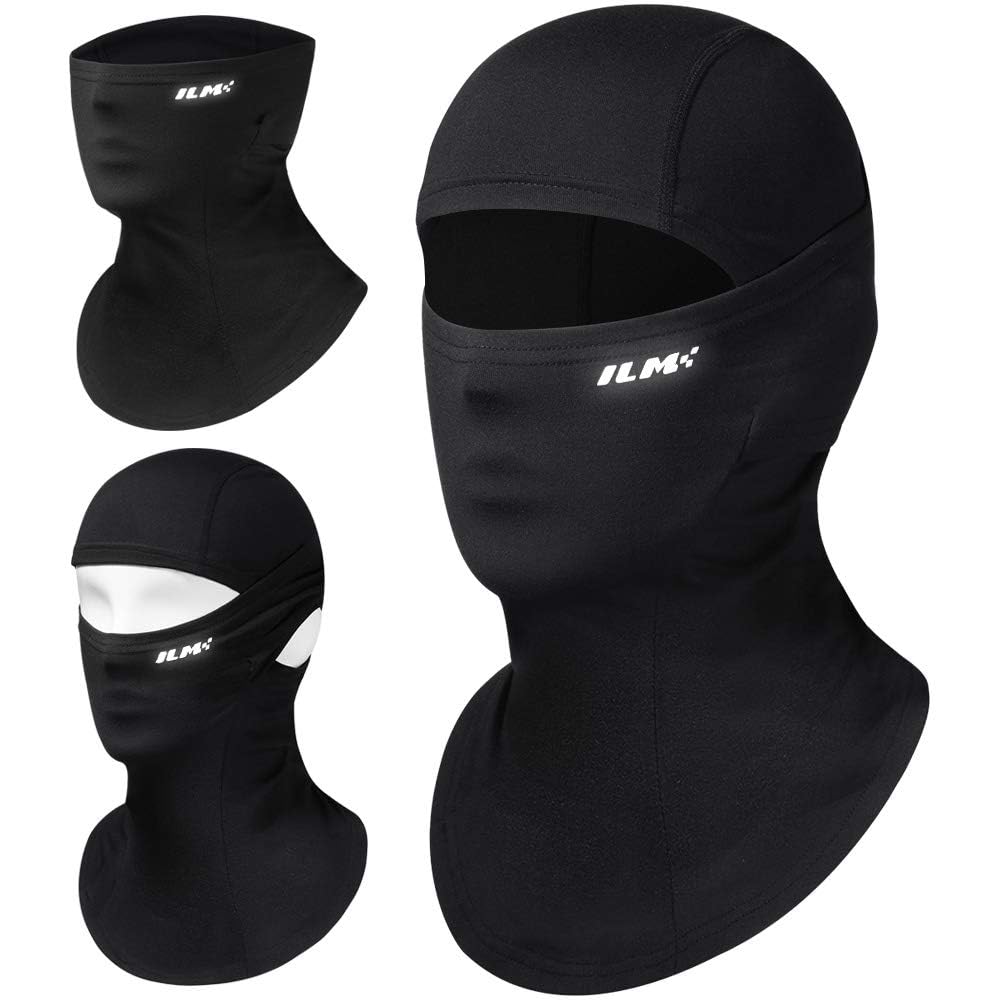
The open tunnels over the ears are the detail that sold us. Earbuds go in and out without taking the mask off, and a ponytail or braids have somewhere to go, small things that decide whether you wear a mask or fight with it.

The spec sheet is more interesting than the price suggests: 50 grams, a 94% polyester and 6% spandex blend with plenty of stretch, and UPF 50+ sun protection. That makes it a helmet liner for three seasons rather than a winter-only piece.

It pulls on easily, sits under a full-face helmet without bunching, and does not ride up the neck the way thicker masks can. The stitching is flat-locked, so nothing digs in under a chin strap.

Taken together, the sun protection, the ear access, and the stretch that covers a wide range of heads, this is what we reach for on summer rides and warm days on the water. It is the least expensive way into this group, and the one we hand to riders who want their ears back.

Pros

  • Open ear tunnels for earbuds and braids
  • UPF 50+ sun protection
  • Light at 50 g
  • Stretch that fits a range of heads

Cons

  • Thin fabric gives little insulation in cold
Our verdict

For warm-weather riding and helmets with earbuds: UPF 50+, open ear access, and stretch that fits most heads.

Check Latest Price
8

Wet, Windy Cold

Sireck Windproof Fleece Balaclava

91 /100
Angler Score Outstanding

Key details

Weight
3.84 oz
Weather
Water resistant and windproof
Coverage
Face, neck, and head
Material
Fleece
Check Details on Amazon

Water resistance is what sets this one apart in a group of fleece masks. The face fabric is water resistant and windproof, which matters in sleet, road spray, and a wet ride home far more than it does in a downpour.

Warmth holds up too. The fleece covers ears, head, neck, and face, and it blocks wind on the kind of raw day when a knit mask leaves your cheeks stinging. At under four ounces it layers under a helmet without much argument.

Where it asks something of you is fit. It runs tight rather than forgiving, and on a bigger head it is a squeeze; the coverage is generous once it is on, but getting there takes a minute. For cold, wet, windy days on a bike or a boat, that is a trade worth making, because a water-resistant fleece is a different tool from a knit.

Pros

  • Water resistant and windproof
  • Warm coverage of ears, head, and neck
  • Light enough to layer under a helmet

Cons

  • Fogs glasses quickly
Our verdict

The water-resistant pick for wet, windy cold: warm coverage for riding and working outdoors, provided you do not need a loose fit.

Check Latest Price

How We Tested 16 Balaclavas Through One Winter

We started with the full wall of options and filtered hard: out went single-layer acrylic hoods with no wind panel over the mouth, one-size models with no give at the crown, and anything you had to pull completely off to talk or take a sip of water. That left 16, spanning thin summer-weight riding masks to heavy fleece hoods, and we wore every one of them from late November into March.

Fit came first, because almost everything else follows from it. I pulled each one on over a bare head, then under a bike helmet and a ski helmet, and noted whether the face opening sat on the bridge of my nose or crept up into my eyes, and whether the neck hem gaped when I turned my head. For coverage I tucked each hem inside a jacket collar and walked into a headwind to see where cold air found its way in. Because a fogged lens is the fastest way to hate a balaclava, I wore glasses for a full week of testing, breathed normally for five minutes, and checked how much haze built up and how quickly it cleared. Breathability got its own round: an hour under a helmet, then a check on whether the mouth panel came out soaked through or dried between outings.

Warmth and thickness we judged in the cold rather than on the label — I held each one up to a bright window, then took it out on a 15-degree morning ride to see whether wind cut straight through. Every mask went through the wash once a week per its care instructions, and I kept an eye out for pilling at the chin, hems that stretched out of shape, and seams pulling loose at the hood. Value came down to a simple question: did the cheap ones survive the season, or did I need to buy a second one in February?

How to Choose a Balaclava

Match the fabric to the temperature, not the name

Almost everything sold as a ski mask is one of two things: a thin knit for sun and wind, or a fleece for cold. The thin ones are packable, inexpensive, and exactly right for summer fishing or a warm-weather ride, and they will not keep you warm on a lift in January whatever the title says.

Decide what you will be doing at 30°F before you read the name. Standing still calls for fleece; moving in heat calls for thin.

Helmet fit is the deciding measurement

Nothing else matters if the mask bunches at your forehead or rides up when you turn your head. You want it snug at the cheeks and jaw, flat across the crown, and free of seams that land under a helmet's pressure points.

Thick fleece also changes how a helmet fits, so if yours is already snug, a thin knit is the safer choice. Stretch covers more heads than sizing suggests: a spandex blend forgives what stiff fleece does not.

Ventilation decides whether you keep it on

Fabric over your mouth traps warm, wet breath, which is what fogs glasses and leaves a mask damp by mid-morning. A mesh panel in front of the mouth is the most useful feature you can pay for, and where it sits matters as much as whether it exists. A panel that covers the nose rather than pressing across the bridge gives warm air somewhere to go.

Coverage and the details that matter outdoors

A long cut that tucks into a jacket collar seals the back of the neck, which is where wind gets in; a short one is fine under a hood. Ear openings are worth having if you ride with earbuds or have braids, and a hinged front keeps a mask on your head when you step indoors.

None of that shows up in a temperature rating, and all of it decides how often you reach for the thing.

What sun protection is worth paying for

Any fabric blocks some sun, so a stated UPF rating is the part you can actually compare. Coverage matters as much as the number: ears, neck, and the back of the head are where fishermen and riders burn, and a mask that pulls down to the neck gives you two levels of cover without a second item.

A mesh vent is cooler, but it is also the one place sun reaches skin.

Frequently Asked Questions

Final Verdict

The ROCKBROS is the one we point most people to, and the reason is simple: it is warm, windproof, and it stays where you put it under a helmet. If your winters are the bitter kind and you are standing rather than moving, the Tough Headwear fleece is the warmer buy. And if you spend your days in a hard hat, the Ergodyne's hinged front earns its snug fit.