
Best Beach Umbrellas of 2026

A beach umbrella can turn a patch of open sand into an all-day camp — or it can spend the afternoon on its side, dragging its anchor while you chase it down the shoreline. The failure is rarely the fabric. A pole that wobbles, a tilt joint that slips the second you set the angle, a base that never really bit into the sand — any one of those turns good shade into a kite, and what you're really buying is a few square feet that stays where you put it.

I've owned umbrellas that felt solid on the sand and folded at the first gust off the water, so I'm fussy about this. Over the past six months, we set up and lived under 12 of them on open beaches, in a windswept park, and in a backyard where the afternoon sun swings fast. The feature people underrate is tilt: the sun doesn't stay put, and a canopy that adjusts without collapsing at the joint beats a thicker pole every time. The picks below are the ones that stayed up.

1

Best Overall

beachBUB All-In-One Umbrella System

96 /100
Angler Score Outstanding

Key details

Weight
9 lb
Wind Tested
44 mph
Anchor System
Sand-filled tarp base
Canopy Diameter
90 inches
Check Details on Amazon

The base is what you're paying for, and the first time you watch it hold, you understand why. Instead of a screw or a spike, the beachBUB uses a wide fabric tarp that you fill with sand and set the pole through, so the load spreads across a couple of square feet of beach rather than one small point. The company says the umbrella was wind tested to 44 mph and that the base is compliant with the ASTM F3681-24 beach umbrella safety standard. All we can tell you is that this is the only umbrella in the group we stopped thinking about once it was set.

Everything above the sand is built to match. The canopy measures 90 inches across, enough to put two chairs and a cooler in shade, and it's a heavy 220-gram UPF-rated polyester on an aluminum shaft with half-inch fiberglass ribs and stainless hardware. Nine pounds is a real number when you're walking to the water, but that weight is the frame, not the anchor, and the sand stays on the beach where you found it. We were pleasantly surprised by how little the canopy moved even when the fabric above the neighboring umbrellas was snapping.

Where it gives ground is portability: nine pounds before the base is filled, and setting up means filling and emptying a tarp rather than screwing an auger into the sand. The tilt is a manual push-button that nudges the canopy instead of re-aiming it across the sky, so plan on moving the whole setup if you're chasing shade through the afternoon. What balances that is the coverage: three years on the frame and a lifetime on the base, which is the kind of warranty that makes sense on an umbrella you keep in the trunk all summer.

Pros

  • Sand-filled tarp base holds where augers pull out
  • 90-inch canopy shades two chairs and gear
  • Heavy UPF polyester over aluminum and fiberglass
  • Three-year frame and lifetime base warranty

Cons

  • Nine pounds before the base is filled
  • Premium price relative to the others here
Our verdict

Our pick for anyone who beaches often and wants the canopy to stay where they put it; the sand-filled base and 90-inch canopy justify the premium.

Check Latest Price
2

Best Value

AMMSUN 7ft Beach Umbrella

91 /100
Angler Score Outstanding

Key details

Weight
6 lb
Sand Anchor
Removable twist-in auger
Sun Protection
UPF 50+
Canopy Diameter
84 inches
Check Details on Amazon

The anchor on this AMMSUN is a separate auger you twist into the sand, and because it detaches from the pole it folds into the carry bag instead of poking a hole through it. That removable anchor is the detail that makes this the value pick of the group: you get real holding power without a base to fill, empty, and haul. Twisting it in takes a minute of leaning, and the fold-down handle gives you enough leverage to get it deep.

Above the sand it's a well-sorted umbrella. The canopy is 84 inches across on a 1.10- to 1.26-inch aluminum pole with eight fiberglass ribs, there's a vent at the top to let gusts through, and the push-button collar tilts two ways, so you can follow the sun without dragging the anchor out of the sand. At six pounds it's light enough to carry a few blocks and substantial enough not to feel like a toy. We paid close attention to the fabric finish, and the silver coating on the underside throws noticeably less glare back at you than plain white polyester.

The honest limit is wind. In an ordinary beach breeze it stays put and the vent keeps the canopy calm, but this is not the umbrella to leave standing through a squall, and the canopy can turn inside out when a real gust loads it. Keep the sand packed around the auger and drop the canopy when the weather builds. Otherwise, it does most of what the premium picks do for a fraction of their price, which is why it's the one we recommend most often.

Pros

  • Removable auger anchor folds into the bag
  • Two-way push-button tilt follows the sun
  • 84-inch canopy on a six-pound frame
  • UPF 50+ silver-coated polyester with a vent

Cons

  • Can invert in a hard gust
Our verdict

The best balance of anchor, tilt, and canopy size for the money here, and the umbrella we point most families toward first.

Check Latest Price
3

Best for a Steady Breeze

Solbello Shade

92 /100
Angler Score Outstanding

Key details

Weight
4.52 lb
Packed Size
48.55 x 4.85 x 3.25 inches
Sun Protection
UPF 50+
Check Details on Amazon

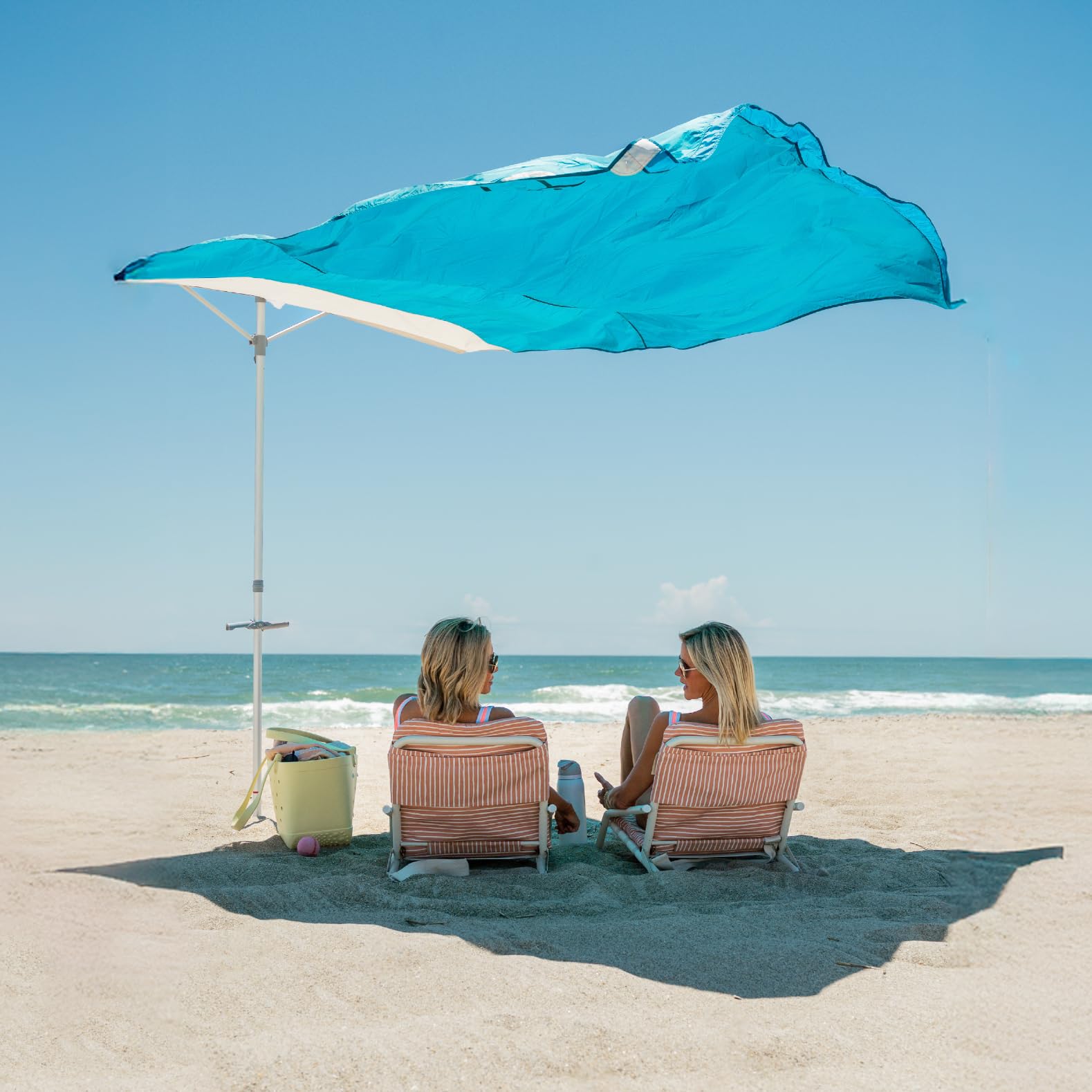
This one needs wind, which sounds like a strange thing to ask of a beach umbrella until you've spent an afternoon on an exposed shoreline. The Solbello is a fabric shade on a screw-in anchor pole that's built to pivot, so the breeze pushes it into a position where it sits rather than loading up a set of ribs. On the beaches where a normal canopy spends the day trying to leave, it's the calmest thing on the sand.

We were skeptical of the shape and came around quickly. The footprint is small, the canopy throws shade for a group rather than a single chair, and the whole package is 4.52 pounds in a bag you can sling over one shoulder. Setup is the anchor screw and a couple of clips, quick enough that you don't dread shifting it as the tide comes in. The canopy sits at sitting height rather than standing height, which is the right call for beach chairs and for anyone who wants to actually see the water.

What it can't do is ignore a dead-calm day. The design wants a steady breeze from one direction, so when the wind swings around you're out of your chair turning it, and on a still afternoon it has less to work with than a conventional canopy. It's also the highest price in this guide. For a windward beach with an onshore breeze, though, we haven't used anything that makes a gusty afternoon feel less like a wrestling match.

Pros

  • Pivots with the breeze instead of fighting it
  • 4.52 pounds with a shoulder carry bag
  • Screw-in anchor pole sets without a base
  • Shades a group from a small footprint

Cons

  • Needs a steady breeze to perform best
  • The highest price here
Our verdict

Buy it for an open, breezy shoreline where ordinary umbrellas spend the afternoon falling over; on a sheltered beach, spend less.

Check Latest Price
4

Best for Air Travel

AMMSUN 6.5ft Foldable Beach Umbrella

86 /100
Angler Score Excellent

Key details

Weight
2.5 lb
Packed Design
Two-fold shaft, carry bag
Sun Protection
UPF 50+
Canopy Diameter
78.7 inches
Check Details on Amazon

Two and a half pounds is the whole argument. This AMMSUN breaks down twice, with the shaft separating and the canopy folding down into a bag that fits inside a large suitcase, so you can stop renting shade by the day on a beach trip. We packed it for a flight and it went into the checked bag without a fight, which is more than we can say for the full-length umbrellas in this group.

On the sand it behaves like a proper umbrella rather than a travel compromise. The canopy is 78.7 inches across, enough for two chairs, and it carries the same integrated twist anchor and push-button tilt as the bigger AMMSUN here, along with a vent and UPF 50+ silver-coated fabric. The aluminum pole and eight fiberglass ribs are the reason it doesn't feel like a toy when you open it, and the bag has a shoulder strap instead of a wrist loop.

The trade for that weight is stiffness in a real wind. This is the umbrella in the group most likely to flex and invert when a squall comes through, so screw the anchor deeper than feels necessary, keep an eye on the canopy, and take it down when the gusts build. We kept it in the bag on the windiest day of the trip and didn't regret it. A canopy that flexes is a fair price for one that fits in your luggage.

Pros

  • Folds twice into a suitcase-sized bag
  • 2.5 pounds including the carry bag
  • 78.7-inch canopy with integrated sand anchor
  • UPF 50+ silver-coated fabric with a vent

Cons

  • Light frame flexes and can invert in wind
Our verdict

The lightest real beach umbrella here: 2.5 pounds, a two-fold shaft, and an anchor that still bites in sand.

Check Latest Price
5

Best Budget

Aoxun 6.5ft Beach Umbrella

88 /100
Angler Score Excellent

Key details

Tilt
30 degrees
Frame
Fiberglass pole and ribs
Sun Protection
UPF 50+
Canopy Diameter
6 feet
Check Details on Amazon

A 1.26-inch fiberglass shaft, not aluminum, is the detail that makes this Aoxun more than a cheap umbrella. Fiberglass flexes where metal dents and stays cooler in direct sun, and here it's paired with fiberglass ribs, a twist-in sand anchor, a 30-degree tilt, and a vent. That's the full beach-umbrella feature list at the lowest price tier in this group, and it's the reason this one earns a place rather than just filling out the budget slot.

The canopy is a 210-gram silver-coated oxford with a UPF 50+ rating, and the silver underside does two jobs: it blocks the rays and makes the shade underneath noticeably less glary than plain white fabric. Everything packs into the included bag, the tilt ring moves without a fight, and Aoxun backs the whole thing with a one-year manufacturer warranty. We also like that the anchor has fold-down handles, so you can get real torque on it without gloves.

Where it's honest about itself is size and stiffness. The canopy measures six feet across, so plan on two chairs rather than a family camp, and the frame will flex in a crosswind the way a light umbrella does. The shoulder strap on the carry bag is the flimsiest thing in the package, so carry it by the handle. What you give up is shade width and a little rigidity, and for weekend trips that's the right trade.

Pros

  • Fiberglass pole and ribs at a low price
  • Twist-in anchor with fold-down handles
  • UPF 50+ silver-coated canopy
  • One-year manufacturer warranty

Cons

  • Six-foot canopy suits two chairs only
  • Thin shoulder strap on the carry bag
Our verdict

Our budget pick: a fiberglass frame, a sand anchor that bites, and UPF 50+ fabric at the lowest price tier here.

Check Latest Price
6

Small Shade Spots

Picnic Time 5.5 Ft Beach Umbrella

91 /100
Angler Score Outstanding

Key details

Pole
Two-piece 1.25-inch steel
Tilt
Manual
Weight
4.9 lb
Canopy Diameter
66 inches
Check Details on Amazon

At 5.5 feet across, this is the smallest canopy we're recommending, and that's the point. It's the umbrella for a beach chair with a built-in slot, a small balcony table, or two people who want a patch of shade and nothing more. The two-piece 1.25-inch steel pole breaks down into a drawstring tote with a shoulder strap, and at 4.9 pounds it's easy to walk onto the sand with.

The striped fabric is the best-looking thing in this guide, and it's polyester that wipes clean with a damp cloth. The tilt works once you understand the sliding collar, and the instructions point to a video for a reason. It's also the umbrella here most likely to be left up on a patio all summer, which isn't a bad second life for it, and the lifetime guarantee suggests Picnic Time expects you to try.

For the beach, the limitation is anchoring: the bag holds an umbrella and nothing else, so there's no auger to screw down. In a chair slot, a table hole, or packed sand on a still morning, it's fine. On open sand with the wind up, it isn't the umbrella you want. The stripes are the reason it gets left up on a patio; the anchoring is the reason it stays home on a windy beach day.

Pros

  • Light 4.9-pound package with a shoulder tote
  • Fits chairs and tables with umbrella slots
  • Tilt and wipe-clean striped polyester

Cons

  • Fabric fades in heavy sun exposure
Our verdict

Our pick for chair-slot shade, small balconies, and two people who want a light, good-looking umbrella rather than a full beach canopy.

Check Latest Price

How We Tested Beach Umbrellas in Real Wind and Real Sun

We started with the umbrellas that kept surfacing in customer reviews, then filtered by canopy diameter, venting, UPF rating, anchor style, tilt mechanism, and packed weight. Anything that needed tools, two sets of hands, or a separate base we'd have to buy later got cut. That left 12 umbrellas, which we used over six months — on open beaches, in a windswept park, and in a backyard where the sun crosses fast.

Each one got the same first test: set up alone, bag in one hand, timed. We sank anchors into wet sand, loose dry sand, and hard-packed sand, then checked after 20 minutes whether the canopy had crept or the pole had started to lean. Gusty afternoons were the real sorting ground — we sat under each umbrella through the wind and noted whether the canopy vented instead of lifting, whether the pole flexed and stayed flexed, and how often we had to reset the anchor.

Then we lived with them. Every umbrella came home, got folded, and went back into its carry bag, which told us plenty about weight and whether the bag was cut generously enough to actually be reusable. Across the six months we watched seams, checked ribs after each trip, and moved the tilt from mid-morning shade to late-afternoon sun, paying attention to whether the joint held its angle or slowly sagged under its own weight.

How to Choose a Beach Umbrella

Start With How It Holds the Sand

Three anchoring styles cover this group. A twist-in auger is quick and light: you screw it down, drop the pole in, and it comes out clean when you leave. A sand-filled base, like the beachBUB's tarp, spreads the load over a wide patch of beach and holds hardest, at the cost of filling and emptying it. A tripod stand sits on top of the sand rather than in it, which works on a gym field and not on a beach slope.

The trap is loose, dry sand near the dune line, where nothing bites. Set up closer to the water line in packed, damp sand, and press the pole in by hand before you load the canopy.

Match Canopy Size to How You Sit

Canopies here run from 5.5 feet to 90 inches, and the difference is roughly one chair. A 5.5- or 6-foot canopy shades two people if they sit close; 7 feet covers two chairs and a cooler; 90 inches gives you room to spread out. A family that walks half a mile to the water is usually better off with a 7-foot umbrella and a good anchor than a huge one that's miserable to carry.

Tilt and Vent Are What You Use All Day

The tilt is the feature you'll touch most. A push-button collar that swings two ways lets you lean the canopy toward a moving sun without pulling the anchor; a single-direction tilt covers less of the afternoon.

Venting matters more in wind. A gap or panel at the top lets air pass through instead of loading the canopy like a sail, and on a breezy day that's the difference between a canopy that shivers and one that inverts. Neither feature rescues a bad anchor, so treat both as comfort rather than safety.

Look at the Fabric, Not Just the Number

UPF 50+ is the figure to look for, but what's underneath it decides how the umbrella ages. A silver or PA coating on the underside blocks rays and cuts glare, and a heavier weave, like the 220-gram fabric on the beachBUB, holds its shape in wind better than thin polyester.

Fading turns up in feedback on several of these, and no coating stops it forever. Rinse the salt off, dry the canopy before you bag it, and don't leave it up on a patio for the season unless you accept that it will go pale.

Weight and Packed Length Decide Whether It Comes Along

Four pounds is an easy walk; nine pounds plus a base is a two-trip haul from the car. Check packed length as carefully as weight. A two-fold shaft, like the AMMSUN 6.5-foot, collapses small enough to live in a suitcase, while a full-length pole rides in the trunk and nowhere else. If you're carrying chairs too, the umbrella that gets left at home is the awkward one, not the heavy one.

Frequently Asked Questions

Final Verdict

Buy the beachBUB if you beach often and want the canopy to stay exactly where you left it. The sand-filled base is the most convincing piece of wind engineering in this group, and the 90-inch canopy means two chairs and a cooler fit underneath it. If the budget is tighter, the AMMSUN 7-foot gives you a removable auger, a two-way tilt, and 84 inches of shade for a fraction of the money. And if you fly to the beach rather than drive, the 2.5-pound AMMSUN two-fold is the one that actually makes the trip.