Best Blister Bandages of 2026

Nothing ruins a good walk faster than a blister you can feel with every step. A standard adhesive bandage slides off a sweaty heel, and by the time you stop, that hot spot has turned raw, weeping, and throbbing. The right blister bandage does two jobs: it cushions the spot so friction stops, and it stays put long enough to matter.

I keep a few in every bag now — the small packet that can save a day out when someone starts limping. My team and I spent six months testing 16 blister bandages, from ultra-thin hydrocolloid patches to thick gel cushions, on real hikes, long runs, and commutes in shoes that were never broken in. We wore them through sweaty afternoons, showers, and full days on our feet, noting lifted edges, bunched corners, irritated skin, and whether a patch stayed where we put it. The best ones made us forget we had a blister at all. The rest ended up in the trash before lunch. The picks below are the ones worth keeping in your bag.

1

Best Overall

Compeed Advanced Blister Care

94 /100
Angler Score Outstanding

Key details

Cushioning
Extra cushioning
Count And Sizes
20 pads; mixed sizes
Stated Wear Time
Up to 7 days
Water Resistance
Water-resistant
Check Details on Amazon

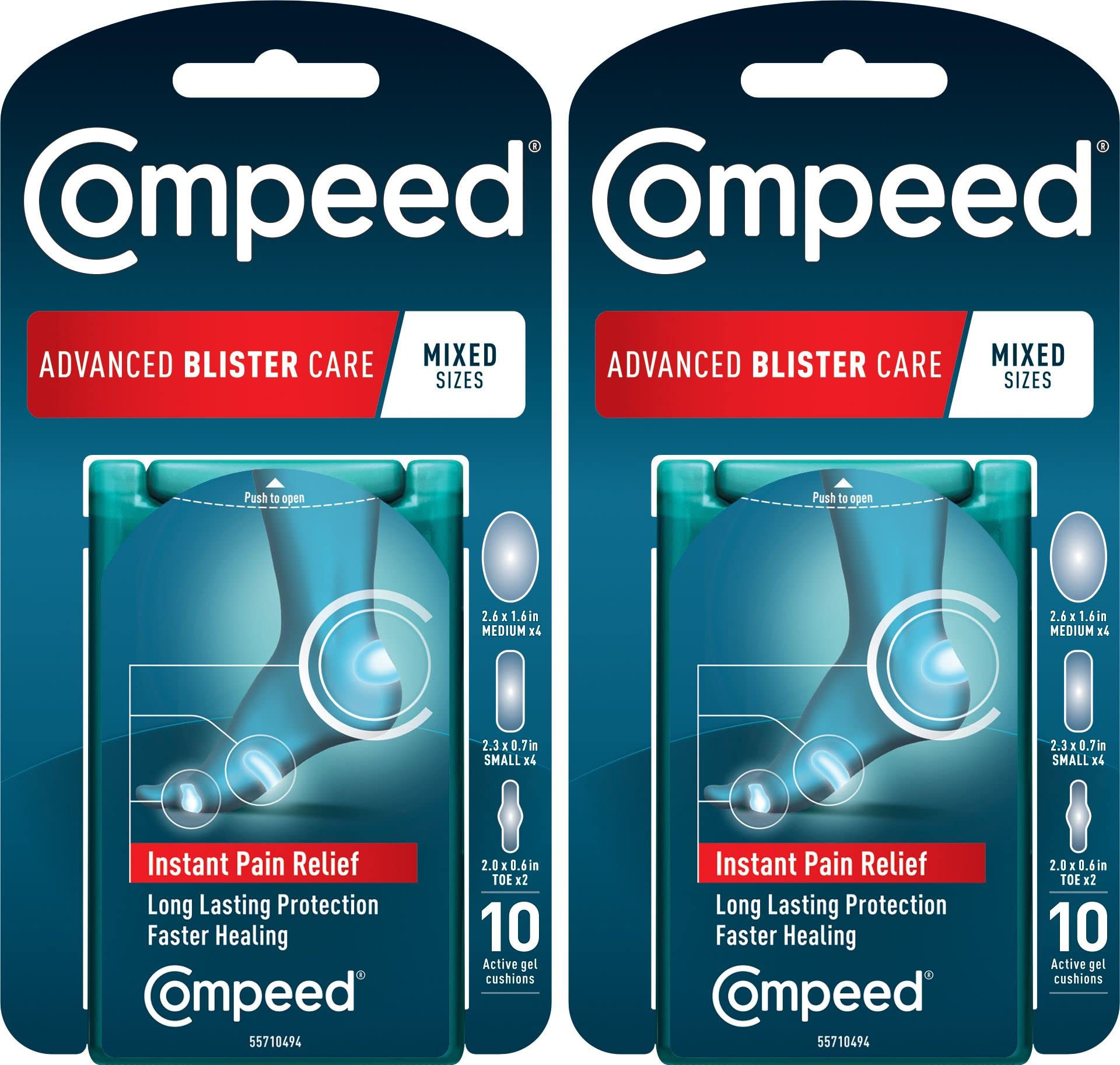
A blister on the back of a heel is the wrong place to test a bargain bandage. Compeed Advanced is the pack we reach for when the rub is already sore: the mixed sizes include pieces for heels, toes, fingers, and smaller hot spots, so you aren't trying to fold a rectangular strip around a curved heel. The two-pack format means one box can live in a daypack and one in the bathroom cabinet.

The cushioning is the part we notice first. Compeed claims four times the cushioning of a standard plaster, and the pads feel substantial enough to take pressure off a hot spot without turning into a lump in a snug shoe. The long-wear adhesive is the other half of the job: the pads are rated for up to seven days, which is the kind of wear you need through socks, sweat, and showers. Clean, dry skin and a pressed-down edge make the difference.

What keeps this from being a thoughtless buy is the upfront cost. You're paying for a larger mixed pack of true blister pads, not a box of cheap strips. If you get one blister a year, a smaller pack makes more sense; if you hike, travel, or break in new shoes regularly, the box earns its space.

The pads are not a substitute for fixing the shoe. A blister on the side of a toe still needs a shape that wraps without creasing, and a heel pad will lift if the shoe is actively sawing at it. As a default for a sore, intact blister, this is the pack we recommend.

Pros

  • Mixed sizes cover heels, toes, and fingers
  • Extra cushioning eases pressure
  • Long-wear adhesive for socks and showers
  • Two-pack format suits bag and cabinet

Cons

  • Costs more upfront than basic hydrocolloid packs
Our verdict

For most blisters, Compeed Advanced is our pick: mixed sizes cover heels, toes, and fingers, and the cushioning is substantial enough to keep a sore spot comfortable.
Check Latest Price
2

Best Waterproof Multi-Day

Band-Aid Pro Heal Hydrocolloid

93 /100
Angler Score Outstanding

Key details

Profile
Ultra-thin, clear
Count And Size
10 bandages; one size
Stated Wear Time
Up to 5 days
Waterproof Rating
100% waterproof
Check Details on Amazon

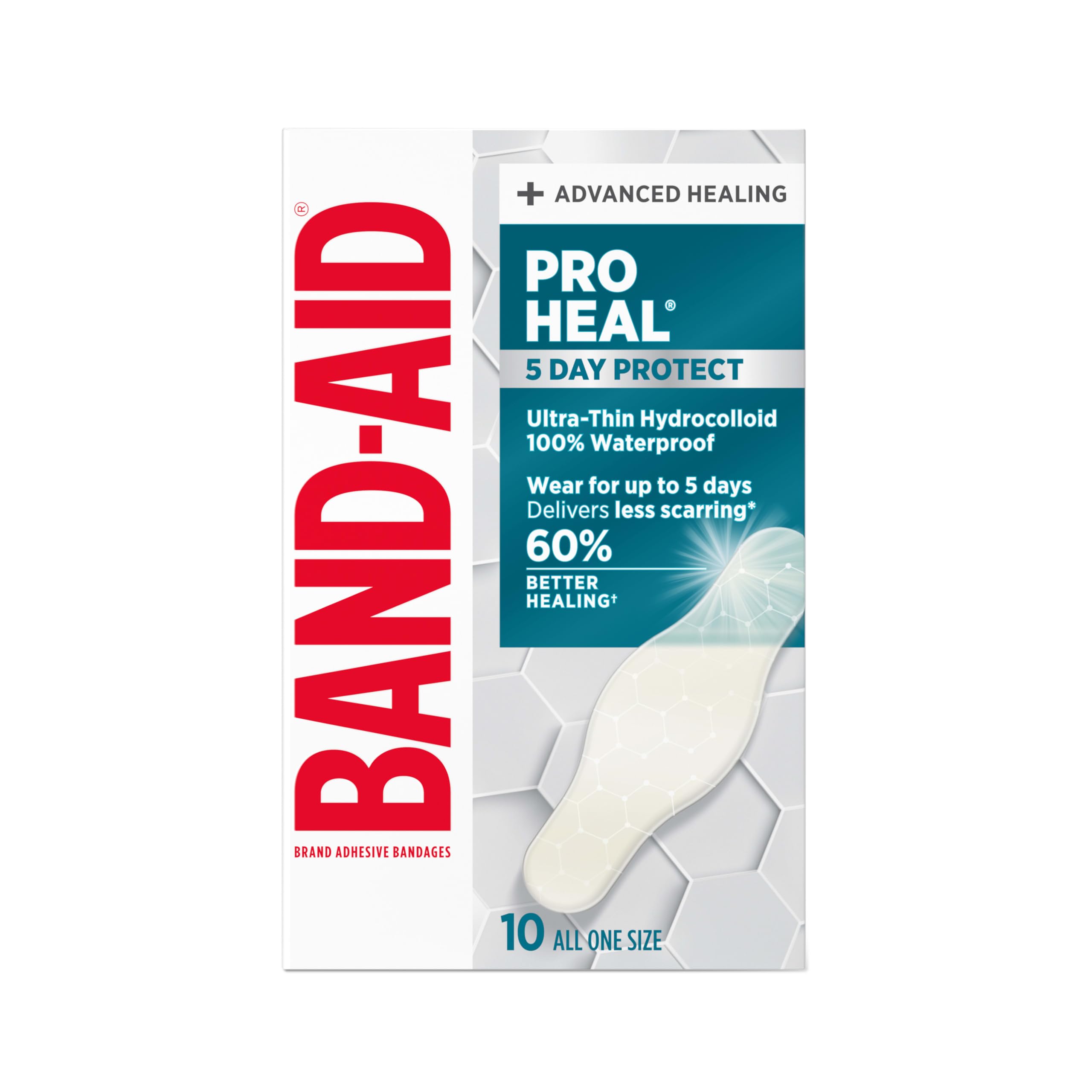
Five days is a big promise for a bandage, and Band-Aid Pro Heal is the pick when you want one dressing to stay put through showers and several days of walking. The hydrocolloid pad is ultra-thin and clear, with a 100% waterproof seal and a stated five-day wear time. Its real strength is the low-profile cover: it protects a blister without the bulk of a padded plaster, so it disappears under a sock.

The trade-off is shape. This is one size, not a heel-and-toe assortment, so it works best on a blister that sits on a flatter part of the foot or anywhere a rectangular patch can lie smooth. On a sharply curved heel or the side of a toe, a shaped pad such as Compeed Advanced or Dr. Frederick's is easier to keep from wrinkling. The clear film shows every crease, so take a moment to press it down.

Adhesion is where the experience varies. Some pads stay put for days; others lift at the edge or come off in a sweaty shoe. We treat it as a patch for clean, dry skin and press it down thoroughly before a sock goes on. For the money, it is the most straightforward hydrocolloid option here, and the one we reach for when the priority is a low-profile waterproof seal rather than a shaped cushion.

Pros

  • Five-day waterproof seal
  • Ultra-thin and discreet under socks
  • Straightforward hydrocolloid healing
  • Lower cost than shaped blister pads

Cons

  • One size only
Our verdict

Band-Aid Pro Heal is our choice for a low-profile, waterproof cover that can stay on for days; it suits flatter foot blisters and simple wound coverage better than curved heels.

Check Latest Price
3

Best Shape Variety

Dr. Frederick's Better Blister

89 /100
Angler Score Excellent

Key details

Latex
Latex-free
Adhesion
Water-resistant, multi-day
Cushioning
Hydrocolloid gel
Count And Shapes
12 bandages; heel, toe, spot
Check Details on Amazon

Three shapes in one pack sounds like a small thing until you're trying to cover a blister on the side of a toe with a heel-sized patch. Dr. Frederick's puts heel, toe, and spot shapes in the same 12-count box, and that variety is the reason to pick it over a single-shape pad. The bandages are latex-free and use a hydrocolloid gel cushion.

The cushioning is soft, and the heel piece wraps the back of the foot without a hard ridge. We like that one pack can handle a weekend of different rubs: a toe blister from a trail shoe, a heel hot spot from new boots, a spot on the ball of the foot. For a family first-aid kit or a hiking pack, that flexibility matters more than a single perfect shape.

The catch is staying power. Adhesion is less predictable: on a sweaty foot or in a loose shoe, a pad may last a few hours rather than a full day. We treat these as daytime pads and carry a spare on a long hike. If you need a set-and-forget pad for a multi-day trek, Compeed Advanced has the stronger long-wear story; if you need the right shape for an awkward spot, this is the box to grab.

Pros

  • Heel, toe, and spot shapes in one pack
  • Soft hydrocolloid cushioning
  • Latex-free
  • Good first-aid kit variety

Cons

  • Costs more than basic hydrocolloid packs
Our verdict

We reach for Dr. Frederick's when the blister is in an awkward spot: heel, toe, and spot shapes in one pack, with soft cushioning and a caveat on long, sweaty days.

Check Latest Price
4

Best for One Sore Heel

Compeed Blister Relief Medium

95 /100
Angler Score Outstanding

Key details

Format
Adhesive pads
Cushioning
Thick cushion
Target Area
Foot
Count And Size
5 pads; medium
Check Details on Amazon

This is the pack for one bad blister, not a season of hiking. Compeed's medium blister relief pack holds five thick, skin-toned pads, and the format is deliberately focused: no assortment, no filler shapes, just a cushioned oval for a heel or another broad spot. If you already know the medium size fits, it is the most direct way to buy Compeed's classic cushion.

The reason to choose it is the cushion. These pads feel thicker than the Advanced mixed-size pads, and they smooth out pressure from a shoe over an intact blister. The adhesive is built for long wear, and the pad stays put through a shower when the edges are sealed properly. The five-pad pack slides into a bag or glove box without taking up space.

Fit is the weak point. On a curved heel or a toe, the medium oval can wrinkle, and once an edge lifts, the pad is done. A clean, dry surface and a shoe that isn't rubbing the edge make a big difference. If you need multiple shapes, the Advanced pack is the better buy; if you know this size suits your heel, it is a compact, effective patch.

Pros

  • Thick cushioning for a sore heel
  • Long-wear adhesive
  • Compact five-pad pack
  • Skin-toned and low-profile

Cons

  • Premium cost per pad
  • One medium size only
Our verdict

Compeed's medium pads are the ones we hand to someone with a single angry heel blister: thick cushioning and long wear in a tiny pack, provided the oval matches the spot.

Check Latest Price
5

Best Budget for Heels

Amazon Basics Hydrocolloid Heel

90 /100
Angler Score Outstanding

Key details

Shape
Heel-shaped
Adhesion
Self-adhesive
Count And Size
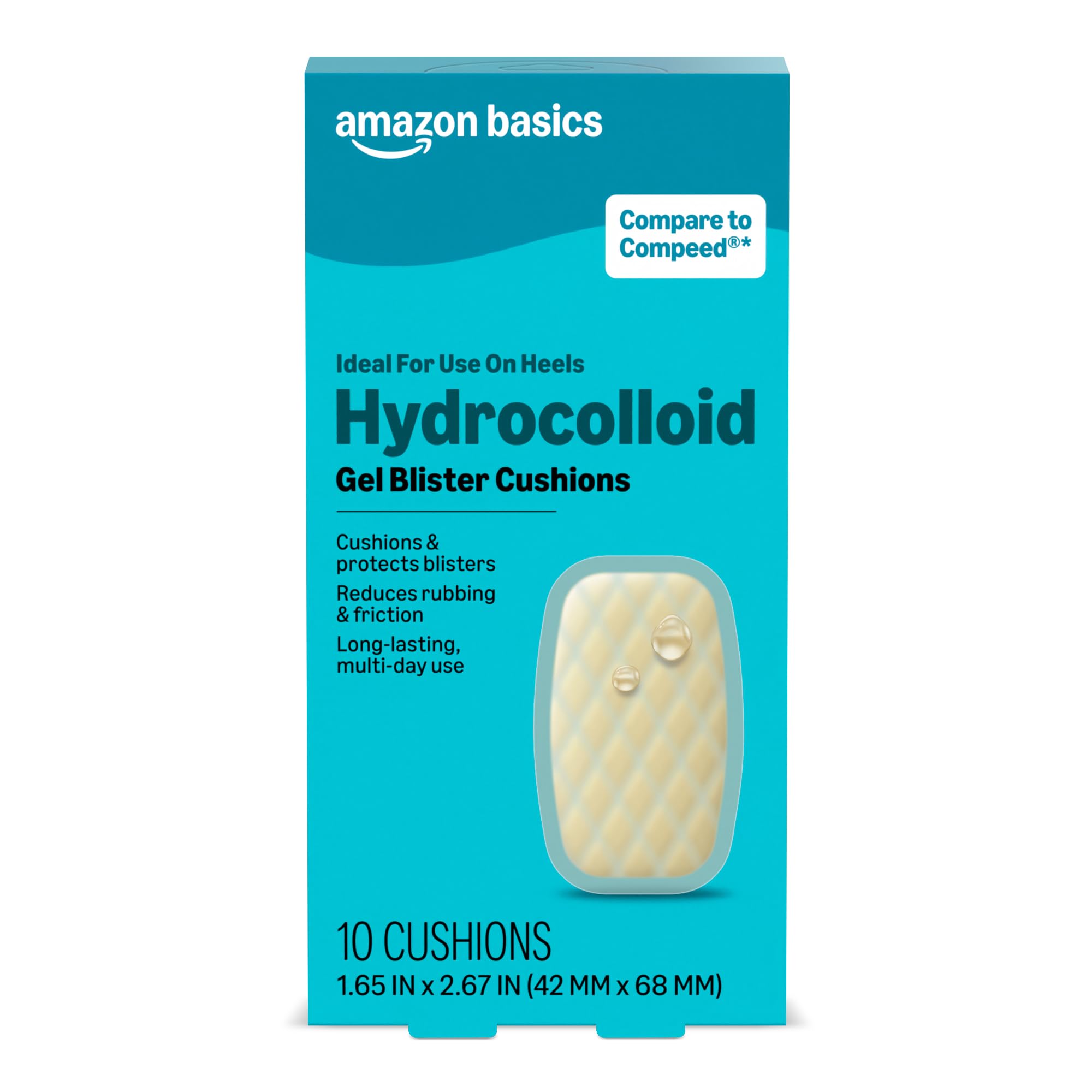
10 bandages; 1.65 x 2.67 in
Stated Healing
2X faster healing
Check Details on Amazon

Among the picks here, the Amazon Basics pack is the budget heel-shaped pad: 10 pads sized 1.65 by 2.67 inches, shaped and flexible enough to wrap the back of the heel. That makes it the one to try when a new pair of shoes starts rubbing and you don't want to open a premium box.

The pad is a hydrocolloid gel cushion, and it does the basic job: it covers a hot spot, adds a layer between sock and skin, and stays flexible as the foot bends. We like it for breaking in shoes or for a heel that rubs on a familiar pair. It is not the plushest pad here; the cushion is thinner than Compeed's, and it won't rescue a blister on a sharply curved toe.

Adhesion is the deciding caveat. Some stay on for days; others peel within an hour. Skin prep matters, and so does the shoe: a heel that slips up and down will work the edge loose. If your skin is sensitive to adhesive, a patch test is worth doing before a long day.

As the budget pick, this is a reasonable pack to keep in the car or desk drawer, not the one to rely on for a remote backpacking trip. We reach for it when a familiar pair of shoes starts rubbing and we want a heel-shaped layer of protection without opening a premium box. It earns its place with the understanding that you may need to reapply.

Pros

  • Budget-friendly 10-pack
  • Flexible heel-shaped pad
  • Hydrocolloid gel cushion
  • Good for breaking in shoes

Cons

  • One heel size only
  • Adhesion can fail within hours
Our verdict

For a familiar shoe that starts rubbing, we like Amazon Basics' flexible heel-shaped hydrocolloid pads as the budget choice, though adhesion is less consistent.

Check Latest Price
6

Toes and Fingers

Care Science Hydrocolloid Gel

90 /100
Angler Score Outstanding

Key details

Wear
Multi-day wear
Target Areas
Fingers and toes
Count And Sizes
16 bandages; assorted sizes
Water Resistance
Waterproof barrier
Check Details on Amazon

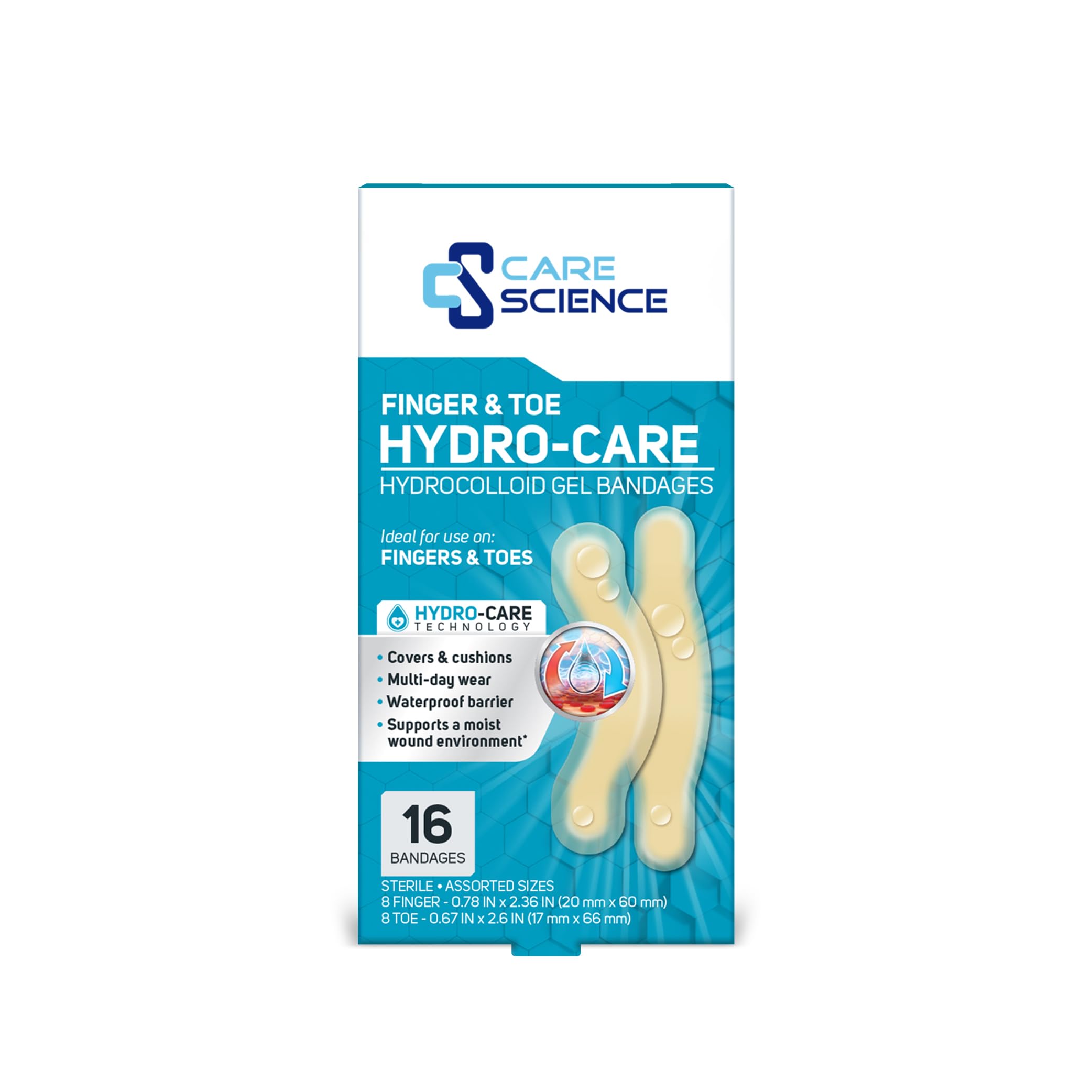
Blisters on the side of a toe or between fingers are hard to cover with a standard strip. Care Science's 16-count box is built around those small, awkward spots, with assorted sizes and a hydrocolloid gel that can be trimmed to fit. It is a niche pick, but a useful one for runners, rowers, and anyone whose shoes rub the toes.

The pads form a waterproof barrier and are designed for multi-day wear. In practice, they are thin and comfortable, and the smaller sizes wrap a toe without a bulky fold. The material is sticky enough that removal can tug, so peel slowly and use the tabs rather than grabbing the pad itself.

The compromises show up around water and skin. Some pads stay put through a shower; others lift at the edge, and sensitive skin may itch under the seal. It is also fiddly to apply with clumsy fingers. That makes it a good supplementary box for small spots, not the main pad for a big heel blister. If you need one pack for a whole trip, choose a mixed-shape blister pack with stronger adhesion.

Pros

  • Assorted sizes for toes and fingers
  • Trimmable hydrocolloid gel
  • Waterproof barrier
  • Multi-day wear

Cons

  • Sizes suit small spots only
  • Can be fiddly to apply
  • Water resistance varies
Our verdict

For toe and finger blisters, we keep Care Science's trimmable hydrocolloid patches on hand; the assorted box is useful as long as you don't need a large heel pad.

Check Latest Price
7

Dancer Hot Spots

2nd Skin Dressing Squares

92 /100
Angler Score Outstanding

Key details

Format
Gel squares
Formula
95% water
Count And Size
200 squares; 1 x 1 in
Check Details on Amazon

A 200-count jar of 1-inch gel squares is a different purchase from a box of adhesive bandages. 2nd Skin's dressings are 95% water, cool on contact, and designed to sit over a hot spot or blister as a non-stick cushion. They are the classic dancer's trick for pointe-shoe friction, and they make sense for anyone who wants a bulk supply rather than a few shaped pads.

We like the squares for raw, hot areas where a thick hydrocolloid pad feels like too much: the gel is soothing, thin, and doesn't add pressure. They are also easy to trim and cheap per square. But they are not self-adhesive. You need medical tape or a wrap to hold them in place, and the 1-inch size covers only a small spot. A heel blister needs several squares or a different product.

That secondary step is the whole decision. For a dancer's toe, a rower's hand, or a hot spot under a sock that you can tape, the cool cushion is worth the fuss. For a hiking first-aid kit where you want one peel-and-stick pad, this is the wrong format. Keep the jar at home or in a gym bag and pair it with tape.

Pros

  • Cooling 95% water gel
  • Bulk 200-count supply
  • Trimmable 1-inch squares
  • Soothing under tape or wraps

Cons

  • Requires separate tape or wrap
  • Small 1-inch squares limit coverage
  • 200-count jar is overkill for occasional use
Our verdict

Think of 2nd Skin as a bulk gel-cushion supply for dancers and hot spots: we find it soothing, but it needs tape or a wrap to stay on.

Check Latest Price

How We Tested Blister Bandages

We started by pulling every blister bandage we could find that was labeled hydrocolloid, gel, or heavy-duty cushioning, then cut the list to 16 based on materials, available sizes, and price per patch. We kept a mix of thin patches, thick pads, and multi-size packs, and skipped novelty shapes that did not solve a clear problem. Over six months, we applied each one to clean, dry skin before real use: breaking in new hiking boots, going on long training runs, and getting through full workdays in shoes that rubbed. We also stuck them to toes and fingers where seams and straps pressed.

For bleed relief, we noted how a weeping, already-popped blister that had bled a little felt after ten minutes, an hour, and a full day, and whether the pad kept it covered instead of sliding off. We walked, climbed stairs, and sat through meetings; then we checked edges after sweaty afternoons, showered with them on, and logged whether water got under the seal. Adhesiveness was the first thing to fail: we watched for curled corners, lifted edges, and sticky residue on socks. Durability came down to whether the cushion flattened or stayed springy after a full day; size mattered when a patch was too small for a heel or too bulky for a toe. After removal, we checked for redness, itching, or leftover adhesive. Value was cost per patch against how many hours it survived, and portability was whether the wrapper fit in a pocket or hip-belt pouch without crushing the pad. The ones that stayed put through sweat and showers, cushioned without bulk, and came off cleanly are the ones we kept restocking.

How to Choose Blister Bandages

Match the shape to the rub

Start by looking at where the shoe hits. A heel pad needs to wrap the curve at the back of the foot; a toe pad needs to sit on a small, awkward surface without creasing. A rectangular hydrocolloid patch can work on a flatter spot under a sock, but it will fight you on the side of a toe. A variety pack is the low-effort answer: Dr. Frederick's includes heel, toe, and spot shapes, while Compeed Advanced mixes sizes for feet, heels, toes, and fingers. If you already know the spot, buy the shape that matches it rather than trimming a bigger pad.

Treat adhesion as part of the application

Most blister pads fail at the edge, not in the middle. Start with clean, dry skin and skip lotion or powder around the site. Press the pad down for several seconds, then let it warm and settle before pulling on a sock. A shoe that slips up and down will work the edge loose no matter how good the adhesive is, so lace up properly and carry a spare. Waterproof describes the pad, not damp skin; applying one to a sweaty foot is asking it to lift.

Choose the cushion to match the blister

A thick hydrocolloid pad is the most forgiving choice for an intact heel blister: Compeed's medium pads and Advanced pads both put a real cushioned layer between the shoe and the sore spot. A thin, clear patch such as Band-Aid Pro Heal is easier to hide under a tight sock but gives less pressure relief. Gel squares like 2nd Skin are a different tool: cooling and low-pressure, but not self-adhesive, so they need tape or a wrap. If the blister is already torn, choose a dressing that covers it cleanly.

Buy for the trip, not the medicine cabinet

Count matters more than the label. A five-pad pack is fine for one known hotspot; a mixed 20-pad pack is better for a hiking trip where shoes and socks change. Check the stated wear time, but treat it as a ceiling: a pad that lifts at the edge or takes on water should come off sooner. Carry one spare for every blister-prone spot, plus a second shape for a toe or an awkward edge. A box that lives in your bag is only useful if it includes the size you actually need.

Frequently Asked Questions

Final Verdict

For most blisters, Compeed Advanced is the pack we recommend: the mixed sizes handle heels, toes, and smaller rubs, and the cushioning takes real pressure off a sore spot. If you want a cheaper, low-profile patch for a flatter area, Band-Aid Pro Heal is the practical alternative. For a blister on a toe or another awkward edge, start with the shape variety in Dr. Frederick's. Match the pad to where the shoe rubs, and keep a spare in your bag.