Best Boning Knives of 2026

A boning knife has to do two opposite things at once: bend enough to follow the curve of a rib, and stay stiff enough that it doesn't wander off the bone and into your dinner. Cheap ones fail at both ends of that — either so floppy the tip skates, or so rigid you're basically butchering with a paring knife. The right one turns breaking down a whole chicken into a two-minute bit of tidying up instead of a wrestling match.

We've spent the past eight months working 14 boning knives through exactly that job, plus pork shoulders, whole fish, and the ordinary weeknight trimming that never makes it into a photo. Here's what I'd tell a first-time buyer: don't shop on out-of-the-box sharpness. Almost everything arrived shaving-sharp. The knives I kept reaching for were the ones that still felt secure in a wet, greasy hand and showed no spotting where the blade meets the handle. A handful of them earned a permanent spot in the block, and those are the ones below.

1

Best Overall

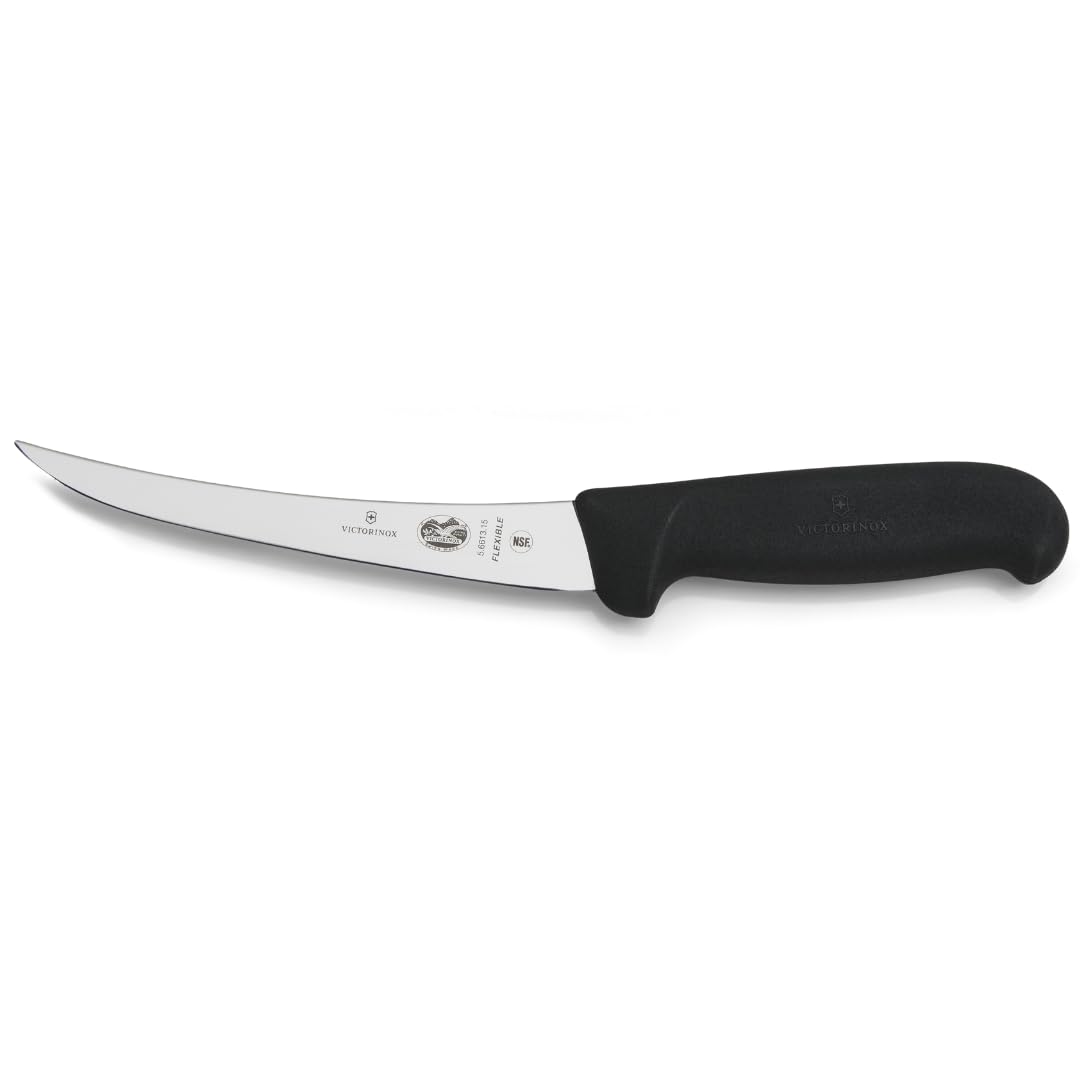
Victorinox Fibrox 6-Inch Curved

96 /100
Angler Score Outstanding

Key details

Weight
3.2 oz
Blade Flex
Flexible
Blade Length
6 inches
Construction
Stamped
Check Details on Amazon

Weight is the first thing you notice. At 3.2 ounces the Fibrox curved boning knife almost disappears in the hand, and the flexible blade does the navigating: the tip finds the seam between a thigh and the carcass, the curve rides the bone, and you are separating a joint instead of sawing through one. Of everything here, this is the knife we hand to someone who has never boned a chicken, because it corrects for inexperience rather than punishing it.

The handle matters as much as the blade once your hands are wet. Victorinox textures the Fibrox rubber along its whole length, so it stays grippy with fish slime or chicken fat on it, which is the opposite of how a smooth polished handle behaves in the same conditions. It is stamped rather than forged, and that is the honest explanation for the price: you are paying for Swiss steel and a shape that works, not for a bolster and a full tang.

Sharpening is where a boning knife earns its keep, and this one comes back fast. A few passes on a steel between birds, a stone when it truly needs one, and it is slicing again. Wash and dry it by hand rather than leaving it in the sink, and the edge holds its character far longer than the price suggests. It is also the knife in this group that gets borrowed and not returned, which tells you something.

Pros

  • Flexible curved blade hugs bone closely
  • Textured Fibrox handle grips when wet
  • Light 3.2 ounces for long sessions
  • Comes back quickly on a steel

Cons

  • Flex wanders on thick red-meat cuts
  • No sheath or guard in the box
Our verdict

We recommend the Fibrox to anyone who breaks down chicken, fish, or game regularly: light, genuinely flexible, grippy when wet, and easy to bring back on a steel.

Check Latest Price
2

Best Budget

Mercer Ultimate White 6-Inch Curved

95 /100
Angler Score Outstanding

Key details

Handle
Textured polypropylene
Weight
4.6 oz
Blade Length
6 inches
Blade Material
High-carbon steel
Check Details on Amazon

The Ultimate White is the least expensive knife here, and it does not behave like one. The six-inch curved blade is high-carbon Japanese steel, thin behind the edge and sharp out of the sleeve, and the polypropylene handle is molded with textured finger points. For trimming a pork loin or pulling the skin off chicken thighs, it does the job without asking you to think about it, which is most of what a boning knife is for.

Press the tip and it gives; press halfway down the blade and it does not. That is the honest answer to whether this knife is flexible, and it explains why opinions split so sharply: the thin last inch turns neatly inside a chicken oyster, while the middle stays straight, so it will not fold itself around a fish's spine the way the Fibrox will. It is 4.6 ounces with more of that weight forward, which steadies long trimming strokes.

What you give up is refinement. There is no bolster to speak of, the handle is plain white plastic, and the blade is happiest on chicken, turkey, and general trimming rather than delicate fish work. At this price, buying two is a real strategy: one for raw poultry, one for everything else, which is roughly how professional kitchens solve the same problem. It is also a forgiving knife to learn to sharpen on, which counts for more than most shoppers expect.

Pros

  • Sharp high-carbon blade at the lowest price here
  • Molded handle with textured finger points
  • Weight-forward balance steadies trimming

Cons

No notable drawbacks to flag.

Our verdict

We think the Ultimate White is the right first boning knife: cheap enough to learn on, sharp enough to do real work, and comfortable enough to use all afternoon.

Check Latest Price
3

Best for Game Processing

Dexter Outdoors 6-Inch Flexible Curved

95 /100
Angler Score Outstanding

Key details

Weight
4.8 oz
Blade Flex
Flexible
Blade Length
6 inches
Blade Material
High-carbon steel
Check Details on Amazon

The Dexter is built around a joint you do not notice until you look for it. The blade and handle are molded into one sealed unit with no seam for blood, fat, or fish slime to creep into, which is a commercial-kitchen detail and the reason this knife can go straight from a deer carcass to hot soapy water without you wondering what is living in the gap.

The blade is a flexible six-inch curve in Dexter's own high-carbon steel, and the whole knife weighs 4.8 ounces. That mass reads as confidence when you are working through a pile of fish rather than a single fillet, and the textured polypropylene handle stays put with wet hands. The curve is deep enough to follow a rib without the tip digging in, and the factory edge takes a steel well.

Stain-free steel is not rust-proof steel. This one can spot if it goes back into the drawer damp, so dry it before it goes away, a small habit that keeps it looking new for years. Otherwise care is simple: hot water, a scrub, air dry. This is the one we pack for a hunting camp, where knives get used hard and cleaned in a hurry, and it has never been the thing that let us down.

Pros

  • Sealed blade-to-handle joint scrubs clean
  • Flexible curved blade for game and fish
  • Textured handle shrugs off hot water
  • Trimming performance praised on brisket and ribs

Cons

  • 4.8 ounces tires a long filleting session
Our verdict

We point hunters and anyone breaking down fish in volume to the Dexter: flexible, sealed against mess, and built to be scrubbed rather than babied.

Check Latest Price
4

Best Full-Tang Feel

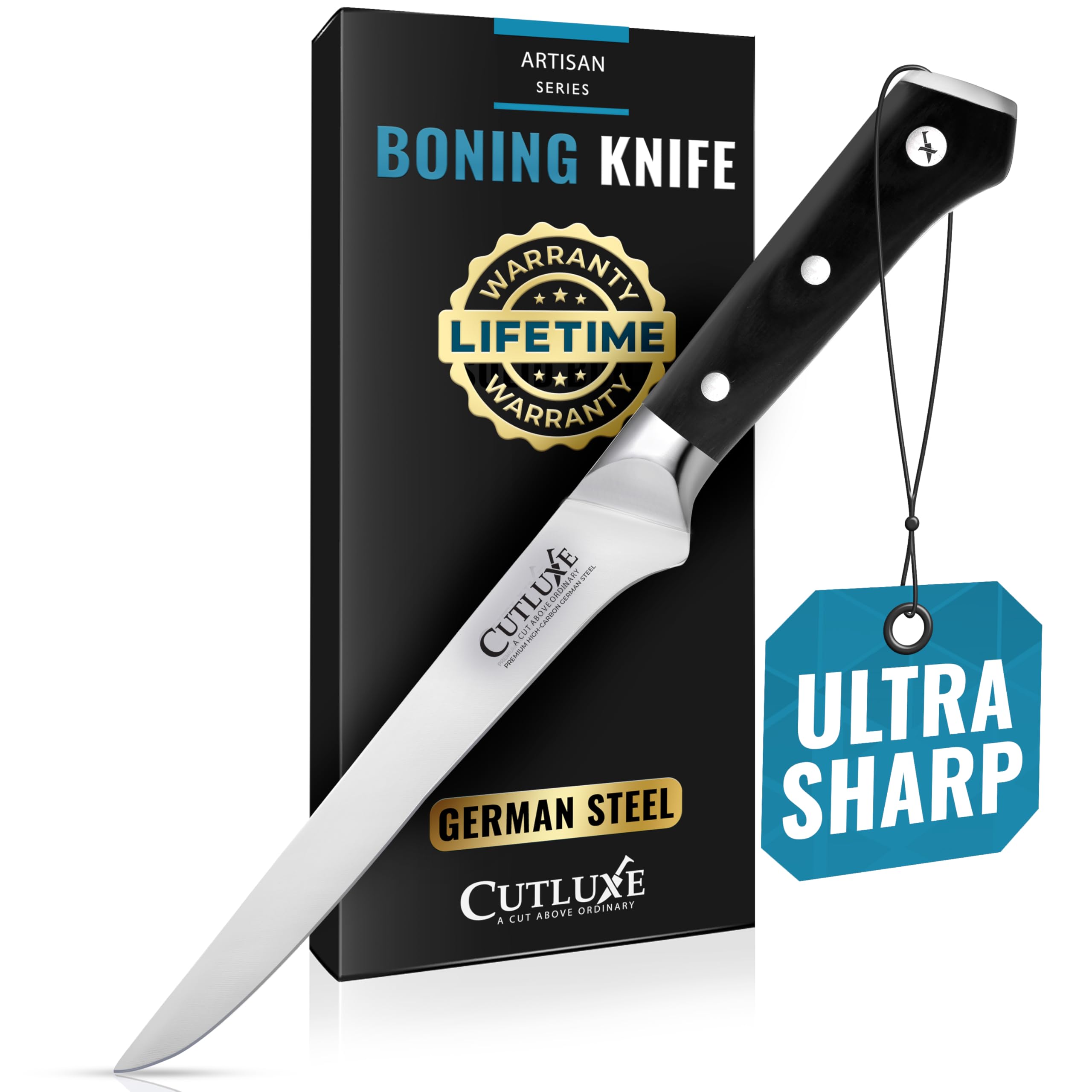
Cutluxe 6-Inch Boning Knife

93 /100
Angler Score Outstanding

Key details

Handle
Full-tang pakkawood
Weight
4.96 oz
Blade Length
6 inches
Blade Material
German high-carbon steel
Check Details on Amazon

Pick up the Cutluxe right after the Fibrox and the difference is immediate. This is a full-tang blade with a pakkawood handle held by three rivets, and it has a spine you can feel through the whole cut. It weighs 4.96 ounces, and it is built for people who do not like the whippy feel of a thin stamped blade and want a knife that sits in the hand like a tool.

The steel is German high-carbon, hardened to 56-plus Rockwell, and sharpened to 14 to 16 degrees per side, which is thin enough that it goes through a brisket flat in one clean pull. That thinness is the thing to respect. This is not a knife for levering through a joint or hunting for a bone with the tip; let the edge do the work and it rewards you, twist it and you will be back on the stone.

Balance is what won us over. The weight sits back toward the hand rather than out at the tip, so long trimming strokes feel controlled instead of nose-heavy and the knife steers from the wrist. It also arrives in packaging nice enough that it does not need rewrapping if you are giving it away, which is more than most knives in this price range manage. Compared with the flexible picks it is simply a different tool, and the difference is deliberate.

Pros

  • Full tang and riveted pakkawood feel solid
  • Balanced weight steers from the hand
  • Ships in gift-ready packaging
  • Thin 14-16 degree edge slices cleanly

Cons

  • Thin edge needs care around bone
  • Almost 5 ounces, the heaviest here
Our verdict

We reach for the Cutluxe when a job wants weight and a stiff spine: pork shoulders, brisket trim, and long slicing strokes rather than delicate work.

Check Latest Price
5

Best Splurge

Victorinox Rosewood 6-Inch Semi-Stiff

95 /100
Angler Score Outstanding

Key details

Handle
Rosewood
Weight
3.52 oz
Blade Flex
Semi-stiff
Blade Length
6 inches
Check Details on Amazon

Semi-stiff is the word to notice. Where the Fibrox bends around a rib cage, this blade holds its line, and that is exactly what you want when you are following the seam between a loin and its fat cap or sliding under the silverskin on a tenderloin. Beef and pork reward a knife that goes where you point it rather than one that reads the terrain for you.

Underneath, it is the same Swiss stainless as the Fibrox, stamped the same way, with the same lifetime guarantee against defects. What changes is the handle. Rosewood is denser and heavier than the Fibrox rubber, so the knife balances further back and feels warmer and more solid in the palm, and no two handles carry the same grain. Whether that is the point or a distraction depends entirely on what you want from a knife you use for ten minutes at a time.

Wood and water are not friends. Hand wash it, dry it the same hour, and do not leave it soaking, because a wooden handle that lives in the sink is one that eventually lifts away from the tang. Treated that way it stays handsome for years. This is the knife you buy because you break down red meat more often than fish, or because you want something worth handing to someone as a gift rather than another black-handled workhorse.

Pros

  • Semi-stiff blade holds its line on red meat
  • Dense rosewood handle, unique grain
  • Same Swiss steel as the Fibrox

Cons

  • You pay a premium for the handle, not the steel
Our verdict

For beef and pork, we choose the Rosewood: a semi-stiff blade that holds its line and a handle worth handing down.

Check Latest Price
6

Large Fish

HOSHANHO 7-Inch Fillet Knife

94 /100
Angler Score Outstanding

Key details

Weight
10.6 oz
Blade Length
7 inches
Construction
Forged
Blade Material
10Cr15CoMoV steel
Check Details on Amazon

Seven inches of blade is a lot until you try to fillet a fish that does not fit the board. Where the six-inch knives here run out of blade halfway up a big walleye, the HOSHANHO keeps going in a single stroke, and one stroke is the whole difference between a clean fillet and one that looks chewed. For salmon, pike, and anything headed for the smoker whole, the extra length earns its keep.

It is forged from 10Cr15CoMoV high-carbon steel and weighs 300 grams, so it has a forged knife's solidity in the hand. Despite that build, the blade is deliberately soft in flex, which means it still follows a backbone instead of skidding off it. That combination is why we think of it as a big-fish tool rather than an all-day knife: the length is the point, and the length is also what you notice after an hour.

Fit and finish is where it surprised us. The pakkawood handle is fitted cleanly, the spine and plunge are polished, and on a magnetic strip it looks like a far more expensive knife than it is. It handles poultry and boning work perfectly well too. It is simply more knife than a chicken requires, and the long tip is less precise than a six-inch blade when you are working through small trout and panfish.

Pros

  • Seven-inch blade finishes big fish in one stroke
  • Soft-flex blade still follows a backbone
  • Polished forged finish looks expensive

Cons

  • 300 g is heavy over a long session
Our verdict

We keep the HOSHANHO for fish too big for a six-inch blade: long, soft-flexing, and handsome enough to leave out on the table.

Check Latest Price

How We Tested the Best Boning Knives

We started by rounding up every boning knife with a genuine following — commercial-kitchen workhorses, budget house brands, and a few Japanese-style blades — then cut the list down by steel, handle material, blade length and curve, and price, so the final group ran from almost disposable to something you'd hand down. Fourteen made the cut.

Those 14 knives lived in our kitchens for eight months. They broke down whole chickens on Sunday afternoons, trimmed pork shoulders for the freezer, and followed the spine of whole fish on the weekends. They also got the unglamorous work: deboning thighs, pulling silverskin off a tenderloin, butterflying a breast at 6 p.m. on a Tuesday.

Tracking was what we watched closest. We noted whether a tip followed a rib cage by feel or kept popping off into the meat, and whether a flexible blade sprang back straight after being pressed flat against the board. Every knife got a fresh sheet-of-paper slice test on arrival, at one month, and at the end, so we could see which edges rolled or chipped under real use. And since nobody bones a chicken with dry hands, we kept them wet and greasy on purpose, noting which handles turned slick and which stayed locked in.

Rust got its own check: after several sessions, each knife was rinsed and left damp in the drying rack overnight, then inspected the next morning along the tang and the seam where blade meets handle. At the end, we weighed price against how each knife looked and cut after eight months rather than how it performed the day it arrived. The ones still sitting in my block passed all of it.

How to Choose a Boning Knife

Start with flex, not brand

A flexible blade curves around bone, which is what you want inside a chicken or along a fish's spine. A semi-stiff blade holds its line, which is what you want when you are following the seam between a loin and its fat cap or trimming a brisket. Buy flexible if fish and poultry dominate your counter, semi-stiff if it is mostly red meat.

The trap is assuming more bend is always better. A blade that folds on a beef forequarter is a blade you fight through every cut, and the reverse is true too: a stiff knife inside a fish's rib cage leaves you sawing. If you process both, the flexible six-inch knife covers more ground and the semi-stiff one is the specialist.

Size the blade to the animal

Six inches covers chickens, turkeys, and most fish up to a few pounds. Step up to seven inches for salmon, stripers, and large game, where a short blade means two strokes where one clean stroke would do. Curved profiles are for working around bone; straighter ones slide along it and under silverskin more predictably.

A seven-inch blade on an eight-inch trout is all tip and no control, so long knives are not an upgrade, they are a different tool. Think about the biggest thing you actually bring home, not the biggest thing you might.

The handle has to work wet

Boning is slippery work, and the handle is where that shows. Textured rubber and molded polypropylene stay grippy with slime and fat on them; polished wood looks better and asks more of your grip. Our preference runs to texture on anything that meets fish.

Look at the joint where blade meets handle as well. A sealed, gapless transition is easier to get genuinely clean after raw poultry or a deer, and on a wooden handle, dryness is the whole game. If you buy wood, plan to wash and dry it the same hour, every time.

Stamped, forged, and what the money buys

Stamped blades are cut from sheet steel: thin, light, and inexpensive to make, and often the most flexible knives in a lineup. Forged blades are thicker and heavier, usually with a bolster and full tang. Neither is sharper by definition, because edge geometry decides that.

What you pay extra for with a forged knife is heft, balance, and looks. Our advice is to spend on steel and shape first and handle material second, and to resist the idea that the priciest knife on the page will bone a chicken any better than a well-shaped budget one.

Care and sharpening

A boning knife touches bone constantly, so it needs a steel more often than a chef's knife does. A few light passes before each session keeps the edge aligned; a stone now and then resets it. Wash and dry by hand, because dishwasher heat and clattering against other cutlery blunt a thin edge and punish wooden handles.

Do not store it loose in a drawer either. A slot, a blade guard, or a magnetic strip keeps the edge intact between jobs, which matters most for the flexible blades that see the most bone contact.

Frequently Asked Questions

Final Verdict

Most people should buy the Victorinox Fibrox six-inch curved boning knife. It is light, genuinely flexible, grippy when wet, and inexpensive enough that you will use it hard instead of saving it for occasions.

Change the pick when the work changes. The Mercer Ultimate White if the budget is tight, the Dexter if the knife lives in a hunting camp, the Rosewood if you break down beef and pork more than fish, the Cutluxe if you want heft and a full tang, and the HOSHANHO once your fish stop fitting a six-inch blade.