Best Camping Blankets of 2026

Camping blankets have a split personality: they need to keep you warm at 2 a.m. in a tent and still be easy to haul to a picnic or a friend’s backyard fire. That gap between cozy and carryable is where most disappoint—too bulky to bring, too thin to matter once the sun drops, or cut for a couch rather than two people sharing a log. The right one closes that gap by giving you real warmth without turning your pack or trunk into a wrestling match. I’ve spent the past eight months rotating 14 camping blankets through tents, tailgates, and living-room forts, and the differences are not subtle.

Warmth per pound is the number I keep coming back to, but size and shape matter just as much: a blanket that’s too small leaves your shoulders cold, and one that’s too heavy stays home. You can feel quality in the stitching and binding before you ever feel the cold, and a wash or a damp morning will tell you whether a wool blanket smells like a barn or a fleece starts to mat. Value isn’t the same as cheap—it’s the blanket you’ll actually bring and use for years. The picks below are the ones I’d hand to a friend without a disclaimer.

1

Best Overall

USGI Woobie Blanket

96 /100
Angler Score Outstanding

Key details

Size
62" x 82"
Weight
1.75 lb with stuff sack
Shell And Fill
Nylon shell, polyester fill
Water Resistance
Water resistant
Check Details on Amazon

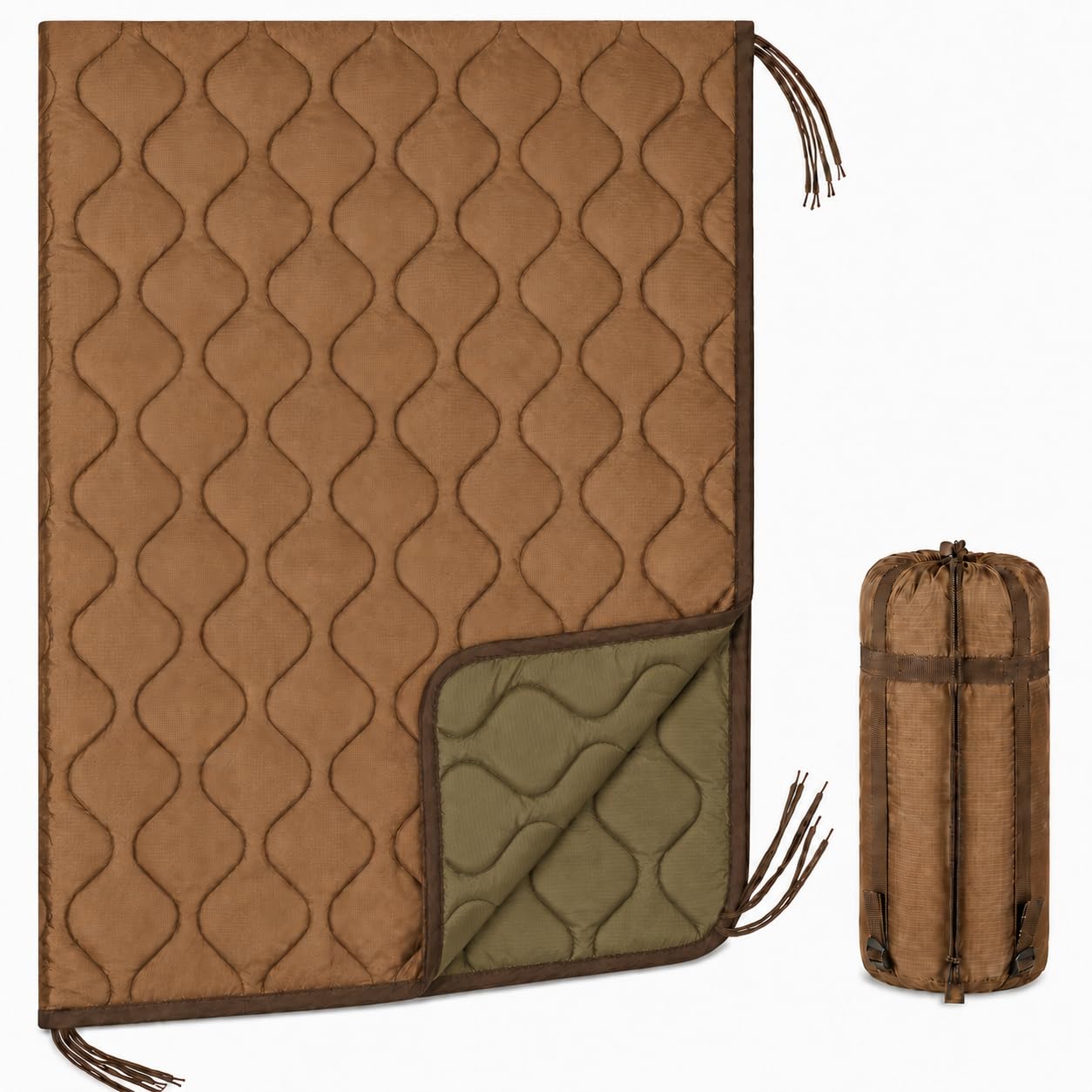
Eight pairs of tie cords run around the edge of the Woobie, and that detail turns a blanket into gear. Tie two corners to a tarp ridge and it hangs as a windbreak; run the cords through a poncho and you have a rough shelter; loop it around your shoulders and it stays there while both hands are free for a rod or a mug. At 62 by 82 inches it covers a full-grown adult from chin to boots, which is more than most packable blankets manage.

Packed in its compression sack it weighs 1.75 pounds, and that is why it is our default. The nylon shell sheds light rain and dries fast, the polyester batting is quilted in waves so it does not slide into the corners, and a damp morning does not leave it useless the way it would a cotton throw. It goes in the washing machine, too, so a muddy weekend does not end in a hand-wash chore.

Where it stops is the cold. This is a three-season layer rather than a winter bag: on a frosty night it goes over a sleeping bag or under a hammock instead of replacing one, and the water resistance here means drizzle, not a downpour. The price sits in the same band as the wool picks, which is fair for something that does three jobs at once.

Pros

  • Tie cords make it a wrap, shelter, or underquilt
  • 1.75 pounds including the stuff sack
  • Dries fast and handles light rain
  • Machine washable

Cons

  • Seams can loosen with hard use
Our verdict

The blanket we hand people first: light enough to pack, warm enough for three seasons, and quick to dry when the weather turns.

Check Latest Price
2

Best Wool Blanket

Arcturus Rainier Wool Blanket

92 /100
Angler Score Outstanding

Key details

Care
Machine wash, line dry
Size
88" x 64"
Weight
4.5 lb
Material
70% wool, 30% polyester
Check Details on Amazon

Cold is the point of the Rainier, and four and a half pounds is what that costs you. That is heavy for a camping blanket and exactly right for a cold one: the 70 percent wool, 30 percent polyester weave is dense enough to hold heat through a long night, and unlike synthetic fill it keeps insulating once the air turns damp. At 88 by 64 inches it covers a tall adult with room to spare, and two people can sit under it without a tug-of-war.

We expected a surplus-blanket itch and did not get one. The blend is soft against the skin, the edges are lock-stitched so they do not fray, and it goes in the machine on cold with a line dry, as the care label asks. It does smell like wool when you unwrap it, more so if it has been sitting in a bag, and a day on the line before your trip settles most of that.

What the weight costs you is bulk. Rolled up it takes real space in a trunk, and there is no version of it that belongs in a backpack, so think of it as the blanket that lives in the truck or the tent. For frost, a campfire, or a cold bed at home, nothing else in this group comes close.

Pros

  • Wool blend insulates even in damp air
  • 88 by 64 inches fits a tall adult
  • Machine washable and softer than surplus wool
  • Lock-stitched edges resist fraying

Cons

  • Heavy and bulky at 4.5 pounds
  • Sheds fiber, especially when new
Our verdict

If cold is the reason you are shopping, this is the warmest blanket here, and its wool keeps working when the air turns damp.

Check Latest Price
3

Best for Wet Ground

Down Under Outdoors Stadium Blanket

94 /100
Angler Score Outstanding

Key details

Size
82" x 55"
Weight
2.43 lb
Backing
Waterproof film
Face Fabric
350 GSM fleece
Check Details on Amazon

Two faces, two jobs. A 350 GSM fleece sits on one side and a waterproof film on the other, so laid fleece-up on wet grass it makes a dry picnic, and draped film-out it keeps wind and drizzle on the outside while the soft side does the warming. That sandwich is why it earned a place here: most blankets handle one of those situations and not the other.

The toggle and loop are a small feature we ended up appreciating more than we expected. Clip it around your shoulders and it stays on as a cape while you hold a thermos or a pair of binoculars, which sounds trivial until you have spent a cold morning trying to keep a blanket up with one elbow. At 82 by 55 inches it is sized for two people sitting or one person wrapped, and it rolls into a bundle that lives behind a car seat without complaint.

It is a sitting blanket rather than a sleeping one. The job is the bench, the picnic, the wet log by the water, not eight hours on a pad, and that is a narrow brief it fills better than anything else in this group. The wind blocking is the part that caught us out; a backed blanket should not cut a cold breeze the way this one does.

Pros

  • Waterproof backing keeps ground moisture out
  • Toggle and loop make a hands-free cape
  • Blocks wind on exposed sidelines
  • Rolls into a compact carry bundle

Cons

  • Medium-weight fleece alone will not carry a frosty night
Our verdict

For wet ground and cold benches, this is the one we reach for: a waterproof back, a warm fleece face, and a cape toggle that keeps your hands free.

Check Latest Price
4

Best for Backpacking

Get Out Gear Down Blanket

91 /100
Angler Score Outstanding

Key details

Fill
650 fill power down
Weight
1.1 lb
Water Resistance
Water resistant
Check Details on Amazon

Pound for pound, down is the warmest thing you can put in a pack, and this quilt is the lightest way to stay warm in this group. It weighs 1.1 pounds, stuffs into its own sack, and 650 fill power down puffs back up when you shake it out. Loft is what traps heat, so a quilt that refuses to fluff is just fabric.

Warmth lands where a one-pound quilt should: summer nights, shoulder-season evenings, a boost over a sleeping bag when the forecast undershoots. The shell is water resistant, which covers condensation inside a tent and a bit of drizzle on the walk out. Down itself does not enjoy being soaked, so treat this as a layer to keep dry rather than a blanket to leave out overnight.

The trade is price and toughness. This is the most expensive of the packable options here, and it is the one we handle most carefully around sharp ground and zipper teeth. If your trips are measured in miles, that is a fair trade; if the blanket mostly rides in the trunk, the Wise Owl synthetic quilt costs less and takes more abuse.

Pros

  • 1.1 pounds and stuffs into a small sack
  • 650 fill power down lofts quickly
  • Water-resistant shell handles condensation
  • Warm for very little weight

Cons

  • Most expensive of the packable picks
  • Needs to stay dry to keep its loft
Our verdict

For backpacking, this is the one: a pound of down that turns a cold evening comfortable without costing you pack space.

Check Latest Price
5

Best for Tall Campers

Snugpak Jungle Blanket XL

96 /100
Angler Score Outstanding

Key details

Care
Hand wash only
Size
90" x 72"
Weight
2 lb
Water Resistance
Water repellent
Check Details on Amazon

Ninety by seventy-two inches makes this the longest blanket in the group, enough for a six-foot camper to pull it over their shoulders without a fight and wide enough to work as an overquilt inside a hammock. If you have been making do with something that stops at your chest, that extra length is the reason to look here.

At two pounds it packs down to almost nothing, and the polyester shell is water repellent, so a damp evening does not soak straight through. It is built for warm, humid climates, and the jungle in the name is honest: it takes the chill off a summer night without turning into a sweatbox. On a frosty trip it becomes a layer over a bag rather than a blanket on its own.

What it earns its price with is length and packed bulk together. Of the blankets here, this is the one that pairs that much coverage with that little space in a bag, which is worth paying for if you are tall or sleep in a hammock. Average height and a car-camping habit, and the shorter picks do the same work for less.

Pros

  • 90 by 72 inches covers tall sleepers
  • Packs down small for a 2-pound blanket
  • Water-repellent shell handles damp
  • Breathable enough for humid summer nights

Cons

  • Hand wash only
  • The priciest blanket in this group
Our verdict

Tall campers and hammock sleepers get the most from this one: 90 inches of coverage that still packs down small.

Check Latest Price
6

Damp Camps

Wise Owl Outfitters Camping Blanket

93 /100
Angler Score Outstanding

Key details

Size
78" x 55"
Shell
Ripstop nylon
Weight
1.8 lb
Packed Size
17" x 6.5"
Check Details on Amazon

Snaps along the edges are the detail that makes this quilt more useful than its spec sheet suggests. Close them and it becomes a wrap you can wear; add the corner loops and it hangs under a hammock as an underquilt. For one piece of gear, that is a lot of jobs.

Seventy-eight by fifty-five inches is a one-person quilt, and 55 inches across is snug on broad shoulders, so check that width against how you sleep. The fill is a synthetic down alternative inside a ripstop nylon shell with a water-resistant coating, which tolerates wet ground and a little drizzle in a way down does not, at the cost of packing to 17 by 6.5 inches rather than to nothing.

Compared with the Get Out Gear quilt, you carry more weight and get a tougher shell and a lower price. Wash it in the machine and air dry it, since a hot tumble kills the loft that does the warming. For a first camping blanket, or one that gets lent out and dragged around, that is the better deal.

Pros

  • Edge snaps and loops make a wrap or underquilt
  • Water-resistant ripstop shell
  • Tolerates damp better than down
  • Machine washable

Cons

  • Narrow 55-inch width for broad shoulders
Our verdict

A snapped synthetic quilt that shrugs off damp camps and rough handling, and the easiest first camping blanket to recommend on price.

Check Latest Price
7

Tent and Van

PuTian Merino Wool Blanket

94 /100
Angler Score Outstanding

Key details

Care
Machine wash
Size
87" x 63"
Material
25% wool, 72% polyester, 3% nylon
Check Details on Amazon

Read the fabric line before you fall for the pattern: 25 percent wool, 72 percent polyester, 3 percent nylon. This is a polyester blanket with wool in it, and once we stopped expecting otherwise the rest made sense. It is soft in a way pure wool rarely is, it goes in the machine, and there is none of the wet-sheep smell some wool blankets arrive with.

What it does well is size and comfort. At 87 by 63 inches it covers a tall adult or two people on a couch, the loom-woven fabric is dense enough to feel substantial, and the striped pattern and contrast stitching look better than most gear blankets inside a van or a cabin. It is warm for a cool evening, and no fire retardants are added, which matters if treated wool is what puts you off.

What it will not do is behave like wool in bad conditions: a quarter wool content does not insulate the way the Rainier does once the air turns wet, so this is a blanket for the tent, the van, and the couch at home rather than a sleeping system. What you get instead is a genuinely soft, genuinely large blanket that survives a washing machine, and that is a fair trade for three seasons of car camping.

Pros

  • 87 by 63 inches covers a tall adult
  • Soft, dense weave that does not itch
  • Machine washable and low-odor
  • Patterned finish looks good indoors and out

Cons

No notable drawbacks to flag.

Our verdict

We recommend it for anyone who wants a big, soft blanket that looks good in a van or a tent and washes without fuss.

Check Latest Price
8

Benches and Picnics

Tirrinia Waterproof Outdoor Blanket

91 /100
Angler Score Outstanding

Key details

Care
Machine wash
Size
59" x 51"
Lining
Sherpa fleece
Backing
Waterproof polyester
Check Details on Amazon

Fifty-one by fifty-nine inches is the number to check before you order, because this is a lap and ground blanket, not something you sleep under. Read that way it makes sense: a sherpa fleece face, a waterproof polyester back, and a roll-and-carry flap with a handle, so it sits behind the seat instead of unrolling itself across the trunk.

Its job is the cold bench, the wet grass, and the windy sideline. The waterproof back stops ground moisture coming through, the fleece face is warm against your legs, and it rolls small enough to carry in one hand. Set against the Down Under, it is smaller and simpler, with no cape toggle and less coverage for two people, but it does the same core job for less money and takes up less room.

Pros

  • Waterproof backing for wet ground
  • Sherpa fleece face is warm against legs
  • Rolls into a handled bundle
  • Small enough to store in the car

Cons

  • Velcro closure and carry handle wear first
Our verdict

The budget pick for cold benches and wet grass: small, waterproof, and easy to keep in the car.

Check Latest Price

How We Tested Camping Blankets From Fire Pit to Tent Floor

We started with a shortlist of blankets sold for camping, backpacking, and stadium use, then filtered out anything with vague sizing, flimsy bindings, or a weight that made no sense for the warmth it promised. We landed on 14 blankets and spent eight months using them the way they’d actually be used: around a backyard fire pit on cool evenings, on two weekend car-camping trips, through a rainy picnic, and on tent floors when the overnight temperature dipped into the low 40s.

Each blanket got weighed on a kitchen scale and packed into its own stuff sack or folded into a car trunk, because a blanket that fights its storage is one you stop bringing. We measured them flat and sat two adults under each to see whether there was enough room without a tug-of-war, then noted whether the edges stayed put or curled up. Around the fire, we watched for sparks and melted pinpricks; in the tent, we paid attention to whether warmth came through evenly or left cold spots at the shoulders and feet.

Durability and stitching got checked by hand and by wash: we tugged seams, looked for loose threads, and noted whether bindings, quilting, or wool fibers clumped or shed after cleaning. Odor got a simple sniff test after a damp morning and again after airing out, with wool blankets getting extra scrutiny for that sheepy smell. We also compared wool content and fill on the labels, then asked whether each blanket earned its keep relative to its size, weight, and cost. The best ones were the blankets we reached for without thinking—warm, packable enough, and built to survive more than one season.

How to Choose a Camping Blanket

Start With the Coldest Night You Actually Camp

A camping blanket is a warmth decision before it is anything else. If your season runs into frost, buy the heavy wool and accept the bulk; the Arcturus Rainier holds heat in a way nothing light can match. If you camp from late spring to early fall, a packable quilt is the better use of your money, because you are paying for warmth you will actually need rather than weight you will carry and never use. Be honest about the night, not about the brochure.

Weight and Packed Size Decide Where It Lives

Blankets in this group run from about a pound to four and a half, and that spread is the difference between a pack item and a car item. The trap is the word compact: in a listing it usually means the blanket folds into its own bundle, not that it vanishes into a daypack. If the blanket has to be carried, stay near two pounds and read the packed dimensions. If it rides in the trunk, buy the heavier one and enjoy the warmth.

Water Resistance Comes in Three Flavors

A water-resistant coating on a nylon shell handles condensation and light drizzle and still lets the fabric breathe. A waterproof film backing, the approach on the Down Under and the Tirrinia, keeps ground moisture out completely, but it does not breathe, so it belongs between you and the wet rather than wrapped tight around a sleeper. Wool is the third case: not waterproof, but it keeps insulating when damp, which matters more on a foggy morning than any rating.

Wool, Down, or Synthetic, and the Care That Comes With Each

Wool is warmest when wet, heaviest to carry, and usually arrives with a smell that needs airing. Down is lightest for the warmth and least forgiving of a soaking or a sharp rock. Synthetic fill sits in the middle: heavier than down, cheaper, and untroubled by damp. Then read the care line before you commit, because hand-wash-only and air-dry-only are real constraints on something that spends its life on the ground.

Frequently Asked Questions

Final Verdict

If we are packing one blanket and we do not know what the weather will do, it is the USGI Woobie: light, fast to dry, and adaptable enough to be a wrap, an underquilt, or an extra layer over a bag.

Buy the Arcturus Rainier instead if your camping runs cold and wet and you have room in the car. It is warmer, it keeps working when damp, and it weighs more than twice as much.