Best Camping Bowls of 2026

A camping bowl is a tradeoff you can hold in one hand. Collapsible silicone flattens into a pack and then flexes under a spoon; titanium and stainless steel shrug off abuse and then turn into a hot pan against your palm; insulated models keep soup warm and eat the space a whole meal would have used. What you actually want is a bowl that holds heat in the food rather than your fingers, survives a drop onto granite, and rinses clean in cold water at the end of a long day.

I've eaten oatmeal out of a mug and chili straight from a rehydrating pouch enough times to be picky. Over the past six months my team and I have carried 14 bowls from campsite tables to tailgates to my own desk drawer, weighing each one, packing it with a lid on, cleaning it with a rag and cold water, and asking whether the cheapest option did the same job as the priciest. Size is the number most people get wrong: too small and you're scraping for second helpings, too big and it's dead weight in the pack. The picks below survived all of it.

1

Best Overall

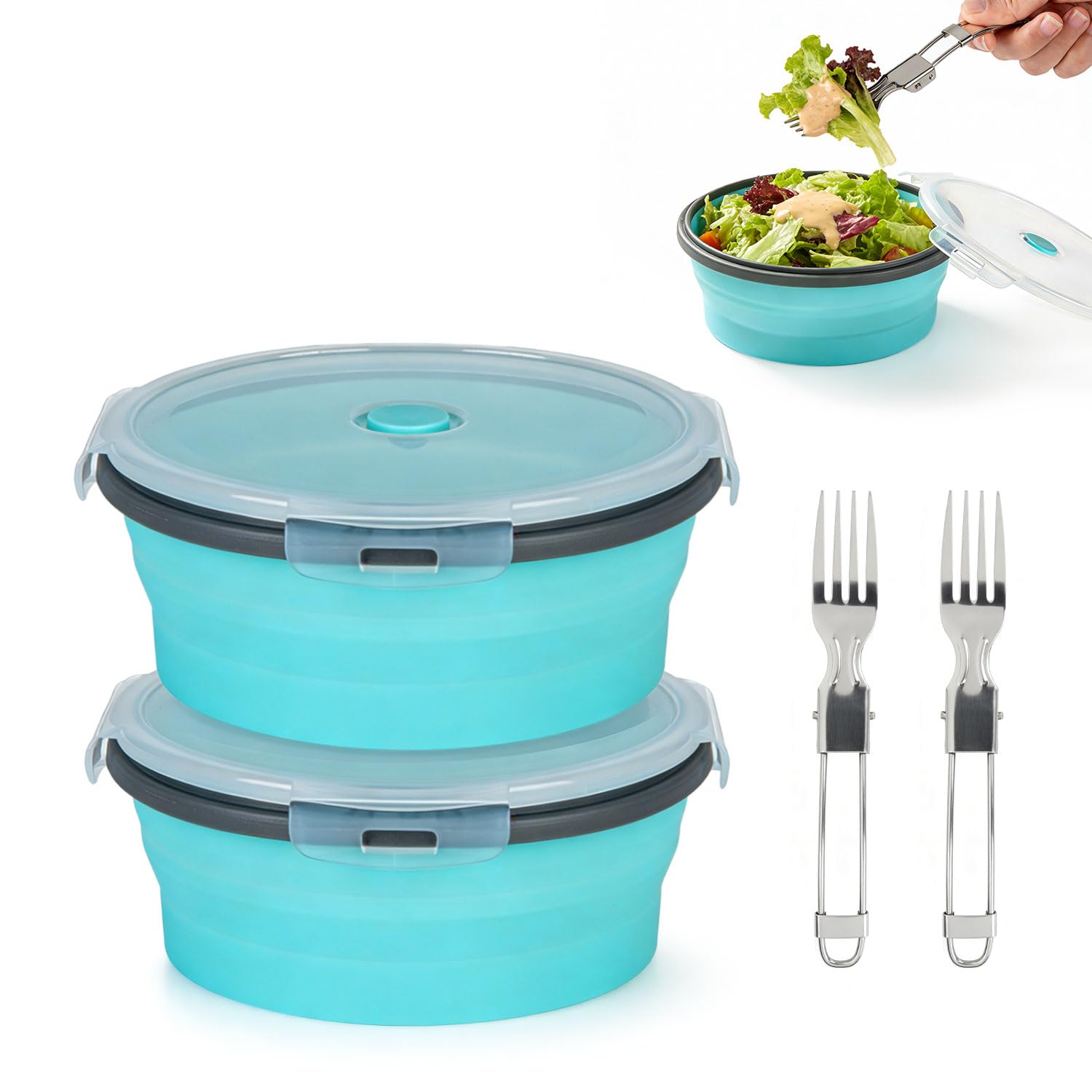
ColorCoral Collapsible Bowl Set

92 /100
Angler Score Outstanding

Key details

Capacity
1200 ml / 42 oz each
Material
Silicone
Dimensions
7.08"W x 2.95"H
Set Includes
Two bowls with lids and forks
Check Details on Amazon

Seven inches across and under three inches deep when open, each bowl takes 42 ounces, enough that a two-serving dehydrated dinner goes in with room to stir instead of sloshing over the rim. Empty, it presses down into a flat disc, which is why we keep the pair in the camp box rather than on the kitchen shelf. The set covers two people, or one person eating in courses, and includes a fork for each bowl.

We think it is the best all-round bowl here because it does both halves of the job: it holds a full portion, and it disappears when the meal is over. The lid snaps onto a rigid brim ring, so leftovers can go back into the cooler instead of a zip-top bag, and the vent button pulls open when you want to reheat. Silicone is also quiet in a camp kitchen and stays cool enough to hold while the oatmeal is still steaming.

Lifted by the rim, though, the sides give: the fold seam is not stiff enough to keep a full bowl of soup rigid, so carry it with a hand under the base or eat sitting down. That is the one compromise, and it buys a bowl that flattens almost to nothing. Cleaning takes a wipe or a quick rinse, and nothing clings to the surface the way it does to bare metal.

Pros

  • Collapses flat for packing
  • 42 ounces holds a full pouch dinner
  • Vented snap lid keeps leftovers in
  • Wipes clean with a rinse

Cons

No notable drawbacks to flag.

Our verdict

For most campers this is the bowl to buy: it holds a full meal, seals with a vented lid, and packs down flat, and you get two of them.

Check Latest Price
2

Best Ultralight

Snow Peak Titanium Trek Bowl

91 /100
Angler Score Outstanding

Key details

Care
Dishwasher safe
Weight
1.6 oz
Capacity
600 ml
Material
Titanium
Check Details on Amazon

This is the bowl for the person who weighs their spoon. Titanium puts the whole thing under two ounces, and nothing else here comes close: it slides into a pack pocket beside a stove and you forget it until dinner. If you are shaving grams for a multi-day carry, that is the entire argument, and it is a good one.

At 600 ml it is sized for oatmeal, noodles, and a side of rice rather than a full dinner, which bothered us less than we expected. A small bowl you actually carry beats a big one left in the car. Titanium earns its reputation in use, too: no metallic taste, no stain from last night's chili, and a dent can be pressed back out with a thumb.

What it will not do is insulate. Fill it with boiling soup and the walls and rim get hot fast, hot enough that you want a bandanna or a glove underneath; hold it by the lip, give it a minute, and it is fine. The dishwasher-safe finish and Snow Peak's lifetime guarantee are the quiet bonuses, since a bowl this thin is one you scrub, drop, and keep for a decade.

Pros

  • Under two ounces on the trail
  • Titanium holds no taste or stains
  • Dents press back out

Cons

  • Hot food makes the bowl hot to hold
Our verdict

For backpackers counting grams, this is the bowl: under two ounces of titanium that survives a pack full of gear. Wrap a bandanna around it when the soup goes in.

Check Latest Price
3

Best Budget

MSR Alpine Nesting Bowl

92 /100
Angler Score Outstanding

Key details

Care
Hand wash only
Weight
3.04 oz
Diameter
5.8 inches
Material
Stainless steel
Check Details on Amazon

Set this beside the titanium bowl and the differences are easy to price out: about an ounce and a half more weight, a few dollars less, and the same willingness to be scraped, stacked, and dropped. The MSR is 5.8 inches across with a rolled lip that takes a knock without folding, and at three ounces it is light enough that we never thought about it while packing.

Where it earns its place is nesting. It drops inside MSR's Alpine cooksets alongside a stove and a fuel canister, so a solo kit becomes one bundle instead of three, and the steel does not hold the taste of last night's curry. It is also the bowl we hand to a kid or a friend who is hard on gear, because there is nothing delicate about it.

Expect a soup-and-oatmeal bowl rather than a dinner plate. It reads smaller out of the box than it does in photos, and a full rehydrated meal will fill it to the brim; for cereal, chili, and a side of rice it is exactly right. The finish rinses clean in seconds, and it costs less than anything else in this group.

Pros

  • Nests inside MSR Alpine cooksets
  • Rolled lip resists dents
  • Rinses clean in seconds
  • Least expensive bowl here

Cons

  • Hand wash only, unlike the rest here
Our verdict

If you want stainless without the titanium bill, start here: it nests in a cookset, shrugs off knocks, and costs the least of the group.

Check Latest Price
4

Best Insulated

Hydro Flask Outdoor Kitchen Bowl

0 /100
Angler Score Fair

Key details

Lid
Press-in lid included
Care
Dishwasher safe
Capacity
1 qt
Insulation
Double-wall
Check Details on Amazon

A pasta salad that has to survive a two-hour drive to a campground pavilion is a different problem from a bowl of oatmeal at dawn, and this is the bowl built for the first one. Double walls hold the cold in and keep your hands comfortable on the carry, and the press-in lid turns it into a container for the drive rather than something you balance on your lap.

We rate it as the best insulated bowl here for cold food and for serving. A quart is sized for one or two people, so it works as a salad bowl, an ice-cream bowl, and a leftovers container without changing shape. The stainless interior does not pick up flavor, which matters more than it sounds when tomorrow's cereal should not taste of tonight's salsa, and it goes into the dishwasher at the end of the weekend.

It is a serving bowl for one or two, not a mixing bowl for a crowd; feeding six means buying two. Where it beats everything else here is the table, because it looks like something you would bring to a neighbor's house and the steel carries no memory of the last dish.

Pros

  • Double walls keep cold food cold
  • Press-in lid holds food for transport
  • Dishwasher safe bowl and lid
  • Looks right on a serving table

Cons

  • Lid can pull tight on cooling food
Our verdict

For salads and cold sides that have to arrive still cold, this is the insulated bowl we reach for: a quart serves two and looks good doing it.

Check Latest Price
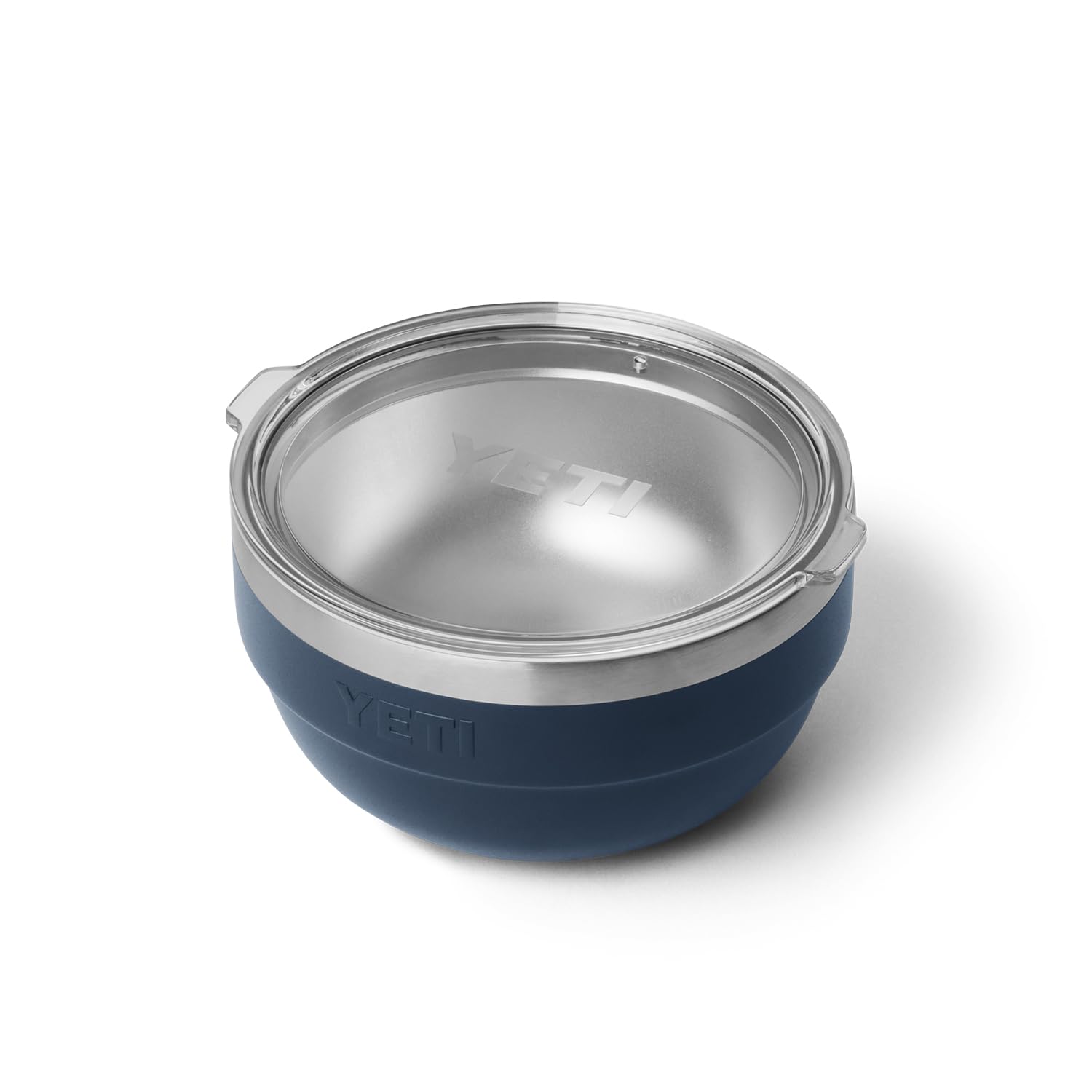
5

Hot Food

YETI Rambler Bowl

90 /100
Angler Score Outstanding

Key details

Capacity
1 qt, 4 cups, 32 oz
Dimensions
6.49"W x 5.98"D x 3.41"H
Insulation
Double-wall vacuum
Empty Weight
1.06 lb
Check Details on Amazon

Just over a pound, empty. That is the number that decides where this bowl goes: it is roughly five times the weight of the MSR Alpine and ten times the titanium one, which makes it a car-camping and potluck bowl rather than something you carry up a hill.

What the weight buys is the most serious insulation here. A double-wall vacuum sits between your hands and the food, so a bowl of chili is still hot at the last spoonful and the outside stays comfortable to hold. The lid presses in, the bowl nests with other Rambler bowls, and the 18/8 steel is dishwasher safe once the weekend is over.

We like it best for the meal that is the event: a campground birthday, a potluck, a pot of queso that has to stay scoopable for an hour. Between trips it ends up on our own kitchen table holding fruit, which is more than we can say for the titanium bowl. As an everyday eating bowl it is overqualified, heavier in the hand than steel and wide enough that a modest portion looks lost in it.

Pros

  • Vacuum insulation holds heat to the last bite
  • Stays comfortable to hold with hot food
  • Nests and stacks with its lid
  • Dishwasher-safe 18/8 stainless

Cons

  • Priciest bowl in this group
Our verdict

Buy it for the table, not the trail: the vacuum insulation holds heat longer than anything else here, and the weight only matters if you are the one carrying it.

Check Latest Price

How We Tested 14 Camping Bowls, From Campsite to Desk Drawer

The shortlist came out of several hundred owner reviews, catalogued by complaint: bowls that flexed and spilled, lids that popped off inside a pack, rims that burned fingers. From there I pulled 14 bowls across four formats — collapsible silicone, bare titanium, nesting stainless steel, and vacuum-insulated — and cut anything that couldn't hold a two-cup serving or nest inside a standard pot.

Testing ran six months, early spring through the end of summer: weekend car-camping trips, a two-week stretch of backpacking dinners, and a less glamorous run of desk lunches. Every bowl ate the same three meals — oatmeal, chili, and instant noodles — because those cover thin liquid, thick liquid, and something you have to stir hard.

Packed weight and packed size came first: we weighed every bowl empty and again with a lid and fork inside, then stuffed it into the same 40-liter pack to see what it crushed against. For heat transfer, we filled each one with boiling water and held the outside for a count of ten. Lid seal was tested lid-down in a stuff sack riding in the back of a truck for a full day. Cleaning meant cold water, a scrap of camp soap, and no scrubber — silicone seams trapped oatmeal in a way the bare metal ones never did. Durability came from dropping each bowl onto gravel from waist height and checking rims and bases for dents. And on value, we kept asking whether the cheapest bowl did the same job as the most expensive one; more often than we expected, it did.

How to Choose a Camping Bowl

Start With Packed Size, Not Capacity

Three designs cover nearly every camp bowl. Collapsible silicone presses down into a flat disc, nesting steel slips inside a cookset, and insulated bowls stack but claim real room in a camp box. A collapsed silicone bowl still has a rigid brim ring, so check the folded stack height rather than the diameter; collapsible describes the sides, not the rim or the lid.

If you cook and eat out of one pot on short trips, a nesting bowl adds little. If you are feeding two or three people out of a car, the silicone set wins the space argument almost every time.

Match Capacity to the Meal You Actually Cook

Camp bowls quietly turn into serving bowls. A 42-ounce bowl takes a full rehydrated dinner with room to stir, a 600 ml bowl is a side or a bowl of oatmeal, and a 1-quart insulated bowl is sized for one or two people at a table. Think about the meal rather than the number.

Pouch dinners that rehydrate into a full portion want the large bowl. Coffee, cereal, and a shared bag of trail mix are easier in a smaller metal one that nests further into your kit.

Single-Wall or Insulated: Heat, Weight, and Your Hands

Single-wall titanium and steel are light and nearly indestructible, and they pass heat straight through: fill one with boiling soup and the rim gets hot enough to sting. A bandanna or a glove solves it, and that is the toll for a bowl weighing a couple of ounces.

Insulation changes the arithmetic both ways. A double-wall vacuum bowl keeps chili hot through a long supper and stays comfortable to hold, but the YETI weighs just over a pound doing it. Pay for insulation when food sits out or travels; skip it when you eat within ten minutes of boiling water.

What a Lid Is Actually For

A lid does three jobs: it covers food while it rehydrates, carries leftovers, and keeps splatter off a shared camp table. A snap lid with a vent button, like the one on the ColorCoral set, lets steam out in a microwave without being lifted off. Press-in lids hold food for a drive but are not a dry-bag seal, so stand a full bowl upright and keep it off the bottom of the pack.

Before you trust any lid, fill the bowl with water, close it, and shake it over the sink. Thirty seconds tells you more than any claim on the box.

Frequently Asked Questions

Final Verdict

For most campers, the ColorCoral set is the one to buy: two bowls that hold a full meal, seal with a vented lid, and press flat enough to vanish into a duffel. It is the rare case where the cheapest-feeling material makes the most useful bowl.

Change the trip and the answer changes. Carrying your bowl for miles makes the Snow Peak titanium bowl the ultralight choice; wanting stainless that disappears into a cookset makes the MSR Alpine the value pick. Choose the YETI when the meal is the event and the car does the carrying.