Best Camping Seat Pads of 2026

A camping seat pad looks like the simplest thing in your pack until you're eating dinner on a cold log. The category splits along one line: closed-cell foam that can't leak and can't really fail, and air-filled pads that feel like a couch for the first hour. What a decent pad fixes is small and specific — it keeps the ground's cold and rocks out of your tailbone, so the fire is worth sitting at for another hour.

I've carried both kinds for years, and over the past eight months my team and I have put 14 pads through trail lunches, campfire nights, and one very long doubleheader. The pattern: the pads you forget you're carrying get used, and the plush ones that need coaxing stay in the car. Thickness turns out to matter less than what the foam does under a hip bone, and a valve that holds air until morning is worth more than an extra half inch. The picks below finished the season without a leak, a tear, or a grudge.

1

Best Overall

Therm-a-Rest Z Seat

96 /100
Angler Score Outstanding

Key details

Fill
Crosslinked polyethylene
Weight
2.08 oz
Thickness
0.75 inches
Dimensions
16 x 13 inches
Check Details on Amazon

Two ounces is the number that matters here, but the Z Seat earns its place because that number comes with real insulation. The closed-cell foam is 0.75 inch thick and measures 16 by 13 inches, so it separates you from cold rock, wet logs, and metal bleachers without asking for much pack space. We slid it into a side sleeve and forgot about it until lunch.

What we appreciate most is how little ceremony it requires. There is no valve to check, no inflation dance, and no seam to worry about. The egg-crate surface gives a little grip, and the bungee keeps the accordion folds together when you are moving. On a cold morning, the difference between sitting on this and sitting on bare ground is immediate.

We also used it as a knee pad when filtering water and as a dry place to set a pack; the closed-cell foam does not care about rocks or roots. That versatility is why it stays in the pack even when we are not planning to sit. The three-year limited warranty is a small plus, though this is the kind of gear that rarely needs paperwork.

Pros

  • Two-ounce closed-cell insulation
  • Puncture-proof foam handles rough ground
  • Bungee keeps the accordion folds together

Cons

  • Too narrow for some larger sitters
Our verdict

For most campers, this is the pad to buy: two ounces of closed-cell foam that insulates, survives rough ground, and disappears into a pack.

Check Latest Price
2

Best Sustainable Foam

NEMO Chipper

87 /100
Angler Score Excellent

Key details

Material
Reclaimed closed-cell foam
Warranty
Lifetime
Packed Profile
Hexagonal nesting
Weight Capacity
250 lb
Check Details on Amazon

Reclaimed foam scraps give the Chipper its one-of-a-kind surface, and the story behind them is the first thing we noticed. The pad is made entirely from foam diverted from the waste stream, so no two look alike. We like that the reclaimed foam does not feel like a compromise: the hexagonal nesting pattern gives it a springy, supportive feel and helps it fold into a compact block.

The square surface is sized for one person, and the 250-pound weight recommendation is worth checking against your own use. The closed-cell foam does not absorb water, so it works on damp ground, and the removable loop gives you a way to clip it to a pack. The lifetime warranty is the kind of backup we want on a pad that will see abrasive rock.

What we came back to is the feel: the reclaimed foam has a little more spring than a flat IXPE pad, and the hexagonal pattern keeps it from packing into a hard brick. It is still a simple seat, but it is a thoughtfully made one. For a day hike where you want a dry, distinctive place to sit, that is enough.

Pros

  • Reclaimed closed-cell foam
  • Hexagonal nesting packs compactly
  • Lifetime warranty

Cons

  • Costs more than basic foam pads
Our verdict

Choose the Chipper if you want a foam pad with a lighter environmental footprint and do not mind paying for the reclaimed-foam story; it is a durable, compact seat for day hikes.

Check Latest Price
3

Best Extra Cushion

Teton Skyline

87 /100
Angler Score Excellent

Key details

Weight
6.4 oz
Inflation
Self-inflating
Thickness
1.5 inches
Inflated Size
18 x 12 inches
Check Details on Amazon

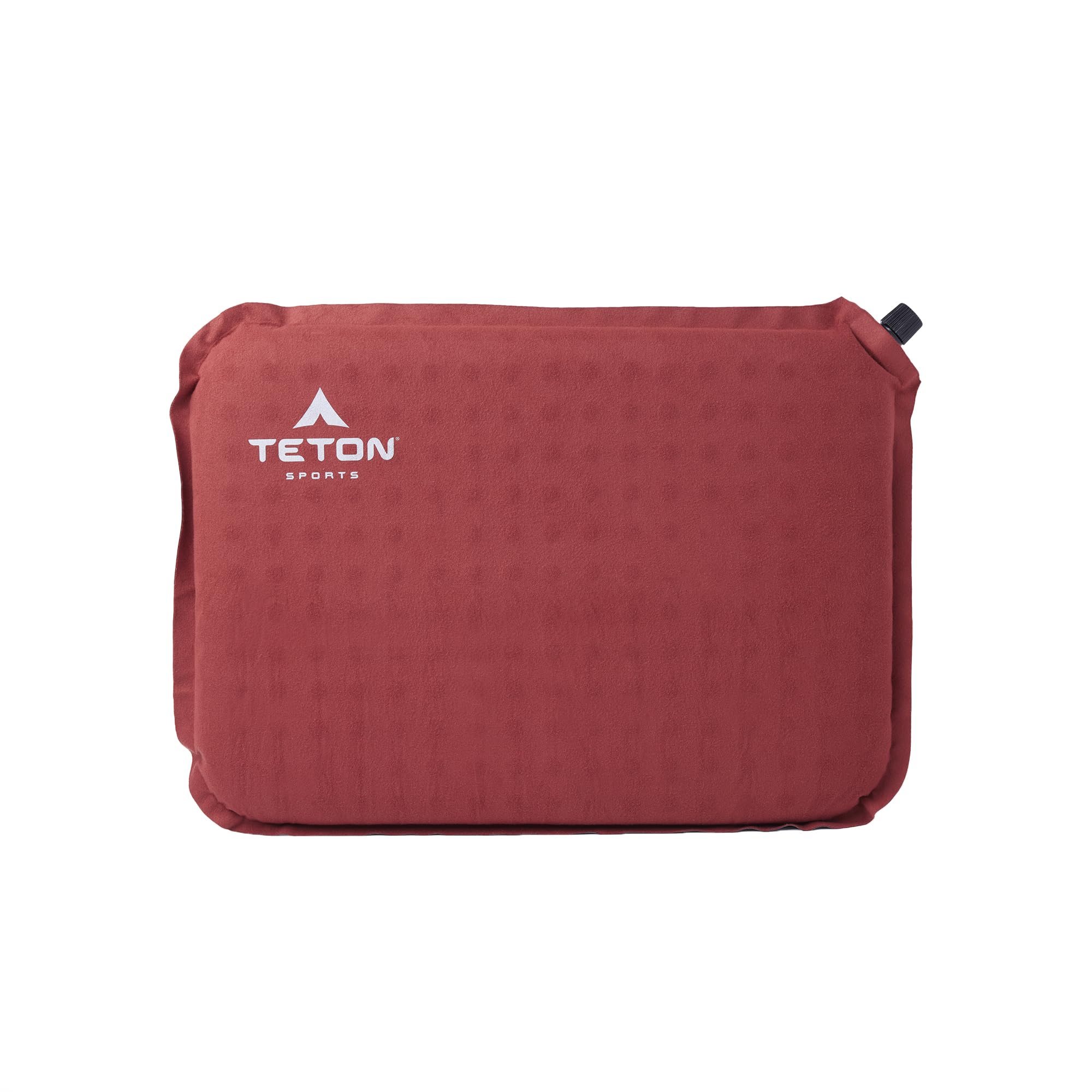
A 1.5-inch foam core and an 18-by-12-inch surface make the Skyline the plushest seat here on paper. The self-inflating valve promises a taller, softer perch than a closed-cell pad, and we reached for it when the plan involved sitting for hours rather than a quick trail break.

Twist the valve and the foam pulls air in; a couple of breaths top it up. The microfiber cover feels softer against bare legs than the foam pads, and the stuff sack keeps it from unrolling in transit. At 6.4 ounces, it is still light enough for a daypack.

Air retention is the caveat we keep in mind. Self-inflating cushions can need a few breaths to reach full height, and a valve that does not seal leaves you on a soft, leaky square. We test the valve at home before packing it, and we treat the Skyline as a car-camping and bleacher seat first.

The payoff is comfort: the extra height keeps hips and tailbone off hard benches, and the foam holds its shape through a long afternoon. On a hard bench, that changes the whole afternoon.

Pros

  • 1.5-inch foam cushion
  • Self-inflating valve is quick to top up
  • Soft microfiber cover
  • Stuff sack included

Cons

  • Heavier than foam pads
Our verdict

The Skyline is for campers who want a plusher, taller seat and will accept an inflatable that needs a valve check before every trip.

Check Latest Price
4

Best Budget Foam

REDCAMP Foam Seat Pad

87 /100
Angler Score Excellent

Key details

Weight
1.92 oz
Material
IXPE foam
Thickness
0.6 inches
Dimensions
16.4 x 11.2 inches
Check Details on Amazon

Egg-nest foam and a sub-two-ounce weight make this REDCAMP pad an easy budget choice. It folds accordion-style into a small packet, and the IXPE surface traps a little air for insulation. We kept one in a pack side pocket and barely noticed it was there.

The 16.4-by-11.2-inch surface is wide enough for most adults, and the 0.6-inch foam is soft enough for a lunch stop without turning into a pack hog. The accordion folds are easy to open with one hand, and the pad lies flat on uneven ground.

What we keep coming back to is the value: the egg-nest surface adds warmth without bulk, and the folds are quick to manage with cold hands. It is the pad we hand to a friend who needs a dry seat, and the one we leave in the car for unplanned stops.

Pros

  • Under two ounces
  • Egg-nest foam adds insulation
  • Folds small accordion-style

Cons

  • Thin on very hard ground
  • Softer foam can wear at the folds
Our verdict

This is the foam pad we hand to anyone who wants reliable insulation and a tiny packed size without spending much.

Check Latest Price
5

Best Packability

Klymit V Seat

83 /100
Angler Score Excellent

Key details

Weight
2.6 oz
Material
75D polyester
Packed Size
3.5 x 1.5 inches
Inflated Size
14 x 14 inches
Check Details on Amazon

Deflated to 3.5 by 1.5 inches, the V Seat changes where you can keep a seat pad: a jacket pocket, a glove box, a tiny lid pocket. We carried it in a daypack without dedicating a compartment to it.

Inflated, it is a 14-by-14-inch square with V-shaped chambers that keep the air from pooling in one spot. A few breaths get it firm, and the 75D polyester feels more substantial than the packed size suggests. On a metal bleacher or a cold log, it takes the edge off.

The trade-off is that this is a short-sit cushion. The 14-inch square leaves more of the seat exposed, and the air chamber does not insulate like closed-cell foam. We treat it as a travel and stadium pad, not the one we rely on for a long, cold lunch stop.

What settles it for us is the packed size. When every ounce and every inch of pack space is spoken for, the V Seat is the pad that comes along. For a cold, all-day sit, we choose foam.

Pros

  • Packs smaller than a lighter
  • A few breaths inflate it
  • V-chambers spread support

Cons

  • Can lose air with repeated use
Our verdict

Pack the V Seat when space is the hard constraint; it shrinks smaller than almost anything here, but treat it as a short-trip cushion.

Check Latest Price
6

Best Wide Surface

Sportneer Sitting Pad

84 /100
Angler Score Excellent

Key details

Cover
Oxford cloth
Weight
0.13 lbs (60g)
Thickness
0.4 inches
Unfolded Size
15.7 x 15.7 inches
Check Details on Amazon

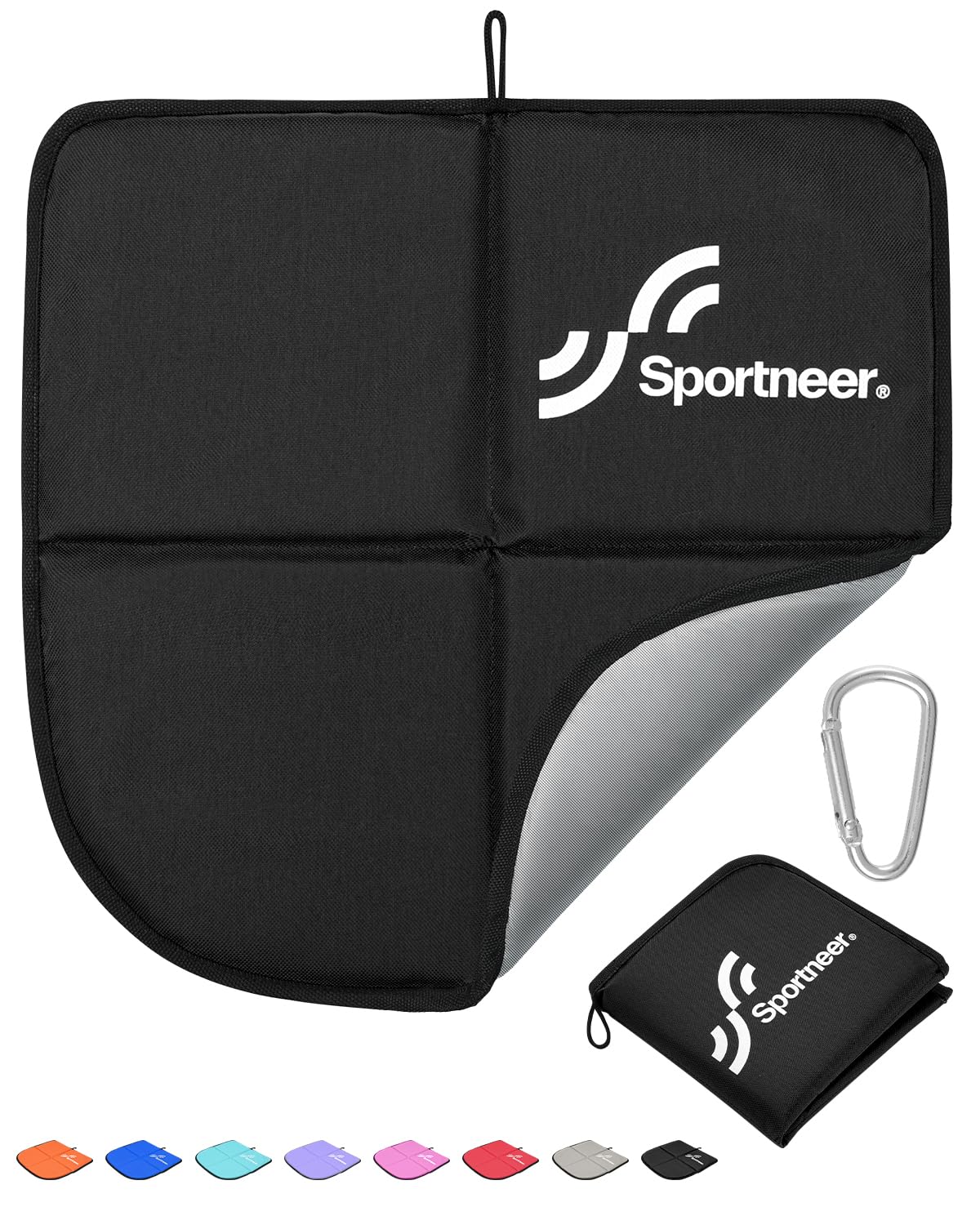
A 15.7-inch square makes this Sportneer pad the widest surface in this group, and that extra width is why we reach for it at a picnic table or on a bleacher bench. The pearl-cotton fill and Oxford cloth cover feel more like a firm mat than a plush cushion, but the size gives you room to shift.

We like the waterproof cover for wet logs and damp ground; it wipes clean and does not soak through. At 60 grams, it disappears into a bag, and the carabiner lets you clip it outside where it will not crowd your gear. The trade-off is that 0.4 inch of foam is a barrier, not a cloud.

For a wet seat or a cold bench, that barrier is exactly what you want. For a long sit on rocky ground, we add a second layer or choose a thicker pad. The square shape also covers more of a bench than an accordion foam pad, which makes it a useful spare for guests. It is the pad we leave by the door for muddy days.

Pros

  • Wide 15.7-inch square surface
  • Waterproof Oxford cloth cover
  • 60 grams with a carabiner

Cons

  • Folded packet is bulkier than its weight suggests
Our verdict

The Sportneer gives a wider, drier place to sit for very little money, making it a smart choice for bleachers, picnic tables, and wet logs.

Check Latest Price
7

Low-Visibility Hunting

FOCHIER F Seat Pad

86 /100
Angler Score Excellent

Key details

Weight
1.76 oz
Surface
Hexagonal
Material
IXPE
Item Dimensions
11.8 x 1.96 x 15.7 inches
Check Details on Amazon

Army-green IXPE gives this FOCHIER pad its low profile, and that is why we reach for it when the seat should not advertise itself. The surface blends into a duck blind or a brushy overlook, and the hexagonal texture gives it a bit more grip than a smooth foam square. The subdued color is a small thing, but it matters when you do not want a bright square of blue on the ground.

At 1.76 ounces, it is a negligible addition to a hunting pack or daypack. The 15.7-by-11.8-inch footprint is enough for a quick sit, and the elastic band keeps the folds together. We used it on wet ground and appreciated that the closed-cell surface did not soak through. The hexagonal bumps also keep it from sliding on a smooth bench.

What we like most is how little space it takes up for the coverage it gives. It folds into a flat packet, and the elastic band keeps it from fanning out in the pack. For a quick sit on wet ground, that is the whole job. We also used it as a kneeling pad while setting up a tent, and the surface stayed comfortable.

Pros

  • 1.76-ounce pack weight
  • Hexagonal IXPE surface
  • Moisture-proof on wet ground

Cons

  • Too thin for heavier sitters
Our verdict

Hunters and quiet-camp users get a low-profile, non-shiny foam pad here, though larger sitters should check the surface area.

Check Latest Price
8

Car Camping Comfort

Whispering Winds Seat Cushion

83 /100
Angler Score Excellent

Key details

Weight
7.76 oz
Thickness
2 inches
Packed Size
8 x 3.5 inches
Inflated Size
16.5 x 13 inches
Check Details on Amazon

Two inches of inflated height makes the Whispering Winds cushion the plushest inflatable here, and that is the reason we keep it in the car-camping bin rather than the ultralight drawer. The 16.5-by-13-inch surface gives you a real perch on a hard bench or a cold picnic table.

The valve is simple: open it, let the foam pull in air, and add a couple of breaths if you want it firmer. The cover is soft polyester, and the whole thing rolls into its own pouch at 8 by 3.5 inches. At 0.22 kg, it is still a small thing to toss in a tote.

We noticed the extra height most on long bleacher afternoons and around a campfire when the ground was cold and uneven. It is not the pad we choose for a fast-and-light hike, but it is the one we want when comfort matters more than grams.

What settles it for us is the balance: two inches of cushion, a small packed footprint, and a valve we can top up without a pump. For a car camp or a season of bleachers, that is a more comfortable seat than a thin foam square, and we do not mind the extra few ounces.

Pros

  • Two-inch inflated thickness
  • Self-inflates with a top-up option
  • Packs to 8 by 3.5 inches

Cons

No notable drawbacks to flag.

Our verdict

The Whispering Winds is the comfort-first inflatable here: two inches of cushion and a simple valve make it an easy seat to live with, as long as you are not counting grams.

Check Latest Price

How We Tested Camping Seat Pads

We started with listings and spec sheets for roughly 60 seat pads, sorted them by construction — closed-cell foam, self-inflating, and pure air — then cut anything whose packed size wouldn't clear a daypack's side pocket or whose weight was listed as a vague range. That left 14, which we bought at retail so no brand could send us a ringer.

Testing ran eight months, from a cold March shakedown through a wet October weekend. Every pad went on at least four outings: a night around a fire, a granite lunch stop, a set of bleachers, and one backpacking trip where it had to earn its ounces. We weighed each one on a kitchen scale, held it next to a 32-ounce water bottle for a size read, and timed how long the self-inflating models took to puff up on their own versus how many breaths they needed after.

Out on the rock, the questions got more practical. We inflated the air pads, left them overnight in a cold tent, and pressed a palm down the next morning to see what had leaked away. Each pad got dragged across gravel and folded along the same crease a dozen times, then checked for cracking, flat spots, and foam that had packed down for good. We noted whether thickness actually helped — several thick pads bottomed out on a root while thinner, denser ones didn't — and let value settle the close calls, since a pad that lasted the season without a leak beat a fussier one at twice the money.

How to Choose a Camping Seat Pad

Foam or Inflatable: Match the Pad to the Trip

Closed-cell foam is the simpler choice for backpacking: it cannot leak, it insulates against cold ground, and it works as a knee pad or a dry place to set gear. Inflatable cushions add height and cushioning, but they bring a valve, a repair question, and the chance of a slow leak. We treat foam as the default for hiking and inflatables as the comfort upgrade for car camping, bleachers, and travel.

The label “self-inflating” is worth reading carefully. It means the foam pulls air in when you open the valve, not that the pad reaches full firmness on its own. Many people add a couple of breaths. Test the valve at home before a trip, because a cushion that will not hold air is worse than a thin foam square.

Weight and Packed Size

On a hiking trip, the difference between a 2-ounce foam pad and a 6-ounce inflatable is more than the number on a scale: it changes whether you carry the pad at all. We look for a pad that fits a side pocket or clips to the outside of a pack, so it does not compete with water, layers, or food.

A folded foam pad can be bulky even when it is light, while an inflatable can pack to the size of a lighter. Check the packed size, not just the inflated size, and remember that “compact” in a listing often means it fits in a car trunk, not that it disappears in a daypack.

Cushioning, Thickness, and Cold Ground

Thickness is not the same as warmth. A 0.75-inch closed-cell foam pad can insulate better than a thin air cushion because the foam itself blocks cold from the ground. Inflatables feel plusher, but they can bottom out under a hip or tailbone, especially if you do not top them up.

We prioritize insulation for cold-weather camping and cushioning for long sits on benches or hard ground. If you are heavier or bony, look for 1.5 to 2 inches of inflatable thickness or a thicker foam pad; if you are counting grams, accept a firmer seat.

Surface Size and Shape

A 14-inch square is easy to pack but leaves more of you hanging over the edges. A 16-by-13-inch rectangle or a 15.7-inch square gives more coverage, which matters on a bench or a picnic table. The shape also affects how the pad folds: accordion pads pack into a long block, while square pads fold flatter.

Measure the seat you sit on most, and choose a pad that covers the sitting area without becoming a bulk item. For backpacking, we accept a smaller surface; for car camping, we take the wider one.

Frequently Asked Questions

Final Verdict

For most campers, the Therm-a-Rest Z Seat is the one to buy. It is the rare pad that insulates, survives rough ground, and takes up almost no pack space, and we never have to think about a valve.

If you want more cushion for car camping, choose the Teton Skyline and check its valve before each trip. If your pack is already full, the Klymit V Seat is the smallest compromise.