Best Charcoal for Grilling of 2026

Two bags of charcoal can cost the same and behave nothing alike. One lights fast and holds a steady 350 degrees for hours; the other throws sparks at your forearm, dumps a third of itself into the ash pan, and quits halfway through the ribs. I've cooked on cheap kettles and a borrowed kamado, and the fuel mattered more than the grill every time. What you're actually buying is hours of usable heat, not pounds on the bag.

Over six months, my team burned through 12 bags, from supermarket briquettes to imported binchotan, on weeknights and long weekend smokes. Some differences only surfaced on the third or fourth cook: how much ash piled up, whether the pieces were uniform enough to stack in a chimney, whether the smoke read clean under a closed lid. The bags that earned a spot all hold temperature without babysitting. Which one suits you comes down to whether you're smoking a pork shoulder or searing skewers.

1

Best Overall

Kingsford Original Briquettes

96 /100
Angler Score Outstanding

Key details

Flavor
Natural wood smoke
Bag Size
16 lb
Fuel Form
Briquettes
Listed Light Time
About 15 minutes
Check Details on Amazon

A 16-pound bag of Kingsford Original is the bag we reach for when the plan is burgers, chicken, or a mixed grill and we want the fuel to stay out of the way. The briquettes are uniform, so they bank neatly to one side for two-zone cooking and spread evenly when you want direct heat. The natural-wood smoke is mild enough to sit behind a simple rub or sauce.

What earns this bag the top spot here is consistency. The briquettes burn evenly and hold heat without the sharp spikes that can make a kettle hard to settle, and the bag is large enough to keep on hand for a run of ordinary cooks. We also appreciate that the shape makes the fire easy to read: a gray, ashed-over briquette is a clear signal that the coals are ready, and the uniform size means they tend to ash over together rather than in fits and starts.

Briquettes leave more ash than lump, so plan on emptying the ash pan more often. That is a small tax on a bag that otherwise makes weeknight grilling feel simple, and the 16-pound size is easy to keep on hand without turning your storage shelf into a charcoal depot. The bag itself is heavier than a small lump sack, but it stores easily in a garage or shed.

Pros

  • Uniform briquettes are easy to arrange for two-zone cooking
  • Holds steady heat for everyday cooks
  • Mild natural-wood smoke
  • 16-pound bag covers a run of ordinary cooks

Cons

  • Can take longer than the stated 15 minutes to light
Our verdict

For the widest range of backyard cooking, we recommend these uniform briquettes: they hold a steady fire, cost less than most picks here, and make a simple two-zone setup easy to manage.

Check Latest Price
2

Best Premium Lump for Long Cooks

Jealous Devil Chunx XL

92 /100
Angler Score Outstanding

Key details

Fuel Form
Lump
Pack Size
Two 35-pound bags
Listed Peak Heat
Above 1,100°F
Listed Open-Air Burn
Over 4 hours
Check Details on Amazon

The pitch on Jealous Devil is heat above 1,100°F and a burn measured in hours, and that is exactly the kind of fuel a kamado or insulated smoker rewards. The Chunx XL pieces are dense and big; we liked having fewer, larger lumps to stack because they leave more air moving through the fire.

The two 35-pound bags make the value calculation unusual. You are buying a lot of fuel at once, and it takes up real storage space, so it suits a cook who has a dry corner to spare. The bag is at its best when you are planning a brisket, a pork butt, or a long afternoon of running a smoker. For a quick burger cook, it is more charcoal than you need.

What we appreciate most is how steadily the fire holds. The lumps burn hot without demanding constant vent adjustments, and the leftover pieces are large enough to be worth snuffing out and using again. It also resists the wild sparking that can make some lump bags unpleasant to light. That combination is why this is the bag we choose when the cook is the event, not just dinner.

Pros

  • Dense XL lumps suit long, hot cooks
  • Listed heat above 1,100°F
  • Two 35-pound bags for a long cooking season

Cons

  • Large pieces may need breaking for small grills
  • Can leave dust at the bottom of the bag
Our verdict

Buy this when a long cook matters more than a low entry price: the dense XL lumps hold high heat for hours and suit kamado or smoker sessions.

Check Latest Price
3

Best Hardwood Lump for Flavor

Rockwood Natural Lump

90 /100
Angler Score Outstanding

Key details

Fuel Form
Lump
Pack Size
Two 20-pound bags
Listed Ash
Minimal ash
Hardwood Blend
Oak, hickory, and cherry
Check Details on Amazon

The blend of oak, hickory, and cherry is the reason to choose Rockwood over a neutral briquette. It is built for cooks who want the fuel to contribute something to the food, and the smoke reads as woodsy rather than heavy.

We liked it best with chicken and pork, where the smoke has room to land without overwhelming the meat. The lumps lit cleanly in a chimney and came up to temperature without the sharp spikes that make a kettle hard to settle. The clean burn also means less ash to deal with after the coals die down, and the smoke stayed clear rather than heavy once the fire was established.

Temperature control is the strongest part of the case. The fire settled into an even bed and held there through a longer cook, which is what makes this bag useful for both a quick sear and a low-and-slow session. We came back to it for the flavor, but the steady heat is what makes it practical.

Pros

  • Oak, hickory, and cherry blend adds woodsy flavor
  • Even heat and good temperature control
  • Clean burn with minimal ash

Cons

  • Bag mixes large chunks with small chips
Our verdict

This is the flavor-first lump we reach for when we want oak, hickory, and cherry smoke with steady heat; just expect to sort the bag.

Check Latest Price
4

Best Bulk Lump for Gravity Grills

Masterbuilt Premium Lump

88 /100
Angler Score Excellent

Key details

Bag Size
16 lb
Fuel Form
Lump
Hardwood Content
100% premium hardwood
Compatible Grills
Gravity Series, barrel, kamado, kettle
Check Details on Amazon

Masterbuilt's 16-pound lump bag is aimed at its Gravity Series grills, and the appeal for anyone with a gravity-fed cooker is obvious: a full hopper of hardwood fuel for a long cook. It is also compatible with barrel, kamado, and kettle grills, so it is not a one-grill bag.

The pieces are 100% hardwood and run large enough to keep air moving; we found the bag easy to work through for a mixed set of cooks, from burgers to a longer smoke. The flavor is clean and woodsy rather than heavy, which makes it easy to pair with beef, chicken, or vegetables.

Where it gets fussy is consistency. The bag can deliver hand-size chunks and a lot of small broken pieces in the same load, so we sorted the small stuff for hot direct cooking and saved the big lumps for the hopper. That is not unusual for lump, but it is worth knowing before you pour the whole bag into a chimney.

For the money, it is the bag we reach for when the hopper is empty and the guest list is long. It burns hot enough for a sear and long enough for a moderate smoke, and the 16-pound size is easy to store between cooks. It is not the most refined lump here, but it is the most practical for a gravity-fed setup.

Pros

  • 16-pound bag suits gravity-fed hopper refills
  • 100% hardwood lump
  • Works across barrel, kamado, and kettle grills

Cons

  • ⚠️ Can throw sparks while lighting
Our verdict

The practical bulk buy for gravity-fed and barrel grill owners: a 16-pound bag of hardwood lump that lets you fill the hopper without paying specialty prices.

Check Latest Price
5

Best Long-Burn Log

Duraflame Char-Logs

84 /100
Angler Score Excellent

Key details

Bag Size
14 lb
Fuel Form
Charcoal logs
Core Design
Central airflow core
Hardwood Blend
Oak and hickory
Check Details on Amazon

Duraflame's Char-Logs look more like compressed firewood than charcoal, and that is the point: the cylinder shape and central core are designed to keep air moving through the fire instead of letting a pile of briquettes choke itself.

We liked the longer burn most. The logs kept heat steady enough for a low-and-slow session, and we could add one or two to stretch a cook without rebuilding the fire. The oak and hickory blend gives them a familiar hardwood smoke, and the even heat is forgiving if you are cooking for a crowd and not watching the vents every minute. They also lit more easily than their size suggests when we used a chimney.

The format is not for every grill. In a small kettle, a full log takes up room that a handful of briquettes would leave for a two-zone setup, so break them down or use fewer. For a barrel grill or a long campfire cook, that trade is easy to accept, especially when the fire holds through a second round of food.

Pros

  • Cored log shape keeps air moving through the fire
  • Long, steady burn for extended sessions
  • Works in kettle, barrel, ceramic, smoker, and pizza oven

Cons

  • Costs more per pound than basic briquettes
Our verdict

Long cookouts are where these cored logs earn their keep: they hold steady heat with fewer reloads and suit barrel grills, smokers, and campfire-style sessions.

Check Latest Price
6

Poultry and Pork

Billy Buckskin Briquettes

84 /100
Angler Score Excellent

Key details

Flavor
Applewood smoke
Bag Size
6.5 lb
Fuel Form
Briquettes
Wood Blend
Oak and applewood
Check Details on Amazon

Billy Buckskin's pitch is oak and applewood sawdust pressed into briquettes, and the applewood is the part that matters. It gives the bag a sweeter smoke profile than a standard hardwood briquette, which is why it belongs in a roundup that otherwise leans neutral.

We liked it best with chicken thighs and pork shoulder, where a little sweetness flatters the meat. The briquettes lit quickly and burned at a steady, moderate heat; this is not a searing fuel so much as a flavor builder. The smoke stayed pleasant rather than acrid, even when we let the coals run longer than planned. For chicken or pork, that is exactly the kind of fire we want.

For a small cook, the briquettes are consistent enough to arrange in a chimney or a two-zone setup, and they leave a pleasant smoke rather than a heavy one. The uniform shape also makes them easy to count out for a shorter session. That makes them a good fit for a weekend chicken cook, especially if you want the fuel to add something to the plate.

Pros

  • Applewood smoke adds a sweeter flavor
  • Lights quickly and burns steadily
  • Uniform briquettes are easy to arrange

Cons

  • Small bag is easy to burn through
Our verdict

A flavor-forward briquette for poultry, pork, and anyone curious about applewood smoke; the small bag and price make it a treat, not the house default.

Check Latest Price
7

High-Heat Searing

Binchotan Charcoal

83 /100
Angler Score Excellent

Key details

Bag Size
11 lb
Fuel Form
Binchotan lump
Listed Burn Time
Up to 4 hours
Listed Peak Heat
Up to 1,200°F
Check Details on Amazon

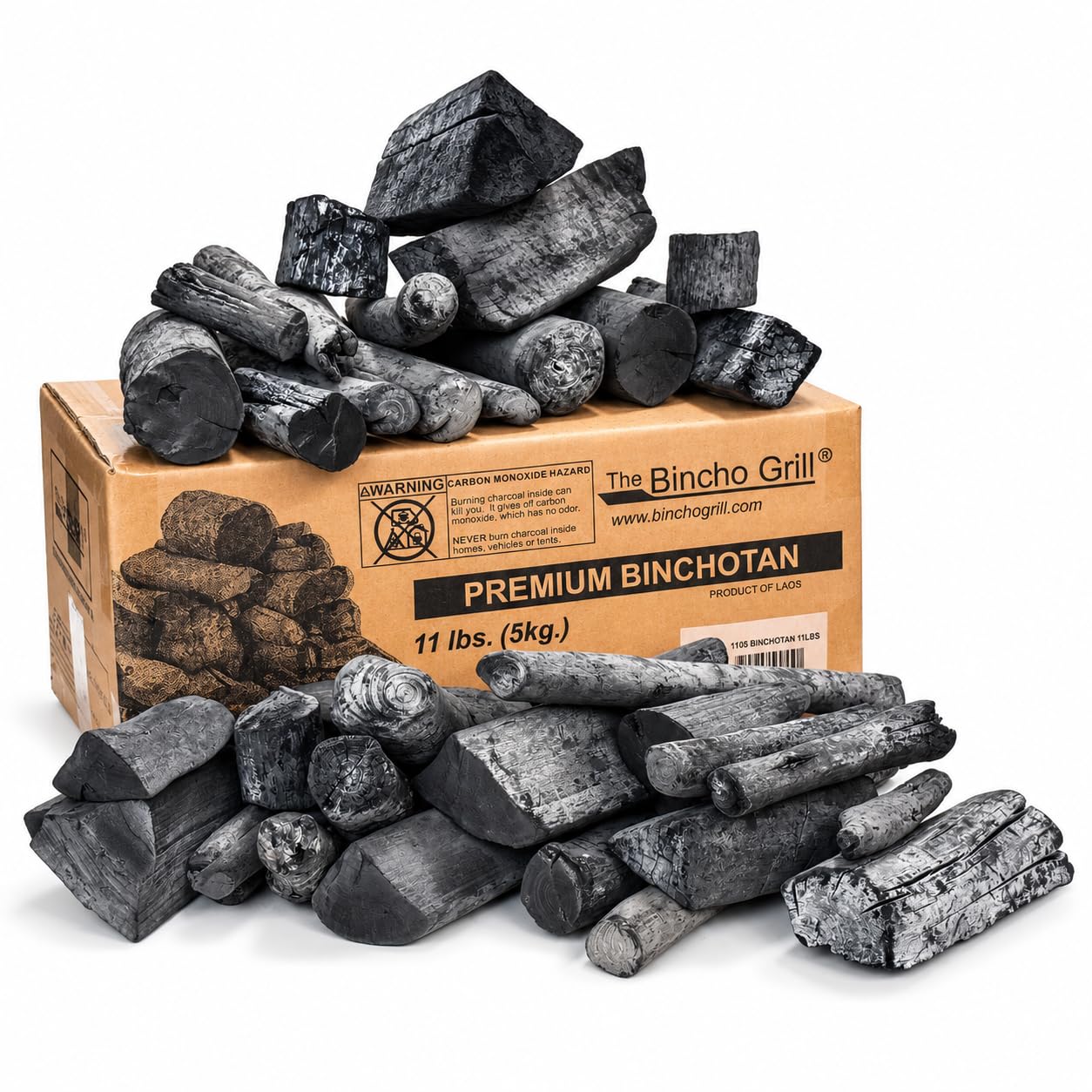
Binchotan is a different kind of charcoal: dense, hard, and capable of reaching up to 1,200°F with almost no smoke or odor while it burns. That combination is why yakitori cooks prize it, and it is the reason this bag belongs in a grilling roundup even at a specialty price.

We found the best use for it is quick, high-heat cooking: skewers, fish, and vegetables that benefit from a clean sear rather than a long bath in smoke. The pieces are dense and heavy, and they take longer to catch than briquettes. A full chimney and a little patience are non-negotiable.

Once lit, the heat is steady and intense, and the lack of smoke lets the food taste like the food. That is the trade you are paying for. It is not a fuel for a casual burger night, where a bag of briquettes will do the same job for less.

The reusable angle is appealing if you are willing to snuff the fire and store the pieces carefully. It rewards a cook who treats the grill as a precise tool rather than a place to pile fuel and walk away. That narrowness is the point, not a flaw.

Pros

  • Reaches up to 1,200°F for high-heat searing
  • Virtually smokeless and odorless
  • Reusable with proper care

Cons

  • Burn time varies by piece size
Our verdict

For searing delicate fish and skewers without a cloud of smoke, this binchotan is worth the splurge; it needs a chimney and patience to light.

Check Latest Price
8

Budget Briquettes

365 Charcoal Briquettes

86 /100
Angler Score Excellent

Key details

Flavor
Natural wood
Bag Size
12 lb
Fuel Form
Briquettes
Listed Ash
Low ash
Check Details on Amazon

The 365 briquettes are the store-brand option in this group, and they are priced like it. That makes them worth a look if you go through a lot of charcoal for straightforward grilling and do not want every bag to be a specialty purchase.

The briquettes are uniform and easy to arrange, and they lit without much drama in a chimney. For burgers and vegetables over a direct fire, they did the job without demanding attention. The low-ash claim holds up well enough for a simple cook, and the 12-pound bag is easy to store, though it is smaller than our top pick's 16-pound sack.

For a simple direct cook, the bag is easy to live with: the briquettes are consistent enough for a two-zone setup, and the bag is big enough to keep on hand for a run of weeknight dinners. They are not the most exciting charcoal here, but they are not trying to be.

We see them as a utility bag: fine for a weeknight cook, not the one to trust for a holiday brisket. If the goal is the lowest-cost way to keep a kettle running, they earn a place; if you want one bag to do everything, go back to Kingsford.

Pros

  • Budget-friendly bag for simple cooks
  • Uniform briquettes for easy arrangement
  • Low-ash claim for easier cleanup

Cons

  • Burn time can fall short on longer cooks
Our verdict

A budget bag for simple burgers and a backup stash; it works, but it won't hold a long cook as reliably as our top pick.

Check Latest Price

How We Tested 12 Bags of Charcoal

We started with everything on the shelf and narrowed it by what the bag actually discloses: wood species or binder, real weight, and a price you can compare. Anything leaning on added flavorings or a vague hardwood claim got cut. That left 12, and we cooked with each over six months on a kettle, a kamado, and a barrel grill — burgers on Tuesday nights, pork butt on weekends, and a couple of windy afternoons that tested our patience.

Every bag went through the same sequence. We filled a chimney level and timed it to first ash, once in still air and once with a breeze. Then we set the vents identically, logged the grate temperature every 20 minutes, and noted how long the fire held 350 degrees and how far it wandered from there. After the coals died we weighed the ash pan on a kitchen scale; a few bags left enough grit to choke airflow before the cook was done. We also dumped each bag onto a tarp to see what we'd paid for — big, even chunks stack in a chimney, while a bag half full of dust and pebbles is money in the trash.

Flavor got cooked, not sniffed. We grilled unseasoned chicken thighs and plain burgers over each fuel and tasted them without sauce, watching for the chemical edge some briquettes leave right after lighting. For value we compared cost per hour of usable heat at 350 rather than cost per pound, since a cheap bag that fades in 40 minutes isn't cheap. We also kept an eye on sparks at the chimney and under an open lid, which matters more than you'd think on a wooden deck.

How to Choose Charcoal for Grilling

Start With the Fuel Form

Briquettes are pressed and uniform, which makes them predictable to arrange and easy to count on for a two-zone fire. Lump charcoal is irregular, usually burns hotter and faster, and can add more wood character, but you give up some consistency. Logs and binchotan sit at the specialty end: logs are built for long, steady sessions, while binchotan is dense and clean-burning for high heat. We choose the form first, then the brand.

Match Burn Time to the Cook

A big bag does not guarantee a long burn. For low-and-slow cooking, look for dense lump or a log format that holds heat, and plan to refuel less often. For quick searing, a hotter-burning lump or binchotan makes more sense than a long-burn briquette. We keep one dependable briquette bag for everyday cooking and one specialty fuel for the cooks that need a different kind of fire.

Read the Bag for Piece Size and Dust

Lump bags vary from hand-size chunks to chips and dust, and that mix changes how you load the grill. Large pieces are better for a long bed of coals; small pieces are useful for a hot direct fire or for filling gaps. Open the bag over a bin or a tarp, sort as you go, and keep the dust out of your chimney. If a listing promises jumbo lump, check the bag size and the stated piece size before you count on it.

Plan for Ash, Smoke, and Cleanup

Briquettes generally leave more ash than lump, while binchotan and some hardwood lumps are marketed as low-ash and low-smoke. That matters most for delicate fish, long cooks, and anyone tired of emptying an ash pan. Ash should cool completely before you bag it, and it should go into a metal container rather than straight into a paper bag. We prefer to buy a fuel that fits the cleanup we are willing to do.

Lighting and Safe Handling

A chimney starter is the most reliable way to light any of these fuels, and it gives you a clear view of when the top coals are ashed over. Lump can pop and throw sparks while it lights, so give the fire some clearance and keep the lid open until it settles. Never add liquid starter to hot coals; if the fire is struggling, start another chimney instead.

Frequently Asked Questions

Final Verdict

For most people, Kingsford Original is the bag to buy first. The briquettes are uniform, steady, and easy to work with, and the 16-pound bag covers a run of ordinary cooks without making charcoal the expensive part of dinner. When the cook changes, the pick changes too: Jealous Devil for long smoker sessions, Duraflame Char-Logs for a steady all-afternoon fire, or Binchotan for high-heat searing with almost no smoke.