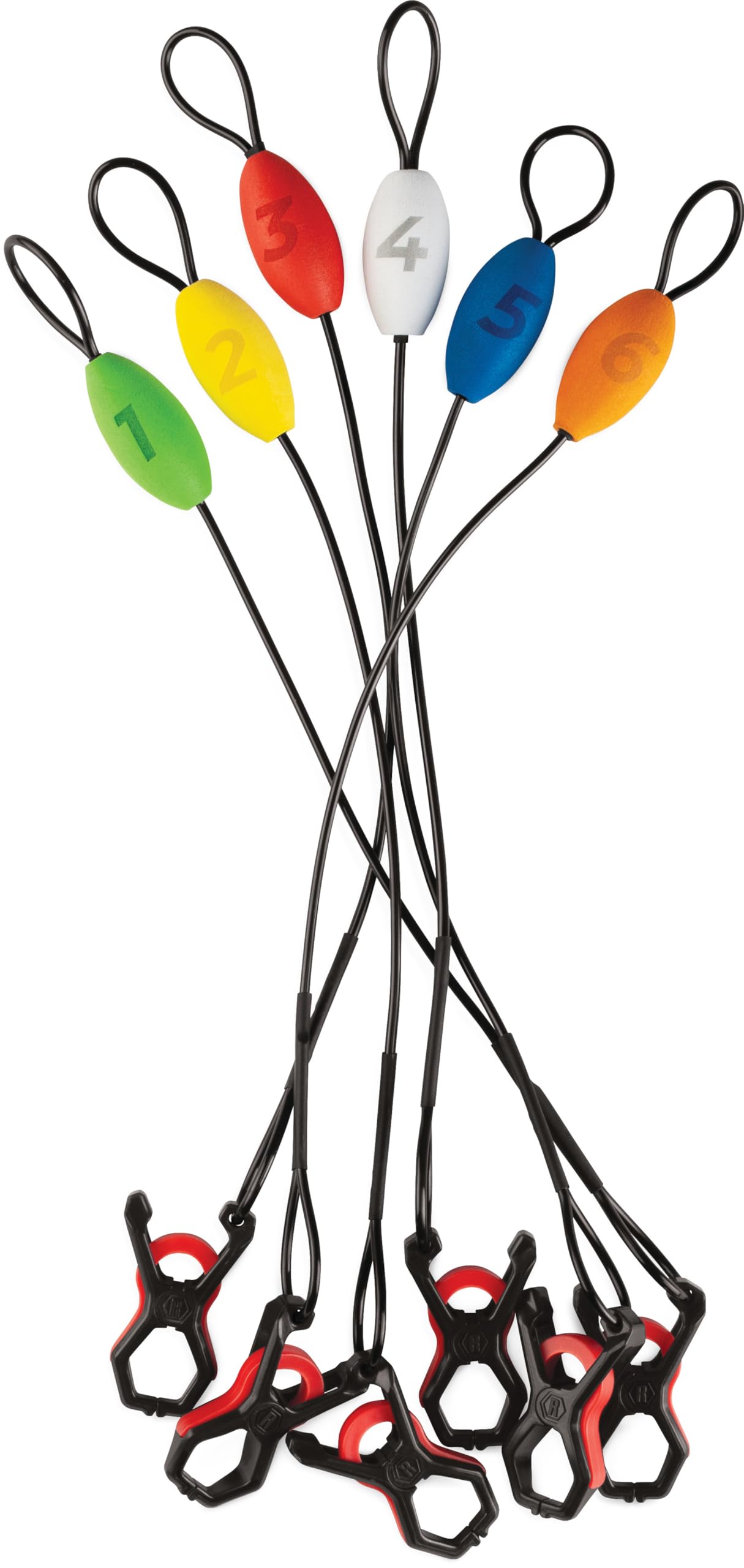
Best Fish Culling Tags of 2026

There's a limit in the livewell and one of those fish is a 13-incher that won't help you at the scales. That's the problem a culling system solves: clip a numbered tag on every fish as it goes in the box, and when you boat a bigger one you know exactly which fish goes back. It sounds simple, but the difference between a system that works and one that doesn't tends to show up at the worst moment — fish flopping on the deck, number tags somewhere in the bottom of the livewell.

I've been clipping fish on club tournament days for years, and the failures are rarely dramatic. It's a clip that's lost its spring by midsummer, a number that's washed off its tag, or a scale that reads three different weights for the same fish. My team and I spent four months running 15 systems through practice days and tournament mornings, and the ones worth keeping had the same thing going for them: the grip held and the numbers stayed readable. The picks below are the ones that did.

1

Best Overall

T-H Marine G-Force Gen 2

92 /100
Angler Score Outstanding

Key details

Clip Type
Non-penetrating
Item Weight
10.6 oz
Identification
Color-coded tags
Set And Release
One-handed
Check Details on Amazon

One purchase and the culling job is handled — that's the case for the G-Force Gen 2, and it's why we point most anglers here. T-H Marine builds the non-piercing clips, the color-coded tags, and the one-handed jaw into a single system, so there's no hunting for a matching beam or a clip that fits somebody else's floats. Every part is designed to work with the others, which sounds like a small thing until you're crouched over a livewell at first light with a bass in one hand and nothing free to hold a loose tag.

Grip is where we paid the closest attention, because it's the one part of a cull system that can quietly cost you a fish. Set the jaw shallow on the lip and a small keeper can work it loose; set it deep on the bony part of the lower jaw and the tag tends to stay put. That's the routine we settled into — deep set, then a glance at every tag when the lid comes up. Non-piercing clips always trade a little grip for a fast, clean release, and this one leans toward the release.

The coding is the other half of the job, and it beats a marker or a sticker: each tag carries its own color and number, so you can call a fish by name instead of describing it to your partner. Working the clip one-handed matters more than shoppers expect, too. Every second a bass spends out of the water counts against it, and a jaw you can open with a thumb while the other hand holds the fish cuts that time down.

Pros

  • Complete system: clips and color-coded tags together
  • Non-penetrating clips suit puncture-free rules
  • Sets and releases with one hand
  • Color coding speeds up fish identification

Cons

  • Heavier than clip-only kits at 10.6 ounces
Our verdict

The kit we tell most tournament anglers to buy first: non-piercing clips, readable color coding, and one-handed operation all in one box.
Check Latest Price
2

Best Premium Set

BUBBA Culling Set

91 /100
Angler Score Outstanding

Key details

Components
Balance beam and color-coded buoys
Dimensions
14 x 8 x 3 inches
Item Weight
1.5 lb
Scale Pairing
BUBBA Pro and Standard smart scales
Check Details on Amazon

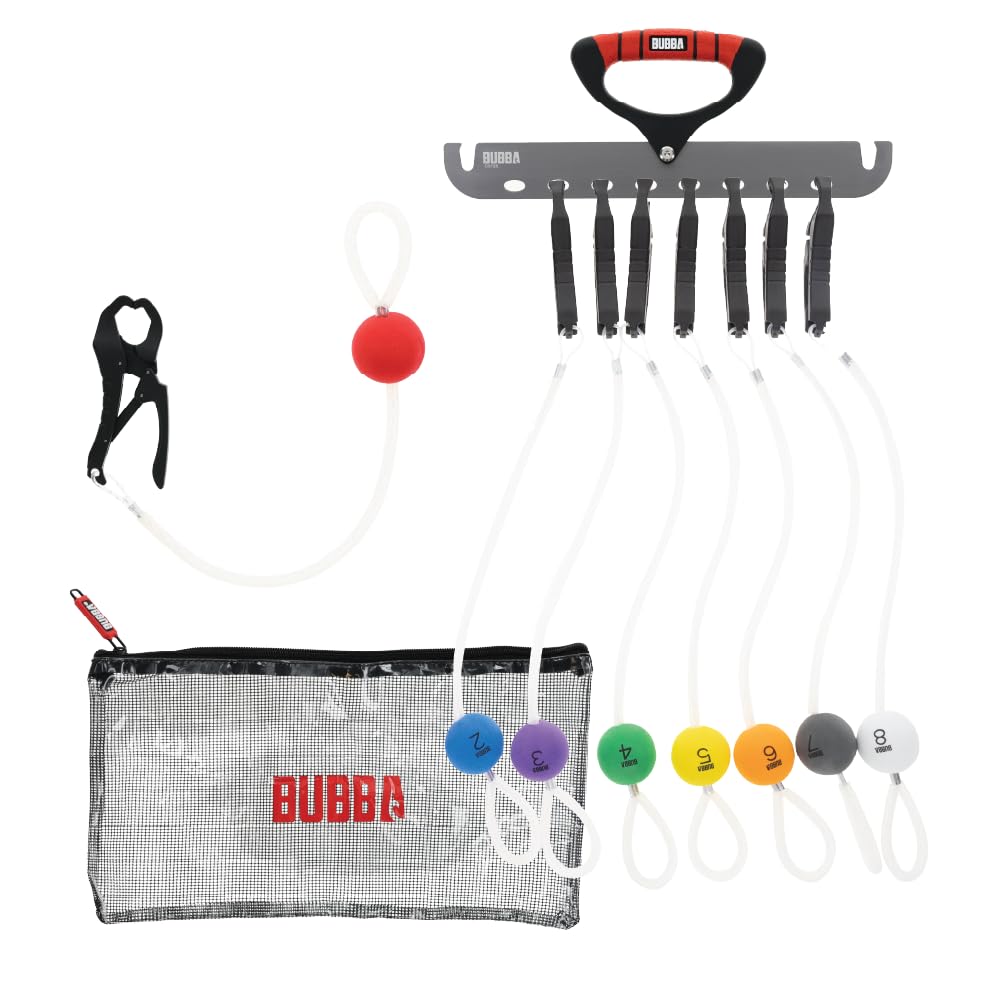
If a BUBBA smart scale already lives in your boat, this set is the natural partner for it, and that is the buyer it is built for. The color-coded buoys line up with the scale's readout, so the number on the fish and the number on the screen are the same number, and the balance beam lets you compare two fish side by side without waking up the electronics at all.

What we appreciated most is the handle on the beam. It carries a non-slip grip wide enough for a wet hand, and the low-profile lip clips sit flat against the jaw instead of dangling, which keeps a fish from grinding the clip against the livewell wall every time it turns. Corrosion-resistant components sound like catalog filler until you've watched hardware go orange in a bass boat's wet storage after a single season.

Size is what you pay for the extra hardware. Fourteen inches long and a pound and a half means the set wants its own slot rather than a corner of a tackle bag, and in a tiller boat that's a genuine decision rather than a footnote. It's also one of the pricier routes here, and it only earns that if the scale pairing is something you'll actually use on the water.

Pros

  • Buoys pair with BUBBA Pro and Standard scales
  • Balance beam with a non-slip grip handle
  • Corrosion-resistant components for wet storage
  • Low-profile lip clips sit tight on the jaw

Cons

  • Bulky to stow at 14 inches and 1.5 pounds
Our verdict

Worth the premium when a BUBBA smart scale is already aboard: a grippy balance beam and buoys that speak the same language as your scale.

Check Latest Price
3

Best for Fast Culling

Tackle Workz Clip N Cull Gen 2

91 /100
Angler Score Outstanding

Key details

Tags
7 numbered, color-coded
Warranty
1 year
Clip Style
Spring-tension, non-piercing
Beam Anchor
Locks onto balance beams
Check Details on Amazon

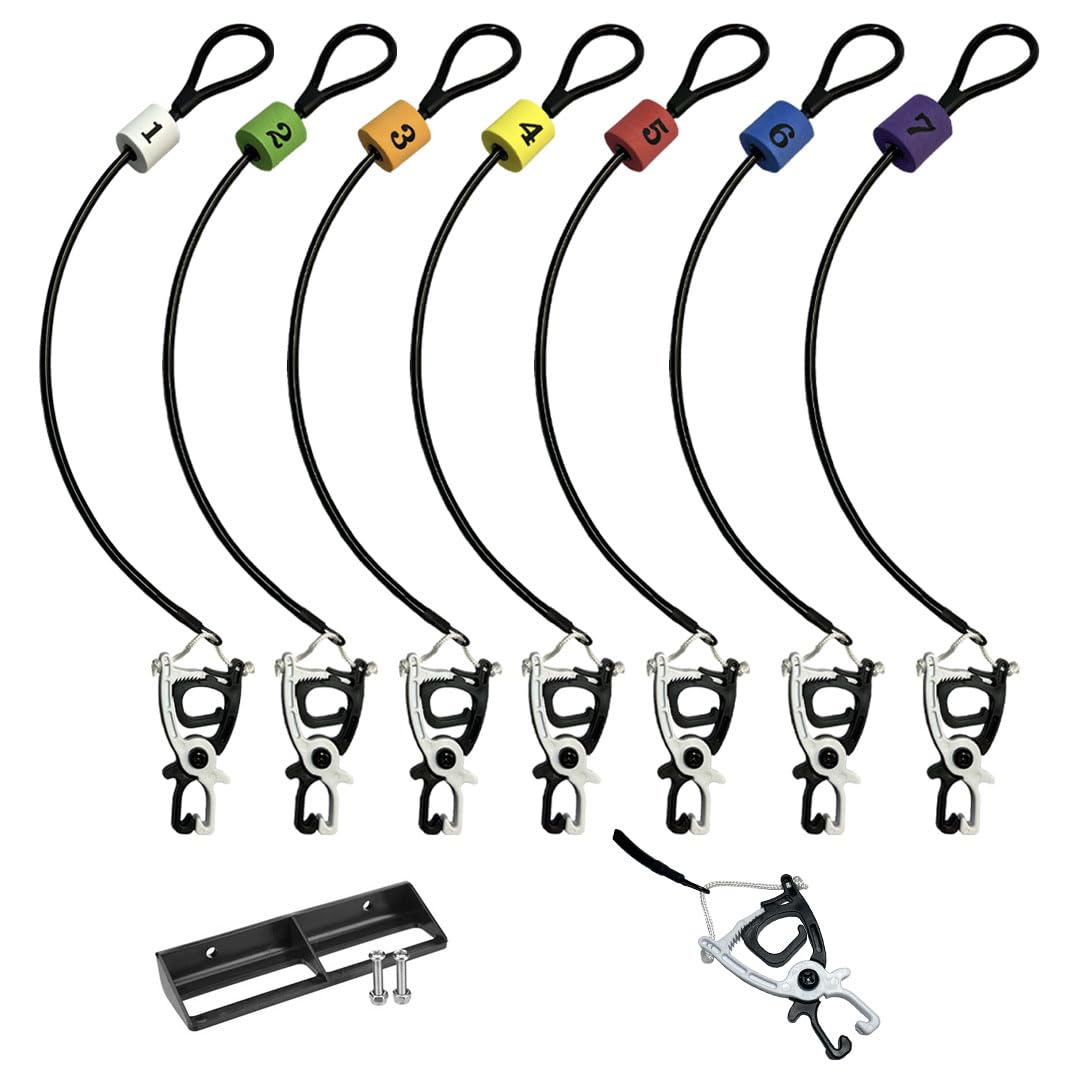
Speed is what the money buys, and the Clip N Cull Gen 2 is the quickest kit in this guide to use. Seven numbered tags, spring jaws that open wide enough to find a lip without fumbling, and a body shaped to anchor on a balance beam so the weighing step doesn't need a second pair of hands. We think that combination is worth paying for if you cull three or four times in a day and the clock is running.

Where it gives ground is grip. The jaw tension that lets a clip release with a thumb's worth of pressure is the same tension that lets a hard-shaking fish walk one loose, so a deep set on the lower lip matters here more than on the stiffest clips in this set. The pinched ends are the other wear point: a bass thrashing against a clip in a livewell can crack it, and that's the failure worth watching for rather than a jaw that bends out of shape.

Seven tags covers a five-fish limit with two spares, and the numbering is the cleanest here — large, high-contrast figures you can read at arm's length through the livewell opening, which is the moment that actually matters. There's a one-year warranty behind the hardware, and the marine-grade polymer and corrosion-resistant parts are built for continuous submersion rather than a rinse and a dry.

Pros

  • Seven numbered, color-coded tags
  • Wide spring jaws release one-handed
  • Anchors directly onto balance beams
  • Backed by a one-year warranty

Cons

  • Clip ends can crack under livewell thrashing
Our verdict

The fastest kit here to work with wet hands, though you're buying speed rather than the most secure grip in this set.

Check Latest Price
4

Best Budget

AMBITIONJUMP Cull Tags

85 /100
Angler Score Excellent

Key details

Tags
6 numbered floating
Clip Style
Wide-opening plier jaws
Anti-tangle
Spacer between float and clip
Item Weight
7.1 oz
Check Details on Amazon

Something has to give at the bottom of the price range, and in a cull kit it's usually the spring. These jaws open wide and set easily, but the tension is lighter than on the premium kits here, so a fish that thrashes hard against the clip can work it loose. Deep sets and a look at the tags whenever the lid comes up cover most of that gap, and it's the reason these suit a weekend schedule better than a money tournament.

What the money does buy is thought through. Six numbered floats in six colors, and a plastic spacer sitting between each float and its clip — that spacer is the detail we like most, because it's what stops six tags from braiding themselves together every time a fish rolls. Floating is the other quiet win: a clip that comes off in the box rises to the surface instead of vanishing into the bottom of a full livewell.

Six tags covers a five-fish limit with one spare, and the colors stay easy to tell apart in the dim light under a lid. For club events, a couple of draws a year, or a spare set kept aboard for guests, this is the sensible buy, and the money it leaves in your pocket is better spent on line and hooks than on a stiffer spring you'd use twice a season.

Pros

  • Six numbered floating tags
  • Spacer keeps clips from tangling
  • Wide plier-style jaws are easy to set
  • Cheapest kit in this guide

Cons

  • Lighter jaw tension than the premium kits
Our verdict

Six floating numbered tags with a spacer that stops livewell tangles — the kit we point to when the budget is set and the limit is five fish.

Check Latest Price
5

Best Retrofit Kit

Cal Coast Retro Cull Tag Kit

88 /100
Angler Score Excellent

Key details

Clip Style
Non-puncture retrofit
Compatibility
Fits most cull systems
Package Weight
4.59 oz
Package Dimensions
6.46 x 6.22 x 1.34 inches
Check Details on Amazon

More tournaments require puncture-free clips every season, which turns a perfectly good set of old cull tags into a liability overnight. This kit is the cheap way out of that corner: replacement clips that go onto your existing tag lines and grip the fish's jaw without punching through it, so the floats, the numbers, and the beam you already know keep working exactly as they did.

We like it best as a repair rather than as a purchase. The clips are rust-free plastic, the package is small enough to live in a glovebox, and they fit nearly any culling system you're likely to own — so a set of these extends the life of a kit that would otherwise be thrown out. For anyone who has spent seasons learning where their own tags sit in the livewell, keeping that familiarity is worth more than the hardware costs.

The honest limit is that it isn't a system. Your identification comes from whatever your old tags already say, so faded colors or a missing number stay faded and missing. Before the season, check that the new clip's eye takes the diameter of your existing tag line — a thick line is the one thing that could stop the swap.

Pros

  • Converts existing puncture tags to non-puncture clips
  • Rust-free plastic construction
  • Works with almost any culling system

Cons

  • Clips only
Our verdict

The fix for a drawer full of puncture tags: clip-on replacements that convert the system you already own to non-piercing for very little money.

Check Latest Price
6

Light, Simple Setups

Rapala Lip-Grip Cull Tags

86 /100
Angler Score Excellent

Key details

Clip Style
Non-puncture lip grip
Item Weight
5.6 oz
Identification
Color-coded tags
Check Details on Amazon

Five and a half ounces is the number worth noticing here, because this is the lightest full set in this guide. Less weight on a tag line means less drag for a fish that has to carry it around until weigh-in, and less swing when you lift one out to cull. In a small livewell holding five fish, that difference is easy to feel and easy to stop thinking about once you're used to it.

The design is about as simple as this category gets: a non-puncture lip-grip clip, a bright color-coded tag, and plastic throughout, finished matte rather than glossy. There's no beam in the set and no scale pairing to consider, which suits an angler who already carries good weighing gear and wants the tags to be the only new thing in the boat.

What we noticed is that the simplicity cuts both ways. Fewer parts means less to break and nothing to corrode, and the flat profile sits against a jaw without catching in the net mesh. The flip side is that a clip is only as good as its set, so seat the jaw deep on the lower lip the first few trips and watch how it holds before you lean on it in a tournament.

Pros

  • Lightest full kit here at 5.6 ounces
  • Non-puncture lip-grip clips
  • Bright color-coded tags

Cons

  • Tags only
Our verdict

Plain, light, non-puncture tags for the angler who already owns a beam or scale and doesn't want extra hardware hanging on a fish.

Check Latest Price
7

Minimal Livewell Bulk

ACCU-CULL Elite E-CON Kit

86 /100
Angler Score Excellent

Key details

Tags
7 numbered floating
Clip Action
Pinch to set and release
Item Weight
0.96 oz
Check Details on Amazon

The whole interaction is a pinch. Two fingers squeeze the clip open, it slides onto the lip, and it closes on its own the moment you let go. That sounds trivial until you've fumbled a stiff clip with cold hands and a bass rolling in the net — the action here is the lightest of any set in this guide, and it's the reason we kept reaching for these when the fish were small and the culling was constant.

Seven tags, each numbered and buoyant, and a rigid plastic body that doesn't flex much under a thumb. Buoyancy matters more than it sounds: a tag that slips off in a full livewell rises to the surface instead of disappearing under a fish, which in a tournament is the difference between culling properly and guessing at what's in the box.

That rigidity is also the weak point, and it's a fair trade rather than a flaw. The pinched ends take all the load when a bass thrashes against a clip, and a crack there ends that tag's day, so check the jaw ends each time you put the kit away instead of finding out when one lets go in the livewell.

Small livewells are where these make the most sense. Seven tags weighing 27.22 grams in total add almost nothing to what a fish is already dragging around, and the pinch release turns a cull into a second's work rather than a minute's. What you give up is weighing hardware — bring your own beam or scale, and this becomes the least obtrusive kit on the boat.

Pros

  • Seven numbered floating tags
  • Pinch action sets and releases quickly
  • Very light at 27.22 grams for the kit

Cons

  • Clip ends can crack under livewell thrashing
Our verdict

The lightest set in this guide and the quickest to work one-handed: seven floating, pinch-release tags that stay out of the way.

Check Latest Price

How We Tested Culling Systems on the Water

We started by gathering more than 30 culling setups — bare clip kits, full sets with a scale and float, piercing and non-piercing designs — and narrowed by clip style, numbering method, and price until 15 were left. Testing ran from March through June, and each system got at least three full days on the water, rigged at the ramp before daylight and used the way it would be if I'd bought it myself.

Before a single fish went in the box, I snapped every clip open and closed 100 times, then repeated it at the end of the season to see which springs had gone soft. I weighed each clip on a kitchen scale and compared it to the others in its set, since a heavy clip drags at a fish's jaw and can nudge a tight weigh-in. Number tags sat in a cup of livewell water for a full day to check whether the printing bled or the adhesive let go.

On the water, we watched whether a clip slipped off a bass's lower jaw after hours of swimming, whether it wore a raw spot on the lip, and how manageable it was one-handed with a fish in the other hand — the moment that actually matters when you're culling in afternoon heat and want that fish back in the water fast. We also weighed the same fish three times on each scale to see whether the numbers repeated.

How to Choose Fish Culling Tags

The Clip Does the Work

Every non-piercing clip is a compromise between a grip firm enough to hold a bass through a day of livewell thrashing and a release quick enough to work with one hand. A jaw that opens wide and closes with a definite snap over the last few millimeters is what you want; one that closes softly will let a small fish work it loose. When a kit arrives, work the clip a dozen times before it ever sees a fish, and set the first few tags deep on the bony part of the lower jaw rather than the soft tissue.

Numbers, Colors, and a Scheme You Can Call Out

A five-fish limit needs five tags, and every kit worth owning gives you a spare or two, because a clip can crack and a tag can go over the side. What separates a useful scheme from a confusing one is whether you can identify a fish without lifting it. We number fish in the order they go in the box and keep the smallest on the highest number, so the one to cull is named out loud instead of described.

Beam, Smart Scale, or Neither

Tags only save time if the weighing step keeps up. A balance beam lets you compare two fish directly without switching on a digital scale, which is why beam kits suit anglers who cull several times a day. If you already carry a smart scale, buy tags that pair with it — the BUBBA set is built for exactly that — rather than adding a beam you won't use. With a plain digital scale, any tag with a beam-compatible body works, and a floating tag is easier to fish out of a full livewell.

Weight and Where the Kit Lives

Kit weight runs from a few ounces to a pound and a half across these sets, and it shows up in two places: what a fish drags around the livewell and what your boat has to store. A 14-inch balance beam wants its own slot in a rod locker, while a clip-only set disappears into a Plano box. Decide where the kit will live before you decide how much hardware you want to carry.

Retrofit or Replace

If you already own a cull system with puncture clips and the floats and numbers are still readable, a retrofit clip set is the cheaper move and keeps the scheme you know. Count your tags first: if you're short of a limit plus a spare, or the floats are cracked, a complete kit makes more sense than repairing half a system. Either way, check that the new clip's eye fits the diameter of your existing tag line before the season starts.

Frequently Asked Questions

Final Verdict

Our default is the T-H Marine G-Force Gen 2. It covers the whole job — non-piercing clips, color coding you can read at a glance, and one-handed operation — in a single kit, and the grip holds once the jaw is set deep on the lower lip.

Buy the BUBBA set instead if a BUBBA smart scale already lives in the boat; the balance beam and matching buoys make the weighing step faster than tags alone can. And if your only problem is a drawer of puncture tags, the Cal Coast Retro kit converts them without buying a whole new system.