Best Foam Sleeping Pads of 2026

Foam sleeping pads look like the simplest piece of gear in the closet, but that's exactly where the choice gets tricky: a pad that's plush enough for a good night's sleep can be a bear to roll, strap, and carry, while a featherweight one may leave your hip aching by 2 a.m. I've spent enough nights on lumpy ground to know that thickness alone doesn't guarantee comfort — cushioning, density, and how the pad recovers after being packed tight all matter just as much.

Over eight months, my team and I slept on 14 foam pads — in tents, on cots, and on guest-room floors during sleepovers — paying attention to how each one felt after a full night, how small it packed down, and whether the straps actually kept it rolled tight. We also checked size against tent footprints and cot dimensions, watched for foam flattening or tearing after repeated use, and compared what each pad delivered for the money. The best ones made us forget we were sleeping on the ground; the rest are not in this guide.

1

Best Overall

Therm-a-Rest Z Lite Sol

93 /100
Angler Score Outstanding

Key details

Weight
14 oz
R-value
2.6
Packed Size
20 x 5 x 5.5 in
Sleeping Area
72 x 20 x 0.75 in
Check Details on Amazon

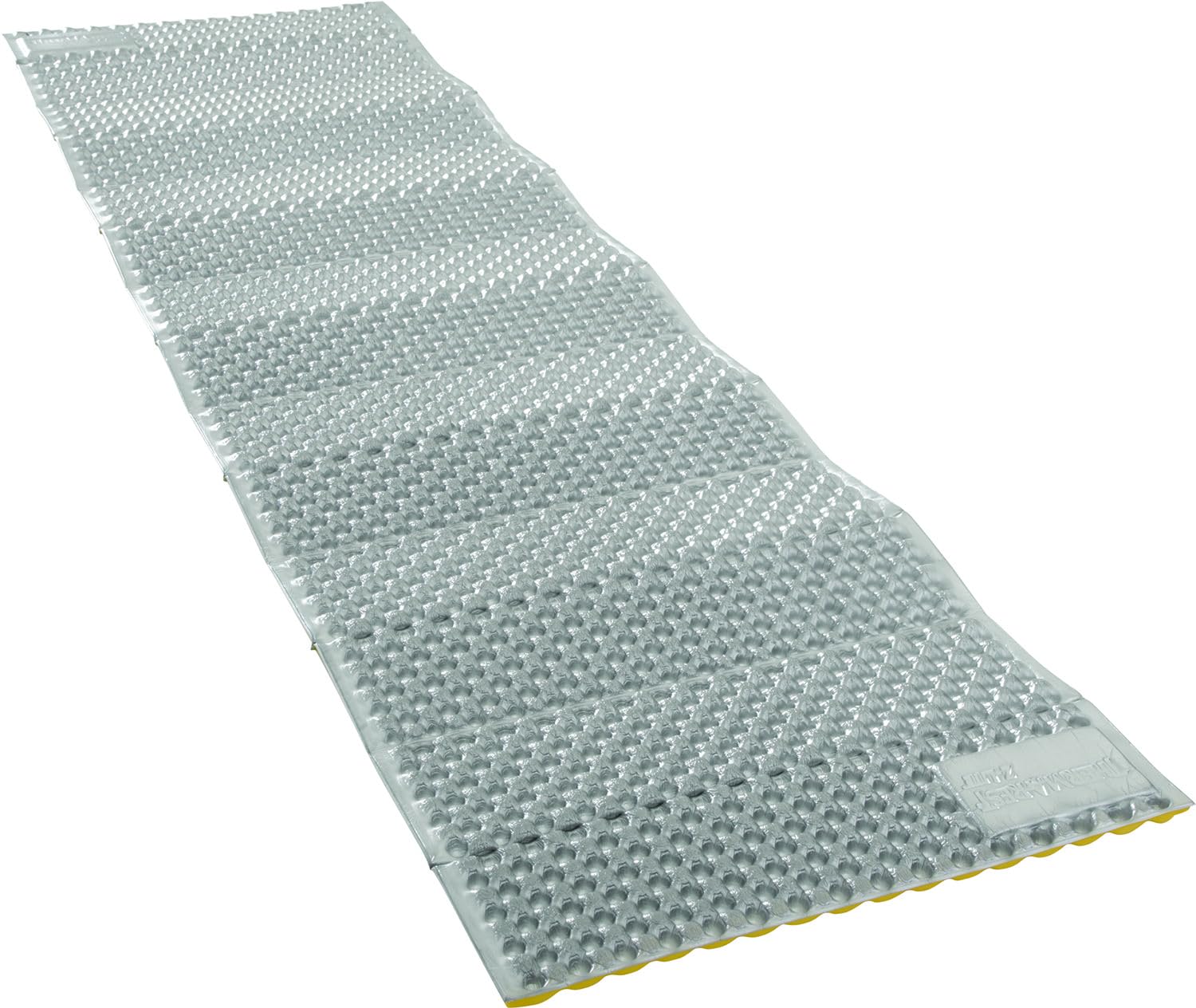
Fourteen ounces, an accordion fold, and no valve to fail: the Z Lite Sol is the foam pad we trust for backpacking. The closed-cell foam is softer on top and denser underneath, while the reflective dimples help it reach an R-value of 2.6. There is no patch kit to carry and no middle-of-the-night search for a leak. For backpacking, that combination is hard to beat.

At 72 x 20 x 0.75 inches, it is a minimalist surface. The accordion fold makes it quick to deploy and easy to strap outside a pack, and we also used it as a sit pad and a dry place to sort gear. The contoured dimples grip a tent floor and give a little more give than a flat sheet of foam. It is not a pad you sink into, but the dual-density construction keeps stones and cold ground from taking over the night.

What we appreciate most is the lack of drama. A closed-cell pad has no seam to fail and no air pressure to manage, so it stays useful as an emergency layer, a guest bed for a child, or a seat at camp long after the trip that justified it. Our recommendation is straightforward: make this your default for backpacking and save the thicker memory-foam pads for car camping and guest rooms.

Pros

  • Cannot deflate or puncture
  • Folds compactly at 14 ounces
  • R-value 2.6 adds warmth
  • Dual-density foam protects from ground

Cons

  • Thin, narrow profile suits back sleepers more than side sleepers
Our verdict

For backpackers, the Z Lite Sol is the foam pad we trust: it cannot deflate, folds to 14 ounces, and adds an R-value of 2.6.

Check Latest Price
2

Best for Cots and Car Camping

Teton Outfitter XL

93 /100
Angler Score Outstanding

Key details

Shell
300D polyester canvas
Weight
6 lb
Thickness
2 in
Sleeping Area
80 x 30 in
Check Details on Amazon

Eighty inches long and 30 inches wide, the Outfitter XL is less a backpacking pad than a foam bed for a cot. The open-cell foam is firm enough to support an adult and thick enough to soften the bars of a camp cot. Corner loops keep it from sliding around, and the canvas cover slips off for cleaning.

We choose it for car camping and guest cots, where the size is a feature rather than a burden. The 30-inch width gives shoulders room, and the 80-inch length leaves space for a pillow. It also works on the floor of a large tent or in the back of a truck. The foam is not water resistant, so keep it out of puddles and away from wet gear.

Roll-up straps with compression buckles make storage manageable, and the removable cover makes cleanup simple. The result is a bed that feels close to a real mattress. If your camp is reached by vehicle and your sleep surface is a cot, this is the one we reach for first.

Pros

  • Cot-friendly 80 x 30 size
  • Comfortable 2-inch open-cell foam
  • Removable canvas cover
  • Roll-up straps with buckles

Cons

  • Heavy and bulky for backpacking
  • Canvas can hold dampness
Our verdict

The Outfitter XL is our pick for cot and vehicle camping, where its 80-inch length and 30-inch width turn a hard cot into a real bed.

Check Latest Price
3

Best Plusher Closed-Cell Pad

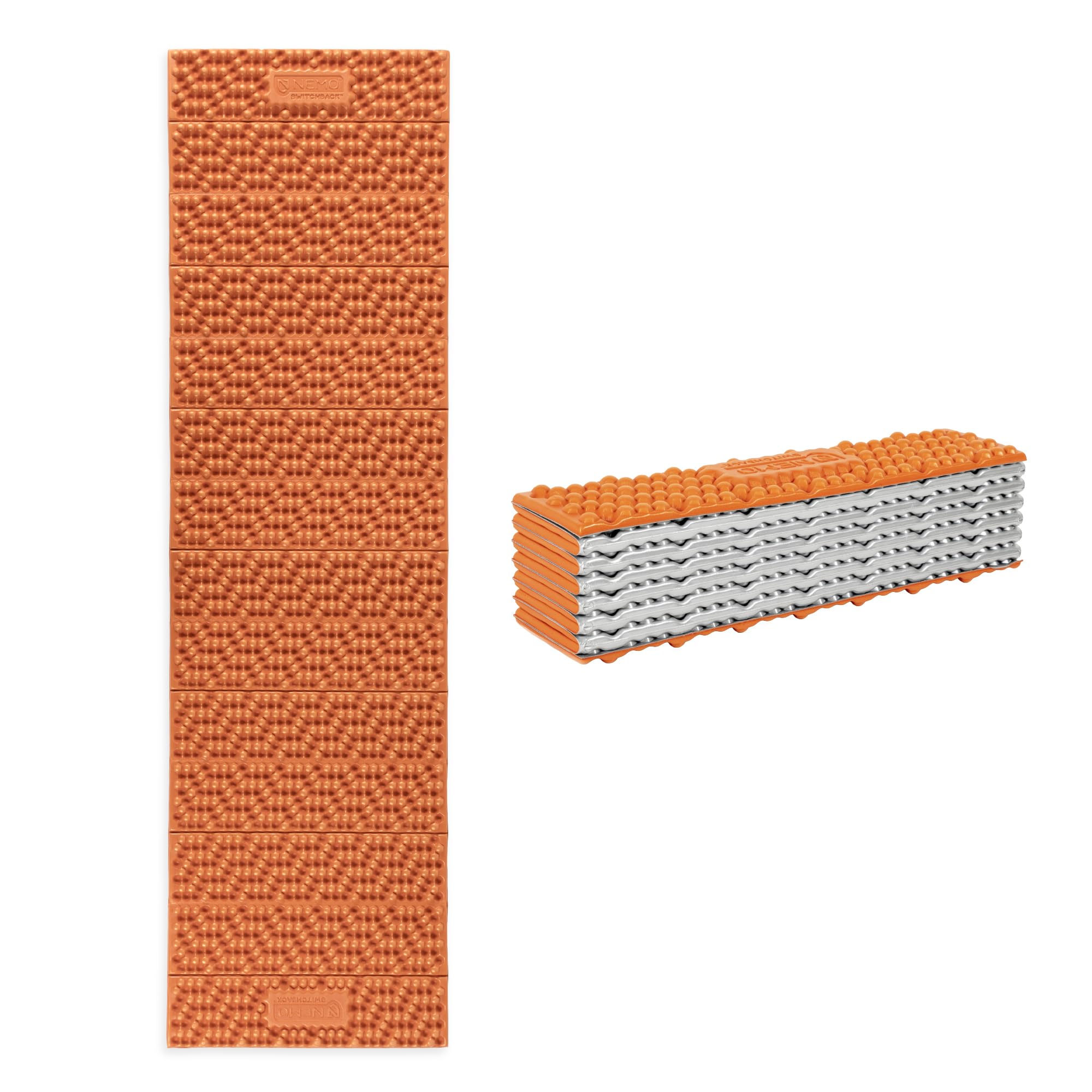
NEMO Switchback

90 /100
Angler Score Outstanding

Key details

Foam
Dual-density Axiotomic
Weight
14.8 oz
R-value
2
Packed Size
20 x 5 x 5.5 in
Check Details on Amazon

Taller hexagonal nodes and dual-density foam separate the Switchback from the Z Lite Sol. NEMO's nodes are designed to nest tighter for a smaller packed size while leaving more room for sleeping-bag loft, and the Axiotomic foam puts a supple layer over a resilient base. A metallized film reflects heat back to the body; the pad is rated to R-value 2.

At 0.42 kg, it is a true backpacking pad, and it folds to roughly 20 x 5 x 5.5 inches. It will not deflate, which makes it a sensible choice for rocky ground, cold weather, and trips where a puncture would end the night. We also used it as a seat and as a ground layer under a sleeping bag; the taller nodes leave more room for bag loft than a flat pad.

The price is the main hurdle: this sits above the Z Lite Sol. What you get for the extra outlay is a more forgiving surface and a lifetime warranty. If durability and packability matter more than cushioning, either works; if you want the plusher feel of the two, the Switchback is our choice.

Pros

  • Taller nodes add cushioning
  • Dual-density foam supports without bottoming out
  • R-value 2 with reflective film
  • Folds compactly and cannot deflate

Cons

  • Still firmer than a 3-inch memory-foam pad
Our verdict

We choose the Switchback when we want closed-cell durability with a plusher surface than the Z Lite Sol offers.

Check Latest Price
4

Best Memory-Foam Value

CYMULA Memory Foam Pad

88 /100
Angler Score Excellent

Key details

Cover
Removable fleece
Thickness
3 in
Certification
OEKO-TEX
Sleeping Area
72 x 24 in
Check Details on Amazon

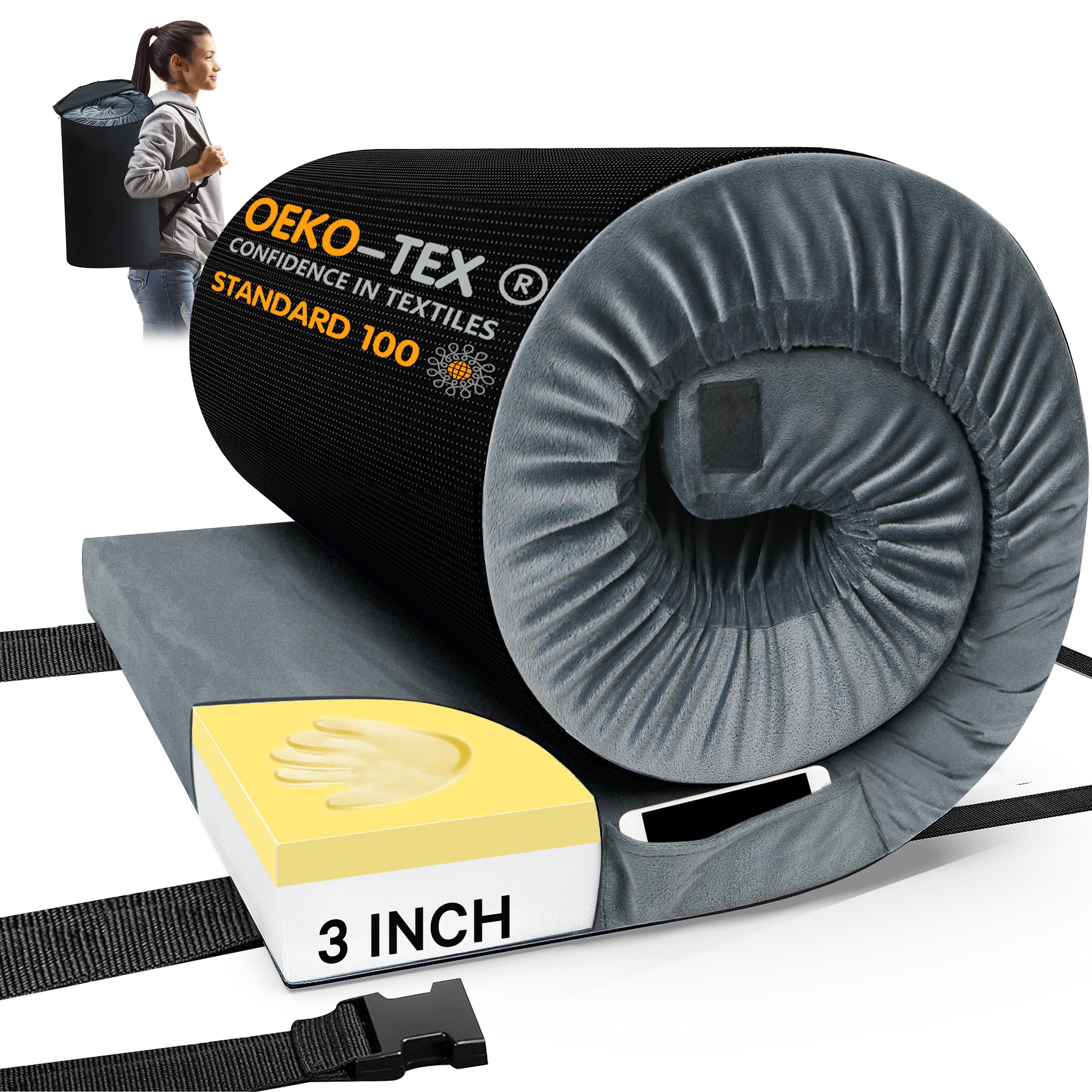
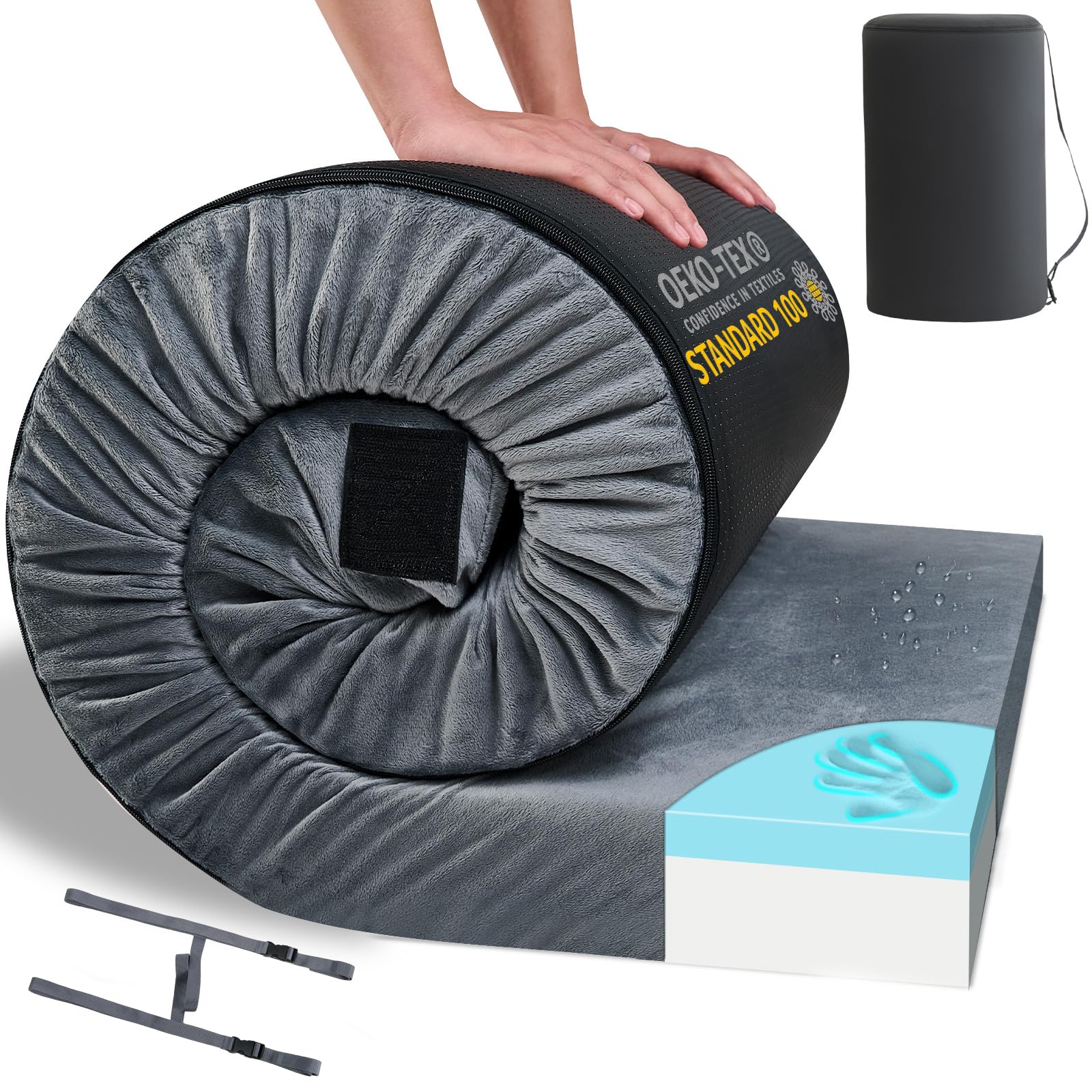
Three inches of memory foam, a washable fleece cover, and a size range that covers solo and guest use make CYMULA's pad the memory-foam value pick. The bottom is waterproof and non-slip, and the whole thing rolls into a travel bag with adjustable buckles. It is also OEKO-TEX certified, a useful detail if the pad will double as a guest bed.

We like the 3-inch thickness for car camping. It has enough give for side sleepers to avoid the hard-floor feeling of a closed-cell mat, and the 24-inch width is a reasonable adult size. The cover zips off for washing, which matters more than it sounds after a weekend of camp dust and dog hair. Seven sizes are available, so you can match it to a cot, a truck bed, or a spare corner.

For a guest room, a car-camping tent, or a kid's sleepover, this is a lot of comfort for the money. The seven-size range is the practical part: you can fit a cot, a truck bed, or a spare corner without moving up to a full mattress. This is the one we point to when the sleeping surface needs to feel like a bed.

Pros

  • 3-inch memory foam cushions hips
  • OEKO-TEX certified materials
  • Waterproof, non-slip base
  • Washable fleece cover

Cons

  • Bulky rolled size
  • 72-inch length may be short for tall sleepers
Our verdict

CYMULA's 3-inch memory-foam pad is the one we point to for car campers and guest rooms that want washable comfort without an air pump.

Check Latest Price
5

Best for Side Sleepers

HomeMate Memory Foam Pad

90 /100
Angler Score Outstanding

Key details

Cover
Removable, washable
Weight
7.8 lb
Thickness
3 in
Sleeping Area
72 x 24 in
Check Details on Amazon

The first thing we noticed on the HomeMate is the removable cover: it unzips, washes, and goes back on without a wrestling match. That is a small thing until a guest bed or camp pad has to be cleaned. Underneath is a 3-inch combination of memory foam and high-density support foam, with a waterproof, non-slip base.

At 72 x 24 inches, it is sized like a standard camping pad, but the foam feels closer to a mattress topper. Side sleepers get more relief at the hip and shoulder than a closed-cell pad can offer, and the surface stays put on a cot or a tent floor. The cover is soft enough for bare skin, which is not something we can say about every foam pad.

We reach for the HomeMate when an adult needs to sleep well on a floor or cot and the pad will be moved by car. It is also the pick for a guest room that has to turn a hard floor into a bed without an air pump. The foam has a firm, supportive feel rather than a deep sink, so it suits sleepers who want to stay on top of the pad.

Pros

  • 3-inch memory foam for side sleepers
  • Removable, washable cover
  • Waterproof and non-slip base
  • Works on a cot or floor

Cons

  • 7.8 pounds is heavy for carrying
  • Rolled size takes up trunk space
Our verdict

For side sleepers, the HomeMate is the washable, bed-like pad we reach for on a cot or guest-room floor.

Check Latest Price
6

Car Camping

Kingfun Memory Foam Pad

89 /100
Angler Score Excellent

Key details

Foam
Gel memory + support
Thickness
3 in
Certification
CertiPUR-US
Sleeping Area
75 x 30 in
Check Details on Amazon

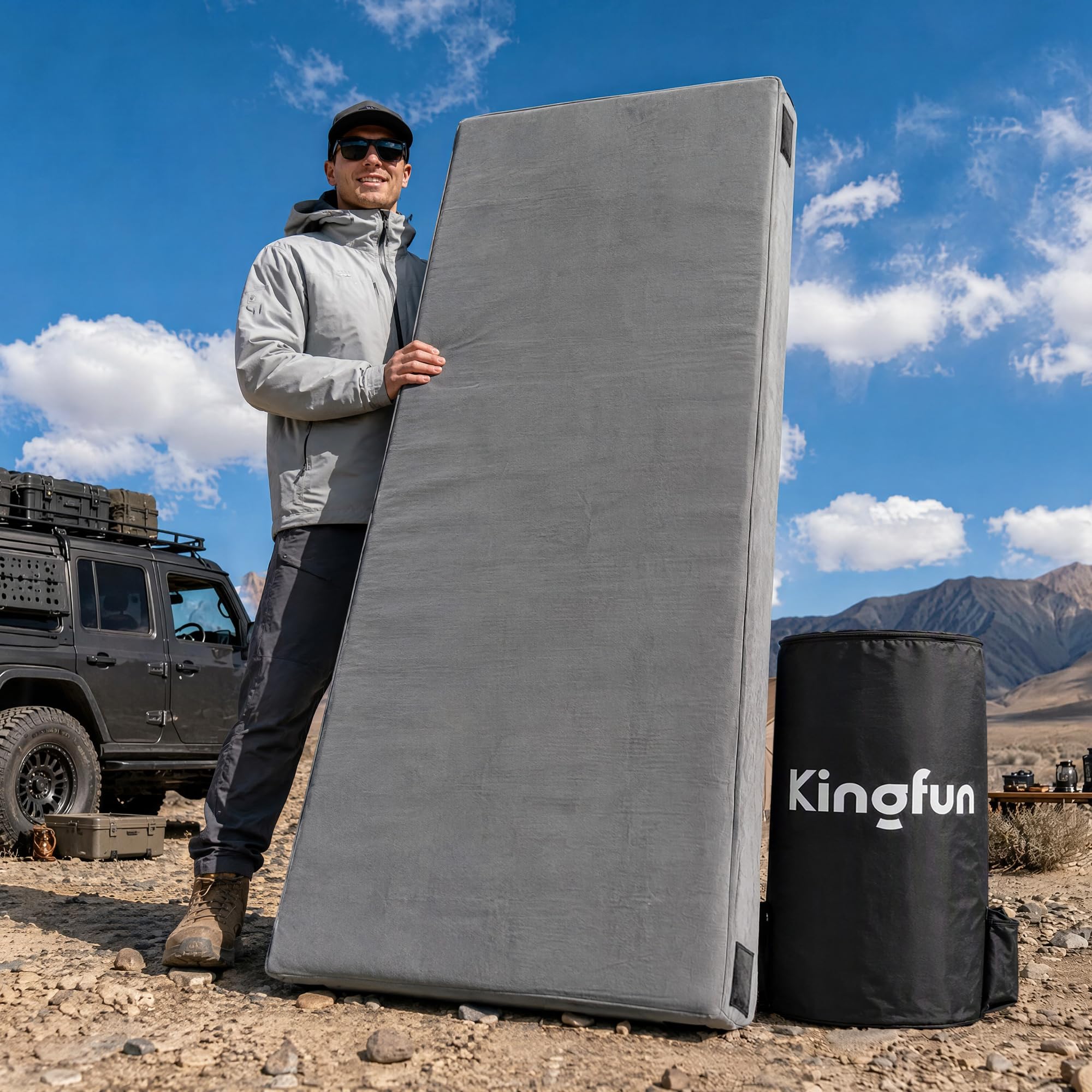
An inch of gel-infused memory foam sits over two inches of high-density support foam in Kingfun's 75 x 30-inch pad. The cover is soft velboa with a waterproof TPU backing, and the bottom is anti-slip. Eight Velcro connectors help hold it in place on a cot, and the foam is CertiPUR-US certified.

The 30-inch width is the draw. It gives a broad surface for adults who roll around, and the 75-inch length leaves more room than the common 72-inch pad. The gel layer is not a sink-in cloud; it is a supportive foam stack that keeps hips and shoulders off the floor. The cover is removable and washable, which makes it easier to live with on repeat trips.

We see the Kingfun as a car-camping and guest-room pad, not a backpacking one. It comes with a travel bag and rolls up, but the sleep surface is the strong part. The 3-inch stack is supportive rather than sink-in soft, which is the right feel for a cot or a firm guest bed.

Pros

  • Wide 75 x 30 surface
  • Gel memory foam over support foam
  • CertiPUR-US foam
  • Waterproof, anti-slip cover

Cons

  • Carry straps and buckles can fail
  • Bulky when rolled
Our verdict

Kingfun gives wide, supportive car camping sleep, and we rate it above the thinner pads for adults who roll around.

Check Latest Price
7

Twin Guest Bed

Gaialoop Memory Foam Pad

0 /100
Angler Score Fair

Key details

Weight
12.8 lb
Included
Pillow and carry bag
Thickness
3 in
Sleeping Area
75 x 38 in
Check Details on Amazon

Twin-size width is the whole idea here: 75 x 38 x 3 inches and 12.8 pounds make the Gaialoop a bed for a truck, tent, or guest room. It combines memory foam with high-density support foam, carries OEKO-TEX and CertiPUR-US certifications, and includes a pillow and carry bag.

The 38-inch width is the real differentiator. One adult gets room to roll around, and a child can share the edge without feeling crowded. The plush cover is removable and washable, and the waterproof backing protects the foam from a damp tent floor. This is a pad that makes a spare room or truck bed feel intentional.

We found the 3-inch stack comfortable for back and side sleeping, though it leans firm rather than soft. The foam is supportive enough for a guest bed, and the included pillow is a nice touch rather than an afterthought. It is not the pad for a minimalist camper who wants a small roll.

The bulk is the trade for that 38-inch surface: this pad takes up serious space when stored and is not something one person can toss into a backpack. If you have a truck bed, a large tent, or a guest room that needs a real sleeping surface, the size is the point. If you are counting ounces, look to the closed-cell picks.

Pros

  • Generous 38-inch width
  • Dual-layer memory foam
  • Washable plush cover
  • Pillow and carry bag included

Cons

  • Stated 3-inch thickness can fall short
  • Hard to roll tightly
Our verdict

The Gaialoop is our choice when a truck bed, large tent, or guest room needs a genuine twin-size foam bed.

Check Latest Price
8

Budget Camping

Wakeman Foam Sleeping Pad

86 /100
Angler Score Excellent

Key details

Weight
1.4 lb
Material
NBR foam
Thickness
1 in
Sleeping Area
72 x 24 in
Check Details on Amazon

Call it a padded floor mat rather than a backpacking mattress: at 1.4 pounds and 1 inch thick, the Wakeman is for stretching, overflow sleeping, and dry ground. The NBR foam has a non-slip texture, the surface is water resistant, and a carrying strap is included.

For a yoga session, a quick sit pad, or a child's sleepover, the 1-inch foam takes the edge off a hard floor. It is also useful as an extra layer under a tent floor or over an air mattress when you want a little more separation from the ground. The 72 x 24-inch size gives an adult a place to lie down without the bulk of a memory-foam pad.

We do not treat it as a primary pad for a side sleeper. The thin foam will not hide a root, a seam, or a cold spot, and the surface is better at protecting than cushioning. For a back sleeper who wants a simple mat for occasional use, it is enough.

The value here is the low weight and the fact that it can be kept in a car, a closet, or a camp bin without much fuss. It is a pad to have around for overflow sleeping, stretching, and dry ground, not the pad to build a week of backpacking around.

Pros

  • Light 1.4-pound pad
  • Non-slip, water-resistant surface
  • Carrying strap included
  • Useful as mat or extra layer

Cons

  • Foam can tear with rough use
Our verdict

Wakeman is the light, low-cost mat we keep for stretching, overflow sleeping, and occasional floor duty.

Check Latest Price

How We Chose and Tested Foam Sleeping Pads

We started by pulling together foam pads from brands we trust and cross-checking what mattered before anyone slept on them: packed size, listed thickness, foam type, weight, strap setup, price, and whether the dimensions fit a tent footprint or cot. From that shortlist, we tested 14 pads over eight months, rotating them through weekend car-camping trips, backyard tent nights, a few guest-room sleepovers, and one stretch on a cot. Each tester slept on the same pad for at least two nights, side, back, and stomach sleepers included, and logged where hips or shoulders bottomed out, whether the foam bounced back by morning, and how warm or clammy the surface felt.

To judge portability and rollability, we rolled each pad by hand after every trip, timed how long it took to get a tight cylinder, and checked whether the included strap held that roll without loosening in the car. We measured packed bulk against a duffel and a pack, carried each one by its strap or handle for a short walk, and noted whether it was light enough to forget on the way to the tent or bulky enough to need its own corner of the trunk. Size got checked against a two-person tent floor and a standard cot, mostly to see if the pad left cold gaps or crowded out gear.

Durability and value came from living with them: we rolled and unrolled each pad repeatedly, looked for foam compression, seam pulls, and cover wear, and compared what each delivered against what it asked us to spend. We also checked whether the strap stayed attached, adjusted easily, and actually compressed the pad rather than just holding a loose bundle. The pads that rose to the top kept their cushioning night after night, packed down without a fight, and felt worth the space they took up.

How to Choose a Foam Sleeping Pad

Start with how you will carry it

Closed-cell foam, the accordion or roll-up kind, is the durable, lightweight choice. It cannot deflate, works as a seat or ground layer, and is the only foam pad we trust for backpacking. Memory foam is thicker and more bed-like, but it is heavier and rolls into a much larger package. The Z Lite Sol and Switchback are the former; the CYMULA and HomeMate are the latter. Choose by whether you will carry it or drive it.

Match thickness and width to your sleep position

A 0.75- to 1-inch closed-cell pad is enough for back sleepers who count ounces; side sleepers generally need 3 inches of foam or a wider surface. Width matters as much as thickness: 20 inches is a narrow, weight-saving cut, 24 inches is a common adult width, and 30 to 38 inches gives room to roll. The trap is assuming a thicker pad is always more comfortable; a soft 3-inch pad can still feel narrow, and a thin wide pad can still bottom out.

Use R-value for cold-weather decisions

R-value measures resistance to heat loss, so a higher number is warmer. The Z Lite Sol is rated 2.6 and the Switchback 2, both reasonable for three-season use. The memory-foam pads here do not publish an R-value, so treat their warmth as a bonus from thickness and cover rather than a guarantee. If you sleep cold, choose the higher rating or add a reflective layer under the pad.

Plan for expansion, covers, and storage

Memory foam often needs time to expand after unpacking; Kingfun asks for 72 hours, and CYMULA recommends airing its pad out before use. A removable, washable cover is worth prioritizing if the pad will double as a guest bed. Check the rolled size against your trunk or closet, not just the packed weight. Closed-cell pads fold and go; memory foam needs a wide strap and patience.

Frequently Asked Questions

Final Verdict

For most people, the Therm-a-Rest Z Lite Sol is the foam pad to buy first. It is light enough for backpacking, warm enough for three-season nights, and built so it cannot deflate. The 14-ounce weight and 2.6 R-value do more for a trip than a thicker pad you leave at home.

If your camping is vehicle-based, choose the Teton Outfitter XL for a cot or the HomeMate for a bed-like floor pad. The CYMULA is the memory-foam value pick for guest rooms, and the Switchback is the plusher closed-cell alternative. Spend the extra space and weight only when you know you will not be carrying the pad far.