
Best Hiking Shoes for Women of 2026

The view from the top is the easy part. It's the mile of downhill after it — toes jamming into the front of the shoe, a heel sliding just enough to raise a hot spot — that tells you whether you bought the right pair. A women's hiking shoe has to do two jobs that pull against each other: grip loose rock and wet roots, and stay comfortable enough that you stop thinking about your feet. Get the fit and arch support right and the whole day changes; get them wrong and every step down is a negotiation.

Feet swell on the trail, which is why the size you wear to the office isn't always the size that works at mile five — most people learn that the hard way, on a blister. Over the past six months my team and I have put 12 pairs through mud, scree, and a surprising amount of pavement, and the gaps in cushioning and water resistance were wider than the prices suggested. Below are the pairs actually worth lacing up, sorted by what they do best.

1

Best Overall

Merrell Moab 3

91 /100
Angler Score Outstanding

Key details

Department
Women's
Model Number
J035894
Package Dimensions
13.35 x 9.02 x 5.08 inches; 2.6 pounds
Check Details on Amazon

There is no break-in period with the Moab 3. We took a pair out of the box and onto a rocky, root-crossed trail and came back without a hot spot, which is not something every shoe here manages. The toe box is the generous part — it leaves room for a thick sock without pressing on the outside of the foot, and it's the shape to choose if a wide forefoot has made hiking shoes miserable before. Sizing runs true, with enough volume that a heavy sock doesn't crowd your toes.

Underfoot is where it separates itself from the rest of this group. The arch support is the most convincing of the shoes we recommend, and it's the pair we reach for when the trail turns rocky or the descent gets steep: it stays stable underfoot instead of letting you feel every stone. Traction held on wet rock and loose gravel, and the tread doesn't skate when you step from stone to dirt. Build quality backs that up — nothing on the shoe felt like it was going to be the first thing to fail.

What you trade for that is weight. The Moab 3 is the beefier shoe beside the Siren Edge 3 — the listing puts its shipping weight at 2.6 pounds against 1.74 — and on a flat, fast walk you feel the extra shoe. Carry a pack or hike rough ground and the trade flips: the extra structure is what holds your feet together on a long descent. Lightweight it is not; unbothered by a hard trail, it very much is.

Pros

  • No break-in before your first hike
  • Roomy toe box leaves space for thick socks
  • Supportive arch that holds on rocky ground
  • Tread grips wet rock and loose gravel

Cons

  • The priciest pick in this group
Our verdict

For rocky trails and long days with a pack, the Moab 3 is the pair we hand people first: supportive, roomy, and comfortable without a break-in.
Check Latest Price
2

Best Value

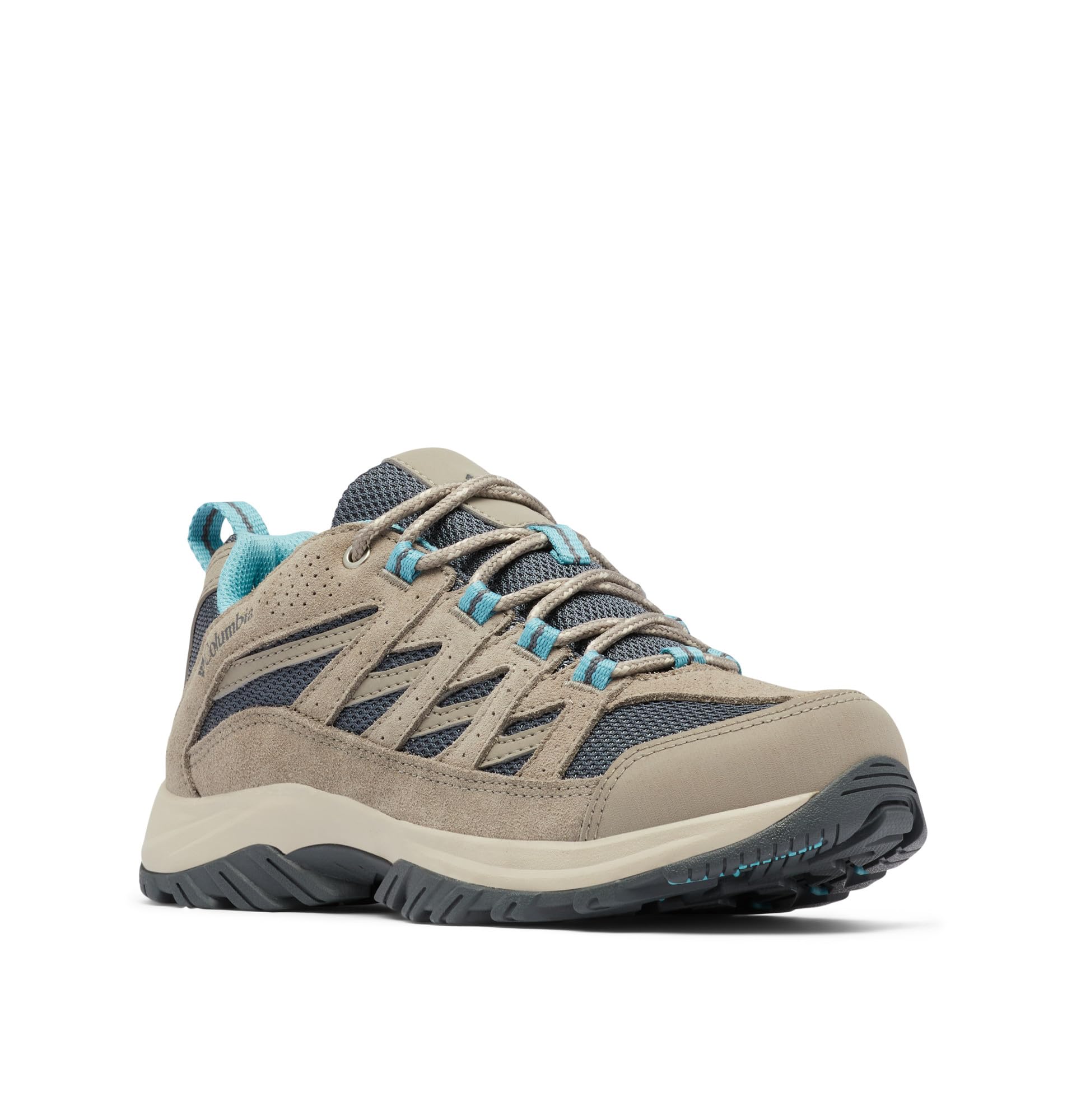
Columbia Crestwood

90 /100
Angler Score Outstanding

Key details

Type
Hiking shoe
Department
Women's
Model Number
178114
Check Details on Amazon

The Crestwood is the value pick of this group, and it earns that on fit rather than on features. The toe box is genuinely roomy, wide sizes are available, and the shoe takes an aftermarket orthotic or a bunion without pinching — the kind of thing that matters more than any number once you're three miles in. Sizing runs true and the upper is soft from the first walk, so there's nothing to break in before a first outing.

The tread is the pleasant surprise. It grips rock and packed dirt with more confidence than the price suggests, and it held on soft dirt and snow without sliding. Underfoot it's comfortable for a couple of hours at a stretch, which is the kind of hiking most buyers of this shoe are actually doing: a local trail on a Saturday, a winter walk, an all-day errand run.

Think of it as a first hiking shoe or a second pair for everyday trails. For someone building confidence on maintained paths, or who wants one pair for dog walks and weekend rambles, it covers the ground and leaves room in the budget for a proper pair of wool socks. Take it onto scree or a multi-day traverse and you'll want more shoe.

Pros

  • Roomy toe box that suits wide feet
  • Takes an orthotic or bunion without pinching
  • Grip that holds on rock and packed dirt

Cons

  • Mesh upper wets through in puddles and wet grass
  • Uppers have torn within months on some pairs
Our verdict

If you hike maintained trails a few times a month and want a roomy, grippy shoe without spending much, the Crestwood is the one we hand beginners.

Check Latest Price
3

Best Lightweight

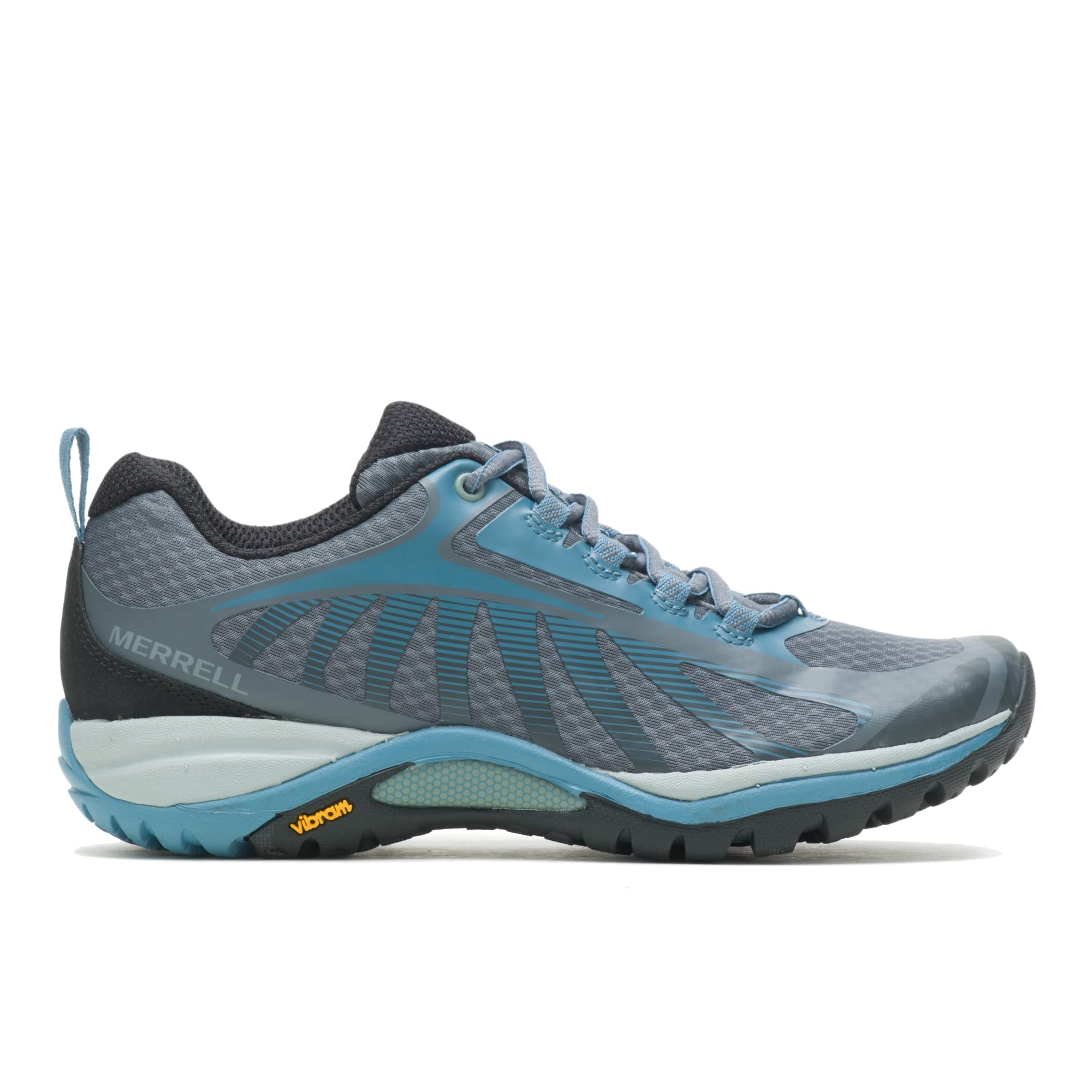
Merrell Siren Edge 3

89 /100
Angler Score Excellent

Key details

Type
Hiking shoe
Department
Women's
Package Dimensions
12.24 x 8.5 x 4.21 inches; 1.74 pounds
Check Details on Amazon

At 1.74 pounds of listed package weight, the Siren Edge 3 is the lightest shoe in this group, and that's the difference you feel first. On the trail it disappears: the shoe is quick off the ground, there's no break-in to plan around, and it still puts real support under the arch. If you have been hiking in stiff boots and blaming your knees, this is the place to start.

Light doesn't mean flimsy. The shoe held its shape on steep, pebbly ground, the tread kept its footing on loose rock, and the arch support is real rather than nominal. It's the quick, sporty end of this group rather than the plush end, and it suits someone who wants to move rather than someone who wants to be cradled. Sizing runs true, so order the size you normally wear.

The stock insole is the weak point: it's firm, and on a long day you feel every mile of it. That's fixable — a cushioned aftermarket insole turns this into a much softer shoe — but if you like a plush ride straight out of the box, budget for the swap or look at the Crestwood. Treat it as a light trail shoe you'll customize once, and it rewards you on every climb.

Pros

  • Lightest shoe in this group
  • Real arch support without the bulk
  • Tread holds on steep, pebbly ground

Cons

No notable drawbacks to flag.

Our verdict

If you want a light, quick-feeling trail shoe for day hikes and don't mind adding your own insole, the Siren Edge 3 is the pair to lace up.

Check Latest Price
4

Best Budget

NORTIV 8 Quick Lace

85 /100
Angler Score Excellent

Key details

Type
Hiking shoe
Closure
Quick lace
Department
Women's
Check Details on Amazon

The lacing is a drawcord you pull and tuck rather than a pair of laces to tie, and that single design choice sums up who this shoe is for: someone who wants to step in and go. It's the least expensive shoe here by a clear margin, and it looks better than it costs — the shape reads as a modern trail sneaker, which is half the appeal if you want one pair for the trail and the coffee shop after.

Grip is the part that surprised us. The outsole handles slippery rock and steep dirt better than a shoe at this price has any right to, and it feels balanced underfoot on uneven ground. Comfort is where the savings show: the ride is firmer and flatter than the Merrells, and this is the shoe in the group most likely to leave you aware of your feet at the end of a long day.

So the case for it is value and convenience. As a first pair, a travel shoe that packs flat, or a spare to keep by the door for muddy mornings, it does a surprising amount of what the expensive shoes do — and the drawcord is genuinely nicer than wet laces on a cold morning. Buy it for that job and it earns its keep.

Pros

  • Drawcord lacing goes on in seconds
  • Grip that holds on slick rock
  • Least expensive pair here

Cons

  • Uppers and seams can give out within a season
  • Narrow through the middle for wide feet
Our verdict

We recommend the NORTIV 8 as a first pair, a travel shoe, or a spare: real grip and an easy step-in for the least money here.

Check Latest Price
5

Trail and Town

CC-Los Hiking Shoe

84 /100
Angler Score Excellent

Key details

Type
Hiking shoe
Department
Women's
Water Resistance
Waterproof
Check Details on Amazon

Nothing about these says hiking shoe. The upper is understated, the colors are quiet, and the shape reads as a trail sneaker — one of the few pairs here you can wear into town after a hike without feeling like you're clomping around in gear. The comfort backs up the looks: the upper is soft from the first wear, and it takes no effort to get them on and off.

Where it earns its place in this group is grip for the money. The outsole held on rocky, slippery ground without the slide you half expect from a cheaper shoe, and it doesn't feel flimsy underfoot. It's easy to live with too — mud rinses off the upper and the shoe comes back looking like itself, which is more than most light-colored trail shoes manage.

The length is the thing to plan around: it runs tight, and a half size up is the safer call, especially with wool socks. Get that right and this is a quietly good trail shoe for day hikes, travel, and the rocky paths where you'd rather not put wear on a nicer pair.

Pros

  • Understated enough to wear into town
  • Grip holds on rocky, slippery ground
  • Soft upper from the first wear

Cons

  • Waterproofing doesn't hold on long wet walks
Our verdict

We recommend the CC-Los to anyone who wants a trail shoe that reads as a sneaker: quiet looks, real grip, and an easy price.

Check Latest Price

How We Tested a Dozen Pairs of Women's Hiking Shoes

We started by pulling together everything on the market in the $60–$200 range and reading the spec sheets closely — lug depth and tread pattern, whether the waterproofing was a built-in membrane or a spray-on coating, the drop, the weight of a single shoe, and how many widths and half sizes each style came in. Reviews from women with wide feet, high arches, and plantar fasciitis did a lot of the filtering for us. That narrowed the field to 12 pairs, which we bought ourselves.

Fit came first, because nothing else matters if the shoe doesn't match your foot. Each tester wore her assigned pair for a full day of errands and stairs before it ever touched dirt, and we noted exactly where pressure landed — across the instep, at the outside edge of the pinky toe, under the ball of the foot. We also pulled the stock insoles out and compared their arch curve against a wet footprint, then repeated the walks with a pair of off-the-shelf insoles to see how much room was actually in there.

On the trail, we paid attention to actions rather than labels. We walked a steep, gravelly descent with a loaded pack and watched for toes sliding forward into the front of the shoe. We stood each pair in a few inches of moving creek water for two minutes with a paper towel stuffed inside, then checked for damp. Cushioning got judged on long, hard-packed days — eight miles or more — by asking whether our feet felt pounded the next morning. And we finished by checking the stitching at the flex point and how badly the toe caps had scuffed.

One more thing we tracked: whether we'd keep wearing a pair after the hike, into a coffee shop or the car ride home. A shoe that looks like a trail shoe and feels like a slipper earns a spot in the rotation; one you resent changing out of ends up in the closet.

How to Choose Hiking Shoes for Women

Fit Comes Before Everything Else

A hiking shoe with excellent tread still ruins a day if your toes hit the front on the descent. Shop at the end of the day, wear the socks you hike in, and leave a thumb's width between your longest toe and the front of the shoe. Width matters as much as length — the Columbia Crestwood comes in wide sizes, and the Merrell Moab 3 carries enough volume in a standard width that a broad forefoot has room to spread.

Then walk, and listen for the heel. It should sit down without slipping, because a sliding heel is where blisters start. If you wear orthotics, bring them with you; a shoe that fits without them can turn tight with them in.

Match the Tread to the Ground You Walk

Deep, blocky lugs bite into mud and loose dirt. A flatter, stickier sole is the better choice on smooth wet rock and hardpack, and a shallow tread is all you need on rail trails and gravel paths. Most day hikers want the middle: enough bite for dirt and rock without feeling like you're walking on cleats. The NORTIV 8 is the proof that price doesn't decide this — nothing about what it costs suggests trail grip, and it holds on slick rock anyway.

Waterproof, Water-Resistant, or Mesh

A membrane keeps splashes out, but it also holds heat in and, once water comes over the collar, holds it there. Plain mesh dries in minutes and breathes better on a summer climb, though it wets through in tall grass. Treat 'water resistant' with suspicion: it usually means a coating that shrugs off a light shower and gives up in a puddle. For hot, dry hiking, breathable mesh with wool socks beats a waterproof shoe that soaks your socks from the inside.

Weigh Weight Against Support

Light shoes are less work to lift, mile after mile, which is why the Siren Edge 3 is our pick for fast day hikes. The trade shows up on rough ground and long descents: a beefier shoe like the Moab 3 puts more structure under the arch and doesn't let you feel every stone. Carry more than water and lunch, or walk loose, rocky ground, and the extra weight buys you something real. Walk flat, well-made trails and it buys you very little.

Expect to Change the Insole

Stock insoles are where shoe makers save money, and the gap between a firm one and a cushioned one is the gap between loving a pair and tolerating it. If you want more arch support or a softer ride, buy the shoes with the replacement insoles in hand and fit them together — sometimes a half size up covers the extra volume. Our Siren Edge 3 pick is the clearest case: firm out of the box, transformed by a cushioned insole.

Frequently Asked Questions

Final Verdict

Start with the Merrell Moab 3. It needs no break-in, it has the most forgiving fit of the supportive shoes here, and it stays stable when the ground turns rocky — which is what most women shopping for a hiking shoe are actually asking for. The weight and the price are the trade, and on real trails they're worth paying.

If budget is the constraint, the Columbia Crestwood covers maintained trails and everyday walks with one of the roomiest toe boxes in the group, and its grip is better than its price suggests. Want the lightest pair? The Siren Edge 3 disappears on your foot, as long as you're willing to add a cushioned insole.