Best Neoprene Bootfoot Waders of 2026

The water hits your knee first, then your waist, and that's usually where the truth comes out — a cold trickle at the sock if a seam has given up, or steady warmth if the pair is built right. Neoprene bootfoot waders solve a particular problem: boot and leg are one sealed unit, so there's no ankle gap for river water to find, and the foam shell holds heat in water that would otherwise numb you in minutes. What separates the good ones is quieter than the marketing suggests — seam construction, a boot that fits a real foot, and neoprene that doesn't fight you on the walk back to the truck.

I've fished and hunted in leaky waders enough to be fussy. My team and I spent eight months in 12 pairs — cold rivers, muddy marsh, worse — and the ones that stayed dry all shared sealed or taped seams. Here's what first-timers learn the hard way: fit the boot to your thickest socks, not your street shoes. The picks below are the ones I'd pull on again without thinking twice.

1

Best Overall

Foxelli 4mm Neoprene Bootfoot

91 /100
Angler Score Outstanding

Key details

Boot
Integrated bootfoot
Shipping Weight
8.4 lb
Neoprene Thickness
4 mm
Check Details on Amazon

Four millimeters of neoprene for less than any other neoprene wader in this guide is the headline, and it is why we point most people here. The shell is thick enough to hold its shape when you step into it on a cold morning, the boots are part of the wader rather than a separate pair you fight on over a stocking foot, and it costs less than the insulated pair we like from HISEA. For a first pair, a spare that lives behind the truck seat, or a season that only runs a few weekends, that math is hard to beat.

The boot is the part to think about. This pair runs small, and going up a size buys room in the toe and space for a wool sock without changing anything else about the fit. Order with the socks you actually fish in on your feet, and if you are on the line between two sizes, take the larger one. The legs and chest are cut generously, which is welcome in November and leaves some slack around the thigh if you are built slim.

Warmth is where it quietly earns its keep. A 4mm shell holds heat in water that would have you shivering in a nylon wader, and the neoprene softens with use until you stop thinking about it. The box includes a carry bag and a waterproof phone pouch, and the pouch is the sort of thing that ends up living in the boat bag permanently. Nothing about the package feels like a corner that was cut to hit a price.

Pros

  • 4mm neoprene at the lowest price here
  • Warm and comfortable in cold rivers
  • Carry bag and waterproof phone pouch included
  • Lighter shipping weight than the bulkier picks

Cons

  • Seam leaks turn up in some pairs
Our verdict

The pair we recommend to most anglers: 4mm of neoprene, a proper bootfoot, and the best balance of warmth and price in this guide.

Check Latest Price
2

Best Insulated Boots

HISEA 600G Insulated Neoprene

0 /100
Angler Score Fair

Key details

Sole
Cleated rubber
Seams
Bonded and taped
Boot Insulation
600 g Thinsulate
Neoprene Thickness
4.5 mm
Check Details on Amazon

Six hundred grams of Thinsulate in the boot is the number that separates this pair from everything else in the group. The body is 4.5mm neoprene laminated to a nylon jersey face and a stretch liner, the thickest shell here, but it is the boot that does the heavy lifting when you are standing still in water close to freezing. The rubber is cleated, the seams are double-stitched, bonded, and taped, and the whole thing comes in a camo print that reads as hunting gear rather than fishing gear.

We rate it the warmest shell-and-boot combination in this set, and it is the one to take if your season runs into hard frost. The trade is bulk, and you feel it on the walk in: 4.5mm plus a 600-gram boot is a lot of insulation to carry. The chest runs snug on broad frames, so if you are wide across the shoulders or plan to put a fleece underneath, take the size up.

The details are thought through. Knees are reinforced, the shoulder straps are padded, and the cut is long enough to sit over a jacket without riding up when you bend. Rinse it and hang it after every trip, because neoprene stored wet and folded stiffens, and this is too much wader to replace because it was left in a heap in the garage.

Pros

  • 600-gram Thinsulate boots for near-freezing water
  • 4.5mm neoprene, the thickest shell here
  • Double-stitched, bonded, and taped seams
  • Padded straps and reinforced knees

Cons

  • Knee and seam wear in some pairs
Our verdict

If you stand still in freezing water, the 600-gram boot matters more than shell thickness, and we rate this the warmest pair here for cold-weather hunting.

Check Latest Price
3

Best Midrange Pick

TIDEWE Neoprene Chest Wader

89 /100
Angler Score Excellent

Key details

Boot
Integrated bootfoot
Material
Neoprene
Shipping Weight
11 lb
Check Details on Amazon

If you want one pair of neoprene waders to cover trout in April through duck season in December, this is the middle of the road in the best sense. Warmth without the insulated boot, generous room through the legs, and knee guards we did not expect at this level. Nothing about it is extreme, and that is exactly the point.

Comfort is where it earns its keep. It is easy to move in, easy to pull on when your hands are cold and not cooperating, and warm in water that would have you shivering in a nylon wader. A pair of tall wool socks solves the one niggle we found, the boot top pressing into the side of the leg. The soles are the real limitation: slick on wet rock and algae, fine on gravel and soft mud, and worth thinking about if your water is a mossy tailwater.

At 11 pounds shipped it is heavier than the Foxelli, and that weight is neoprene doing its job rather than a fault. Buckles, a belt, and a chest pocket are all present and unremarkable, which is what you want from hardware on a wader. Hang it to dry and it goes back in the truck ready for the next cold morning.

Pros

  • Warm neoprene without insulated-boot bulk
  • Generous leg room and knee guards
  • Comfortable and easy to move in

Cons

  • Water can seep through at the seams
Our verdict

The sensible middle of this group: warm neoprene, generous leg room, and easy handling for anyone buying a first pair.

Check Latest Price
4

Best for Late-Season Hunting

TIDEWE Neoprene Hunting Wader

91 /100
Angler Score Outstanding

Key details

Style
Chest hunting wader
Sizing
By boot size
Material
Neoprene
Check Details on Amazon

A hard frost, a skim of ice at the edge of the marsh, two hours of standing still: that is the morning this pair was built for. The neoprene body and the insulated boot hold heat where a lighter wader gives up, and the chest sits high enough to lean into the wind without feeling exposed. If your season ends when the birds leave rather than when the calendar does, start here.

There is a hand-warmer pocket across the chest, which sounds like a gimmick until you have spent a morning with numb fingers and nowhere to put them. The cut is roomy enough for a base layer plus a fleece, and getting in and out is quick enough to do in the dark, which is when you will actually be doing it.

Warmth is the whole argument, and it holds: this is the pair we reach for when the water is in the thirties and the plan is to stand rather than walk. The walk in is the catch, because the same insulation that makes a cold blind comfortable will have you sweating before you get there, and a damp base layer on a slow morning undoes everything the wader just did for you. Strip a layer before the hike and put it back on when you stop moving.

Pros

  • Warm enough for standing in near-freezing water
  • Hand-warmer pocket and room for layers
  • Quick to get in and out of in the dark

Cons

  • Runs big for a true-to-size order
  • Knee-padding stitching can come apart
Our verdict

We keep this one for the coldest sits: warm, roomy, and built for standing still, though the walk in will leave you sweating.

Check Latest Price
5

Best for Women

HISEA Women's 400G Neoprene

89 /100
Angler Score Excellent

Key details

Sole
Cleated rubber
Boot Insulation
400 g Thinsulate
Neoprene Thickness
4.5 mm
Check Details on Amazon

The Arabian Leopard print is what you notice first, and there is no point pretending otherwise: this is the only wader here you could call fun. Underneath is a real women's cut, with 4.5mm neoprene, 400-gram boots, and shoulders, chest, and leg length proportioned for a shorter frame rather than a men's pattern scaled down. It is the pair we recommend to women who are tired of swimming in a men's small.

The pre-ship check is the detail that sold us. Every wader in this line is turned inside out, filled with water, and hung to dry before it goes out, a leak test we cannot point to on any other pair here, and the sort of check that catches a boot seam before you find it in a cold river. The 400-gram boot is the middle of the range: warm for fall and mild winter, no substitute for 600-gram rubber in real ice.

Sizing is generous, and that is the thing to plan around. When the fit misses here, it misses big, so if you are between sizes take the smaller one, and match the boot to your normal shoe size rather than assuming it will run like your hiking boots. The belt, chest pocket, and cleated soles are all present and sensible, and the print has a way of improving a gray morning.

Pros

  • Women's cut, not a scaled-down men's wader
  • Every pair leak-tested before shipping
  • Warm 400-gram insulated boots
  • A print that is actually fun

Cons

  • Stitching at the legs comes apart in some pairs
Our verdict

A women's-specific wader with genuinely warm boots and a cut that suits shorter frames, and we recommend it without the usual unisex compromise.

Check Latest Price
6

Mobile Fly Fishing

Trudave Neoprene Bootfoot Wader

86 /100
Angler Score Excellent

Key details

Boot
PVC bootfoot
Seams
Stitched, glued, taped
Neoprene Thickness
4.0 mm
Check Details on Amazon

It ships with a boot hanger and a waterproof phone pouch, and those small inclusions tell you someone thought about the whole trip rather than just the wading. The pouch matters more than it sounds: a phone in a chest pocket is a phone that eventually gets wet.

The body is 4.0mm neoprene with seams that are stitched, glued, and taped, and the boots are PVC with a textured anti-slip sole. That lighter shell is why this pair is comfortable to walk and bend in, and an afternoon crouching to tie on flies does not leave it fighting you the way a thicker wader can. It dries quickly too and does not hold river smell the way heavier rubber does.

This is the pair for the angler who walks a mile to the water and wades gently once they are there. The boot is where it gives ground: PVC is light and cheap to mold, and it does not bite into wet rock the way a cleated rubber sole does. Gravel, sand, and soft mud are fine; mossy ledges call for more tread. For fly fishing and open river wading, that is an easy trade to accept.

Pros

  • Light 4.0mm shell that moves and bends easily
  • Stitched, glued, and taped seams
  • Boot hanger and dry pouch included

Cons

  • Thinner 4.0mm shell gives up warmth in hard winter
Our verdict

A lighter 4mm wader for anglers who cover ground, with taped seams and a couple of genuinely useful extras in the box.

Check Latest Price
7

Flooded Timber Hunts

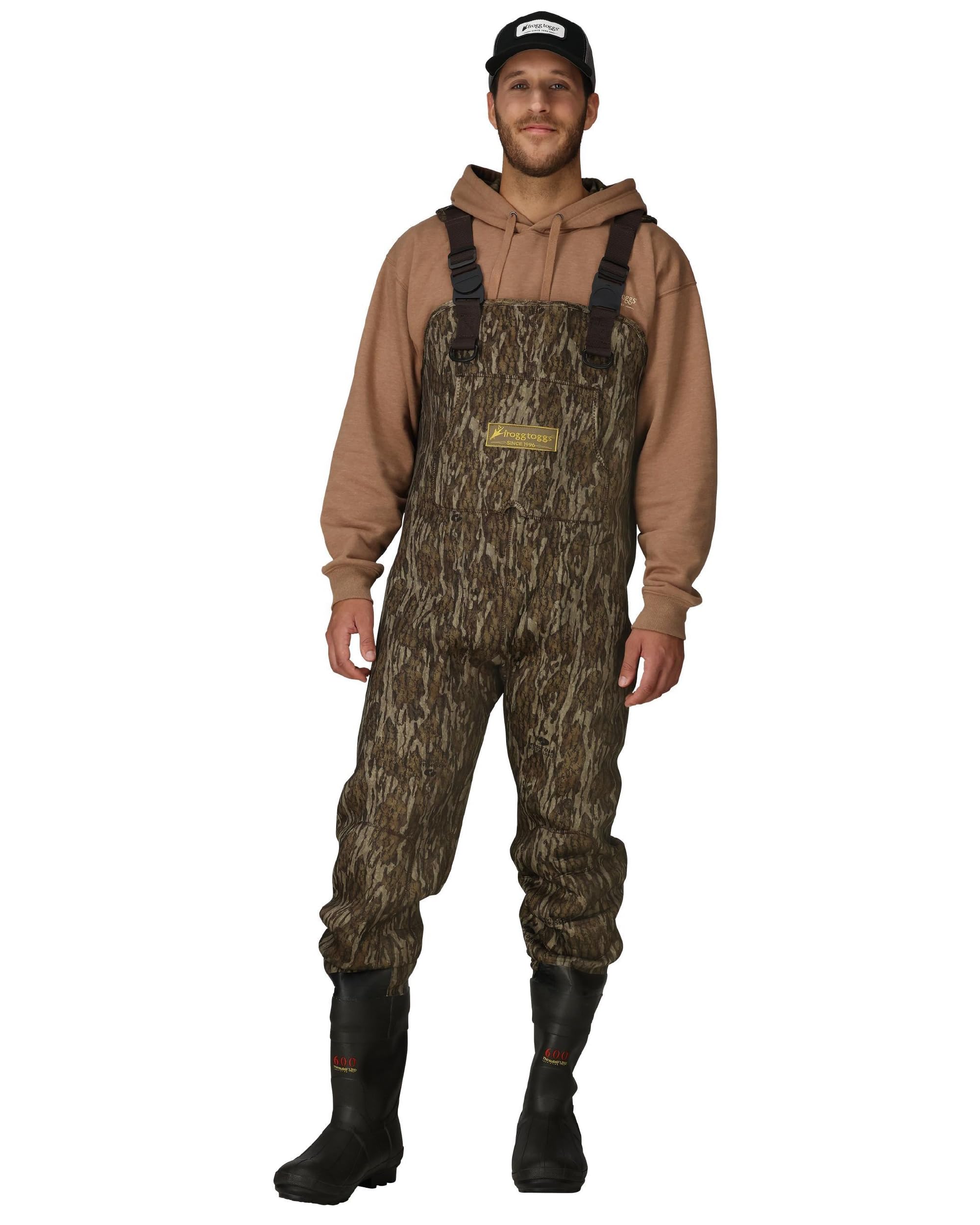
Frogg Toggs Amphib Neoprene

85 /100
Angler Score Excellent

Key details

Boot
Integrated bootfoot
Pattern
Camo
Material
Neoprene
Check Details on Amazon

Start with the size, because it decides everything else. These run big and long: the boots are cut generously enough that a wearer in a 13 shoe lands comfortably in a 12, and the legs are long enough that shorter anglers lose the boot top somewhere near the knee. Order down a size, and if you are on the short side, this is not the pair for you.

Get the size right and there is plenty to like. The neoprene is warm, the boots are comfortable enough to stand in all morning, and the camo does what camo is supposed to in a flooded field. It is a hunting wader first, built for sitting in a blind and walking flooded corn rather than scrambling down a rock bank after trout.

What it gives up is refinement. The knees and the shoulder straps are the parts that feel built to a price, and the fit is the least precise of anything here, which is a real cost when you are layering underneath in December. Warmth and comfort are genuine; tailoring is not its strength.

So this is a conditional recommendation: a tall hunter who orders a size down, keeps them clear of brush, and rinses and hangs them after every trip. Meet those conditions and the warmth earns its place in the truck. Miss the sizing and you will spend the season fighting a wader that is half a foot too long.

Pros

  • Warm neoprene for cold field hunting
  • Comfortable for a full morning in a blind
  • Camo pattern suits duck and goose setups

Cons

  • Knee patches and seams come apart
Our verdict

Warm, comfortable camo waders for tall hunters who size down, and the build is the reason we stop short of a full endorsement.

Check Latest Price

How We Tested Neoprene Bootfoot Waders

We built the shortlist by reading through hundreds of reviews and pulling every neoprene bootfoot wader with a stated neoprene thickness, a published boot-size chart, and a pattern of repeat buyers. Anything with vague sizing, unsealed seams, or a price that suggested corners were cut came off first. That left 12 pairs, which we bought ourselves and rotated through eight months of fishing and hunting seasons so no one could send us a doctored sample.

Those 12 pairs went chest-deep in a 42-degree tailwater, into a duck marsh well before legal light, and out onto a tidal flat where the mud grabs at a boot. After every session we peeled out and checked wool socks at the toe, heel, and seam line for damp, then laid each pair flat and filled the legs with water in the tub to watch the seams from the outside. We noted where water crept in, how fast, and whether it was a pinhole or a whole seam letting go.

Warmth got measured in shivers: I stood in the same cold water for 45 minutes per pair and paid attention to when cold turned to numb, and whether the insulated pairs bought real time or just bulk. Fit was about the boot, not the chest — we tried each with thin and thick wool socks, walked a mile of gravel, timed getting in and out, and weighed them on a luggage scale for anyone packing in. Durability showed up in ugly places: pushing through brambles and over oyster shells, then checking knees and inseams for abrasion. We compared price against how each pair finished, because a cheap set that seeps in month two is the expensive one.

How to Choose Neoprene Bootfoot Waders

When Neoprene Beats a Nylon Wader

Neoprene is heavy, warm, and pricey next to the 2-ply nylon and PVC waders that sell for a fraction as much. It earns that weight in cold water and cold air: the shell insulates even when it is wet, so standing thigh-deep for two hours is a different experience from shivering through it. If you fish warm summer water, hike far, or pack waders into a duffel, a lightweight nylon pair is the smarter buy and we would not talk you out of it.

If you hunt, or you fish a tailwater in November, neoprene is what keeps you out there longer. The pairs here run from a 4.0mm shell to 4.5mm, and every one of them is warmer than the nylon alternative in the same water.

Thickness and Boot Insulation Are Two Different Numbers

Four to 4.5mm is the useful range for a shell that keeps you warm without turning you into a suit of armor; thinner shells suit mild weather and moving around, thicker ones suit standing still. Then read the boot, because that is where cold feet actually start. A 400-gram insulated boot is a fall boot, 600 grams handles hard frost, and 800 grams is for slush.

The common mistake is chasing the thicker shell and ignoring the boot. Your feet sit in that boot all day, and cold feet end a trip faster than cold legs ever will. If you plan to stand rather than walk, spend your money on boot insulation first.

Size the Boot First, Then the Body

The number on the label is a boot size, not your trouser size, and the boot is the one measurement you cannot adjust later. Try them on with the socks you actually fish in; a heavy wool sock can move you up a full size. Do not assume the boot matches your street shoe either, because plenty of pairs run small and a few run big.

Then check the body: you need room to bend at the waist, to raise your arms overhead without the crotch pulling, and to layer a fleece underneath without feeling vacuum-packed. Broad shoulders are the usual sticking point, so size for the chest and accept slightly roomy legs.

Seams and the Boot Join Decide Whether You Stay Dry

Water almost never comes through the neoprene itself. It comes through the places where pieces meet: the boot-to-leg join, the crotch, and the knee panels. The strongest construction in this group is stitched, glued, and taped, with the boot bonded into the leg rather than stitched on and hoped for.

Before your first trip, stand in shallow water for ten minutes and look hard at the boot seam when you step out. A damp sock on day one is a return, not a repair project. After that, rinse with fresh water, hang by the boots in moving air, and keep them out of direct sun and away from heaters.

Weight, Soles, and What the Walk In Costs You

The pairs here ship between roughly 8 and 11 pounds, and that difference matters more than it sounds when you are walking a mile of flooded timber. Heavier means more insulation and more shell; lighter means you arrive fresher. Think about which one your season actually asks for.

Soles decide the rest. Cleated rubber bites on rock, ramp, and packed mud, while smoother soles are quieter in a blind but sketchy on algae. Knee padding earns its place if you kneel for decoys or sit on a bucket, and a chest pocket is worth more than it looks once you are carrying a phone and a license.

Frequently Asked Questions

Final Verdict

Most people should buy the Foxelli 4mm pair. It is the least expensive neoprene wader here, thick enough for late-fall water, and the warmth and comfort hold up across a very large body of use. Order it a size up in the boot and you have the best value in this guide.

If your season means standing still in freezing water, the HISEA 600-gram pair is worth the step up, because that boot is what keeps your feet in the game. Women should start with the HISEA women's cut and settle the boot size before anything else.