Best Portable Carbon Monoxide Detectors of 2026

Carbon monoxide is the one household danger you can't see, smell, or taste — which is exactly why a portable detector earns its keep. A wall-mounted alarm is fine until the power goes out, until you're in a camper, or until you're checking a basement utility room. What you want is a small unit that reads the air in front of you, shows the number plainly, and runs on its own batteries. The right one quiets the 2 a.m. worry that a headache is something more.

We spent five months living with 14 portable detectors — clipping them to backpacks, setting them on hotel nightstands, and leaving them near gas appliances. The differences came down to response time, display legibility, battery life, and whether mounting one was a five-minute job or a chore. Cheap doesn't have to mean disposable, but not every model earns its keep; some are bulky, some bury the reading behind menus. The picks below are the ones I'd actually keep within reach.

1

Best Overall

Kidde KN-COPP-B-LPM

95 /100
Angler Score Outstanding

Key details

Alarm
85 dB audible
Power
2 AA batteries (included)
Sensor
Electrochemical
Display
Digital ppm with peak memory
Check Details on Amazon

Plenty of detectors on this page are instruments. The Kidde is a home alarm that happens to be easy to carry, and that distinction is why it's our top pick: two AA batteries (included) run it, it stands on a dresser or screws to a wall, and the LCD gives you an actual ppm number instead of a chirp and a shrug.

That number changes how you use it. A plain alarm tells you something happened; this one tells you roughly how much, then holds the highest level it recorded in peak memory, so a closed-up camper or a hotel room with a gas fireplace can be checked after the fact rather than during it.

About the footprint of a coaster — 4.5 inches wide and 2.75 tall — it fits a nightstand without rearranging anything, and 85 decibels is enough to wake a bedroom. It isn't a pocket meter, though: 9.28 ounces is heavier than the Klein or the Sensorcon, and there's no vibration mode, which is the one feature the TOPTES has that we miss here.

It's rated for 5% to 95% relative humidity, which covers a steamy cabin bathroom or a beach rental, and the 10-year limited warranty is the longest in this group. Buy a spare pair of AAs, drop it in the suitcase, and it's the one piece of safety gear that comes on every trip without being asked.

Pros

  • Live ppm display plus peak-level memory
  • Standard AA batteries you can buy anywhere
  • Stands on a shelf or mounts to a wall

Cons

  • No vibration alert for noisy settings
  • Bulkier than the pocket meters here
Our verdict

Our pick for most people: a genuine CO alarm with a ppm display, two AA batteries, and a footprint that fits a nightstand or a camper shelf — and it's the least expensive detector here.

Check Latest Price
2

Best for Camping and Road Trips

TOPTES CT-580

87 /100
Angler Score Excellent

Key details

Power
Rechargeable internal battery
Range
0 to 1000 ppm
Alarms
Sound, light, and vibration
Display
TFT color
Check Details on Amazon

Three alarm modes is two more than most detectors here offer, and the extra one is why this is our camping pick. The CT-580 vibrates as well as sounding and flashing, which matters when the background noise is a generator, a box fan, or rain on a tent fly — a tone you sleep through isn't much of an alarm.

The color screen is the friendliest here: continuous ppm, adjustable brightness, and an auto screen-off that keeps it from lighting up a dark tent all night. The alarm thresholds can be adjusted too, which turns it from a fixed-threshold alarm into something you can use to chase a small leak around a camper rather than only to be told about a large one.

It recharges over USB and ships with its own case, so there's no AA drawer to raid before a trip — and no gas-station fix if you forget. We treat charging it as part of packing, the same as a headlamp. What we don't rely on is the ppm figure: readings are indicative rather than calibration-grade, so use it to spot a trend and leave the defensible numbers to the Klein or the Sensorcon.

Pros

  • Vibration you can feel in a noisy tent
  • Rechargeable, with a carry case included
  • Adjustable thresholds for tracking a leak
  • Bright color display with auto dimming

Cons

  • Must be charged before trips; no AA fallback
  • Readings are indicative, not calibration-grade
Our verdict

Tent, van, or thin-walled cabin: the vibration alarm, color display, and rechargeable body make this the detector we pack for noisy nights.

Check Latest Price
3

Best for Diagnostics

Klein Tools ET110

91 /100
Angler Score Outstanding

Key details

Range
0 to 1000 ppm
Weight
5.1 oz
Display
Backlit ppm and temperature
Alarm Set Points
35 ppm and 200 ppm
Check Details on Amazon

The backlit screen reads 0 to 1000 ppm and also shows temperature in Fahrenheit and Celsius — a pairing that sounds like filler until you're watching a flue heat up while the room stays cold, which tells you something about draft that a CO number alone won't.

As a troubleshooting tool it's the most complete here. Alarms trip at 35 and 200 ppm, and the short-term exposure limit alarm catches the moderate, sustained exposures a household alarm is built to sit through. Add the pouch and the included batteries and it's ready to ride in a tool bag.

What it isn't is a bedroom alarm. Thirty-five ppm is an occupational set point, not a wake-you-up threshold, so it supplements a home CO alarm rather than replacing one. Accuracy is the other thing to weigh: readings can drift from a reference instrument, so a calibration check is part of owning this one rather than an optional extra.

Pros

  • Reads 0 to 1000 ppm plus ambient temperature
  • Two set points plus a STEL alarm
  • Pouch and batteries in the box

Cons

  • Readings can drift from a reference meter
  • Set points suit exposure limits, not bedrooms
Our verdict

For chasing a leak rather than guarding a sleeper, the ET110's 0 to 1000 ppm readout, temperature display, and set-point alarms are the most useful combination here.

Check Latest Price
4

Best for Rugged Carry

Sensorcon Inspector

88 /100
Angler Score Excellent

Key details

Power
1 CR123A battery (included)
Weight
3.84 oz
Certification
CE, EN 50271
Weather Rating
IP67
Check Details on Amazon

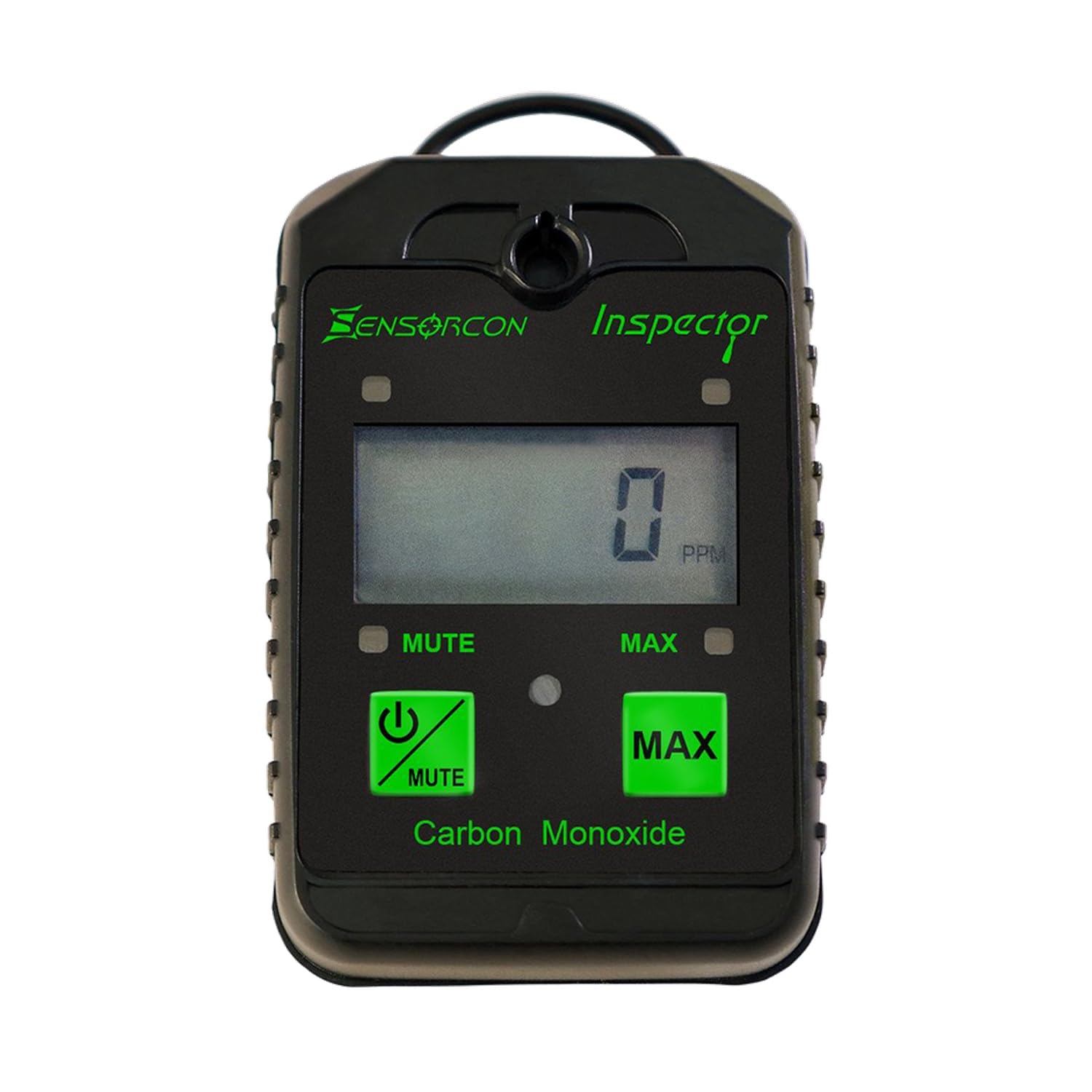
At 3.84 ounces and under an inch thick, the Inspector disappears on a belt clip or in a jacket pocket — the kind of monitor you can wear all day and forget about, which is the whole point of a wearable detector.

Its alerts are a red LED and an audible tone rather than a number you have to interpret, and the IP67 housing means rain, spray, and a dunk in a puddle aren't the end of it. The EN 50271 certification is the clearest statement in this group that you're holding an occupational instrument rather than a household alarm.

Two practical catches. The CR123A cell is a camera battery, not the AA you can buy at any gas station, so pack a spare. And while the sensor is replaceable — rare in this set — the unit carries a one-year warranty, so the swap is a cost you'll meet well before the Kidde's decade mark. That's the difference between an instrument you maintain and a sealed unit you throw away.

Pros

  • Wearable at 3.84 ounces with a steel clip
  • IP67 rated for rain and splashes
  • Replaceable sensor extends the unit
  • Certified to EN 50271

Cons

  • Runs on a CR123A, not standard AA
  • Sensor replacement adds ongoing cost
Our verdict

Buy this if the detector lives on you rather than on a shelf: IP67, under four ounces, EN 50271 certified, and a sensor you replace instead of scrapping the unit.

Check Latest Price
5

Cabins and Rentals

Siterwell GS828A

88 /100
Angler Score Excellent

Key details

Power
2 AA batteries
Display
Real-time LCD ppm
Product Life
7 years
Certification
ETL listed
Check Details on Amazon

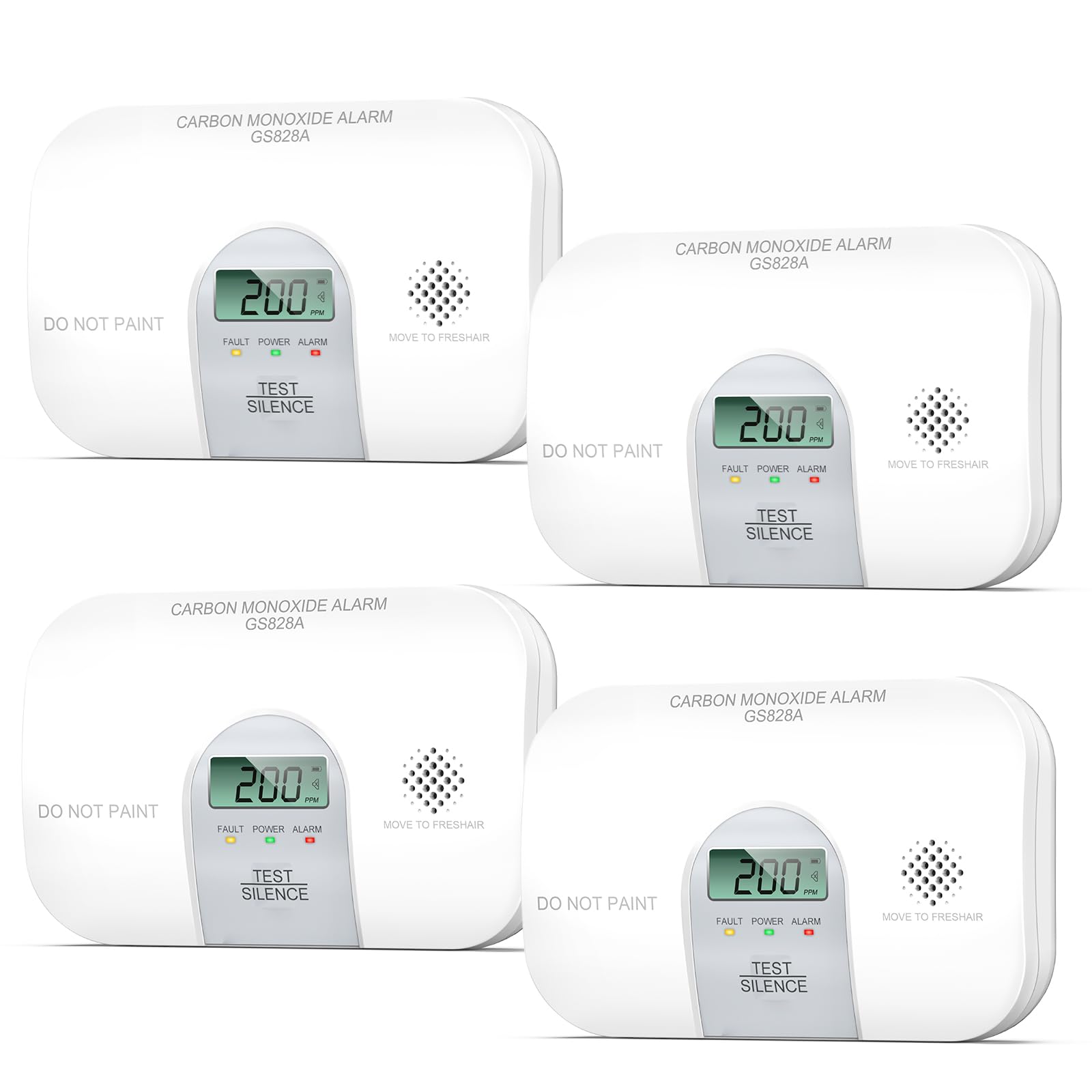
Seven years is how long Siterwell says this detector will last, and that number shapes everything about it: two AA batteries come installed and run the unit for its whole service life, so there's nothing to open, swap, or remember before a trip.

The LCD shows a live ppm reading and a three-color LED does the interpreting for you — green for power, red for alarm, yellow for a fault — which is easier to read from across a room than a bare number. It stands on a counter or hangs on a wall, and ETL listing plus a three-year warranty is a reasonable pair of reassurances for something you'll leave in a rental.

The sealed design is also the catch. When the seven years run out, the whole unit goes in the bin, and a battery that quits early means a new detector rather than a trip to the kitchen drawer. For a cabin, a rental, or a guest room you visit a few times a year, we think that trade is fine; for something that lives in a carry-on, the Kidde's swappable AAs are the friendlier arrangement.

Pros

  • Batteries sealed in for the unit's life
  • Three-color LED shows alarm, power, or fault
  • ETL listed with a three-year warranty

Cons

  • Sealed power: a flat cell means a new unit
Our verdict

A tidy, ETL-listed alarm with a live ppm readout and a seven-year clock — the easy choice for a rental or cabin you want to equip once.

Check Latest Price

How We Tested Portable Carbon Monoxide Detectors

We started by pulling together every portable CO detector we could find from established safety brands, then narrowed the field by certification, battery type, display style, size, and price. That left 14 units, which we tested over five months. We didn't just unbox them and wave a test gas canister; we put them where CO problems actually show up — a kitchen with a gas range, a basement utility room near a furnace and water heater, a camping tent, a hotel room, and a glovebox on weekend road trips.

Accuracy and response time got the most attention. Using a calibrated CO test gas canister, we introduced a known concentration and timed how long each detector took to alarm, then compared the reading on its display to the reference. We also watched how clearly the number showed up in a dim basement and in direct sun, and whether the alarm was loud enough to hear from another room. For installation, I mounted each one solo with a stopwatch running and noted whether the bracket, screws, and instructions made sense without a second pair of hands.

Battery life played out over the full five months, with rechargeable models cycled between trips and battery-powered ones left to run. Durability got a less gentle treatment: each unit took a waist-high drop onto a tile floor and a week riding loose in a duffel bag. We also judged value by what came in the box — a readable display, a mounting kit, and a low-battery warning you'd actually notice — rather than by the sticker alone. The detectors that held up were the ones that responded fast, stayed legible, and didn't make me dread installing one.

How to Choose a Portable Carbon Monoxide Detector

Alarm, meter, or both

A household-style CO alarm is designed around one outcome: getting you out of the room. A meter is designed around a number, so you can watch a reading climb and work out where it's coming from. The certification usually tells you which you're holding — the Sensorcon is built to EN 50271 for portable detection instruments, while the Kidde and the Siterwell are household alarms, listed to alarm standards.

Neither substitutes for the other. Buy the alarm for a bedroom, a tent, or a rental. Buy the meter if you're troubleshooting a furnace, a boat, or an engine — and keep the alarm anyway.

Power is the real travel decision

Standard AA cells are the friendliest format for travel: the Kidde takes two, and a spare pair from any gas station keeps it running. A rechargeable body like the TOPTES saves the battery drawer but adds a pre-trip chore — a flat battery has no quick fix on the road. A sealed cell removes maintenance entirely and then makes a failure a replacement.

Pick the format you'll actually maintain. For a detector that lives in a suitcase, we lean toward user-replaceable AA.

What the number on the screen is worth

A ppm display turns "the alarm went off" into "it went off at this level," and peak memory lets you check a room after the fact rather than during it. That's genuinely useful when you're trying to work out whether a camper or a hotel room has a problem.

Don't over-trust it. Consumer sensors aren't calibrated instruments, and two units in one room can differ by a few ppm without either being broken. Use the number to spot a trend and the alarm to decide when to leave.

Can you hear it, and where does it sit

Eighty-five decibels wakes a bedroom; it competes less well with a generator, a box fan, or rain on a tent fly. If you sleep somewhere loud, a vibration alert is worth more than a few extra decibels.

Placement does the rest. CO mixes with room air, so a detector on the nightstand near where you sleep does more for you than one at the far end of a camper. Keep it clear of bedding, curtains, and packed gear — a covered sensor is a useless one.

The cost after you buy

The purchase is the small number. Sensors age, and how the maker handles that sets the long-term cost: the Kidde carries a 10-year limited warranty, the Siterwell is a sealed seven-year unit, and the Sensorcon has a replaceable sensor you pay to swap. A meter is also only as good as its last calibration check.

Write the date on the back of whatever you buy, and price the replacement before you come to depend on it.

Frequently Asked Questions

Final Verdict

The Kidde KN-COPP-B-LPM is the one we recommend to almost everyone. It's a proper CO alarm with a readable ppm display, two AA batteries, and a shape that sits on a nightstand or a camper shelf without a mount — and it's the least expensive detector here, which makes buying a second one for the car or the cabin an easy call.

Change the requirement and the pick changes. If you sleep in tents, vans, or thin-walled cabins where noise drowns out a tone, the TOPTES CT-580's vibration alarm is worth the step up. And if you're hunting a leak rather than guarding a sleeper, the Klein Tools ET110 and the Sensorcon Inspector read ppm properly and alarm on exposure limits — just don't hand either one to a family as their only bedroom alarm.