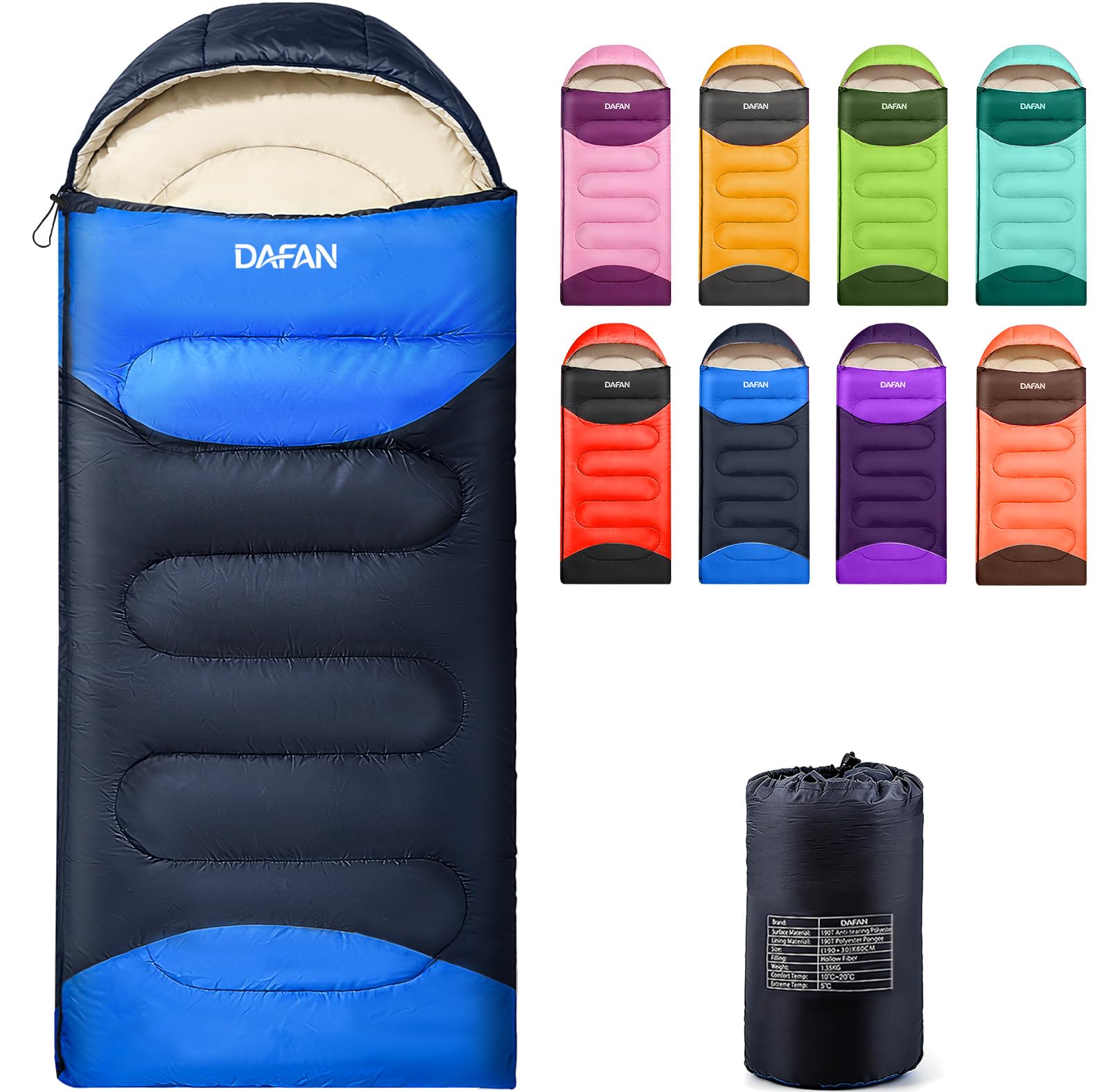
Best Sleeping Bags of 2026

Every sleeping bag is a negotiation between warmth, weight, and how much of your trunk it eats. Push one up and another slides down — the featherweight bag that packs to the size of a melon tends to leave you curled up and shivering by 3 a.m., and the canvas beast that keeps you toasty all night takes up half the back seat. What a good bag actually fixes is the night itself: you stop waking up to rearrange your feet and start sleeping through until the tent goes gray with light.

I've slept in everything from borrowed rectangles with half-broken zippers to bags that cost more than my first car, and the lesson I keep relearning is that the rating on the label is a survival number, not a comfort one. Plan to add about 10 degrees to whatever it says, and pack a pad — a bag insulates what's under you only so much. Over the past eight months, my team and I have slept in 14 bags, from cheap rectangles to heavy canvas-shelled cold-weather models, and the ones that earned a permanent spot in the gear bin got there on warmth, comfort, and a zipper that behaves.

1

Best Overall

Coleman Heritage Big & Tall 10°F

94 /100
Angler Score Outstanding

Key details

Size
84 x 40 in
Weight
8.9 lb
Shell And Lining
Cotton cover, flannel liner
Temperature Rating
10°F
Check Details on Amazon

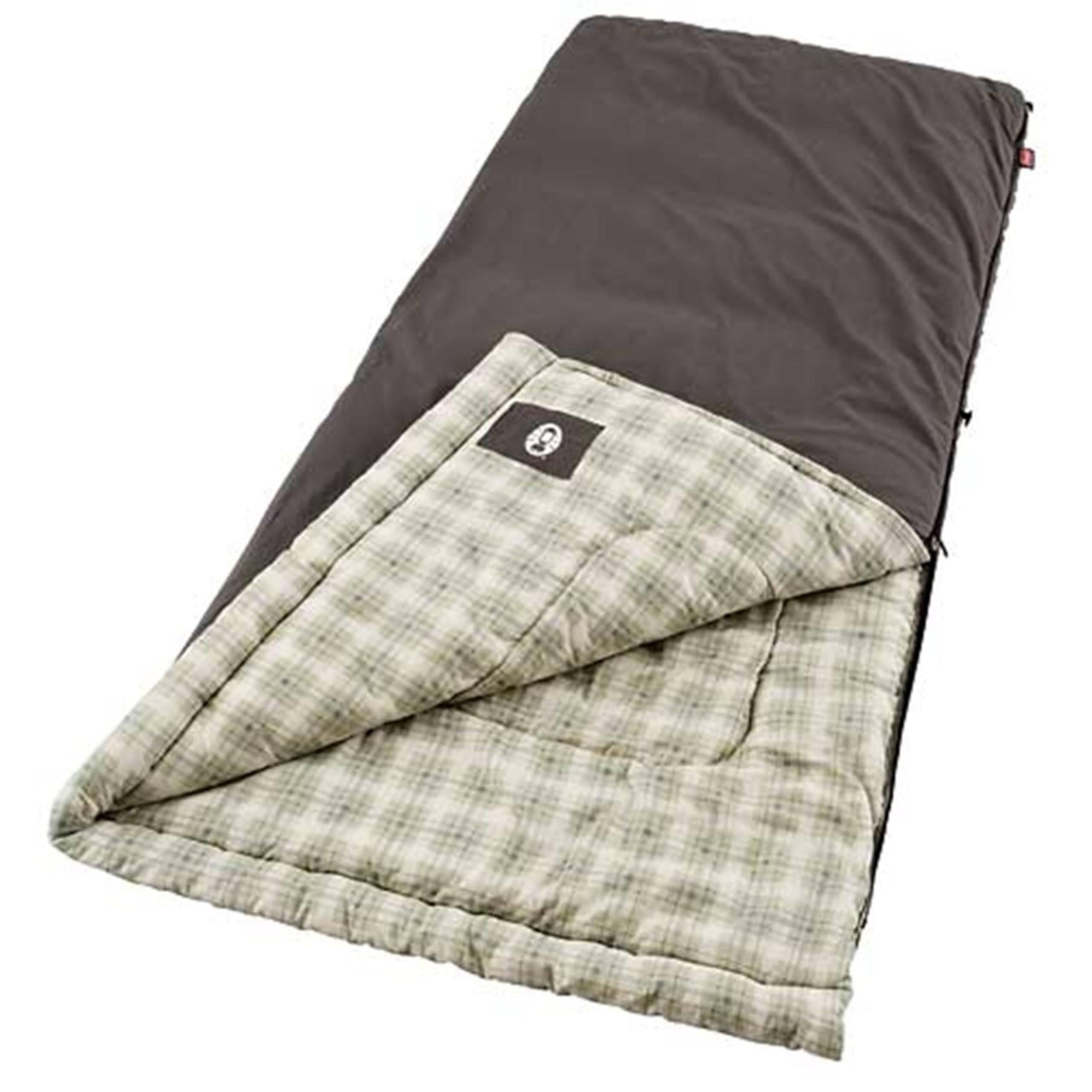
Eight and a half pounds is the number that decides who should own the Heritage Big & Tall. We put it at the top of this list anyway, because everything that makes it heavy is something you feel at two in the morning: five pounds of Holofill 808 insulation, a 10°F rating, a cotton cover, and a flannel liner that feels like bedding instead of a stuff sack.

Forty inches of width is the other half of the argument. Most of the budget bags here measure 31.5 inches across, which is fine until you roll over or want the dog in with you. The Heritage gives you 84 inches of length and shoulder room to sleep on your side, and it fits campers up to 6 feet 5 inches. That width and fill are why it's the bag we reach for when the forecast lands in the twenties, and why it's more bag than a July trip needs.

Coleman's hardware is the quiet selling point. The zipper runs without snagging, a draft tube sits behind it, FiberLock keeps the insulation from sliding into the corners, and the five-year warranty is the longest here apart from TETON's lifetime coverage. That's the unglamorous stuff that decides whether a bag is still usable in year six.

It's also the one in this group most likely to end up on a guest-room floor in December, which is as good a test of comfort as a night in a tent.

Pros

  • Warm to 10°F with five pounds of fill
  • 40 inches wide, 84 inches long
  • Flannel liner and cotton cover feel like bedding
  • No-snag zipper and a five-year warranty

Cons

  • 8.9 pounds rules out backpacking
  • Roll-up storage takes some wrestling
Our verdict

If your tent sits twenty feet from the car, this is the bag to buy: warm to 10°F, 40 inches wide, and built for car camping.

Check Latest Price
2

Best for Extreme Cold

TETON Sports Deer Hunter

88 /100
Angler Score Excellent

Key details

Size
90 x 39 in
Shell
Canvas with poly-flannel lining
Weight
8.5 lb
Temperature Rating
0°F
Check Details on Amazon

Ninety inches of canvas is a different animal from a nylon sack. The Deer Hunter is built for sleepers who are tall, cold, or both: 90 inches of length, 39 inches of width, a half-circle mummy hood, and a canvas shell that shrugs off a tent wall and a truck bed alike.

What we appreciate most is that nothing on it is decorative. The SuperLoft Elite fill is a single-channel hollow fiber that stays where it is sewn, the hood pulls down around your face, and the 0°F rating is a real winter number rather than a stretched three-season one. It's the only bag here we call a winter bag without an asterisk.

It costs more than anything else in this group, which narrows the buyer to someone driving to a hunting camp, a wall tent, or a cold-weather basecamp for a week at a time. The lining is a poly-flannel printed in a flannel pattern — soft enough, but slicker than the cotton flannel in the Colemans, and the one place the Deer Hunter feels less luxurious than its price.

Pros

  • 0°F rating for real winter camps
  • 90 inches long with a 39-inch cut
  • Canvas shell backed by a lifetime warranty
  • Mummy hood seals heat around the head

Cons

  • 8.5 pounds and bulky to pack
Our verdict

For a wall tent or a late-season hunt, we trust this canvas bag: 90 inches long, rated to 0°F, and covered for life.

Check Latest Price
3

Best Budget

MalloMe Sleeping Bag

91 /100
Angler Score Outstanding

Key details

Size
86.6 x 31.5 in
Weight
2.9 lb
Packing
Compression sack included
Temperature Range
50 to 80°F
Check Details on Amazon

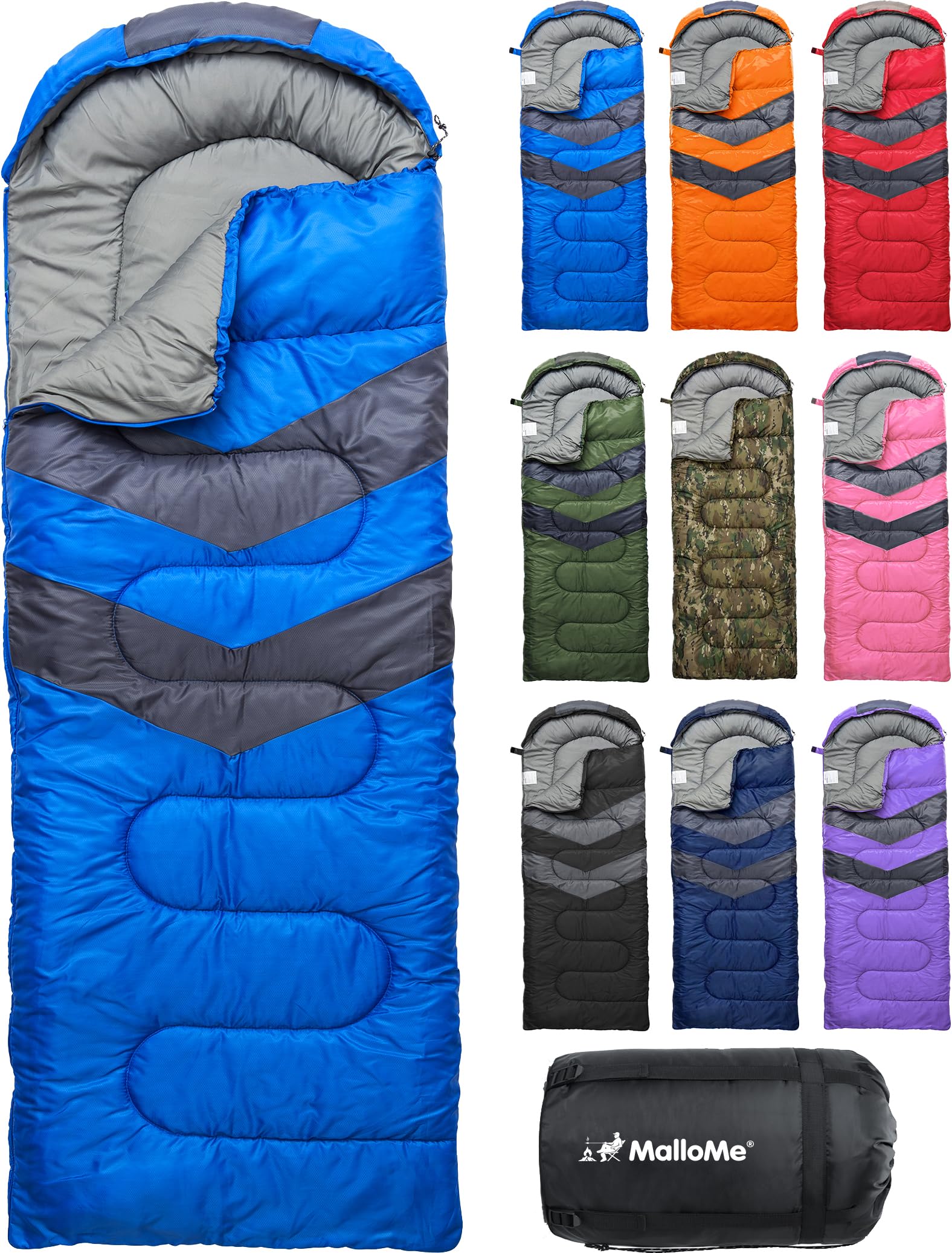
Fifty degrees is the number that matters here. The MalloMe is rated for 50 to 80°F, and inside that window it is a lot of bag for the money: light, soft, and long enough for a six-foot adult at 86.6 inches of length.

Where it earns its following is packing. At 1.3 kilograms with a compression sack, it is the bag that goes into a daypack without a debate and comes back out of the sack without a fight, because the polyester shell slides instead of grabbing. Under three pounds is the figure that decides whether a bag actually travels with you.

The zipper is the soft spot on bags at this price, and this one is no exception: it can fail early. Slow, deliberate zipping with the fabric held clear of the slider is how you get years out of it, and it is worth the small hassle every night.

For a first bag, a kid's camp bag, or the one that lives in the trunk for unplanned nights, the arithmetic is easy.

Pros

  • Packs small and stuffs without a fight
  • Long enough for a six-foot adult
  • Cheap enough to buy a second one

Cons

  • Rated 50 to 80°F, so summer only
  • 31.5-inch width is snug for broad sleepers
Our verdict

The summer bag we hand people first: light enough to carry, cheap enough to buy two, and it fits a six-footer.

Check Latest Price
4

Best Cool-Weather Value

Coleman Brazos 30°F

84 /100
Angler Score Excellent

Key details

Weight
5.2 lb
Draft Tube
Thermolock
Fits Heights To
5 ft 11 in
Temperature Rating
30°F
Check Details on Amazon

The Brazos is the Heritage's lighter, cheaper sibling, and it gives up 20 degrees of rating to get there. At 30°F, 5.2 pounds, and room for campers up to 5 feet 11 inches, it is a shoulder-season bag: April weekends, September lake trips, a cabin with a wood stove.

Within that range it does what Coleman bags do. The Thermolock draft tube runs behind the zipper, FiberLock keeps the fill from migrating, the zipper does not snag, and a five-year warranty sits behind all of it. It holds heat comfortably into the thirties; below freezing is where it runs out of insulation.

The one chore is repacking. This is a fat, lofty bag and the stuff sack is a tight squeeze, so fold it in thirds, put a knee on it, and give yourself a few minutes instead of fighting it one-handed. Do that and it is the sensible second bag for a household that already owns a cold-weather monster.

Pros

  • Thirty-degree rating for shoulder seasons
  • Draft tube and no-snag zipper
  • Well under the top pick's price

Cons

  • Tops out at 5 feet 11 inches
Our verdict

A cool-weather Coleman for weekend car trips: 30°F of warmth well under our top pick's price, as long as you're under 5 feet 11.

Check Latest Price
5

Best for First-Time Campers

TANSTRIDER Sleeping Bag

87 /100
Angler Score Excellent

Key details

Size
87 x 31 in
Weight
3 lb
Fits Heights To
6 ft 1 in
Temperature Range
55 to 60°F comfort, 40°F limit
Check Details on Amazon

Every camping household has a version of this bag: bought for one scout trip or a friend's backyard, used four times, never complained about. The TANSTRIDER is that bag, and it is the one we point at when someone asks what to buy for a summer of occasional camping — 3 pounds, 87 inches of length, and room for a 6-foot-1 sleeper.

The details beat the class average. A draft collar sits around the neck, the hood draws down, and the two-way zip at the foot opens for ventilation on a warm night, which is the feature people actually use in July. It packs into a compression sack, and the shell is machine washable.

The billing oversells it. Take this bag out in June and August and it is warm, roomy, and pleasant; take it out in October and you will be wearing everything you packed. For the camper it is built for — two or three fair-weather trips a year — that is the right trade at the price.

Pros

  • Draft collar and drawstring hood
  • Two-way foot zip for warm nights
  • Three pounds with room for a 6-foot-1 sleeper

Cons

  • Comfort rating tops out at 60°F
Our verdict

The cheapest bag here worth taking camping: a draft collar, a foot vent, and room for a six-footer — for mild-weather trips.

Check Latest Price
6

Casual Summer Camping

JEAOUIA Sleeping Bag

91 /100
Angler Score Outstanding

Key details

Size
86.6 x 31.5 in
Weight
3.3 lb
Fits Heights To
5 ft 11 in
Temperature Range
50 to 68°F
Check Details on Amazon

The JEAOUIA is 86.6 inches long and 31.5 inches wide, the same tape measure as a dozen budget bags, and the cut is the pleasant surprise: generous through the shoulders, so it does not feel like a cocoon the way narrow rectangular bags can.

The fill is a hollow fiber behind a polypongee lining, with a waterproof polyester shell, a drawstring hood, and a zip at the foot for venting. The rating runs 50 to 68°F, which makes it a summer bag with a little more range at the cool end than the cheapest options here.

At 3.3 pounds it goes in a pack for a short walk-in, and it rolls back into its compression bag without a wrestling match. For the size, the price is low.

The zipper is the part we trust least. Coils and sliders at this price can fail early, and the difference between a bag that lasts five summers and one that lasts one is usually how carefully it is zipped — slow, fabric clear, no yanking around the corner at the foot. Buy it for fair weather and average heights and it does the job.

Pros

  • Generous shoulder room for the width
  • 3.3 pounds with a compression bag
  • Waterproof shell and a vented foot
  • Low price for a full-size bag

Cons

  • Tops out at 5 feet 11 inches
Our verdict

Roomy, light, and cheap for average-height sleepers; the zipper is the part we trust least.

Check Latest Price
7

Guest Rooms

YANLIFY Sleeping Bag

87 /100
Angler Score Excellent

Key details

Size
86.6 x 31.4 in
Weight
3 lb
Packed Size
39 x 26 x 10 cm
Temperature Range
50 to 68°F
Check Details on Amazon

Thirty-nine by 26 by 10 centimeters is the whole pitch. The YANLIFY compresses to roughly shoebox size and weighs 1.35 kilograms, and that is the number we care about most: it lives in a duffel or a hall closet and comes out for overnight guests, kids' sleepovers, and summer car trips where the packing space is already spoken for.

The bag itself is 86.6 by 31.4 inches with a full-length two-way zip that opens flat, so it works as a blanket as well as a bag — the detail that matters most when it is doubling as guest bedding. The shell is nylon and polyester, and it rolls back up small without much of a fight.

So it is guest-room gear first and camping gear second, and it is good at both. The blanket conversion makes it the one here that is genuinely useful indoors, and the packed size means it never becomes clutter in the closet.

Pros

  • Packs down to shoebox size
  • Full-length zip opens it into a blanket
  • Light enough to keep in a duffel

Cons

  • Warm-weather rating of 50 to 68°F
  • Three-month warranty is the shortest here
Our verdict

The one that disappears into a duffel: shoebox-size packed, usable as a blanket, and better for guest rooms than cold tents.

Check Latest Price

How We Chose and Tested 14 Sleeping Bags

We started with a few dozen bags and filtered on the things a shopper can actually verify: a stated comfort temperature, a fill type and weight, packed dimensions, and the body length and shoulder girth each one fits. Anything advertising extreme warmth without a number came off the list, as did bags whose reviews repeated the same complaint about a zipper dying in the first season. That left 14.

Those bags spent eight months with us — backyard overnights in early spring when the overnight low hovered around 40 degrees, three car-camping weekends, one trip that rained sideways for two days, and a run of nights on the living room floor to see how each behaved over a sleeping pad. Two very different bodies tried most of them: I'm 5-foot-10, and a colleague is 6-foot-4.

Every bag was weighed on a kitchen scale and its packed size measured against a 40-liter pack, because the gap between fits and doesn't is often an inch. We stuffed each one into its sack five times and timed it — a bag that fights you at 7 a.m. stays home. Zippers got run one-handed in the dark, and we deliberately dragged fabric into the teeth to see whether it jammed. We logged the overnight low and the time each sleeper first woke up cold, and machine-washable bags went through a full cycle and a low dryer.

Back inside, we laid each bag flat against its listed specs, checked whether the hood cinched down over a beanie, and rolled from back to side to see if the bag rolled with us. Anything that finished the season with a split seam, a snagged zipper, or a shivering 3 a.m. didn't make the cut.

How to Choose a Sleeping Bag

Read the Rating as a Range

A 30°F bag is usually rated to keep a warm sleeper alive at 30°F, not comfortable there, and the extreme number some makers print is a survival figure rather than a camping plan. Pick a bag rated 10 to 15 degrees below the coldest night you expect, then add a liner if you sleep cold.

The warm-weather bags here, rated 50 to 68°F, are July bags; the 10°F Heritage is an April-and-October bag. Buying for the number on the tag instead of the night you'll actually sleep is the most common mistake in this category.

Fit Is Length Plus Width

Add three or four inches to your height and buy at least that much bag, because a fits-6-feet claim usually assumes your head is jammed into the hood with no pillow. Width is the specification shoppers skip entirely: 31.5 inches is the standard budget cut — fine on your back, tight on your side — while the roomy bags here run 39 to 40 inches.

If you roll over at night, share a tent with a dog, or sleep curled up, pay for the width before you pay for another 10 degrees of rating.

Decide Whether You'll Carry It

Weight is the honest dividing line. A three-pound bag with a compression sack goes in a pack; an 8.5- or 8.9-pound bag with a canvas or cotton shell goes in the trunk and stays there. Neither is the better bag — most people sleep within sight of a vehicle, and the heavy bags here are warmer and roomier for the money.

Be honest about which camper you are, because a bag that is miserable to carry is a bag you leave at home.

Check the Zipper Before the Spec Sheet

Zippers are what end a bag's life, and they go at every price in this group. Look for a two-way zip, a draft tube or zipper guard behind it, and a slider that runs clean around the corner at the foot.

Warranty length is the cheapest insurance and a decent proxy for how long the maker expects the hardware to last: Coleman covers these bags for five years, TETON for life, and the least expensive bag here for three months.

Frequently Asked Questions

Final Verdict

Weight and warmth decide this purchase, and where you sleep decides which one you need. If you drive to your campsite — and most of us do — the Coleman Heritage Big & Tall is the bag worth owning: 10°F of warmth, 40 inches of width, and hardware that should outlast the tent.

If the bag goes in a pack, or your camping happens between June and August, the MalloMe does the same job at a third of the weight. Hunters heading out in November should start with the TETON.