Best Slip Bobbers of 2026

A slip bobber does one clever thing: it slides up your line on the cast, then stops dead at your depth knot, so you can fish fifteen feet down without dragging a fifteen-foot float around. Everything that goes wrong with one goes wrong at that same point — a stopper that creeps, a spring clamp that crushes your line, a float that hangs tail-down because it drank water an hour ago. The fix is boring and specific: a bobber that holds its depth, sits upright, and pops back up after a take.

We fished 16 slip bobbers through a spring and into summer, from cold shoreline mornings to hot afternoons off the dock, and the differences showed up fast. Here's something a first-timer won't hear at the tackle counter: a bobber has to be sized to the bait, not to the fish you're dreaming about — go too big and it never dips on a light take. Value, weight, spring tension, and looks all got a fair shake. The picks below are the ones that earned a permanent spot in my box.

1

Best Overall

Thill America's Favorite Float

90 /100
Angler Score Outstanding

Key details

Top
Orange and red
Body
Balsa wood
Size
Assorted (5-Pack)
Float Style
Center slider
Check Details on Amazon

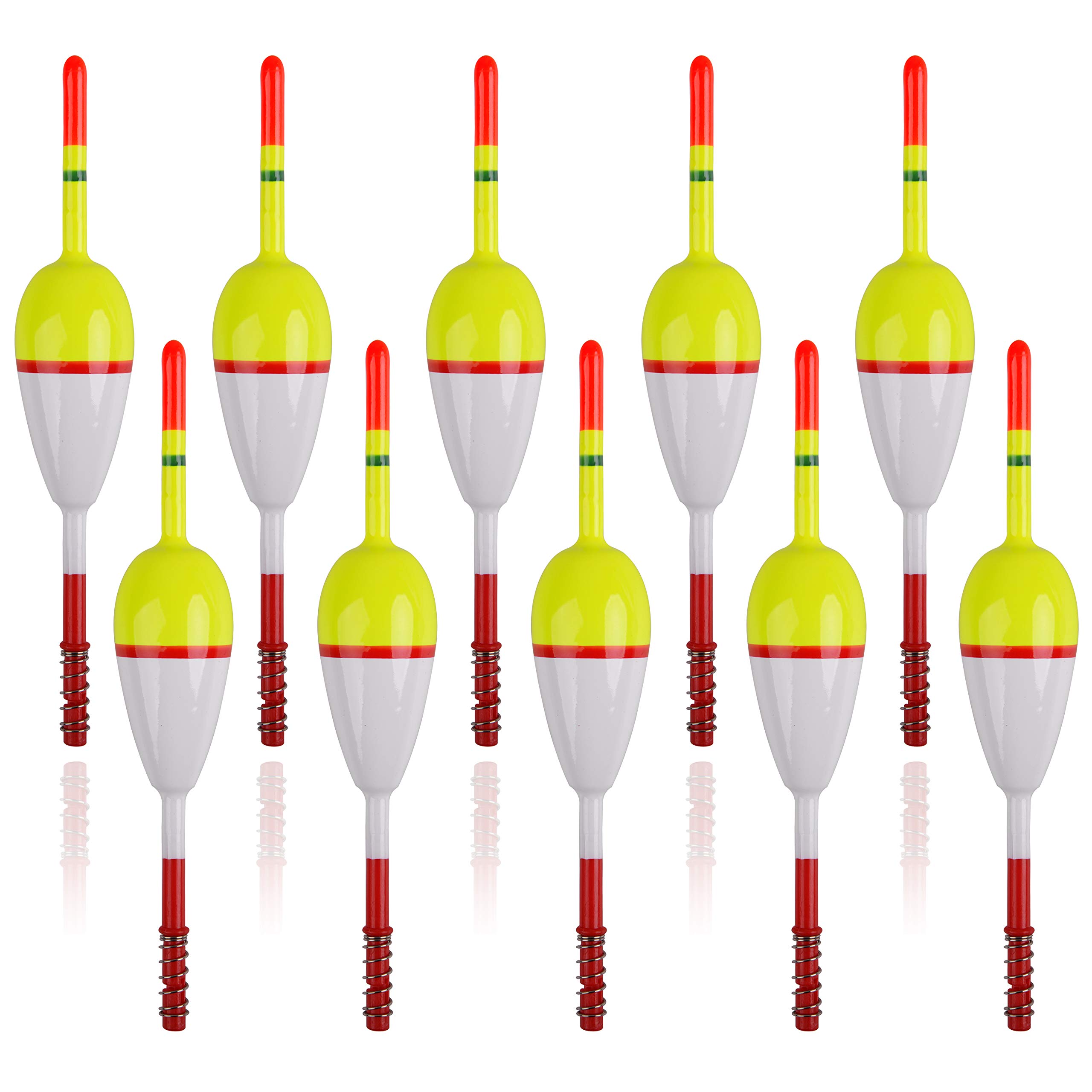
Five floats in assorted sizes, one box, and a body that rides low in the water — that combination is why this pack is the first thing we tell people to buy. The bodies are balsa, the shafts are cut short so less of the float sits above the surface, and the line runs through the center on a slider rather than clipping on. Orange and red tops are easy to follow when the water is choppy and the light is flat.

Riding low is the part we appreciate most. A float that sits deep needs very little lift to go under, so a light take reads as a quick bob instead of a slow, ambiguous sink, and you set the hook on something you actually saw. The assortment steps from a panfish float up to one that carries roughly a half-ounce of lead, which covers split shot and a worm, a small jig, or a chunk of cut bait on most inland water.

What you give up is choice. The pack is fixed, so if you fish one weight all season you're paying for floats that stay in the box, and a single float in the right size is the leaner buy. For anyone building a slip-bobber box from scratch, though, the variety does the work: a small float for a calm morning, a bigger one when the wind picks up or the bait gets heavier. Slide the stop knot up and you're fishing eight feet down with a rod's length of line out.

Pros

  • Five assorted sizes in one box
  • Low-riding balsa telegraphs light bites
  • Bright orange and red top is easy to follow

Cons

  • Plastic center tube rather than a brass insert
Our verdict

Five assorted balsa sliders in one box make this the pack we hand new slip-bobber anglers: a low-riding body shows light takes, and the size range covers panfish through bass.

Check Latest Price
2

Best for Big Baits

Thill Gold Medal Big Fish Slider

88 /100
Angler Score Excellent

Key details

Top
Orange and yellow
Body
Balsa wood
Size
4", 1/2 oz
Line Insert
Brass grommet
Check Details on Amazon

A whole live bait is where most slip floats quit. Put a hand-size bait on a light balsa slider and it lies over or goes under, and you're watching nothing at all. This is the float we tie on when the bait is the biggest thing on the rig: a balsa body, a brass grommet the line falls through, and a top painted orange and yellow for distance. The line runs five sizes rated from half an ounce to two and a quarter ounces of load, and the 4-inch version is a substantial piece of wood in the hand.

Read that rating the right way. The number on a float's package is the weight it will carry, not the weight it is, and a slider this size needs a real bait and a real sinker to sit correctly. Loaded near its rating it stands up in wind and moving water and shows a take as a clean pull under; under-loaded, it rides too high and a bite can look like nothing.

Deep, fast water is where the extra buoyancy earns its place — a tailrace, a windy bank, a river bend where a light float gets dragged under and swept along. The balsa is soft, too, so keep these in a hard box rather than loose in the bottom of a bag; a ding in the body is a float that sits differently the next time out.

Pros

  • Floats half-ounce-and-up baits without lying over
  • Brass grommet lets line fall freely
  • Stands up in wind and fast water

Cons

  • Too much float for panfish and light jigs
Our verdict

Buy this one when a whole live bait is the plan: the big-bait slider floats half-ounce-and-up loads that flatten a light float, and it stays upright in wind and current.

Check Latest Price
3

Best for Panfish

Alwonder Balsa Slip Bobbers 4-Pack

88 /100
Angler Score Excellent

Key details

Body
Balsa wood
Pack
4 floats
Size
#2: 2" * 0.92"
Line Hole
0.035 in
Check Details on Amazon

The hole at the top of this float measures 0.035 inch across, and that small opening is the reason it works. A tight channel centers the line, so the float hangs straight on a stop knot instead of canting off to one side, and there's no eyelet or spring coil for fine line to catch on. Rigging is the part of slip-bobber fishing that goes wrong most often, and this one gets out of the way.

Four floats come in the pack, each the #2 body at 2 inches by 0.92 inch, with a glossy epoxy coat that keeps the color bright and takes knocks better than a thin painted finish. Balsa is what makes them sensitive: a light jig and a crappie's take shows as a small, definite dip rather than a wobble you talk yourself into.

We hand these to anyone rigging a first slip-bobber rod for panfish, because they go together without teaching you a new mechanism. What surprised us is how much of a bite they show on a lightly windblown surface — the body sits with just the tip above the waterline, and a take is a short, clean dunk. Set the stop a foot above the bait as a starting depth and adjust from there.

Pros

  • 0.035-inch top hole centers the line
  • Glossy epoxy finish stays bright
  • Balsa body shows a crappie's light take

Cons

  • All four floats are the same 2-inch body
Our verdict

The tidiest small float here for panfish and crappie, with a 0.035-inch top hole that centers the line and rigs cleanly on a stop knot before the sun is up.

Check Latest Price
4

Quick Depth Changes

SILANON Wood Slip Bobbers 10-Pack

87 /100
Angler Score Excellent

Key details

Body
Wood
Pack
10 floats
Finish
Crack and chip resistant
Line Grip
Spring tension
Check Details on Amazon

Ten floats, three sizes, one box — the arithmetic is what gets this set into a boat bag. The bodies are wood with a fluorescent top, and instead of a hole through the middle the line is held by a spring at the top of the float. Rotate the spring and you change how firmly it grips, which is how you set depth. There's no stop knot to tie, slide, or re-tie.

That's a real convenience on a cold morning with numb hands, and it's why a set of these stayed in the box for quick depth changes while we worked along a bank. Buoyancy is fine for a float this size, the bright top is easy to follow, and the price per float works out well when you're buying ten at once.

What it isn't is a free-fall slider. The line doesn't drop cleanly through the body on the cast; the spring holds it, so this is a float for fishing a set depth close in rather than casting a long way to a stop knot in deep water. If that's your fishing, buy a through-hole balsa float instead and keep these for quick changes.

Pros

  • Ten floats in three sizes
  • Spring sets depth without a stop knot
  • Good price per float in a bulk box

Cons

  • Line can creep through the spring on a hard cast
Our verdict

A ten-float box in three sizes, with a spring that sets depth without tying a knot — the quickest way to change how deep you're fishing.

Check Latest Price
5

Watching Light Bites

THKFISH Balsa Spring Bobbers 5-Pack

86 /100
Angler Score Excellent

Key details

Body
Balsa wood
Pack
5 floats
Size
2 x 1.1 x 5.86 inches
Line Grip
Corrosion-resistant spring
Check Details on Amazon

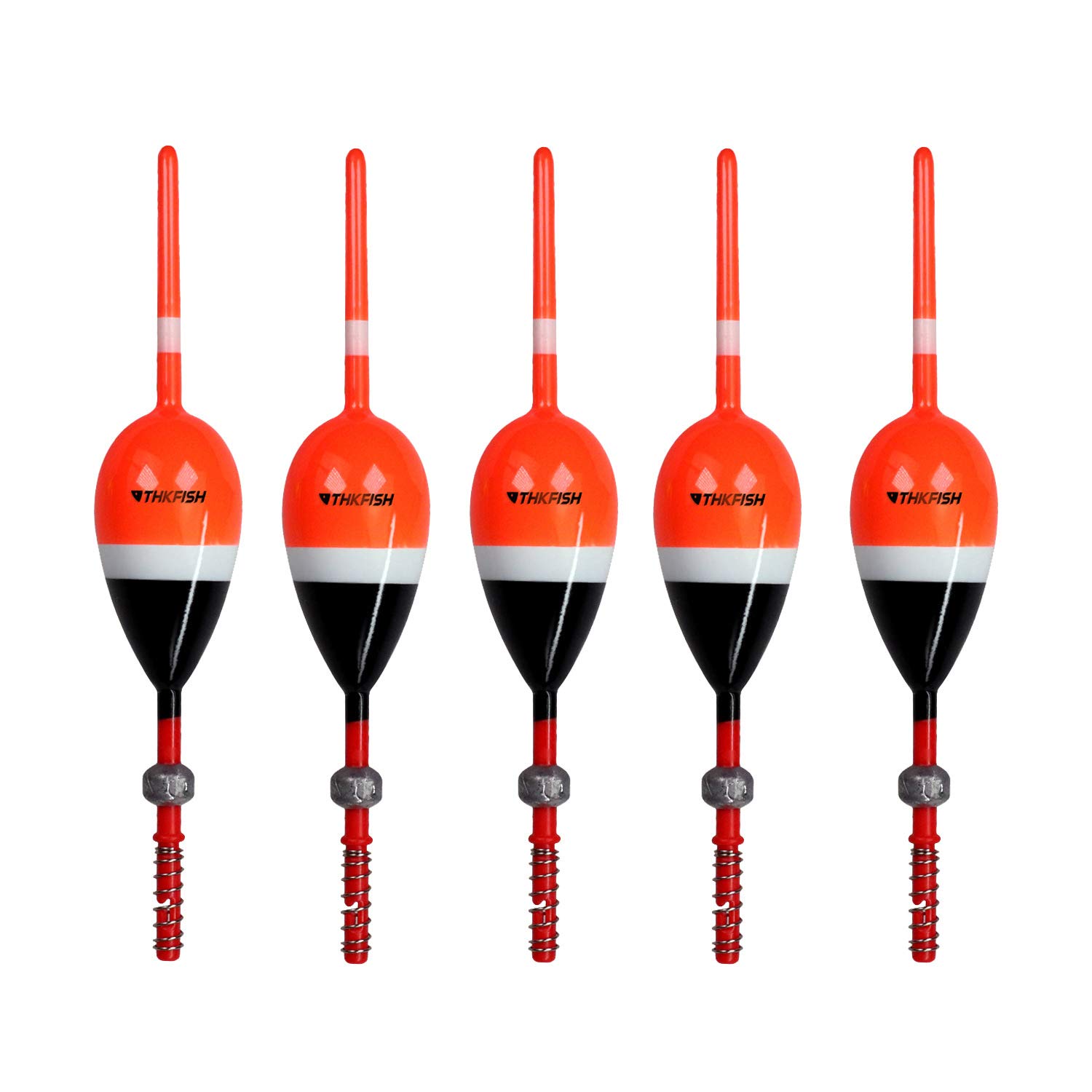
A spring tip magnifies a bite. Where a plain balsa body needs a fish to pull it under, the spring at the top of these floats bends and jiggles with a take that barely marks the surface — the kind of signal you catch out of the corner of your eye while the float drifts.

Five floats come in the pack, each about 2 inches by 1.1 inches by 5.86 inches, with a corrosion-resistant spring and a fluorescent finish that stays readable across a pond. They can be fished as a slip float or pinned as a fixed float, which suits a boat where you're switching between a float rig and a jig.

Buoyancy is where these need care. A body that rides low or lies over on the surface tells you nothing no matter how sensitive the spring is, so these want a light bait and a small split shot rather than anything heavy. And because the spring grips the line rather than letting it run, these are for close-range fishing at a set depth — not for casting to a stop knot in deep water.

Pros

  • Spring tip shows bites a body alone would hide
  • Fluorescent finish stays readable at distance
  • Fishes as a slip float or a fixed float

Cons

  • Rides low or lies flat with a heavy bait
Our verdict

Pick this five-pack when you want to watch a spring for the lightest bites on a pond or slow river; it rewards a carefully matched light bait.

Check Latest Price

How We Tested These Slip Bobbers

We started by gathering every slip bobber we could find sold as singles and in multipacks, then cut the field down by body material, available sizes, spring style, and price per float. That left 16, which we bought ourselves and fished for roughly four months, from the first cold-water panfish trips of spring through the flat, hot afternoons of midsummer.

Each one went on real rods with real line, mostly 4- to 8-pound mono for panfish and heavier setups for the big-bait slider styles, and got fished off docks, in a farm pond, and from a boat drifting minnows. We slid every float up and down its line fifty times to see how the spring held, then ran the line back out and looked for fraying or flattening under the clamp. On the water we set a depth, cast repeatedly, and checked where the float actually sat afterward to catch any creeping.

In a bucket at the dock we floated each bobber for an hour, then reweighed it and marked the waterline to see whether it had absorbed water, and added split shot until it went under so we knew what bait weight it could realistically carry. Between trips they lived loose in a damp tackle box, which is how we caught chipped paint, dented balsa, and springs that started to rust by week six. We also held each one at arm's length in flat light to judge how easily it could be seen. Multipacks were scored on cost per usable float, because a cheap bag that loses two springs by July isn't a bargain.

How to Choose Slip Bobbers

Sliders and Spring Grips Are Two Different Rigs

A true slip float has a channel running through the body. Line free-falls through it on the cast, and a stop knot tied above the float sets how deep the bait fishes. A spring-grip float holds the line with tension instead: you rotate the spring to change depth and skip the knot entirely.

The trap is the wording. Plenty of floats sold as spring slip bobbers have no through-hole at all, so the line never free-falls and a stop knot won't behave the way you picture. If you want to cast a long way and hold a fixed depth, buy the through-hole slider. If you change depth a dozen times a morning, a spring grip is quicker.

Match the Float to the Load, Not to Its Size

The number on a float's package is the weight it will carry, not the weight of the float itself. That half-ounce rating on a big slider describes the sinker and bait it will hold up, which is why a float rated at half an ounce looks enormous next to a panfish bobber.

Loaded right, the body sits at the waterline with only the tip showing. Too little weight and it rides high and skips across the surface; too much and it lies over, and every bite starts to look the same. Fishing a whole live bait means starting at the heavy end — the Thill Gold Medal slider is built for half-ounce-and-up loads — while a jig and a split shot wants the small end of the range.

The Line Channel Decides How the Morning Goes

A brass grommet or a cleanly drilled hole lets line leave the float on the cast without a tick or a catch. Paint in the channel, a burr, or an opening that's too wide for fine line and the float hangs up mid-cast — the most irritating failure in slip fishing, because it happens after you've committed to the cast.

Thread your line through at home, before you're on the water, and do it with the line you actually plan to fish. Keep a spare float in the box; a channel that's picked up grit isn't something you fix with cold fingers in a boat.

Balsa, Foam, and How Many to Carry

Balsa is the traditional body for good reason: it's buoyant for its size and it passes a light take along better than foam. It also dents, and a dented float sits differently in the water. Foam and EVA shrug off knocks and cost less per float, but they're bulkier for the same buoyancy and duller on a soft bite.

Start with an assortment rather than a single size. You'll find you fish two weights most of the time, and once you know which, buy those individually and keep the rest as spares.

Frequently Asked Questions

Final Verdict

If you want one box to cover most of your slip-bobber fishing, buy the Thill America's Favorite five-pack. The assorted balsa bodies ride low enough to show a light take, and between the smallest and largest float you can fish a split shot for panfish or a heavier bait on a windy bank.

Two situations call for something else. Floating a whole live bait for catfish or pike? The Gold Medal Big Fish Slider is the float in this group built for that load. Rigging a first panfish rod and want one small float that threads cleanly onto a stop? The Alwonder four-pack is the tidier choice.