
Best Snake Boots of 2026

A snake boot has one job, and everyone hopes never to find out how well it does it. The trouble is everything else: most protective boots are stiff as stovepipes, heavy enough to shorten your stride, and muggy by midmorning. Spend a season in a pair that won't flex and you'll leave them in the truck — the worst outcome of all. What you're buying is armor where it counts plus a boot you can still walk five miles in.

Over the past eight months, my team and I have worn 12 pairs through spring turkey season, early bow season, and plenty of sweaty afternoons of scouting and fence repair. Sizing swings wildly — one maker's 11 is another's 10 — and a boot that feels fine in the store can take your heel apart by mile three. Weigh them, flex them, and check where the protective wrap actually stops. The picks below are the ones we kept reaching for.

1

Best Overall

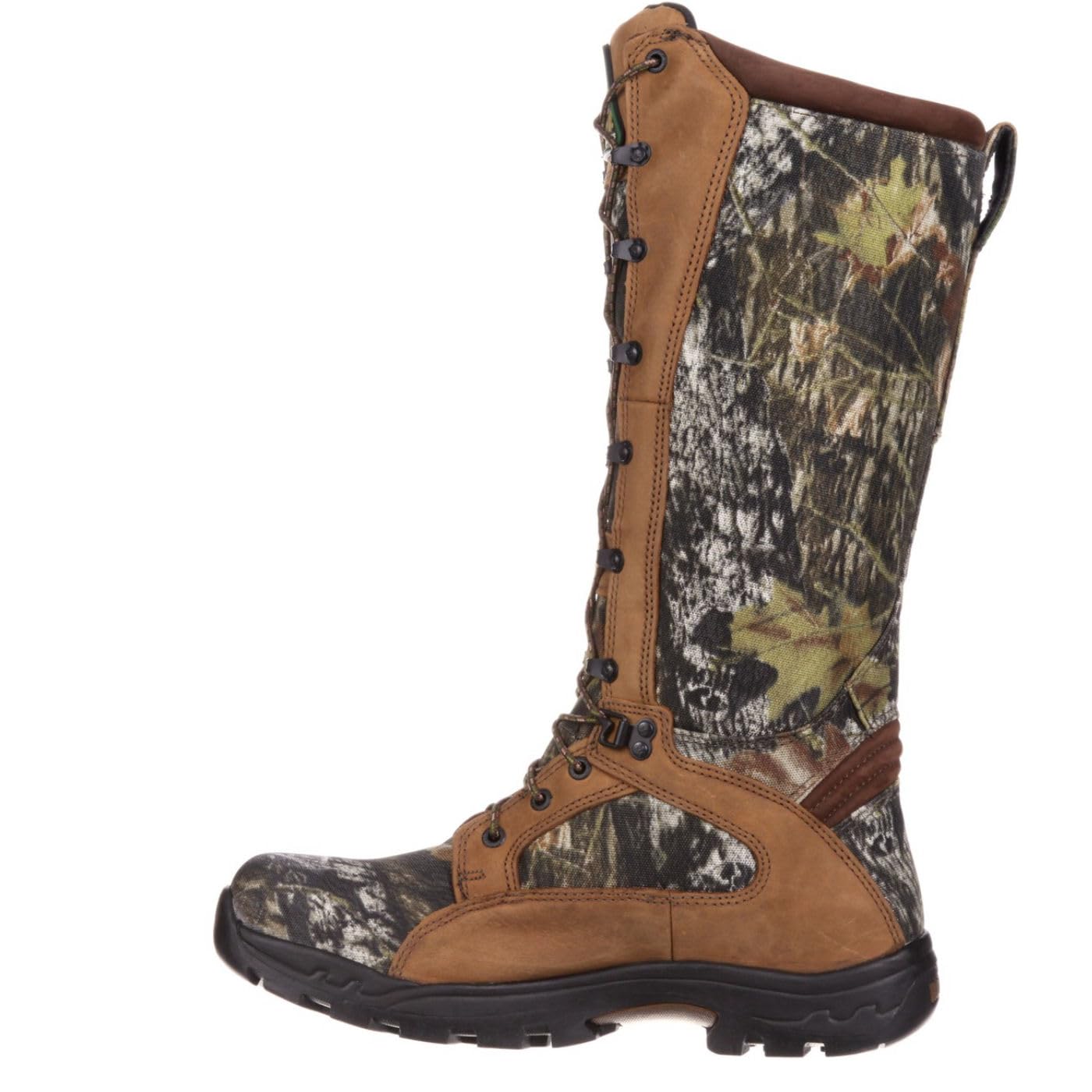
Rocky ProLight

91 /100
Angler Score Outstanding

Key details

Sizing
Unisex
Weight
4.5 lb
Closure
Lace-up
Waterproof
Yes
Check Details on Amazon

Four and a half pounds is the number that sells this boot, and it is the number we kept coming back to. Snake boots get left in the truck when they feel like anchors, and the ProLight is the pair that stops being noticeable a few hundred yards into a morning of walking and glassing. The shaft rises to just below the knee, the laces take up slack at the calf, and the whole boot flexes with your stride instead of clomping through the woods ahead of you.

Roomy is the other word for it. There is space in the shaft for a heavy sock and space in the toe box so your toes do not jam on a downhill, which is exactly the room you want in late season. If you are between sizes, or you wear thin socks through an early-season hunt, take the smaller one; we found the heel ran a half size generous. Give the ankle a few wears to settle around your foot rather than across it.

Waterproofing deserves a word of caution. Some pairs shrug off wet grass and shallow crossings for years, and others start weeping at a seam inside a season, which is why the first thing we do with a new pair is stand in a few inches of water while the return window is still open. Do that and you will know which boot you bought before the season depends on it. It is also the cheapest pair here by a comfortable margin, which leaves money for the tag you actually want.

Pros

  • Light enough to walk in all day
  • Generous room through calf and toe box
  • Laces let you tune the shaft fit

Cons

  • Internal stitching can come apart with hard use
Our verdict

For hunting and working on foot, this is the pair we recommend first: light, roomy through the calf, tall enough to count, and forgiving from the very first wear.

Check Latest Price
2

Best for Wet Ground

Dryshod Viperstop

90 /100
Angler Score Outstanding

Key details

Season
Warm weather
Weight
4 lb
Closure
Pull-on
Waterproof
Yes
Check Details on Amazon

Snake country is usually wet country — creek bottoms, flooded timber, the muddy skirt around a pond — and the Viperstop is built for exactly that ground. It is a molded rubber boot in a warm-weather build, so the waterproofing is not a coating that wears off at the seams; it is the material itself. Walk a shallow slough and the water stays on the outside where it belongs.

Two details made us keep reaching for them. The first is the heel: there is a molded step at the back that lets you push down with the other foot at the tailgate and be out of them in a couple of seconds, which nobody wants to do bare-handed after a wet morning. The second is the cut. The shaft is generous enough for a wide calf and a heavy sock, and the footbed is firm and supportive rather than pillow-soft, which is what we want underfoot in mud.

Mud is the price. The outsole bites well enough to climb a slick bank, but it holds clay, and by mid-morning in bottomland the pair feels considerably heavier than the four pounds on the listing. We still take them whenever the ground is wet, because dry feet are worth the extra weight on the walk out. On a dry ridge in September, we leave them behind.

Pros

  • Waterproof by construction, not by coating
  • Molded heel lets you step out of them
  • Shaft accommodates wide calves

Cons

  • Legs sweat in hot, humid weather
Our verdict

Wet ground is where these earn their keep: waterproof by construction rather than by coating, easy to kick off at the tailgate, and comfortable enough for the walk back in the dark.

Check Latest Price
3

Best for Comfort

LaCrosse Snake Country 17

87 /100
Angler Score Excellent

Key details

Closure
Pull-on
Outsole
Prairie
Insulation
Non-insulated
Shaft Height
17 in
Check Details on Amazon

Seventeen inches of shaft, nothing to lace with cold fingers, and a Prairie outsole built for traction: the Snake Country is a straightforward boot, and the straightforwardness is the appeal. The shaft is uninsulated, so it suits early season and warm country rather than a late-November stand, and the height stops just below the knee on most adults without crowding the back of the joint.

Slip-on entry is most of what you are buying. There is no wrestling match at the tailgate — they pull on, and they come off with a heel and a tug. The comfort is real too: no break-in to speak of, a footbed that stays supportive through a long sit in a blind, and a sole we trusted more than any other here on wet clay and loose gravel.

Fit is the one thing to sort out before you commit. This boot runs both ways, large for some feet and tight across the instep for others, so try them with the socks you actually hunt in rather than the thin ones you drove to the store in. Get that right and it is the easiest, most forgiving tall boot in this guide — the one to take if you are on your feet from dark to dark.

Pros

  • Easiest tall boot here to get on and off
  • Comfortable from the first wear, no break-in
  • Traction outsole grips wet clay and gravel

Cons

  • The most expensive pair in this group
Our verdict

The pair we hand someone who wants to pull boots on at the truck and forget about their feet until dark, with the surest outsole in this group on clay.

Check Latest Price
4

Full-Height Coverage

Goodville PreyMaster

88 /100
Angler Score Excellent

Key details

Upper
Leather
Closure
Zip
Shaft Height
17 in
Protective Layer
SnakeGuard Extreme
Check Details on Amazon

Leather, 17 inches of shaft and a zip that actually works: for the money, this is the most boot in the group. The upper is a SnakeGuard Extreme layer under leather, the sole is built for puncture resistance and traction, and the finish reads like a work boot rather than a hunting fashion piece — which is also why it looks better in person than on a screen.

Rough country is where it makes sense. The sides are thick and stiff, high enough that a string trimmer throws gravel at the shaft instead of your shin, and the sole has enough bite for mud and clay. Nothing about these feels delicate, including the hardware: the zip runs clean instead of catching fabric the way a cheap side zip does, and it opens the boot wide enough to get a foot in without a fight.

What you give up is time. The leather is stiff out of the box and wants several evenings indoors with thick socks before it stops pressing across the top of your foot, so plan that rather than lacing them up on opening morning. Do the break-in and this is a boot for the worst ground you own — blackberry, cutover, the brushy fence line you keep meaning to clear.

Pros

  • Full 17 inches of leather coverage
  • Heavy-duty zip that runs without catching
  • Thick stiff sides stand up to brush and gravel

Cons

  • Runs small and narrow; size up if you are wide
Our verdict

The leather option we reach for on rough ground: a full 17 inches of coverage, a heavy-duty zip that behaves, and a build that takes gravel and brush in stride.

Check Latest Price

How We Tested the Best Snake Boots

To build the shortlist, I started with more than 30 models from brands we trust, then narrowed on the details that actually change the experience: full-wrap protective panels versus front-only guards, a true waterproof membrane versus a coated upper, and whether the boot goes on with a zipper or a determined pull. Anything that didn't come in a broad size run got cut, since fit complaints were the most common thing we heard from readers.

All 12 pairs got worn the way snake boots actually get worn. That meant early mornings in tall grass and palmetto, ankle-deep creek crossings, fence-line walks, and long, slow scouting afternoons in 80-degree heat, where breathability stops being a spec and starts being the reason you cut a hunt short. I wore the same wool socks in every pair so the sweat comparison was fair.

Getting in and out of each boot got timed, once in daylight and once in the dark of a truck bed. Every boot hit a kitchen scale. For water resistance, I stood in moving water above the ankle for five minutes with paper towels stuffed inside, then checked whether the towels came back damp. Durability got judged by miles: we logged every walk, counted blisters, and inspected seams, zippers, and guards for fraying at the end of each month. Value came last — a boot that stayed dry and comfortable for eight months earned its price, and one that didn't, no matter what it cost, didn't.

How to Choose Snake Boots

Height Only Protects What It Covers

Seventeen inches of shaft lands just below the knee on most adults, which covers the calf — the part of the leg a strike reaches above the ankle. A shorter shaft leaves a gap, and a taller one crowds the back of the knee on a shorter frame: on a 5-foot-2 wearer, a 17-inch boot comes right up to the knee. Measure from the floor to the crease behind your knee and pick a shaft that stops an inch or two below it.

The exception is work where you want the boot to stay up on its own in deep grass and mud. Stiffer shafts, like the leather Goodville, stand up high without sagging, but they also need breaking in before they stop pressing on the shin.

Zips, Laces and Pull-Ons

Closure decides how often the boots actually get worn. A side zip is the fastest way in and out of a 17-inch boot, which is why so many pairs have one — and it is also the part that fails first, so look at how the zip is backed and whether it clears the ankle without catching fabric. Laces let you tune the fit at the calf and are the simplest thing to repair; pull-ons sit in between, with no hardware to break but a boot that has to fit your calf from the start.

Waterproofing Is a Claim You Can Test

Rubber and molded boots are waterproof by construction; leather pairs depend on a membrane and sealed seams, and those are the ones that surprise people. Whichever you buy, wear them in wet grass and stand in an inch or two of water well inside the return window. A boot that weeps at a seam on day three is a boot to send back, not one to hope improves.

Fit the Calf, Then the Foot

Snake boots are sold on shaft fit as much as shoe size, and sizing runs inconsistently between brands — the same number can be roomy in one pair and narrow through the calf in another. Start from the size you wear in a hiking boot, add half a size if you plan on heavy wool socks or have a wide foot, and go down if you are between sizes and wear thin socks. Then check the top of the shaft: it should clear the back of your knee when you bend it.

Weight, Heat and the Season You Hunt

Rubber keeps water out and heat in. If your season is early and humid, expect your lower legs to sweat and treat it as the price of dry feet; the same uninsulated boot in a cold blind leaves your toes chilly. Leather and fabric boots breathe better and take a break-in. Think about the two months you actually hunt rather than the whole year, and pick the material for those weeks.

Frequently Asked Questions

Final Verdict

The Rocky ProLight is the pair we tell most people to buy. It covers the calf where a strike lands, walks like a much smaller boot, and leaves more in your pocket than anything else here, which makes it the right first snake boot for a turkey hunter, a landowner or anyone whose job puts them in tall grass.

If most of your ground is wet and muddy rather than dry, take the Dryshod Viperstop instead — the rubber is worth the sweat. And if you would rather pull boots on at the truck and stand in them all day, the LaCrosse Snake Country is the one to try.