Best Spinnerbait Rods of 2026

A spinnerbait rod has to do two jobs that don’t always get along: load a lure smoothly for easy casting and still have backbone to drive a hook home around grass and laydowns. Get the balance wrong and you’ll feel it: a tip that’s too stiff kills accuracy, while a noodle turns a good bite into a missed fish. The right rod makes a full day of casting less tiring and puts more hooksets in your favor.

I spent five months fishing 12 spinnerbait rods — casting and spinning models, including a few telescoping ones — on local ponds and a nearby lake from the bank, a kayak, and a friend’s boat. The best values felt crisp and balanced with a reel mounted; others were tip-heavy or had reel seats that loosened after a morning of casting. A few telescopers packed small enough for a car trunk or daypack, but only those with tight joints stayed solid after repeated setups. Durability showed in guide wraps, grip wear, and whether a rod still felt solid after bouncing around a boat deck.

1

Best Overall

Ugly Stik GX2 Casting Rod

83 /100
Angler Score Excellent

Key details

Power
Medium
Warranty
7 years
Rod Length
6'0"
Lure Rating
Up to 0.63 oz
Check Details on Amazon

Seven years is a long warranty on any rod, and it says exactly how Ugly Stik expects you to treat the GX2: like a tool, not an heirloom. The blank blends graphite with fiberglass — Ugly Tech, in the company's language — and keeps a Clear Tip, so the last few inches stay forgiving while the middle of the rod holds enough backbone to drive a single hook home. We've leaned it against gunwales, slid it under a truck seat, and handed it to friends who fish twice a year. It has shrugged off all of it.

Accuracy is where the shorter blank earns its keep. In a farm pond ringed with brush, or from a kayak where the rod has to stay inside the boat, a 3/8-ounce spinnerbait lands where you're looking instead of where the rod swung it. The listed lure rating tops out at 0.63 ounce, so a 3/8- or 1/2-ounce blade with a trailer sits comfortably inside the window, and the 6- to 12-pound line range is printed on the blank where you can check it against your spool before you rig up.

Six stainless guides with a PVD coating are fewer than you'll count on a premium blank, but they're corrosion-resistant and kind to line. The full shrink-tube EVA grip stays tacky with wet hands, which we noticed about hour three of slow-rolling a blade through pads. We were also surprised by how light it feels for a fiberglass blend — the name suggests a broomstick and the rod doesn't fish like one.

It won't be the last rod on your rack, but it's the one that gets grabbed when the boat's already hooked up and you have an hour before dark.

Pros

  • Seven-year warranty on a rod you'll abuse
  • Graphite-fiberglass blank absorbs knocks
  • Lure rating covers standard spinnerbait weights

Cons

  • 6-foot blank gives up casting distance
  • Medium power and 6-12 lb line are light for heavy cover
Our verdict

We keep coming back to this one as the baitcasting default: a 6-foot medium blank that throws a spinnerbait and shrugs off a truck bed, backed by a seven-year warranty.
Check Latest Price
2

Best for Spinning Tackle

KastKing Spartacus II Plus

81 /100
Angler Score Excellent

Key details

Power
Medium
Action
Fast
Rod Length
7'0"
Line Rating
8-14 lb
Check Details on Amazon

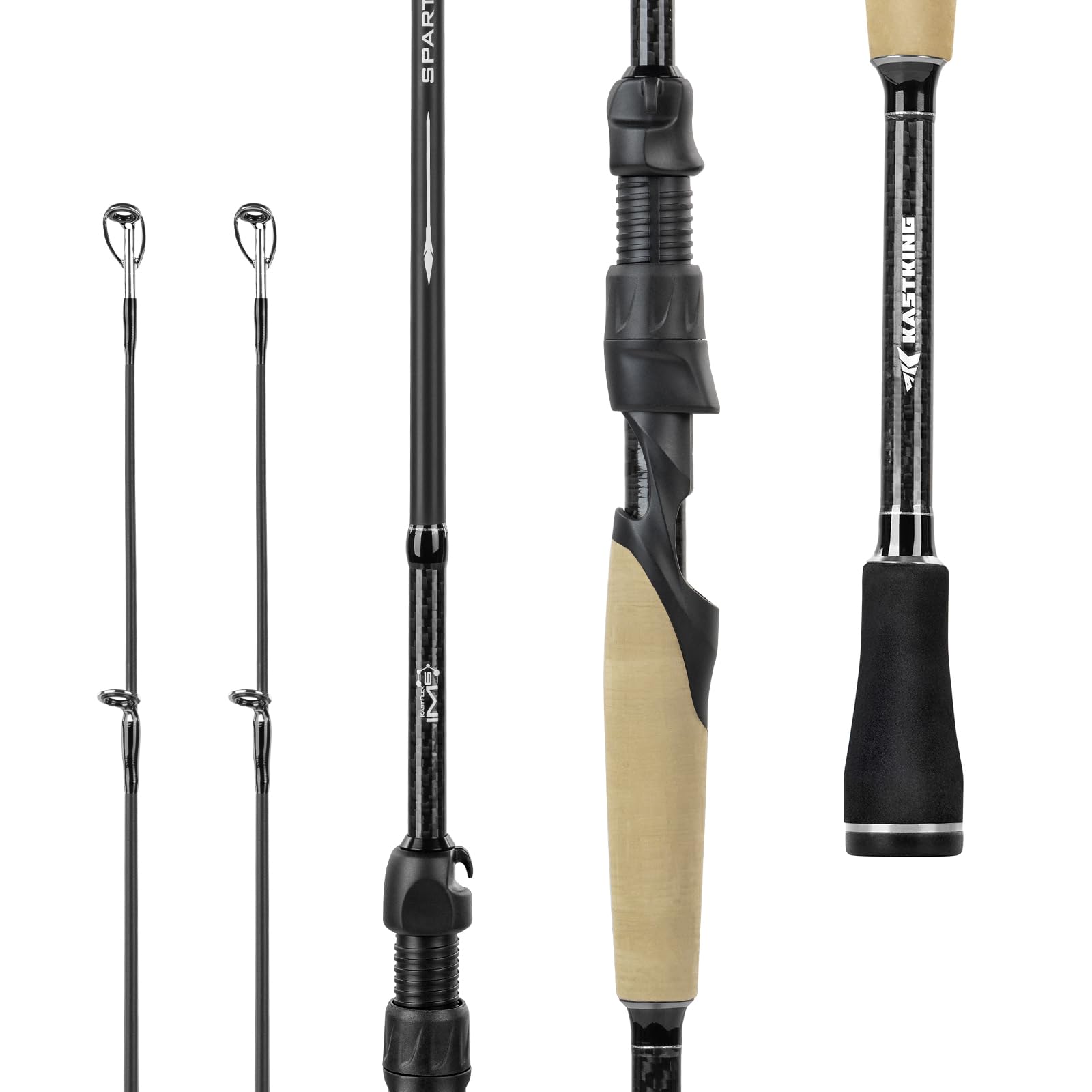
There are two tips in the tube, and that detail does more for this rod than any finish or ferrule ever could. KastKing ships the Spartacus II Plus as a two-piece with a matching spare top section, so a snapped tip costs you a re-rig instead of a rod. Rod tips fail — that's the least surprising thing about fishing tackle — and a replacement already sitting in the bag is worth more than the cosmetic upgrades a fancier blank would bring.

The rod itself is a 7-foot medium-fast spinning blank in IM6 graphite, and it's the longest, quickest rod in this group. That length and speed show up on the cast: a 3/8-ounce spinnerbait loads the tip and travels farther than it does on a 6-footer, and the fast recovery picks up line quickly when a blade gets crushed on the fall. We liked how it balanced with a 2500-size reel, and the AAA cork foregrip stayed comfortable through a full day of winding.

KastKing's details are better than the price suggests. Stainless frames with zirconium oxide rings cut friction and stand up to braid, the hook keeper molded into the foregrip means you stop hanging baits off a guide, and the 8- to 14-pound line window gives you more room than the Ugly Stik to lean on a fish around laydowns. The reel seat is functional rather than refined; we stopped thinking about it by the second trip.

Spool it with 12- or 14-pound fluorocarbon, tie on a 3/8-ounce double willow, and fish it down a windy bank — that's the day this rod was built for.

Pros

  • Matching spare tip section included
  • 7-foot fast blank casts a spinnerbait a long way
  • Cork foregrip and hook keeper add all-day comfort

Cons

  • Medium power, not the medium-heavy grass rod
Our verdict

The pick for anyone throwing spinnerbaits on spinning tackle: a 7-foot fast blank that casts a long way and arrives with a spare tip in the tube.

Check Latest Price
3

Car and Travel

KastKing Megatron Titanium

82 /100
Angler Score Excellent

Key details

Power
Medium
Action
Fast
Rod Length
6'6"
Collapsed Length
22.8-28.9 in
Check Details on Amazon

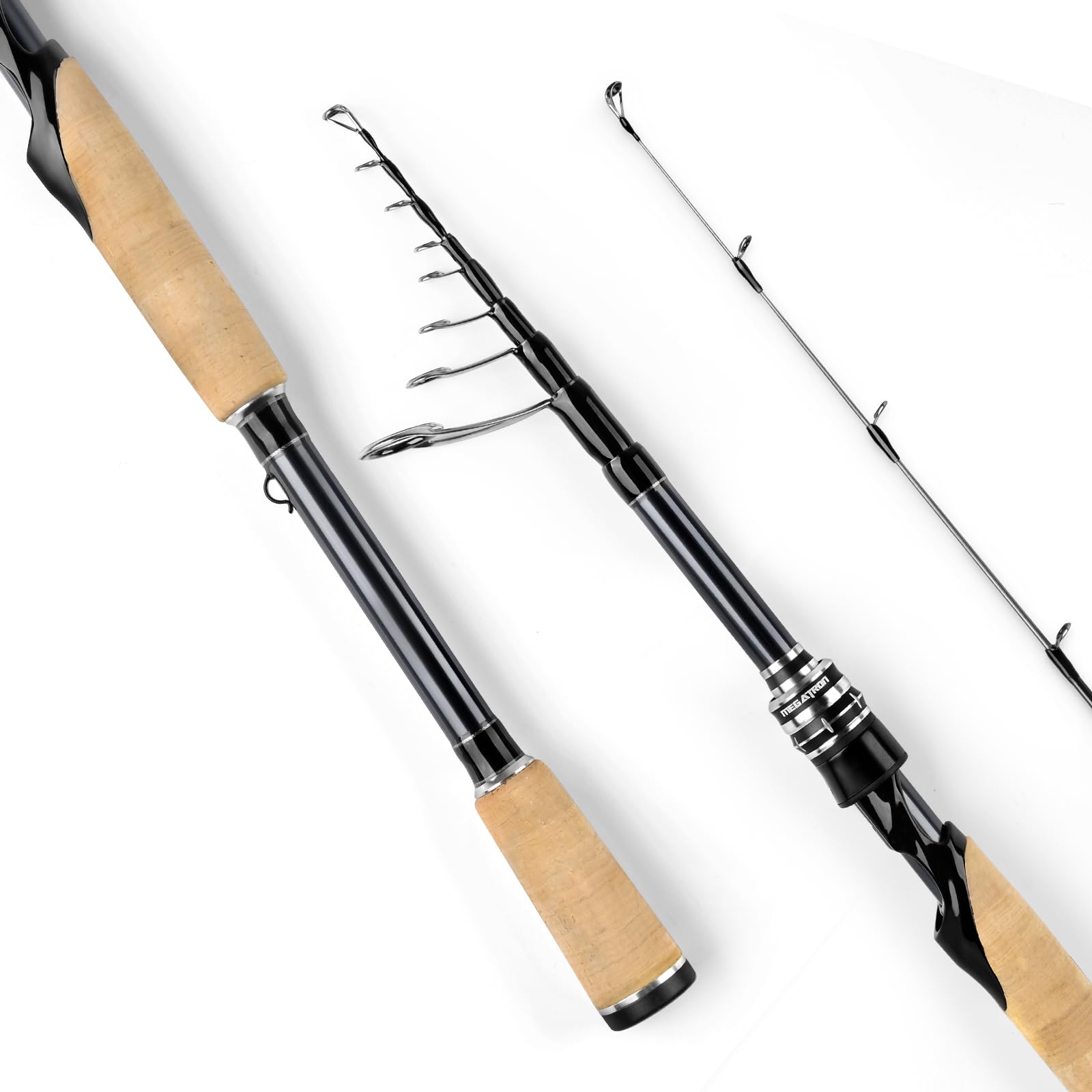
Telescopic rods have a reputation, and the Megatron does its best work against it. Extended, it's a 6-foot-6 medium-fast blank that locks up firmly enough that we stopped noticing the joints after a few casts; collapsed, it's a tube short enough to disappear behind a truck seat or into a duffel. If you have ever left a rod home because it wouldn't fit in the car, that's the problem this one solves.

The titanium solid tip is the piece worth understanding. A solid tip survives knocks that snap a hollow one, and this blank bends further down the rod than a fast graphite tip, which helps it load with a lighter bait on a short cast. Thirty-ton IM7 graphite above it keeps the rod light in the hand, and the cork grip is comfortable across a long retrieve.

What telescoping costs you is connection. Every extra joint sits between your hand and the blade, and we could feel the thump of a big Colorado blade through the blank without getting the fine tick a one-piece delivers. The cork and the finish are honest rather than pretty, which is the right call on a rod that will spend its life in a vehicle.

Packability is the whole reason to own it, and it pays you back in the situations where a full-length rod stays home: the pond you pass on the commute, the rental car, the hike into a backcountry lake. For a dedicated spinnerbait setup, one of the others serves you better; for the rod that's always with you, this is it.

Pros

  • Collapses small enough for a truck or duffel
  • Titanium solid tip resists knocks
  • Locks up firmly once extended

Cons

  • One-year warranty, the shortest here
Our verdict

The travel pick that still casts a spinnerbait properly — it collapses small, locks up solid, and beats leaving a full-length rod in the garage.

Check Latest Price

How We Tested Spinnerbait Rods

We started with a shortlist of casting and spinning rods whose listed power, action, and lure ratings made sense for 3/8- to 1/2-ounce spinnerbaits, then narrowed it to 12 rods that covered a range of designs and prices. Over five months, I fished those rods on local ponds and a nearby lake from the bank, a kayak, and a friend’s boat. Most sessions ran two or three hours, long enough for weight and balance to reveal themselves.

On the water, I cast around grass lines, laydowns, and dock edges, alternating roll casts and overhead casts. I noted whether the tip loaded smoothly, whether the rod put the lure where I aimed, and whether it felt tip-heavy after an hour. I also set hooks whenever a fish or a snag cooperated, paying attention to whether the rod kept its backbone or folded under pressure.

For telescoping models, I collapsed and extended each rod repeatedly, checked that the joints seated tight and the guides lined up, then packed it in a car trunk, a kayak crate, and a daypack. Back home, I inspected guide wraps, reel seats, and grips for loosening, scratches, or signs of wear. Value was judged against what each rod actually delivered, not just its spec sheet.

How to Choose a Spinnerbait Rod

Start with the lure rating, not the label

A 3/8-ounce spinnerbait with a trailer fishes like a half-ounce bait, and a blank rated to a quarter ounce is a light-power rod that will feel overloaded the second you tie one on. Check the lure weight window before anything else on the packaging. The Ugly Stik GX2 tops out at 0.63 ounce, which leaves room for standard 3/8- and 1/2-ounce blades with a skirt and trailer.

If you throw big Colorado-blade models or add a bulky trailer, look for a rod rated past that ceiling rather than assuming a heavier rod is automatically better. A blank that's rated well above your bait casts it like a rock.

Power and action for a single hook

The conventional spinnerbait rod is medium-heavy with a fast tip: enough backbone to drive a single hook through a bass's jaw, and a tip that loads quickly so you can throw a bulky bait into wind. All three rods here are medium power, which is the honest compromise in this group — softer, more forgiving on the cast, and better with 3/8-ounce baits, but short of authority in matted grass and around wood.

If your spinnerbait fishing happens in open water and along weed edges, medium is a sensible place to start. If you pitch blades into cover, hold out for a heavier blank.

Casting or spinning: match the reel you own

Spinnerbaits are usually thrown on baitcasting tackle because the reel gives you line control on the cast and winching power on the retrieve. That doesn't make a spinning rod wrong — a 7-foot medium-fast spinning blank like our Spartacus pick throws a 3/8-ounce blade a long way and is much kinder to anyone still learning to thumb a spool.

The trap is buying a rod to match a reel you don't have yet. Decide the reel first, then buy the rod in the same technique, or you'll spend the season learning to cast instead of fishing.

Length is a distance and storage decision

Six feet is maneuverable and accurate at short range, and it's the length that fits inside a kayak or a small boat cockpit. Seven feet casts farther, picks up line faster, and gives you more leverage to turn a hooked fish away from a dock.

What gets forgotten is the drive home. A one-piece 7-footer rides diagonally across a cab or in an open truck bed; two-piece and telescopic rods solve it. If you own one vehicle and one rod, packability is a fair reason to give up a few inches.

Tips, guides, and what the warranty covers

Rod tips are the part that breaks — in a truck bed, in a screen door, on an overenthusiastic hookset. The two most useful things you can buy are a spare top section, which comes in the tube with the Spartacus II Plus, or a long warranty, which the Ugly Stik backs with seven years.

Stainless guides with zirconium or PVD inserts resist line fray and corrosion, and a hook keeper saves you from hanging a bait off a guide and scratching it. None of that helps you cast, but all of it decides how long you keep casting.

Frequently Asked Questions

Final Verdict

Buy the Ugly Stik GX2 casting rod if you want a baitcaster for spinnerbaits and a rod that survives the truck more than one that measures beautifully. Its seven-year warranty and 6-foot medium blank cover 3/8- and 1/2-ounce blades, with the accuracy that comes from a shorter rod.

If you throw blades on spinning gear, the Spartacus II Plus is the better rod: longer, faster, and carrying a spare tip. And if the rod lives in the car, the Megatron's two-foot collapse settles it before anything else.