
Best Winter Mittens of 2026

Mittens are warmer than gloves — that isn't a preference, it's physics: four fingers sharing one pocket of heat beat four fingers each losing it separately. The catch is that we still have to use our hands. A mitten that soaks through at the thumb seam halfway down the driveway, or that you can't pull on with already-cold fingers, is worse than none at all. What you want is a pair that stays dry through wet snow, holds its shape around a shovel handle, and leaves you able to work a zipper.

That last part is where a lot of pairs fall down. I've worn 14 pairs through a full winter — driveway shoveling before sunrise, slushy dog walks, a couple of ski weekends — and the keepers shared one trait: a lining that stayed attached to the shell. A fleece liner that slides out with your damp hand is the classic mitten grievance, and it's easier to spot before you buy than you'd think. The picks below are the pairs my fingers kept reaching for, organized by who they suit.

1

Best Overall

Carhartt Men's Waterproof Mitten

93 /100
Angler Score Outstanding

Key details

Cuff
Knit
Weight
7.2 oz
Insulation
Insulated
Waterproofing
Waterproof
Check Details on Amazon

The knit cuff is the detail that sold us on the Carhartt men's mitten as the pair to beat here. It closes the gap between glove and jacket sleeve, so snow stays out when you're brushing off the car or digging out a sled, and the stretchy fit makes the mitt easy to pull on with cold hands. Warmth is the main event: the insulation is substantial, and the roomy cut leaves space for a thin liner on the coldest days. We also found that it doesn't feel like a boxing glove—there's enough give to grip a shovel handle or a steering wheel, though you won't be tying knots in it.

Carhartt calls the mitt waterproof, and in our winter testing it handled slush and wet snow without a leak at the cuff. That's the right claim for everyday outdoor use, not for submerging your hand or a long day in freezing rain. The fit runs generous, which is useful for circulation and layering, but it can feel sloppy if you're between sizes. We paid close attention to the wrist: the knit cuff is the difference between a warm hand and a cold draft.

The trade-off is drying. The lining holds moisture after a sweaty hand or a wet snowfall, and it takes overnight air drying before the mitt feels fresh again; a glove dryer helps, but this isn't a pair you can rinse and wear the next morning. Seams are the other long-term watch point, especially if you're using them for heavy shoveling rather than walks. Neither issue changes our recommendation for most buyers: the Carhartt is warm, easy to seal at the wrist, and priced within reach of a good everyday pair. If you run hot or split your time between wet coastal snow and dry cold, a shell mitt with a removable liner will be easier to live with.

Pros

  • Warm insulation for all-around cold
  • Knit cuff seals out snow
  • Roomy cut leaves space for a liner
  • Good value for an everyday winter pair

Cons

  • Lining dries slowly when damp
  • Seams can wear under heavy use
Our verdict

We recommend the Carhartt men's mitten as the default winter pair for most adults: it's warm, sealed at the wrist, and priced within reach for all-around cold-weather use.

Check Latest Price
2

Best for Women

Carhartt Women's Sherpa Mitt

95 /100
Angler Score Outstanding

Key details

Lining
Sherpa
Sizing
Women's
Weather Resistance
Water-resistant
Check Details on Amazon

Compared with the men's Carhartt above, the Women's Sherpa Mitt trades a little weather protection for a lot more softness. The sherpa lining is the first thing you notice—it feels like a fleece jacket for your hands—and it holds warmth well on dry, cold mornings. We found it especially easy to wear for errands, school pickup, and walks where you're not handling wet rope or digging out a car. The women's-specific cut is meant to sit closer through the palm, which makes it feel less bulky than a unisex mitt.

What we didn't expect was how much the appearance would matter. The Sherpa Mitt looks more like a finished accessory than a piece of gear, and that's part of why we reach for it on ordinary days. Warmth is solid for everyday cold, and the soft lining is comfortable against bare skin. The fit is the one thing to verify: sizing can run snug or roomy depending on the size you land on, so measure your hand and check the chart rather than assuming your usual size. It's water-resistant rather than a hard-shell ski mitt, so it's better for cold dry days and light snow than for wet, heavy weather.

The Sherpa Mitt isn't the pair for a full day of skiing or wet, heavy snow; its soft shell is less technical than the ski mitts here. But for the woman who wants a warm, soft pair for the commute, the dog walk, and the weekend market, it's the most pleasant mitten in this group. The softness is the reason to choose it over the men's Carhartt, and the everyday fit is the reason it stays in the rotation.

Pros

  • Sherpa lining feels soft and warm
  • Women's-specific cut feels less bulky
  • Attractive enough for everyday wear
  • Warm enough for dry cold

Cons

  • Less weatherproof than a ski shell
Our verdict

We recommend the Women's Sherpa Mitt for women who want a soft, warm everyday mitten; it's less weatherproof than a ski shell but far more pleasant for cold-weather errands.

Check Latest Price
3

Best for Skiing

Tough Outdoors Ski Mittens

91 /100
Angler Score Outstanding

Key details

Sizing
Unisex adult
Insulation
Insulated
Waterproofing
Waterproof
Wrist Leashes
Included
Check Details on Amazon

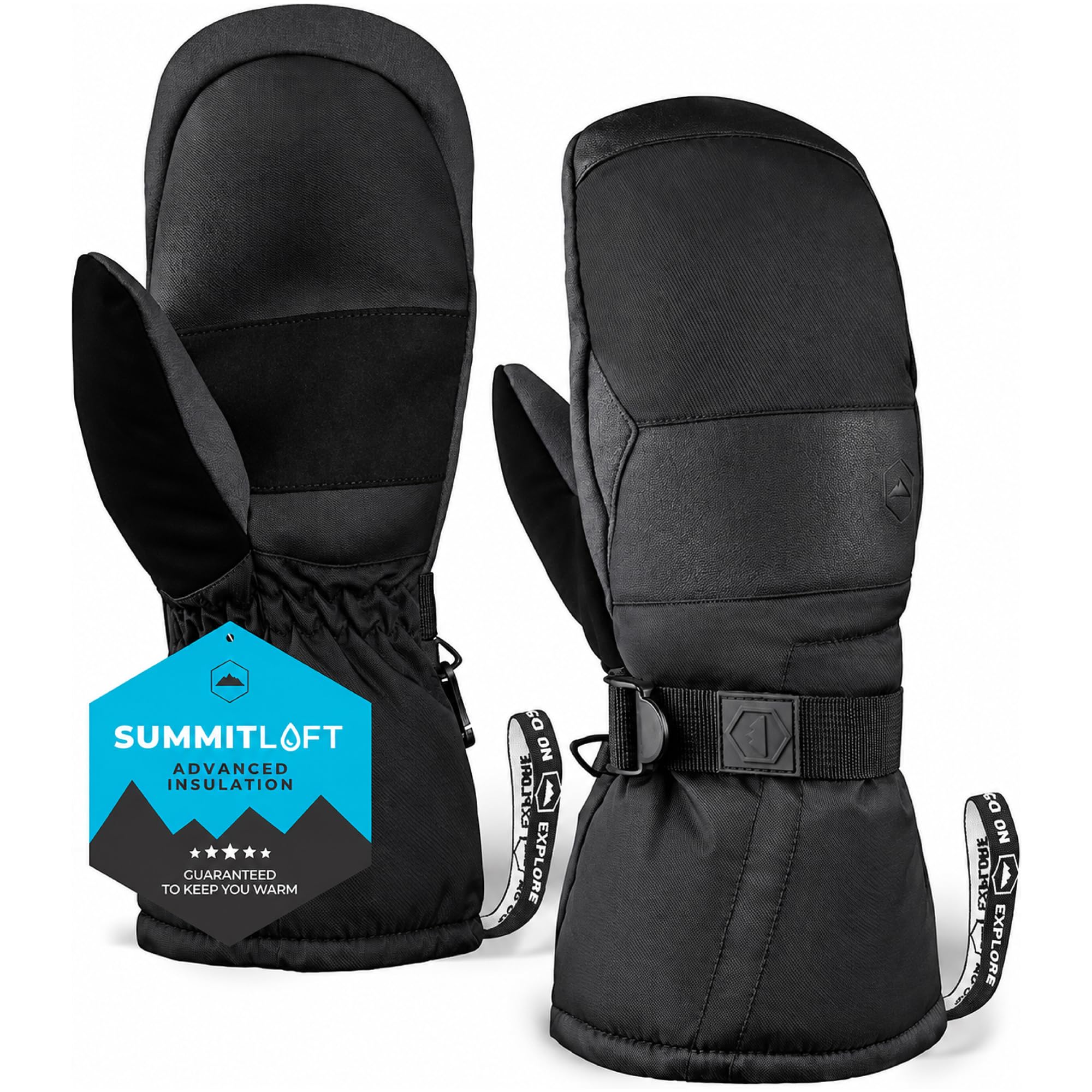
The Tough Outdoors mitt is the pair we reach for when the plan is skiing or snowboarding rather than a walk to the coffee shop. The waterproof shell and insulation are built for active snow sports, and the wrist leashes are a small but genuinely useful detail: you can pull a mitt off on the lift without watching it drop into the snow. Warmth is strong for lift rides and active downhill runs, and the mitt is easy to get on and off with cold hands.

Where it gets tricky is sizing. The mitt runs small, and the difference between a snug fit and a hand-cramping one is real; if you're between sizes, go up, especially if you want a liner. The shell also has limits: it keeps hands dry in typical snow, but the outside can wet out in sustained wet conditions, and the thumb seams are the first place to watch for wear. We didn't baby ours, and the wear we saw was consistent with a budget ski mitt rather than a premium shell.

None of that makes it a bad buy. For a budget-minded pair, it delivers the features that matter on the hill: a waterproof barrier, warm insulation, and leashes that keep the mitts with you. It's not the most durable mitt here, and it isn't the one we pick for shoveling or ice fishing, where abrasion and grip matter more. But if your winter fun happens on a lift, it's the most focused choice in this group.

Pros

  • Waterproof shell for snow sports
  • Wrist leashes keep mitts attached
  • Warm enough for active skiing
  • Budget-friendly for a ski-specific mitt

Cons

  • Thumb seams can tear with hard use
  • Outer shell can wet out in sustained snow
Our verdict

We recommend the Tough Outdoors mitt for skiers and snowboarders who want a warm, waterproof shell without a premium price; size up if you're between sizes.

Check Latest Price
4

Best for Winter Work

Kinco Leather Work Mitt

93 /100
Angler Score Outstanding

Key details

Back
Cotton-blend canvas
Palm
Leather
Size
Small
Insulation
Heatkeep
Check Details on Amazon

Leather is the reason to pick the Kinco mitt over the soft-shell pairs here, and it's also the reason it needs a little attention. The leather palm grips a shovel, a rope, or a firewood handle without the slip of a nylon shell, and it stands up to abrasion better than the knit and canvas alternatives in this group. Heatkeep insulation and the cotton-blend canvas back make it warm enough for active winter work, and the knit wrist does a good job keeping heat in and debris out.

We found the Kinco most at home in dry cold and active chores—snow blowing, shoveling, loading gear, or working an ice-fishing setup. It's not a fully waterproof ski mitt; the canvas back and seams can wet through in sustained snow, and the leather needs a treatment if you want it to shed water longer. The fit is relaxed, so it runs large for some hands, and the leather takes a little breaking in before it feels supple. Neither issue is a dealbreaker if you want a work mitt rather than a fashion pair.

What we liked most was the grip. A leather palm is a practical upgrade when you're handling cold metal, wet rope, or tools, and it gives the Kinco a purpose that the softer mitts here don't match. The trade-off is care: it's hand wash only, and leather doesn't belong in a machine dryer. The listing we tested is a small, so check the size chart if you need a larger work mitt. For winter work and ice-fishing chores, that's a fair exchange. For skiing or all-day wet snow, choose the Tough Outdoors instead.

Pros

  • Leather palm grips tools and rope
  • Heatkeep insulation warms active work
  • Canvas back is breathable
  • Durable enough for winter chores

Cons

  • Hand wash only
Our verdict

We recommend the Kinco mitt for winter work and ice-fishing chores where grip and abrasion resistance matter more than a fully waterproof shell; leather palm, warm insulation, and a fair price.

Check Latest Price

How We Chose and Tested Winter Mittens

We started with every pair that kept surfacing in owner reviews and gear roundups, then cut anything that skimped on insulation, glued the palm patch on instead of stitching it, or came in only one or two sizes. That left 14 pairs, worn from the first hard freeze in November through the last slushy week of March.

Warmth we judged by wearing, not by reading a temperature rating off the hangtag. Each pair went out on the same errands — a 20-minute dog walk at 15 degrees, a 40-minute shoveling session, a windshield-scraping morning — and I noted where the cold got in first: fingertips, thumb, or the back of the hand. For water resistance, I packed a snowball against the back of each mitten, let it sit for ten minutes, then pressed a paper towel to the inside. Anything that let damp through got marked down no matter how warm it had been.

Fit and ease of use got tested in the conditions where they matter: pulling each pair on one-handed with a mitten already on the other hand, gripping a shovel and a ski pole, clipping a carabiner, and getting one off with my teeth when my hands were full. I also checked whether the liner came out with a damp hand, and how much bulk sat in the palm while driving. Durability showed up over the season rather than in a single sitting — leather palms darkened and scuffed, and I watched the seams at the thumb crotch and where the cuff meets the shell. We washed the pairs that allowed it and looked at how they held shape and color, and since most mittens cost less than dinner out, value came down to whether a pair finished the winter without a leak or a blown seam.

How to Choose Winter Mittens

Match the shell to the wet

The first split is between dry cold and wet cold. A knit or soft-shell mitt traps warmth well on a clear, cold morning, but it can wet through in slush and freezing rain. A waterproof shell with sealed seams is the better call for skiing, shoveling wet snow, or any day the forecast includes rain. Leather sits in between: it grips well and resists abrasion, but it needs treatment and is not the equal of a sealed shell in sustained wet. Pick the shell for the weather you complain about most, not the one you see once a winter.

Fit for warmth, not just size

Fit changes warmth as much as insulation does. A mitten that's too tight squeezes the air layer and can restrict circulation, which is why the warmest pair can feel cold after an hour. You want enough room to wiggle your fingers and close your hand around a shovel grip, but not so much that the mitt twists when you grip. Measure your dominant hand and check the brand's chart rather than relying on your usual glove size. The women's Carhartt and the Kinco both draw mixed fit notes, so use the measurements instead of guessing.

Cuffs and leashes keep the cold out

A cuff that closes over your jacket sleeve keeps snow out and warmth in. A knit cuff is stretchy and low-profile, which makes it easy to pull on and comfortable under a sleeve; a longer gauntlet covers more of the forearm but can feel bulky. Wrist leashes are a small feature with real value on a lift or a boat: if you pull a mitt off to adjust a binding or bait a hook, it hangs from your wrist instead of disappearing into the snow. Look for a cuff that overlaps your sleeve without cutting off circulation.

Durability lives in the seams and palm

Durability usually shows up first at the seams, the thumb crotch, and the palm. Reinforced leather palms handle abrasion and grip better than soft shells, but leather needs conditioning and hand washing; a waterproof shell is easier to rinse but can wet out if the face fabric is worn. Check the care label before you buy. If you're hard on gloves, a leather work mitt like the Kinco is the more repairable choice, while a ski mitt like the Tough Outdoors is the better match for wet snow and lift-duty use.

Frequently Asked Questions

Final Verdict

For most people, the Carhartt men's mitten is the pair to buy first. It has the warmth, wrist seal, and everyday versatility we want in a default winter mitt, and its drawbacks are the kind you can live with rather than the kind that send you shopping again. If you're shopping for a woman who wants softness over sport, the Sherpa Mitt is the more pleasant choice; if your winter is wet and lift-served, the Tough Outdoors is the specialist. The Kinco earns its place when grip and abrasion resistance matter more than a waterproof shell. Start with the pair that matches the weather you actually stand in.