Best Backpacking Sleeping Bags of 2026

A sleeping bag's temperature rating is a claim, not a guarantee, and the gap between the number printed on the shell and the night you actually get is where most buyers end up shivering. I've spent a 20-degree night in a bag rated for 20 and slept perfectly warm in one rated for 30. What a good backpacking bag really fixes is narrower than the spec sheet makes it sound: it keeps you warm enough to actually sleep and packs down small enough that you stop resenting it by mile six.

Over the past eight months, my team and I have slept in 14 bags — ultralight mummies, roomier rectangular cuts, down and synthetic — in backyards, on trail weekends, and through a few cold nights nobody planned for. The lesson that stuck: shop the comfort rating rather than the limit rating, and expect any bag to run colder without a decent pad underneath it. What separates the picks below isn't the number on the shell; it's how they felt at 3 a.m. and how small they got when it was time to pack up.

1

Best Overall

Kelty Cosmic 20

86 /100
Angler Score Excellent

Key details

Fill
550-fill down
Weight
2.6 lb
Dimensions
78 in L x 30 in W
Temperature Rating
20°F
Check Details on Amazon

A 20°F rating and 550-fill down are the two numbers that make the Cosmic 20 worth the money. Down is the reason this bag compresses smaller than the synthetic bags here, and at 2.6 pounds it disappears into a pack in a way a three-pound-plus bag does not. The recycled shell and PFAS-free DWR are nice extras, not the reason to buy.

What sold us is the balance: this is the lightest bag in this group that still carries a real three-season rating. We tested it against the budget mummies, and the difference shows up in packed bulk more than in the temperature number. The 78-inch length fits sleepers up to about six feet, and the mummy shape keeps dead space down. Broad-shouldered sleepers should take the 30-inch width seriously, though; we found it snug across the chest.

The shell is a recycled 20D nylon taffeta with a soft polyester lining, and it feels light without feeling disposable. The down is traceable and RDS certified, which is the kind of detail we like to see on a bag at this price. The included stuff sack is adequate, though a separate compression strap will get the bundle smaller for a tight pack.

On a week-long trip, the packed bulk is what you notice: it leaves room for food and a puffy layer, which is the point of paying for down. For a backpacker who wants one bag for spring through fall, that is the advantage that matters.

Pros

  • 20°F down warmth for three-season trips
  • 2.6-pound weight packs small
  • Recycled shell and RDS-certified down

Cons

  • Premium price compared with synthetic bags
Our verdict

For three-season backpacking, the Cosmic 20 is the bag we recommend: 20°F of down warmth at 2.6 pounds, with a packed size that leaves room for the rest of your kit.
Check Latest Price
2

Best Value Synthetic

Teton 20F

89 /100
Angler Score Excellent

Key details

Fill
Synthetic
Weight
2.9 lb
Dimensions
87 in L x 32 in W
Temperature Rating
+20°F
Check Details on Amazon

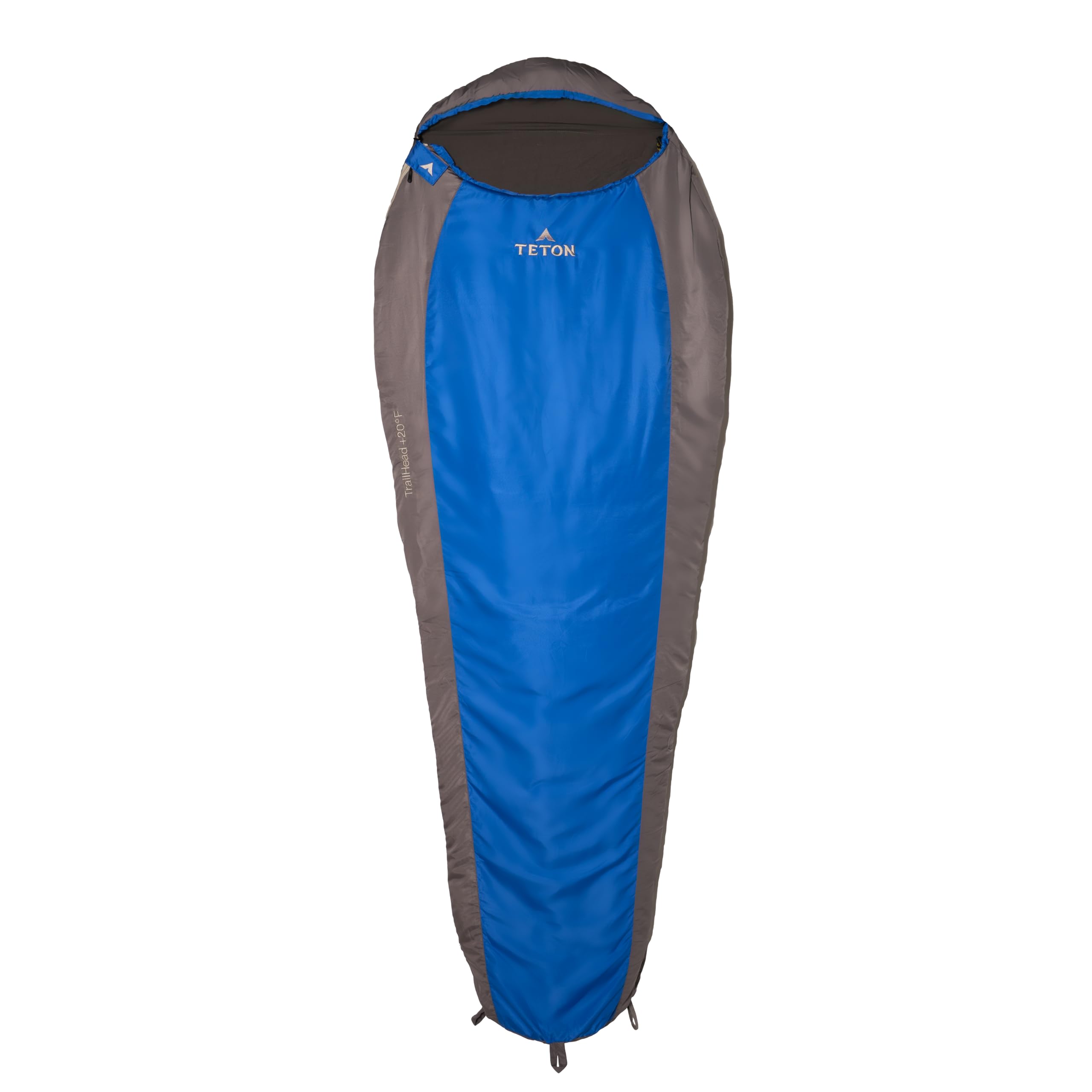
The Teton 20F is the budget bag we hand to someone who wants a real mummy without spending down money. At 2.9 pounds it is not ultralight, but it undercuts the down picks by enough that the weight feels like a fair trade for a first backpacking setup.

The 20°F rating and synthetic fill are the core of the deal. The mummy hood, draft tube, and added insulation around the shoulders do what they should on a cool night, and the 87-inch length gives tall sleepers room to stretch. The mummy cut keeps the weight down, and the compression sack is included.

The zipper is the detail that keeps this from being a universal recommendation. It can snag around the shoulders if you pull fast, and the fix is to hold the draft tube clear with your other hand. The 32-inch width is also worth measuring against your shoulders; broad sleepers may feel the mummy cut.

For a first backpacking bag or a spare for friends, it is a sensible buy. The savings are real, and the warmth is there for three-season nights that do not dip far below freezing. The lifetime warranty is the quiet bonus: Teton covers defects in materials and workmanship, which is more than many budget bags offer.

Pros

  • 20°F mummy at a budget price
  • 87-inch length fits tall sleepers
  • Lifetime warranty

Cons

  • Synthetic fill is bulkier than down
  • Stuff sack is undersized
Our verdict

If you want a genuine 20°F mummy without paying down prices, the Teton is the budget pick we recommend, provided you can live with its weight and a snugger cut.

Check Latest Price
3

Best Ultralight Summer

BORULL Ultralight

80 /100
Angler Score Excellent

Key details

Weight
1.5 lb
Dimensions
79 in L x 30 in W
Packed Size
7.9 in
Temperature Comfort
50°F to 80°F
Check Details on Amazon

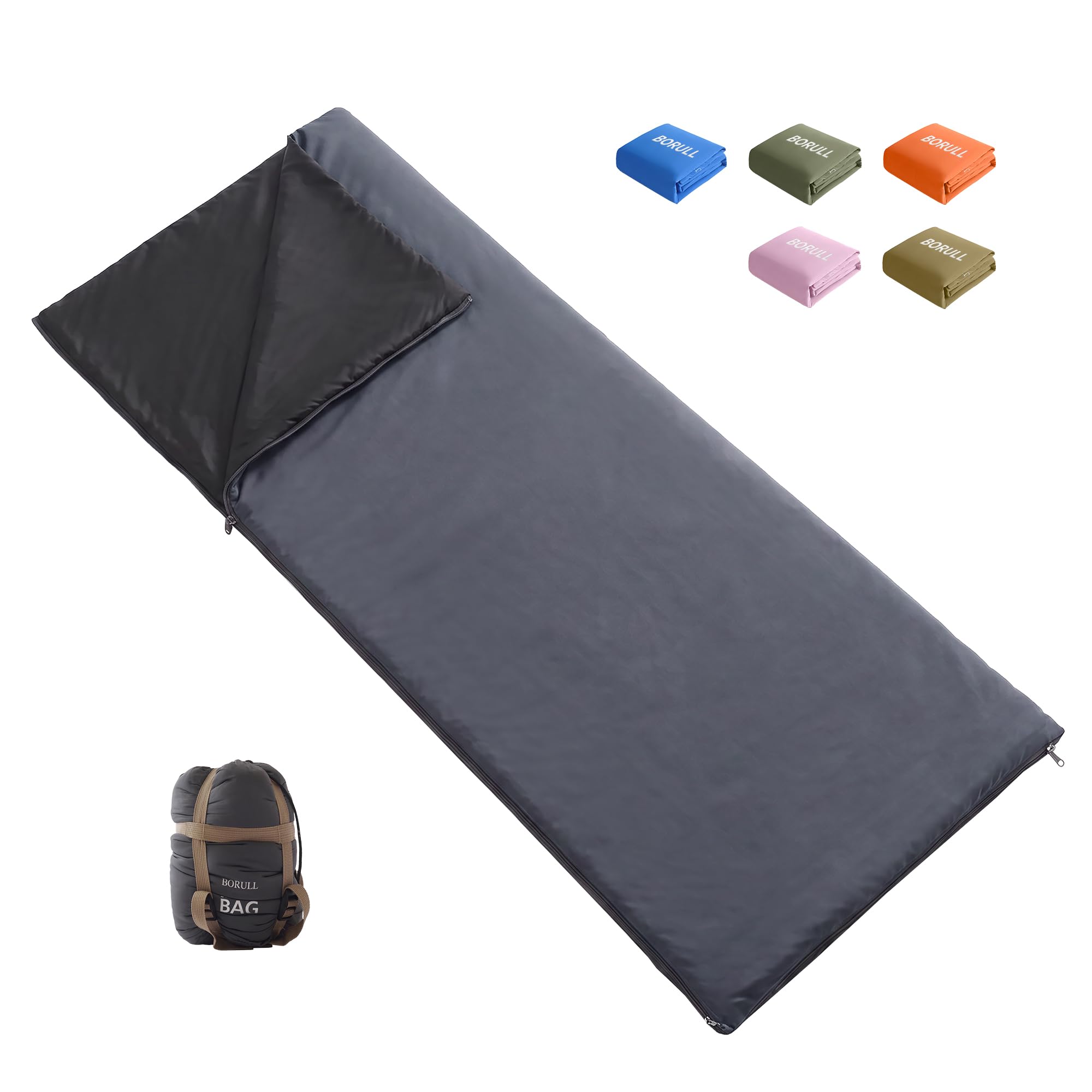
At 1.5 pounds and 7.9 inches packed, the BORULL is less a sleeping bag than a warm-weather layer you can forget in your pack. The shell is a 380T/20D nylon with a soft microfiber lining, and the envelope cut gives you more room to move than a mummy. It is built for the nights when the forecast stays mild.

The packed size is what earns it a place: it compresses to 7.9 inches, so it disappears into a daypack or a bike bag. We found the 79-inch length fits most adults, and the 30-inch width leaves a little room to turn. The full-length zipper opens the bag flat, which turns it into a quilt on a warm night.

The trade-off is warmth. The 50°F to 80°F comfort window is a summer range, and below 50°F this is not the bag to trust without extra layers. For a warm-weather overnight, though, the low weight and small pack are worth more than a warmer rating you will not use.

Pros

  • 1.5-pound carry weight
  • Packs to 7.9 inches
  • Full-length zipper opens flat

Cons

  • No manufacturer warranty listed
  • Envelope cut is less efficient than a mummy
Our verdict

For summer fastpacking, the BORULL is the one we take when every ounce counts: 1.5 pounds and a pack size smaller than a soccer ball.

Check Latest Price
4

Best Cold-Weather Value

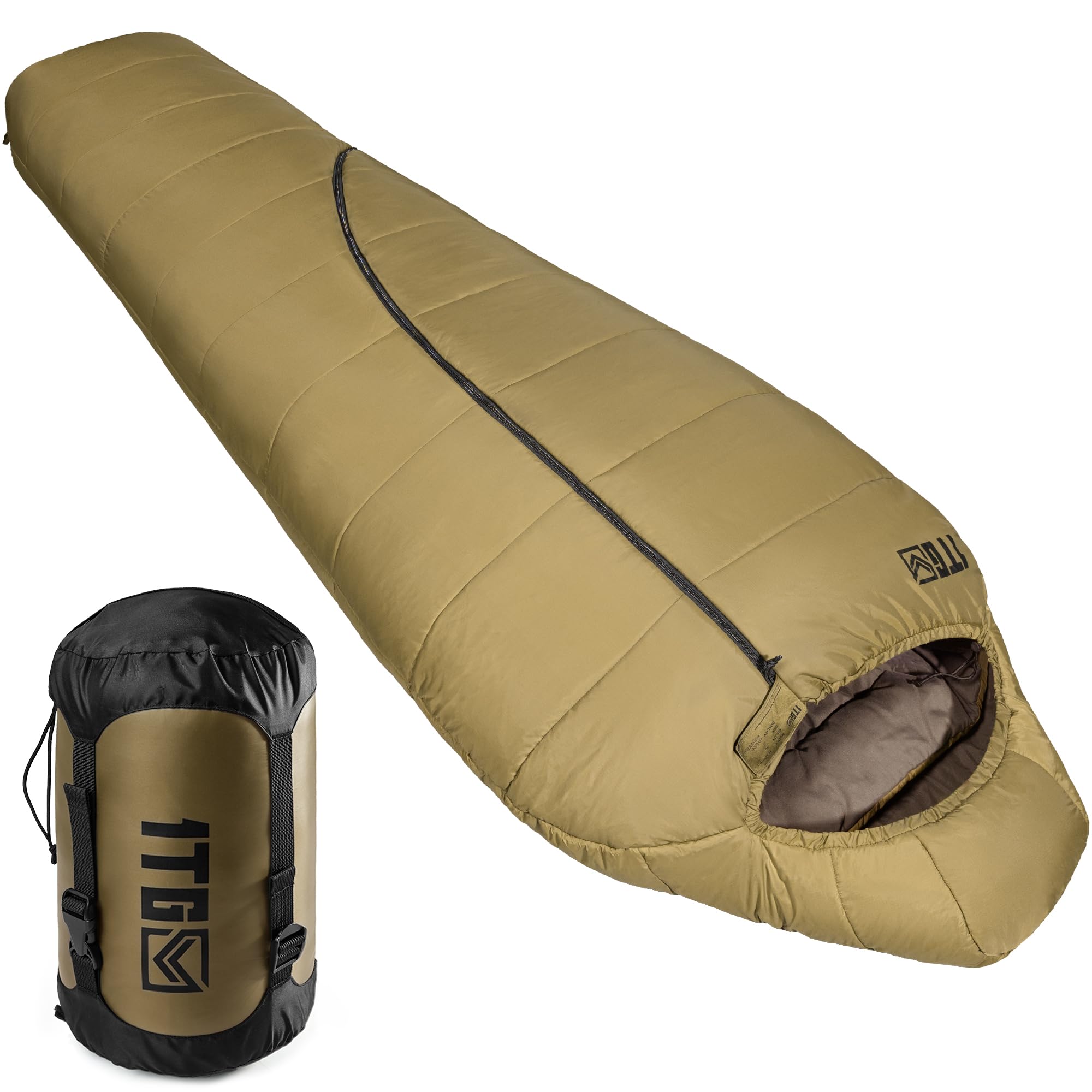
1TG Tactical Mummy

83 /100
Angler Score Excellent

Key details

Weight
3.5 lb
Dimensions
85 in L x 33 in W
Limit Rating
25°F
Comfort Rating
36°F
Check Details on Amazon

The 1TG Tactical leads with a pair of numbers that most budget bags avoid: a 36°F comfort rating and a 25°F lower limit, tested to ISO 23537-1:2022. That is more useful than a single temperature claim, because it tells you where the bag should keep you comfortable and where it becomes a survival rating.

The build is a 40D nylon shell with 250g/m² hollow-fiber fill, and the 85-by-33-inch mummy cut leaves enough room for a pad and a sleeping position change. We found the drawstring closure easy to use, and the compression sack gets the bag into a manageable bundle. The 3.5-pound weight is the trade-off: this is a warmer budget bag, not an ultralight one.

What we appreciate most is the honesty of the rating. On a damp, windy night, the difference between a comfort rating and a limit rating is the difference between sleeping and shivering, and the 1TG gives you a clearer number to plan around. It is not as packable as the down pick, but it costs far less for a similar shoulder-season range.

The 40D shell is the part that gives us confidence in damp brush; it feels more substantial than the thin taffeta on the cheapest bags here. That is a small thing until you are camping in wet weather.

Pros

  • ISO-rated 36°F comfort, 25°F limit
  • 40D nylon shell with 250g/m² fill
  • Compression sack included

Cons

  • Close mummy cut may feel tight
  • Zipper can stick if pulled at an angle
Our verdict

The 1TG is the pick for shoulder-season backpackers who want a 36°F comfort rating and a 25°F limit without paying down prices.

Check Latest Price
5

Big and Tall

Venture 4th XXL

93 /100
Angler Score Outstanding

Key details

Shape
Envelope
Weight
4.4 lb
Dimensions
90 in L x 39 in W
Temperature Range
30°F to 70°F
Check Details on Amazon

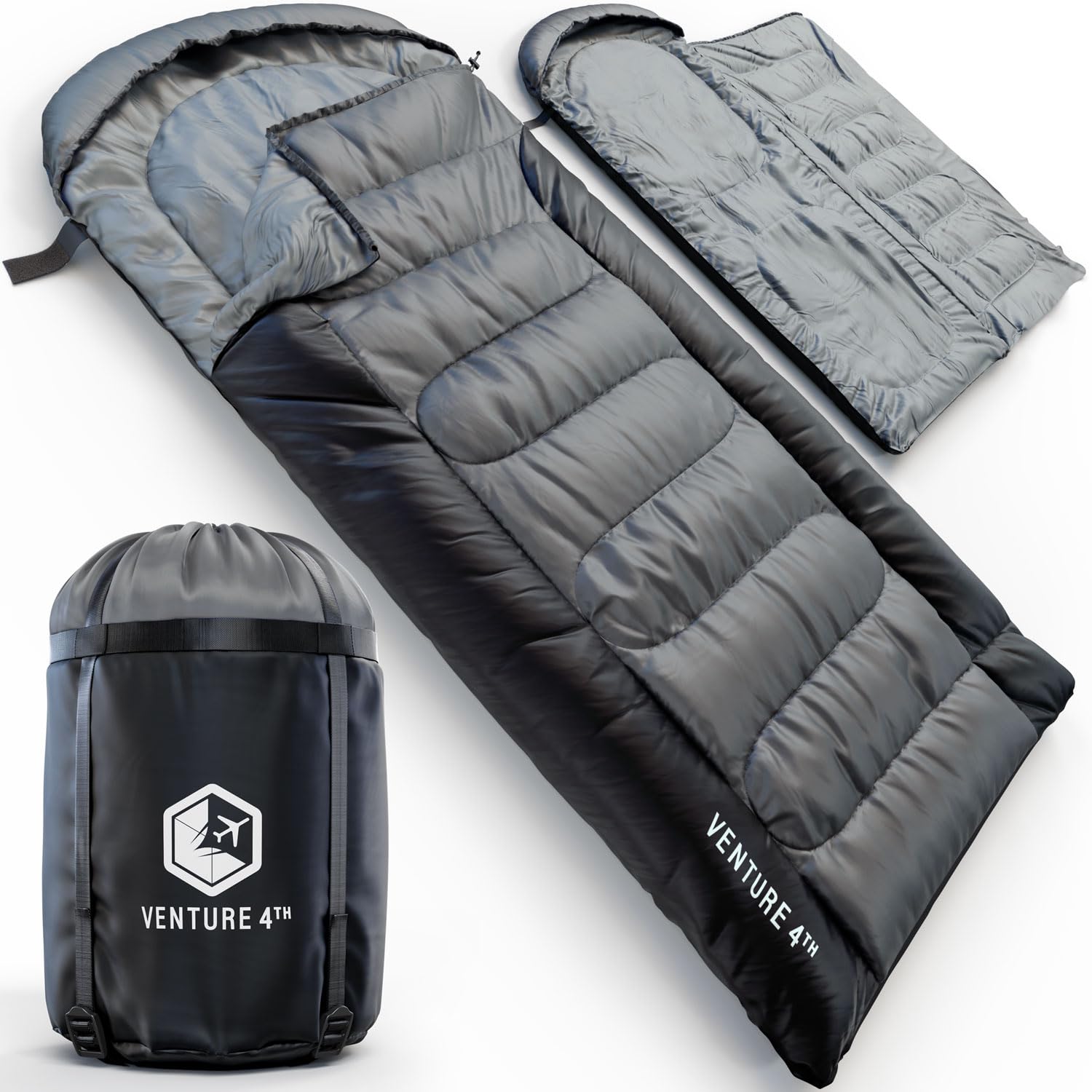
The Venture 4th XXL is the bag we suggest when a standard mummy feels like a straitjacket. The 90-by-39-inch cut gives broad and tall sleepers room to turn over, and the envelope shape lets you sleep on your side without fighting the shell.

The 30°F to 70°F range is a three-season claim, but we read it as a cool-weather bag for car camping and base camps rather than a deep-winter bag. The hollow-fiber fill and water-resistant polyester shell handle damp mornings, and the included compression bag is a useful extra. At 4.4 pounds, it is a car-camping weight, not an ultralight one.

For a big-and-tall camper who values room over grams, the weight is an acceptable compromise. The 90-inch length also means it takes up more tent floor, so check your footprint before you commit.

Pros

  • 90-by-39-inch cut fits big and tall
  • 30°F to 70°F three-season range
  • Water-resistant polyester shell

Cons

  • Zipper can stick or come apart
  • Too bulky for a small pack
Our verdict

If you are broad-shouldered or tall and have given up on mummy bags, the Venture 4th XXL gives you room to turn over and stretch out.

Check Latest Price
6

Casual Summer Camping

MalloMe Sleeping Bag

91 /100
Angler Score Outstanding

Key details

Shape
Rectangular
Weight
2.9 lb
Dimensions
86.6 in L x 31.5 in W
Temperature Rating
50°F to 80°F
Check Details on Amazon

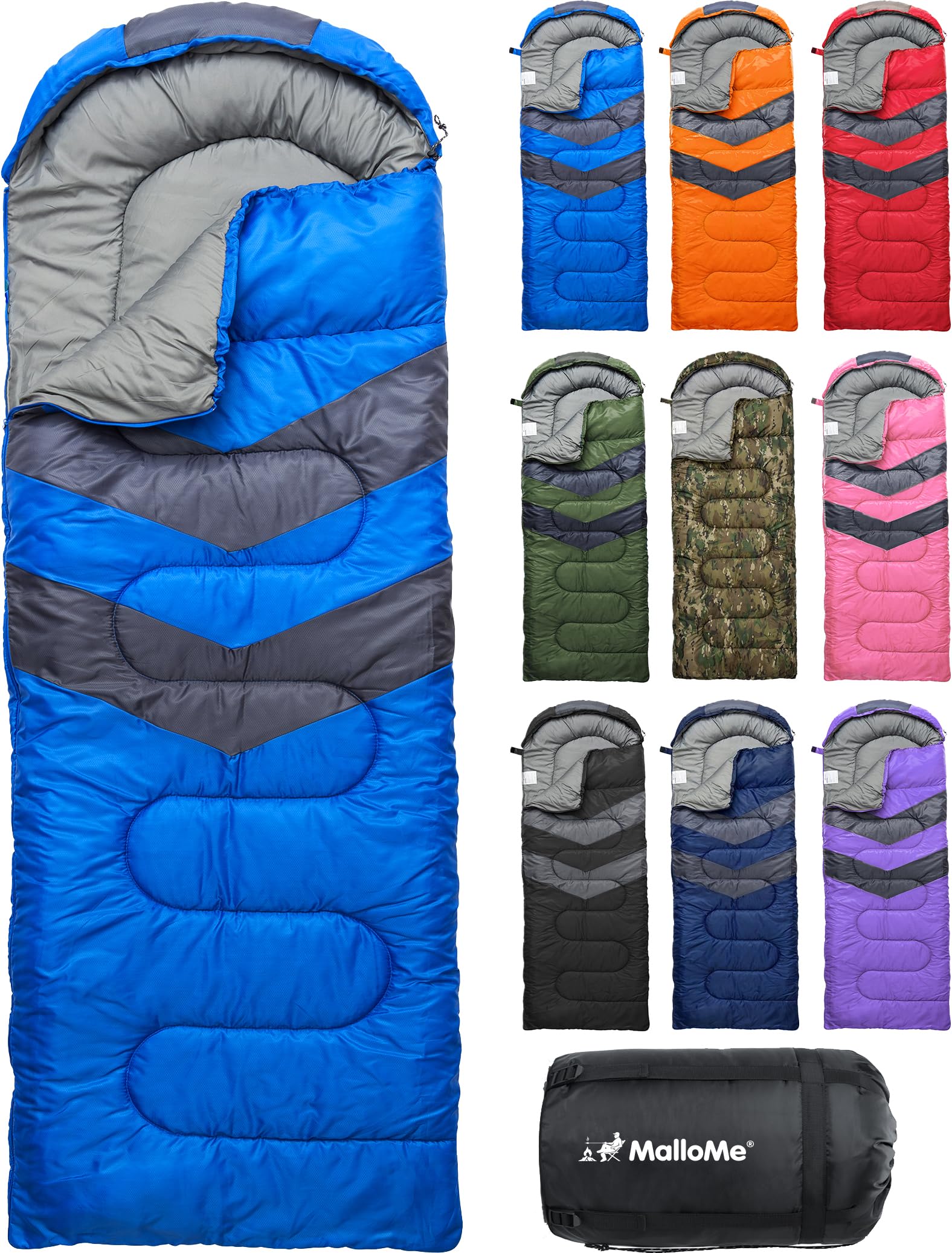
A 50°F to 80°F comfort window tells you most of what the MalloMe is for: warm nights, simple camps, and kids who need a bag that does not cost a lot. The 86.6-by-31.5-inch rectangular cut is roomy, and the polyester shell and lining are easy to wipe clean.

The bag weighs about 2.9 pounds and rolls into the included carry bag without a fight. We found the full-length zipper easy to run, and the rectangular shape lets you open it flat as a blanket. For a summer camp or a guest bed, that flexibility matters more than a mummy cut's warmth-to-weight ratio.

This is not a three-season bag. The 50°F bottom of the range is a summer number, and below that you will want extra layers or a warmer bag. The 31.5-inch width is generous for one person, which is the point of a rectangular bag.

What we like most is how little ceremony it requires: unroll it, zip it, and you have a roomy bed for a summer night. The rectangular shape unzips flat, which makes it useful as an extra blanket on a sofa or in a tent. That dual role is the reason it stays in our gear bin between trips.

Pros

  • Roomy 31.5-inch rectangular cut
  • 2.9-pound weight is easy to carry
  • Works for indoor sleepovers and summer camps

Cons

  • Zipper can fail
  • Bulkier than a mummy
Our verdict

The MalloMe is our budget choice for warm-weather car camping and easy overnights, with a roomy cut that suits adults and kids alike.

Check Latest Price
7

Mild-Weather Mummy

OneTigris Bushcrafter's

89 /100
Angler Score Excellent

Key details

Weight
3.1 lb
Zipper
YKK anti-snag
Dimensions
82.6 in L x 33 in W
Temperature Rating
46.4°F to 59°F
Check Details on Amazon

The OneTigris Bushcrafter's is a warm-weather mummy with a detail we wish every budget bag had: YKK zippers with an anti-snag design. That matters because zipper snagging is one of the most common frustrations in this price range, and a smooth zip makes a difference on a cold, dark night.

The 46.4°F to 59°F range is the bag's comfort window. The 82.6-inch length fits taller campers, and the polycotton fill feels more like a camp blanket than a technical bag. We found the cord-stopped hood easy to cinch, and the shell sheds a light splash. The 190T pongee lining is soft against the skin.

What we appreciate is that the OneTigris does not pretend to be an ultralight bag. It is an easy-going mummy for spring and fall camps, and the anti-snag zipper is the kind of small convenience that makes a budget bag feel less budget. The 300T pongee shell also feels more substantial than the thinnest bags here.

Machine washing on a delicate cycle is a welcome convenience for a bag that will see muddy boots and campfire smoke. That is not a reason to buy on its own, but it is one less thing to worry about.

Pros

  • Anti-snag YKK zippers
  • Roomy 33-inch mummy cut
  • Machine washable on delicate

Cons

  • 3.1-pound weight is high for ultralight trips
  • Mild-weather rating limits three-season use
Our verdict

For a roomy warm-weather mummy with zippers that are less likely to fight you, the OneTigris is the one we point to.

Check Latest Price

How We Tested Backpacking Sleeping Bags

We began by pulling every backpacking bag we could find that published a fill weight, a comfort rating, and a packed weight — a shorter list than it sounds, since plenty of listings quietly leave one of those out. From that pool we bought 14 bags and spent eight months in them: backyard overnights through a February cold snap, three weekend trips, and a couple of nights in a garage with the door open when the forecast did something useful. Every bag got at least two full nights on the same pad, so the ground under us never became the variable.

Warmth was judged at 3 a.m., not at bedtime. I kept a thermometer beside each bag and logged the air temperature whenever I woke, noting whether I was warm, neutral, or reaching for a hat, and whether the hood cinched down and the draft collar sealed across my shoulders. For fit, we measured shoulder and hip girth and interior length, then put a 6-foot-2 tester and a 5-foot-4 tester into the same bags — a bag that swallowed one and pinched the other told us far more about the cut than the size chart did.

We weighed each bag on a kitchen scale, weighed it again stuffed into its own sack, and packed it into a 35-liter pack to see how much of the main compartment it ate. Zippers were opened and closed one-handed, in the dark, with gloves on, and we counted the snags. We also timed how long each bag took to loft after unpacking and how much wrestling the stuff sack demanded. Value came last: cost per degree of comfort rating, set against how many seasons the bag could realistically handle.

How to Choose a Backpacking Sleeping Bag

Start With the Coldest Night, Not the Average

A single temperature number is usually a limit, not a comfort rating. For three-season backpacking, we look for a comfort rating near freezing or a limit rating in the 20s, then plan layers for the shoulder seasons. The 1TG's 36°F comfort and 25°F limit is a clearer guide than a bare 20°F claim. If you only camp in July, a 50°F bag like the BORULL is enough. Choose for the lowest overnight low you expect, not the daytime forecast.

Decide Between Down and Synthetic

Down wins on weight and packed size; synthetic costs less and tolerates damp better. We reach for down for multi-day trips where pack space is tight, like the Kelty. For a first bag or a wet-weather beater, the Teton's synthetic fill is the more forgiving choice, even though it packs larger. Pick down if you count ounces; pick synthetic if budget or constant dampness matters more.

Fit Is More Than Height

Length gets the attention, but shoulder width is what makes a bag feel tight. A 30-inch mummy like the Kelty suits many sleepers but will feel snug on broad frames; the Venture's 39-inch cut is the opposite trade-off. If you sleep on your side, add room or choose a rectangular bag. Measure your shoulder width and compare it to the bag's width, not just your height to the length.

Check Packed Size and Pack Compatibility

A bag that saves a few ounces but fills half your pack is not a win. Look at the compressed size and the stuff sack's dimensions, then check it against your pack's sleeping bag compartment. The BORULL's 7.9-inch pack is the extreme here; the Teton needs more room. A separate compression strap can shrink a bulky sack. Pack your bag inside your pack before a trip; if it crowds the food bag, go smaller.

Pay Attention to Zippers and Draft Protection

Zippers are a common failure point, and a snag can wake you up faster than a cold spot. Look for anti-snag backing, a draft tube, and a hood that cinches without gaps. The OneTigris uses YKK zippers with an anti-snag design; the Teton's zipper can snag around the shoulders, so keep the fabric clear. Zip and unzip the bag a few times before you buy, and check that the draft tube covers the zipper.

Frequently Asked Questions

Final Verdict

For most three-season backpackers, the Kelty Cosmic 20 is the bag we recommend: it is the lightest here with a genuine 20°F rating, and the down fill keeps the packed size in check. If you need to spend less, the Teton 20F is the budget synthetic alternative, though it is heavier and bulkier. If your trips are strictly warm-weather, the BORULL cuts the weight dramatically.