Best Backpacking Water Filters of 2026

A water filter is the piece of gear that decides how far you can walk in a day — not because it weighs much, but because it determines how much water you have to carry. Get it right and you drink straight from a creek three miles past the trailhead; get it wrong and you're hauling eight pounds of bottles or sucking on a clogged straw with a headache rolling in. My team and I have spent the last six months putting 14 filters through spring runoff, silty desert creeks, and one genuinely questionable stream below a cattle pasture.

The spec sheet won't rescue you here. A micron rating tells you what a filter stops, not how long it takes to fill a two-liter bottle when your hands are numb, and the weight printed on the box doesn't account for a filter that's been soaking since Tuesday. The real differences hide in the small stuff: whether the squeeze pouch seal holds after a hundred refills, whether the housing survives your pack landing on it, and whether the thing still feels worth its price in season two. The picks below are the ones that held up.

1

Best Overall

Sawyer Squeeze SP129

95 /100
Angler Score Outstanding

Key details

Flow Rate
1.7 liters per minute
Pore Size
0.1 micron absolute
Filter Life
100,000 gallons
Filter Weight
2 oz
Check Details on Amazon

The thread is the whole argument. A standard 28 mm fitting on the filter's mouth means it screws onto a disposable water bottle, a Smartwater bottle, or either of the two 32-ounce pouches in the box. That one detail turns any bottle into a dirty-water vessel, a clean-water vessel, or — with a length of cord and the bag hung from a branch — a gravity setup that fills itself while you pitch the tent.

The numbers hold up the convenience. The hollow-fiber element is rated 0.1 micron absolute, which covers bacteria and protozoa but not viruses, and it's good for 100,000 gallons — a life nothing else here approaches except its own smaller sibling. Flow runs about 1.7 liters per minute with a clean membrane, quick enough that we can fill two bottles at a creek without holding up the group. The filter alone is 2 ounces, and the whole kit rolls down to roughly fist size.

The pouches are the soft spot, and they're the part to plan around. Seams and corners are where a squeeze bag eventually gives up, and there's a limit to how hard you can crank one onto the threads before the housing cracks. Our answer is to carry a one-liter bottle as the primary vessel and treat the pouches as spares and gravity reservoirs; the system stays well under a pound and gets more reliable in the bargain.

It also runs inline on a hydration pack with the included adapters, and the supplied syringe backflushes the membrane — the maintenance that keeps the flow honest after a silty weekend. This is the filter we hand to a friend heading out for two nights, because it fits whatever bottle is already in their kitchen.

Pros

  • Screws onto standard 28 mm bottles
  • 0.1 micron absolute with a 100,000-gallon life
  • About 1.7 liters per minute when clean
  • Two 32-ounce pouches, straw, and adapters included

Cons

  • Flow drops as silt loads the membrane
Our verdict

The one we recommend for most backpackers: it screws onto a standard bottle, flows fast enough for two people, and the filter weighs 2 ounces.

Check Latest Price
2

Best Ultralight

Sawyer Mini SP128

95 /100
Angler Score Outstanding

Key details

Weight
2 oz (41 g)
Included
16-oz pouch, straw, plunger
Pore Size
0.1 micron absolute
Filter Life
100,000 gallons
Check Details on Amazon

Cheaper than our top pick and just as light, the Mini asks for patience in exchange. Same 0.1 micron hollow-fiber element, same 100,000-gallon rating, but a much smaller membrane area, so the stream is a trickle unless you stay on top of backflushing. For one person filling one bottle at a time, we find that trade easy to take. For two people at a dry camp, it's the difference between a minute and a chore.

The kit is genuinely complete for a solo overnight: the filter, a 16-ounce pouch, a short drinking straw, and a cleaning plunger. It screws onto standard bottles and works inline on a hydration pack too, so the pouch is a backup rather than a requirement. Nothing to charge, nothing to assemble, and the whole thing disappears into a hipbelt pocket.

The one thing we'd flag — the o-ring at the pouch end. Crank a pouch down hard and it can pop out of its seat; finger-tight is plenty, and a spare o-ring costs nothing to keep in a repair kit. The 16-ounce pouch is also small for camp, so most solo hikers end up pairing the filter with a bottle anyway.

This is the filter we keep in a daypack for hot loops where a full kit feels like overkill, and the one to buy if you want a second filter for a partner or a loaner that won't sting if it's lost.

Pros

  • Two ounces with a 100,000-gallon rating
  • Screws onto standard bottles and hydration packs
  • Complete solo kit in the box

Cons

  • Noticeably slower flow than the Squeeze
  • 16-ounce pouch is small for camp use
Our verdict

For solo hikers counting ounces, the Mini does the top pick's job for less money, as long as a slower squeeze doesn't bother you.

Check Latest Price
3

Best Threaded Straw

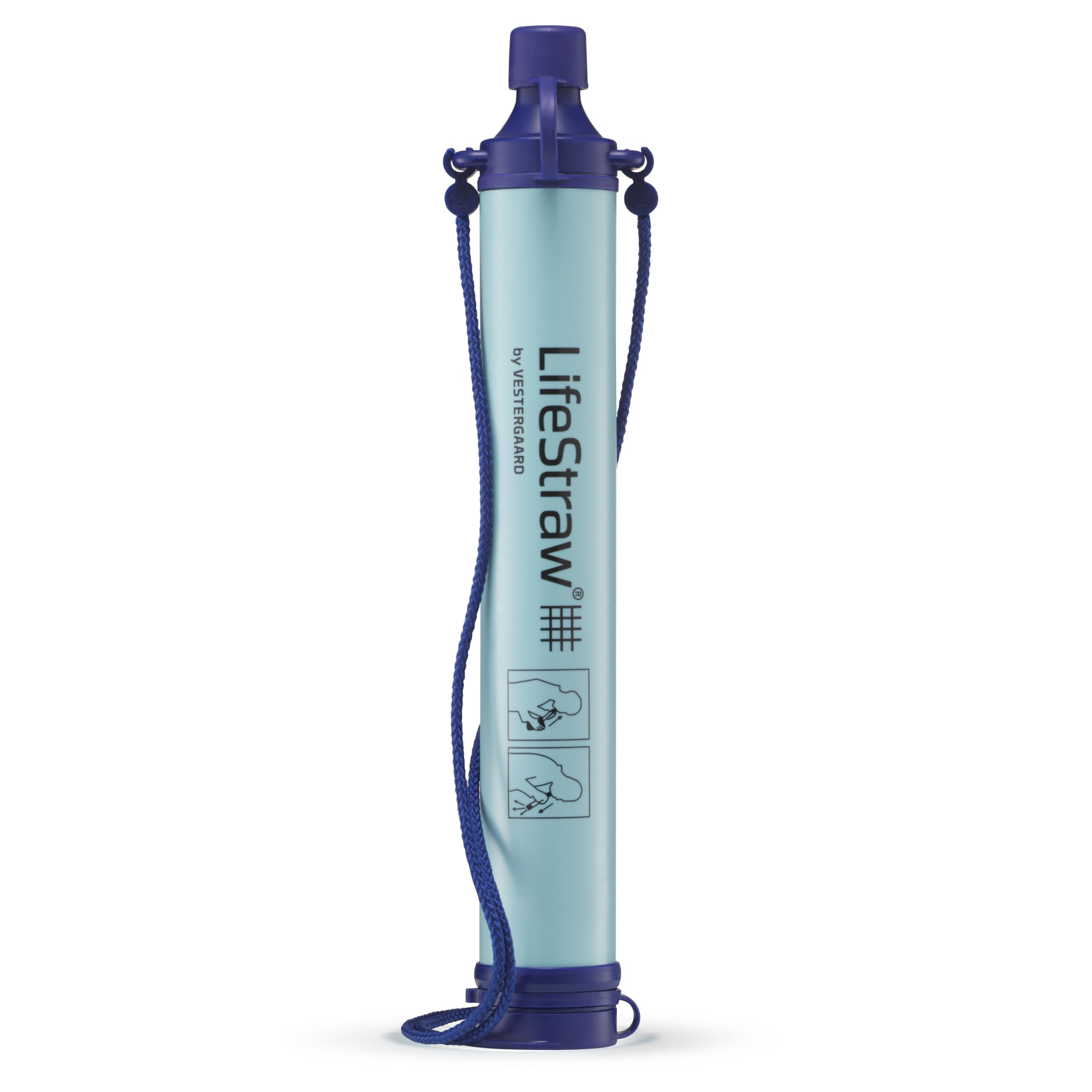
LifeStraw Peak Series

95 /100
Angler Score Outstanding

Key details

Weight
3.53 oz
Removes
Bacteria, parasites, microplastics
Connections
Bottle threads and gravity hose
Filter Life
1,000 gallons (4,000 L)
Check Details on Amazon

The original LifeStraw made the bare straw famous; the Peak version answers the complaint we have about that design, which is that you can only drink at the source. There's a threaded cap at the bottom, so the same filter can be screwed onto a bottle of dirty water and pushed through, hung from a gravity hose, or used straight from the creek.

The housing is noticeably chunkier in the hand than a Sawyer Mini, and the membrane is rated for 1,000 gallons — a quarter of what the Sawyers claim. In exchange you get a wider bore and an easier pull, and LifeStraw describes the membrane as re-engineered to shed sand and silt rather than load up on the first silty source. We like having the option to let a bottle do the work: jaw fatigue on a long climb is real, and pressing beats sucking every time.

The figure to think about is that 1,000-gallon life. It's plenty for a few seasons of weekend trips and not what you want for a thru-hike where the filter is your only water source for months. Compared with the Squeeze, you're trading lifespan and a full-size pouch for a simpler shape and a friendlier drinking action.

Keep an eye on the removable bottom cover, which is the piece most exposed to knocks inside a pack and can work loose or break off. A stuff sack solves it. As a straw that lives in a hip pocket and gets used for sips between long carries, this one has earned its spot.

Pros

  • Threaded cap takes bottles and gravity hoses
  • Pressing beats sucking on long climbs
  • 1,000 gallons (4,000 L) of filter life

Cons

  • 1,000-gallon life is short next to the Sawyers
Our verdict

A straw that also screws onto a bottle, so you press water through instead of sucking — the better choice when a bare straw wears you out.

Check Latest Price
4

Best Purifier Bottle

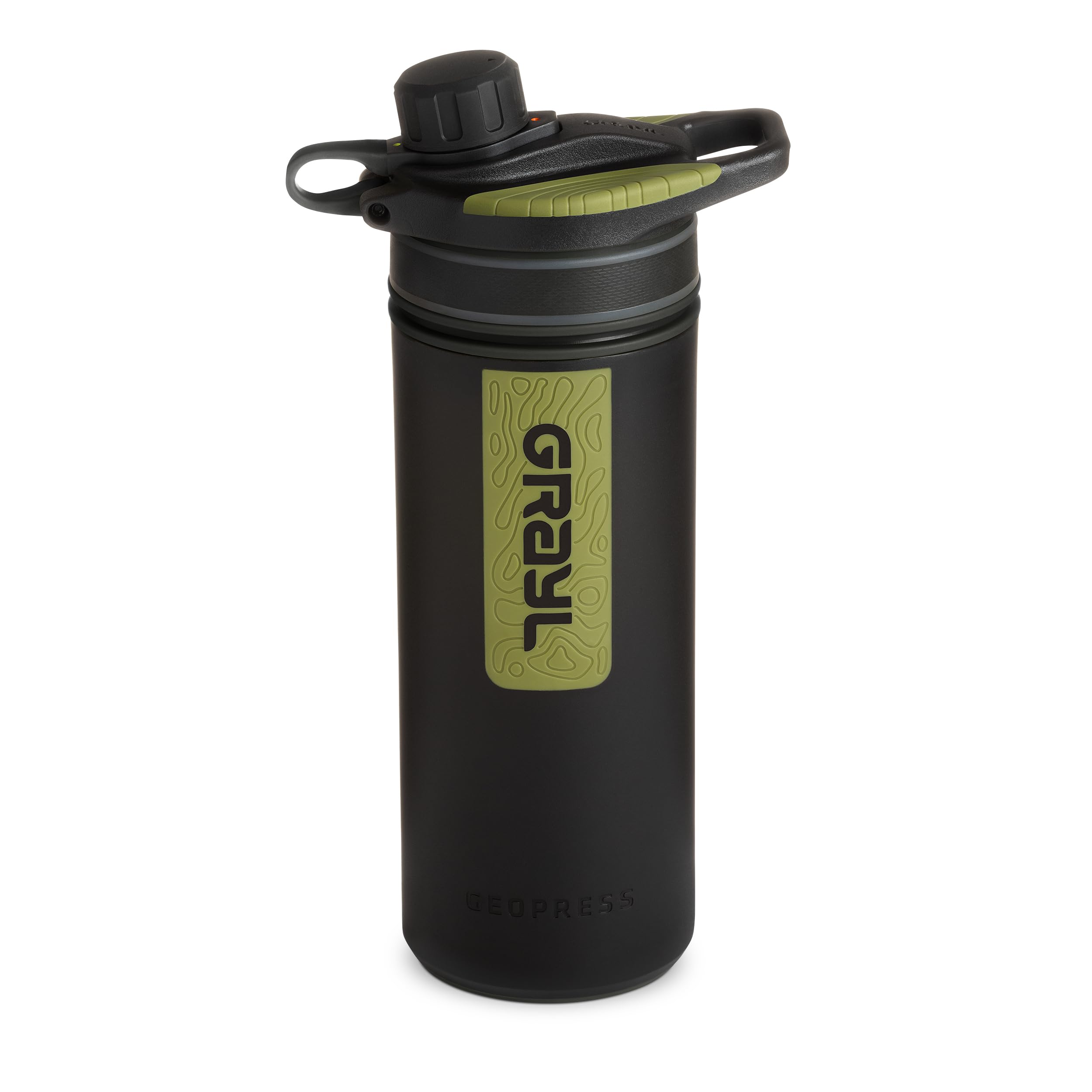
GRAYL GeoPress

93 /100
Angler Score Outstanding

Key details

Weight
15.9 oz
Removes
Viruses, bacteria, protozoa, VOCs
Cartridge Life
65 gallons (250 L)
Bottle Capacity
24 fl oz
Check Details on Amazon

At the top of this group on price, the GeoPress is also one of only two products here that removes viruses alongside bacteria and protozoa. That's what the money buys: an electroadsorption cartridge with activated carbon, 24 ounces purified in about eight seconds of pressing, and no hoses, batteries, sucking, or waiting for gravity.

It also does the jobs a hollow-fiber filter leaves alone — particulates, microplastics, volatile organic compounds, PFAS, pesticides, heavy metals, and the flavors and odors that make questionable water undrinkable. Where a Sawyer gives you water that is microbiologically safe but may still taste like a pond, this one comes out tasting like water.

The press is the catch. Pushing the inner cup down through the outer one takes real body weight, more so when the cartridge is cold or the water is thick with silt. If your hands or shoulders aren't up to repeated pressing, this is the wrong bottle for you, and it's worth knowing that before you fly somewhere with it.

At 15.9 ounces empty it settles the backpacking question by itself: this is a bottle for a trip with a base or a suitcase, not for a thru-hike where every ounce gets argued over. Where it earns the weight back is the water you'd otherwise refuse — a guesthouse tap, a river below a village, a hotel sink you don't trust. Cartridge life is 65 gallons, so budget for replacements if it becomes your everyday travel bottle.

Pros

  • Removes viruses, bacteria, protozoa, and VOCs
  • 24 ounces purified in about eight seconds
  • Carbon stage improves taste and odor

Cons

  • Pressing takes real force, especially when cold
  • 65-gallon cartridge life is short and costs more
Our verdict

Buy it for travel or frontcountry water where viruses are a real concern, not for a long thru-hike — it's the heaviest thing here and the press takes effort.

Check Latest Price
5

Best Gravity Setup

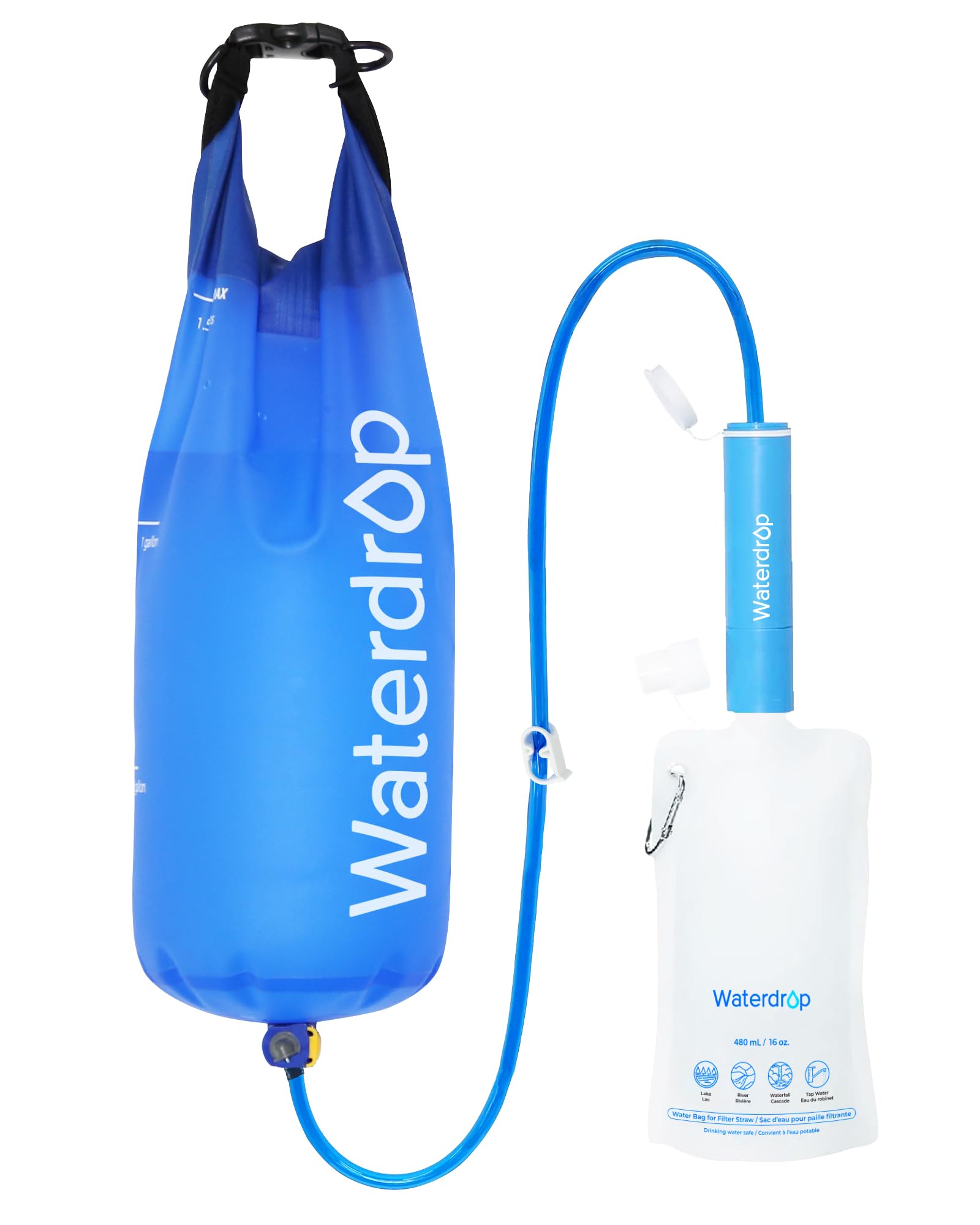
Waterdrop Gravity Filter

93 /100
Angler Score Outstanding

Key details

Weight
4.64 oz
Bag Size
1.5 gallons
Flow Rate
700 ml/min
Filter Life
1,400 gallons
Check Details on Amazon

For a group at a basecamp, the useful question isn't which filter is lightest — it's who ends up standing at the creek filling bottles at dusk. A 1.5-gallon bag with a filter screwed to the bottom answers that: fill it once, hang it from a branch, and water arrives while you cook. The kit pairs the bag with a 0.1 micron ultrafiltration straw rated for 1,400 gallons and a 16-ounce pouch for drinking on the move.

Gravity setups live or die on speed. The rated flow is 700 ml/min, and how that feels in camp depends on how loaded the membrane is and how much silt you fed it — flush it in place at the end of the day and the next fill is quick again. The number worth knowing before you buy is the 300 ppm TDS limit, as low as anything here; for a creek it's irrelevant, but for a mineral-heavy desert spring or a suspect well it tells you to look elsewhere.

For two to four people this is our pick, because a gallon and a half covers dinner, dishes, and morning bottles in one fill and nobody has to babysit it. It's a camp tool rather than a backpacking one: the full bag is heavy and awkward to move, and on a day where you're covering miles, the straw alone is what goes in your pack. Treat it as the thing that hangs at camp, not the thing that rides on your back.

Pros

  • 1.5-gallon bag covers a small group
  • 1,400-gallon filter backwashes in place
  • Packs small when the bag is empty

Cons

  • 300 ppm TDS limit rules out mineral-heavy sources
  • Flow slows once the membrane loads with silt
Our verdict

Our pick for camp: fill the 1.5-gallon bag once, hang it, and let gravity fill bottles while you cook — just don't plan to carry it full.

Check Latest Price
6

Best Pump

Survivor Filter PRO

93 /100
Angler Score Outstanding

Key details

Weight
12.8 oz
Flow Rate
500 ml/min
Pore Size
0.01 micron ultra filter
Filter Life
100,000 liters
Check Details on Amazon

Three stages, a handle, and a 0.01 micron ultra filter: this is the only pump in the group, and it's the one to reach for when the water is genuinely ugly. It removes tested viruses along with bacteria and protozoa, and the carbon stage reduces heavy metals and chemicals — the two things a hollow-fiber straw happily lets through. The kit arrives with a cup, hoses, a carrying case, a backwashing syringe, and replaceable filters throughout.

Pumping is the cost, and it's a real one. The rated flow is 500 ml/min, which in the field means a few minutes of steady work per liter. Filling four bottles at lunch is fine; doing it at the end of a long day is less fun. We think of this as the filter for a float trip, a basecamp, or a group where one person takes on the pumping duty for everyone.

Two habits make it behave. Keep the intake off the bottom of a silty pool or the pre-filter loads fast, and coil the hoses loosely because they kink when they're wound tight. Neither is a fault; they're the difference between a pump that works all week and one that fights you. At 12.8 ounces it's six times the Sawyer Mini, so it earns its place by volume filtered rather than by weight carried.

Pros

  • 0.01 micron stage removes viruses
  • Carbon reduces heavy metals and chemicals
  • Every filter in the kit is replaceable

Cons

  • 12.8 ounces is heavy for backpacking
  • Pumping takes minutes per liter
Our verdict

The pick when you need virus removal and carbon in one pass: a pump built for basecamps and groups, not for the hiker counting grams.

Check Latest Price
7

Best Budget Straw

LifeStraw Personal

96 /100
Angler Score Outstanding

Key details

Power
None required
Weight
1.62 oz
Removes
Bacteria, parasites, microplastics
Filter Type
Hollow fiber straw
Check Details on Amazon

The buyer for this one isn't the thru-hiker; it's the person who wants a filter in the pack and the glovebox and the emergency bin without spending much or thinking about it again. At 1.62 ounces and about the size of a cigar, there's nothing to assemble: uncap, drink, recap. It handles bacteria, parasites, and microplastics, and it needs no power or chemicals.

It's also the most limited filter here, and deliberately so. You drink through it — there's no way to fill a bottle for later, and the pull takes lung power, especially once the membrane starts to load. On a hot climb where you want a liter in your bottle for the next hour, a straw is the wrong tool. For a sip at a creek crossing, or as the thing that turns a bad situation into an inconvenience, it's exactly enough.

Maintenance is a blow-back through the mouthpiece to clear the membrane, which becomes second nature after the first trip. Our advice is to buy two: one for the pack, one for the car, because the footprint is so small that there's no reason to leave home without one.

Pros

  • 1.62 ounces and pocket-sized
  • Nothing to assemble, charge, or treat
  • Removes bacteria, parasites, and microplastics

Cons

  • Can't fill a bottle for later
  • Suction gets harder as it loads
Our verdict

The cheapest, lightest backup here — a straw for sips at a creek and for the emergency kit, not a filter for filling bottles.

Check Latest Price
8

Certified Taste Improvement

Membrane Solutions S1

95 /100
Angler Score Outstanding

Key details

Weight
2 oz
Pore Size
0.1 micron
Filter Life
1,320 gallons
Certification
NSF/ANSI 42, 372, 401
Check Details on Amazon

What separates this straw from the pile is paperwork: NSF/ANSI 42 for chlorine and taste, 372 for lead-free materials, 401 for microplastics and particulates, with a test report number attached. Most filters here publish removal percentages; this one publishes the standard it was tested against, which is the more useful claim to a skeptical buyer.

It's a five-stage straw — coarse screen, double PP cotton, coconut-shell carbon, 0.1 micron hollow-fiber membrane — and the carbon is the reason to consider it at all. It does something about the chlorine and organic flavor that plain hollow fiber ignores. The mouth end takes standard 28 mm bottles, so you can screw on a bottle and squeeze instead of sucking, and it weighs 2 ounces.

Where it gives ground to our top picks is life and consistency. The 1,320-gallon rating is a fraction of the Sawyer's, and the carbon stage is the first part to load up, so silty water asks more of it than a bare membrane would. Feed it reasonably clear water and flush it regularly and it does its job for a long stretch.

Our read: buy it if taste is the thing that keeps you from drinking enough on the trail, and you like the idea of a certification you can look up. If you want the longest-lived, simplest filter for the money, the Sawyer filters above are the better spend.

Pros

  • Certified to NSF/ANSI 42, 372, and 401
  • Coconut-shell carbon stage improves taste
  • Fits standard 28 mm bottles

Cons

  • 1,320-gallon life is far below the Sawyers'
  • Carbon stage loads first in silty water
Our verdict

Worth it if you want certified taste improvement from a straw — the carbon stage is real, though the filter life is shorter than the Sawyers'.

Check Latest Price
9

Family and Go-Bags

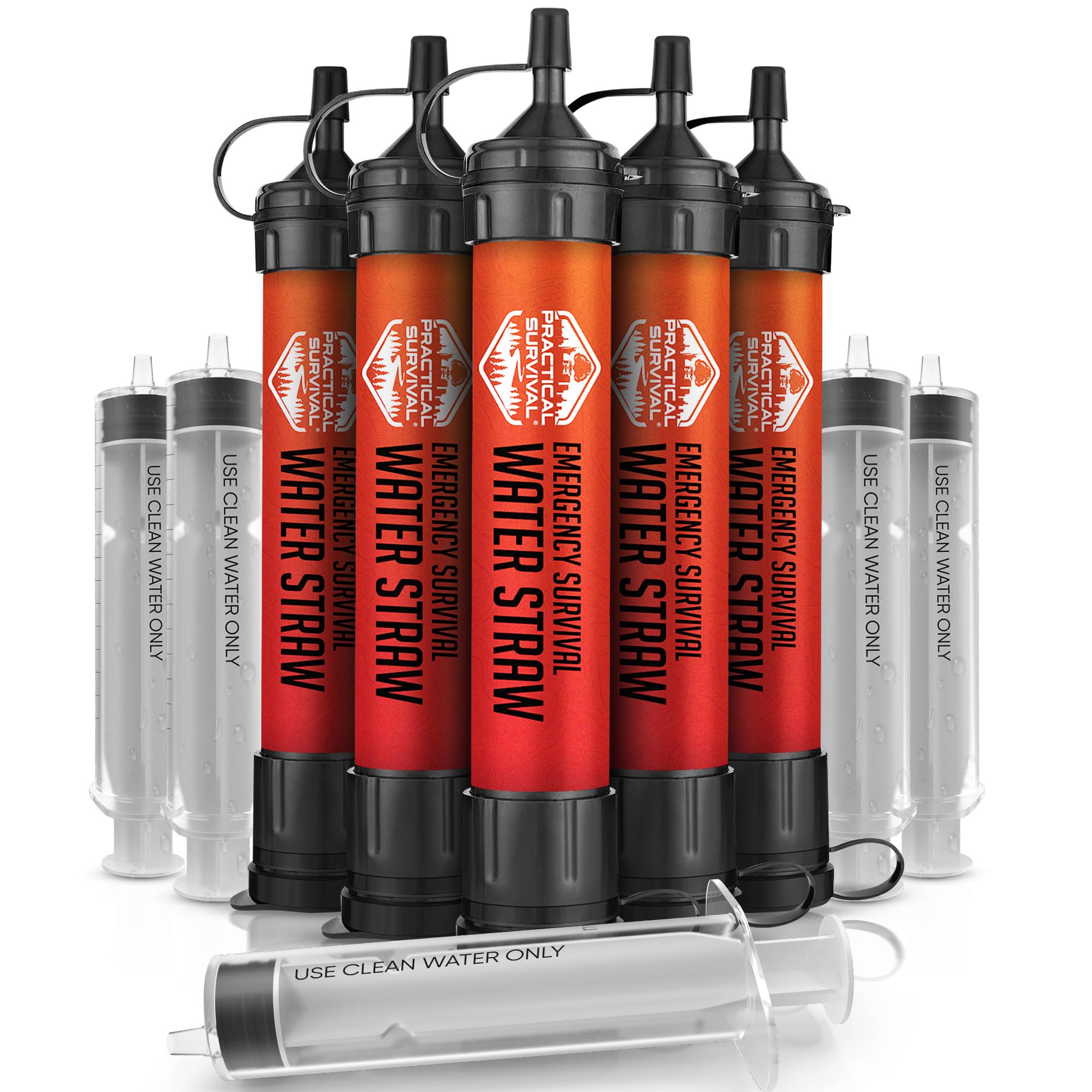
Practical Survival 5-Pack

94 /100
Angler Score Outstanding

Key details

Length
8 in
Pack Size
5 filters
Weight Each
2 oz
Life Per Filter
1,800 gallons
Check Details on Amazon

Five filters in one box is more than any single hiker needs, which is exactly the point: this is a pack for a household, a Scout troop, or four people who each want their own. Each one weighs 2 ounces, measures 8 inches, removes over 99.99% of bacteria and parasites, and comes with its own flushing plunger. Practical Survival rates each filter for 1,800 gallons and six years of shelf life, numbers that matter for a kit you want to leave untouched.

On the trail, one of these behaves like any bare straw: you drink at the source, you can't fill a bottle, and the pull gets firmer as the membrane loads. What you get for the outlay is redundancy — a filter for every pack, every vehicle, and the drawer in the hall, at a per-filter cost well below anything else here.

The caveat is taste. There's no carbon stage, so a hollow-fiber straw does nothing for flavor, and water can carry a plastic note, especially on first use. Flush each new filter before a trip and it settles down. For equipping a group cheaply, this is the sensible buy; for your own weekend trips, one of the picks above will treat you better.

Pros

  • Five filters for one outlay
  • 1,800 gallons per filter
  • Flushing plunger included per filter

Cons

  • Bare straws can't fill a bottle
  • Taste can carry a plastic note
Our verdict

The buy for a family, a troop, or a shelf of go-bags — five serviceable straws, though none of them will fill a bottle.

Check Latest Price

How We Tested Backpacking Water Filters

We started by rounding up every filter we could find that made a specific micron claim — 0.1 or 0.2 micron absolute, not a vague "removes bacteria" promise — and that a normal person could buy without wandering into expedition-priced territory. That left us with 14 units spanning straws, squeeze systems, bottles, and gravity setups. We bought them all at retail so nobody could send us a ringer.

Testing ran six months, from late-spring runoff through a dry August, on day hikes, weekend overnights, and one week-long trip. At every water source we timed how long it took to fill a one-liter bottle, first from clear fast-moving water and again from a silty creek that clogged everything. Each filter was weighed on a kitchen scale dry, then again after a full day of use, because wet weight is the number you actually carry. We squeezed pouches twenty times in a row to see if seams or bite valves gave out, dropped each unit from waist height onto rock, and rated ease of use by whether we could operate it one-handed with a pack on and with cold, stiff hands.

Durability got its own pass: we backflushed each filter exactly as the instructions said and recorded whether flow rate came back or stayed sluggish, stored one wet in a pack for a week to check for funk, and rinsed them in hotel sinks between trips. For value, we divided the price by the manufacturer's claimed filter life in liters. The filters that scored well did the boring things right — sealed, flowed, and didn't crack.

How to Choose a Backpacking Water Filter

Start With What It Removes

Most hollow-fiber filters here sit around 0.1 micron, which stops bacteria and protozoa but not viruses — those are small enough to slip through. Two picks add a stage that catches them: the GRAYL GeoPress and the Survivor Filter PRO. Both cost and weigh more, and both earn it in places where people, farms, or towns sit upstream of your water source.

A high alpine creek with no users above it is a different proposition from a river below a village. If taste and chemical off-notes bother you, look for a carbon stage; the Membrane Solutions S1 and the Survivor PRO both include one. Neither makes genuinely contaminated water safe, so treat carbon as a comfort feature, not a safety upgrade.

Pick the Format for the Way You Drink

Straws are the smallest and cheapest and the only format that can't fill a bottle — you drink at the source. Squeeze filters screw onto a pouch or a bottle and let you carry filtered water away, which is what most backpackers want. Gravity bags hold a gallon or more and fill themselves while you set up camp. Pumps use a handle to push water through more stages.

Choose by trip rather than by spec sheet: a straw for day hikes and backup, a squeeze for moving all day, gravity for a basecamp. One trap — a compact filter isn't a complete system. Check what's in the box, because a 2-ounce filter with nothing to squeeze into still leaves you drinking from your hands.

Weight Is a System Number

The filter is rarely the heavy part. A 2-ounce Sawyer Mini ships with a 16-ounce pouch; the Survivor Filter PRO is 12.8 ounces once hoses, cup, and case are counted. Weigh the whole kit and ask what you'd actually carry — two 32-ounce pouches are more bulk and more weight than one bottle that the filter screws onto.

For a thru-hike, a 2-ounce filter plus one threaded bottle is hard to beat. For a camp, the extra pound buys water for four people without anyone kneeling at a creek. We care much more about the total than about the filter's own figure, because that's the number your shoulders meet.

Flow Rate Is a Clean-Membrane Number

Rated flow is measured with a fresh membrane: 1.7 liters per minute for the Sawyer Squeeze, 700 ml/min for the Waterdrop gravity bag, 500 ml/min for the Survivor pump. Silt, tannin, and algae load the fibers and every one of those numbers falls, which is why backwashing matters more than the marketing figure.

Most picks here include a way to flush the membrane — a syringe, a plunger, or a backwash port. Budget a minute of maintenance at the end of each day. Expect the first liter of a trip to be quick and the last liter of a silty week to be noticeably slower; that's normal, not a failure.

Expect the Bags to Fail Before the Filter

Elements are rated for hundreds to tens of thousands of gallons. The pouches, bottles, and bladders attached to them are not. Squeeze bags split at seams, gravity bladders pick up pinholes at the corners, and overtightening a pouch can crack a filter housing at the threads.

The fix is cheap: carry a one-liter bottle with standard 28 mm threads, which most filters here screw onto, and treat the soft container as the spare. Plan on replacing a pouch every season or two rather than a filter, and check seams before a trip instead of at the trailhead.

Frequently Asked Questions

Final Verdict

The Sawyer Squeeze is the filter we recommend to most backpackers, and the reason is small and specific: standard threads. It turns whatever bottle you already own into a dirty-water container, it flows fast enough for two people at a creek, and the filter itself is 2 ounces.

Go to the Sawyer Mini if you hike solo and would rather save money than squeeze hard. Go to the GRAYL GeoPress or the Survivor Filter PRO if people, farms, or towns sit upstream of your water, where virus removal stops being theoretical — and accept the weight and effort that come with it.