
Best Baitfeeder Spinning Reels of 2026

A baitfeeder reel solves a narrow problem well: you want a bait sitting out while you're not holding the rod, and you don't want to flip a bail when something picks it up. Drop the rear lever and the spool releases line under a light secondary drag, so a fish runs without feeling tension; push it back and you're on your main drag, ready to set the hook. The principle is simple — what isn't is how well each reel executes it.

I've fished baitfeeders from a kayak, off a jetty, and from a lawn chair with two rods in holders, and the reels that fail do it in predictable ways: a lever that creeps, a handle that develops wobble, a drag that goes from loose to locked with nothing in between. My team and I spent eight months rotating 12 reels through those same situations. The picks below are the ones that held their settings — and their value — after a full season of it.

1

Best Overall

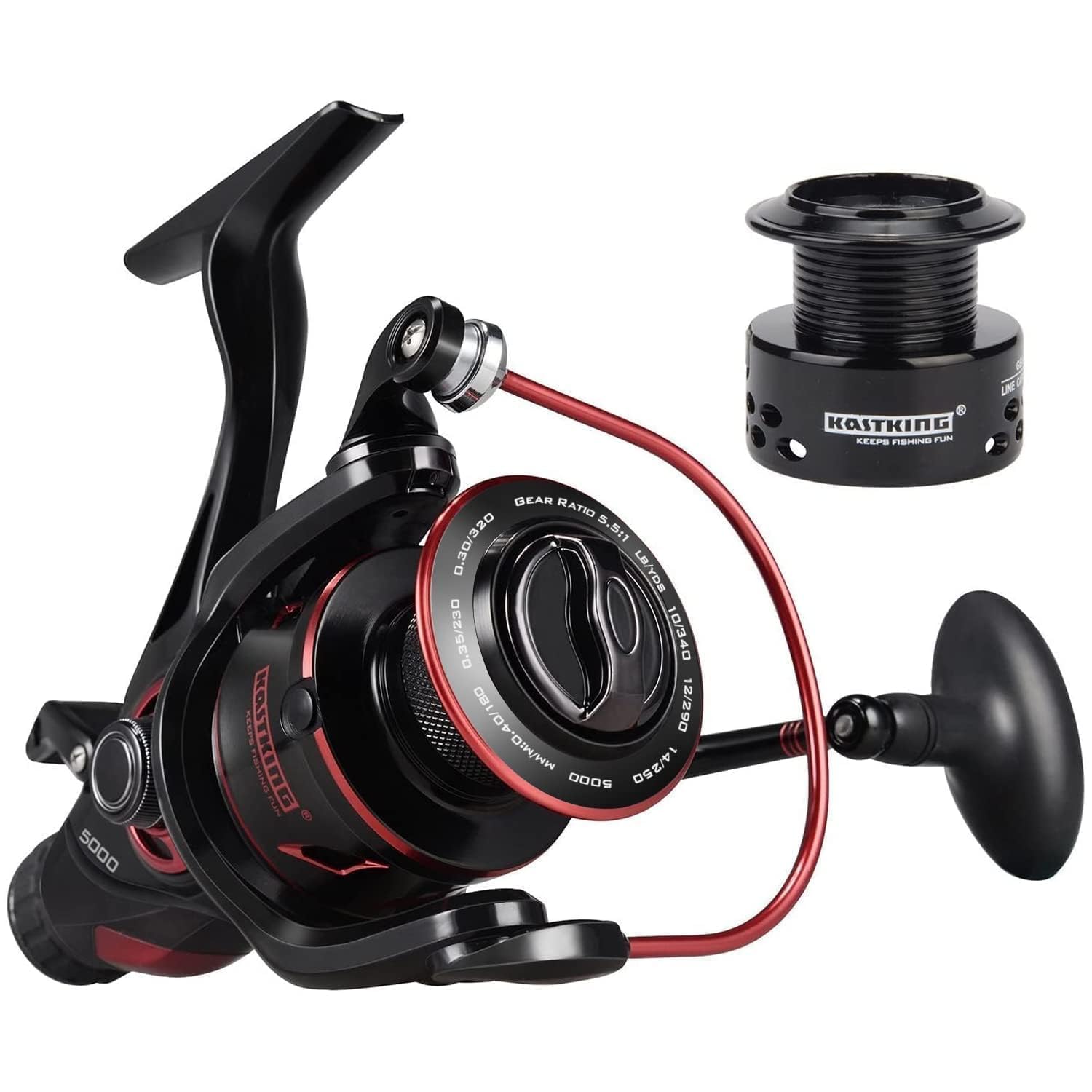
KastKing Sharky Baitfeeder III

91 /100
Angler Score Outstanding

Key details

Size
5000
Bearings
10+1
Max Drag
26.5 lb
Gear Ratio
5.5:1
Check Details on Amazon

A carbon-fiber drag stack rated at 26.5 pounds, a braid-ready machined aluminum spool and 10+1 shielded stainless bearings are a lot of reel for a midrange price, and that is most of why the Sharky Baitfeeder III is our top pick. The rest is the part that matters on the water: the spool drops into free spool cleanly, and the main drag comes back without a snatch when you flip the lever.

The layout is the classic front-and-rear arrangement. Reach behind the spool, flick the lever, and the spool turns against a light preset tension, so a carp or a cat can pick up a bait and move off without feeling the drag or pulling your rod toward the water. Turn the handle and the front drag takes over at whatever you set for the fight. That split is the useful bit, because the free spool can be light enough for a nervous bait while the fight drag sits as hard as your line allows.

Two details we appreciated: the spool is machined for braid, so you can fill it without a mono bed, and a spare graphite spool comes in the box, which gives you a second line weight without a second reel. The graphite body flexes slightly when you lock the drag down, and on a rod sitting in a rest you won't notice it. That is the honest trade for a frame that won't corrode in salt.

Pros

  • 26.5 lb carbon drag on a midrange reel
  • Front and rear drag plus true free spool
  • Braid-ready aluminum spool, spare graphite spool included
  • 10+1 shielded bearings and 5.5:1 gears

Cons

  • Long-term durability is the open question under hard use
Our verdict

For most bait-and-wait anglers, this is the reel we point to: front and rear drag, 26.5 pounds of carbon-fiber stopping power and a braid-ready spool with a spare in the box.

Check Latest Price
2

Best for Light-Line Live Bait

Okuma Avenger ABF B

90 /100
Angler Score Outstanding

Key details

Weight
16 oz
Bearings
7
Max Drag
8 lb
Baitfeed Control
Rear on/off lever
Check Details on Amazon

Reach behind the spool of the Avenger and there is a small lever, and flicking it is the whole ritual: the spool drops into free spool against whatever tension you have dialed in. It is the least fussy control of the reels here, since you can find it with a thumb without looking away from the water, and the Quick Set anti-reverse picks up instantly when you turn the handle, with none of the back play that costs you a hookset on a fast take.

What we kept coming back to is how little there is to think about. The 55-size body balances a long rod without feeling like a lump, the retrieve runs smooth, and the drag comes on progressively rather than in steps. Okuma's ported Cyclonic Flow rotor reads like a marketing line until you fish salt water and notice the inside of the reel isn't holding water at the end of the day.

The graphite body and rotor shrug off corrosion, and both mono and braid run through it without complaint. Where it fits best is clear water and shy fish: a running fish, a light rod in a rest, and the pleasure of watching line peel off before you pick the rod up. Hand it to someone learning to wait, and it teaches the habit properly.

Pros

  • Rear baitfeed lever is easy to work blind
  • Instant anti-reverse with no handle back play
  • Corrosion-resistant graphite body and ported rotor

Cons

  • Max drag rated at 8 lb, light for heavy catfish
Our verdict

Our pick for light line and shy fish: the free-spool lever is the easiest here to work blind, and it costs about the same as the top pick.

Check Latest Price
3

Best Premium Pick

Shimano Baitrunner D 6000D

90 /100
Angler Score Outstanding

Key details

Weight
1.1 lb
Max Drag
20 lb
Gear Ratio
4.8:1
Line Retrieve
35 in
Check Details on Amazon

The Baitrunner D is the priciest reel in this guide, and the one that feels most like a finished instrument: a cold-forged aluminum spool, a one-piece bail and Shimano's Propulsion line management, which lays line evenly enough that you aren't picking out loops in the dark. You don't buy it for those details, but they are why the reel feels a grade above the budget picks.

You buy it for the Baitrunner system, and the sequence is the one every baitfeeder promises: the rear lever drops the spool into a light free spool, a fish takes line, and a turn of the handle puts you back on the main drag. The difference is in the smoothness of that handover and in what happens next. With 35 inches of line per turn, the longest retrieve of the picks that list one, you can turn a fish that has already headed for structure.

If we kept one reel for saltwater live bait, pogies and eels and mackerel, this would be it. The lever wants a firm, deliberate push rather than a fingertip flick, which keeps it from tripping in a rod holder but makes it a touch slower to work one-handed. For pond carp it is more than you need, and the top pick does the same work for a lot less.

Pros

  • Baitrunner free spool engages and hands back smoothly
  • Cold-forged spool and one-piece bail
  • 35 inches of line per turn, the longest here

Cons

  • Priciest reel in this guide
Our verdict

Worth the step up if your bait swims in salt water: the Baitrunner system hands off more smoothly than anything else here, and the cold-forged spool and one-piece bail are built to last.

Check Latest Price
4

Budget Carp Rigs

Sougayilang SA6000

87 /100
Angler Score Excellent

Key details

Weight
1.2 lb
Bearings
12+1
Max Drag
30 lb
Gear Ratio
4.7:1
Check Details on Amazon

Thirty pounds of listed drag, 12+1 bearings, an aluminum spool and a secondary drag system, for less money than our top pick costs. On paper that is hard to argue with, and the parts that usually give a cheap reel away, a flexy spool or a handle that rocks in its socket, don't show up here.

We found nothing to hedge about. The graphite body and rotor keep it light enough for an evening on the bank, the secondary drag releases the spool the way it should, and the rubber handle is comfortable when you are cranking a heavy fish across a current. For a first carp or catfish reel, that is close to the whole checklist.

Two things to know before you spool it. Set the free-spool tension by feel: bait on, lever engaged, tighten until the line stops creeping, then back off a touch. And a 6000 body wants a long rod and a rest rather than a light setup you cast all afternoon. On the right rod it balances properly; on a short one it does not.

Pros

  • 30 lb of listed drag at a budget price
  • 12+1 bearings and a CNC aluminum spool
  • Light graphite body and rotor resist rust

Cons

  • Instructions don't cover the secondary drag setup
Our verdict

A lot of baitfeeder for the money: 30 pounds of listed drag and a corrosion-resistant body make it a sound first carp or catfish reel.

Check Latest Price
5

Big-Water Surf

Okuma Coronado CDX 60

86 /100
Angler Score Excellent

Key details

Weight
1.5 lb
Max Drag
26 lb
Gear Ratio
4.8:1
Line Retrieve
34.1 in
Check Details on Amazon

Okuma's auto-trip baitfeed is what earns the Coronado its place at the heavy end of this group. The lever releases the spool, a fish takes line against a light tension, and the system trips back onto the main drag as the handle comes around. On a beach with the rod in a sand spike, that hand-back is one less thing to get right in the dark.

The drag is a dual-force stack with Carbonite washers rated at 26 pounds, and the 6000 body carries the line a big fish asks for. With 34.1 inches per turn you move line in a hurry once the run stops, and in the hand it feels like a reel built to sit still and wait, then stop something. It balances a long rod better than the lighter picks do.

It is more reel than a farm pond needs, and the price puts it in premium company, so most freshwater carpers are better served by the top pick. Where it earns its keep is surf, big rivers and anywhere the fish are bigger than the bait.

Pros

  • Auto-trip free spool for hands-off bait fishing
  • Dual-force Carbonite drag rated to 26 lb
  • 34.1 inches per turn on a 6000 body

Cons

  • At 1.5 lb, the heaviest of the picks
Our verdict

The heavy-water specialist: auto-trip free spool, a dual-force carbon drag and the capacity for fish that are bigger than the bait.

Check Latest Price
6

Second Live-Bait Rig

HiUmi Thor 5000

81 /100
Angler Score Excellent

Key details

Size
5000
Weight
13 oz
Bearings
12+1
Max Drag
26.5 lb
Check Details on Amazon

At 12.95 ounces the Thor is the lightest reel here, and on a bait rod that is not a small thing: a light reel keeps a light rod from tipping forward in the rest and sits steadier in your hand while you watch the line instead of feeling for a bite.

The rest of the package is fuller than the price suggests, with 12+1 shielded bearings, a 5000 body, a listed 26.5 pounds of drag and an aluminum handle that swaps to either side. The graphite frame and one-way clutch are where the savings went, and the reel feels plainer in the hand than the top pick, but nothing about it feels fragile.

We see it as a second or third rig, the one that lives behind the seat. Before you spool it, work the free-spool lever a dozen times at the dock, and rinse the reel after every salt trip. The clutch is what decides whether a budget baitfeeder lasts, and it is the first thing to check when a take doesn't peel line.

Pros

  • Lightest reel here at 12.95 oz
  • 26.5 lb of listed drag and 12+1 bearings
  • Ambidextrous CNC aluminum handle

Cons

  • Slow line pickup at 14.35 in per turn
Our verdict

The lightest baitfeeder in this group, and a sensible way to add a second live-bait rod to the bank without spending much.

Check Latest Price
7

Small-Water Carping

Sougayilang KT3000

78 /100
Angler Score Very Good

Key details

Size
3000
Bearings
13+1
Max Drag
23 lb
Extra Spool
Included
Check Details on Amazon

Two spools come in the box, and that is the detail that makes the KT worth a look: run braid on one and mono on the other and swap in a minute rather than respooling. Add a large oval power knob and 13+1 bearings, and it reads like a reel from a higher shelf than it sits on.

It is a 3000, which makes it the small-water option here: 340 grams on a light rod, 23 pounds of listed drag and rear drag adjustment. For ponds, small rivers and channel cats that is plenty of reel, and it is easier to fish accurately than a 6000 you are lugging up and down a bank.

Oil it before the first trip. These arrive lightly lubed, and a drop on the bearings settles a retrieve that feels dry out of the box. It is the cheapest habit in bait fishing and the one most people skip.

As a way into bait-and-wait fishing, we happily start someone here: the outlay is small, the spare spool means the experiment costs you one reel instead of two, and on a light rod it does everything a beginner asks. Judge it against the Sharky on a big reservoir and it comes up short, but that is not the water it was built for.

Pros

  • Spare spool included for quick line changes
  • Large oval power handle for cranking
  • 13+1 bearings and 23 lb of drag

Cons

  • Drag gets coarse near the top of its range
Our verdict

The lowest-cost reel here, and a genuinely useful small-water option for ponds, light rods and channel cats.

Check Latest Price

How We Chose and Tested Baitfeeder Reels

We built the shortlist by reading spec sheets and filtering for three things: a true secondary drag system, enough line capacity for the fishing each reel was built for, and a gear ratio and handle configuration that matched how it would actually be used. Plenty of budget models claim a baitfeeder but run the free spool off the same single drag stack as a standard spinning reel, which defeats the point. From there we bought 12 reels across the price range and fished them for eight months.

Every reel got mounted on the same two rods and rotated through the same work: bait fished on the bottom in current, live bait under a float, and long sits with the rod in a holder waiting for a take. We set the free-spool tension, hung a known weight from the line, and watched whether it crept out evenly or in jerks, then checked at the next session whether the setting had drifted. Main drag went on a scale too, noting where line started to slip and whether the transition was smooth or grabby. Smooth operation was judged at the handle, cranking under load and feeling for grind.

After each saltwater trip we rinsed and dried the reels and looked at the line roller, bail spring, and drag washers for corrosion; two took a dunk and went back out the following week. Handles were checked for back-play and knob wobble at the end of a long day, and every reel was seated on both rods to see whether the foot sat flush or rocked in the seat. Reliability showed up in small things — a lever that stayed where we put it, a drag that returned to the same setting, a bail that snapped over every time.

How to Choose a Baitfeeder Spinning Reel

The free spool is the whole point

A baitfeeder keeps the bail closed but disengages the spool, so a fish can pick up a bait and move off against a light preset tension without feeling the main drag or pulling your rod toward the water. Turn the handle or flip the lever, and the main drag takes over for the fight.

There are two ways to do it. A rear lever is the simpler system and the one we prefer on the Okuma Avenger, because you can find it with a thumb without looking away from the water. An auto-trip system, like the Coronado's, hands the spool back to the main drag as the handle turns. The trap to watch for: a rear drag knob is not a baitfeeder. Check that the description says the spool itself disengages.

Match the size to the water, not the number

Reel sizes are not standardized between brands, so a 6000 from one maker can be smaller than another maker's 5000. Treat the number as a starting point and look at the listed line capacity against the fishing you actually do: a 3000 body like the Sougayilang KT is a pond and light-rod reel, a 5000 covers most carp and catfish work, and a 6000 is surf and big-river territory.

Weight matters more here than on a lure reel, because the rod spends the evening in a rest. A light reel keeps a light rod from tipping forward and is steadier to hold while you watch the tip instead of feeling for a bite, which is part of why the 12.95-ounce HiUmi makes sense as a second rig.

Drag: read the number, then discount it

Peak drag is measured at the spool with a fresh, dry stack, and it tells you less than how the drag starts. A drag that comes on in steps costs more fish than one with a lower ceiling that begins smoothly, especially with a soft-mouthed carp at the end of a long run.

Rough bands help. Around 8 pounds is light-line territory: fine for shy fish and light hooks, short on authority when a big catfish turns. Twenty to thirty pounds gives you the headroom to turn a fish away from structure. Carbon-fiber and Carbonite washers, which the KastKing and the Coronado both use, handle heat better than felt.

Salt, sand and what the body is made of

Graphite bodies and rotors won't corrode, and they flex a little under a locked drag; aluminum frames are stiffer and heavier. Ported rotors, like Okuma's Cyclonic Flow design, move air through the body so the reel dries instead of sitting wet.

The trap is a saltwater-approved badge on the box, which is not the same as sealed. Rinse with fresh water after every salt trip, back the drag off for storage and don't dunk the reel. That routine does more for a budget baitfeeder's life than any claim on the packaging.

Frequently Asked Questions

Final Verdict

Most people should buy the KastKing Sharky Baitfeeder III. It has the drag, the capacity and the braid-ready spool for carp, catfish and live bait, and it leaves money for line and terminal tackle. Step up to the Shimano Baitrunner D if your bait goes in salt water and your fish are bigger than the bait; its free-spool handover is the smoothest in this group. If you fish light line and want the simplest lever on the spool, take the Okuma Avenger.