
Best Bear Canisters of 2026

Nobody buys a bear canister for fun. You buy one because you'd rather carry a plastic cylinder than lie awake listening to something snuffling around your food—or create a bear that now equates campsites with snacks. The right one keeps your food safe, disappears into your pack, opens without a wrestling match, and holds enough for the trip you're actually taking.

I've spent the past ten months carrying 11 different canisters—sleek cylinders, boxy hard cases, one that looked like a small suitcase—and the differences are not subtle. They all met the same bear-resistant certification, but they varied wildly in usable capacity, weight on your back, and whether the lid came off without a wrestling match when my fingers were cold. Value, it turns out, is less about sticker price than days of food per pound; appearance matters less until you've scraped one down granite, which is when hinge quality and lid fit start to show. The picks below are the ones that held up, stayed shut, and didn't make me dread breakfast.

1

Best Overall

BearVault BV ONE

83 /100
Angler Score Excellent

Key details

Closure
Push button
Capacity
8.3 liters
Trip Length
1–4+ days
Certification
IGBC approved
Check Details on Amazon

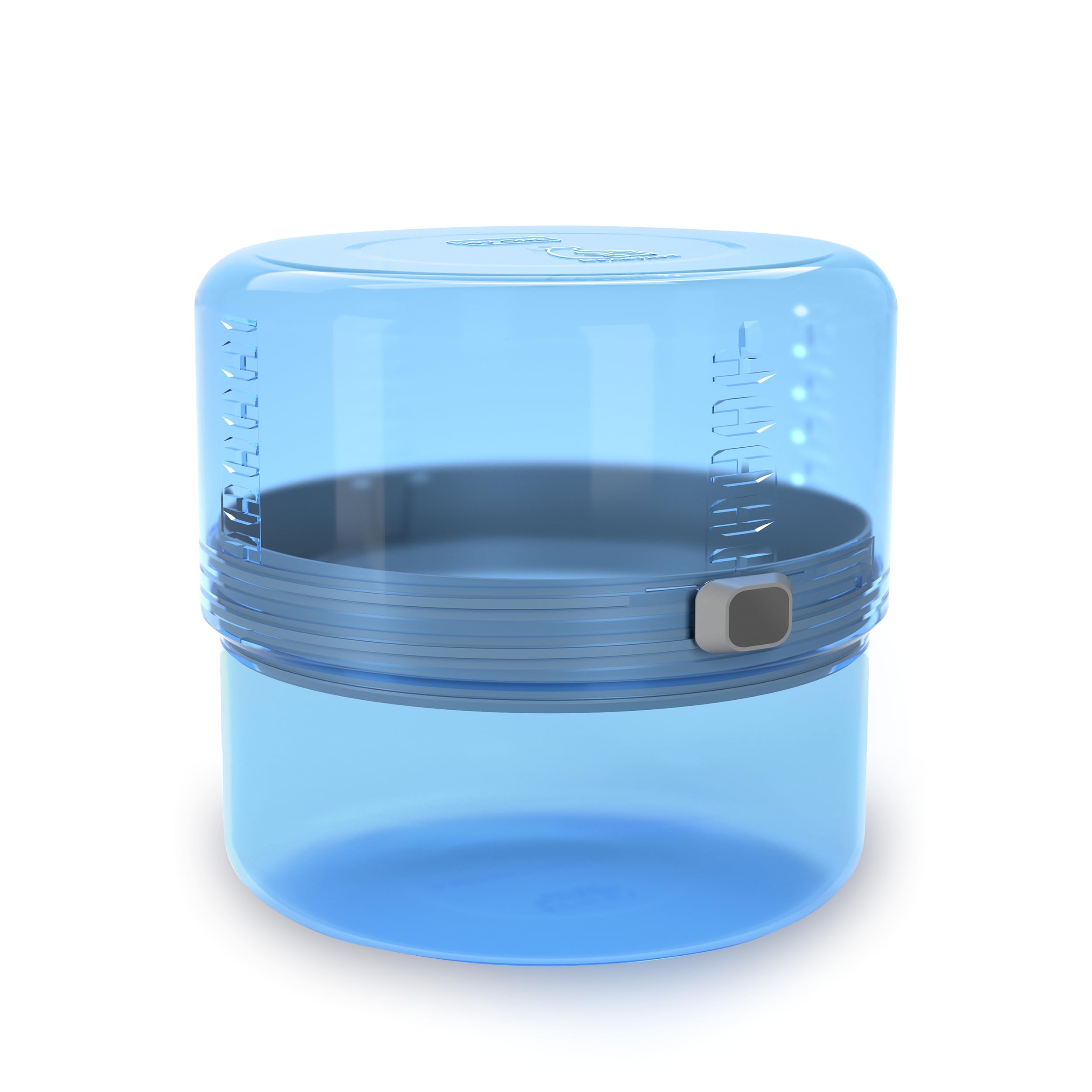
The BV ONE is the only canister here that changes size. Its two halves telescope together as the food goes, so the 8.3 liters you start a trip with is a much smaller lump in your pack by the last morning. That is why it sits at the top of this list: a single overnight and a four-day push both work in the same container, which means one purchase instead of two, and a pack that gets lighter and smaller as the miles pile up.

Opening it is the other place it earns the spot. The most common complaint about canisters is a lid that fights cold, tired fingers, and this one answers with two soft-touch buttons and wide threads — no coin, no key, nothing to keep track of in the dark. The two-button sequence took us a couple of tries to learn and then became automatic. Both halves open wide and double as bowls, so dinner does not mean tipping everything onto a rock. It is IGBC-approved under number 255500, which is the sort of thing rangers actually check.

What it does not have yet is a long field record. The design is new, and the canisters below have been dragged through more seasons. Keep the adjustable joint clean and dry, since grit in the threads is what turns a smooth twist into a fight. BearVault also calls this the lightest canister in its line, with 20 percent better weight-to-volume than its earlier design — worth knowing when the canister is the heaviest single item you are carrying.

Pros

  • Shrinks with your food supply to free pack space
  • Two-button lid needs no coin or key
  • Halves open wide and double as bowls
  • IGBC-approved for park food-storage rules

Cons

  • Expensive next to the fixed-volume canisters here
Our verdict

If one canister has to cover every trip you take, we recommend the BV ONE: it shrinks as you eat and opens without a coin.

Check Latest Price
2

Best for Long Trips

Backpacker's Cache Canister

90 /100
Angler Score Outstanding

Key details

Volume
200 fluid ounces
Weight
3 lb
Material
ABS polymer
Check Details on Amazon

There is nothing clever about the Backpacker's Cache, and that is exactly the appeal. It is a black ABS barrel with 200 fluid ounces of space and a lid that comes off with no button, no thread, and no coin slot to lose in the duff. The shell gets sat on, dropped off a tailgate, and stacked in the truck without complaint, and roughly four days of dehydrated meals disappear into it.

We point people here when the trip is a set length and the menu is freeze-dried. It is the least fussy canister in this group: you open it, you take out dinner, you put the lid back. The latches can be stiff, especially after the lid has been pressed down hard, so work them gently rather than wrestling with them. It is not watertight either — leave it face-up through a storm and you will pour water off the lid in the morning, so set it on its side under the fly when the weather turns.

Two things to settle before you order. The walls are opaque, so packing is a memory exercise or a list taped inside your pack lid. And if your destination publishes a list of approved canisters, check this model against it first — the paperwork on the agency's website matters more than the wording on the barrel.

Pros

  • Holds about four days of dehydrated meals
  • ABS shell takes hard use
  • No tools, buttons, or coin needed

Cons

  • Opaque walls make packing a memory test
  • Three pounds before you add any food
Our verdict

For a known four- or five-day trip with freeze-dried dinners, this is our simplest recommendation: no tools, no threads, nothing to break.

Check Latest Price
3

Best Value

UDAP No-Fed-Bear BRC

86 /100
Angler Score Excellent

Key details

Weight
2.4 lb
Capacity
2.1 gallons / 8 liters
Trip Length
4–6 days
Certification
IGBC approved
Check Details on Amazon

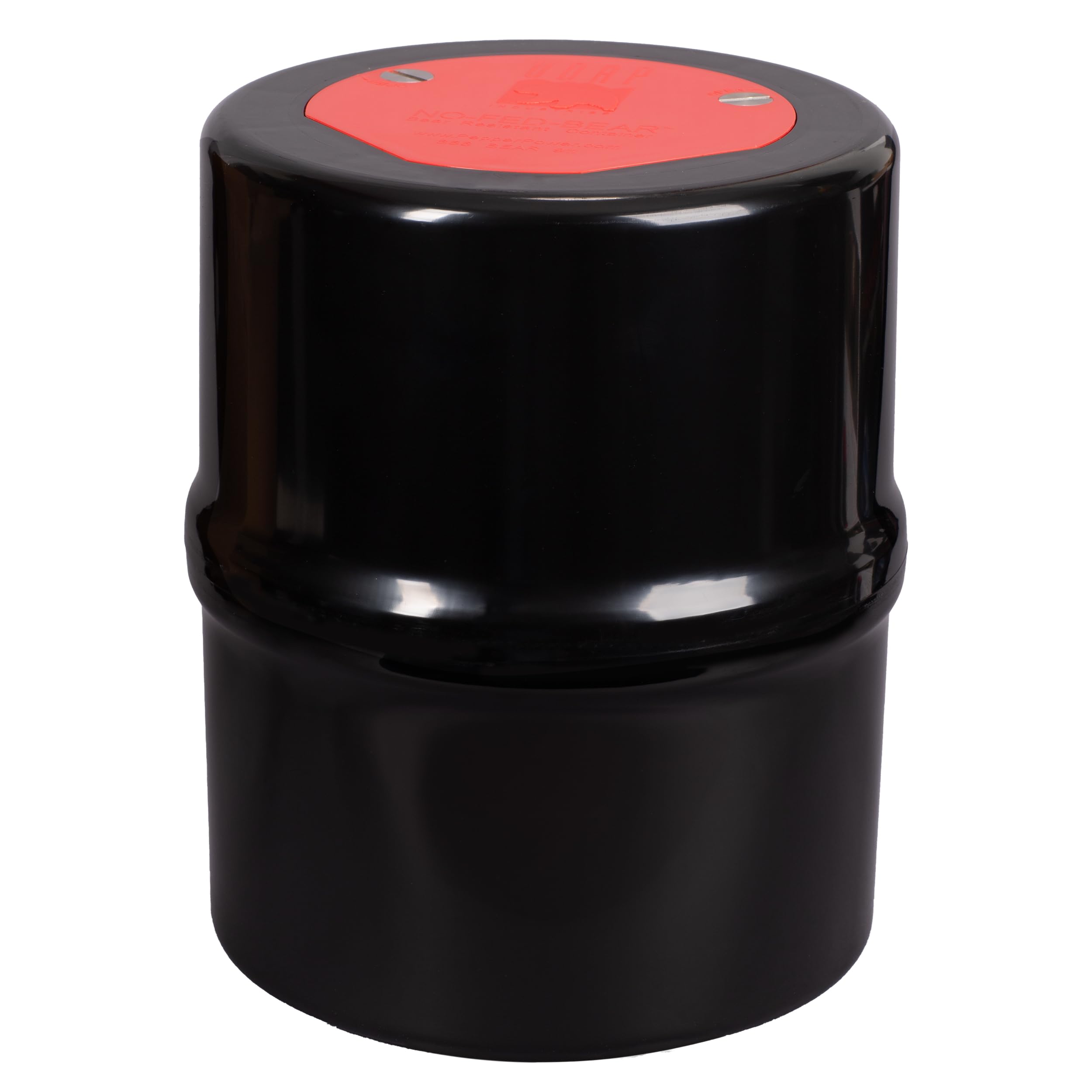
2.4 pounds for eight liters, certified, is the trade the UDAP No-Fed-Bear makes, and it comes at the friendliest price in this group. This is the canister we hand someone packing for a four- or five-day trip who does not want to pay for cleverness. UDAP rates the 2.1-gallon body at four to six days of food depending on how tightly you pack it, and the lid rides on a metal fastener that turns with a coin.

The coin is the honest trade-off, and it is a small one. A quarter or the edge of a car key opens it, and that is exactly why the lid holds against claws and teeth. We keep a quarter in the cook kit and stop thinking about it. What you give up is opening it one-handed, and opening it at all if the coin has disappeared into the bottom of your pack — so give it a fixed home before the first night out.

The weight is the part we notice. At 2.4 pounds it is light for the volume, but it is still a lump on a long carry, and that weight stays with you after the food is gone. Pack dense — dinners out of their pouches, oats and rice in bags — and an eight-liter barrel will give you a day more than the label suggests.

Pros

  • Eight liters of space at 2.4 pounds
  • IGBC-approved for regulated areas
  • Friendliest price of the priced picks here
  • Metal fastener holds against claws and teeth

Cons

  • 2.4 pounds is real weight on a long carry
Our verdict

We point budget-minded backpackers at the UDAP: certified, 2.4 pounds, and eight liters of food space without a premium price.

Check Latest Price
4

Best for Groups

Counter Assault Bear Keg

85 /100
Angler Score Excellent

Key details

Weight
3.5 lb
Capacity
716 cubic inches
Dimensions
9.5"L x 9.5"W x 14.12"H
Certification
IGBC and SIBBG approved
Check Details on Amazon

Bright yellow is not a styling decision. The Bear Keg is the canister you can pick out from across a basin at last light, which is a small thing that becomes a big one when you are tired and the light is going. It carries 716 cubic inches, the largest body in this group, and it holds both IGBC and SIBBG approval.

The lid is the fussy part. A coin turns three screw heads, and once they are free the lid can still take a firm pull to break the seal — tight is the point, but it means two hands and a little patience at the end of a long day. What you get for that is volume: food for two or three people across several nights, with room left over for a stove or a bag of coffee, plus a lid that has never shifted in transit on us.

Where it earns its place for us is group trips and base camps, not solo ultralight missions. At 3.5 pounds and 14 inches tall it takes over the main compartment of a small pack, so plan to lash it outside or carry a bigger one. It is not watertight either, so set it on its side or under the vestibule when the weather turns. For a car camp or a shared trip where one canister carries everybody's dinner, those are easy trades to make.

Pros

  • 716 cubic inches, the biggest body here
  • Bright yellow is easy to find in the woods
  • IGBC and SIBBG approved
  • Coin-turned screws hold the lid securely

Cons

  • 3.5 pounds and 14 inches tall
Our verdict

Packing food for two or three people? We reach for the Bear Keg — 716 cubic inches of bright yellow that is easy to spot at dusk.

Check Latest Price
5

Best for Solo Overnights

BearVault BV425 Sprint

0 /100
Angler Score Fair

Key details

Weight
1.8 lb
Material
Polycarbonate (PC)
Trip Length
1–2 days
Certification
IGBC approved
Check Details on Amazon

The best job for the BV425 is not a thru-hike. It is a base camp on a fishing trip: lunch, a bag of jerky, and a few bars sealed in a barrel while you work a run upstream. At 1.8 pounds it is the lightest canister here, rated for a day or two of food for a regular hiker, and it is built with the same IGBC-approved construction as the bigger BearVaults.

It is also the one we hand a group member who is already carrying the stove, so the food load splits sensibly. The clear sides are more useful than they sound — you can see what is left without unpacking anything, which matters on a wet evening when you are eating by headlamp. It makes a serviceable camp stool, too, and after a long day that is a nicer feature than any of the specs suggest.

Where it stops is size. A weekend for two is a squeeze and a week is out of the question, so take the one-to-two-day rating as honest and plan the food around it. The screw lid is tool-free but wants a firm grip, and a lid cranked down hard in cold weather is the classic way to start a bad evening: turn it until it seats and no further, and you will not be fighting it at breakfast.

Pros

  • 1.8 pounds, the lightest canister here
  • Clear sides show what is left without unpacking
  • Doubles as a camp stool
  • IGBC-approved like the larger BearVaults

Cons

  • Rated for only one or two days of food
Our verdict

For one person, one or two nights, or a lunch left at the base while you fish, the BV425 is the canister we grab.

Check Latest Price

How We Tested Bear Canisters

We started by pulling every canister we could find that carried the IGBC bear-resistant certification—the only standard that matters for safety—then filtered by capacity (three-day, five-day, and week-long), packed size, and price. That left us with 11 canisters, which we tested over 10 months.

We loaded each one with a real three-day menu—oatmeal, tortillas, peanut butter, two freeze-dried dinners—and noted what fit with room to spare and what required rearranging. We weighed them empty and full, then carried them on weekend trips and one eight-day stretch in the High Sierra, paying attention to how each sat against our backs and whether it shifted on descents. We also opened and closed every lid with fleece gloves on, and again after a stream crossing with numb fingers, because ease of use at 6 a.m. matters more than a sleek profile.

Back at camp, we dropped each canister from waist height onto granite, then checked for cracks, loose hinges, or lids that no longer seated properly. We shook them upside down and sideways to see if the lid stayed put, and left them in sun and rain to watch for fading or warping. We also compared price against usable capacity—how many days of food per pound and per dollar—because a cheap canister that only fits two days isn't a bargain.

How to Choose a Bear Canister

Certification, and Whether Your Destination Accepts It

Bear resistance is not a marketing adjective. In a lot of bear country it is a rule with a list attached, and the Interagency Grizzly Bear Committee tests canisters to produce that list. Land managers in canister-required areas check it, which means the approval matters more than the color, the price, or the shape of the lid.

Two habits follow. Buy a canister that states its certification plainly — the BearVault BV ONE and BV425, the UDAP, and the Bear Keg all name theirs. Then look up the specific area you are camping in before you order, because an approval that satisfies one park is not automatically the one another asks for. A canister you cannot legally use is dead weight in your pack.

Capacity: Days, People, and How You Pack

The number on the box answers a slightly different question than the one you are asking. A canister rated for four to six days assumes you pack like a regular hiker, which means dense, repackaged food rather than bulky pouches. Dinners out of their foil bags, oats and rice in zip bags, bars stacked flat — that buys an extra day in the same barrel, and we consider repacking part of trip prep rather than an optional trick.

Match the size to the trip instead of buying the biggest thing available. A one- or two-day canister for overnights, eight liters for four to six days, and something like the Bear Keg's 716 cubic inches when two or three people pool food. Clear sides, as on both BearVaults, let you see what is left without unpacking everything in the rain.

The Lid You Will Open Twice a Day

Every canister here is bear-resistant; the differences show up at six in the morning, in the rain, with cold hands. The choices are a two-button push lid on the BV ONE, a grip-and-turn screw lid on the BV425, a plain mechanical lid on the Backpacker's Cache, and a coin-turned metal fastener on the UDAP and the Bear Keg. Buttons need no extra tool and are the easiest to work in gloves. Coin fasteners feel the most secure and are the most irritating when the coin has gone to the bottom of a pack.

Practice at home before the trip, wearing the gloves you will actually wear, with the canister empty and then full. Then decide where the coin or key lives — a quarter taped inside the cook kit is worth more than a clever lid you cannot open at dusk.

Weight and How It Rides

Canisters here run from about 1.8 pounds to 3.5 pounds, and the pack is where you feel the spread. A barrel this size sits against your spine or eats the main compartment, so load it high and centered when you can, and lash it outside only when the rest of the load balances it. Fixed-volume canisters stay full-size after the food is gone — that is the Cache, the UDAP, and the Keg. The BV ONE's collapsing body is the exception, and it is the main reason we rank it first for longer trips.

Check the fit before you buy. Measure the internal height of your pack against the canister's tallest dimension, because a 14-inch keg will not drop into a daypack, and strapping a hard barrel to the outside is a compromise you feel on a scrambly descent.

Frequently Asked Questions

Final Verdict

We recommend the BearVault BV ONE. The telescoping body is the difference you feel on day three, when the food is gone and the pack should be lighter for it, and the two-button lid is the one we trust in cold hands at dusk. You pay a premium for both, and the fixed-volume canisters here cost less; if budget is the deciding factor, the UDAP does the core job with four to six days of capacity.

For a trip whose length you already know, the Backpacker's Cache is the alternative: a plain ABS barrel that holds about four days of freeze-dried meals and has nothing in the lid that can fail.