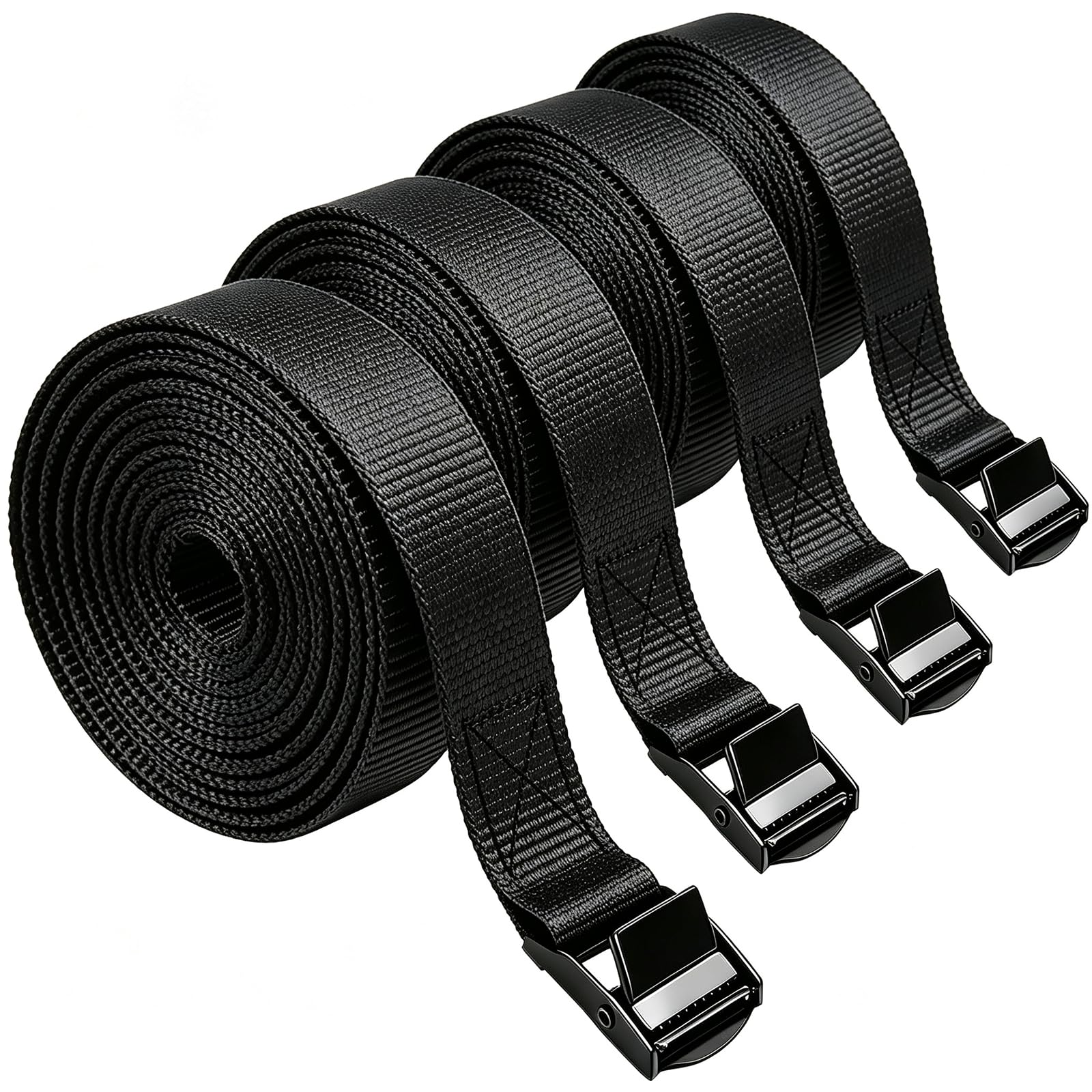
Best Cam Buckle Straps of 2026

A cam buckle does its work in a fraction of a second: you thread the webbing through, pull it snug, and a spring-loaded tooth bites down and holds. No cranking, no ratcheting, no scratched hulls. Which means everything rides on one small piece of hardware — the spring, the cam, the hooks at the end. Good webbing with a weak buckle will slip. The right strap just holds, so you stop thinking about your load.

I've tied lumber and a secondhand dresser to a trailer and watched a kayak shift on a roof rack at highway speed, so I'm picky. We put 14 cam buckle straps through six months of that kind of work, and the differences came down to details you feel in your hand. Worth knowing before you shop: the number on the package is break strength, not a working load — stay well under it. The picks below are the ones I'd strap to my own roof again.

1

Best Overall

NRS 1.5" Heavy Duty Straps

93 /100
Angler Score Outstanding

Key details

Width
1.5 in
Length
20 ft
Pack Size
2 straps
Breaking Strength
2,000 lb
Check Details on Amazon

Polypropylene is the reason to start here. Nylon webbing takes on water and gives a little as it does, which is how a strap that was drum-tight in the driveway ends up slack at the put-in. NRS builds these from UV-stabilized polypropylene specifically so they won't stretch when wet, and backs that with a 2,000-pound minimum breaking strength and a cam buckle running on two stainless-steel springs. On a boat, in the rain, that is the whole purchase.

Twenty feet of 1.5-inch webbing is a lot of strap, and we liked having it: it reaches around a hull and down to a J-bar with enough left over to pull against. The width spreads the load instead of digging a line into plastic. What we cared about most was whether the cam let go, and it doesn't. The bite is the most decisive of anything here, and the release is a clean push rather than a fight, which is the difference between a five-minute load and a second attempt.

The trade is length and count. Two straps per pack means one pack covers one boat over the middle, and a second boat or a crossed line means a second pack. Twenty feet also leaves several feet hanging past the cam, and that tail has to be wrapped or tied off; left loose, it whips at speed and marks paint.

A small thing we appreciated: the name-and-contact label stitched near the buckle. Straps walk off at launches, and a label is the cheapest way to get one back. Per strap, these cost more than anything else in this group. For a hull, a trailer, or a load going down the highway, that's the right place to spend.

Pros

  • 2,000-pound minimum breaking strength
  • Polypropylene webbing resists stretching when wet
  • Cam bites hard and releases cleanly
  • 1.5-inch width spreads load on hulls

Cons

  • Only two straps per pack
Our verdict

For kayaks, canoes, and anything riding a roof rack, these are the strongest, surest-gripping straps here — buy them if you want one less thing to check in the mirror.

Check Latest Price
2

Best All-Around Set

Rhino USA Lashing Straps 4-Pack

89 /100
Angler Score Excellent

Key details

Width
1 in
Length
12 ft
Pack Size
4 straps
Breaking Strength
1,320 lb
Check Details on Amazon

This is the priciest of the 1-inch four-packs here, and it's the one we hand people who want a general set and don't want to think about it again. The money shows: a silicone housing molded around the cam, a Velcro keeper on every strap, a bag for the lot. We ended up liking that combination more than we expected, because the genuinely annoying parts of owning straps are tangling and scratched paint, not strength.

Strength isn't in question. There's 1,320 pounds of break strength in 12 feet of 1-inch polyester, and 12 feet is our favorite length in this group: long enough to reach over a mattress or around a roof-rack crossbar, short enough that the tail doesn't need a plan. The bumper earns its keep the first time you set the cam down on a car roof, because that's rubber meeting paint instead of zinc.

The same rubber sits over the release, and the tab takes a firmer push than a bare cam, which you notice with cold hands. That's the trade for the protection and it's a small one. Behind the set there's a lifetime warranty, which is more than most here offer.

Pros

  • 1,320-pound break strength
  • Silicone-covered cam protects paint
  • Velcro keepers and a storage bag included
  • 12-foot length suits roof racks and truck beds

Cons

  • Webbing at the cam frays with heavy use
Our verdict

The four-strap set most people should start with: 12 feet of strong 1-inch webbing, a paint-friendly cam, and keepers that stop the tangle before it starts.

Check Latest Price
3

Best Bulk Set

Cartman Cam Buckle Straps 8-Pack

91 /100
Angler Score Outstanding

Key details

Width
1 in
Length
15 ft
Pack Size
8 straps
Breaking Strength
600 lb
Check Details on Amazon

Eight straps, 15 feet each, in one box. That's the argument, and it's a good one if you're the person everyone borrows from: one behind the seat of each vehicle, a couple in the trailer, spares in the garage. The webbing is 1 inch with a 600-pound break strength, which puts these in medium-duty territory — fine for a bed load, a roof box, or a stack of lumber, not the strap you choose for a motorcycle.

Each strap carries a protect pad at the buckle, and the cam has a quick-release thumb tab. We found the release firm after a hard tensioning: ease the load a touch, push the tab, and it lets go; yank at it and you'll fight it. The pads are the detail we underrated, because the buckle is what touches the roof or the tailgate when you cinch down, and the pad keeps metal off the paint.

What keeps this out of the top slot is what the straps leave behind. The black dye comes off on wet hands and wet cargo, so don't wrap one around anything pale and expect it to stay pale. Eight usable straps is still a lot of utility, and the protect pads mean you don't think twice about using them on a painted surface.

Pros

  • Eight 15-foot straps in one box
  • Protect pads keep buckles off paint
  • 600-pound break strength for bed loads

Cons

  • Webbing frays at the cam with heavy use
  • Black dye can transfer to wet cargo
Our verdict

Buy the box if you want a strap in every vehicle and can live with watching the webbing — eight 15-footers that will absolutely earn their keep.

Check Latest Price
4

Best for Motorcycles

XSTRAP Motorcycle Tie-Downs

91 /100
Angler Score Outstanding

Key details

Width
1.5 in
Length
8 ft
Pack Size
2 straps
Breaking Strength
3,000 lb
Check Details on Amazon

A dirt bike in a truck bed is a specific problem: compress the front suspension, hook onto something that won't scar a fork tube, and get it done while the engine is still ticking. The XSTRAP set is built for exactly that. Each 1.5-inch strap ends in a coated full-bend S-hook with a spring-loaded keeper clip, and integrated soft loops wrap a handlebar or frame tube so the hardware never touches the bike.

The numbers are serious for the size: a 3,000-pound break strength and a 1,000-pound working load on 1.5-inch webbing, with a cam that bit hard and stayed bit. The release is a clean push. The extra width also grips a wide load without cutting into it the way a 1-inch strap can.

Eight feet is the measurement to check before you order. On a dirt bike in a short bed that's generous, long enough to reach the corners with slack left to pull. On a tall trailer or a big adventure bike, run a tape from the bed corner to the handlebar first, because eight feet arrives faster than you think.

The detail we keep coming back to is the keeper clip on the hook. An open S-hook can bounce out of a bed eye on a washboard road, and the spring clip closes that loop, which is why we trust this pair with a bike rather than a cheap set of plain hooks. The mesh bag keeps a muddy pair together between trips.

Pros

  • 3,000-pound break strength
  • Coated S-hooks with spring keeper clips
  • Soft loops protect handlebars and frames
  • 1.5-inch webbing grips without digging in

Cons

  • Only two straps per pack
Our verdict

If you're hauling a motorcycle or an ATV, start here: wide webbing, closed hooks, and soft loops that keep every piece of hardware off the bike.

Check Latest Price
5

Best for Kayaks and Paddleboards

ORANGEE No-Scratch Lashing Straps

91 /100
Angler Score Outstanding

Key details

Width
1 in
Length
15 ft
Pack Size
4 straps
Working Load
366 lb
Check Details on Amazon

Fifteen feet, 1 inch wide, four to a pack, with a soft silicone cover molded around the cam buckle. That cover is the reason these made the list: the buckle is the part of a tie-down that touches a car roof, and here it's rubber rather than zinc. We set them down on paint and on fiberglass without a second thought, which isn't true of every strap in this group.

They're built for boats. The polyester webbing is treated against UV, the set comes with a bag and a Velcro keeper, and 15 feet is enough to run over a hull and down to a J-bar with a couple of feet left to pull. The cam locks on a short, firm pull rather than a long crank, which suits a job you do standing on a tire in a parking lot.

The cam is compact, which is the only thing we minded: over a thick bundle of padding or a double wrap of webbing it takes a pass or two to seat. For hulls it's the right size, and the length means you're rarely fighting for the last inch. These are the straps that stay coiled in the car for board days.

Pros

  • Silicone-covered cam won't scratch hulls or paint
  • 15-foot length suits roof racks
  • Anti-UV polyester webbing
  • Carry bag and Velcro keeper included

Cons

  • 366-pound working load limits it to boats and light gear
Our verdict

For kayaks and paddleboards, the covered cam and 15-foot length make these the easiest straps here to trust against a painted roof or a fiberglass hull.

Check Latest Price
6

Best Budget

Clay&Fire Lashing Straps 4-Pack

89 /100
Angler Score Excellent

Key details

Width
1 in
Length
6.7 ft
Pack Size
4 straps
Breaking Strength
660 lb
Check Details on Amazon

Just under seven feet of 1-inch webbing with a carbon steel cam: short straps, and short is the point. These are the ones we reach for around a bin of camp gear, a bundle of firewood, a cooler on a rack, or a tarp rolled around a pole. Four to a pack, and nothing dangles, because there's barely any tail.

The cam has a positive, toothy bite for a strap in this bracket, and the polyester webbing feels denser than the price suggests. We did find that the lock wants a deliberate set: pull the strap through, tension it, then look at the cam and make sure it's seated before you drive off. Do that and they hold like a much pricier strap; skip it and you'll find out why the check matters.

The 660-pound break strength is the honest limit. These are bundle straps, not motorcycle straps, and a bike deserves wider webbing and a stronger rating. What you get is a tidy four-pack that lives in the toolbox and gets used constantly, the straps you grab when the job is small and you don't want to uncoil something long.

Pros

  • Four short straps with no tail to manage
  • Carbon steel cam bites firmly
  • 660-pound break strength for light loads
  • Budget price for a four-pack

Cons

  • Too short to reach over a hull on a tall rack
Our verdict

Short, cheap, and genuinely useful — the four-pack to keep in the toolbox for bundles, bins, and every job that doesn't need 15 feet of strap.

Check Latest Price
7

Small Loads

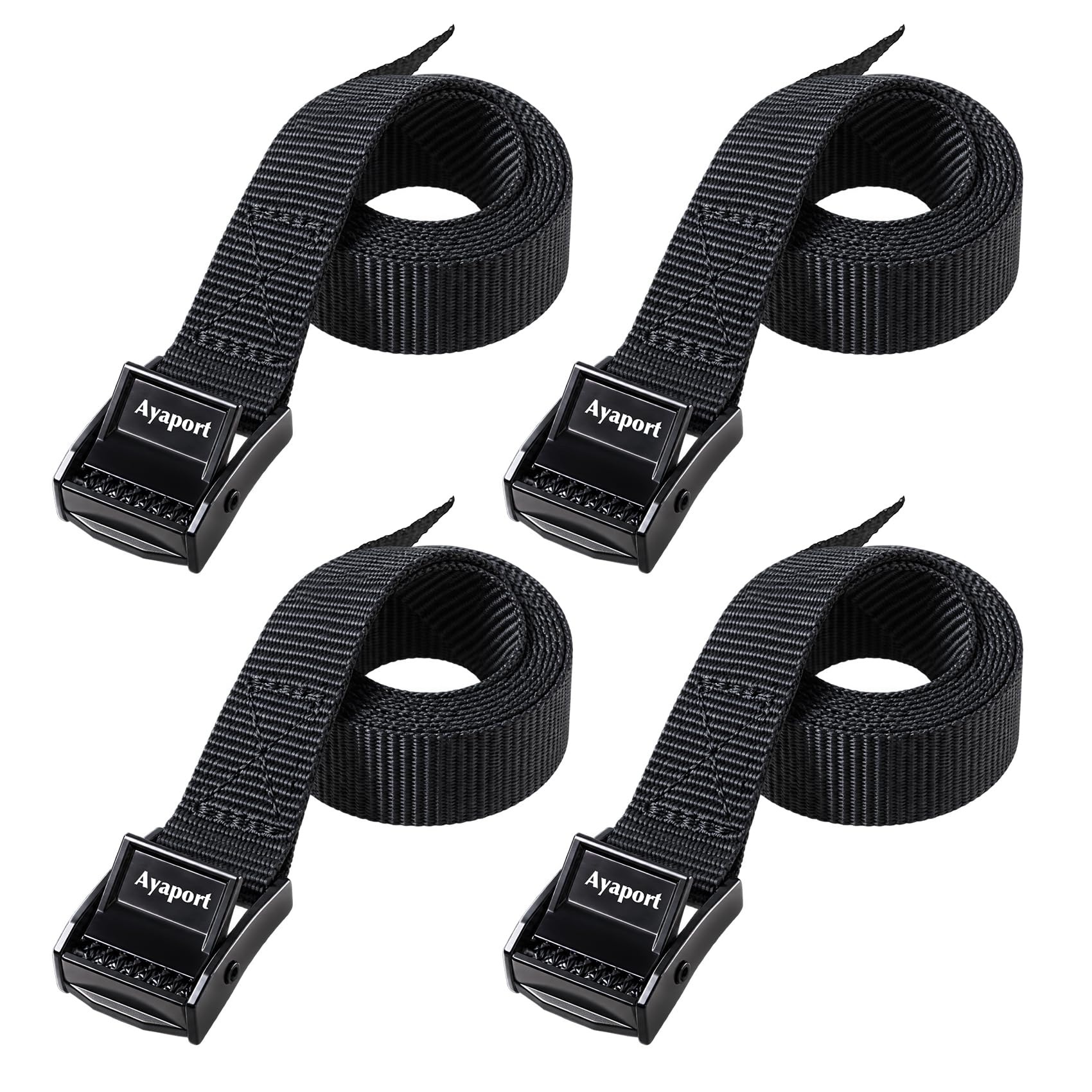
Ayaport Lashing Straps 4-Pack

94 /100
Angler Score Outstanding

Key details

Width
0.75 in
Length
4 ft
Pack Size
4 straps
Load Capacity
260 lb
Check Details on Amazon

The first job we gave these was bundling: three-quarter-inch webbing, 4 feet long, four to a pack, wrapped around a stack of camp chairs and pulled snug on the little zinc cam. That's the size they're built for, along with luggage, a rolled mattress, a cooler lid, and a tarp wrapped around a rod tube.

260 pounds of load capacity and a 350-pound break strength put them in hand-tight territory. What they're good at is tidiness. The narrow webbing threads through a handle, a grommet, or a D-ring that a 1-inch strap won't fit, and the short length means nothing trails off the back of a bike or a boat.

The cam is small, and adjusting tension one-handed while you hold a bundle together takes a few tries before the motion clicks. Two hands and a knee on the load solves it, and that's the trade for the size. We keep a pack in the duffel and another in the garage, and they've become the straps we grab when the good ones are already on the truck.

Pros

  • 3/4-inch webbing threads small handles and rings
  • Four feet leaves no dangling tail
  • 260-pound load capacity for hand-tight loads
  • Budget price for four straps

Cons

  • Four feet of 3/4-inch webbing won't secure rack cargo
Our verdict

For bundling gear, luggage, and awkward small loads, these little straps do the job a 15-footer can't do neatly — just keep them off the roof rack.

Check Latest Price
8

Long-Reach Anchoring

JCHL Cam Buckle Straps 4-Pack

87 /100
Angler Score Excellent

Key details

Width
1 in
Length
20 ft
Pack Size
4 straps
Load Capacity
1,000 lb
Check Details on Amazon

Four 20-foot straps for less than a pair of the NRS. That comparison is the case for these. If you want real length and you want hooks, this is the least expensive way to get both in this group.

The vinyl-coated S-hooks are why you'd pick them over a plain cam strap. A hook drops into a bed eye, a D-ring, or a trailer loop in a second, where a hookless strap has to be threaded through and doubled back. We used ours to hang a canoe under a garage ceiling and to hold a ladder along a wall, and the hooks turned both into a one-person job.

Twenty feet is a lot of strap, and this is where the price shows. The webbing is thinner in the hand than the NRS pair, and the cam needs a firm, steady pull to take up slack. Pull it as tight as you can, then tug the strap at the cam to confirm the teeth have it. That tug is the whole safety check.

For long, awkward runs — a canoe overhead, a ladder along a wall, a load that has to reach a far corner — the extra footage is the point, and the coated hooks keep hardware off whatever they touch. Check the cam every time you tension one. That's the price of the length.

Pros

  • 20-foot length reaches far corners
  • Coated S-hooks clip straight into eyes and D-rings
  • Four long straps at a low price

Cons

  • You tension these by hand, with no ratchet leverage
Our verdict

Long, hook-ended, and inexpensive: the set for ceiling racks, canoe storage, and any load that needs reach more than polish.

Check Latest Price

How We Chose and Tested Cam Buckle Straps

We started with every cam buckle strap we could find in webbing widths from 1 to 2 inches and lengths from 5 to 20 feet, then cut the list by reading the hardware: stamped versus cast cams, coated versus bare S-hooks, and whether the webbing was polyester (better in sun and rain, less stretch) or nylon. Price mattered, but a buckle that slips is worse than no strap. That left 14 straps, from four-packs of short cinch straps to a single 20-foot pair.

Testing ran six months, mostly in a driveway and the bed of a pickup. We lashed a 14-foot kayak and a paddleboard to a roof rack, loaded a dresser and a stack of lumber onto a utility trailer, and strapped a dirt bike to a hitch carrier for a two-hour drive. Every strap got the same loads so the comparisons held. We timed how long one person needed to thread, cinch, and tie off the tail — some cam buckles grab at the first pull, others need a second set of hands to keep tension.

Durability got checked by leaving straps out in the rain and sun between trips, then looking for frayed edges and rust blooming on the springs. Grip came down to the cam itself: we noted whether the webbing crept back a quarter inch after a hard pull or held solid, and whether the hooks marred a painted trailer deck. Adjustability was tested one-handed, with gloves on, mid-load. We also weighed what came in each pack, since a four-pack that stows in a glovebox is genuinely useful and a stiff tail that won't stay put is not.

How to Choose Cam Buckle Straps

Length: measure the job, then add a little

Lengths in this group run from 4 feet to 20 feet, and the right one is set by the distance around the load and back to the anchor, plus a couple of feet to pull against. Twelve feet covers most roof-rack and truck-bed work, 6 to 7 feet is a bundle strap, and 20 feet is for reaching across a trailer or down the side of a hull.

The trap is assuming more length is more capability. Every extra foot has to go somewhere, and a loose tail whips at speed and marks paint. The usable length is also always shorter than the number on the label once the buckle and your hand take their share.

The cam needs a load that gives a little

A cam buckle locks by pinching the webbing under a spring-loaded toothed cam, and you tension it by hand. That works beautifully on anything with some give, such as fork suspension, an inflatable, or a hull settling onto a padded bar, because the load helps draw the strap tight. On a rigid, flat load, a ratchet has the advantage.

Two checks before you trust one: tension the strap, then tug the webbing at the cam to confirm the teeth have it, and try the release before you load up. A silicone-covered cam presses harder than a bare one, which is worth knowing with cold hands.

Break strength is a ceiling, not a target

Break strength is where the webbing fails; working load is what you can sensibly carry, and the gap between them is your margin. Here those figures run from 260 to 1,000 pounds of working load and 350 to 3,000 pounds of break strength. For a boat, a bike, or anything on a highway, look at 1.5-inch webbing and four figures of break strength. For chairs, bins, and luggage, a 350-pound strap is honest.

Ratings also assume the full width of the webbing is bearing the load. A nick at the cam edge is where these fail, so replace the strap rather than trimming the damaged end and hoping.

Webbing, weather, and what it touches

Polypropylene shrugs off water and won't stretch when wet; nylon is softer in the hand but can loosen as it takes on moisture, which is how a strap that was tight in the driveway ends up slack at the put-in. UV treatment matters if the strap lives on a rack, and some dyed webbing bleeds onto pale cargo when wet.

On paint or a composite hull, the buckle is what touches down. Covered cams, coated S-hooks, soft loops, and buckle pads are the features that keep metal off the surface, and they matter more than an extra hundred pounds of rating on a boat you care about.

Frequently Asked Questions

Final Verdict

The NRS pair is what we put on a boat: 2,000 pounds of break strength, webbing that won't stretch when it's wet, and a cam that holds without a second look. For everything that isn't a hull, the Rhino USA four-pack is the better shape, with 12 feet of 1-inch webbing, four straps, and a covered cam that won't mark paint.

If your loads are small and constant, the Clay&Fire four-pack earns its place in the toolbox and asks nothing of you.