
Best Camp Shoes of 2026

The best part of any hike happens at the tent site, when the boots come off and something soft slides on. The trouble is most camp shoes are either too flimsy to cross a gravel parking lot or so heavy you may as well keep your hikers on. Feet swell over a long day too, so a pair that fit fine at the trailhead can pinch by dinnertime. What you actually want is a shoe that goes on without hands, dries fast, and grips well enough for a 2 a.m. bathroom run.

I've burned through plenty of bad ones: flip-flops that shot off wet roots, mocs that soaked through in morning dew. Over the past eight months, my team and I have worn a dozen pairs on desert car-camping trips, muddy river weekends, and cold overnights, watching fit, traction, and how each one treated a swollen foot after a day of miles. Color and looks counted for more than I expected, since the best of these go straight from camp to the coffee run to the drive home. The picks below are the ones that survived all of it.

1

Best Overall

Crocs Classic Clog

96 /100
Angler Score Outstanding

Key details

Care
Rinses clean
Style
Classic clog
Sizing
Unisex, whole sizes
Closure
Slip-on with heel strap
Check Details on Amazon

The classic clog earns its place at camp because it asks so little of you: slide in, walk to the shower, hose it off, and leave it by the tent. We kept reaching for it for short trips around the site, and the heel strap makes the difference when you need to move faster than a shuffle.

The roomy unisex shape is comfortable with thick socks on a cool morning, and the closed toe gives you more protection from roots and gravel than a flip-flop. We also appreciate that the foam wipes clean after mud or lake water, so it doesn't become a soggy project by day three. That easy cleanup is the reason it stays by the door rather than buried in a bag.

Packing is the trade-off. A pair takes up more room in a duffel than fold-flat sandals, so these are a car-camping and basecamp shoe rather than a backpacking luxury. For a fishing camp with a vehicle nearby, that's an easy compromise.

The clog is also the easiest of these to wear with socks, which extends its season from summer showers to cool fall mornings. It's not a hiking shoe, and it shouldn't be; keep it for the camp perimeter and the bathhouse.

Pros

  • Slips on and off without hands
  • Rinses clean after mud and water
  • Roomy enough for thick socks
  • Heel strap adds security on uneven ground

Cons

  • No half sizes; fit is generous
  • Heel strap is a durability weak point
Our verdict

For most campers, this is the pair we reach for first: easy on and off, easy to rinse, and comfortable enough for the walk to the bathhouse.
Check Latest Price
2

Best Packable Shower Shoe

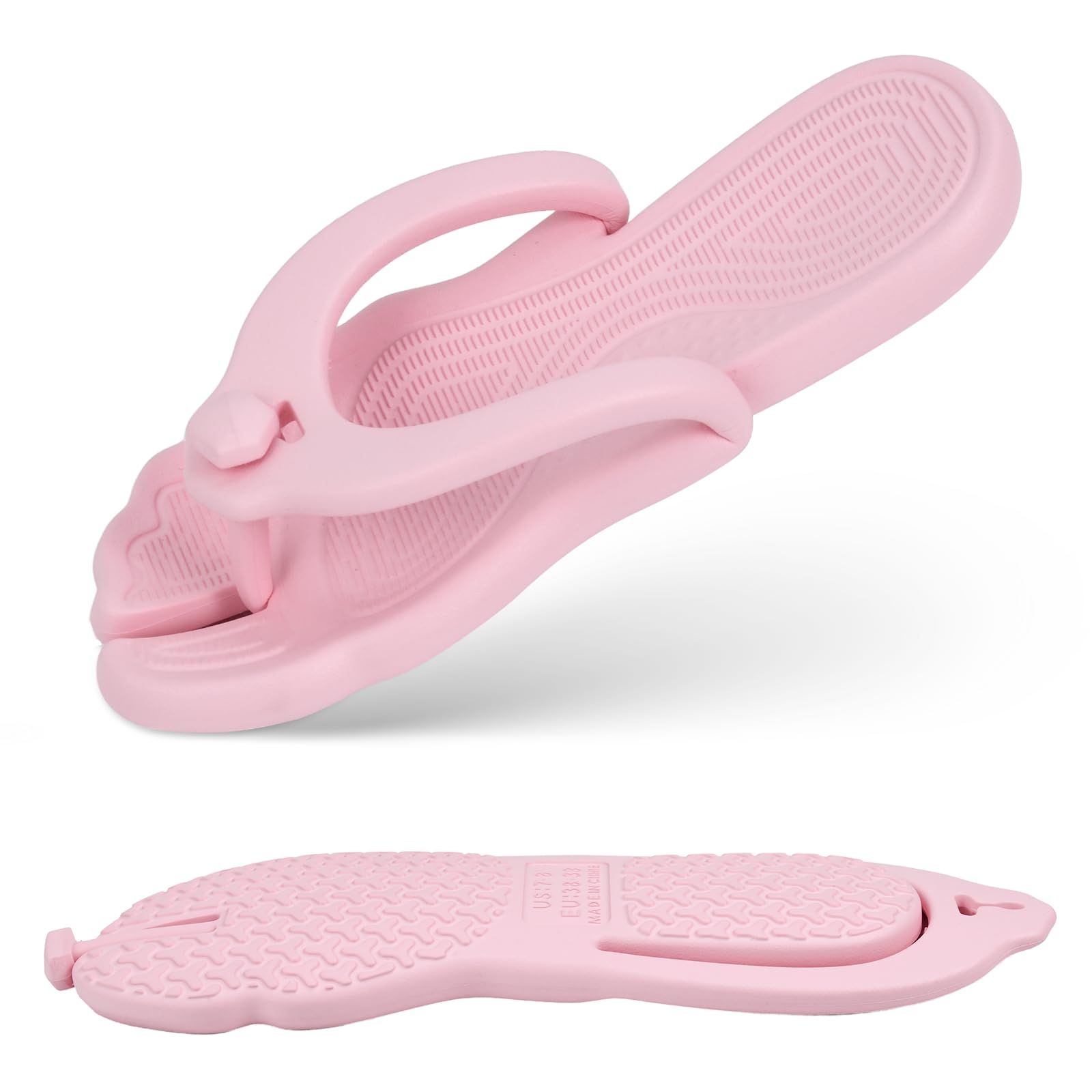
Rosoz Foldable Flip-Flops

87 /100
Angler Score Excellent

Key details

Fit
Runs small
Style
Foldable flip-flop
Traction
Non-slip on wet tile
Packed Footprint
Folds flat
Check Details on Amazon

The whole case for these flip-flops fits in a side pocket: they fold flat, take up little room, and give you a dedicated pair for shower houses and wet docks. We like that they turn a questionable campsite shower into a quick stop rather than a barefoot sprint.

We found them most useful as a shower and boat-ramp shoe, not as a walking sandal. The folded shape is not a gimmick, either: they lie flat in a duffel and come out ready to wear, which is more than we can say for a bulky clog. The non-slip feel on wet tile is the reason we keep them in the shower bag, and the flat shape makes them easy to rinse.

The strap is basic, but that's the point of a shoe this packable. They make sense as a second pair for the car or the bottom of a dry bag, and they take up less space than a pair of socks. They are not the pair for a rocky shoreline or a long walk to the water; that's a job for a closed clog or a camp bootie.

Pros

  • Folds flat for packing
  • Useful for showers and wet docks
  • Non-slip feel on wet tile

Cons

  • Runs small; order up if between sizes
  • Thin sole is best for smooth surfaces
Our verdict

If your camp has a communal shower or your pack has no spare room, these fold flat and give you a dedicated pair for wet floors.

Check Latest Price
3

Best for Wet, Muddy Ground

SYLPHID Garden Shoes

88 /100
Angler Score Excellent

Key details

Use
Wet yard and camp
Style
Neoprene camp bootie
Closure
Slip-on
Waterproof
Yes
Check Details on Amazon

Wet grass is where these earn their keep. The neoprene upper and slip-on shape make them the pair we grab for a muddy walk to the bank or a damp morning around the fire, and they keep socks dry in conditions that soak a mesh clog.

We like the ankle-hugging collar because it stops debris from kicking inside, and the shoe slips off without a fight when you're getting into a tent. The sole is happiest on grass, gravel, and packed dirt. On smooth wet concrete, the grip is less convincing, so we still take our time around the bathhouse.

The stock footbed is flat, and it can slide when the inside gets damp. If you need arch support or plan to wear these for more than quick chores, add a thin aftermarket insole and check it before you head out. That small fix turns them into a more useful wet-weather camp shoe.

For a fishing camp, the waterproof upper is the feature that matters: it handles the launch ramp, the muddy bank, and the early-morning dew without turning into a heavy boot. They are not an all-day walking shoe, but they are the pair you leave by the door for wet chores.

Pros

  • Waterproof neoprene upper
  • Easy on and off
  • Ankle collar keeps debris out
  • Rinses clean after mud

Cons

  • Sizing runs inconsistent
Our verdict

When the path to the water is mud and wet grass, these waterproof slip-ons keep your feet dry and rinse off fast.

Check Latest Price
4

Best Camp Moc for Cool Evenings

SOREL Dude Moc

90 /100
Angler Score Outstanding

Key details

Use
Indoor and outdoor
Style
Moc-toe slip-on
Warmth
Cold-weather
Listed Weight
10.6 oz
Check Details on Amazon

The Dude Moc looks like a campsite shoe that can pass for a loafer at the camp store—a moc-toe slip-on with enough structure to wear outside the tent. We found it most appealing for cool evenings when a foam clog feels too thin and a boot feels like overkill.

The warmth is the real draw. The closed shape and lining hold heat on a chilly morning, and the sole is sturdy enough for a walk to the truck or the firewood pile. It's a slipper in name, but it behaves more like a soft shoe, which is why we reach for it when the temperature drops.

Fit is where we hesitate. These run large, sometimes by a full size, and the heel can slip when you walk. If you order, go down a size and plan to wear them with socks; that combination makes the moc feel secure. What we like most is the versatility: they are presentable enough for the camp store and sturdy enough for a dewy walk to the water. They are not a hiking shoe, and the secure fit matters more than the style on uneven ground, but they fill the gap between a slipper and a boot.

Pros

  • Warm enough for cool evenings
  • Sturdy sole for short outdoor walks
  • Moc-toe look works off-site

Cons

  • Warm lining limits hot-weather use
Our verdict

A warm, sturdy camp moc for cool evenings and quick trips outside, with a substantial feel that sets it apart from a slipper.

Check Latest Price
5

Best for Cold-Weather Camping

The North Face Thermoball Traction Mule

92 /100
Angler Score Outstanding

Key details

Style
Insulated mule
Outsole
Rubber
Insulation
Thermoball
Water Repellent
Yes
Check Details on Amazon

At the top of the price range here, the Thermoball Traction Mule is the pair we choose when the forecast is cold and wet rather than mild and dry. The insulated upper and water-repellent finish make it a camp shoe for frosty mornings, not a shower shoe.

The warmth is immediate, and the rubber outsole gives you enough grip for a walk to the bathhouse or the truck without swapping into boots. The water-repellent finish shrugs off slush and damp grass, and the sole has enough tread for a short walk away from the tent. We appreciated that it stays put on packed snow and wet gravel, though it is still a mule, not a winter boot.

Getting it on is the trade-off. The opening is snug, and the fit runs slightly big, so the mule can feel loose once your foot is in. If you have a high instep or wide foot, try before you commit; for everyone else, a pair of wool socks makes the fit more predictable. What it buys you is a camp shoe that feels almost like a lightweight boot, which is exactly what a late-season fishing trip calls for. It's not the easiest to pack, but it earns its space when the weather turns.

Pros

  • Insulated for cold mornings
  • Water-repellent upper
  • Rubber outsole grips wet ground

Cons

  • Warm insulation is overkill in summer
Our verdict

For cold, wet camps, this insulated mule keeps feet warm and dry and earns its space as a specialist rather than a default.

Check Latest Price

How We Tested Camp Shoes in Mud, Dust, and Morning Dew

We started with a shortlist of nearly 60 pairs pulled from outdoor retailers, brand catalogs, and the shoe bins that turn up in every trailhead town, then filtered by weight, packed size, closure type, outsole tread, and price. Anything heavier than a pair of trail runners, or anything that needed two hands to pull on in a cold tent, was cut. Twelve pairs made the final list, spanning slip-on clogs, insulated mules, water shoes, and simple flip-flops.

Testing ran eight months and covered desert car camping, a few wet river weekends, and cold overnights where the ground froze before breakfast. Each pair lived on my feet, and my teammates', for at least three weeks of that stretch.

Every pair got the same treatment. I stepped into them one-handed in the dark, standing in a tent doorway, and noted whether my heel seated or I had to sit down and wrestle. I crossed wet granite slabs and slick river rock to find where traction let go, and walked through shallow water to see how quickly each pair drained and dried. For sizing, I wore every pair barefoot and then with thick wool socks after a long day of miles, when feet are at their largest.

Durability meant stuffing pairs into duffels and truck beds, washing the ones that claimed to be machine-washable, and tracking which soles scuffed, flattened, or started peeling. Color and appearance got judged in daylight at camp and again in town, since a camp shoe that can pass at the coffee shop earns its place in the bag. Value came down to price per season: the pricier pairs had to show a sturdier outsole or an insole that didn't pack out to justify the money.

How to Choose Camp Shoes

Start With Your Camp's Worst Condition

Think about the wettest, coldest, or roughest part of the day, then buy for that. A ventilated clog is our default for mild, dry camps because it slips on and rinses off. A fold-flat shower shoe makes more sense if the bathhouse is the main event. For wet grass and mud, choose a waterproof slip-on with a closed toe; for frosty mornings, an insulated mule earns its bulk. The trap is buying a warm camp bootie for a summer trip, where it becomes a sweat box.

Packability vs. Camp Comfort

Camp shoes live in the gap between a slipper and a hiking shoe, so decide how much space they deserve. A fold-flat sandal disappears into a duffel and is easy to keep for showers; a clog takes more room but gives you more support and protection for walks around the site. If you are backpacking, pack the flat pair and accept the thinner sole. If you are car camping or fishing from a truck, bring the pair you can wear all evening.

Get the Fit Right for Socks and Half Sizes

Camp shoes often get worn with thick socks, after a day in boots, when feet are warm and slightly swollen. That makes half sizes and roomy toe boxes more important than they seem in the listing. Clogs may come only in whole sizes; some mules run large; thin shower shoes often run small. Order for the socks you plan to wear, and if you are between sizes, check the brand's size guidance rather than assuming the same number fits every style.

Traction and Underfoot Support

A camp shoe does not need hiking-boot traction, but it does need to handle wet concrete, gravel, and roots without skating. Smooth foam soles are fine for a shower stall and poor on a muddy slope. A rubber outsole with visible tread is the safer choice for a fishing camp, especially near a dock or launch ramp. Support matters too: a thin flip-flop is for short wet walks, while a closed clog or mule gives you more cushioning for an evening around the fire.

Check Straps, Insoles, and Upkeep

The parts that fail first are usually the heel strap, the pull loop, or the insole. Give those a tug before you rely on a pair for a trip, and replace a sliding insole with a thin aftermarket one if the shoe is otherwise right. Rinse muddy shoes before they dry, and let them air out instead of sealing them in a bag. A camp shoe that dries overnight is worth more than one that fits slightly better and stays damp.

Frequently Asked Questions

Final Verdict

For most camps, the Crocs Classic Clog is the pair we recommend: it is easy to step into, easy to rinse, and comfortable enough for the walk to the bathhouse. If your camp is wet and muddy, the SYLPHID Garden Shoes keep feet drier; if you camp in cold weather, the North Face Thermoball Traction Mule is the specialist worth packing. The rest comes down to how much space you have and how far you plan to walk.