
Best Camping Tents of 2026

Every tent looks fine in the store. The difference shows up at 2 a.m., when the rain starts sideways and the zipper sticks halfway up. I've slept in that tent — a borrowed dome that sagged under the first real gust and had a puddle creeping across the floor by morning. What separates it from a tent that keeps you dry isn't the price tag; it's whether the poles seat properly, whether the seams are taped, and whether the door opens with one hand in the dark.

Here's what first-time buyers get wrong: shopping by person count. Capacity numbers are optimistic — a six-person tent fits six sleeping pads and very little else, and you'll want room to stand up and change. Over eight months we pitched 12 tents, from instant pop-ups to three-room cabins, and the ones worth carrying made setup easy, stayed dry, and didn't look like a bag of laundry sitting in a field. The picks below are the ones I'd hand to a friend.

1

Best Overall

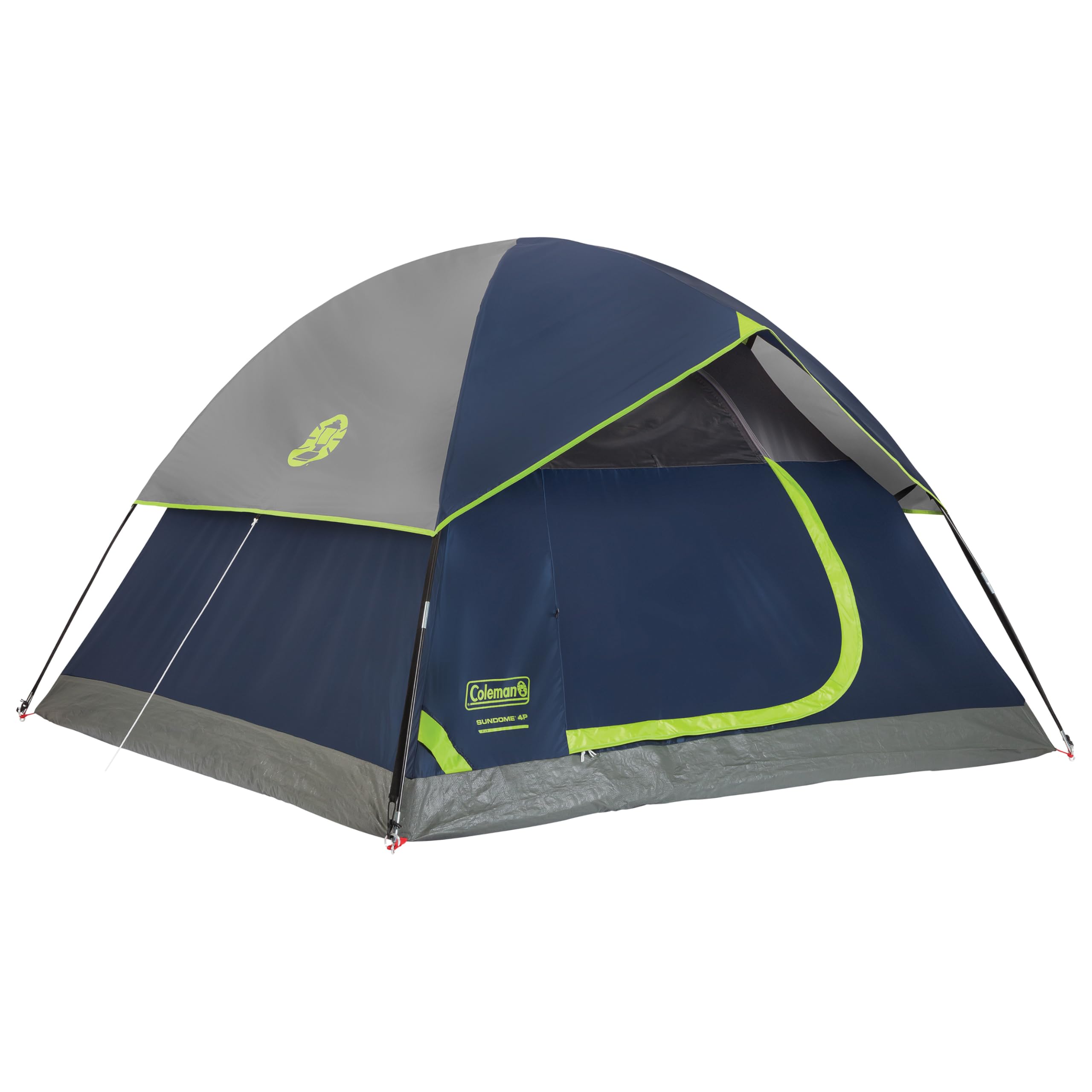
Coleman Sundome 4-Person Tent

93 /100
Angler Score Outstanding

Key details

Weight
9.1 lb
Floor Area
63 sq ft
Peak Height
59 in
Sleeping Capacity
4 person
Check Details on Amazon

Tent shopping pulls you toward the feature list: the second door, the room divider, the blackout fabric. The Sundome is the argument for ignoring all of it. Two aluminum poles, a body that clips on, an included rainfly, and a 63-square-foot floor, and it is the tent we hand to anyone buying their first one. What we like most is how little it asks of you. Nothing to feed through a sleeve, no footprint to remember, no instructions to decode by headlamp.

Setup is where it separates from the rest of this group. One person can have it standing in about the time it takes to unroll a sleeping bag, and the clips mean you can pitch it in the rain instead of sliding a wet pole through a wet channel. Rain performance is good rather than heroic: the fly covers the roof and the seams are sealed, so a steady overnight rain stays outside, while a long sideways blow will eventually find the low corners. Point the narrow end into the wind and it is fine.

The four-person label is optimistic the way tent labels always are. Sixty-three square feet takes a queen air mattress with a couple of feet left along one side, which makes it a two-adult tent with gear for most couples, and the 59-inch ceiling means you dress sitting down. Four grown adults fit only if everyone is on a pad and nobody needs floor space for a bag.

Where it earns the top spot is the arithmetic of a first tent. The money you do not spend here goes into the pad, the bag, and the stove, which decide whether you sleep far more than the tent does. The trade is that it stays a car tent: 9.1 pounds and a long packed bundle are fine from the trunk to the pad and miserable on a trail.

Pros

  • Pitches in minutes with clips, not sleeves
  • Rainfly and sealed seams handle steady rain
  • Ground vent and large windows limit condensation
  • Leaves budget for the pad and bag

Cons

  • One door for the whole footprint
  • Aluminum poles can bend in a hard gust
Our verdict

For a couple or small family buying a first tent, this is the one we recommend: quick to pitch, dry through an ordinary wet night, and affordable enough to leave budget for a better pad.

Check Latest Price
2

Best for Big Families

CORE 9-Person Instant Cabin Tent

93 /100
Angler Score Outstanding

Key details

Weight
27.6 lb
Floor Area
126 sq ft
Peak Height
78 in
Sleeping Capacity
9 person
Check Details on Amazon

It is dark when you pull in, the kids are hungry, and the tent is the last thing between you and dinner. That is the case for an instant cabin, and the CORE makes the strongest argument for one in this group. The frame is already attached to the body, so you unfold, pull the poles until the hubs click, and the shell is standing.

Takedown is the same trick in reverse, which matters more than people expect. The tent you dread packing is the tent that gets left up in the rain or abandoned in the garage by August.

Fourteen by nine feet is the number that sells it: 126 square feet, 78 inches at the center, and room for two queen air beds with a walkway between them. The hanging divider splits it into two spaces so the kids' side goes dark while yours does not. We think the ceiling height is what changes the trip, though. Standing up to pull on trousers in the morning is worth more than another window.

The 1200 mm shell, taped fly, and sealed seams handle an ordinary wet night; what it does not like is a long driven rain against a side wall, so pitch the low end into the weather and guy it out. Ventilation is generous enough that four damp people do not wake up in a cloud, which is the failure mode nobody warns you about with a big cabin tent.

Pros

  • Pre-attached frame stands in about two minutes
  • 126 square feet with a 78-inch ceiling
  • Two doors and a divider for a second room

Cons

  • 27.6 pounds and a long bundle, so car camping only
  • Frame poles can bend in a strong gust
Our verdict

For four or more people at a drive-in site, we hand the job to this one: up in about two minutes and big enough to spend a rainy day inside.

Check Latest Price
3

Best Mid-Size with Headroom

Coleman Skydome 6-Person Tent

84 /100
Angler Score Excellent

Key details

Floor Area
86 sq ft
Setup Time
5 minutes
Peak Height
6 ft
Sleeping Capacity
6 person
Check Details on Amazon

Six feet of center height does not sound like much until you have spent a weekend changing clothes lying down. The Skydome gets there with near-vertical walls rather than a taller dome, so the headroom sits where you actually stand, at the door and down the middle, instead of forming a cone over the center. Eighty-six square feet is a queen mattress plus two camp chairs, or three pads and a dog.

The reason we like it is the combination: standing height without the weight and bulk of a cabin tent, and a pitch one person can manage. The poles are pre-attached at the corners, so setup is unfold, extend, clip the fly, and about five minutes at a stroll. The door is wider than a standard dome's, which reads like a brochure line until you are dragging a loaded cooler through it.

WeatherTec is Coleman's name for welded corners and inverted seams, and it does what it says, with the honest caveat that this is a light-to-steady-rain tent rather than a storm shelter. The softer spot is the frame: poles can splinter under load, and the pole ends are stiff enough at the base that breaking camp on a cold morning is a two-handed job.

Pros

  • Six-foot ceiling you can stand under
  • Pre-attached poles, pitched solo in about five minutes
  • Welded corners and inverted seams handle rain

Cons

  • One door for a six-person floor
Our verdict

A couple who wants to stand up to get dressed without dragging a cabin tent along should look here first.

Check Latest Price
4

Best for Tall Campers

FanttikOutdoor Alpha C4 Ultra Tent

90 /100
Angler Score Outstanding

Key details

Weight
27.5 lb
Floor Area
61 sq ft
Peak Height
80 in
Sleeping Capacity
4 person
Check Details on Amazon

Most four-person tents are domes, which means the walls curve away from you and the usable height is a stripe down the middle. The Alpha C4 goes boxy instead: four near-vertical walls on a 94-by-94 footprint, an 80-inch ceiling, and twelve mesh windows wrapping the upper half. The effect is that nearly all of the 61 square feet is floor you can stand on, which is not true of any dome at this size.

Setup is genuinely about a minute. The X-frame is pre-attached and the eave poles are integrated, so it is unfold, lock, and the shell is up; the rainfly adds a couple of minutes and hooks in tightly enough that it does not flap all night. That speed is the whole pitch of an instant tent, and this one delivers it without the flexy feel that usually comes attached, helped by a 300D floor that is thicker than the shell exactly where boots and chair legs land.

Weather performance is solid rather than stormproof. The 150D shell with a sealed fly handles a wet night, and a sustained downpour is where it can let go, with water showing up at the floor first. The zippers are the recurring irritation: they catch where the fabric turns a corner, and a hard yank is how good tents get torn.

What it is really for is the tall camper who camps in heat. Twelve windows and a full mesh upper move air through the tent even with the fly on, and the footprint takes a queen pad with room to step around it at the sides. We think that combination is worth the trade, provided you are not the one carrying it far.

Pros

  • 80-inch ceiling in a compact four-person footprint
  • Up in about a minute with a pre-attached X-frame
  • Twelve windows move air on hot nights
  • Thick 300D floor takes boots and chair legs

Cons

  • 27.5 pounds is heavy for four people
  • Single door for a tent this size
Our verdict

If you are tall and tired of crouching, this is the four-person tent here that lets you stand up and walk around.

Check Latest Price
5

Best Big Tent on a Budget

CAMPROS CP 8-Person Tent

89 /100
Angler Score Excellent

Key details

Rooms
2
Floor Area
126 sq ft
Peak Height
72 in
Sleeping Capacity
8 person
Check Details on Amazon

Eight-person tents usually come in two flavors: enormous and expensive, or cheap and cramped. This one is neither. A hundred and twenty-six square feet under a 72-inch ceiling, split by a hanging curtain into two rooms, and it costs less than the smaller Coleman here. We noticed the straight walls first, because they run upward rather than curving in, so the floor near the edges stays usable instead of turning into sloped storage for duffels.

Pitching takes two people about five minutes, which is the honest version of the claim: color-coded poles, a body that clips on, and one person can manage it in still air if they are patient. Five mesh windows and a mesh roof move a lot of air, and the divider gives you somewhere to put the kids down at eight while the adults stay up.

Water is the part to manage. Sealed seams and a coated fly keep an ordinary night out, but the seams that sit beyond the fly's coverage are where rain gets in during a long storm, and a tube of seam sealer plus a tarp underneath is cheap insurance. Buy it for the space, treat it as a three-season tent, and it will do everything a family asks of it.

Pros

  • 126 square feet and a divider for midrange money
  • Five windows and a mesh roof keep air moving
  • Two people pitch it in about five minutes

Cons

  • Door zipper jams on the waterproof flap
  • Fiberglass poles can snap in wind
Our verdict

Big usable floor for midrange money, with a divider to split the room, as long as you can live with the door zipper.

Check Latest Price
6

Best Ultralight Budget Pick

UNP 2-Person Dome Tent

89 /100
Angler Score Excellent

Key details

Setup Time
3 minutes
Peak Height
45 in
Trail Weight
4.7 lb
Sleeping Capacity
2 person
Check Details on Amazon

Four point seven pounds, a stuff sack the size of a loaf of bread, and a price that undercuts everything else on this page. The UNP dome is the tent you buy when the trip is one person, two nights, and not much money.

The honest read on it comes down to size. Eighty-four by sixty inches is a twin mattress, and a 45-inch ceiling means you sit up to read and crawl to the door. Treated as a one-person tent with room for a pack, it is genuinely good: the mesh upper and skylight make it airy in July, and the single door is where your boots live. Plan on two adults sharing it and you will be sleeping in a hug.

Weather is better than the price suggests. The removable fly and a 1500 mm coating kept out a proper storm, and the coated floor stops ground water creeping up from below. Leave the fly off on a clear night and the whole roof is bug net. It pitches in about three minutes, and the instructions are sewn into the bag, which is the small mercy that saves a first trip in the dark.

Pros

  • 4.7 pounds and a sack you can carry anywhere
  • Pitches in about three minutes, one person
  • Removable fly and coated floor handle real rain

Cons

  • Sold as four-season, but the mesh roof is summer
  • Fiberglass poles can split if handled roughly
Our verdict

At under five pounds, it is the right first tent for one person on summer weekends and the wrong one for two adults sharing.

Check Latest Price
7

Whole-Group Basecamp

CORE 12-Person Cabin Tent

90 /100
Angler Score Outstanding

Key details

Doors
2
Floor Area
176 sq ft
Peak Height
86 in
Sleeping Capacity
12 person
Check Details on Amazon

Set it beside the nine-person CORE and the difference is plain: fifty more square feet, eight more inches of ceiling, and straight walls that run floor to roof instead of leaning in. Sixteen by eleven feet takes four queen air beds with floor left over, and the divider splits it into two rooms so the snorers get their own side.

Pitching is conventional rather than instant: color-coded fiberglass poles, sleeves, and a serious number of stakes and guylines to set if the wind is up. Two people who have done it once will be inside in ten minutes, and one person can manage it slowly. The reward is the ceiling. Eighty-six inches means everyone stands, and nine windows plus the mesh roof make it bright rather than cave-like inside.

We think of it as a basecamp rather than a tent: the thing you leave standing for a week at a drive-in site with a table, a cooler, and a lantern in the middle. The listing calls it a summer tent, and the build matches, since nine windows and a mesh roof are wonderful in July and miserable in a cold snap. Water resistance holds up in real rain, which is the surprise for a shelter this open.

Pros

  • 176 square feet and an 86-inch ceiling
  • Straight walls make the whole floor usable
  • Two rooms and two doors for a group

Cons

  • Zipper pulls can fail after a season
  • Fiberglass poles can snap in wind
Our verdict

The biggest shelter here, and the one to book when the whole group is coming and nobody wants to pitch a second tent.

Check Latest Price
8

Long Family Stays

UNP 8-Person Tunnel Tent

84 /100
Angler Score Excellent

Key details

Weight
32 lb
Floor Area
180 sq ft
Peak Height
80 in
Sleeping Capacity
8 person
Check Details on Amazon

Six feet of the twenty is porch: mesh on the sides, a floor underneath, and enough room for two chairs and a cooler out of the bugs. That is the feature that sells this tent, and it is the only one of these with anything like it. It is also the difference between a tent you sleep in and a tent you spend a wet afternoon in.

The sleeping end is fourteen feet by nine, 80 inches at the peak, with four oversized windows and a mesh ceiling that keeps air moving through a humid week. Two doors mean you can come in through the porch or straight into the bedroom, and the 180 square feet takes two full air mattresses with space to walk between them.

Pitching is the weak spot: eight steel legs, a long sequence of poles and clips, and instructions that leave a lot to be discovered. Give the first attempt daylight and half an hour, and do not plan to move it after a beer. Once it is up it is rigid, and steel does not shimmy in wind the way fiberglass does.

Where it earns its place is a long stay. The 1500 mm fabric and steel frame handle weather that would push a dome around, the mesh keeps condensation down over a week of damp mornings, and the porch keeps sand, wet boots, and the dog out of where you sleep. At 32 pounds it is a car tent, full stop, but nothing else here gives you a dry outdoor room.

Pros

  • Six-foot screened porch keeps bugs off the chairs
  • 180 square feet with an 80-inch ceiling
  • Steel legs hold up in wind and rain

Cons

  • 32 pounds, so it goes where the car goes
  • Will not stand until every stake is set
Our verdict

The only tent here with a screened porch, and the one to take when the trip is a week in one place rather than a tour.

Check Latest Price

How We Chose and Tested the Best Camping Tents

We started with spec sheets — packed size, floor dimensions, peak height, number of doors — then read the one- and two-star reviews, which is where zipper failures, snapped pole ends, and "it leaked at the corners" tend to live. From there we narrowed to 12 tents across dome, cabin, tunnel, and instant styles, sized for two to nine people, and gave every one of them eight months of real use rather than a single weekend.

Each tent got a timed first pitch, solo, without rereading the instructions, then a second pitch at dusk after a long drive, which is when fumbling shows up. We noted whether pole ends seated without forcing, whether sleeves snagged at the corners, and how teardown went — some tents took two people to walk the poles back out, and one took a genuine wrestling match to get into its bag.

For weather, we hosed seams, zipper flaps, and the rainfly for ten minutes and then checked inside for wicking, and a rainy two-night trip filled in the rest. Zippers were opened and closed one-handed, in the dark, with cold hands, because that's the only test that matters at 2 a.m.

We also lived in them — kids, a dog, duffels, a camp chair dragged inside on a wet evening — which is where generous capacity claims fall apart. That's where we judged whether a tent looked decent enough to be the backdrop for an entire weekend and whether the materials felt like fair value next to the cheaper tents that nearly do the same job.

How to Choose a Camping Tent

Decide how the tent travels before you decide how many it sleeps

Packed weight is the first fork in the road, and it has nothing to do with capacity. The four-person UNP dome at 4.7 pounds and the nine-person CORE at 27.6 pounds are both camping tents, and only one of them is worth carrying a quarter mile. If every trip starts at a parking space, weight buys you nothing but a sore shoulder, so spend it on floor and ceiling instead. If any trip involves walking in, your ceiling is around five pounds and everything else follows from there.

Watch how the number is quoted, too. Trail weight usually leaves out the stakes, guylines, and sometimes the fly, so the bag you actually lift is heavier than the figure you read.

Read the weather spec as a system, not a number

A 1500 mm coating means less on its own than a fly that covers the whole roof with taped seams under it. The millimeter figure describes the fabric, not the stitching, the zips, or the gap where the fly stops short of the windows. Look for a fly that comes down past the window line, sealed or welded seams, and a floor that turns up at the edges to hold ground water out.

Ventilation belongs in the same decision. A lot of tents that get called leaky are condensing, and mesh panels set high with a vent down low do more for a dry night than another thousand millimeters of coating.

Halve the stated capacity and check the ceiling

Sleeping-capacity figures count bodies on pads with nothing else in the tent. Sixty-three square feet is a two-adult tent in practice, which is what the four-person Sundome really is; 126 square feet takes two queen air beds with a walkway. Before you buy, find the floor dimensions and lay your mattresses out on the living room floor. It takes ten minutes and settles the question.

Peak height matters just as much. Forty-five inches is a crawl-in tent, 59 inches is sit-up-and-dress, 72 inches and above is standing room. Near-vertical walls put that height where you use it, along the edges; a dome loses it the moment you step away from the center.

Judge setup by the worst pitch, not the best

Instant frames with pre-attached poles really do go up in a couple of minutes, and arriving after dark in the rain is exactly when that is worth paying for. The trade is bulk and weight: instant tents pack long, and a 27-pound bundle is a car-only proposition. Conventional pole-and-sleeve tents are slower to raise and easier to repair in the field.

Whichever you choose, put it up once in the yard before the trip. The first pitch is always the slow one, and a tent you have already wrestled with once is a tent you will not be learning about at midnight.

Spend your attention on zippers and poles

Those are the two parts that fail, and neither appears in a headline specification. A door zip that catches on the waterproof flap becomes the thing you remember about the tent, so check for a stiffened flap or a two-way zip, and check that the pole ends are metal rather than plastic.

Fiberglass is heavier and more brittle than aluminum; aluminum bends and comes back, fiberglass splinters. Guy the tent out even when the evening is calm, because the wind that arrives at 3 a.m. does not care what the forecast said.

Frequently Asked Questions

Final Verdict

The Coleman Sundome is the tent we recommend to most people, because it does the two things that decide a trip: it goes up without a fight, and it keeps an ordinary wet night outside. It is also the pick that leaves the most money for the pad and bag that actually determine whether you sleep.

Let your requirement move you off it. Four or more sleepers at a drive-in site want the CORE nine-person and its two-minute pitch; anyone who wants to stand up to get dressed should look at the Skydome or the Alpha C4; and a week in one place, with chairs and a cooler, is what the tunnel tent and its screened porch are for.