Best One-Person Tents of 2026

Every solo tent asks you to pick a side: light enough to forget on the climb, roomy enough to sit up and change a shirt, or tough enough to shrug off a night of sideways rain. Rarely all three. What a good one-person tent actually fixes is that moment eight miles in, when the light is going and you need dry shelter for yourself and your pack — quickly, without a wrestling match.

I've slept in shelters that packed down to the size of a burrito and ones that felt like a pup tent, and the difference rarely shows up on the spec sheet. Over the past six months, my team and I pitched, slept in, rained on, and repacked 12 one-person tents, from bare-bones bivies to instant pop-ups. The lesson that stuck: usable floor width beats headline weight every time. A tent that saves eight ounces but leaves your sleeping pad pressed into damp fabric isn't a bargain, and one that won't fold back into its own sack stops being fun by day three. The picks below each solve that tradeoff in a different way.

1

Best Overall

Clostnature 1-Person Backpacking Tent

89 /100
Angler Score Excellent

Key details

Floor Size
86.6 x 31.88 in
Packed Weight
4 lb (1.8 kg)
Sleeping Capacity
1 person
Waterproof Rating
PU 5000 mm
Check Details on Amazon

Two figures do most of the work here: 5000 mm of waterproof coating on the fly and on the floor underneath you, and a price that undercuts every other freestanding dome in this guide. Coatings are what a tent actually offers instead of a promise, and 5000 mm is the highest number on this page — on both surfaces, which is rarer than it should be. That is why the Clostnature is the tent we point most solo campers toward first.

The frame is two aluminum poles that clip to the body, so the shelter stands up on its own before you drive a stake, which is worth a lot on hardpack and rock ledges where stakes fight back. Fourteen aluminum stakes ship in the bag, more hardware than most solo tents bother with, and the stuff sack has enough slack to take the tent back without a wrestling match. Nothing about the pitch is fussy: poles, clips, two ends, fly.

Inside, 86.6 inches of floor leaves room at the head for a stuff sack, and 35.8 inches at the peak is enough to sit up and pull on a layer without unzipping the door. Two mesh pockets take a phone and a headlamp, and the fly covers the door end properly rather than stopping short. The one-year guarantee is shorter than the ALPS warranty, but the poles and the coated Oxford floor are the parts we expect to outlast it anyway.

Pros

  • 5000 mm coating on fly and floor
  • Freestanding aluminum frame, no fiberglass
  • 86.6-inch floor leaves headroom for a pack
  • Cheapest of the freestanding domes covered

Cons

  • Narrow 31.88-inch floor for broader sleepers
Our verdict

This is the solo tent we recommend first: the highest waterproof coating on both fly and floor in this group, aluminum poles, and a floor long enough to sit up in, without a premium price.
Check Latest Price
2

Best Headroom

Naturehike Cloud-Up 1

87 /100
Angler Score Excellent

Key details

Packed Size
15.3 x 5.1 x 5.1 in
Packed Weight
3.66 lb
Sleeping Capacity
1 person
Waterproof Rating
3000 mm+
Check Details on Amazon

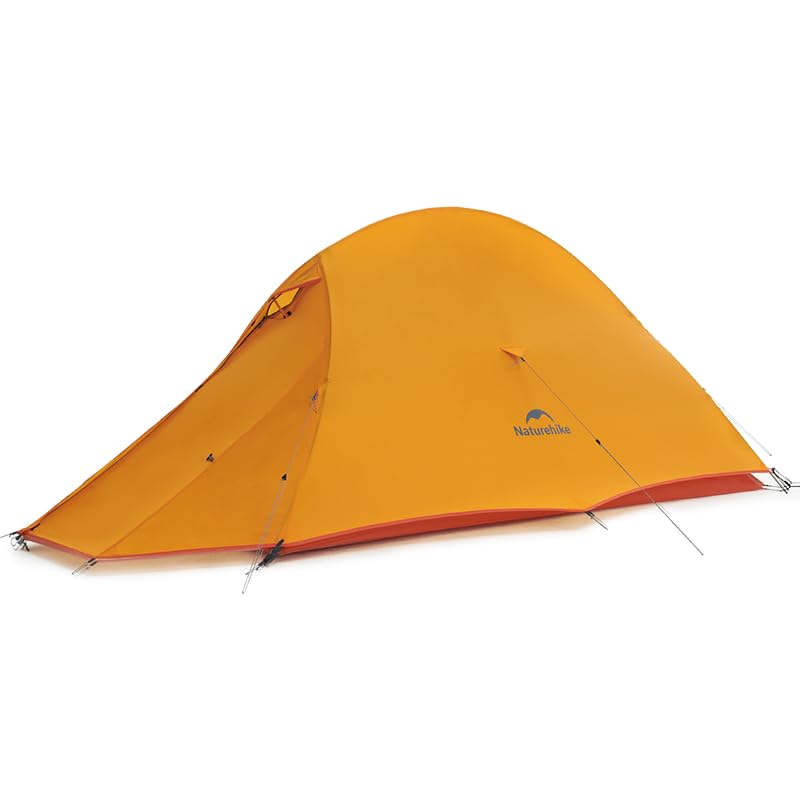
A small vent window sits above the front door, and that detail is the one we keep coming back to. Condensation, not rain, is what soaks a solo sleeper on most nights — one body in a sealed box puts a surprising amount of moisture into the air — and a high vent gives it somewhere to go besides the inside of the fly.

Where the Cloud-Up earns its place is headroom. At 43.3 inches the peak is the tallest in this set, and that changes the morning: you can sit up, reach the door and get dressed without unzipping half the tent. Packed down to 15.3 by 5.1 by 5.1 inches it stows where most tents will not, and 3.66 pounds is light enough to forget on a day-and-a-half approach.

The frame is a single 7075 aluminum pole on clips, with five guylines and fourteen alloy stakes — enough hardware to tie it down properly when the weather turns. The 3000 mm coating is honest three-season gear rather than a monsoon shelter, so pitch it taut and keep the fly off the inner wall. We reach for this one over the top pick when height and pack size matter more than the last two thousand millimetres of coating.

Pros

  • Tallest peak in this set at 43.3 inches
  • Packs to 15.3 x 5.1 x 5.1 inches
  • 7075 aluminum pole and alloy stakes
  • Vent window above the door for condensation

Cons

  • Narrow 35.4-inch floor for its height
Our verdict

Buy it for the headroom — 43.3 inches at the peak is the tallest here and it packs smaller than anything else in this guide; we accept a thinner coating for that.

Check Latest Price
3

Best for Gear

GEERTOP Ultralight Solo Bivy

88 /100
Angler Score Excellent

Key details

Floor Size
84 x 39 in
Packed Weight
3.7 lb
Sleeping Capacity
1 person
Doors And Vestibules
2 doors and 2 vestibules
Check Details on Amazon

Two doors on a one-person tent sounds like overkill until you have spent a wet night with a pack. The GEERTOP gives you a vestibule on each side, so boots and a rucksack have somewhere to live that is not your sleeping bag, and you are not hauling gear across the mattress at two in the morning.

That is the pitch: this is the solo tent for camping out of a motorcycle, a kayak or a truck, where the gear comes in with you. The floor runs 84 by 39 inches, wide enough for a pad with a pack beside it, and 3.7 pounds on aluminum poles still carries comfortably on the days you do walk in. Two vent windows keep air moving through a body that would otherwise trap every breath you take.

Set-up is a two-pole frame with a fly over the top, freestanding once the poles are clipped and quick to re-tension when the wind gets up. The 210T ripstop takes a taut pitch without much persuasion, and the stakes that come with it are anodized aluminum rather than the wire hooks you usually end up replacing. It is the tent that makes a wet morning easier rather than the one that saves you ounces.

Pros

  • Two doors and two vestibules for gear
  • 39-inch floor fits a pad plus a pack
  • 3.7 lb on aluminum poles
  • Two vent windows in a sealed body

Cons

  • 2500 mm coating is mid-pack for the money
Our verdict

Our pick for camping with gear: two doors and two vestibules keep boots and a pack out of the sleeping bag, and the 3.7-pound package still carries comfortably.

Check Latest Price
4

Best Warranty

ALPS Mountaineering Lynx 1

92 /100
Angler Score Outstanding

Key details

Floor Size
90 x 32 in
Packed Weight
4 lb 1 oz
Sleeping Capacity
1 person
Waterproof Rating
1500-2000 mm
Check Details on Amazon

A limited lifetime warranty is the one thing no other tent in this guide offers, and on gear that lives in the back of a truck and gets folded away wet, it is worth more than a saved ounce. The Lynx has been in the ALPS line long enough to have a following, and the build shows it: a 2000 mm coated floor, a factory-sealed fly, aluminum poles and stakes, and a gear loft.

Ninety inches of floor is the number to note — longer than most of the domes here and enough that a six-footer is not touching both ends. Two aluminum poles clip on and the body stands free, so you can shuffle it into position before committing a stake. One door, one vestibule, two mesh pockets and a loft: nothing exotic, all of it earning its place.

Our reservation is the fly. It sits close to the inner tent, so on a damp night moisture moves wherever the two make contact. That is a pitching problem as much as a fabric one — guy it out taut, pick ground that drains, leave the vents open — and it is a three-season tent doing a three-season job well. For a winter ridge in bad weather, look at something built for it.

Pros

  • Limited lifetime warranty
  • 90-inch floor leaves room at both ends
  • Factory-sealed fly and coated floor

Cons

  • 1500 mm rainfly is the least waterproof here
Our verdict

We recommend it to first-time backpackers on the strength of a lifetime warranty, a 90-inch floor and a freestanding frame that goes up without drama; just pitch the fly taut.

Check Latest Price
5

Best for Tall Campers

camppal 1-Person 4-Season Tent

86 /100
Angler Score Excellent

Key details

Floor Size
98.4 x 35.4 in
Trail Weight
3.8 lb
Sleeping Capacity
1 person
Waterproof Rating
3500-4000 mm
Check Details on Amazon

Ninety-eight point four inches of floor is more than eight feet, and that is the reason this tent exists. If you are over six feet and tired of waking with your head against wet nylon, the camppal is the one here worth your money: it is the longest solo tent in this guide by more than a foot, and the length does not come with a premium attached.

The rest of the package is better than the price suggests. The coating is rated 3500 to 4000 mm, near the top of this set, and the fly extends 1.31 feet past the inner tent on one side, which makes a covered strip for boots and a pack. Two mesh pockets, two guylines, an aluminum pole and aluminum stakes — no fiberglass anywhere in the frame.

One pole is the compromise. A single ridge saves weight and fiddle, but it moves more in a gust than the two-pole domes here, so stake it out properly and pick a sheltered pitch rather than an exposed shoulder. The camppal also claims four seasons, which we treat as a three-season tent with a bit more margin — one pole and two guylines is not a snow-load frame. Width is 35.4 inches, so length is what you are buying.

Pros

  • 98.4-inch floor for tall sleepers
  • 3500-4000 mm coating near the top of this set
  • Aluminum pole and aluminum stakes
  • About 3.8 lb on the trail

Cons

  • Single ridge pole gives up stability in gusts
Our verdict

Tall campers, start here: more than eight feet of floor, a top-tier coating and an aluminum frame, for less than the premium tents in this guide.

Check Latest Price
6

Best Ultralight

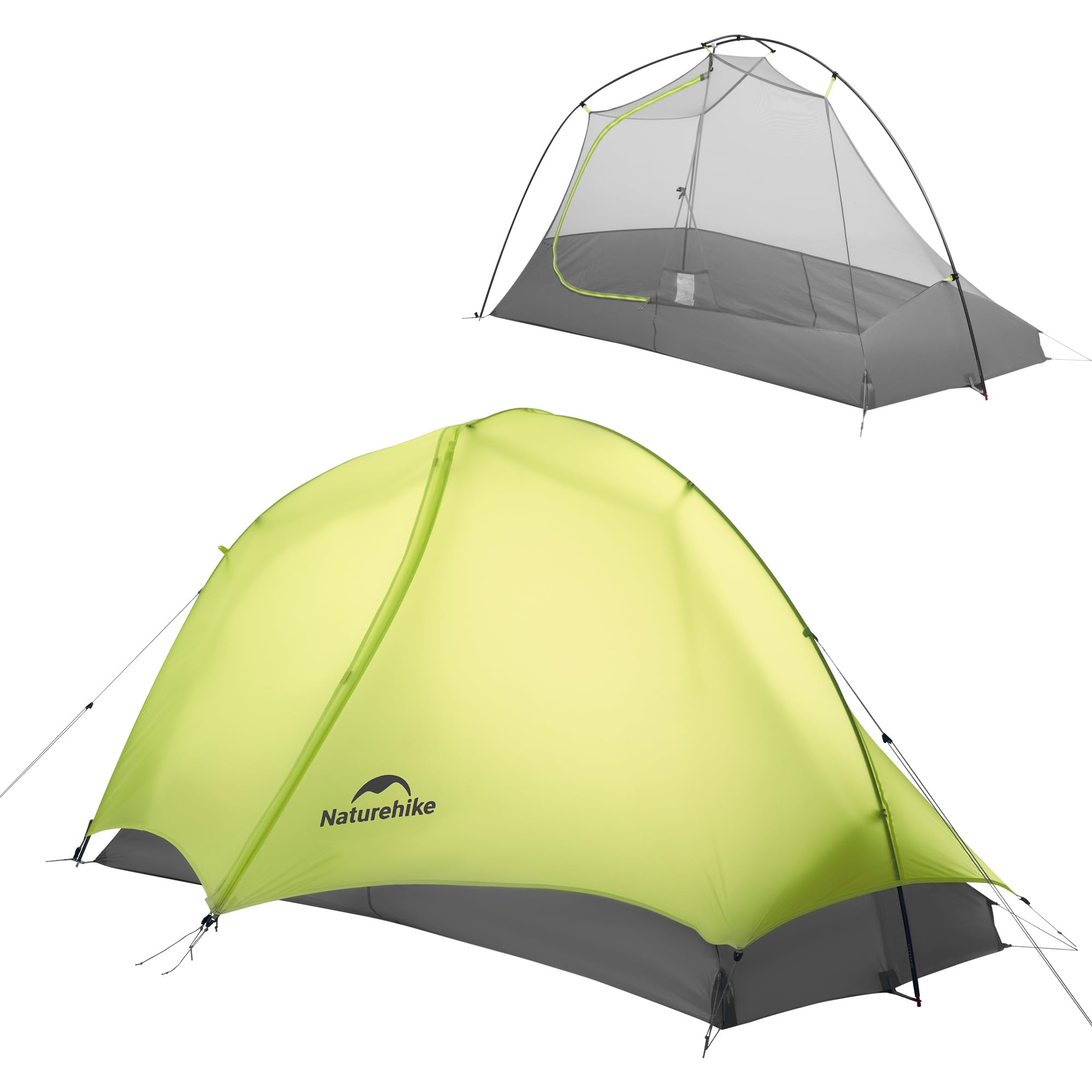
Naturehike Star Trail 1

82 /100
Angler Score Excellent

Key details

Floor Size
86.6 x 59.1 in
Packed Weight
2.3 lb
Sleeping Capacity
1 person
Waterproof Rating
1500 mm+ fly, 3000 mm+ floor
Check Details on Amazon

Two point three pounds, all in, including the footprint and the compression strap. That is the lightest tent here by more than a pound, and it is the difference between a pack that is pleasant at mile twelve and one that is not.

The build is where the money goes. The fly is 10D nylon with a 1500 mm coating, the floor is 20D at 3000 mm, and the inner is full mesh — so you get airflow over your face and a floor that stands up to ground water without dragging a heavier shell along. Two aluminum poles, nine alloy stakes and three reflective guylines make up the whole kit.

The floor is listed at 59.1 inches wide, closer to a one-and-a-half-person berth than the 32-inch cabins most solo tents offer, and 41.3 inches at the peak is enough to sit up with room to spare. Lay a pad across it and there is still a dry strip for a pack, a stove and the boots you did not want in the sleeping bag.

For a long carry this is the tent we take, and the footprint cut to the tent's own shape is part of why: no tarp to fold and refold every morning, no guessing at the edges. It is not the tent for pitching beside a truck, where the lightness buys you nothing that a heavier, cheaper shelter would not.

Pros

  • 2.3 lb packed, lightest here
  • 59.1-inch floor is the widest in this set
  • Footprint and compression strap included
  • Full mesh inner for ventilation

Cons

  • Very thin 10D fly demands careful handling
Our verdict

For thru-hikes and long carries we take the Star Trail: 2.3 pounds including the footprint, a floor wide enough to live on, and a proper aluminum frame.

Check Latest Price
7

Quick Overnight Trips

Night Cat Pop-Up Tent

83 /100
Angler Score Excellent

Key details

Floor Size
92.5 x 39 in
Packed Weight
3.3 lb
Sleeping Capacity
1 person
Waterproof Rating
2000 mm
Check Details on Amazon

You throw it on the ground, spread the frame, and it is up. The maker claims three seconds and we stopped counting after the first few tries because there was nothing left to measure. For a festival, a riverbank at dusk or the end of a long drive, that is the entire appeal: no poles to thread while the light goes.

At 92.5 by 39 inches it has the largest stated floor area in this guide, and 35.5 inches at the peak is enough to sit up in. Folded, it is a 21-inch disc about two inches thick that straps flat to a rack or drops into a tote, and the fiberglass frame lives inside the shell, so there is nothing separate to lose in the dark.

Where it gives ground is weather. A shell that opens in one piece traps the moisture you breathe out, and on a still night that lands on the inside of the roof by morning — this is a fair-weather tent, and a good one. Folding it back is the other skill: it collapses into a figure eight, twice over, and ten minutes with the instructions before your first trip saves a lot of flapping at the end of it.

Pros

  • Pitches in seconds with no poles to thread
  • Folds to a 21 x 21 x 2 inch disc
  • 3.3 lb and easy to sling on a back

Cons

  • 2000 mm coating is among the lowest here
Our verdict

The tent we hand someone who wants to be asleep ten minutes after arriving — it springs up in seconds and packs into a 21-inch disc, as long as the forecast is dry.

Check Latest Price

How We Chose and Tested the Best One-Person Tents

We started by reading listings closely, which ruled out more tents than it let in. Packed weight, floor dimensions, peak height, and the fabric's stated water resistance all had to line up with what the tent was actually for, and we skipped anything whose packed length wouldn't slide into a 40-liter pack or whose floor was too short for a full-length pad. We also struck listings that quoted a weight without stakes, poles, or the stuff sack included. That left 12 tents, which we used for six months.

Testing happened where these tents actually live: overnighters in the backyard on wet grass, a two-night trip that settled into steady rain, and one gusty exposed ridge where I was glad to have staked out every guy line. I timed the first pitch solo with a stopwatch, from opening the bag to the last stake, then did it again after dark with a headlamp to see how the setup held up when I was tired and couldn't see.

Back home, I weighed each tent on a kitchen scale with everything it shipped with and compared that to the listed figure, then ran a hose over the fly and seams for five minutes and checked whether water pooled on the floor or crept along the inner walls where the fly touched. I laid out a pad plus a 40-liter pack inside to see whether I could sit up and still reach my boots. Zippers, floor fabric dragged across gravel, and the final pack-up got the same scrutiny — a tent that fights its own stuff sack at 6 a.m. is a tent you stop bringing.

How to Choose a One-Person Tent

Start with the floor, not the person count

One-person tents here run from 19 to 25 square feet and from just over 80 inches to more than 98. That is a foot and a half of difference in a category that sounds standardized, and it decides whether you sleep or spend the night curled against wet nylon.

Measure your height and add six inches, then check the floor length against that number. Under six feet, almost anything here works. Over six feet, the camppal at 98.4 inches and the Clostnature at 86.6 are the ones to look at first. Width matters too: 32 inches leaves no space for a pack beside the pad, and 39 inches does.

Read the fly and floor coatings separately

Water resistance is quoted in millimetres of hydrostatic head, and the two surfaces are rated independently — a fly at 3000 mm over a floor at 1200 mm will still soak you from below. Ground water is the leak nobody plans for.

Our rule of thumb: 1500 mm is a fair-weather tent, 2000 to 3000 mm handles a normal night of rain, and 3500 mm and up is what you want if you camp where it rains sideways. Seam taping matters as much as the number, since water finds stitching long before it finds fabric.

Weight is a decision about how far you walk

The tents here span 2.3 to 4.1 pounds, and nearly two pounds is a day's water or a stove. Where that weight stops mattering is at the car: a four-pound tent carried fifty feet from a tailgate is the same as a two-pound one.

Packed size is the half people forget. A tent that folds to 15 inches disappears into a pack's middle; a pop-up that collapses to a 21-inch disc straps flat to a rack but resists the inside of a 40-liter bag. Decide which shape your load can take before you decide the ounces.

Doors, vestibules and where the boots go

Most solo tents give you one door and a small porch, which is fine until you pack wet gear inside with you. Two doors and two vestibules — the GEERTOP here — turn the tent into a small hallway, and on a rainy trip that is worth more than a saved half-pound.

If you camp out of a vehicle, a kayak or a motorcycle, count the covered space before anything else. If you are walking in, a single vestibule that holds boots and a stove is enough.

Poles and zippers decide how long it lasts

Aluminum poles bend and spring back; fiberglass ones splinter, shed material into your hands and snap at the joint. Every tent in this guide that carries aluminum also carries a better record on the long haul, and the cheap fiberglass frames are where most solo-tent failures start.

Zippers on the door fly get the most abuse of any part on a tent. A taped storm flap and a chunky pull are worth more than another fifty millimetres on the coating.

Frequently Asked Questions

Final Verdict

The Clostnature is the tent we point most solo campers toward, because it is the one that does not make you choose: the thickest coating in the group on both fly and floor, an aluminum frame, and a floor you can sit up in, at a price below the rest of the freestanding domes here. If you want the best default for three-season solo camping, that is the buy.

Two requirements change the answer. Carrying it all day or sleeping tall behind a single mesh wall puts the Naturehike Cloud-Up first, for the 43.3-inch peak and the smallest bundle here. Wanting the tent to live with you for a decade makes the ALPS Lynx 1 the better purchase on the strength of a limited lifetime warranty — provided you pitch its lighter fly taut and pick ground that drains.