
Best Fly Fishing Combos of 2026

The trouble with most starter fly-fishing combos is that they look complete in the box and feel incomplete on the water. A rod that casts well but arrives with a coiling fly line, a reel with a drag that either locks or does nothing, or a case that barely survives the drive to the river turns a cheap start into an expensive lesson. What a good combo actually fixes is decision fatigue: it should get you from box to first cast without a trip back to the shop for missing leaders, tippet, or flies.

I’ve learned that fly line matters more than rod marketing; a smooth, low-memory line makes a modest rod feel better, while a bargain line makes good gear feel clumsy. Over seven months, we cast and fished 12 starter combos on ponds, small streams, and a windy local lake, checking what came in the box, how fast a beginner could rig up, and whether the drag and hardware survived repeated trips. The picks below are the ones that felt complete, not just packaged.

1

Best Overall

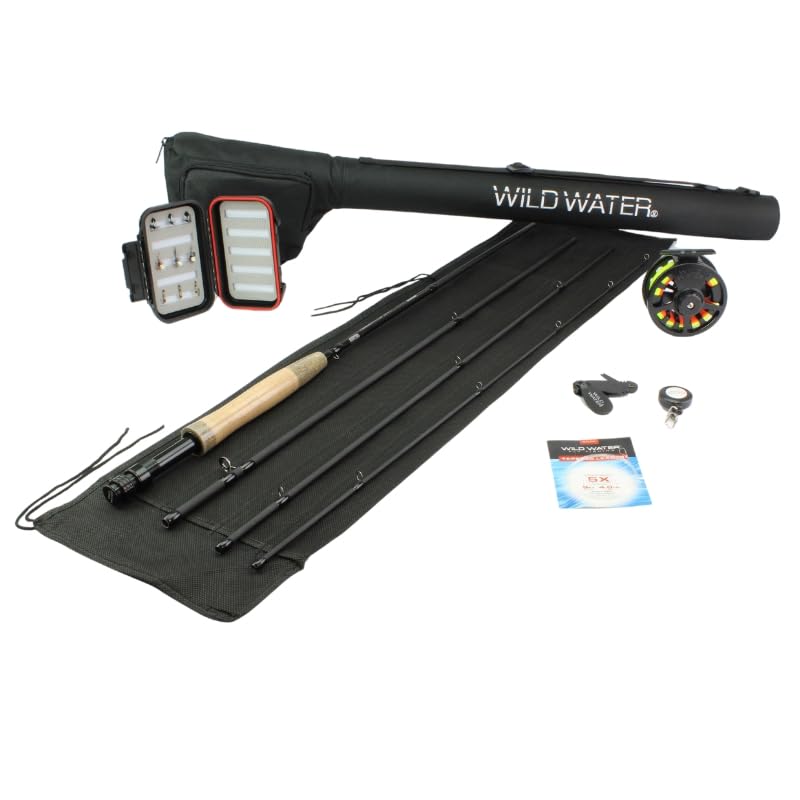
Wild Water Standard 5/6 Combo

92 /100
Angler Score Outstanding

Key details

Kit
Line, backing, leader, 9 flies, fly box
Rod
9 ft, 5/6 wt, 4-piece graphite
Case
Nylon case with PVC rod tube
Reel
Die-cast aluminum, 85mm spool
Check Details on Amazon

Open the case and the only thing standing between you and the water is a fishing license. The Wild Water outfit arrives as a 9-foot, 5/6-weight, four-piece rod with a die-cast aluminum reel that already carries floating line, backing and a tapered leader, a waterproof fly box holding nine flies, and a nylon case with a PVC rod tube. We have handed this exact kit to people who had never held a fly rod, and that is the highest compliment we can pay a starter combo: nothing had to be bought, tied, or explained first.

The rod is the part that keeps surprising us. It weighs 4.4 ounces, is built from IM8 graphite with a medium action, and it loads with the slow, unhurried stroke a beginner actually has rather than demanding a fast one. Fish it on a pond for bluegill or a river for trout and the 9-foot length gives enough line control to mend without feeling like a broom. The reel is a plain die-cast aluminum model with an 85mm quick-release spool — no drag adjustment to fuss over, and more than enough for the fish a 5-weight is built to handle.

Two habits keep the outfit fishing well. Seat each ferrule with a firm quarter-turn so the sections do not creep apart mid-cast, and snug the reel foot into the seat at the start of every session; those are the only two maintenance notes we have, and neither takes more than a few seconds.

The case is the detail we did not expect to care about and now do. The rod breaks into four pieces that vanish into a trunk or a pack, and the PVC tube in the sleeve is what keeps the tip section alive in transit — the part that fails first when a rod travels without one.

Pros

  • Rod, reel, line, backing, leader, and flies in one box
  • Waterproof fly box and PVC-tubed rod case included
  • Forgiving medium action on a 4.4-ounce rod
  • 9-foot 5/6 weight covers trout, panfish, and bass

Cons

  • Nine starter flies will not cover a local season
Our verdict

Our default first outfit: everything but a license is in the box, and the 9-foot 5-weight is the size that suits the most water. Buy it if you want to fish the day it arrives.
Check Latest Price
2

Best Step-Up

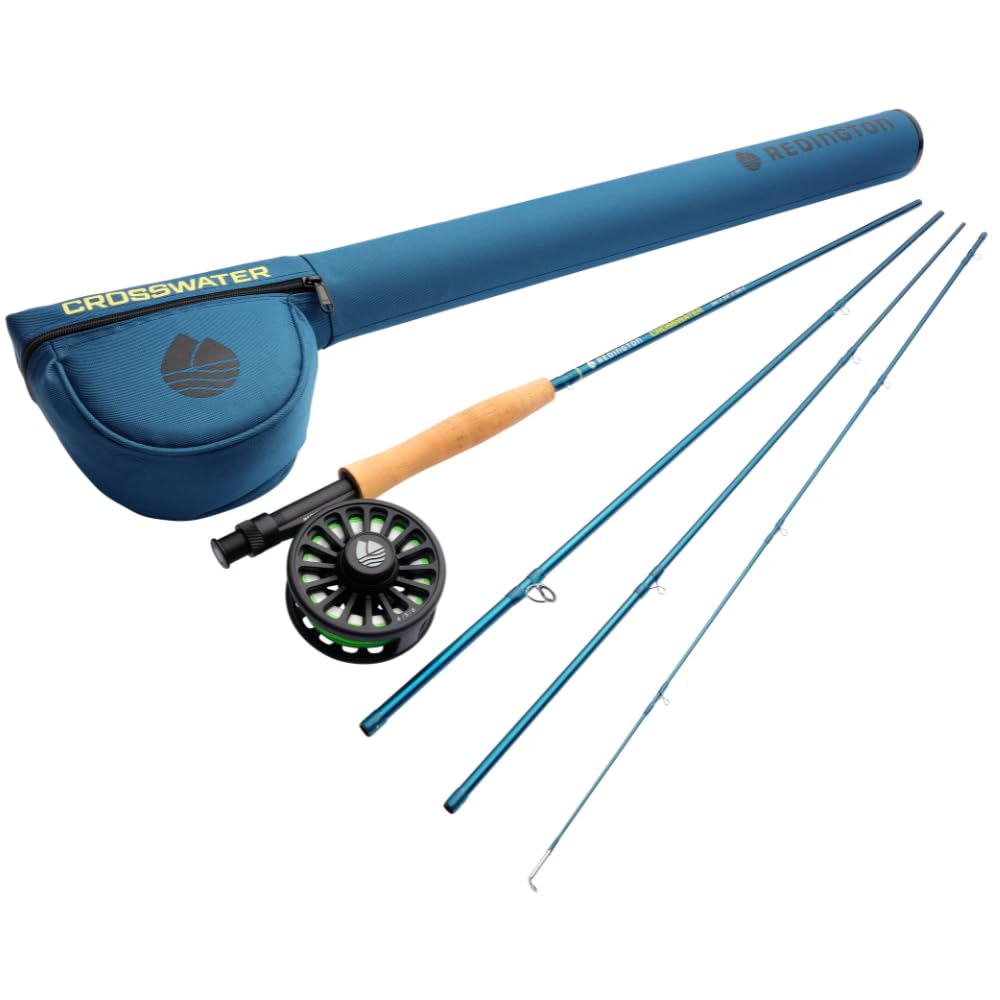
Redington Crosswater Outfit

89 /100
Angler Score Excellent

Key details

Rod
9 ft, 5 wt, 4-piece graphite
Case
Zippered travel case
Line
RIO Mainstream WF5F, pre-rigged
Reel
Crosswater with disc drag
Check Details on Amazon

The most important thing on the Redington Crosswater is not the rod. It is the line on the reel. Redington ships this 9-foot 5-weight four-piece outfit with a RIO Mainstream WF5F line and a leader already attached, which is a different class of component from the generic line most outfits at this level carry.

That matters because the line is the thing you actually cast. A matched weight-forward taper with a welded loop is the difference between a roll cast that turns over and one that lands in a heap, and it is the single upgrade we would otherwise tell a new angler to make first. Around it sits a proper Crosswater reel with a disc drag that runs smoothly through its range, and a medium-fast graphite blank that suits a learning stroke without feeling dead in the hand. Of everything here, this is the outfit we reach for when the plan is to fish more than a handful of times a year.

What you give up is the contents. There are no flies, no fly box, no nipper or forceps, and no spare leader in the package, so the case for this one rests entirely on the line and the drag rather than on what falls out of the box. The zippered travel case is worth a mention, though — it swallows the four sections plus the reel, which is more than the sleeve most kits give you.

As with any graphite blank at this length, a ferrule that is not fully seated is how rods break, so twist each section home and check them again after the first ten minutes of casting.

Pros

  • RIO Mainstream WF5F line arrives rigged with a leader
  • Crosswater reel with a smooth disc drag
  • Zippered case holds rod sections and reel
  • Medium-fast 9-foot blank casts easily for beginners

Cons

  • No flies, fly box, leader, or tools included
Our verdict

We point experienced beginners here: the RIO line and disc-drag reel are the parts that make casting click, and you will add flies and tools yourself.

Check Latest Price
3

Best Complete Package

Ventures Weekend Warrior

88 /100
Angler Score Excellent

Key details

Rod
9 ft, 5 wt, 4-piece carbon
Package
23 accessories including net and sling pack
Warranty
Lifetime
Check Details on Amazon

The price is the first thing anyone asks about, and the honest answer is that you are not paying it for a better rod. You are paying for everything around it. The Weekend Warrior package pairs a 9-foot 5-weight four-piece carbon rod and reel with line, leader, tippet, forceps, nipper, floatant, a net and net release, a sling pack, a printed beginner guide, and fly identification cards — twenty-three accessories in total. For someone who has already decided this sport is theirs, it is a genuinely sensible way to buy.

The reference cards are the piece we did not expect to value. Fly selection is where new anglers freeze at the water, and a card that names the pattern already in the box keeps you fishing instead of guessing. The guide does the same job for the knots and the rigging, which is normally the half hour that decides whether a first trip is fun.

The rod itself is a competent medium-power 9-foot 5-weight — the same all-round size as everything else here — so do not expect it to feel like a specialist's instrument. The money goes into the kit, the guide, and a lifetime warranty, and a warranty in writing is something the cheaper outfits here mostly do not offer.

Which points to the catch: if you already own a vest, a net, and a fly box, a good part of this package is duplication, and you are paying premium money for a rod that behaves like the midrange ones. Where it earns its place is the first morning — one bag, one rod, nothing forgotten on the kitchen table.

Pros

  • Net, net release, and sling pack included
  • Beginner guide and fly identification cards
  • Lifetime warranty on the outfit
  • Tippet, floatant, forceps, and nipper in the box

Cons

  • Priciest outfit here by a wide margin
  • Net and sling pack duplicate gear you may own
Our verdict

For the angler who already knows they are in, this is the only outfit here that arrives with the net, pack, and tippet included, backed by a lifetime warranty.

Check Latest Price
4

Best Budget

Wakeman Charter Series

88 /100
Angler Score Excellent

Key details

Rod
8 ft, 6/7 wt, 3-piece fiberglass
Case
Travel case included
Line
45 ft, no backing included
Reel
Size 5/6
Check Details on Amazon

Eight feet of fiberglass with a 6/7 weight rating is a different animal from the nine-foot fives that dominate this list. The Wakeman Charter Series rod is shorter, slower, and heavier in the hand, with an EVA foam grip instead of cork and a three-piece build that folds into a compact travel case.

What that buys is reach in tight places and muscle for big flies. An eight-footer casts under overhanging trees and out of a canoe where a nine-footer finds branches, and a 6/7 line turns over poppers and streamers for bass and panfish in a way a 5-weight cannot. The flip side is a rod that feels like a club when you are trying to drop a small dry fly on a clear trout stream — fiberglass and a heavier line take the delicacy out of it.

For a pond, a canoe, or a kid who will bang it against a dock, we think this is the sensible first rod, and at the lowest price in this group it is the one that costs least to be wrong about. It is simply the wrong tool for a spring creek where the fish see you coming.

Pros

  • Short fiberglass rod fishes tight cover
  • 6/7 weight turns over poppers and streamers
  • Lowest price in this group
  • Compact three-piece travel case included

Cons

  • Ships with 45 feet of line and no backing
  • No setup instructions in the box
Our verdict

The cheapest way into the sport, and the right first rod for ponds, panfish, and kids — as long as your water is not a clear trout stream.

Check Latest Price
5

Best Fast Action

Aventik Extreme 5/6 Kit

83 /100
Angler Score Excellent

Key details

Rod
9 ft, 5/6 wt, 4-piece, fast action
Line
Pre-spooled with backing and leader
Reel
SADC aluminum, 86mm spool, disc drag
Extras
12 flies, nipper, zinger, cordura tube
Check Details on Amazon

Fast action is the first thing to understand about the Aventik Extreme, and it decides who should buy it. The 9-foot 5/6-weight four-piece blank is stiff through the middle and bends mostly in the top third, so it rewards a crisp, accelerating stroke and exposes a slow, scooping one. Beginners who have never felt a rod load will find it less talkative than the medium-action outfits here.

We think it is a good rod for a beginner who has had a lesson or two and wants something that will still feel right in three years. The hardware is better than the money suggests: a CNC-machined aluminum reel seat, A-grade cork, Pacific Bay hard chrome guides, and a blank that weighs 4.2 ounces. The SADC reel has an 86mm spool and a central disc drag, and its one-way bearing flips between left- and right-hand retrieve without tools.

The accessory package is where this outfit separates itself from the cheaper nine-footers: twelve flies in a waterproof box, a nipper, a wader zinger, and a cordura tube with a clear window pocket so you can see the reel without unpacking everything. The reel is the least substantial part of the kit — serviceable rather than lovely, and the piece we would upgrade first if the budget allowed.

Twelve flies sounds generous until you see how trout respond to local patterns, so treat the box as a sampler and add a handful from a shop near the water you fish.

Pros

  • Fast action rewards a crisp casting stroke
  • CNC reel seat, A-grade cork, chrome guides
  • 12 flies, nipper, and zinger in the box
  • Retrieve converts between hands with no tools

Cons

  • Reel is the least substantial part of the kit
  • Soft cordura tube offers less protection than a hard case
Our verdict

A fast-action 9-footer for a beginner with a lesson or two behind them, bundled with more tools than anything else at its price.

Check Latest Price
6

Value 9-Footer

MASTER LOGIC 5/6 Starter Kit

83 /100
Angler Score Excellent

Key details

Rod
9 ft, 5/6 wt, 4-piece carbon
Line
Pre-spooled, no welded loop
Reel
Die-cast aluminum, adjustable drag
Extras
9 flies, fly box, nipper, zinger
Check Details on Amazon

Count the accessories on the MASTER LOGIC kit and it looks like a pricing error: a four-piece 9-foot 5/6-weight carbon rod, a die-cast aluminum large-arbor reel with an 85mm quick-release spool and an adjustable drag, a waterproof fly box with nine flies, a nipper, a zinger, a rod bag with a reel pouch, and a one-year manufacturer warranty.

Two gaps explain the number. The fly line does not have a welded loop, so you either nail-knot a leader on or add a loop yourself, and no leader comes in the box — that is one purchase and one knot before your first cast. Everything else is conventional in a good way: a half-Wells cork grip, a medium-action carbon blank that feels light in the hand, and a reel that releases its spool with a quarter-turn.

We think of this as the value nine-footer. It puts you on the water with a proper large-arbor reel and a full tool kit for less than most of the outfits here, as long as you are willing to spend twenty minutes rigging it properly at the kitchen table. For a buyer who wants a 9-foot 5/6 and does not need a net, a pack, or a guidebook, that trade is easy to make.

Pros

  • Large-arbor reel with an adjustable drag
  • Fly box, nipper, and zinger included
  • One-year manufacturer warranty
  • Cheapest 9-foot 5/6 outfit in this group

Cons

  • No leader included and the line has no welded loop
Our verdict

Our value pick for a 9-foot 5-weight: a large-arbor reel and a full tool kit, provided you are happy to rig the line and buy a leader.

Check Latest Price

How We Tested These Starter Fly-Fishing Combos

We started with the starter combos sold as all-in-one outfits, filtered out kits that skimped on leader, tippet, or flies, and compared rod length, weight, reel type, and case design before settling on 12 combos to test. Over seven months, we kept each outfit assembled and broken down repeatedly, rigged it from the case on a lawn, then took it to a local pond, a small stream, and a windy lake where roll casts and longer casts separated the easy rods from the fussy ones.

Setup was timed from opening the case to the first false cast, with attention to whether the instructions made sense to a beginner and whether the rod sections fit without forcing. On the water, we watched the fly line: whether it shot through the guides, coiled in cool mornings, floated when it should, and tangled on false casts. We also checked the drag by pulling line off the reel against a set tension, then adjusted it during fish runs, noting any sticking, grabbing, or sudden lockups. We also watched two friends who had never fly fished rig and cast several of the outfits, noting where they got stuck—usually the leader knot or the drag knob.

To judge completeness and value, we emptied every box on a table and tried to get fishing without a trip to the shop; if we had to add tippet, flies, or a net, we counted it against the kit. We also packed and unpacked each case for day trips, checked whether rod sections and reel fit without forcing, and noted crushed corners or loose zippers. Durability got the same treatment: repeated assembly, a few accidental knocks, and trips in a hot car, looking for loose ferrules, wobbly reel seats, and cork that wore early.

How to Choose a Fly Fishing Combo

Start with line weight and rod length

A 9-foot 5-weight is the closest thing this sport has to a default: long enough to mend line and lift a back cast over grass, light enough to present a small dry fly, and strong enough for trout, panfish, and small bass. If your water is ponds, farm tanks, or brushy creek banks, an 8-foot 6/7 turns over poppers and streamers with less work and casts under branches a 9-footer will catch.

The trap is a combo billed as all-purpose that pairs a heavy 6/7 line with a long rod. It will cast, but it lands like a wet sock on clear water. Buy for the water you actually fish most, not the species list on the package.

Read the line before you read the rod

Budget outfits save money in the line, and the line is what you cast. Look for a welded loop at the tip (so you can loop on a leader instead of tying a nail knot), a weight-forward taper matched to the rod's stated weight, and enough length and backing that a running fish does not empty the spool.

A kit that ships with 45 feet of line and no backing will still catch fish on a pond, but a decent fish on a river will strip it to the arbor. If the supplied line curls off the reel in coils, a replacement line is the first upgrade worth making — more so than a new rod.

Count the accessories, not the claims

Ready to fish can mean three very different things: line on a reel, line plus backing and a tapered leader, or a full package with flies, a box, nipper, forceps, and a net. Compare what you would still have to buy. Leaders and tippet are the near-universal omissions, and a fly box with nine flies is a sampler, not a season.

This is where the price spread between the Wild Water and the Ventures packages actually lives. One gets you fishing immediately with the basics; the other removes every remaining shopping trip, including the net and the pack.

Match the drag to the fish

For trout and panfish under a few pounds, a simple click or rim-control reel is enough — you control the fish with the line hand, not the drag. A disc drag earns its place when bass, carp, or bigger water are on the menu, and a large-arbor spool picks line up faster when a fish turns toward you.

Two things to check in the hand: that the reel foot locks into the seat without wobbling, and whether the retrieve can be set for the hand you reel with. A one-way bearing makes that a flip rather than a rebuild.

Think about the case and the breakdown

A four-piece rod disappears into a backpack or a duffel; a three-piece is fine if the rod lives in a truck or a garage. Either way, look for a case with a separate reel pouch and a tube that protects the tip section.

A nylon sleeve marketed as a travel case protects against scratches, not against a cooler sliding into it. If the rod will ride in a car full of gear, a tube matters more than a strap.

Frequently Asked Questions

Final Verdict

The Wild Water kit is the one we tell a first-timer to buy. It is not the cheapest outfit here and it is not the fanciest, but it arrives with a line, a leader and flies on board, and the 9-foot 5/6 is the size that works on the most water. Nothing needs buying before the first trip except a license.

If you already know you will fish a dozen times a season, step up to the Redington for the RIO line and the disc drag — that is money spent on casting rather than accessories. And if the budget is the binding constraint, the Wakeman gets you onto a pond for the least money and tells you whether you like this sport at all.