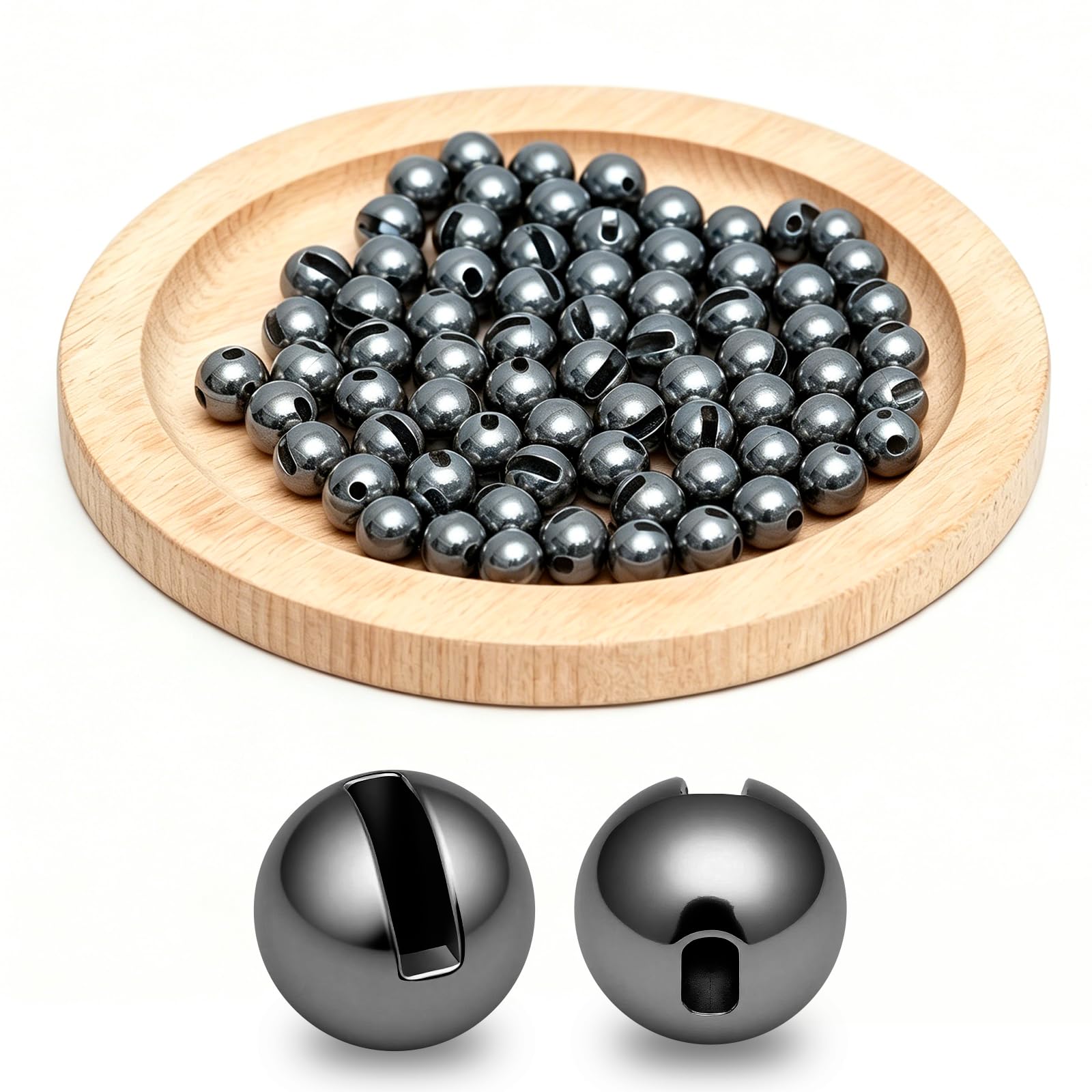
Best Fly Tying Beads of 2026

A bead is the smallest thing on a nymph and the reason it fishes where it does — that tungsten cone flips the hook over and drives the fly down into the strike zone. The trouble is that beads look identical in a product photo and aren't. Hole diameter, slot depth, and whether you're getting real tungsten or brass with a coat of paint change how a fly swims, and a bead half a size off won't seat at all. Get those right and nymphing stops feeling like guesswork.

I've tied nymphs for years, and I keep three bead sizes in one compartment because the labels lie. Over the past four months we've tied with and fished 16 packs, brass and tungsten, and the pattern held: the ones worth refilling are the packs where every bead matches its label and threads on the first try. A 50-count bag isn't a bargain if a quarter of it won't seat. Paint matters less on the cast than after the third bounce off a rock. The picks below are the ones I reach for.

1

Best Overall

Maxcatch Tungsten Beads

89 /100
Angler Score Excellent

Key details

Hole
Countersunk
Size
2.4mm (3/32 in)
Material
97% tungsten
Quantity
100 beads
Check Details on Amazon

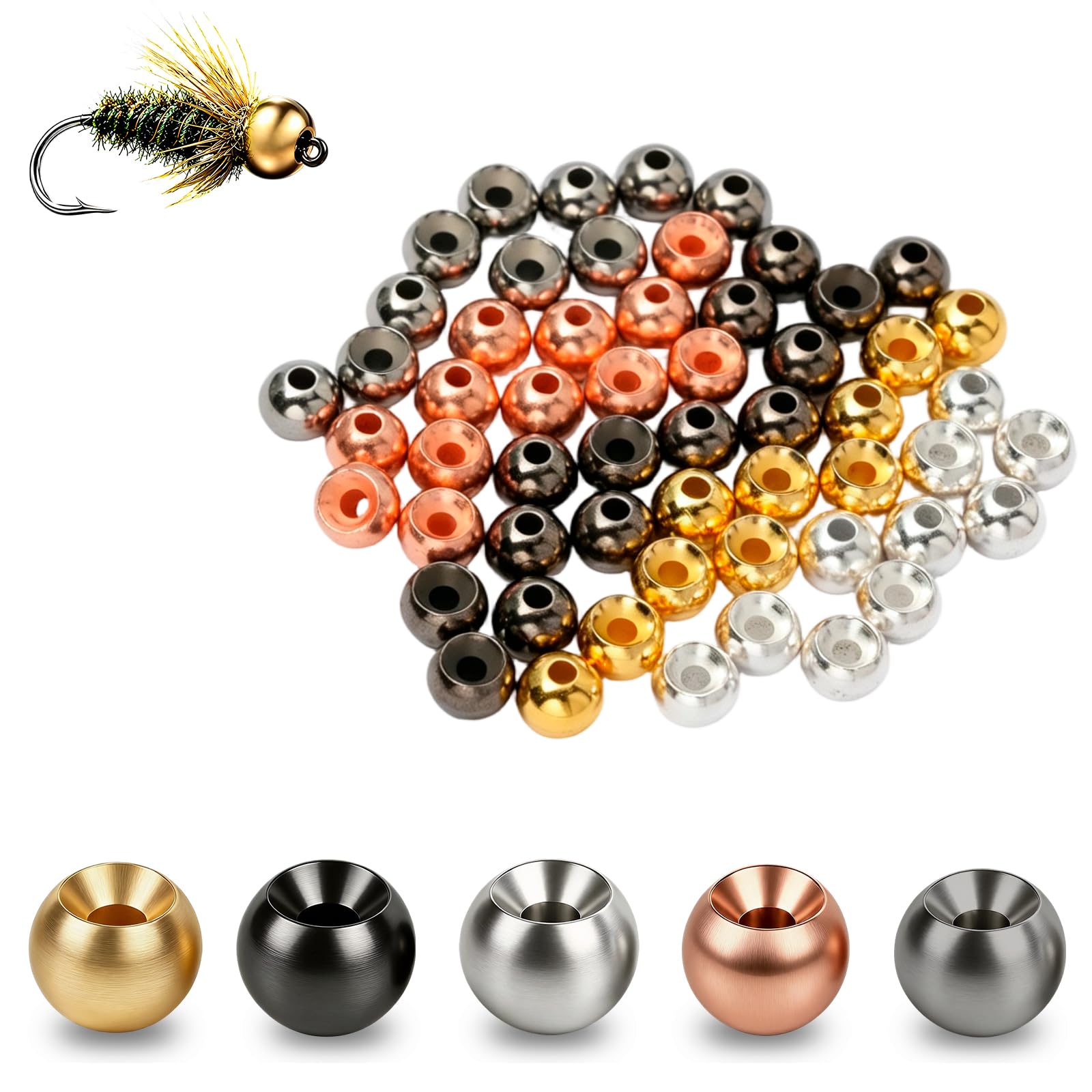
The first question with any beadhead is whether it will go around the bend of the hook you tied the fly on, and Maxcatch is one of the few here that answers it on the listing. Every diameter is paired with a hook range — 2.0mm for #16 through #20, 2.4mm for #14 through #18, 2.8mm for #12 through #16 — and that chart matched what we found at the vise. A 2.4mm slid around the bend of a #14 jig hook without needing to be opened up, which is not something we can say for every bag on this list.

The beads are 97% tungsten, dense enough that a size 12 to 16 beadhead nymph gets down in a pushy current without a stack of lead wraps behind it. The assortment we tied from splits its hundred beads across four colors at 25 apiece, and that is a sensible ratio: you will fish gold and black nickel far more often than fluoro pink, and 25 is roughly a season of one pattern without hoarding.

Countersunk holes are the quiet reason they seat so easily. The cone-shaped mouth centers the bead as it comes down the shank, so it lands square behind the eye instead of hanging up on the thread wraps, and you are not chasing it around with a bodkin. Slotted beads solve a different problem and we get to that below, but on a standard nymph or streamer hook a countersunk mouth is simply faster to tie with.

Where the pack runs out is at the edges of the size range: there is nothing below 2.0mm for a size 22 midge and nothing past 4.0mm for a big stonefly, so a tier who fishes both ends needs a second bag. For the middle of the box, the 12s through 16s that most beadhead nymphs live on, this is the one we restock.

Pros

  • Hook-size chart printed on the listing
  • 97% tungsten sinks a nymph fast
  • Countersunk mouths seat square behind the eye
  • 100 beads split four colors, 25 apiece

Cons

  • Nothing below 2.0mm or above 4.0mm
  • Assortment packs split colors evenly, 25 each
Our verdict

The sizing chart and the countersunk mouth are what put this one first for us: you know the bead will fit before you order it.
Check Latest Price
2

Best for Stocking a Box

Angler Dream Tungsten Beads

0 /100
Angler Score Fair

Key details

Hole
Tapered
Sizes
2.0mm to 4.65mm, 8 sizes
Material
95% tungsten
Quantity
100 beads
Check Details on Amazon

Eight diameters in one bag, from a 2.0mm that will pass for a size 20 midge up to a 4.65mm with real bulk to it. That spread, at a hundred beads per bag, is what this pack is for: not the bag you carry for a single pattern, but the one that fills every size slot in a box you are building from scratch.

The smaller diameters can run tight. A couple of the sub-3mm beads fought the bend of a #18 where other brands' beads of the same stated diameter went straight around, and the tapered hole does not leave much margin on heavy wire. Thread one bead onto the actual hook before you tie a dozen of the same fly — five seconds of checking beats unpicking a finished nymph.

The rest is honest work. The 95% tungsten blend sinks the way it should, the tapered holes take thread without snagging, and gold, silver, copper, rainbow and black nickel cover the colors most of us actually fish. A hundred beads to a bag means you stop counting what is left in the packet, which is worth more than it sounds when you are tying for a trip.

Pros

  • Eight diameters, 2.0mm to 4.65mm
  • 95% tungsten with nickel and iron
  • Tapered holes slide around the bend
  • Five finishes including copper and rainbow

Cons

  • Black nickel reads matte rather than polished
  • No hook-size chart to size from
Our verdict

Our pick for stocking a whole box — eight diameters at a hundred apiece, so you stop rationing the size you fish most.

Check Latest Price
3

Best for Small Nymphs

Sankorn Tungsten Bead Mix

90 /100
Angler Score Outstanding

Key details

Hole
Slotted
Sizes
1.5mm to 5.5mm, 12 sizes
Material
Tungsten
Quantity
100 beads
Check Details on Amazon

Sankorn's set goes down to 1.5mm, and that number is the whole pitch. Tie size 20 to 24 midges and small Perdigons and most bead assortments bottom out a size above you, leaving you to thread a bead whose hole swallows the hook eye. Here the smallest diameters are meant for those hooks, and the line runs up to 5.5mm in twelve steps.

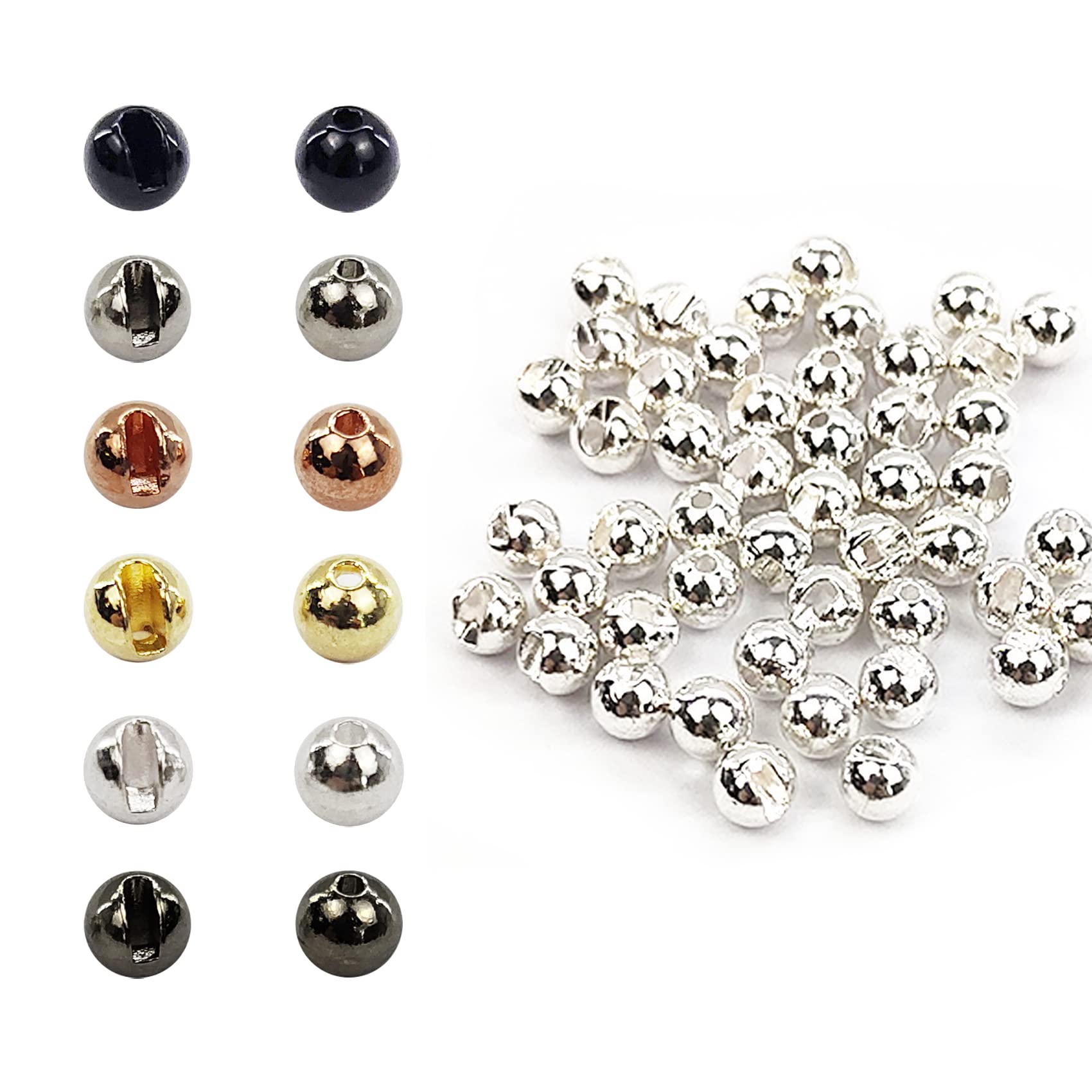
The design is slotted — a vertical cut in the bead so it mounts sideways onto jig hooks and curved-shank nymphs instead of being threaded down from the eye. That is a real convenience when the bend is too tight for a bead to make the turn, and the slot holds the bead in place while the thread goes down. It is fussier on a straight-shank hook, where a countersunk bead is quicker.

Five finishes, including a natural tungsten that reads darker than the metallics and a copper that suits the little brown stuff. One flag: the listing sells this as a hundred-piece mix across twelve sizes and five colors, so read the variant carefully. A mixed bag and a single-size pack are very different purchases, and the photos do not always make the difference obvious.

None of that changes the reason to buy it. Tungsten that fits a size 22 is genuinely hard to find, and this is the only pack here that goes there. If your nymph box lives between 16 and 22, start here and treat the bigger sizes as the bonus.

Pros

  • Starts at 1.5mm for size 20 to 24 hooks
  • Slotted for jig and curved-shank hooks
  • Five finishes including natural tungsten
  • Plated finish resists corrosion

Cons

  • Listing mixes sizes and colors; check the variant
Our verdict

Point this at your small nymphs: it is the only pack here that goes down to 1.5mm and still fishes like tungsten.

Check Latest Price
4

Best for Jig Hooks

Aventik Slotted Tungsten Beads

86 /100
Angler Score Excellent

Key details

Hole
Slotted
Sizes
2.5mm to 4.5mm, 5 sizes
Material
Tungsten
Quantity
50 beads
Check Details on Amazon

Jig hooks are where a slotted bead earns its keep, and Aventik's are the ones we keep in the jig compartment. The vertical slot lets you mount the bead sideways onto a jig shank rather than running it down from the eye, and the tapered hole underneath still lets it sit square behind the collar. Ten finishes, five of them fluoro, plus a size guide that pairs 2.5mm with #14 to #18 hooks and walks up from there.

The slot is a specialist's feature, and this is a specialist's pack. On a straight-shank nymph a countersunk bead is faster to tie and less fussy to seat; the slot only pays for itself when the bend is too tight to thread. So it suits a box that leans jig nymphs and Euro patterns, in colors bright enough to track in tea-stained water. If your nymphs are mostly on standard shanks, a countersunk bag gives you more bead for the money.

Pros

  • Slotted for quick jig-hook mounting
  • Ten finishes including five fluoro colors
  • Printed size-to-hook guide

Cons

  • Range stops at 4.5mm
  • 50 beads per pack
Our verdict

Keep a bag in the jig compartment; the slot saves time on every bead and the fluoro colors stay visible in dirty water.

Check Latest Price
5

Best Small Pack

Blue Wing Olive Tungsten Beads

91 /100
Angler Score Outstanding

Key details

Size
2.8mm (7/64 in)
Material
97% tungsten
Quantity
25 beads
Check Details on Amazon

7/64 inch, about 2.8mm, is the bead size most nymph boxes actually run on, and Blue Wing Olive sells it on its own, 25 to a pack, in 97% tungsten. That is a narrow brief, and it is why we keep a bag in the drawer: you are not paying for ten colors and a compartment case, you are paying for one honest size done properly.

The beads come out smooth and bright with clean holes that do not need reaming, and they seat tight behind the eye rather than rattling along the shank. A 2.8mm covers roughly a #12 to #16, which is where most beadhead nymphs live, so the single-size format costs you less than the count suggests. Buy it as a first tungsten bead, or as the top-up bag for the size you burn through fastest.

Pros

  • One workhorse 2.8mm size, done well
  • Small 25-bead pack lowers the outlay
  • Clean holes that seat without reaming

Cons

  • One size per pack
Our verdict

Hand it to anyone who wants to try tungsten without committing to a hundred — one workhorse size, 25 beads, done properly.

Check Latest Price
6

Best Budget

Temorah Brass Beads

90 /100
Angler Score Outstanding

Key details

Size
3.3mm (1/8 in)
Color
Gold
Material
Brass
Quantity
100 beads
Check Details on Amazon

Brass is the older answer to the same question, and it is still the right one when you do not need to reach the bottom. Temorah's 3.3mm bead — 1/8 inch, the size most charts pair with #10 to #14 hooks — comes a hundred to a resealable bag in a polished gold, at a price that makes tungsten look indulgent.

What you give up is sink rate. Brass is roughly half as dense as tungsten, so the same 3.3mm bead fishes noticeably lighter, which on a shallow riffle, a spring creek or a short dry-and-dropper rig is an advantage rather than a compromise. The generous profile also puts bulk in the silhouette of a stonefly nymph or a small streamer where a slim tungsten bead would disappear.

The molding is clean and the mouth clears a hook barb without filing, which is where cheap brass beads usually fail. That leaves it as the shallow-water half of a box rather than a replacement for tungsten — and for a first box, an afternoon of bluegill bugs, or a tying class where a hundred beads walk out the door, brass at this money is the sane call.

Pros

  • A hundred brass beads for very little
  • 1/8-inch body suits bigger nymphs and streamers
  • Clean molding clears a hook barb

Cons

  • Single size and color per pack
Our verdict

Buy brass when depth is not your problem and cost is: a hundred heavy-bodied gold beads that fish a shallow riffle properly.

Check Latest Price
7

Bench Organization

Skylety Bead Kit

85 /100
Angler Score Excellent

Key details

Hole
Countersunk
Sizes
2mm, 2.5mm, 3mm
Material
Tungsten alloy
Quantity
120 beads in a plastic box
Check Details on Amazon

The most useful thing in this kit is the box. Skylety ships 120 beads in a 2.7-by-2-inch plastic case with compartments, which sounds trivial until you have spent a March evening chasing loose tungsten around the tying bench. The case closes firmly enough to live in a vest pocket and turns the beads into something you can take to the river rather than something you own.

Inside are three diameters — 2mm, 2.5mm and 3mm — in black nickel, gold and silver, all with countersunk holes that center the bead as it comes down the shank. That is the small-nymph end of things, where most beadhead tying happens, and the countersunk mouth means no fiddling on a standard hook.

What we did not expect was how much the case changes the habit. A bead you can see and reach for gets used; a bead in a zip bag at the bottom of a drawer gets skipped in favor of split shot. The three sizes cover a 14 through an 18 cleanly, and the compartments make restocking a two-minute job instead of a session.

The catch is the ceiling: 3mm is as big as this kit goes, so streamers and big stonefly nymphs need more bead than the box holds. If your tying runs to size 12 and up, look at the wider sets here. For small nymphs in a vest pocket, though, this is the one that actually travels.

Pros

  • Compartmented case keeps beads sorted
  • Countersunk holes seat squarely
  • 120 beads across three nymph sizes

Cons

  • Sizes arrive mixed and need sorting
Our verdict

This is the one we leave on the bench: a sorted, closable box of small-nymph beads that goes to the water without spilling.

Check Latest Price
8

Wide Size Range

Avaluri Slotted Beads

86 /100
Angler Score Excellent

Key details

Hole
Slotted
Sizes
1.5mm to 6.4mm, 13 sizes
Material
Tungsten
Quantity
50 beads
Check Details on Amazon

Thirteen diameters from 1.5mm to 6.4mm is the widest spread here, and it is the reason Avaluri earns a place in a crowded drawer. The top end is genuinely big — 6.4mm is streamer territory, the sort of bead that gets a rabbit strip down in a heavy riffle — and the bottom end will still fit a size 22 midge.

The listing calls it an assortment, and it is not one. Your fifty beads are a single diameter in a single finish; the thirteen sizes and three colors are choices, not contents. That is the sensible way to sell beads, since nobody needs fifty beads spread across six diameters, but read the size field twice before you order, because the photos show the range rather than the bag.

The slot is cut vertically so the bead mounts sideways onto jig and curved-shank hooks, which is the whole point of a slotted bead, and the openings are clean enough that we did not need to ream any of them. Seating is quick, and the slot holds the bead where you put it while the thread goes down.

Buy it for the ends of the range. If you tie size 20 midges and big streamers from the same bench, this is the only line here that covers both — down to 1.5mm and up to 6.4mm — and the slotted design means the big sizes go onto jig hooks without a fight. For a general nymph box, a countersunk hundred-pack is still the better buy.

Pros

  • Widest diameter spread here, 1.5mm to 6.4mm
  • Slotted for jig and curved-shank hooks
  • Non-toxic tungsten alternative to lead

Cons

  • Only three finish options
Our verdict

Worth it for the extremes: one slotted line that runs from size 22 midges up to streamer-sized 6.4mm beads.

Check Latest Price

How We Chose and Tested the Best Fly Tying Beads

We started with more than 40 listings and dropped any that wouldn't state a hole diameter, a slot depth, or an honest bead count — a 100-piece bag is worthless if a third of it is the wrong size or won't slide over a hook bend. Sixteen packs made the cut, spanning round and slotted styles, brass and tungsten, plain and painted, in sizes from small midge beads up to the wider heads used on jig-style nymphs. We bought every one at retail, the same way you would.

Each pack went to the vise first. Over four months of tying, we caliper-checked hole diameters against the labeled size and threaded individual beads onto bare hooks in three sizes, noting whether each one slid over the bend or hung up halfway. We counted culls — misshapen, burred, half-painted, or simply the wrong size — and worked out a price per usable bead instead of trusting the number on the bag.

Then we fished them. Most weekend mornings we were on a local spring creek and a tailwater, tying the same beadhead nymph pattern with each bead and rotating them between the point and dropper positions on a two-fly rig so no bead got the best water twice. We watched how quickly each one got the fly down in the same run, whether it held depth through the drift, and how the finish looked after we deliberately dragged a few over rock. Color was judged in daylight, on the water, against the same fly tied with a different bead.

What separated the good packs wasn't price or brand so much as consistency: a bag where the beads are the size promised, thread on the first try, and still have their color after a morning of bouncing bottom.

How to Choose Fly Tying Beads

Tungsten or Brass, and How Deep You Fish

Tungsten is roughly twice as dense as brass, so a tungsten bead of a given diameter sinks faster and fishes deeper than a brass one of the same size, or lets you drop a size and still reach the same depth. That makes brass the better bead on shallow riffles, spring creeks and short dry-and-dropper rigs, where you want some weight and a generous profile without burying the fly in the rocks.

Decide by water before you decide by price. Our brass pick here is a 3.3mm gold bead that fishes a size 10 to 14 nymph beautifully in skinny water; the tungsten packs earn their money the moment the current has some push to it and you need the fly down in the first two seconds of the drift.

Countersunk or Slotted

Countersunk and tapered holes are for standard nymph and streamer hooks: the cone-shaped mouth centers the bead as it comes down the shank so it seats square behind the eye. Slotted beads carry a vertical cut and are made for jig hooks and curved-shank nymphs, where the bend is too tight for a bead to make the turn from the eye.

The trap is buying the right diameter for the wrong hook. A slotted bead is fussy on a straight shank, and a countersunk bead will not go around a jig bend no matter how carefully you work it. Sort your hooks into straight and jig before you sort your beads.

Sizing: Read the Chart, Then Test One Bead

Most sellers publish a hook chart, and it is worth using as a starting point: 2.0mm suits roughly a #16 to #20, 2.4mm a #14 to #18, 2.8mm a #12 to #16, and 3.3mm a #10 to #14. It is not a rule, because hole diameters vary between makers at the same stated size, and a heavy-wire hook takes up more room than a fine-wire one.

Thread a single bead onto the actual hook before you commit to a hundred. If it hangs on the bend, go up a size or switch to a slotted bead; if it swallows the eye, go down. That one-bead test is the difference between a season of tying and a bag in the drawer.

How Many, and Where They Live

Twenty-five beads is a trial, a hundred is a season, and 120 in a compartment box is a bench you can actually work from. Buy the size you fish rather than a mixed bag — a bag spread across six diameters leaves you short of the one you tie most, which is why the single-size packs here earn their place.

Whatever you buy, label it. Two diameters look identical once they are out of the packaging, and a size written on the bag saves you measuring beads against a hook at eleven at night. If loose beads currently live in a zip bag at the bottom of a drawer, the compartmented kit is worth its price for the case alone.

Frequently Asked Questions

Final Verdict

The Maxcatch pack is the one we buy again: a printed size chart, countersunk mouths that seat squarely, and a hundred 97% tungsten beads covering the nymph sizes most of us actually tie. If your box runs small, at a size 18 and down, Sankorn's 1.5mm bottom end is worth the higher price per bead.

And if your nymphs live on jig hooks, put a bag of Aventik's slotted fifty in the same order — the slot saves time on every bead you tie.