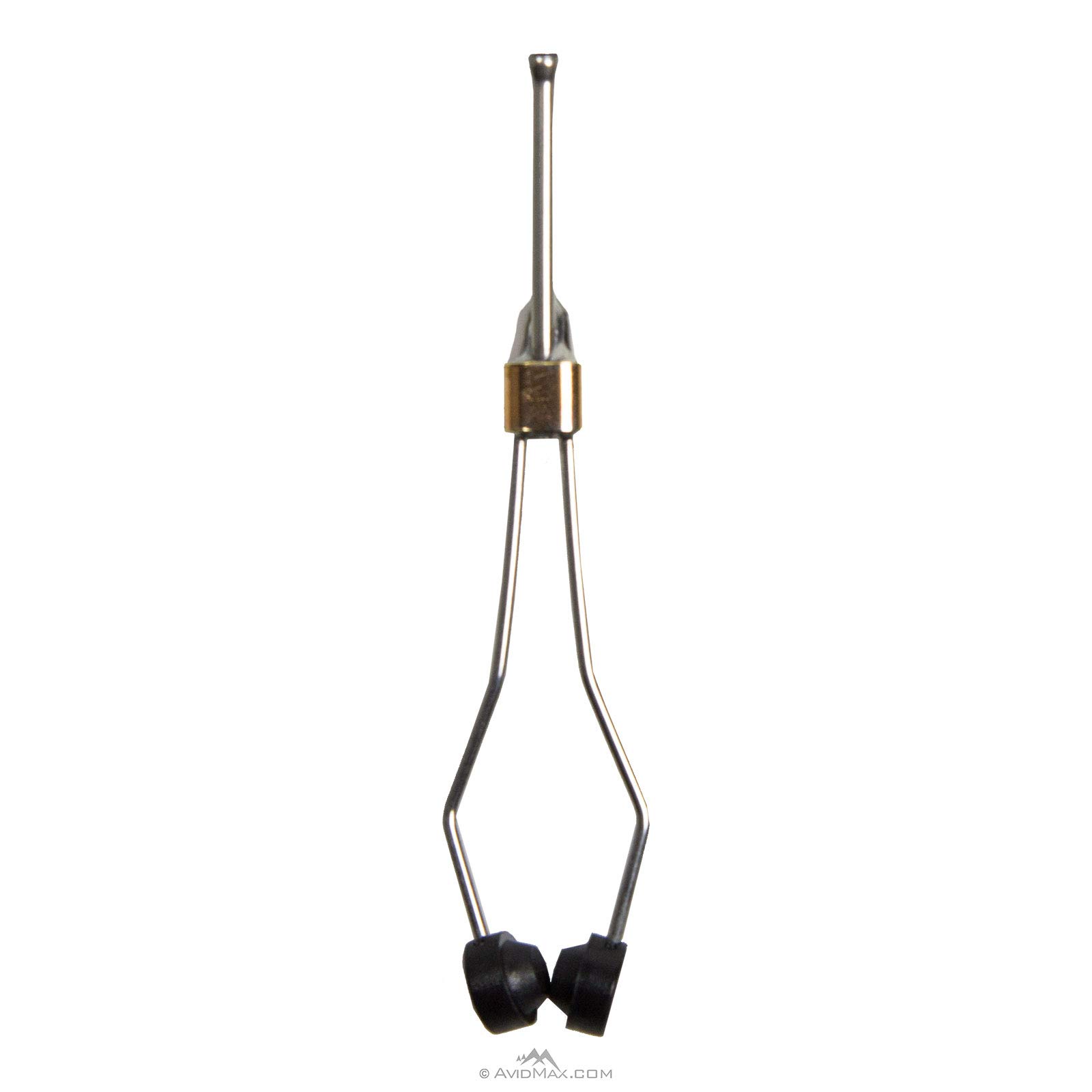
Best Fly Tying Bobbins of 2026

A bobbin looks like the simplest tool on the bench — two arms, a spool, and a tube the thread feeds through — yet it's the thing your hand holds for every single wrap you make. The difference between a good one and a forgettable one shows up quickly: thread that snaps when you pull, tension that creeps looser as you tie, an insert that grooves after a season of wire. What you're buying isn't hardware so much as control, and control is what makes size 20 midges possible and keeps a deer-hair bug from spinning into a mess.

I tie most of my own trout flies at the kitchen table after dinner, and I've quietly retired more bobbins than I'd care to admit because they frayed 8/0 thread or rattled around in my fingers. Over the past four months, my team and I have cycled 16 of them through the same rotation of nymphs, streamers, and spun hair, paying attention to how each felt an hour in and whether it held the tension we set. One thing worth knowing before you spend: adjustable tension isn't a luxury if you tie with wire, GSP, or stacked deer hair — you'll want to change it without cutting your thread. The picks below cover that whole spread.

1

Best Overall

Rite Ceramic Standard Bobbin

91 /100
Angler Score Outstanding

Key details

Type
Standard bobbin
Tension
Adjustable base
Tube Insert
Ceramic
Check Details on Amazon

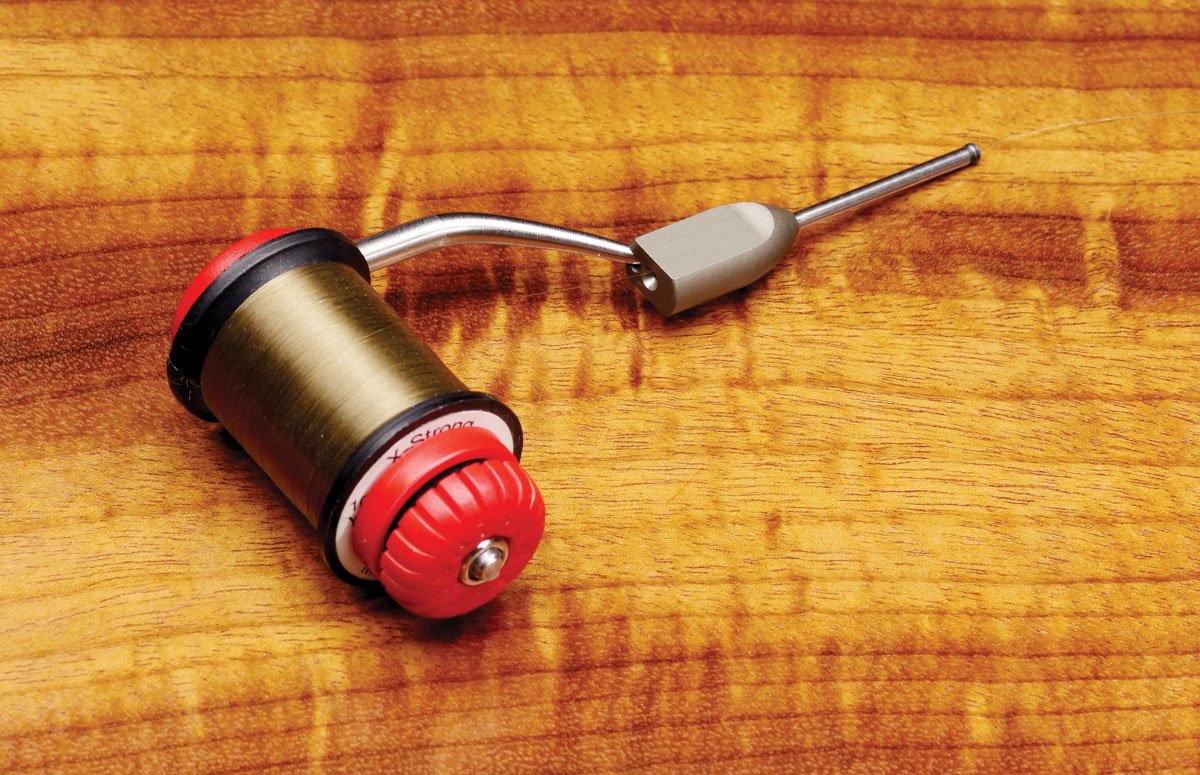
The tension dial at the base is the reason this is our top pick. Rite's standard ceramic bobbin lets you set drag once and then leave it alone, so the thread feeds smoothly instead of pulling off in surges. That matters most on small flies, where a jerky bobbin turns a few wraps into a frayed thread. The ceramic insert is another detail we appreciate: it gives the thread a smooth path and avoids the rough-edge problem that can show up on a poorly finished tube.

We also like the hand feel. The frame sits naturally in the fingers, and the adjustment holds through normal use rather than creeping looser as you tie. Beginners get a clear place to start, and experienced tyers can dial in a repeatable feed without thinking about it. It is a single bobbin with a premium price, not a set, so you are paying for control rather than extras. For a tool that touches every fly you make, we think that is the right place to spend.

One habit worth forming: set the drag lighter than you think you need, then tighten only until the spool stops overrunning. That is where this bobbin feels most controlled, and it keeps delicate thread from being asked to do more than it can.

Pros

  • Adjustable base holds tension settings
  • Ceramic insert feeds thread smoothly
  • Comfortable, controlled hand feel
  • Easy for beginners and everyday tying

Cons

No notable drawbacks to flag.

Our verdict

For one bobbin that handles everyday tying without fighting you, we recommend the Rite for its repeatable tension and smooth ceramic tube.
Check Latest Price
2

Best Ergonomic Grip

Loon Ergo Bobbin

82 /100
Angler Score Excellent

Key details

Grip
Ergonomic thumb/finger barrel
Tube
Custom tube
Tension
Easy adjustment
Spool Holder
Japanese steel
Check Details on Amazon

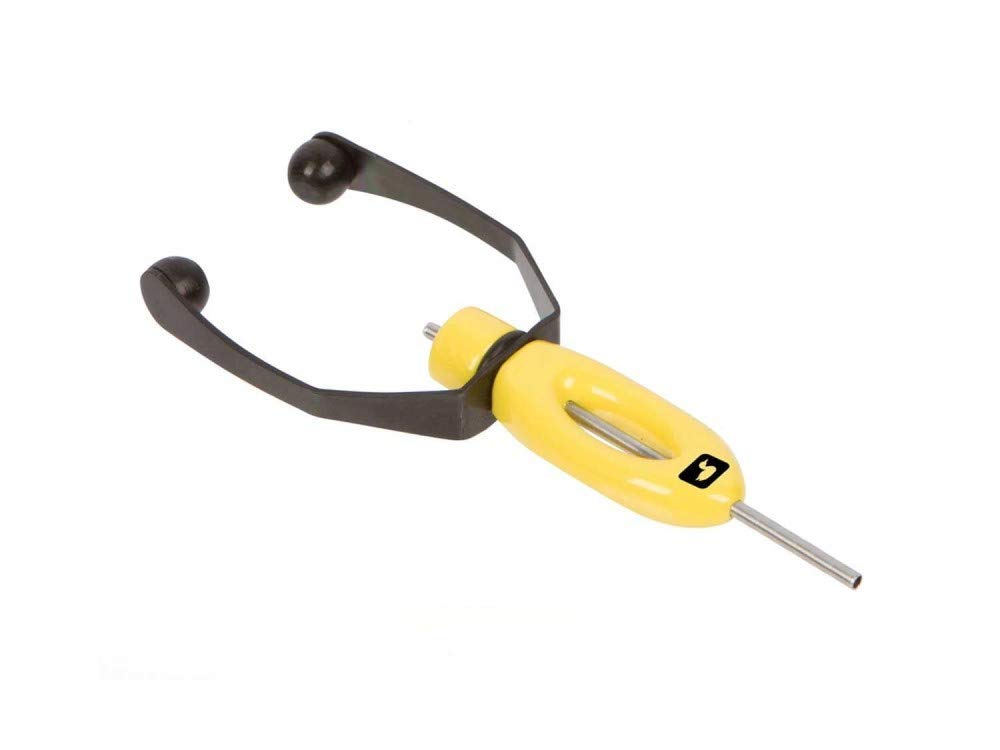
Long tying sessions are where the Loon Ergo makes sense. The barrel has a thumb-and-finger grip system that gives you a place to hold without pinching the spool, and the powder coating adds a little texture when your hands are dry or slick. We found the shape encourages a relaxed grip instead of a white-knuckle squeeze.

The Japanese steel spool holder and custom tube are the quiet supporting parts. The spool turns with little fuss, and the tension adjustment is easy to reach when you want to slow the feed. This is not a bobbin built around a numbered drag; it is built around comfort, and that is the reason we keep it in the rotation. If you tie for an hour or more at a stretch, the Loon is easier on the hand than the straight-barrel picks here.

It still has a conventional thread path, so fine thread needs the same light touch you give any bobbin. We prefer it for marathon sessions at the bench, not for tyers who want to chase a specific drag number. The powder-coated grip is the detail we notice most when switching between this and a bare metal frame.

Pros

  • Ergonomic barrel gives fingers a secure grip
  • Japanese steel spool holder
  • Easy tension adjustment

Cons

No notable drawbacks to flag.

Our verdict

We pick the Loon when comfort matters most: its shaped grip keeps long tying sessions easier on the hand.

Check Latest Price
3

Best Premium Drag Control

Stonfo Elite Disc Drag Bobbin

85 /100
Angler Score Excellent

Key details

Drag
Disc drag
Weight
0.99 oz
Tension Knob
Numbered
Check Details on Amazon

The numbered drag knob is the first thing we look for on a premium bobbin, and Stonfo's Elite is the best example here. Instead of guessing at tension, you can return to a setting you liked and make small changes as you switch from fine thread to heavier material. The drag has a smooth, controlled feel, and the frame sits comfortably in the hand.

We also appreciate the small, dense build. At just under an ounce, it does not weigh down your hand during detail work, and the knob is easy to find without looking. The catch is the price: this is the most expensive single bobbin in this group, and you are paying for that numbered control. If you tie mostly one thread size, the simpler bobbins here make more sense.

What tips it for us is repeatability. When you find a drag setting that suits a pattern, the numbers give you a way back to it instead of starting from feel every time. For streamers, you can add drag until the spool stops overrunning; for small dries, back it off and let the thread flow.

Pros

  • Numbered drag knob for repeatable tension
  • Smooth, controlled thread feed
  • Comfortable in hand

Cons

  • Premium price against basic bobbins
Our verdict

We think the Stonfo Elite earns its keep if you change thread weights and want a numbered drag you can return to.

Check Latest Price
4

Best for Fine Threads

Dr. Slick Glass Bobbin 3"

82 /100
Angler Score Excellent

Key details

Feet
Delrin
Frame
400 grade stainless steel
Length
3 inches
Inserts
Dual glass
Check Details on Amazon

A 3-inch bobbin sounds like a small detail until you are tying size 20 dries and want your hand close to the hook. Dr. Slick's Glass Bobbin is built for that close work, and the dual glass inserts are the reason we reach for it over a general-purpose ceramic tube. They are designed for 8/0 and finer threads, plus synthetics, and the smooth surface helps keep delicate material from fraying.

The 400-grade stainless frame and Delrin feet give it a solid, simple feel. There is no drag knob to fiddle with, just a well-made conventional bobbin that lets the spool and thread path set the tension. We did find the small insert takes a little patience to thread; a bobbin threader makes it much less annoying. That is the trade-off for the fine-thread performance.

The short frame also makes it easier to keep the thread under control when you are wrapping close to the eye. If most of your tying is small trout flies, this is a specialized tool that earns its place. For streamers and heavier thread, a larger tube makes more sense.

Pros

  • Dual glass inserts suit 8/0 and finer thread
  • 3-inch frame keeps hand close to small flies
  • 400-grade stainless frame and Delrin feet

Cons

No notable drawbacks to flag.

Our verdict

We reach for the Dr. Slick Glass when the pattern calls for 8/0 or finer thread and we want our hand close to the hook.

Check Latest Price
5

Best Two-Bobbin Set

XFISHMAN Ceramic Bobbin 2-Pack

86 /100
Angler Score Excellent

Key details

Pack
2 bobbins and threader
Insert
Ceramic
Tension
Adjustable
Material
Stainless steel
Check Details on Amazon

Two bobbins and a threader for about the price of one midrange bobbin is the appeal here, and the XFISHMAN set is a sensible way to keep a couple of thread colors loaded. The CNC-machined grip has a rounded, hyperboloid shape that fills the fingers nicely, and the ceramic tube is meant to stop thread from fraying. We liked the adjustable tension for a set at this price; it lets you back off the drag for fine thread and tighten it for heavier material.

The stainless-steel frame feels sturdier than the price suggests. The two bobbins are matched, so the set works well as a starter kit or as backups for a bench that already has a favorite tool. There are a couple of quirks. The included threader can catch on the small bushing inside the tube, so we prefer a separate threader or a loop of fine wire. And the ceramic insert still needs a light touch with 8/0—crank the tension down and even a smooth tube can fray delicate thread.

Keep the included threader for emergencies, but a separate one makes loading less fiddly. For the money, the pair is hard to beat as a second and third bobbin.

Pros

  • Two bobbins plus a threader
  • Adjustable tension at a set price
  • Ceramic tube resists fraying
  • Contoured grip fills the fingers

Cons

No notable drawbacks to flag.

Our verdict

We recommend the XFISHMAN set for anyone who wants two usable ceramic bobbins and a threader without spending much.

Check Latest Price
6

Best Simple Ceramic

Griffin Ceramic Bobbin

84 /100
Angler Score Excellent

Key details

Insert
Ceramic
Material
Stainless steel
Tube Ends
Flared both ends
Spool Feed
Smooth gliding spools
Check Details on Amazon

Flared ends are the detail that makes Griffin's ceramic bobbin easy to live with. The tube opens out at both ends so the thread has a wider path in and out, and the ceramic insert keeps the feed smooth once it is through. We found the spool holder lets a spool turn without a lot of drama, which matters when you are stripping line off quickly.

The stainless frame has a simple, solid feel. This is a conventional bobbin, so the tension comes from the spool fit and the thread path rather than a numbered dial. That makes it a good match for tyers who set the spool and go. It is less adjustable than the Rite or Stonfo, but it is also less fussy.

The smooth gliding spool feed is the part we notice on longer strips of thread; it keeps the spool from lagging behind your hand. The flared openings also make it easier to see the thread path when you are loading a new spool, which is a small thing that saves time.

Pros

  • Flared tube ends help thread clear
  • Ceramic insert feeds smoothly
  • Spools turn smoothly

Cons

No notable drawbacks to flag.

Our verdict

We like the Griffin for simple ceramic control and a flared tube that helps the thread travel cleanly.

Check Latest Price
7

Streamers

Stonfo Elite2 Saltwater Bobbin

85 /100
Angler Score Excellent

Key details

Drag
Disc drag
Tube
Large diameter
Weight
0.64 oz
Spool Fit
Every size spool
Check Details on Amazon

The large-diameter tube is why the Elite2 belongs on a streamer bench. Big flies and heavy thread need more room at the tube, and this Stonfo gives it without making the frame feel clumsy. The disc drag tensioner is the other half of the story: it lets you crank down on bucktail and schlappen without the spool free-spooling, then back off for a lighter touch.

We like that it accepts every size spool, so you can move it between thread weights without changing tools. The blue accents are a small thing, but they make it easy to spot in a crowded kit. It is a premium single bobbin and it is overkill if you mostly tie small dries.

The larger tube also gives you a clearer view of the thread path when you are working with bulky materials. For saltwater patterns, that extra room is the difference between fighting the bobbin and concentrating on the fly.

Pros

  • Large tube handles heavy streamer thread
  • Disc drag controls heavy thread
  • Fits every size spool

Cons

  • Large tube is overkill for tiny dries
Our verdict

We keep the Elite2 for streamers and saltwater patterns, where its large tube and disc drag make heavy thread easier to manage.

Check Latest Price
8

Budget Tying

Dr. Slick ECO 4" Bobbin

87 /100
Angler Score Excellent

Key details

Feet
Brass
Length
4 inches
Inserts
Dual glass
Material
Stainless steel
Check Details on Amazon

At the low end of the Dr. Slick range, the ECO 4-inch is the bobbin we hand to a new tyer who wants glass inserts without paying much. The dual glass inserts are the same fine-thread-friendly idea as the 3-inch Glass Bobbin, but the longer 4-inch frame gives you more reach around larger hooks and streamer patterns. Brass feet and a stainless frame keep it simple and sturdy enough for a bench tool.

We like that it does not ask you to learn a drag system; the tension comes from the spool fit, so you load it and tie. The trade-off is adjustability: there is no tension dial, so you cannot fine-tune drag the way you can on the Rite or Stonfo. The glass inserts are smooth, but they are not indestructible; keep the thread path clean and avoid forcing a knot through the tube.

A threader helps with the small glass inserts, and the brass feet keep the frame stable on the bench. The 4-inch length is also a comfortable compromise if you tie both small nymphs and the occasional streamer. For a first bobbin or a spare for a different thread color, the ECO is a lot of tool for the money.

Pros

  • Dual glass inserts for fine thread
  • 4-inch reach around larger hooks
  • Brass feet and stainless frame

Cons

No notable drawbacks to flag.

Our verdict

We suggest the ECO 4-inch for a first glass-insert bobbin or a spare, as long as you do not need a tension dial.

Check Latest Price

How We Tested Fly Tying Bobbins

We began by gathering every bobbin we could get our hands on in the range most tiers actually shop — ceramic and glass inserts, brass and Delrin feet, fixed tension and disc drag — then set aside anything that required pulling the spool to rethread. That left 16 bobbins, which went into a four-month rotation at my tying bench and at two teammates' benches, tying everything from size 20 nymphs on 8/0 thread to bucktail streamers on 210 denier.

Threading got timed and counted. We fed each bobbin from scratch and noted how many attempts it took to get thread through the tube — the ones you can draw through in one pass with a threader or a quick puff earned a permanent spot; the ones that needed three tries and a pair of hackle pliers did not. Tension got the most scrutiny: we set each bobbin where it felt right, tied for a solid hour, then checked whether the setting drifted, whether the thread flattened or frayed where it left the tube, and whether we could back it off for a wrap of lead-free wire without losing our place.

Durability came from repetition rather than a lab. Each bobbin took at least 20 wraps of wire and a few hair-stacking sessions, after which we looked for grooving in the insert and wobble where the arms met the barrel. We also dropped every one onto a hardwood floor from bench height, which told us more about real durability than any spec sheet. Ergonomic notes went down at the hour mark — cramping, hot spots, whether the tube sat where we expected it without looking. The cheapest bobbins in the group weren't automatically the worst, but the ones that held a setting and threaded cleanly were the ones we kept reaching for.

How to Choose a Fly Tying Bobbin

Start with the tube and your thread size

The tube is where a bobbin earns or loses its keep. A small glass or ceramic insert is the right choice for 8/0 and finer thread because it presents a smooth, narrow path without pinching. Ceramic is the more common all-round material, while glass inserts are especially slick for delicate synthetics. If you tie streamers, saltwater patterns, or heavy thread, a larger-diameter tube gives the material more room and reduces friction. We keep a fine-thread bobbin and a large-tube bobbin separate for that reason; one tool does not cover both ends of the range equally well.

Decide whether you need adjustable tension

An adjustable drag is worth paying for if you change thread weights often. A numbered knob, like the one on the Stonfo Elite, lets you return to a setting instead of guessing. A simpler friction-fit bobbin, like the Griffin, relies on the spool fit and thread path; it is fine for one or two thread sizes and fewer adjustments. The trap is assuming more adjustment always means better control. A drag that drifts or is hard to repeat can be worse than a simple bobbin you know. Set the tension light, then tighten only until the spool stops overrunning.

Check the thread path for burrs

Run a length of thread through a new bobbin before you tie with it. The insert should sit flush, with no lip, rough edge, or exposed glue that can fray the thread. A sharp edge is the most common reason a bobbin cuts material, and it can happen on an otherwise good-looking tool. If the thread catches, return the bobbin rather than fighting it. We also look at the tube ends: flared openings, like the Griffin's, help the thread clear the tube without dragging.

Match the length and grip to your tying

A 3-inch bobbin keeps your hand close to the hook, which is useful for small dries and tight work. A 4-inch or longer frame gives more reach around streamers and larger hooks. Grip matters just as much when you tie for hours; an ergonomic barrel, like the Loon Ergo's, gives your fingers a place to rest without pinching the spool. If you have larger hands, try a longer frame before committing to a short one. The best length is the one that lets you work without stretching or crowding your hand.

Sets versus singles

A two-bobbin set is a practical way to keep a couple of thread colors loaded, and it gives you a backup if one tube gets damaged. The XFISHMAN set also includes a threader, which helps with small inserts. But sets often use the same tube size, so they do not replace a dedicated fine-thread or large-streamer bobbin. Buy a set for convenience, then add a single bobbin for the thread range the set does not cover. Check the threader and bushings before you rely on them; a threader that catches inside the tube is more trouble than none.

Frequently Asked Questions

Final Verdict

For most tyers, we recommend the Rite Ceramic Standard Bobbin as the first one to buy. Its adjustable tension and ceramic insert give you smooth, repeatable control without a learning curve, and it covers everything from small dries to moderate streamers. If you regularly switch thread weights and want a numbered drag, the Stonfo Elite is the better tool. If comfort during marathon sessions matters more than adjustability, choose the Loon Ergo.