Best Folding Saws of 2026

A folding saw makes one promise: it cuts like a full-size saw right up until the moment you fold it up and drop it in a pack. The way that promise breaks is a lock that lets go halfway through a stroke, usually with your knuckles on the far side of the cut. What you're actually shopping for is a blade that stays put, teeth that are still sharp after a full afternoon, and a handle that doesn't punish you when your grip is tired.

I've cleared storm damage and cut camp firewood with folding saws for years, and over the past six months my team put 12 of them through backyard pruning, trail deadfall, and kindling duty. The clearest pattern: price predicts very little, but weight and lock quality predict almost everything. A modest saw with a tight hinge outlasts an expensive one with play in the pivot. The picks below are the ones we kept reaching for.

1

Best Overall

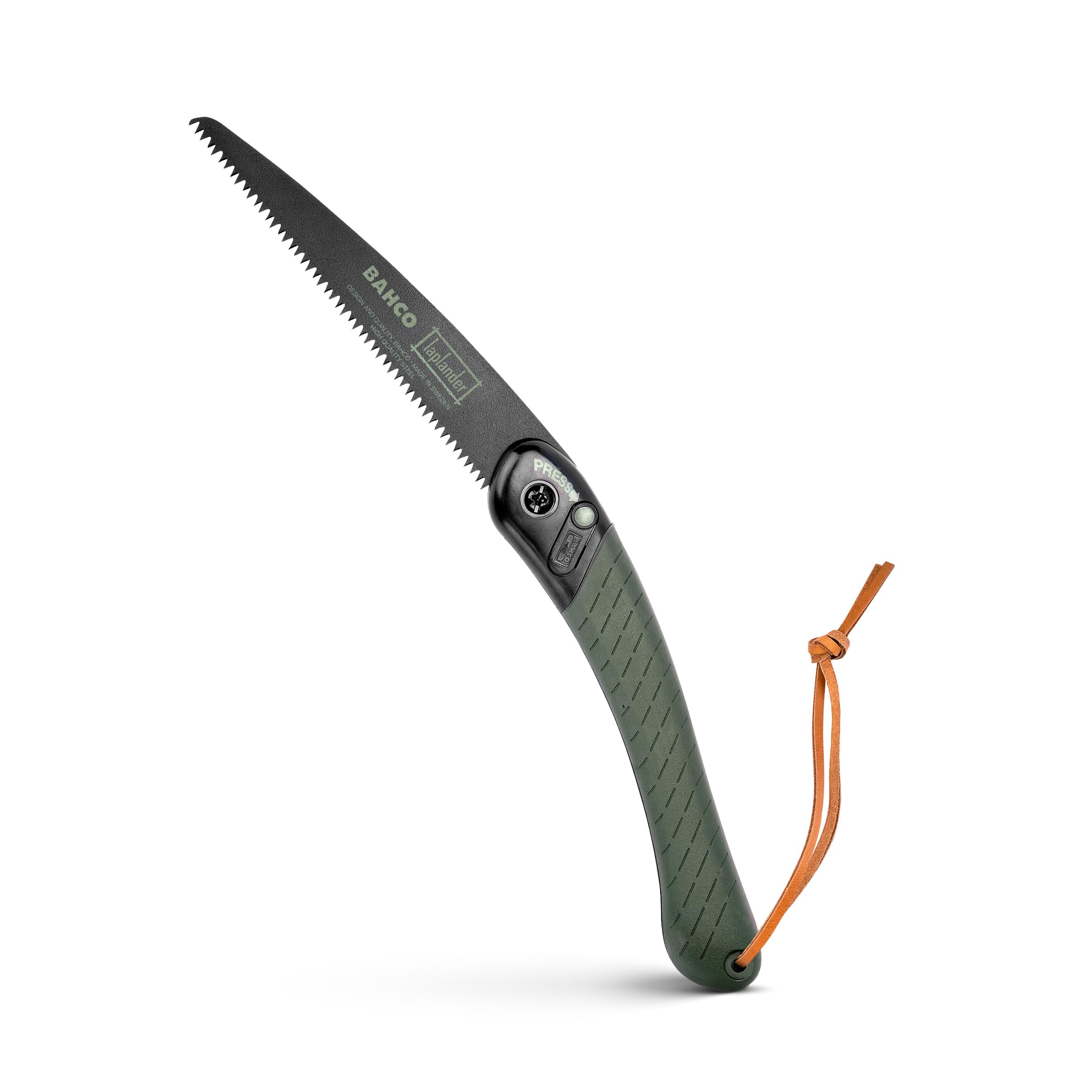
Bahco Laplander 396-LAP Folding Saw

96 /100
Angler Score Outstanding

Key details

Teeth
7 TPI
Weight
7.52 oz
Blade Lock
Open and closed
Blade Length
7-1/2 inches
Check Details on Amazon

If you want one folding saw and you don't want to think about it again, start here. The Laplander pairs a 7-1/2-inch Swedish steel blade with a 7 TPI XT tooth pattern — coarse enough to clear a green branch in a handful of strokes, fine enough to leave a tidy face on dry firewood. At 7.52 ounces it disappears into a pack, and the price sits in the middle of this group.

The blade is thicker than the Silky blades here, and we think that is the right call for a general-purpose saw. It tracks straight once the teeth are set, stays in the line you started, and does not bind and stall halfway through a limb. The handle is 9 inches of two-component plastic shaped to fill a gloved hand, which stops mattering right up until you are cutting overhead in the rain.

Two locks rather than one is the detail we appreciate most. The blade clicks into position open for cutting and closed for carry, so a saw loose in a duffel keeps its teeth to itself. There is a leather strap in the box as well; it is the sort of accessory that ends up in a drawer, but it is what makes the saw easy to lash to a pack frame.

A 7-1/2-inch blade is a branch tool, not a log tool — past about four inches you want the GomBoy or the Agawa, and no amount of enthusiasm changes that. Within that brief we have not found a job it ducks: green limbs, dead standing wood, kindling, the occasional root. Ours lives in the truck and comes out more often than the hatchet it replaced.

Pros

  • Locks open and closed for pack-safe carry
  • XT teeth cut green or dry wood without binding
  • 7.52 ounces carries easily in a daypack
  • Nine-inch handle grips in wet weather

Cons

  • Lock button can take a deliberate push to engage
Our verdict

We tell anyone buying a first folding saw to start here: the blade locks open and closed, it cuts green or dry wood, and 7.5 ounces rides in a pack unnoticed.

Check Latest Price
2

Best Cutting Performance

Silky GomBoy Professional 240mm

96 /100
Angler Score Outstanding

Key details

Weight
8.82 oz
Blade Length
9.5 in (240 mm)
Cut Capacity
4.7 inches
Blade Thickness
1.5 mm
Check Details on Amazon

Silky's teeth are impulse-hardened and taper-ground, and the blade is only 1.5 mm thick — thinner than everything else here apart from the PocketBoy. That thinness is the whole trick: less steel passing through the kerf means less drag, and the saw pulls through hardwood at a rate that makes ordinary pruning saws feel like hard work.

On a 4-inch green limb the GomBoy is the fastest cutter in this group, and the cleanest — it leaves a face you could almost plane. It is the saw we hand to anyone whose work is orchard pruning, trail clearing, or cutting dead standing wood, and who wants the cut finished in fewer strokes than the next tool would take.

The 9.5-inch blade gives a 4.7-inch cut capacity, so limbs that stop the Laplander are a single pass here. Silky ships it in a hinged plastic case, which beats a fabric sheath: the teeth do not chew through it in a season, and you can throw it in a pack without thinking about what else is in there.

Weight is 250 grams, the handle is comfortable enough that gloves do not change much, and the fold is smooth enough to open and close one-handed once it loosens up. It is the most refined saw in this roundup, and it is priced like it. For a professional or a serious orchard owner, the strokes it saves justify the difference; for someone cutting a few branches a year, it does not.

Pros

  • Fastest, cleanest cut of anything here
  • 4.7-inch cut capacity in a short blade
  • Hinged hard case protects the teeth in a pack

Cons

  • Thin blade snaps if the stroke is forced
Our verdict

Our pick when cut quality matters more than budget — the GomBoy slices through 4-inch limbs with fewer, cleaner strokes, and the hard case keeps it packable.

Check Latest Price
3

Best for Pruning

Corona RS 7245 Razor Tooth

96 /100
Angler Score Outstanding

Key details

Weight
9.6 oz
Blade Shape
Curved
Tooth Count
6
Blade Length
7 inches
Check Details on Amazon

The curve is the point. Corona's 7-inch blade arcs along its length, so instead of dragging two or three teeth through a branch you engage a whole run of them at once — the saw bites on contact and keeps biting. On a branch above shoulder height, where you are working at an awkward reach with no leverage, that is the difference between a clean cut and a fight.

It is a pull-cut blade on a lock-back handle, and the lock is what makes one-handed work realistic: you can hold a branch out of the way with one hand and cut with the other, which matters on a ladder or reaching into a hedge. The contoured grip holds up in wet and muddy conditions, and at 9.6 ounces it hangs off a tool belt all afternoon without complaint.

Folded, it goes in a back pocket or a truck door pocket, which is where this kind of saw earns its keep — a quick trim on the way past, a limb across the path, a shrub that has finally outgrown its spot. We like it most for green wood, where the razor teeth clear a 3-inch branch in a few strokes and leave a face that heals cleanly.

The shape works against it on flat lumber and on dead, hard wood, where a straight coarse blade like the Laplander's clears faster. This is a pruning saw that happens to be good at camp, not the other way around — and for anyone with fruit trees, a hedge line, or a shrub border, that is exactly the right emphasis.

Pros

  • Curved blade bites deep on green branches
  • Lock-back handle allows one-handed cutting
  • Light enough to hang off a belt

Cons

No notable drawbacks to flag.

Our verdict

For pruning at head height, we reach for the Corona: the curved blade bites deep and the lock-back handle lets you cut one-handed.

Check Latest Price
4

Best for Big Timber

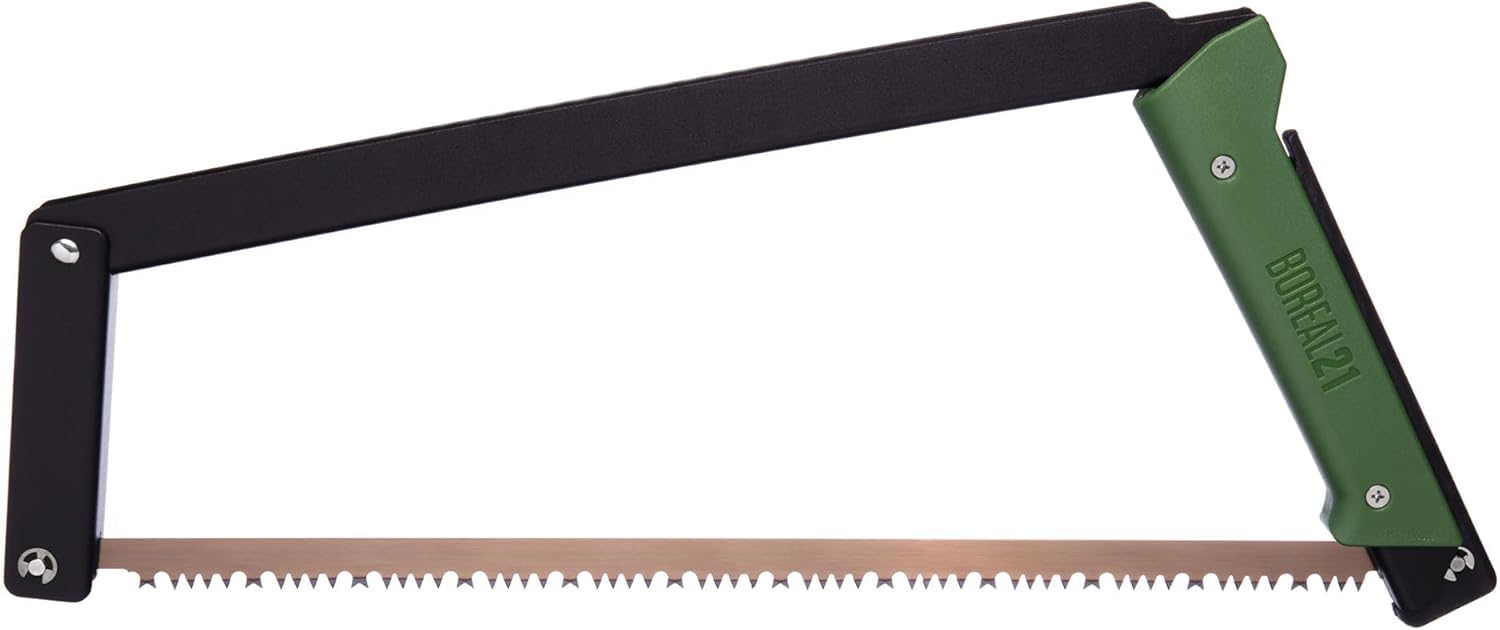
Agawa Boreal21 Folding Saw

95 /100
Angler Score Outstanding

Key details

Frame
Anodized 6063 aluminum
Weight
18 oz
Blade Length
21 inches
Blade Changes
No tools needed
Check Details on Amazon

Twenty-one inches of blade changes what a folding saw is for. The Boreal does not prune; it bucks. On a 5-inch log it cuts with the long, unhurried strokes of a bow saw, because the three-hinged aluminum frame holds the blade rigid and the tension sets itself as the frame snaps open.

The craft is where the money goes: anodized 6063 aluminum, stainless hardware, a fiberglass-reinforced nylon handle cover, and a blade you swap without tools and without touching the teeth. Folded, it is a slim two-foot bundle with nothing sharp exposed, which is why it goes inside a backpack rather than strapped to the outside of one.

We reach for it when the wood is the point of the trip — a fire for a group, a cleared route, a fallen limb that has to become firewood. Against the small saws here it is in a different class on anything over four inches, and it is the pick that keeps a chainsaw in the truck on trips where the truck is nowhere nearby.

Unfolding takes a couple of seconds and the hinges are the sort you stop worrying about. The blade is coarse, so the face it leaves is rougher than the GomBoy's — fine for firewood, less so for anything you plan to look at. If your cutting is mostly thumb-sized branches, the frame is more saw than you need.

Pros

  • 21-inch blade sections real logs
  • Rigid aluminum frame holds tension while cutting
  • Blade swaps without tools or touching teeth

Cons

  • 18 ounces is the heaviest saw in this group
Our verdict

The saw we pick when the wood is too big for a hand saw: 21 inches of blade on a rigid aluminum frame, folded into a slim two-foot bundle.

Check Latest Price
5

Best Compact

Silky PocketBoy 170mm

97 /100
Angler Score Outstanding

Key details

Blade Length
6.75 in (170 mm)
Cut Capacity
3.4 inches
Blade Thickness
1.4 mm
Locking Positions
Two open positions
Check Details on Amazon

A 6.75-inch blade that folds into a clear plastic case with a belt clip: the PocketBoy is the saw you carry when carrying a saw is not the plan. The case is rigid, so it does not matter what else is rattling around in the pack with it, and the flip lock keeps the saw where you put it.

For its size it is the best cutter here. Impulse-hardened, hard-chrome-plated teeth on a 1.4 mm blade go through a small branch in two or three strokes, and the two open locking positions — one in line with the handle, one offset for flush cuts — let you take a stub off level with a trunk without gouging the bark around it.

Where it fits: young fruit trees, bramble, kindling, a trail that needs clearing. We like it best as a second saw — the one that lives in a glovebox or a daypack while the bigger one stays home — because the saw you have with you beats the one in the garage every time.

The price is the sting. A 6.75-inch blade at the premium end of this group asks a lot of anyone who is not already sold on Silky's teeth, and a hardware-store saw will cut your rose bushes. What the extra buys is a blade that stays sharp through a season of real use and a case that keeps it usable in a pack full of gear.

Pros

  • Rigid belt case keeps the teeth covered
  • Two locking positions allow flush cuts
  • Cutting speed out of proportion to its size

Cons

  • Small blade makes thick limbs slow work
Our verdict

This is the one that is actually with you: a 6.75-inch blade and 3.4-inch capacity in a belt case small enough to forget you are wearing.

Check Latest Price
6

Best Multi-Blade

Mossy Oak 3-in-1 Folding Saw

95 /100
Angler Score Outstanding

Key details

Carry
Nylon pouch
Branch Size
Up to 70 mm
Pruning Blade
7.5 in, 5 TPI
Blades Included
Three
Check Details on Amazon

Three blades, one handle, one knob. This is the only saw here that changes what it is: a black-coated 5 TPI pruning blade for green wood up to about 70 mm, plus blades for metal and plastic that no wood saw should be asked to touch. The black knob at the pivot does double duty — it locks the blade for cutting and releases it for a swap, in seconds and with no tools.

The pruning blade does the bulk of the work, and it cuts green branches cleanly with the light pressure a 5 TPI tooth pattern likes. The TPR handle is comfortable in bare hands or gloved ones, and the nylon pouch holds the saw with the two spare blades alongside — a complete kit in one package rather than three loose tools in a shed.

What we like is the shape of the deal rather than any single number: one pouch, three blades, and a saw that covers pruning, camping, and the odd piece of metal or plastic that has to go. For a homeowner who wants one tool on a shelf, that is more useful than a marginally better single blade.

The knob is the one habit to build. It is the lock and the blade retainer at once, so tighten it before every session and again after a swap — a loose knob is the difference between a clean cut and a wobble, and it is easy to forget when you are in a hurry.

Pros

  • Three blades cover wood, metal, and plastic
  • Blade changes take seconds with no tools
  • Pouch carries the saw and both spares

Cons

  • Thin blades bow and chatter under a hard stroke
Our verdict

Buy it if one saw has to handle more than wood: three blades swap on a single knob, and it costs less than most saws here.

Check Latest Price
7

Sappy Fruit Trees

Felco F 600 Folding Saw

93 /100
Angler Score Outstanding

Key details

Weight
6.4 oz
Blade Shape
Conical
Tooth Count
6
Blade Length
6 inches
Check Details on Amazon

Felco grinds this blade conical — thinner along the top edge, thicker at the bottom — with a tooth geometry designed to shed sap rather than collect it. On resinous conifers and sappy fruit trees, that is the difference between a blade that keeps cutting and one you have to stop and wipe every few strokes.

At 6 inches it is the shortest blade in this group, and the most precise. It slips into a pocket, folds in half, and gets into places loppers will not reach — between crossing branches, tight against a trunk, into the middle of a shrub. The chromed steel resists rust and the non-slip TPE handle stays put in a wet glove.

This is a gardener's saw rather than a camper's. Six inches and a fine tooth count make it slow on anything over a couple of inches, and it is not a firewood tool. But for shaping fruit trees and cutting out deadwood without mauling the tree around the cut, it is the most careful cutter here, and the pull-stroke action does most of the work for you.

Closing it takes a deliberate motion — the blade has to line up before it drops into the handle — and that is fiddly for a day and automatic after that. It also carries a limited lifetime warranty, which tells you how Felco expects the tool to be treated: sharpened by use, not by force.

Pros

  • Conical blade resists sap and clogging
  • Short blade reaches into tight pruning cuts
  • Light enough to pocket at 6.4 ounces

Cons

  • Fine blade tip can snap if the saw is levered
Our verdict

For sappy fruit trees and tight cuts, the Felco's conical blade stays clear where a flat blade clogs — a small, precise pruning saw.

Check Latest Price
8

Budget Limb Work

REXBETI 8-Inch Folding Saw

93 /100
Angler Score Outstanding

Key details

Teeth
7 TPI
Weight
9.76 oz
Branch Size
4 to 5 inches
Blade Length
8 inches
Check Details on Amazon

Eight inches of blade is a lot of reach for a saw near the bottom of this group's price range, and on a 4- or 5-inch limb the extra length pays for itself — longer strokes, more teeth in the wood, fewer of them needed to finish the cut. The staggered 7 TPI pattern is aggressive on both strokes, which suits clearing rather than finishing.

We treated it as a light-duty saw, and on that basis it is genuinely good value. The long rubber-coated handle gives you a second hand's worth of grip and keeps your knuckles clear, and it folds small enough for a truck door pocket or the bottom of a tool bag. For storm damage, kindling, and a fence line that needs clearing, that is plenty of saw.

The one habit worth building: check that the lock has seated with a positive click before every cut. It can kick out of the open position under a heavy pull, so open it firmly, listen for the click, then put weight on the stroke rather than hoping.

It is also the saw here with the least finesse. The teeth are coarse enough to leave a rough face on green wood, and the handle, comfortable as it is, takes up room in a small pack. None of that matters for rough work, which is exactly what this saw is for.

Pros

  • Eight inches of blade for 4- to 5-inch limbs
  • Long rubber-coated handle keeps a firm grip
  • Low price for the reach it provides

Cons

  • Thin blade flexes and can snap under load
  • Bulky handle eats space in a small pack
Our verdict

The REXBETI gives you 8 inches of blade for limb work near the bottom of the price range, as long as you treat it gently.

Check Latest Price
9

Occasional Yard Work

Flora Guard 7.7-Inch Folding Saw

0 /100
Angler Score Fair

Key details

Teeth
7 TPI
Weight
8.48 oz
Branch Size
Up to 4 inches
Blade Length
7.7 inches
Check Details on Amazon

This is the least expensive saw here, and it does not behave like it. The 7.7-inch blade arrives sharp — triple-cut teeth at 7 TPI — and it goes through green branches and softwood with almost no pressure. For a go bag, a glovebox, or a first saw for a shed, that is a lot of cutting for the money.

The handle is a rubber-coated shape that fills the hand and stays put when it is wet, and the lock holds the blade open solidly enough that you stop thinking about it mid-cut. At 8.48 ounces it is light enough to carry all day, and it folds into a package short enough for a cargo pocket.

It is rated for branches up to 4 inches, and that is about the right ceiling — past that the coarser, heavier saws here clear the same limb with less effort and less swearing. Think of it as a two-to-three-inch saw that will handle four if you are patient, and it will not disappoint you.

One small thing we ended up valuing: the handle is red. That sounds trivial until you set a saw down in a pile of leaves or on a brush pile and spend ten minutes looking for a black one. It is the sort of detail that makes a cheap tool easy to live with.

Pros

  • Sharp out of the box at the lowest price here
  • Rubber-coated handle grips when wet
  • Light enough to carry all day at 8.48 ounces

Cons

  • Teeth lose their edge faster than hardened blades
Our verdict

A genuinely sharp saw for the lowest price here, and one we keep for occasional yard work and a go bag.

Check Latest Price

How We Tested Folding Saws in the Yard, on the Trail, and at Camp

To build the shortlist, I started with around 40 saws and narrowed them by the things that genuinely change how one cuts: blade length, tooth geometry, whether the saw bites on the push or the pull stroke, the lock mechanism, handle material, and price. That left 12, which my team used for six months across spring pruning, trail clearing, and weekend camping.

Testing happened where these saws actually live. We pruned overgrown fruit trees, bucked a storm-felled oak limb in a driveway, and broke deadfall into firewood on hikes. For every saw we counted the strokes it took to get through the same 4-inch green limb and noted whether the teeth clogged with wet sawdust or cleared themselves, then repeated that cut on dry, seasoned hardwood, which is where a sharp edge either holds or rolls over. We also kept track of which saws pinched in a closing cut and how easily they backed out.

Locking got its own attention, because a blade that folds mid-stroke is how people get hurt. We opened and closed each saw hundreds of times, checked the pivot for play, and pushed hard against a locked blade to see whether it crept. After every session we inspected the teeth for rolled tips and watched for wobble in the hinge. We also weighed each saw, carried it in a daypack and a hip pocket, and asked whether the price matched the cut quality and the years we expected to get out of it.

How to Choose a Folding Saw

Start with blade length, not tooth count

Blade length sets what the saw can do before any other specification matters. The 6.75- to 7.5-inch saws here — the PocketBoy, Corona, Felco, Laplander, and Mossy Oak — handle branches up to roughly three or four inches and pack small. An 8-inch blade reaches further on the same stroke. A 21-inch frame stops being a pruning tool and becomes a packable bucksaw.

The trap is assuming longer is always better. In a crowded shrub, up a ladder, or cutting above your head, a long blade is one you cannot steer. Match the blade to the wood you cut most weeks, not the biggest log you might meet once a year.

Pull-stroke or push-stroke changes how you work

Most saws here cut on the pull. That is not a technicality — it changes your stance. You pull the handle toward you and the blade stays in tension, which is why a 1.4 mm blade can cut as fast as a much thicker Western saw. Two-way and push-cut teeth are more forgiving of a heavy hand but leave a rougher face.

Tooth count follows the same logic. A coarse 7 TPI pattern clears green wood quickly; 8.5 to 10 TPI leaves a smoother face and suits dry, hard wood. If your cutting is mostly green limbs and softwood, go coarse and let the teeth do the work.

Blade steel and thickness decide how hard you can push

Thin blades cut with less effort and do not tolerate twisting; thicker blades track straighter and take more abuse. That is the real choice between the Silky saws and the Bahco, and it is worth making deliberately rather than by accident.

Impulse-hardened teeth hold an edge for a long time and generally are not meant to be filed, so plan on a replacement blade rather than a sharpening session. On a premium saw, check what a spare blade costs and how easy it is to fit before you commit.

The lock is the safety feature

Every saw here locks open; not all of them lock closed. A closed lock matters more than it sounds — a saw riding loose in a pack or a truck box with an unlocked blade is how people get cut reaching for something else. Check both positions, and check that the lock seats with a positive click rather than a soft one.

If a saw only locks open, keep it in a sheath and treat the sheath as part of the tool. It is also worth opening and closing a saw a few times before you rely on it; a lock that feels vague on the first day will not improve with sawdust in it.

Weight and packed size: where will it live?

Six ounces or eighteen is the difference between a saw in your pocket and a saw in the truck. The small saws weigh little and cut small. Our largest pick weighs 18 ounces and folds to about two feet, which makes it a pack item rather than a pocket one.

Decide where the saw will actually live — glovebox, tool belt, daypack, kitchen drawer — and buy for that spot. A saw that is inconvenient to carry is a saw you leave at home, and a saw at home cuts nothing.

Frequently Asked Questions

Final Verdict

The Bahco Laplander is the saw we recommend to almost everyone: 7-1/2 inches of blade, a lock that works open and closed, and 7.5 ounces that disappear into a pack, all at a price that sits mid-pack in this group. It is the one that ends up in the truck, the daypack, and the hands of whoever forgot to bring a saw.

Step up to the Silky GomBoy if clean, fast cuts matter more than money, or to the Agawa Boreal21 if your wood is measured in logs rather than branches. Both are better saws for narrower jobs; neither replaces the Laplander as the one to buy first.