Best Hiking Boots of 2026

Hiking boots ask you to pick a side: waterproof ones that shrug off a stream crossing but feel like cinder blocks by mile six, or light, airy pairs that are a joy on the climb and a misery in wet grass. What a good pair actually fixes is narrower than the specs suggest — heel locked down on descents, toes clear of the front, no hot spot blooming at mile four. Get those right and the day changes.

I've owned boots that fit like a glove in the store and betrayed me at mile four, so I stopped trusting the try-on. Over the past eight months, my team and I have put 12 pairs through muddy trails, rocky descents, and a lot of ordinary dog walks, and the gaps in fit and finish showed up long before the tread wore down. Feet swell over a long day, too — the size that feels snug at 8 a.m. is the one that costs you a toenail. The picks below are the ones that survived, and a couple look good enough to wear into town after.

1

Best Overall

Columbia Newton Ridge Plus II

91 /100
Angler Score Outstanding

Key details

Department
Men's
Listed Weight
1.12 lb
Waterproofing
Waterproof
Check Details on Amazon

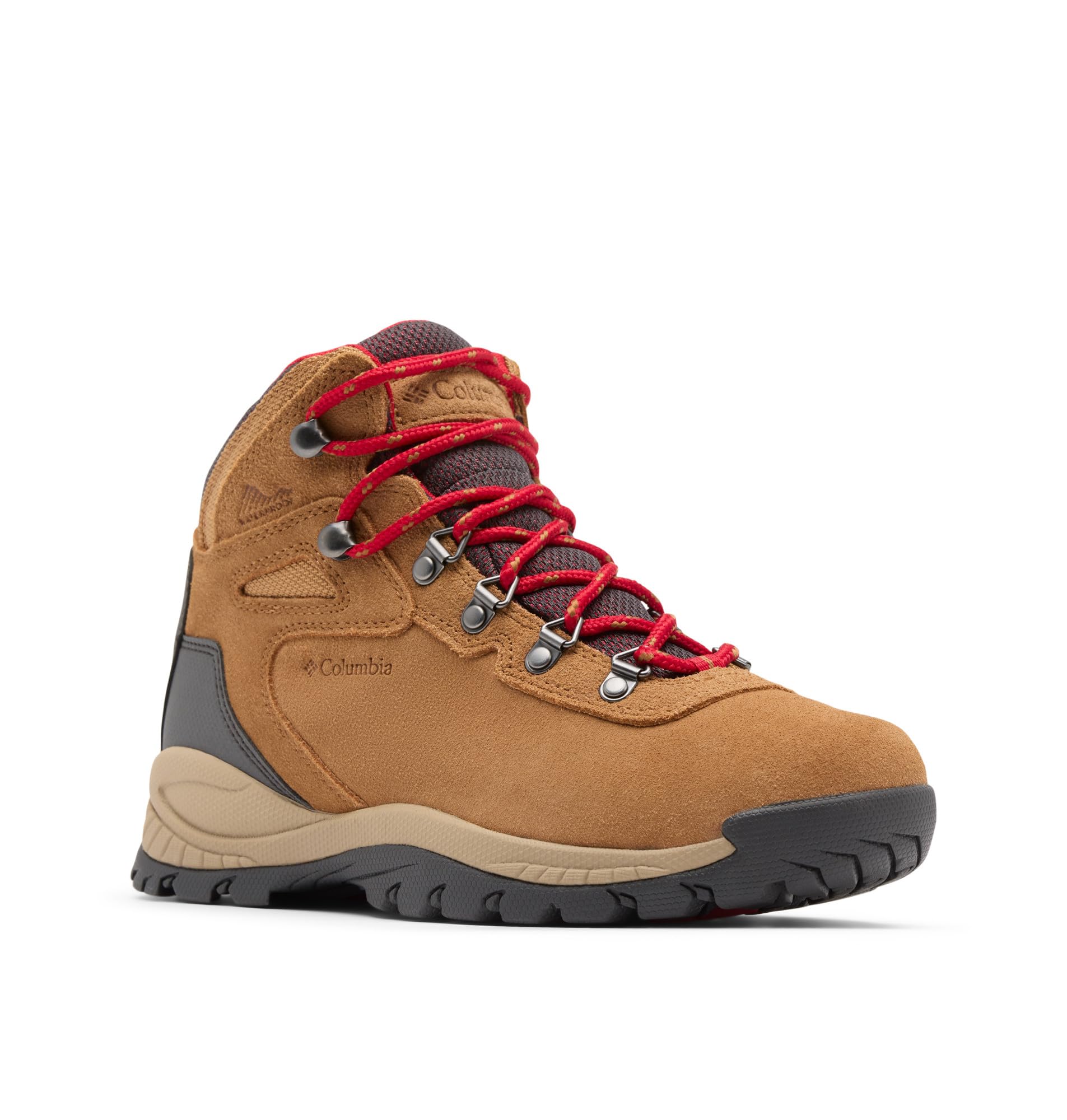
Wet ground is where inexpensive hiking boots give themselves away, so it is the first thing we check. The Newton Ridge Plus II passed. Rain, wet grass, and the muddy edge of a trail left our feet dry, and the suede upper shed water instead of soaking it up and staying heavy for the rest of the walk. That alone, at a midrange price, is why it is the boot we name first for most people.

The rest of the package holds up. Columbia lists the pair at 1.12 pounds, and on the foot it reads like a trail shoe with a collar rather than a stiff mountain boot, which you notice most on the second half of a long day. Grip is sure on packed dirt, gravel, and slick roots, and it held on snow and icy patches where cheap rubber skates. The collar sits high enough to feel supportive without cutting in, and lacing is the ordinary, no-fuss kind.

One boundary is worth naming: the waterproofing stops at the collar. Water that crests the tongue on a real stream crossing gets in, as it does on every mid-cut boot here, so plan on rock-hopping rather than wading. Within that, this is the boot we pack for a week of mixed weather and mixed terrain, from a local loop to a day of cobblestones in a city.

Pros

  • Keeps feet dry in rain and wet grass
  • Light on the foot for a mid-cut boot
  • Sure grip on dirt, gravel, and ice
  • Wide sizes available

Cons

  • Runs narrow in the standard width
Our verdict

The boot we recommend to most hikers: dry in wet weather, light on the foot, sure-footed on mixed ground, and available in wide sizes.
Check Latest Price
2

Best Women's Fit

Columbia Newton Ridge Plus Amped

91 /100
Angler Score Outstanding

Key details

Department
Women's
Waterproofing
Waterproof
Listed Dimensions
10 x 15 x 6 in
Check Details on Amazon

Take the recommendation above and change the fit. The Newton Ridge Plus Amped is Columbia's women's version of that same design: a waterproof upper, a roomy toe box, and enough collar to feel like a hiking boot rather than a sneaker with lugs glued on. The pink laces are the giveaway detail, and it is the boot in this group most likely to draw a compliment.

What we like most is how little it asks of you. The wide width is genuinely wide, with room across the toes and space left for thick socks, and the ankle support is stiff enough to feel like support without the collar digging in. On wet ground it does what a waterproof boot is supposed to do: light rain, wet grass, muddy trail edges, dry feet. For a first hiking boot, or a second pair for someone who hikes a few times a year, this is the women's boot we keep coming back to.

Sizing runs true to street size for most feet, and the wide is worth taking if you have ever sized up just to get room across the toes. It costs about the same as the Moab 3 Mid below, and the two split cleanly: choose this one when the weather is the hard part of the hike, and the Merrell when the terrain is.

Pros

  • Dry feet in light rain and wet grass
  • Supportive collar that does not dig in
  • Genuinely roomy wide width
  • Good-looking enough to wear off the trail

Cons

  • Can blister the ankle before the collar softens
Our verdict

Our women's default: the same wet-weather reliability in a women's fit, with a wide option and support that holds up on long days.

Check Latest Price
3

Best Support

Merrell Moab 3 Mid (Women's)

91 /100
Angler Score Outstanding

Key details

Cut
Mid
Department
Women's
Listed Weight
1.5 lb
Waterproofing
Waterproof
Check Details on Amazon

Ankle support is the reason to buy a mid-cut boot at all, and the Moab 3 Mid is the strongest version of it in this group. The collar comes up high enough to feel like it is holding something, the arch is supportive without a hard lump under the middle of your foot, and the shape around the ankle bone does not press on it. That last detail is the failure that makes people give up on boots entirely.

Comfort is the other half. There is no break-in period to schedule: they are soft from the first walk, the toe box leaves room for toes to move and for a midweight sock, and the wide width takes a genuinely wide foot rather than just adding volume. The listed weight is 1.5 pounds, light enough that the support does not come at the usual cost.

Durability is where it separates from the cheaper boots here. The soles are stiff enough that gravel and roots do not telegraph through, the uppers hold their shape, and they come out of mud and snow looking ready to do it again the next weekend. Sizing runs a touch small, so if you are between sizes or plan on thick socks, take the half size up.

For long days and rough ground, rock and roots and a pack on your back, this is the women's boot we recommend. It is the most supportive pair here, comfortable from the first mile, and priced about the same as the Columbia above. Choose it when the terrain is the hard part of your hiking, and the Columbia when the weather is.

Pros

  • Strong ankle and arch support
  • Comfortable with no break-in
  • Stiff sole handles roots and rocks
  • Wide width for wider feet

Cons

  • Waterproofing can soak through on long wet days
Our verdict

Buy this one if ankle support matters more than anything else: it is the most supportive women's boot here and comfortable from the first mile.

Check Latest Price
4

Best Comfort Out of the Box

Timberland Mt. Maddsen

91 /100
Angler Score Outstanding

Key details

Department
Men's
Listed Weight
3 lb
Waterproofing
Waterproof
Check Details on Amazon

Most hiking boots look like hiking boots. The Mt. Maddsen looks like a Timberland, which is the point: leather, a padded collar, and a profile that reads as something you can wear into town without changing first. It is bought for exactly that, one pair that covers the trail and the rest of the weekend.

It is also the softest boot here out of the box. There is no break-in to plan around: the collar and tongue are padded, the toe box has room to move, and the open eyelets make lacing and unlacing quick, which matters more than it sounds when you are taking boots off in a tent vestibule. Water resistance holds through slush and shallow puddles, and a wipe brings the leather back.

Upkeep is the trade. Leather wants a wipe after muddy days and a treatment now and then to stay supple, where a synthetic boot just gets hosed off in the yard. What you get back is a pair that looks better with age rather than worse, holds its shape, and does not announce itself as technical gear. For a three-season trail boot that doubles as everyday footwear, that is the deal we take.

Pros

  • Comfortable from the first wear
  • Quick to lace and unlace
  • Dry through slush and shallow puddles
  • Leather that looks better with age

Cons

  • Seams can separate with hard use
Our verdict

The boot for people who want one pair for the trail and the rest of the weekend: soft from the first wear, dry in slush, and good-looking enough to keep on.

Check Latest Price
5

Best Budget

NORTIV 8 Women's Waterproof

91 /100
Angler Score Outstanding

Key details

Department
Women's
Intended Use
Hiking and trekking
Waterproofing
Waterproof
Check Details on Amazon

Not everyone needs a boot that will survive a thru-hike. If you get out a few times a season, walk the dog on trails, and want something that will not wreck your feet or your budget, this is the women's boot we point to. It is the cheapest women's pick here, and it behaves like a more serious boot than it costs.

Comfort is the headline. They are soft underfoot from the first wear, blisters have not been an issue on a first hike, and the fit feels closer to a sneaker than a mountaineering boot. That softness is deliberate: this is a boot for maintained trails and packed dirt, not for carrying a heavy pack over talus. Arch and ankle support are both there, and the waterproofing keeps feet dry in shallow water and mud as long as you stay below the collar.

Fit is the one thing to manage. Some feet find these narrow through the sides, others find them roomy enough for thick socks, so buy from a seller with easy returns and try them on with the socks you hike in rather than trusting the size on the box. Get that right and it is a lot of boot for the least money in this group.

Pros

  • No blisters on the first hike
  • Dry in shallow water and mud
  • Arch and ankle support
  • Cheapest women's pick here

Cons

  • Grip is less sure on wet rock
Our verdict

The women's pick for occasional hikers: comfortable from the first walk, dry in mud and shallow water, and the least expensive way into a real hiking boot.

Check Latest Price
6

Wide Feet, Long Days

Merrell Moab 3 Mid (Men's)

91 /100
Angler Score Outstanding

Key details

Cut
Mid
Department
Men's
Waterproofing
Waterproof
Check Details on Amazon

The Moab 3 Mid is the boot in this group we point wide-footed hikers toward first. The toe box is generous, the midfoot does not clamp, and there are wide sizes if the standard width still feels close. The catch is length: these run small, and most people need a half size up from their street shoe, so try them with the socks you actually hike in before committing to a long trip.

Get the size right and it is a proper all-day boot. Cushioning is soft without feeling vague, the ankle collar supports without pressing, and the sole is stiff enough that sharp rocks do not come through it. It is the pair we hand to someone who wants to put a boot on and forget about their feet for six hours.

Durability is the reason it keeps its place. The uppers scuff rather than tear, the soles wear evenly, and pairs hold their shape through mud, dust, and hard use. Of the men's boots here, it is the one we take when the plan is long and rocky rather than short and easy, and at about the same money as the top pick that is a fair trade rather than a compromise.

Pros

  • Room for wide feet and thick socks
  • Comfortable for a full day
  • Stiff sole protects against rocks
  • Uppers and soles wear evenly

Cons

  • Waterproofing can wet out in sustained rain
Our verdict

A proper all-day boot for wide feet and rocky ground, as long as you size up and do not count on the waterproofing in sustained rain.

Check Latest Price
7

Muddy, Rough Ground

NORTIV 8 Men's Ankle High

89 /100
Angler Score Excellent

Key details

Cut
Ankle high
Department
Men's
Waterproofing
Waterproof
Check Details on Amazon

Some boots get bought for a trail and end up doing farm work. This one starts there. The build is sturdy, the ankle collar is high, and it handles mud, gravel, and wet grass without complaining. If your hiking is really a muddy walk, a hunting lease, or a job that keeps you outdoors, it is a lot of boot for a budget price.

Comfort is decent rather than plush. The insole is basic, and replacing it is the first upgrade worth making, while the boot itself stays stiff for the first few walks before it loosens. Sizing runs large on some feet, so confirm the fit before a long trip rather than assuming your usual number will do.

Where it fits is on rough, dirty ground: farm tracks, wet fields, gravel roads, and a few miles of trail. It is not the pair we recommend for a long hike with a pack, and it is not the pair for someone who wants to buy once and forget it. It is the pair for when the job is dirty and the budget is tight, and the mud rinses off.

Pros

  • Sturdy build for mud and gravel
  • Ankle-high collar
  • Cheap enough to abuse
  • Dry in light rain and wet grass

Cons

  • Soles can separate with hard use
  • Water resistance gives out in sustained wet
Our verdict

A sturdy, cheap boot for muddy ground and dirty jobs: fine for short rough hikes, not the pair to take on a long loaded trip.

Check Latest Price
8

Cold-Weather Hiking

XPETI Thermator

89 /100
Angler Score Excellent

Key details

Cut
Mid-rise
Department
Men's
Insulation
Insulated
Waterproofing
Waterproof
Check Details on Amazon

Insulation changes the job. The Thermator is built for cold: an insulated upper, a mid-rise collar, and a sole with enough bite for snow, mud, and the kind of wet cold that makes a summer boot useless. On a freezing morning it is the boot here we reach for, and it is the only one in this group designed for that.

Warmth is the point, and it delivers. Feet stay warm and dry in snow, slush, and long cold days outdoors, and feet do not go numb standing around in it. Grip is better than the price suggests, in mud and on packed snow, and it does not feel like a heavy winter boot on the foot, so walking in it for a full day is easy.

Fit runs true to size for most feet with room for thick socks, and the look is more hiking boot than snow boot, which is part of the appeal. Water resistance holds in snow and puddles, but this is a waterproof boot and not a wader: slush over the collar gets in like it does on anything else here.

Where it lands is as a specialist, and we mean that as praise. It does a job nothing else in this group does, for the lowest price here. Treat it as the cold-weather half of a two-boot rotation rather than the only boot you own, and it earns its keep from the first frost to the last one.

Pros

  • Warm and dry in snow and slush
  • Grip holds in mud and on packed snow
  • Light for an insulated boot
  • Insulated mid-rise collar

Cons

  • Too warm for summer trails
  • Seams and heel lining can fail with hard use
Our verdict

The cold-weather specialist of this group: warm and dry in snow and slush, with grip to match, for the least money here.

Check Latest Price

How We Tested 12 Pairs of Hiking Boots

We started with spec sheets and a few hundred owner reviews, filtering for the kind of waterproof construction a boot actually uses, the size run (including wide and women's-specific lasts), claimed weight per boot, and price measured against the materials on the label. That brought roughly 40 candidates down to 12 pairs, all bought at retail so nothing arrived pre-broken-in or specially tuned.

Every pair got the same first day out: a five-mile loop with a stream crossing and a long, loose downhill, plus a driveway test where the boot stood in two inches of water for ten minutes and we checked the socks afterward. We noted hot spots at mile markers rather than at the end of the day, watched whether heels lifted on descents or toes jammed the front, and re-weighed each boot on a kitchen scale after 50 miles to see how much cushioning had packed out.

Sizing got checked with thick and thin socks, then again after a full day on our feet, since that's when a snug fit turns into a bruised toenail. We wore pairs into town for coffee after hikes to see how they scuffed and whether they read as trail boots or something you'd keep on. And we logged what failed first — laces, toe caps, stitching at the flex point — because that's what separates three seasons of wear from one.

How to Choose Hiking Boots

Waterproofing, and What It Costs You

A waterproof membrane keeps out rain, wet grass, and shallow puddles, and it also holds heat and slows drying once water gets inside. Every boot in this guide claims waterproofing; in practice they range from dry through a wet morning to soaked after an hour of tall wet grass.

Choose waterproofing if your trails are wet, muddy, or cold. If you hike hot, dry, dusty ground, a breathable non-waterproof boot runs cooler and dries faster. Either way, keep your expectations at the collar: a mid-cut boot keeps a puddle out, not a creek crossing.

Fit Comes Before Every Other Specification

Sizing is not consistent between these models: one runs narrow through the midfoot, another needs a half size up, a third is roomy. That makes the seller's return policy part of the purchase. Try boots on with the socks you hike in, late in the day when your feet are at their largest.

Two checks settle most of it. Your heel should stay put when you walk up an incline, and your toes should not touch the front when you walk down one. If you need width, ask for it: several of these come in wide sizes, including the Newton Ridge and the Moab 3 Mid.

Cut Height, Support, and Weight

A mid-cut collar covers the ankle and stiffens the boot's ride, which is what you want on rough ground and with a pack on. Lower-cut boots are lighter and cooler for smooth, well-graded paths.

Weight and support are not the simple trade they look like. The lightest boots here still feel structured underfoot, and the heaviest is not automatically the most protective. Judge it by how the sole resists a sharp rock and how the collar holds your heel, not by the number on the listing.

Traction and the Parts That Wear Out

Lug depth and rubber compound decide grip. Deep, soft lugs bite mud and loose dirt; harder rubber lasts longer but skates on wet rock. If your trails mix both, favor grip and accept faster wear.

On every boot in this group, the seams and the sole bond go before the upper does. Check the seam at the toe flex point and around the heel when a pair arrives, keep leather wiped and treated, and rinse mud out of the lugs so it does not dry hard in them.

Frequently Asked Questions

Final Verdict

For most people, the answer is the Columbia Newton Ridge Plus II. It keeps feet dry in the weather that ruins a hike, it is light enough to forget about, it grips the surfaces that actually throw people, and it comes in wide sizes. That combination, at a midrange price, is why it sits at the top of this list rather than the most expensive or most technical boot here.

Two changes redirect the choice. If you are shopping in a women's fit, the Newton Ridge Plus Amped is the direct swap, with the Merrell Moab 3 Mid as the upgrade for long, rocky, loaded-up days. If cold is the deciding condition, the insulated XPETI Thermator covers the half of the year the others do not.