Best Hiking Daypacks of 2026

A hiking daypack has to resolve a small contradiction. It needs to swallow a full day's water, layers, and snacks, then feel like it was never there by mile eight. Too small and you're lashing a jacket to the outside; too big and you're hauling empty fabric and a swaying load. The right pack settles that argument: everything you need, nothing you don't, and shoulders that still feel fine at the trailhead.

I learned this the slow way, after ordering three packs that looked identical on my screen and completely different once loaded with a full bladder and a wet rain shell. Since then, the team and I have spent six months with 14 daypacks — weekday evening loops, a soggy summit morning, and a couple of flights where the bag had to squash under the seat in front of me. We weighed every one empty and packed, checked seams and padding after weeks of use, and measured what actually fit inside a bag labeled 20 liters. The picks below are the ones nobody wanted to hand back.

1

Best Overall

Osprey Daylite Plus

92 /100
Angler Score Outstanding

Key details

Weight
1.3 lb
Pockets
5
Capacity
20 liters
Shell Material
Recycled 300D polyester
Check Details on Amazon

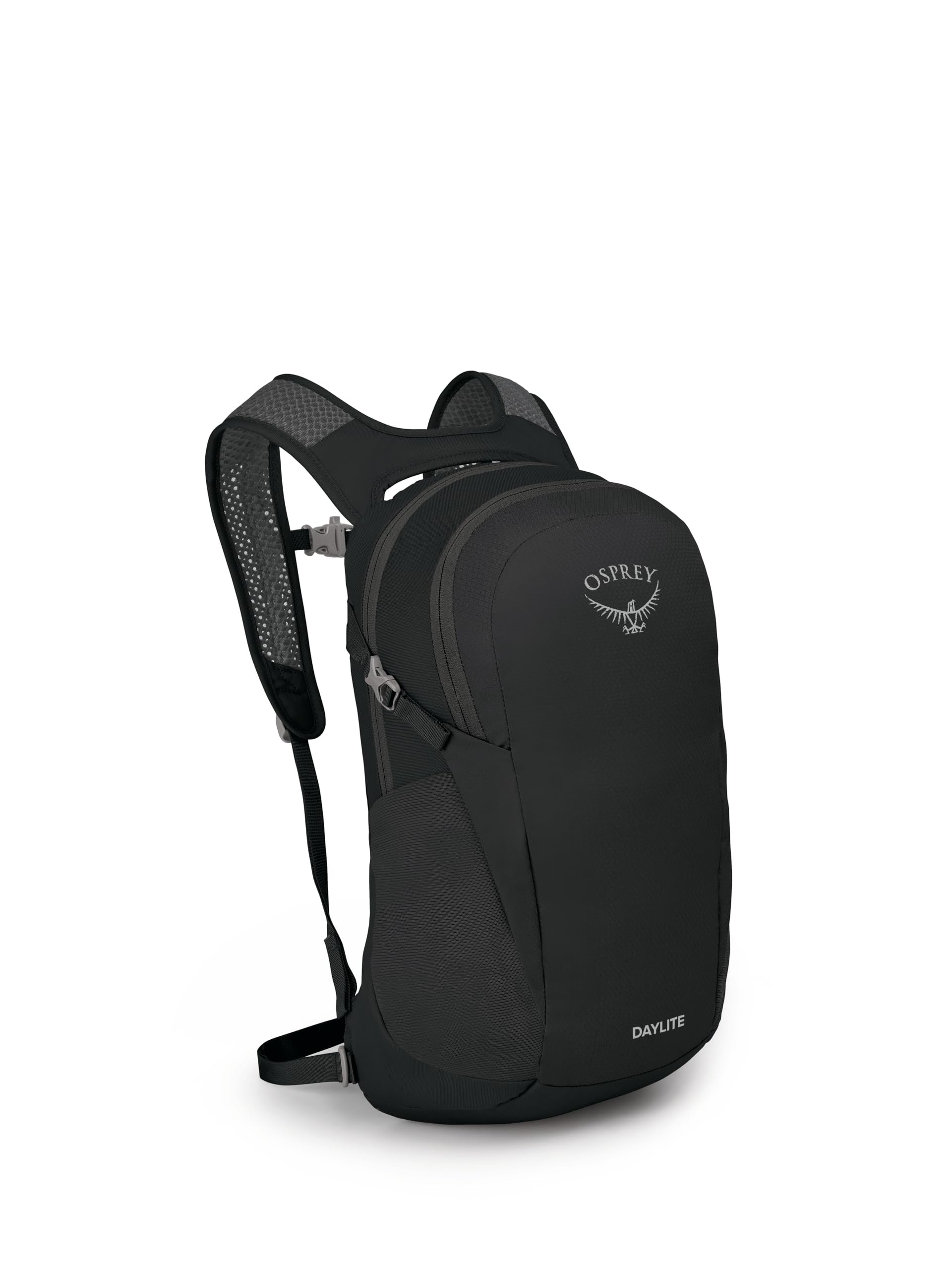
Twenty liters does more than the number suggests. We packed a fleece, a lunch, two bottles, and a shell for a morning that started cold and ended warm, and the Daylite Plus swallowed all of it without turning into a brick. The main compartment is a panel loader, so it opens flat like a duffel instead of forcing you to dig from the top, and the stretch pocket on the front takes the shell you peel off without soaking everything under it.

The harness is what separates it from the cheaper packs here. Wide shoulder straps, a mesh back panel, a sternum strap, and a hip belt that wraps rather than just threading through webbing. On a steady climb it sat close and stayed put, and the back panel kept the damp patch smaller than we expected. Inside, a sleeve takes a hydration reservoir and does double duty for a tablet or a 14-inch laptop, which is why this is the one pack here that doesn't look out of place on a weekday.

Recycled 300D polyester with a water-repellent finish, five pockets, 1.3 pounds. What that weight buys is structure: the pack stands up when you set it down and keeps its shape half full, which is exactly what a packable won't do. Nothing about it feels fragile, and the zips and seams have the dense, finished look of a pack built to be used rather than admired.

The detail we ended up depending on: the dual side compression straps. Cinch them down when the pack is half full and a light load stops shifting on descents, which is the difference between a pack that rides and one that thumps your back on every step.

Pros

  • Wide straps, mesh back, and a real hip belt
  • Panel opening makes packing and digging easy
  • Sleeve fits a reservoir or a 14-inch device
  • Recycled 300D polyester with water-repellent finish

Cons

  • Costs more than every other pack here
  • 1.3 pounds is heavy next to the packables
Our verdict

We recommend the Daylite Plus to most day hikers: a comfortable harness, 20 liters that load easily, and a hydration sleeve, though it costs more than anything else here.
Check Latest Price
2

Best Compact Daypack

Osprey Daylite

94 /100
Angler Score Outstanding

Key details

Weight
1.1 lb
Capacity
13 liters
Hydration Sleeve
Fits a reservoir or 14-inch device
Water Resistance
Water resistant
Check Details on Amazon

Thirteen liters is the smallest capacity in this group, and that is the whole idea: this is the pack for a two- or three-hour hike where the kit is a bottle, a shell, and lunch. Loaded that way it disappears — 1.1 pounds, wide shoulder straps, and a mesh back panel that holds the fabric off your spine.

We kept reaching for it on fast afternoon loops, and on trips where the pack has to be a town bag in the morning and a trail bag after lunch. The multifunctional sleeve inside takes a reservoir or a device up to 14 inches, the side mesh pockets stretch around a wide bottle, and the whole thing clips onto a larger Osprey travel pack when you want a summit bag without a second carry-on.

The limit is volume, not build. Thirteen liters fills quickly once a warm layer and a proper lunch go in. On a short hike in mild weather that's a fine trade; on a cold, all-day outing, the Daylite Plus is the pack we point people to instead.

Pros

  • Light 1.1-pound carry
  • Stretch side pockets take wide bottles
  • Sleeve fits a reservoir or a 14-inch device
  • Clips onto larger Osprey travel packs

Cons

  • Hip belt is thin webbing, not padding
Our verdict

If your day hikes are short and you hate bulk, the Daylite is the pack we hand over: a comfortable harness in a 13-liter body that weighs just over a pound.

Check Latest Price
3

Best Organization

SKYSPER 20L Hiking Backpack

93 /100
Angler Score Outstanding

Key details

Weight
1.21 lb
Pockets
10
Capacity
20 liters
Shell Material
600D polyester and 210D nylon
Check Details on Amazon

Ten pockets and seven compartments in a 20-liter pack is either exactly what you want or a scavenger hunt waiting to happen. We lean toward the first: when the kit changes from week to week — headlamp, gloves, snacks, phone, keys, a map — having a home for each one means you're not unpacking the whole bag at the summit.

The build is water-resistant 600D polyester and 210D nylon, so it takes a shower and a scrape against rock without complaint, and the trekking pole attachment on the outside frees your hands on the climb. At 550 grams it sits close to the back against a grooved, ventilated panel, and the chest strap kept it from swaying on a long descent. There's a security zipper on the valuables pocket, a feature we appreciated in a crowd far more than on a ridge.

What we paid close attention to was the stitching at the shoulder anchors, because that's where a pack like this gives first — this is the most divided durability picture in the group, with packs tearing at the strap attachments after a couple of months. Check those seams when it arrives and keep the load inside the rating on the spec sheet, and you have a great deal of organization for the money.

Pros

  • Ten pockets and seven compartments
  • Water-resistant 600D polyester and 210D nylon
  • Trekking pole attachment and chest strap
  • Security zipper on the valuables pocket

Cons

  • Load rating is only 7 kg
Our verdict

If you want a place for everything, this is our pick: ten pockets, water-resistant fabric, and a 20-liter body that carries close to your back.

Check Latest Price
4

Best Hydration Pack

N NEVO RHINO 18L Hydration Pack

92 /100
Angler Score Outstanding

Key details

Weight
1.74 lb
Bladder
3 liters, BPA-free PEVA
Pockets
3
Capacity
18 liters
Check Details on Amazon

The case for a hydration pack is that you drink more when you don't have to stop, and this one arrives ready: an 18-liter pack with a three-liter bladder, hose, and bite valve included. Nothing else to buy, and no guessing whether the sleeve will fit a reservoir you already own.

The insulated compartment around the bladder is the feature we appreciate most. Cold water is water you actually drink on a hot climb, and insulation is the difference between a pack you sip from at the top and one you ignore. Ventilated mesh runs across the shoulder straps, waist belt, and back panel, so the contact points breathe even when the bladder is full.

Eighteen liters of cargo plus three liters of water is a workable day for one person — a shell, lunch, a small first-aid kit, and room to spare. The load sits evenly, and 0.79 kg means the water, not the bag, is what you feel on the climb.

One habit worth building: fill and pressurize the bladder at home before your first real outing, and don't swing the pack around by the hose, because the bite valve has cracked early on some packs. Do that and it's the strongest hydration value in this group.

Pros

  • Bladder, hose, and bite valve included
  • Insulated compartment around the bladder
  • Ventilated mesh on straps, belt, and back
  • Light 0.79 kg carry

Cons

  • Bladder seam has split under a full load
Our verdict

For hot, thirsty climbs, this is the pack we hand over: 18 liters of storage, a three-liter bladder in the box, and insulation around the water.

Check Latest Price
5

Best Ultralight Packable

4Monster Packable 16L

91 /100
Angler Score Outstanding

Key details

Weight
2.1 oz
Capacity
16 liters
Packed Size
Folds into a wallet-sized pouch
Shell Material
30D ripstop nylon
Check Details on Amazon

Unfolded it's a 16-liter daypack; folded it's a pouch that disappears into the corner of a suitcase. We noticed the difference at the airport more than on the trail — a pack that adds almost nothing to a carry-on is one you stop thinking about bringing.

For a hike it's more capable than the packed size suggests. A main compartment, a front zip pocket, and two mesh side pockets that hold a bottle upright, all in water-resistant 30D nylon with reinforced stitching. Ours has carried a shell, lunch, a bottle, and a camera on a warm afternoon and come out fine, and the side pockets are the detail that matters most when you're drinking as you walk.

What it doesn't do is carry weight: no frame, no hip belt, and no structure of any kind. That's the design rather than a defect, since a real harness would double the packed size, so treat it as the second pack — the one in your luggage, on the boat, or on a three-hour trail. The stuff pouch is attached to the bag, which means you can't lose the thing you're supposed to fold it into.

Pros

  • Folds into its own attached pouch
  • Water-resistant 30D nylon shell
  • Mesh side pockets hold bottles upright
  • Barely adds weight to your back

Cons

  • Unpadded straps bite once the load grows
  • Thin 30D fabric is not abrasion-proof
Our verdict

For travel and light day hikes, this is the pack we tuck into a suitcase: 16 liters, water-resistant nylon, and a weight you won't notice on your back.

Check Latest Price
6

Best Packable with Pockets

WATERFLY 20L Packable

91 /100
Angler Score Outstanding

Key details

Weight
10.2 oz
Pockets
4
Capacity
20 liters
Folded Size
8.7 x 6.3 inches
Check Details on Amazon

Folded, this pack measures 8.7 by 6.3 inches and weighs 290 grams — numbers that only mean something once you've packed a week into a carry-on and still want a daypack in the corner. That's the job it does for us: it lives in the luggage and comes out at the trailhead.

Of the packables here, this is the one with the most structure, and we mean that relatively. A main pocket, two front pockets, and a removable zip pocket give you somewhere to put a wet shell apart from your lunch, which is more organization than most packs in this class bother with. The 20-liter body takes a jacket, snacks, a bottle, and a wallet without turning into a sack of laundry, and it folds back into its pouch without a fight.

What you're buying is portability, not support: the straps are built for a light load, and the water-resistant finish on the recycled nylon is a shower barrier rather than a downpour one. Keep the load to a shell, lunch, water, and a camera and it does everything you can ask of a pack this size.

Pros

  • Folds to 8.7 by 6.3 inches
  • 20 liters with four pockets
  • Recycled nylon, water-resistant finish
  • Weighs 290 grams

Cons

  • Unpadded shoulder straps limit heavy loads
Our verdict

For a pack that lives in your luggage and comes out for day hikes, this is our pick: 20 liters, four pockets, and a fold that leaves room in your suitcase.

Check Latest Price
7

Best for Bulky Loads

MIYCOO 35L Packable

90 /100
Angler Score Outstanding

Key details

Extras
Zipper clips, survival whistle
Weight
12.8 oz
Capacity
35 liters
Water Resistance
IPX4
Check Details on Amazon

Thirty-five liters is more daypack than most day hikes need, which is exactly why it's here: it's the one pack in this group that handles bulbous gear — a camera bag, a bulky layer, a picnic for four — and still folds into its own pocket at the end of the trip. We treat it as the overflow pack, the one that goes in the duffel and earns its keep on the way home.

The feature set is unusually complete for a packable. A separate wet compartment keeps a soaked shell away from dry layers, the zipper pulls clip together so the main compartment can't drift open, and there's a survival whistle on the sternum strap. It's rated IPX4 for water resistance, and 12.8 ounces is light for the volume.

What you give up is load transfer, and that's the design rather than a fault: a padded harness and a frame would double the packed size. For gear that's bulky but not dense — a sleeping bag, spare clothes, souvenirs you didn't plan on — it's a fair trade, and 35 liters earn their place in situations where a 20-liter pack would leave you carrying a second bag.

Pros

  • 35 liters in a packable body
  • Separate wet compartment
  • Zipper clips and a survival whistle
  • Folds into its own pocket

Cons

  • Unpadded straps under a full load
  • IPX4 splash protection only, not waterproof
Our verdict

When the day's gear is bulky, this is the pack we grab: 35 liters, a wet pocket for soaked layers, and a fold-down size that fits back in its pouch.

Check Latest Price
8

Rainy-Day Hikes

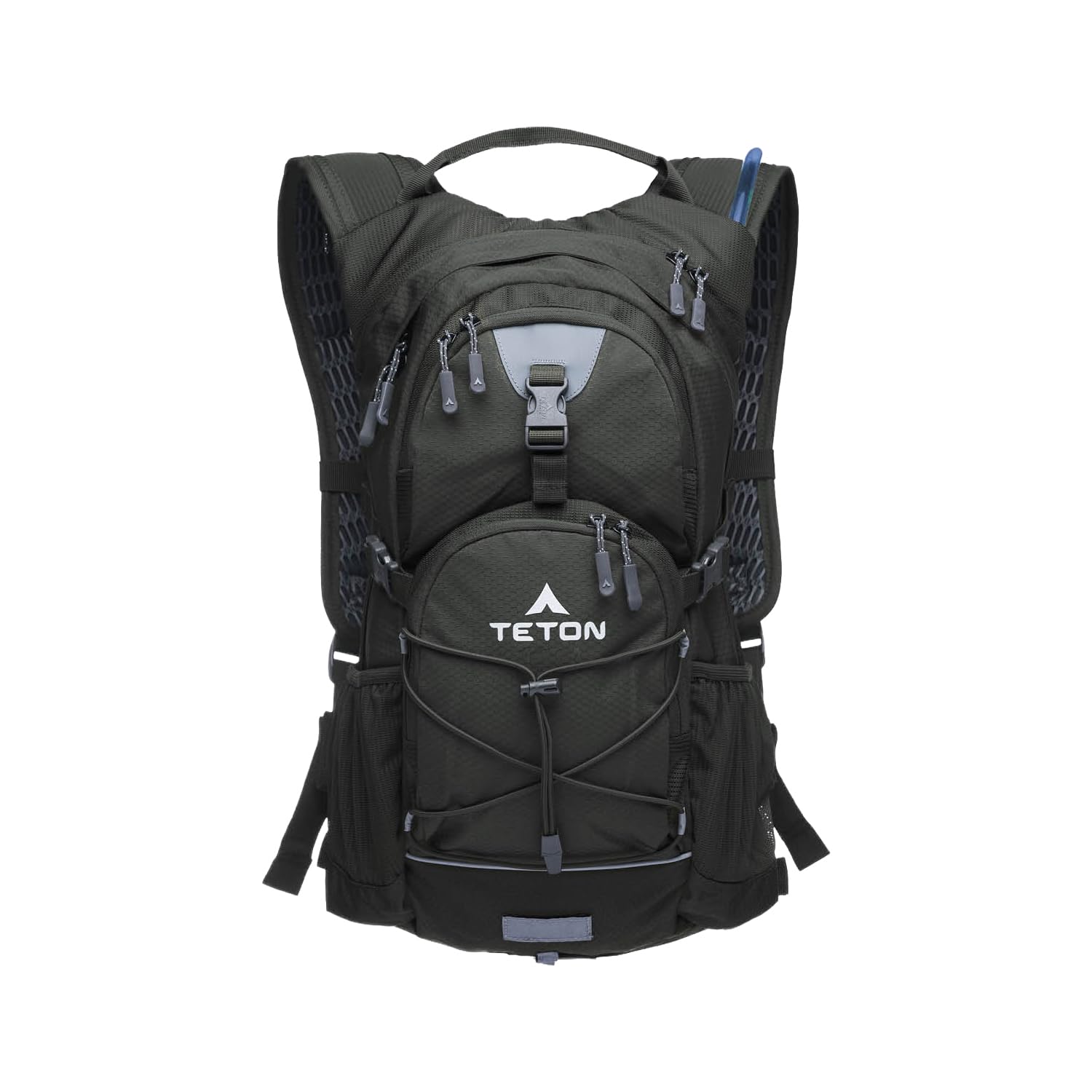
Teton Oasis Trailrunner 18L

91 /100
Angler Score Outstanding

Key details

Weight
2 lb
Bladder
2 liters
Capacity
18 liters
Rain Cover
Sewn in
Check Details on Amazon

A rain cover that's sewn in is a rain cover you can't leave in the car, and on a day that turns, that's worth more than a nicer strap. The Trailrunner is the wet-weather option here: 18 liters, a two-liter bladder, and a cover that's always on the pack.

The hydration side is well thought out. The two-liter bladder has a wide two-inch opening, which makes adding ice and scrubbing it out far less annoying than the narrow-mouth bladders we've wrestled with, and the bladder pocket is insulated so the first liter doesn't turn warm on the climb. Weather-guarded zippers, a bungee cord for a helmet or a jacket, and a butterfly opening round out a pack that was clearly designed by people who hike in the rain.

Two things to weigh. At two pounds it's the heaviest pack here, and the harness suits average-to-large frames — the straps don't sit right on smaller builds, so check the adjustment range against your own torso before you commit.

Where it lands for us: the best wet-weather option in this group when the pack fits you, and one worth trying on before you buy if you're on the small side.

Pros

  • Sewn-in rain cover
  • 2-liter bladder with a wide fill opening
  • Insulated bladder pocket
  • Weather-guarded zippers and bungee lacing

Cons

  • Waist strap has broken under load
  • Bladder can taste of plastic at first
Our verdict

A wet-weather hydration pack: a two-liter bladder, a sewn-in rain cover, and 18 liters of storage, as long as the harness suits your build.

Check Latest Price

How We Tested 14 Hiking Daypacks

We built a shortlist of about 40 daypacks from retailer listings, brand lineups, and a long stack of customer reviews, then cut it hard. A pack had to land between roughly 15 and 25 liters unless it was designed to fold into its own pocket, and we kept a deliberate mix: framed daypacks with real hipbelts, hydration-ready packs with a dedicated bladder sleeve, and ultralight packables that stuff down to the size of a grapefruit. Narrow straps, single-stitched attachment points, and capacity claims that reviewers repeatedly called inflated eliminated a bag. That left 14.

Every pack carried the same load — a full bladder, a rain shell, a fleece, lunch, a small first aid kit, and a camera — and we weighed each one empty and again loaded, so we knew exactly what was on our backs. On the trail we paid attention to whether the hipbelt actually took weight off the shoulders or just cinched around the waist, whether the pack swayed during a short scramble, and how long it took to adjust the straps with cold hands. The packable models went into their own pockets, clipped to a larger pack, and rode as the under-seat bag on weekend flights.

Water resistance got a five-minute run under the kitchen faucet with paper towels stuffed inside. Durability was the slow part: months of setting packs down on granite, shoving them into overhead bins, and letting branches and zipper pulls do their worst, then checking for frayed stitching, bottle pockets stretched permanently out of shape, and bottoms rubbed thin. The bags that came back without a loose thread are the ones that made this list.

How to Choose a Hiking Daypack

Start with liters, then check what they hold

Most day-hike kits land between 10 and 20 liters: water, a shell, lunch, a phone. Move to 20 to 30 liters when you carry layers for changing weather, a camera, or a stove for a hot lunch, and go above 30 only when you're hauling gear for other people or doubling the pack as a travel bag.

Volume claims aren't comparable across styles, either. A 20-liter packable sags into a sack when it's full, while a 20-liter structured pack holds its shape and carries far better. If your usual kit includes a warm layer and a liter of water, start at 20 liters and don't shop below it.

The harness is what you actually pay for

Shoulder straps should be wide enough to spread the load and curved enough to clear your arms; a sternum strap keeps them from sliding outward; a hip belt is what stops a full pack from pulling your shoulders back. On a structured pack like the Daylite Plus, that harness is most of what you're buying. On a packable like the 4Monster there's no padding at all, which is fine for a bottle and a shell and miserable after five hours.

If you routinely carry water for a long day plus lunch and a layer, buy the harness.

Bladder or bottles

A reservoir is for drinking without breaking stride on a climb; bottles are for knowing exactly how much you have left and for refilling through a filter. Most packs here do both: the Osprey sleeves take a bladder or a device, while the hydration-specific packs ship with a bladder and an insulated pocket.

Remember that bladder volume counts against the stated liters, so an 18-liter hydration pack is not 18 liters of cargo. In heat, insulation around the bladder matters more than capacity, because warm water is water you stop drinking.

Packable or structured

A packable is a backup. It folds into a pouch, weighs next to nothing, and lives in a suitcase until you need it; a structured pack is the one you carry on purpose. Buy packable when the pack is secondary to the trip — travel, souvenirs, a short trail after a long drive — and buy structure when the pack has to make a long day comfortable.

The fabric number tells you which you're getting: 30D nylon is light and folds small, 600D polyester is heavier and takes abrasion. Check, too, whether the pouch is sewn to the pack, because that's one less thing to lose.

What water resistance really means

Water-resistant fabric with a DWR finish sheds a shower. It does not keep a downpour out of a bag that's mostly seams and zips, and packables are the weakest of the lot because their coatings wear with folding and abrasion.

If you hike in real rain, choose a pack with a cover — the Teton's is sewn in — or line the pack with a compactor bag and keep your shell and spare layer inside it. A spray-on DWR refresh helps the outer fabric, but it won't rescue a soaked seam.

Frequently Asked Questions

Final Verdict

The Daylite Plus is the daypack we recommend by default: comfortable enough for a full day, organized enough that you're not digging, and made from recycled fabric that shrugs off a shower. If your hikes are short and you want to travel light, the 13-liter Daylite carries the same way with less pack.

If the pack only has to exist for a few hours at the end of a travel day, the 4Monster does it in the space of a paperback — and that is a different purchase from the one the Daylite Plus solves.