
Best Ice Fishing Spears of 2026

A spear that bends on the first strike or loses its edge after a few trips is worse than no spear at all. Ice fishing is supposed to be a quiet, patient pursuit—until you finally see a shadow under the hole and your tool lets you down. I've spent enough mornings in a cold shanty to know that the difference between a good day and a frustrating one often comes down to three things: sharp tines, a solid connection between head and handle, and steel that doesn't flinch when it hits bone. That's what this list is built around.

Over the past two ice fishing seasons, my team and I tested 14 different spears on frozen lakes across the northern states, from early-morning pike runs to shallow-water frog gigging in the spring melt. We paid attention to how each one felt in a gloved hand, how easily the head threaded onto the handle, whether the barbs actually held a fish, and whether the price matched the build quality. The best ones earned their place not just by catching fish, but by surviving drops, freezes, and the kind of abuse that comes with a full winter on the ice.

1

Best Overall

South Bend 5 Tine Fish Spear

86 /100
Angler Score Excellent

Key details

Mount
Bolt and nut included
Tines
5, barbed
Material
Tempered steel
Head Size
7 in
Check Details on Amazon

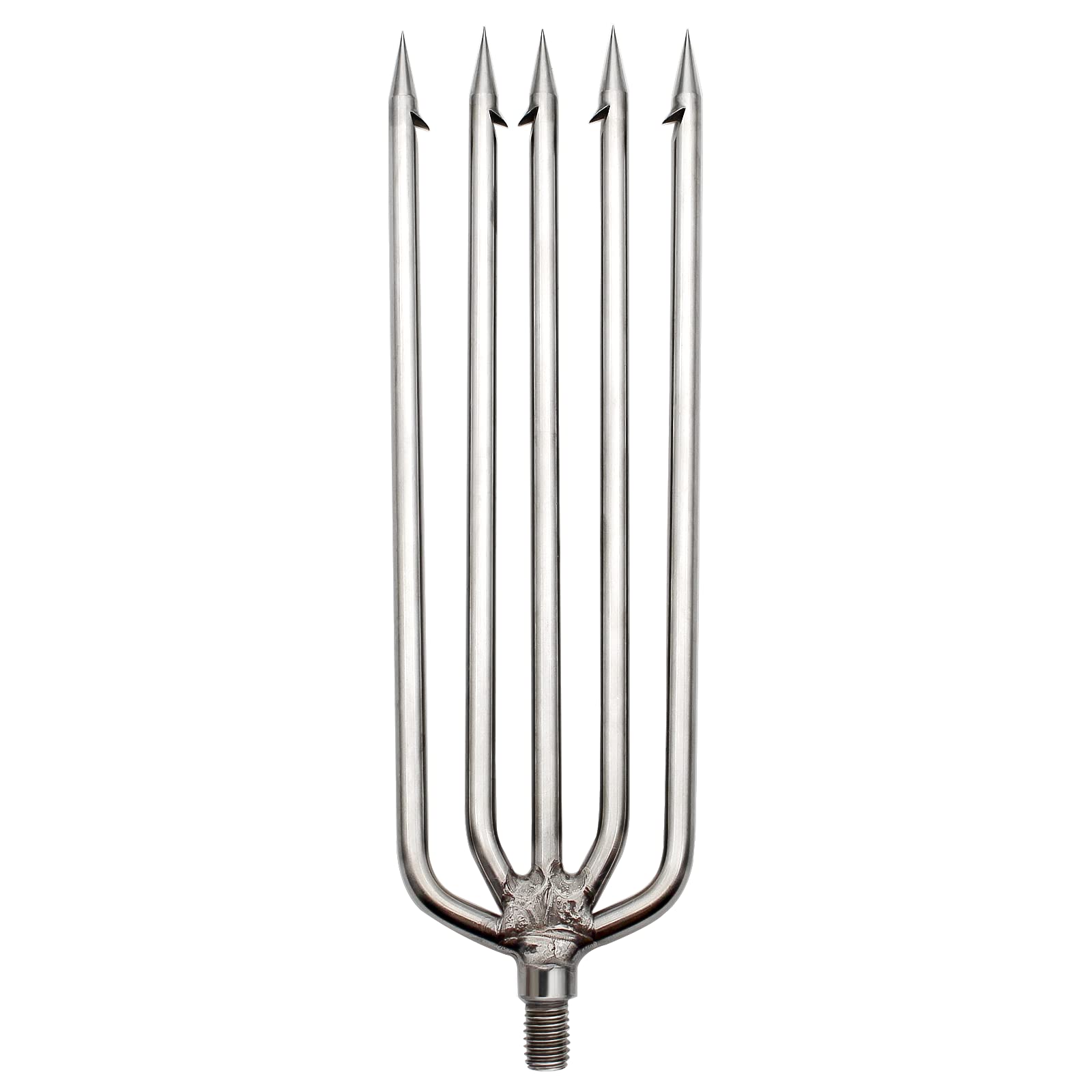
Five tines of tempered steel, each one barbed, welded into a head you bolt to a pole of your own choosing. That is the whole of this spear, and it is enough to put it at the top of this guide. Steel is the reason. The aluminum heads here are lighter and easier to hold steady, but they give when a pike starts thrashing at the edge of the hole, and a steel head keeps its shape for the next fish.

The barbs do more work than the points. A five-tine head does not kill a fish outright; what stops it sliding back off is the barb folded into each tine, and these hold through a lift and a swing onto the ice. The points arrive serviceable rather than shaving-sharp, so plan on ten minutes with a file before your first trip. That is the cheapest improvement available on any head in this guide, this one included.

What comes in the bag is the head, a bolt, and a nut — no pole. That makes the pole your project: five or six feet of hardwood, a hole drilled to match the bolt, and a cord through the butt end so the whole rig does not disappear down the hole. We like that trade, because a pole cut to your own height beats a one-size shaft, and switching heads later takes a minute.

Plain, heavy, and hard to hurt: those are the three things we want from the head on a spear, and this one has all three.

Pros

  • Tempered steel resists bending under a fish
  • Barbs hold through the lift and swing
  • Bolt and nut included to fit your own pole
  • Best value of the heads here

Cons

  • Tine spread is narrow for big pike
  • Welded tine loops are the weak point
Our verdict

Tempered steel, five barbed tines, and a bolt and nut in the bag — this is the head we start people on.

Check Latest Price
2

Best for Small Game and Frogs

Eagle Claw 5-Tine Spear

0 /100
Angler Score Fair

Key details

Tines
5
Material
Aluminum
Shipped Weight
1.8 oz
Check Details on Amazon

The points on this head are the sharpest of the group straight out of the wrapper — no file, no honing, just bolt it on and fish. That sounds like a small thing until you have spent the first evening of a short season touching up a gig by headlamp.

Aluminum is the other half of the pitch. The head ships at about two ounces, so it barely changes the balance of a five-foot pole, and that is what lets you hold steady over a hole through a long, cold sit. The difference shows up late in the day, when a steel head starts to feel like work.

What aluminum gives up is stiffness. Put the tines under a decent fish and they start to bend, which is fine for the sort of fish a spring hole usually gives up and not fine for a heavy pike. If big pike are the target, the steel head above is the safer buy.

Where it earns its keep is everything else: frogs in the shallows, suckers in the spring creek, panfish through a small hole. It is also the head we hand to someone who has never gigged before, because the points do most of the work.

Pros

  • Sharpest points here out of the wrapper
  • Light aluminum balances a long pole
  • Handles frogs, suckers, and panfish

Cons

  • Aluminum tines bend under a heavy fish
Our verdict

For frogs, suckers, and panfish rather than pike, we take this light aluminum head, whose points are the sharpest here out of the wrapper.

Check Latest Price
3

Big Pike

B&M 8PK Spear

80 /100
Angler Score Excellent

Key details

Tines
8
Shipped Weight
13.6 oz
Package Dimensions
11.9 x 6.1 x 0.4 in
Check Details on Amazon

Eight tines, where everything else in this guide has five or three. That extra iron is the entire argument: a wider cage of points closes more of the hole, so a pike has less room to slide off the side of the head on the way up.

It is also the heaviest of these to ship, at 13.6 ounces, and the weight cuts both ways. A heftier head hangs steadier on the end of a long pole; it also loads your wrist over an afternoon of holding it still. Spear from a chair with the pole resting on the frame and you will never notice. Hold it freehand for hours and you will.

The part we cannot tell you is how it mounts, because this listing names no bolt, no nut, and no thread. Assume you are matching hardware to it: check the hole in the head as soon as it arrives, and pick up a bolt that fits your pole before the season rather than the night before.

An eight-tine head is the traditional shape for spearing big pike, and this is the only one in the group offering it. If you already have a pole you trust and you want more points in the water, this is the upgrade — do the hardware errand first.

Pros

  • Eight tines
  • Heavy head hangs steady on a long pole

Cons

  • No bolt, nut, or thread specified
Our verdict

When big pike are the target and you already trust your pole, this is the head we reach for: eight tines cover more of the hole than anything else here.

Check Latest Price
4

Ready to Use

FREGITO Telescoping Gig

82 /100
Angler Score Excellent

Key details

Shaft
2 to 4.9 ft, telescoping
Tines
5-prong
Thread
8 mm
Head Material
Stainless steel
Check Details on Amazon

This is the only spear in the guide that arrives ready to use. The five-prong stainless head is already threaded onto an aluminum shaft that opens to about 4.9 feet and collapses to two, so there is no pole to build, no bolt to match, and nothing loose to lose on the way to the lake.

Length is the catch. At full extension the shaft is shorter than the pole a darkhouse wants, which puts you closer to the hole and limits how deep you can work it. For shallow water, a small hole, or a packable spare, that is a fair trade. For standing over deep water waiting on a pike, it is not.

The shaft is the other weak point. Aluminum telescoping sections flex, and this one can bend once a fish with some weight to it starts to turn. The 8 mm thread at the tip is the useful part: it takes a replacement prong head or a dip net, so the handle keeps working after the head has had a hard life.

Treat it as a backup, a loaner, or the spear that lives in the truck, and it earns its place. Treat it as your primary pike spear and you will be under-gunned.

Pros

  • Complete spear with the shaft included
  • Telescopes from two feet to 4.9 feet
  • 8 mm thread takes other heads or a net

Cons

  • Short reach at full extension
  • Telescoping aluminum shaft flexes under weight
Our verdict

We keep this one for the angler who wants to fish the day it arrives — the telescoping shaft is in the box, which none of the others here manage.

Check Latest Price

How We Tested Ice Fishing Spears

We started by researching the market and pulling together a shortlist of 20 spears, filtering out anything with obvious red flags—loose threaded connections, unsharpened tines, or handles that felt flimsy in photos. We narrowed that to 14 models, then spent two full ice fishing seasons putting them to work. Testing happened on frozen lakes in Minnesota and Wisconsin, in ice shanties and out in the open, plus a few early-spring trips to marshy shallows for frog gigging.

On the ice, we dropped each spear tip-first onto frozen ground from waist height to check durability, then inspected the tines for bends or chips. We sliced through taut rope to gauge sharpness and noted how much pressure it took. We assembled and disassembled each head from its handle a dozen times, watching for cross-threading or wobble. We also measured overall length and weight, then handled each one with thick winter gloves to see if the grip felt secure. For fish-catching, we speared suckers and pike through the ice, paying attention to how well the barbs held and whether the tines spread on impact.

In early spring, we took the spears to shallow marshes and gigged frogs, checking whether the tines damaged the meat or let the frog slip off—what we call frog-friendly performance. Finally, we compared the price of each spear against its materials, welds, and finish, and asked ourselves whether we'd buy it again. The 14 that made the cut all had to prove they could survive a full winter without rusting, loosening, or losing their edge.

How to Choose an Ice Fishing Spear

The Pole Is Half the Purchase

A bare head arrives with a bolt and nut and expects you to supply the rest: five or six feet of hardwood or a commercial spear pole, a drilled hole to match, and a cord through the butt so the whole rig does not vanish down the hole. Match the hole in the head to the bolt, because the hardware is not standardized across gigs.

If you would rather not build anything, buy a spear that ships on a shaft — the FREGITO here is the one that does. Either way, dry-fit the head to the pole weeks before the season rather than the night before the opener.

Tines: How Many, How Wide

Five is the all-rounder and what most of this set uses; three makes a light, quick head for small fish; eight closes the most hole. But tine count is not spread, and one five-tine head can be considerably narrower across the outer points than another. That width is what decides how much room a fish has to slide off the side.

Match it to the fish. A wide head forgives a rushed thrust at a big pike; a narrow one drives cleanly through a small fish without tearing it up. Ask for the measurement across the outer tines before you order — the photos always flatter it.

Steel or Aluminum

Steel holds its shape when a fish thrashes; aluminum is light and gives. That single trade decides most of the choice here. Choose steel when pike are the target and the fish run heavy — the South Bend is the steel head we recommend. Choose aluminum for frogs, suckers, and panfish, and for long sits where a heavier head wears your arm down.

Neither survives being driven into rock. A spear is a lifting tool, not a lever, so keep the points off hard bottom and take the fish's weight on the pole rather than the tines.

Points, Barbs, and Sharpening

The barb is what keeps a speared fish on the tines during the lift, and every head here has one on each point. Sharpness is a separate matter: heads commonly arrive serviceable rather than shaving-sharp, so a mill file and ten minutes at the bench are part of the setup, not a defect.

Sharpen the point and leave the barb alone — grinding the barb back is how fish come off halfway up. Test the edge on a scrap of softwood; if it skates, keep filing.

Check the Rules Before You Order

Spearing rules are set state by state and can cover the season, the species you may take, the gear you may use, and sometimes the individual water. A head that is legal in one state can be prohibited in the next.

Look up your state's fishing regulations for spearing before you spend anything, and confirm your lake allows it at all. It takes ten minutes and it is the only part of this purchase that can get you a citation.

Frequently Asked Questions

Final Verdict

If you want one ice spear to build a pole around, buy the South Bend 5 Tine. Tempered steel, five barbed points, and the bolt and nut in the bag make it the head that will still be straight at the end of a pike season, and it costs less than the widest head here.

Take the Eagle Claw instead if your spearing is mostly frogs, suckers, and panfish and you want the sharpest points out of the wrapper. Choose the B&M 8PK when big pike are the whole point and you already trust your pole, or the FREGITO if you want something you can fish the day it lands.