Best Overall

Quicksilver 25W-40 4-Stroke
Key details
- Volume
- 1 gallon
- Viscosity
- 25W-40
- Engine Type
- 4-stroke
- OEM Replacement For
- Mercury 8M0078628
The number that decides this one is 25W-40, and a large share of four-stroke outboards and sterndrives specify exactly that. So this is the gallon we point most four-stroke buyers to first. It's Mercury's own oil, a direct replacement for Mercury part 8M0078628, which means a Mercury or MerCruiser engine gets the fill it was designed around, and Quicksilver lists it for other brands of four-stroke outboards as well.
What you get over a generic jug is heat and shear control. An outboard doesn't cruise at 2,000 rpm the way a car does; it holds 4,500 to 6,000 rpm for as long as the weather holds, and the viscosity modifiers in a marine oil exist to keep the film from thinning while it does. Then there's the corrosion package, which is the part that matters when the boat sits for five months with salt still on the block.
In use there's nothing to report, which is the report you want from oil. The gallon pours cleanly through a funnel, the grade is legible on the jug without reading glasses, and our four-stroke has run a season on it with steady pressure and a dipstick that hasn't darkened early between changes.
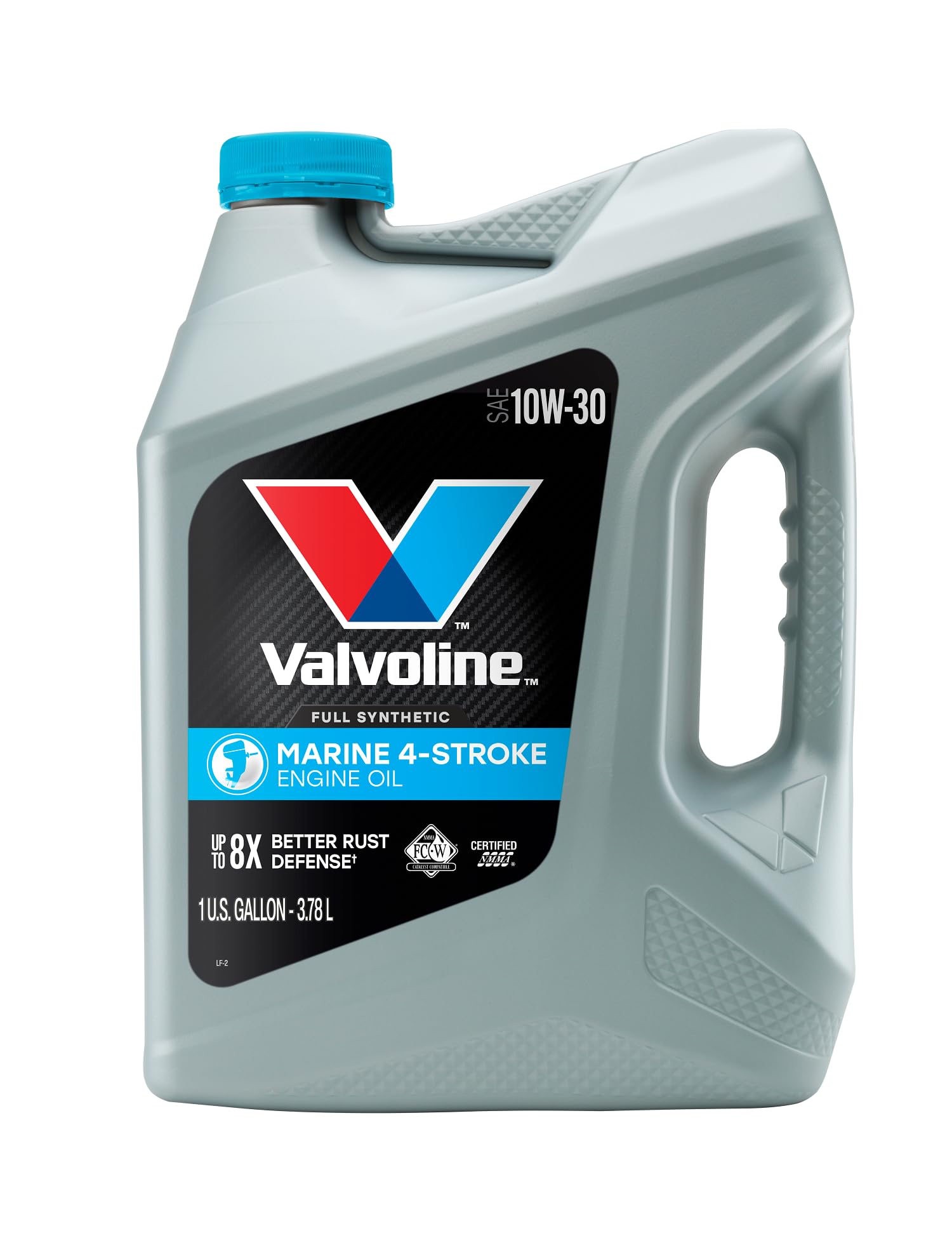
The one thing to get right is the number on the cap. This is 25W-40 and nothing else. If your manual calls for 10W-30 — plenty of four-strokes do — the Valvoline or the Yamalube on this list is the correct purchase instead. Viscosity isn't the part of this decision where anyone gets to have an opinion.
Pros
- Mercury's own 25W-40 fill, not a lookalike
- Viscosity modifiers for sustained high-rpm running
- Corrosion and wear protection for saltwater boats
Cons
- Only offered in 25W-40, so 10W-30 engines need another pick
For most four-stroke outboards and sterndrives, we buy this: OEM-spec protection, a fair price for a gallon, and no guesswork about what's in the jug.