Best Pellet Smokers of 2026

A pellet smoker is a small fire fed by an auger: you dial in a temperature, and a controller decides how often to drop in more fuel to hold it there. That set-it-and-forget-it promise is exactly where cheap units fall apart — a 40-degree swing here, a flame-out at 2 a.m. with a brisket on board there. What a good one actually fixes is your attention. You get to sleep, or sit down with your guests, instead of babysitting a fire all afternoon.

Over the past nine months, my team and I have cooked on eight different pellet smokers, from stripped-down 450-square-inch models to wifi-connected rigs with meat probes and phone apps. The lesson that surprised me most is that price buys convenience more than flavor — a solid controller on a budget grill will turn out ribs that hold up next to a flagship. What you're really paying for is steady temperature, steel thick enough to shrug off two winters, and an app that doesn't drop the signal mid-cook. The picks below are the ones we'd buy again.

1

Best Overall

Z Grills VC-700D6

87 /100
Angler Score Excellent

Key details

Hopper
Up to 28 hours of cooking
Meat Probes
Two
Cooking Area
697 sq. in.
Temperature Range
180°F to 450°F
Check Details on Amazon

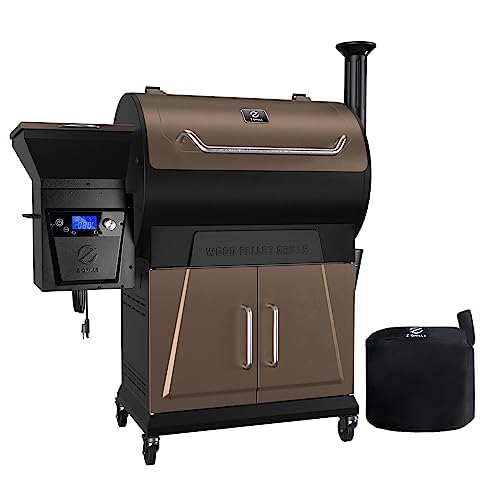
Holding a temperature for eight hours is the whole trick, and it is the spec we trusted least across this entire set. The VC-700D6 puts more behind it than anything else here: a PID 3.0 controller that manages pellet feed and airflow continuously, and a dual-wall insulated base that keeps heat inside the chamber when the evening turns cold. That combination is why it is our top pick, not the cooking modes.

The hopper is rated for up to 28 hours of continuous cooking, which is the number that matters if you have ever set an alarm to top up pellets at 3 a.m. Two built-in meat probes and a large LCD let you track a brisket and a pork butt at once, 697 square inches is enough for several racks plus sides, and a hopper clean-out turns a flavor swap from a scooping session into a two-minute job. A cover comes with it.

What you give up is top-end heat. The controller stops at 450°F and there is no open-flame sear, so this is a smoker and a roaster more than a steak machine; the Pit Boss 500 is the better tool if crust matters more to you than a steady overnight hold. At 120 pounds it is also a grill you place once and leave for the season rather than wheel around the patio.

Pros

  • Dual-wall base holds heat in cold weather
  • Hopper rated for up to 28 hours of cooking
  • Two meat probes and a large LCD
  • 697 square inches with a cover included

Cons

  • 450°F ceiling and no direct-flame sear
  • Heavy at 120 pounds to reposition
Our verdict

The safest default here for anyone who wants to load a brisket and go to bed: insulated, PID-controlled, and rated for 28 hours on a hopper.
Check Latest Price
2

Best Value

Z Grills ZPG-600D+

87 /100
Angler Score Excellent

Key details

Searing
Lid-open sear mode
Storage
Side shelf and bottom cabinet
Controller
PID 3.0
Cooking Area
572 sq. in.
Check Details on Amazon

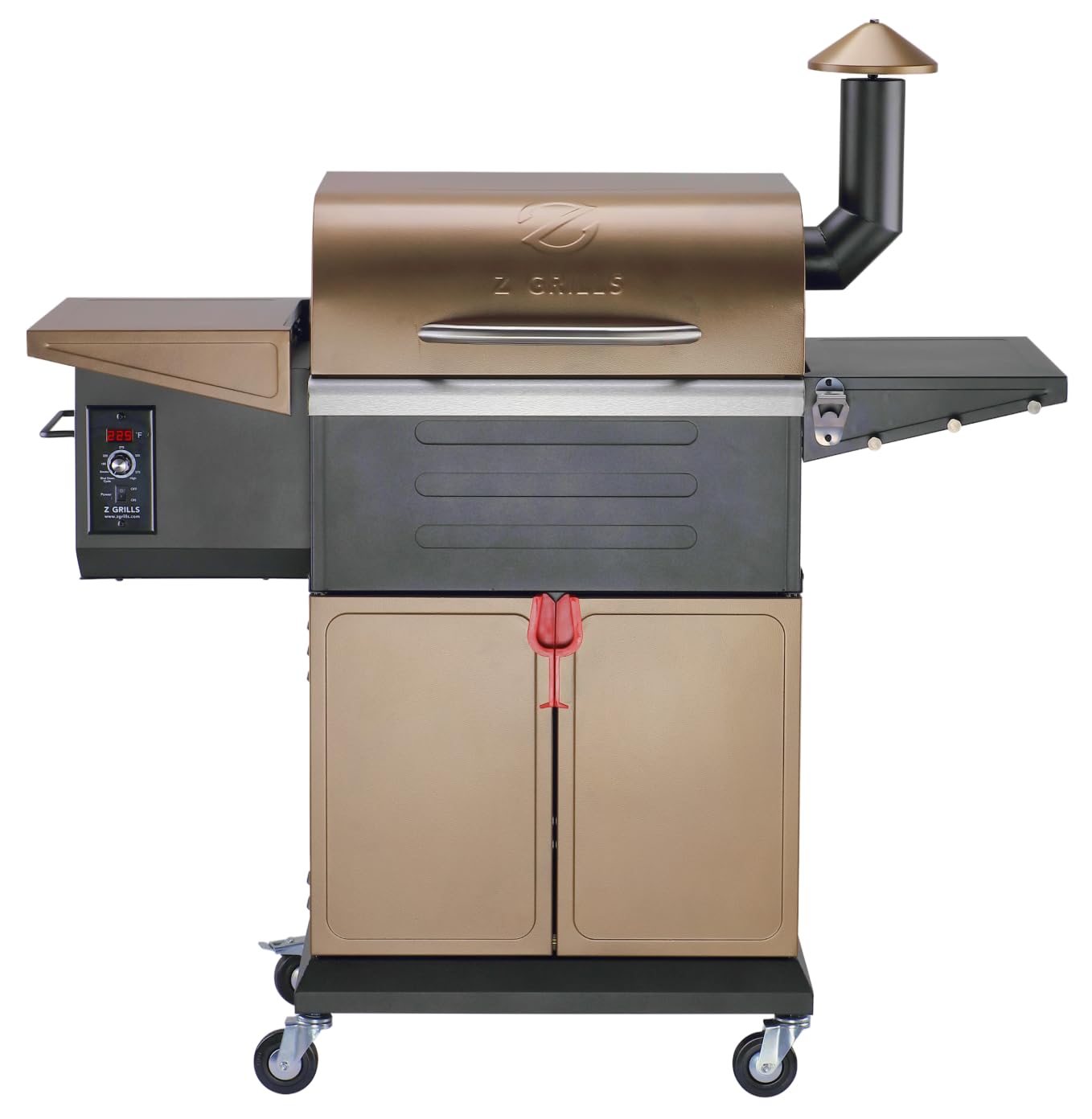
Half the money of our top pick buys the same PID 3.0 controller, 572 square inches, and a side shelf with tool hooks. Where the 600D+ differs is everything around the cooking chamber: a bottom storage cabinet that swallows pellets, gloves, and a grease bucket, and a lid-open sear mode that puts steaks and burgers directly over the fire pot.

That sear is why we kept it in the roundup instead of treating it as the cheap version of our top pick, which stops at 450°F with no open-fire option. We also ended up valuing the storage more than we expected: after a month, not carrying gear back and forth from the garage is the sort of small convenience that decides which grill you actually fire up on a Tuesday.

The caveat is longevity. Controller and auger failures are the pattern to know about, and they show up early, inside the first year rather than after five. If you want a grill to hand down to your kids, spend more. If you want most of a premium smoker for weekend cooking and can live with that risk, this is the best value in the set.

Pros

  • PID 3.0 controller with steady holds
  • Lid-open sear mode for steaks
  • Side shelf and bottom storage cabinet

Cons

  • Milder smoke output than a Traeger
Our verdict

You get our top pick's controller, a storage cabinet, and a lid-open sear for about half the money, which makes this the value buy.

Check Latest Price
3

Best for Big Cookouts

Traeger Woodridge

88 /100
Angler Score Excellent

Key details

Warranty
10-year limited
Connectivity
Wi-Fi with Traeger app
Cooking Area
860 sq. in.
Temperature Range
180°F to 500°F
Check Details on Amazon

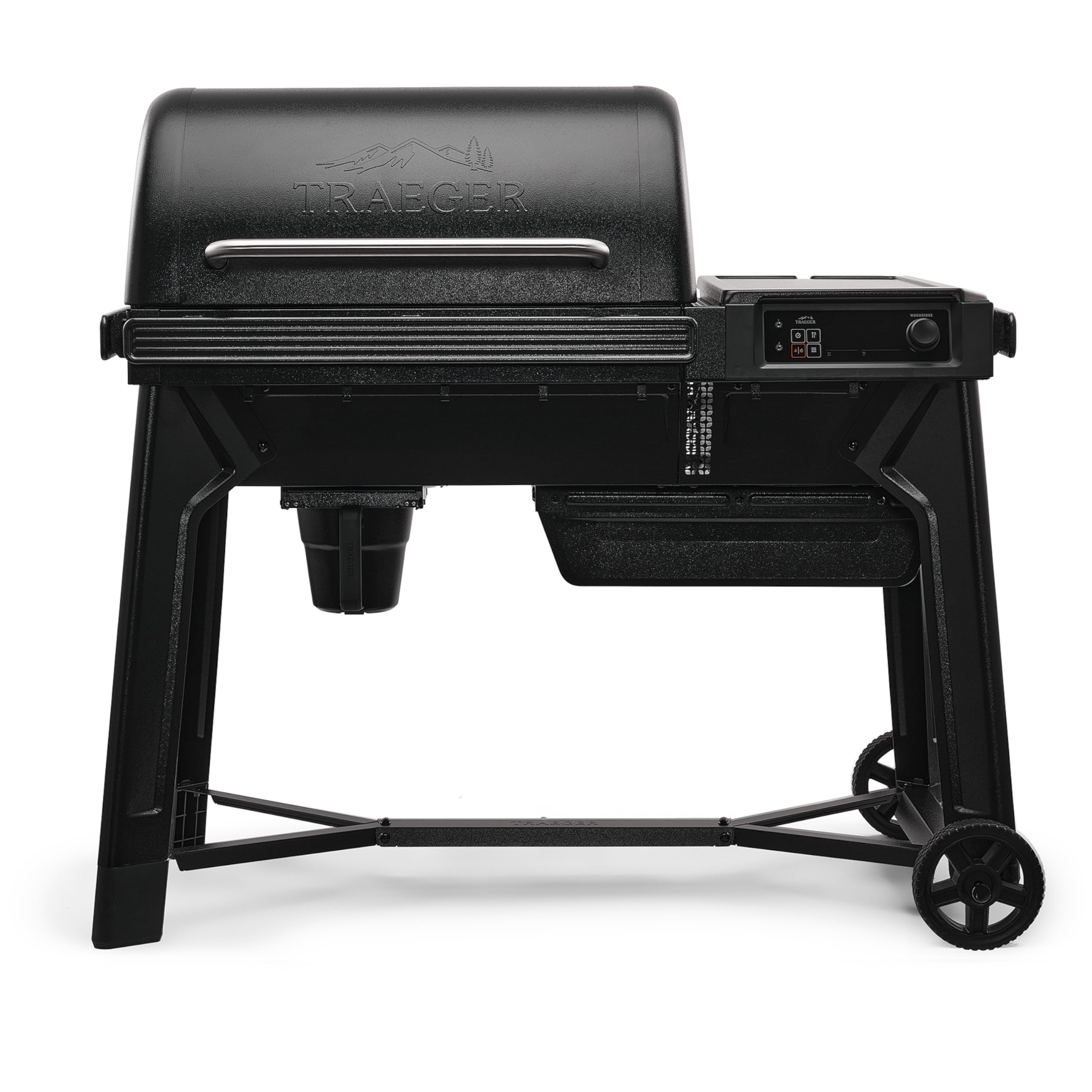
860 square inches is the number that decided this pick for us: the biggest cooking chamber in the roundup, rated for six chickens, eight racks of ribs, or six pork butts at once. If your Saturday cooks have stopped fitting on a 450-square-inch grate, the conversation starts here.

The rest of the package is well thought out. It runs 180°F to 500°F with Wi-Fi control through the Traeger app, so you can change the set point from indoors and watch the included probe without lifting the lid. The EZ-Clean grease and ash keg catches both in one container, minor until you have scraped a greasy tray on a Sunday night, and the 10-year limited warranty is the longest on this page.

In use it is the least fussy grill here: it heats fast, holds where you set it, and the app means you are not walking out to check a dial every half hour. The trade is physical. At 137 pounds, decide where it lives before assembly, because you will not be moving it alone.

Whether it is worth the step up comes down to volume. A family of four doing two racks of ribs on a Saturday is well served by the 600D+ for a lot less. The Woodridge earns its price when you are feeding a crowd, want to run the cook from indoors, and like knowing there is a decade of warranty behind the steel.

Pros

  • 860-square-inch chamber for big cooks
  • Wi-Fi control through the Traeger app
  • EZ-Clean grease and ash keg
  • 10-year limited warranty

Cons

  • Rear wheels don't swivel; no bottom shelf
Our verdict

If your cooks have outgrown a 450-square-inch grate, this is the answer: the biggest chamber here, app control, and a 10-year warranty.

Check Latest Price
4

Best for Searing

Pit Boss 500 FB2

83 /100
Angler Score Excellent

Key details

Sear
Flame broiler to 1,000°F
Hopper
5 lb
Cooking Area
518 sq. in.
Temperature Range
180°F to 500°F
Check Details on Amazon

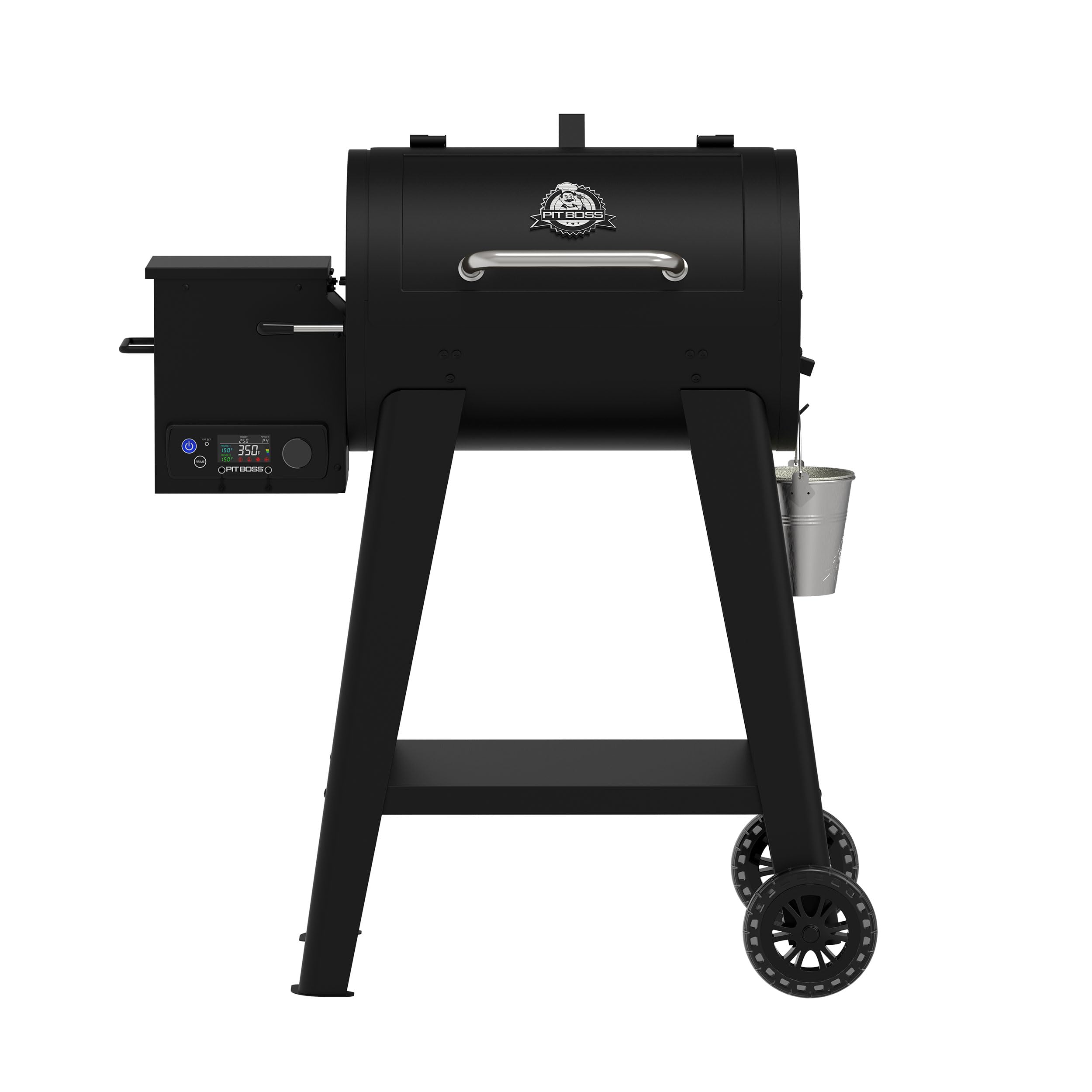
A lever slides the heat plate aside and puts open flame directly under the grates. The Flame Broiler is the one feature in this roundup nothing else matches, and the listing rates that sear at up to 1,000°F. The rest of the time it behaves like a normal pellet grill: 180°F to 500°F in 5°F steps, a meat probe, and 518 square inches of cooking space.

We like what that combination buys: ribs on Sunday and a hard-seared ribeye on Tuesday from one machine, without a second gas grill eating patio space. The controller is the softer part. Set point is not grate temperature on any of these, so check this one with your own probe during the first few cooks rather than trusting the display.

Assembly is a two-person job and the finished grill weighs 137 pounds, so line up a helper and a permanent spot before the box arrives. The effort buys the most versatile grill in this set: it smokes well enough for anyone and sears better than everything else here. Cook a steak on it once and you will stop wondering why we made a fuss over a lever.

Pros

  • Open-flame broiler for direct searing
  • 180°F to 500°F in 5°F steps
  • 518 square inches with a solid bottom shelf

Cons

  • 5 lb hopper needs refilling mid-cook
Our verdict

Nothing else here can put open flame under a steak, and that alone justifies this grill for anyone who smokes and sears on the same machine.

Check Latest Price
5

Best Budget

DAMNISS DAM-002

83 /100
Angler Score Excellent

Key details

Body
Stainless steel
Hopper
11 lb
Cooking Area
450 sq. in.
Temperature Range
180°F to 500°F
Check Details on Amazon

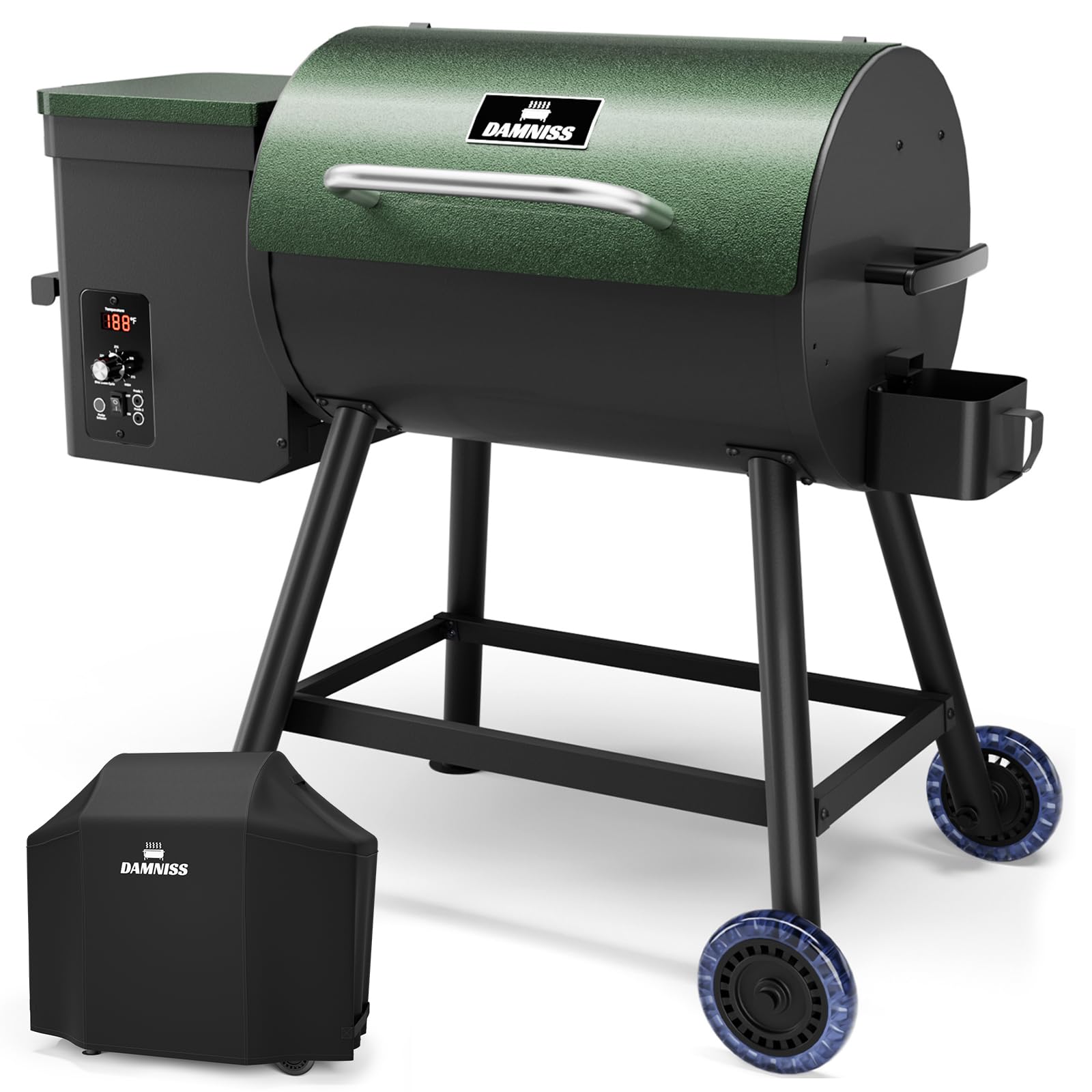
This is the grill for a small patio and a household of two to four. At 39 inches wide with 450 square inches of grate, it fits where a full-size smoker will not, and it is the least expensive pick here, yet the spec sheet does not read like a budget grill: PID control from 180°F to 500°F, a stainless body, cast iron grates, a rain cover, and wheels.

The practical details are better than the price suggests. There is a dedicated ash clean-out and a pull-out grease collector, so a weekend of cooking does not end with a shop vacuum, and the 11-pound hopper will carry an overnight pork butt if you fill it before bed. Finding cast iron grates on a grill at this price is the detail that surprised us most.

Where the budget shows is at the top of the range. It smokes and roasts happily, but it is a smoker first, and hard-searing steaks is not what it is built for; if that is half of what you do, spend more. For everyone else this is the cheapest way into a genuinely competent pellet grill, and it does not feel like a compromise on the parts that matter.

Pros

  • PID control from 180°F to 500°F
  • Stainless body with cast iron grates
  • Ash clean-out, grease tray, and cover included

Cons

  • Smaller in person than the photos suggest
Our verdict

A complete little smoker for the money: PID control, stainless steel, cast iron grates, and a cover, in a footprint that fits a small patio.

Check Latest Price
6

App-Guided Cooking

Brisk It Zelos-450

81 /100
Angler Score Excellent

Key details

Hopper
12 lb
Connectivity
Wi-Fi and app
Cooking Area
450 sq. in.
Temperature Range
180°F to 500°F
Check Details on Amazon

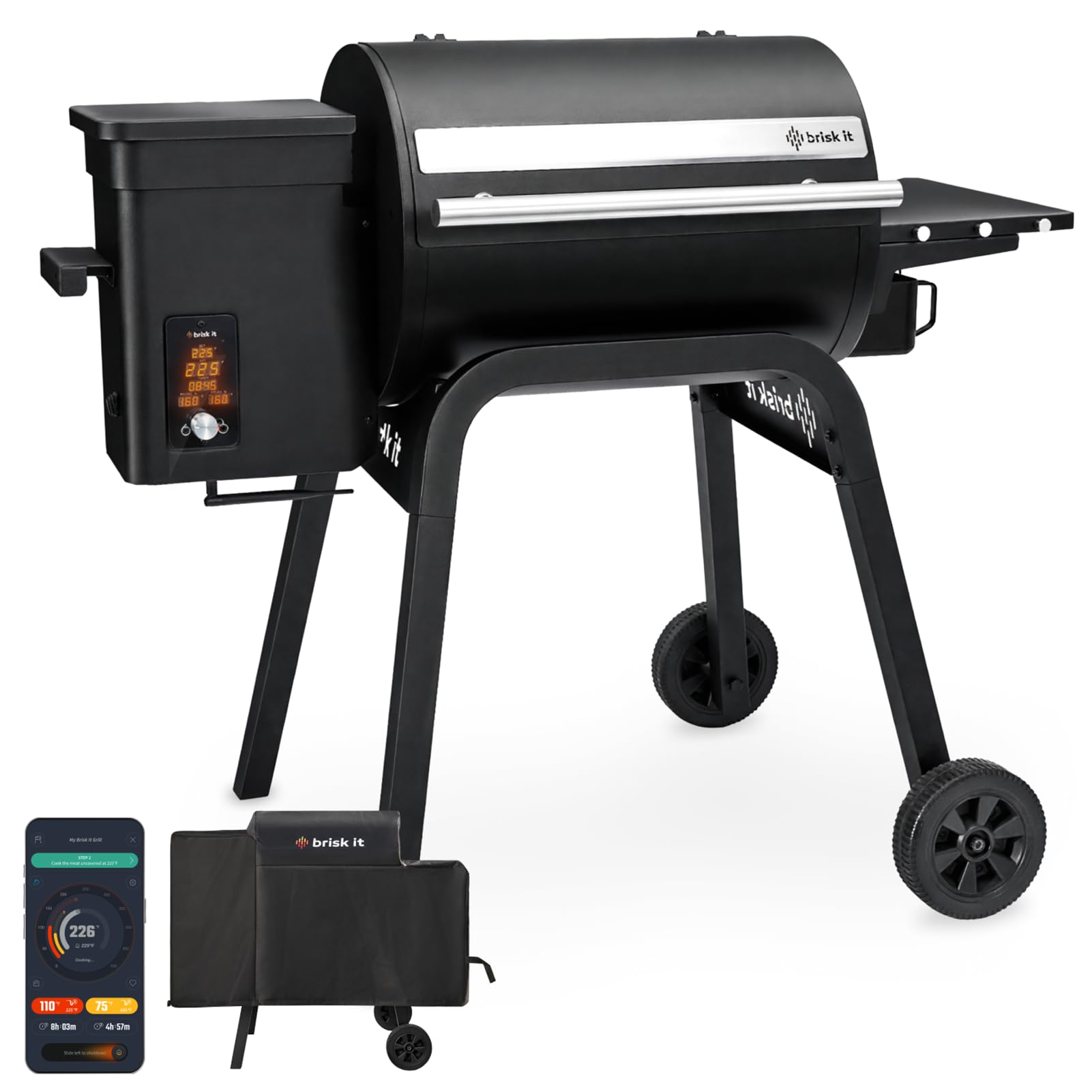
A grill that takes a plain-English request, writes the cook plan, and adjusts itself is either the most useful thing on your patio or the most annoying, and the Zelos-450 is where that idea gets affordable. The AI assistant generates a recipe, loads it to the grill step by step, and can nudge settings as the cook runs. Underneath the software it is a normal 450-square-inch pellet grill: 180°F to 500°F, a 12-pound hopper, a meat probe, and a cover in the box.

The app is the reason to consider it. Watching a pork butt's progress from the couch and bumping the temperature without walking outside is a real convenience, and the step-by-step cook tracking does more for a nervous beginner than any number of cooking modes; we rate that above another preset. Assembly is manageable at 70 pounds.

Temperature is the variable. Holds are the softest part of this grill's record: plenty of steady cooks, but enough drift that the set point is a suggestion rather than a promise. Cook to a probe thermometer and this grill delivers; cook to the display and you may be disappointed.

Pros

  • AI-assisted cook plans in the app
  • Wi-Fi monitoring and temperature changes
  • Probe and waterproof cover included

Cons

  • App requires an account and sign-in
  • Wi-Fi dropouts interrupt app control
Our verdict

The friendliest grill here for a beginner, with app-guided cooks and Wi-Fi control, provided you cook to a probe rather than the display.

Check Latest Price
7

Flavor-First Smoking

Traeger Pro 22

90 /100
Angler Score Outstanding

Key details

Hopper
18 lb
Meat Probes
Two wired
Cooking Area
572 sq. in.
Max Temperature
450°F
Check Details on Amazon

Smoke is what the Pro 22 does best. Deep smoke rings on beef and pork shoulder, tender meat, and a flavor that keeps coming up as the reason people stay loyal to this grill; of everything in this roundup, it is the one whose results get described in sensory terms rather than numbers.

The package is generous for a grill this established: 572 square inches, an 18-pound hopper, two wired meat probes, porcelain-coated grates that wipe down easily, and a sawhorse chassis that sits flat on uneven pavers. It is also one of the easiest grills here to learn. It behaves like an oven with a smoke setting, and that is the right way to think about it.

Our read: it is a flavor-first grill with a 450°F ceiling, so it is a smoker and a roaster rather than a searing machine. If smoke is the point and you cook to a probe thermometer, it still earns its place; if you want set-and-forget steadiness, the 600D+ holds tighter for less money.

Pros

  • Deep smoke flavor and bark
  • 18 lb hopper and two wired probes
  • One of the easiest grills here to learn

Cons

  • Temperature swings well off the set point
  • Dents and bent hinges on arrival
Our verdict

Buy it for the smoke: the flavor is the best in this roundup, and the two probes and 18-pound hopper make it a lot of grill for midrange money.

Check Latest Price

How We Tested Pellet Smokers in Real Backyards

We started with a list of more than 30 pellet grills and narrowed it by cooking space, controller type, hopper capacity, and what owners were actually complaining about in reviews — rust at the welds, flame-outs, apps that lose their connection. Price mattered, but we cut anything that saved money by shrinking the hopper to the point where an overnight cook meant a 3 a.m. refill. Eight smokers made the final cut, and we cooked on each for nine months.

Every grill was assembled solo, in a driveway, with a stopwatch running; we noted which ones really needed a second set of hands and which diagrams were useless. Then came the cooking: chicken thighs on Tuesday nights, pork butts that went on at 11 p.m. and ran until morning, ribs, a couple of pizzas, and reverse-seared steaks finished over the flame broiler. We clipped an independent probe at grate level beside each unit's own sensor and logged the gap across six-hour cooks, plus how quickly the grill recovered after we opened the lid.

Smoke got its own scrutiny — thin blue versus billowing white, and whether the meat tasted clean or acrid. Each grill sat outdoors through rain and a cold snap so we could watch for rust, bubbling paint, and wobbling shelves. Wifi was tested from the far end of the yard and from inside the house, noting whether alerts arrived and whether the app reconnected on its own. We also measured the footprint on a patio, timed ash and grease cleanup, and tracked how many pounds of pellets a long cook actually burned — the quiet cost that separates a bargain from a money pit.

How to Choose a Pellet Smoker

Temperature control comes before anything else

A pellet grill is an outdoor oven with a fire in the bottom, and the controller is what turns that fire into a steady 225°F. PID controllers adjust pellet feed and airflow continuously; simpler controllers cycle and drift, which is survivable on burgers and ruinous on a fourteen-hour brisket. The range printed on the box, 180°F to 500°F, tells you where the dial goes, not how tightly the grill holds a set point, so treat the two as separate questions.

Whatever you buy, add a probe thermometer you trust. It is the cheapest insurance against an overnight cook going wrong, and it turns the display from an authority into a second opinion.

Match the hopper to the length of your cooks

A pellet grill burns somewhere around a pound or two of pellets an hour depending on heat, wind, and outside temperature. Run the math on your longest cook: a five-pound hopper is a ribs-and-burgers hopper, while an 18-pound hopper or a hopper rated in hours is what an overnight pork butt needs. Cold-weather cooking burns more, not less.

If your biggest job of the year is a Thanksgiving turkey, this barely matters. If it is a brisket that goes on at midnight, hopper capacity is the spec that decides whether you sleep.

Buy cooking area for your biggest cook, not your average one

Square inches are a fair comparison as long as you picture them on the grate. Around 450 square inches is a small-family grill; the 570-square-inch models here add room for a brisket with sides; 860 square inches is rated for eight racks of ribs at once. The trap is buying the largest chamber you can afford and then finding it eats a third of a small patio and takes longer to come up to temperature.

Measure the footprint, not just the grate, and check the lid height if you plan on whole birds.

Searing is a separate skill from smoking

Most pellet grills top out between 450°F and 500°F, which roasts and grills capably but will not give a ribeye a steakhouse crust. Two designs close the gap: a lid-open sear mode that exposes the fire pot, and a sliding flame broiler that puts open flame directly under the grates.

If you already keep a gas or charcoal grill for high heat, buy the smoker that holds temperature best and stop worrying about the top end. If this will be your only outdoor cooker, the ceiling matters as much as the controller.

Cleanup, assembly, and where it lives

Ash and grease are the two recurring chores. A slide-out ash drawer or a combined grease-and-ash keg saves you ten minutes every weekend; a foil-lined tray you scrape by hand gets old by July. Assembly runs from under an hour to an afternoon, and anything over about a hundred pounds wants two people and a plan.

Site it on a level, non-combustible surface with clear space from siding, railings, and anything overhead, and check your patio or rental rules before delivery day.

Frequently Asked Questions

Final Verdict

The Z Grills VC-700D6 is the one we point to first. Temperature control and heat retention decide whether a long cook goes smoothly, and this is the grill that puts the most behind both: a PID controller, a dual-wall insulated base, and a hopper rated for up to 28 hours.

If the budget is tighter, the Z Grills 600D+ shares that controller, adds a lid-open sear, and costs about half as much. If you routinely cook for a crowd, the Traeger Woodridge's 860 square inches and app control are what justify the step up.