
Best Rain Jackets of 2026

A rain jacket has one job, and it stumbles over the same two hurdles every time: the shell that genuinely keeps water out usually turns into a sauna by the second block, and the thin one you can stuff into a tote rarely has much going on in the warmth department. I've owned both — the sweaty trash-bag shell and the "waterproof" jacket that soaked through at the shoulders in twenty minutes. The right one lives in that narrow middle: it beads water off in a real downpour, breathes well enough that you aren't peeling it off at the door, and cuts wind when the temperature drops.

Over eight months we wore 14 rain jackets through commutes, school runs, dog walks in sideways drizzle, and a few genuinely miserable hikes, and the gaps came down to fit and finish more than spec sheets. Nobody tells a first-time buyer this: most shells are cut to layer a fleece underneath, so if you're between sizes and plan to wear it over a sweater, size up. The eight that made the cut are below, from packable emergency layers to long trenches you'd wear to dinner.

1

Best Overall

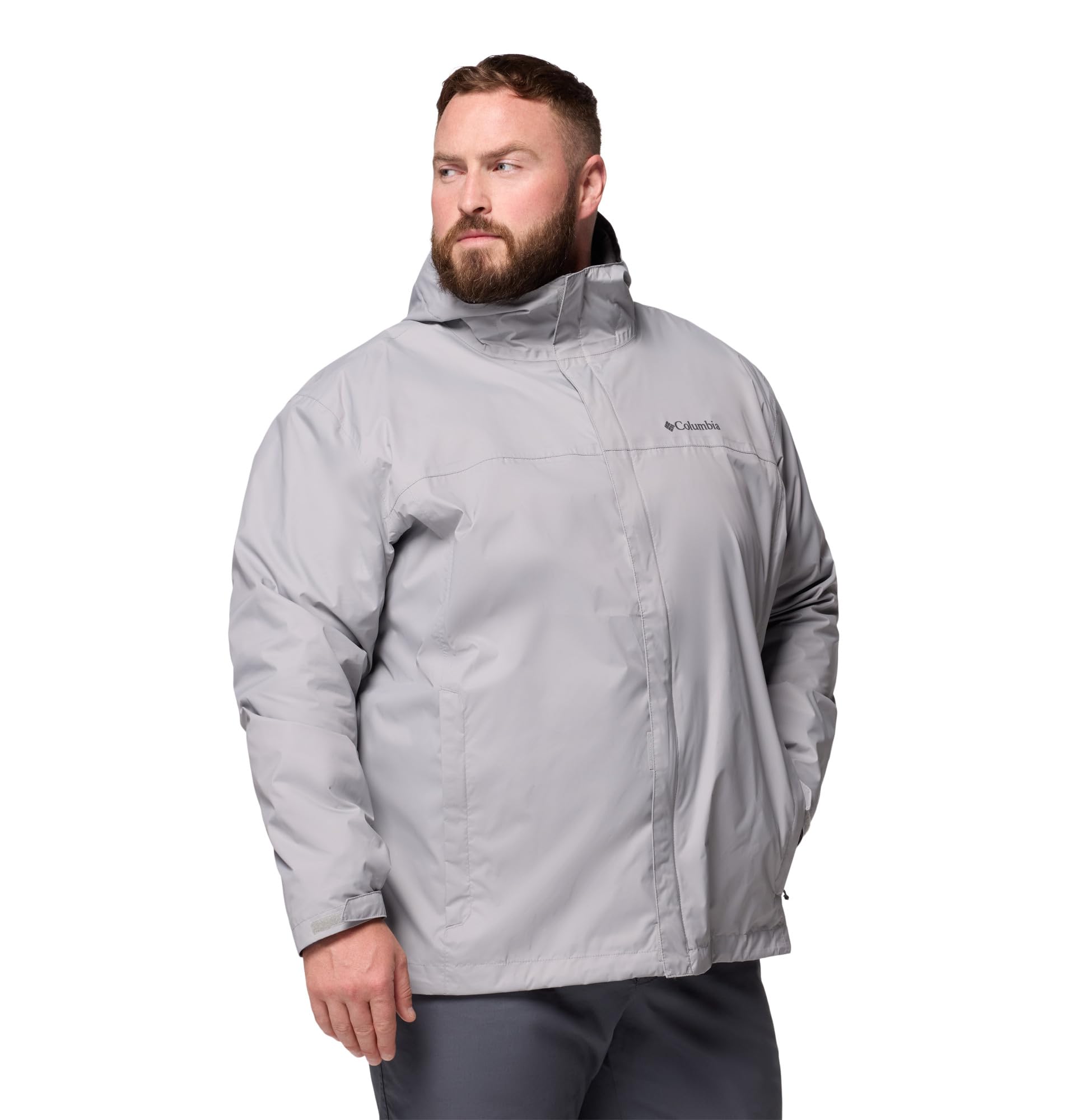
Columbia Watertight II

94 /100
Angler Score Outstanding

Key details

Model
153389
Style
Rain jacket
Department
Men's
Check Details on Amazon

Every other jacket here gets compared to this one, and none of them has knocked it off. The Watertight II is a plain waterproof shell that does the unglamorous thing well: it keeps a long, steady rain off your back, packs into a daypack, and doesn't cook you on the walk home. If you want one jacket for a wet climate and you're not chasing a look, this is the one we point to.

Packability is what keeps it in rotation. It rolls up smaller than any of the lined coats here, dries fast once you're indoors, and blocks wind on an exposed ridge without turning into a sauna when you step into a shop. The hood sits close enough to stay up in weather, and the fabric has enough body that it hangs like a jacket rather than a bag.

The one thing to get right is size. The body and sleeves run generous, so if you're between sizes and won't layer much, take the smaller one; if you plan to wear a fleece under it from October onward, keep your usual. Otherwise there's little to negotiate. It's a shell, it doesn't pretend to be a coat, and the money goes into the waterproofing rather than insulation.

Pros

  • Keeps water out through sustained rain
  • Packs small enough for a daypack
  • Blocks wind without overheating indoors
  • Dries quickly between showers

Cons

  • Unlined
Our verdict

This is the jacket we tell most people to buy: a proper waterproof shell that handles an all-day rain and disappears into a daypack afterward.

Check Latest Price
2

Best for Women

Columbia Arcadia II

93 /100
Angler Score Outstanding

Key details

Model
1534113-526
Style
Raincoat
Department
Women's
Check Details on Amazon

The detail that makes the Arcadia II feel more expensive than it is sits at the front zip: a velcro storm flap over the zipper, plus velcro tabs at the cuffs, closing off the two places rain usually finds a way in. It's a small thing, and plenty of coats at this level skip it.

This is the women's jacket we recommend first, and the reason is boring in the best way: water beads on the surface and stays out, including through a couple of hours of proper rain. The fabric is quiet, with none of the rustle you get from a cheap shell, and it packs down small enough to keep in a tote. The hood covers your face rather than perching on the back of your head, and the hand pockets are deep enough for gloves.

Sizing is the one place it needs care. The chest and shoulders run small, so if you're layering a sweater — or you're broad through the back — go up rather than trusting your usual. Get that right and it's an easy jacket to live with: light enough for a summer shower, roomy enough for a fleece in April, and quiet enough that you forget you're wearing a raincoat.

Pros

  • Beads water and stays dry through real rain
  • Storm flap and velcro cuffs close the gaps
  • Quiet fabric and a compact pack size
  • Hood covers the face properly

Cons

  • No interior pockets
Our verdict

The women's version of our top-pick formula and the one we point women to first — just order up if you plan to layer.

Check Latest Price
3

Best Premium

The North Face Antora

94 /100
Angler Score Outstanding

Key details

Model
NF0A7QEY
Sizing
Standard and big sizes
Department
Men's
Waterproofing
Waterproof
Check Details on Amazon

This is the one for the person whose raincoat lives in a hiking pack rather than a coat closet. The Antora is cut roomy through the shoulders and chest, so a fleece or a light puffy goes underneath without the shell pulling tight across your back — the fit problem that turns most waterproof jackets into a wrestling match halfway up a hill.

It's the priciest jacket here, and what the money buys is consistency. Water beads and runs off rather than soaking into the face fabric, and it keeps doing that through the kind of drizzle that lasts all day. Wind is a non-issue, the pockets are big enough for gloves, and the whole thing packs into the top of a pack without a fight.

The caveat is fit. The sleeves run long — noticeably past the wrist on shorter frames — and the body is generous enough that a slim build will swim in it. Treat it as a shell rather than a coat, too: it has no insulation of its own and won't stand in for a winter jacket. For a rainy hike with a fleece underneath, none of that gets in the way.

Pros

  • Waterproofing holds through all-day drizzle
  • Room enough for a fleece or puffy
  • Blocks wind on exposed ridges
  • Big pockets and easy packing

Cons

  • Sleeves run long past the wrist
  • Priciest pick here, with no insulation
Our verdict

Worth the premium if you hike in rain and want room for a mid-layer, though the long sleeves and roomy body need a try-on.

Check Latest Price
4

Best Insulated for Men

33,000ft Men's Fleece-Lined

92 /100
Angler Score Outstanding

Key details

Hood
Hooded
Lining
Fleece lined
Department
Men's
Waterproofing
Waterproof
Check Details on Amazon

The fleece inside this one changes what it's for. Instead of a shell you pull on over a sweater, it becomes the layer itself — warm on a raw morning, soft against bare arms, and still shedding steady rain. For a cold, wet walk where you're not moving fast, that's a better arrangement than three separate pieces.

It's warm in a way that surprises you for something this light. On a windy morning it traps heat without the bulk of a puffy, and the fabric has a tight weave that reads closer to a softshell than technical gear, which is why it gets worn to the store as often as to a trailhead. Seams and zippers feel solid, and the pockets sit where your hands actually fall.

The trade-off is ventilation. The warmth that feels good standing at a trailhead turns clammy the moment you start climbing, and there are no vents to dump it. The sleeves are cut narrow, too, so size up if you plan to wear anything more than a t-shirt underneath. For cold, wet, low-effort days it's the jacket we reach for; for anything aerobic, it's the wrong tool.

Pros

  • Fleece lining for cold, wet mornings
  • Warm without a bulky puffy
  • Solid seams and smooth zippers
  • Sheds steady rain on a walk

Cons

  • No pit zips or adjustable cuffs to vent heat
Our verdict

The lined shell we reach for on cold, wet mornings — as long as you're not working hard enough to sweat in it.

Check Latest Price
5

Best Insulated for Women

Outdoor Ventures Women's Fleece-Lined

91 /100
Angler Score Outstanding

Key details

Shell
Softshell
Lining
Fleece lined
Department
Women's
Waterproofing
Waterproof
Check Details on Amazon

The two-way zipper sounds like a small thing until you sit down in it. Unzip from the hem and the coat opens over your lap instead of bunching up under it, which is why this one gets worn in the car, on a bike, and on a cold bench at a wet Saturday game.

Underneath the details, it's a fleece-lined softshell built for cold, windy, wet weather rather than a summer shower. The lining is what sells it: soft enough to wear over a t-shirt, warm enough that you skip the sweater, and the shell sheds water instead of soaking it up. There's an inner drawstring at the waist if you want a shape, and the hood is roomy enough to pull up over a hat.

Pockets are where it quietly wins. Zippered hand pockets sit where you'd expect, and there's more storage inside the lining than most coats at this level bother with — enough for a phone, keys, and the small stuff that otherwise ends up in your jeans.

What we didn't expect is how little it looks like rain gear. With the waist cinched it reads as a proper coat, the kind you can wear to dinner after a wet walk, and that's why it gets picked over the technical shells hanging in the hall. It's the difference between a jacket you keep in the car and one you actually wear.

Pros

  • Fleece lining for cold, windy days
  • Two-way zipper opens from the hem
  • Zippered hand pockets plus interior storage
  • Reads as a coat, not rain gear

Cons

  • Bulkier than a shell; it won't pack into a bag
Our verdict

One coat for the wet half of the year: fleece-lined, pocket-heavy, and cut to look good doing errands.

Check Latest Price
6

Best Long-Length

LOMON Women's Long Raincoat

91 /100
Angler Score Outstanding

Key details

Sizes
S to XXL
Length
Long
Department
Women's
Waterproofing
Waterproof
Check Details on Amazon

Length is the whole argument here. A hip-length shell keeps your top half dry and lets whatever runs off the hem land on your legs; this coat keeps going below the hip, so a twenty-minute walk to the station doesn't end with wet thighs and a cold seat on the bus.

It's also the best-looking coat on this list, which counts for something when you're wearing it four days a week. The drawstring waist pulls it into a shape, the hood is generous, and the fabric has a smooth, slightly stiff hand that sheds water instead of absorbing it. It's lined, so it's warmer than a plain shell without pretending to be a winter coat.

Get the size right and the appeal is simple: a raincoat that covers more of you than a hip-length shell, looks like you chose it on purpose, and costs less than the big-brand jackets here. It's the one we suggest to people who walk or take transit to work and would rather arrive looking put together than rained on — and it's the one that draws the most compliments, which nobody expects from rain gear.

Pros

  • Long hem keeps rain off your legs
  • Drawstring waist gives it a coat shape
  • Lined for cool weather
  • Handles steady rain, not just drizzle

Cons

  • Runs small through the chest and shoulders
Our verdict

Buy it for the length: rain that runs off a short jacket ends up on your legs, and this one keeps going.

Check Latest Price
7

Best Packable

33,000ft Women's Packable

92 /100
Angler Score Outstanding

Key details

Hood
Hooded
Department
Women's
Packability
Packable
Waterproofing
Waterproof
Check Details on Amazon

It comes with its own stuff sack, and the whole jacket disappears into it — small enough to live in a tote bag or the bottom of a carry-on, which is the point. You forget about it until the sky turns, and then it's there.

On the move it's the most thoughtful of the packable jackets. There are zipped vents under each arm, so you can dump heat on a climb without stopping to strip off, and there are enough zippered pockets — including one inside — that a phone and keys don't end up in a puddle.

It handles rain properly, too. It isn't a hard shell for a day-long downpour, but for a wet week of sightseeing, a hike that turns soggy, or a commute that starts dry, it does the job and dries fast once you're inside.

The annoyance is getting it back into the sack. The fabric doesn't fold as neatly the second time, and it takes a couple of tries to close the zip, so roll it rather than folding it. That's a small gripe about a jacket that earns its place by being the one you actually have with you.

Pros

  • Packs into its own sack for travel
  • Underarm vents dump heat on a climb
  • Zippered pockets, including an internal one
  • Dries fast once you're out of the rain

Cons

  • Unlined and thin; warmth has to come from layers
Our verdict

The packable one we take on trips — vents, pockets and a stuff sack, with warmth coming from your layers.

Check Latest Price
8

Showers and Commutes

OTU Men's Rain Jacket

91 /100
Angler Score Outstanding

Key details

Hood
Hooded
Weight
Lightweight
Department
Men's
Waterproofing
Waterproof
Check Details on Amazon

The OTU is the cheapest jacket here, and it's better than that suggests: a light, hooded shell with two zippered hand pockets and a zippered inside pocket, which is more storage than a couple of the pricier coats on this list offer. It's the one to buy if you want a rain jacket in the car, the boat bag or the office drawer without thinking about it again.

It's genuinely light, light enough to forget in a pack, and the fabric doesn't turn clammy the way a cheap shell can on a warm, wet day. The cut runs large and the hood is big enough to swallow a smaller head, so if you're between sizes, take the smaller one.

Where it gives ground is in real rain. It handles a shower and a drizzle without complaint, but in a long, heavy downpour water can find its way through, and you'll feel it before the walk is over. That's the trade for the price: this is a jacket for the rain you get caught in, not the rain you plan a day around. Keep it in the car or the bottom of a daypack and it will earn its keep.

Pros

  • Two zip hand pockets plus an inside pocket
  • Very light and easy to keep in a bag
  • Lowest price here by a wide margin

Cons

  • Lets water through in prolonged, heavy rain
Our verdict

A cheap, light shell for showers and the car — not the jacket to trust in an all-day soaking.

Check Latest Price

How We Tested Rain Jackets Through Eight Months of Wet Weather

We started with roughly 60 jackets — the familiar outdoor names plus a handful of budget shells that surface on every search — and thinned the field by reading spec sheets: waterproof ratings, whether seams were sealed or just stitched, how adjustable the hood actually was, and which sizes each jacket truly came in, including whether it ran to big-and-tall or plus. Price counted, but a jacket got dropped faster for a missing hem cinch than for costing $40 more.

The 14 finalists went everywhere with us for eight months. Each did a 40-minute walk to work in steady rain, a two-hour hike with a loaded pack, a cold windy evening around 45 degrees, and a week crammed into a daypack. For the shower test we taped paper towels beneath the shoulder and hood seams, ran the water for five minutes, then checked for damp spots. We turned our heads hard to see whether a hood stayed put or slid over our eyes, worked pit zips one-handed mid-walk, and noted the point at which a shell over a t-shirt stopped being enough and a fleece had to go underneath.

Fit and sizing caused the most surprises. Two testers tried each size when we could, measuring chest, sleeve, and hem against the brand's own chart, then pulling a hoodie on underneath to see if the shoulders still moved freely. We also held each fabric and trim in daylight next to the product photo, since a color that reads olive on a screen can arrive closer to gray, and noted which ones looked shiny or plasticky in person rather than on a model.

The jackets that came through the whole stretch without a leak, a jammed zipper, or a hood that wouldn't stay up are the ones recommended below. We're still wearing them into another wet season and will update if anything gives out.

How to Choose a Rain Jacket

Waterproof and Water-Resistant Are Not the Same Thing

A water-resistant jacket has a surface coating that sheds drizzle and dries fast. A waterproof one adds a membrane or a coated fabric plus taped seams, so water doesn't get a chance to work through during a long, steady rain. If you're outside for an hour or more at a stretch, buy the waterproof shell and accept the slightly stiffer fabric. If your rain is mostly the walk from a parked car to a door, a water-resistant coat is lighter and often more pleasant to wear.

The trap is that a jacket can be waterproof on day one and stop beading once the surface finish wears away. That's normal and fixable rather than a reason to replace the coat.

Fit and Room to Layer

A rain shell should sit a little loose, because the layer underneath is what keeps you warm. How loose depends on what you wear beneath it: a shell over a t-shirt is a different fit from a shell over a fleece in November. Sizing is the least reliable thing on a rain jacket listing, and these brands don't agree with each other — our Arcadia II runs small through the chest, while our top pick runs roomy with long sleeves. Buy for the layer you'll actually wear, not the size on your everyday jacket.

Packability and What It Costs You

The lighter and more packable a shell is, the more often it's with you rather than in a closet — that's the real argument, not the number on a scale. The trade is thin fabric and no warmth: a packable jacket is a shell, and a cold, wet day needs a fleece under it. A lined softshell is the opposite trade. It's heavier and bulkier, and it's the one you grab when the forecast is in the forties and wet.

Vents and Breathability on the Move

If you hike, cycle or run in your jacket, ventilation matters more than the fabric's spec sheet. A waterproof shell traps heat, and a zip under each arm is the fastest way to dump it. Look for pit zips and cuffs you can cinch; lined jackets with neither turn clammy within a mile of climbing. Our fleece-lined picks are for standing around in the cold and walking the dog, not for working up a sweat.

Hood, Hem and Pockets

The small details decide whether you actually wear the thing. A hood with a drawcord stays up in wind, a hem that falls below the hip keeps rain off your legs on a walk, and zippered pockets keep a phone dry when you bend over. Deep pockets are nice, but closed pockets are the point. The LOMON's longer hem and the Outdoor Ventures' pocket count are the kind of differences you notice daily, long after the fabric spec stops mattering.

Frequently Asked Questions

Final Verdict

Buy the Columbia Watertight II and stop shopping. It's the jacket that handled the rain we care about, packs away when the sky clears, and takes a mid-layer without complaint; if you want that formula in a women's cut, the Arcadia II is the same idea with a closer fit.

If your wet days are cold ones, the 33,000ft fleece-lined shell for men or the Outdoor Ventures for women will get worn far more often between November and March. Everything else here is a specialization — length, packability, a lower price — and worth choosing only when that one thing is what you need.