
Best Ultralight Rain Jackets of 2026

A rain jacket has one job, and the good ones still fail at it in two directions: the shell that keeps every drop out but turns into a sauna, and the featherweight that packs into its own pocket and quits after ten minutes of real weather. Waterproof enough for a downpour, light enough that you don't think twice about stuffing it in a bag — that's the sweet spot, and it's what separates a jacket you own from a jacket you actually carry.

I've been caught out enough times to keep a shell in the car year-round, and over the past six months my team and I wore 12 ultralight jackets through wet commutes, weekend hikes, and a few miserable sideline afternoons. Fit was the sneaky differentiator — sizing swings so widely that a small can mean fitted or tent-like — and warmth isn't really the point of a shell, though the ones without ventilation go clammy fast. A couple of them looked like garbage bags; the best didn't. The ones I'd hand a friend before a trip are below.

1

Best Overall

Marmot PreCip Eco

91 /100
Angler Score Outstanding

Key details

Hood
Attached, adjustable
Pockets
2 zippered
Material
100% recycled nylon
Listed Weight
7.05 oz
Check Details on Amazon

Two zips under the arms are what put the PreCip Eco at the top of this list. A waterproof shell that can't vent turns into a sauna the moment the trail tilts upward, and these let you dump heat without stopping to peel the jacket off. The fabric is recycled nylon with a PFC-free finish, the hood adjusts properly, and the listed weight is 0.2 kg — about seven ounces. That last figure is the one that decides whether a shell rides in your pack or stays in the closet.

The details are where it pulls ahead of the cheaper shells here. The hood rolls down and stows in the collar, so it stops flapping at your neck when the rain eases, and the chin guard is lined, which you appreciate on a long day with the zip all the way up. The two zippered hand pockets sit clear of a pack's hipbelt. Ours came out of the washing machine ready to go again, which matters for something that lives in a stuff sack.

The caveat is longevity at the lining. After several seasons of hard use the inner coating can start to flake, which turns a jacket that still looks fine on the outside into one that sheds on your shirt. Treat the PreCip as a shell you replace every few years rather than a hand-me-down, and the arithmetic still works. The cut is regular, with room for a light fleece and not much more.

Pros

  • Underarm zips dump heat on a climb
  • Recycled nylon with a PFC-free finish
  • Hood rolls down into the collar
  • Listed at about seven ounces

Cons

  • Inner lining can flake after seasons of use
Our verdict

Our top pick: the underarm zips make a waterproof shell wearable on a climb, and it's the lightest of these on paper.
Check Latest Price
2

Best Everyday Shell

Columbia Watertight II

94 /100
Angler Score Outstanding

Key details

Fit
Runs large
Hood
Attached
Pockets
Zippered hand pockets
Water Resistance
Waterproof
Check Details on Amazon

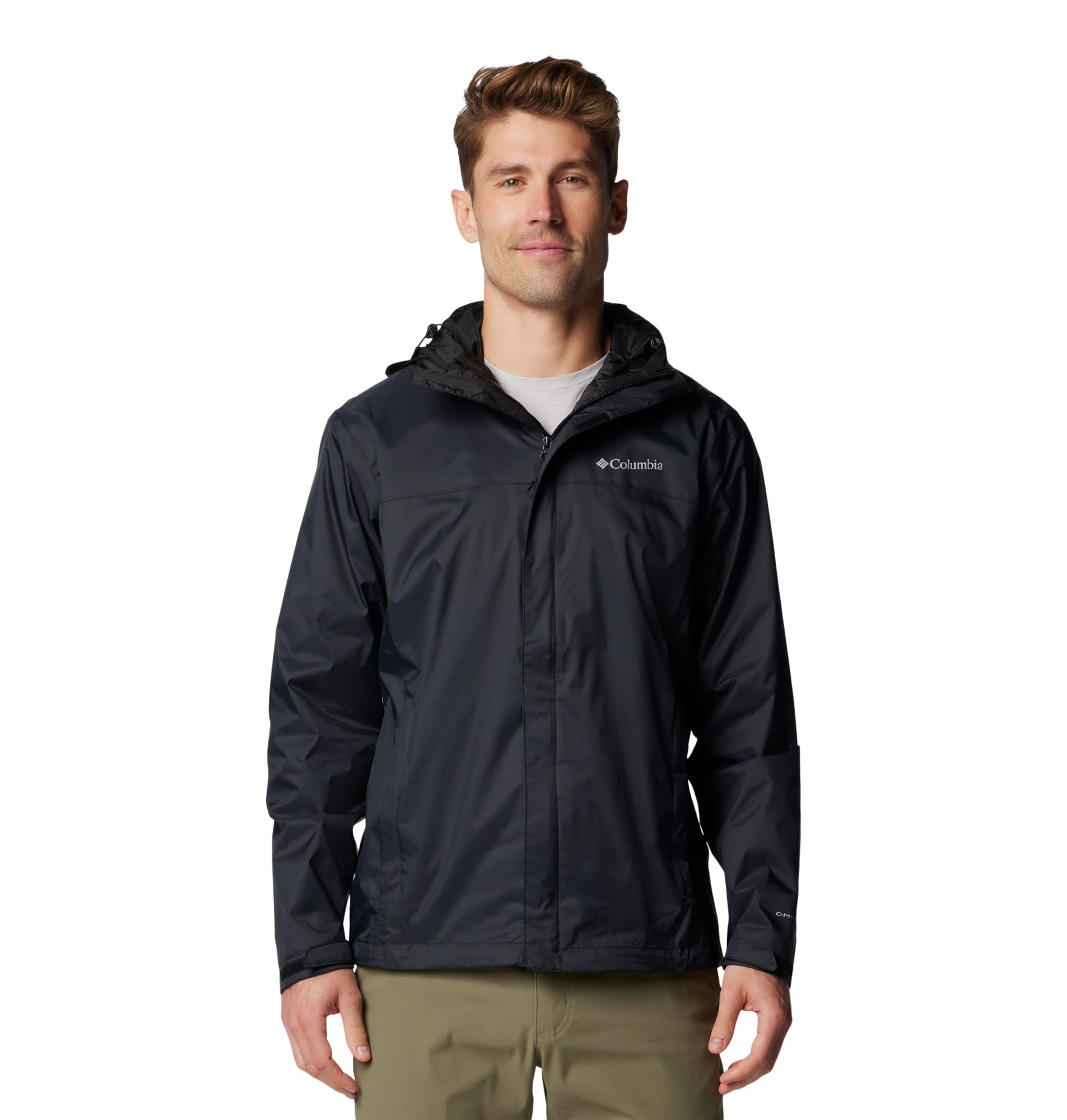
Some rain jackets are gear. This one is insurance. The Watertight II is the shell to keep folded in the back of the car, in a boat locker, or at the bottom of a daypack, because it packs small enough to forget and works hard enough to justify the space. Nobody plans to get soaked; the point is having something within reach when the sky changes its mind.

It keeps you dry in the rain that actually happens — the sustained, wind-driven kind rather than a passing drizzle — and it does a second job as a windbreaker on cold, dry days. It dries quickly between showers, so a wet morning doesn't mean a damp afternoon, and it rolls up small enough to live in a pack permanently. Of the jackets here, this is the one we recommend to someone who wants a rain jacket and nothing more complicated than that.

Sizing is the usual Columbia story. It runs big through the body and long in the sleeve, so if you're between sizes, take the smaller one; sizing down is what turns a baggy shell into a jacket you'll wear into town. The hood is shaped well enough to stay put in wind without constant tugging, and the zip pockets are the right depth for a phone and keys.

Pros

  • Keeps you dry in wind-driven rain
  • Doubles as a windbreaker between storms
  • Dries fast and packs into a daypack

Cons

No notable drawbacks to flag.

Our verdict

Buy it if you want a rain jacket you never think about — it keeps you dry, blocks wind, and lives happily in a pack.

Check Latest Price
3

Best for Layering

The North Face Antora

94 /100
Angler Score Outstanding

Key details

Fit
Roomy for layering
Sizing
Standard and big sizes
Pockets
Zippered hand pockets
Water Resistance
Waterproof
Check Details on Amazon

Pull the Antora on over a fleece and you still have room to reach forward, which isn't true of every shell here. The cut is generous through the chest and shoulders and the sizing holds true, so order your normal size and layer underneath rather than sizing up and swimming in it.

In wet weather it behaves like a proper shell. It keeps you dry through steady rain and blocks wind on exposed stretches, and the hand pockets are big enough to swallow gloves and a beanie. Build quality is a step above the budget jackets here: the zip runs cleanly, the seams are tidy, and the fabric holds its shape through repeated wear. It also rolls up small enough for the bottom of a pack.

The thing to understand before you buy is that this is a shell, not a warm jacket. It traps heat while you're moving and gives you nothing while you're standing still, so comfort comes entirely from what you put under it. For a wet commute or a cool-weather hike with a fleece beneath, that's exactly what you want.

Pros

  • Roomy enough for a mid layer
  • Keeps you dry in steady rain
  • Large zippered hand pockets

Cons

  • Sleeves run long on some sizes
  • Purple colorway reads more orange in person
Our verdict

Choose the Antora when you want room for a fleece underneath and a shell that shrugs off steady rain — it's a layer, not a warm coat.

Check Latest Price
4

Best for Women

33,000ft Women's Rain Jacket

92 /100
Angler Score Outstanding

Key details

Hood
Adjustable
Pockets
Zippered, plus internal
Venting
Underarm zips
Packed Size
Packs into included bag
Check Details on Amazon

Most rain jackets look like rain jackets. This one doesn't, and that was the first thing we noticed: no shine, no stiffness, and a cut that follows the waist instead of ballooning at the chest when the wind picks up. It reads as a normal jacket in a good color, which is why it gets worn on the commute and not just on the trail.

Underneath it's a genuinely well-equipped shell. Underarm vents let hot air out on a climb, the hand pockets and an internal pocket all zip, and the hood and hem adjust so you can cinch everything down when the weather turns properly. It packs into the supplied bag, which is the difference between carrying it and leaving it at home. We rate it the best women's jacket of this group.

Fit is the one place to pay attention. It's roomy through the body, so order your normal size rather than sizing up for layers — the extra room is already there, and one more size turns a jacket into a tent. The sleeves are long enough to cover your wrists when you reach forward, and the Velcro cuffs stop them riding up.

Pros

  • Underarm vents for warm, wet days
  • Packs into its own stuff sack
  • Zippered pockets, including an inside one

Cons

  • Shoulders can soak through in long downpours
Our verdict

The women's jacket we recommend first: it vents, packs into its own bag, and looks tidy enough for town.

Check Latest Price
5

Best Budget Pick

APEXUP Packable Rain Jacket

91 /100
Angler Score Outstanding

Key details

Hood
Attached
Reflective
Rear reflectors
Packed Size
Rolls into included sack
Package Weight
8.82 oz
Check Details on Amazon

The APEXUP arrives in a package that weighs 8.82 ounces, and the jacket inside rolls into the little sack that comes with it. That's the entire pitch: a shell small enough to live in a bike bag or the bottom of a daypack, dry enough for real rain, and simple enough that you stop thinking about it. For a warm-weather trip where the forecast is a coin toss, this is the one we tuck in.

In moderate showers it kept us dry, which is the honest expectation at this end of the range. What it does have is a hood and cuffs that seal properly in wind-driven rain, decent pockets, and reflectors across the back — more than you expect from a jacket this cheap. Sizing is accurate and roomy enough for a sweatshirt underneath. Ours smelled faintly of the factory when it came out of the sack, and a day hanging outside cleared it.

Pros

  • Rolls into its own sack
  • Package weighs under nine ounces
  • Hood and cuffs seal well

Cons

  • Not breathable on hard efforts
Our verdict

For a shell you keep in a pack and forget about, this is the budget pick — light, compact, and dry in steady rain.

Check Latest Price
6

Best for Wet Commutes

baleaf Men's Rain Jacket

91 /100
Angler Score Outstanding

Key details

Fit
Runs slightly small
Pockets
Zippered hand and chest
Visibility
Reflective trim
Back Length
Dropped hem
Check Details on Amazon

The reflective print across the back and sleeves is the reason this baleaf made the list. On a dark, wet commute, being seen matters as much as staying dry, and the silver trim catches headlights in a way a black shell never will. The back drops lower than a standard rain jacket too, so it covers you in a riding position and keeps spray off your lower back.

Waterproofing holds up through light and moderate rain, and the pockets are properly sorted: zippered hand pockets plus a slash chest pocket that takes a large phone. The hood is deliberately oversized so it sits over a cap and keeps rain off your face instead of pasting itself to your forehead.

Sizing is the catch. The cut runs slightly small, especially across the shoulders, so order a size up if you plan to layer — that's the difference between a fitted shell and one you can't reach forward in.

Where it makes sense is the commute, the run, the ride: the twenty minutes when you're moving, generating heat, and the jacket is on for a purpose. The chest pocket, the dropped hem, the reflective print — none of it is glamorous, and all of it is right for the weather you're actually out in.

Pros

  • Reflective trim for low light
  • Longer back covers you on a bike
  • Chest pocket takes a large phone

Cons

  • No underarm zips, so it runs clammy
Our verdict

If your rain falls on a commute rather than a summit, the reflective trim and dropped back make this the one to buy.

Check Latest Price
7

Cool, Wet Days

Diamond Candy Women's Rain Jacket

91 /100
Angler Score Outstanding

Key details

Fit
Runs small
Hood
Removable, zippered
Lining
Lined
Pockets
Large zippered
Check Details on Amazon

This is more jacket than shell. The Diamond Candy has a lining, some body to the fabric, and enough warmth that you notice the difference on a cold, wet morning when other rain jackets leave you wishing for another layer. It's still light enough to carry in a daypack and rolls up small, but warmth is part of the design rather than a side effect.

The details are thought through. The hood zips off entirely, the cuffs adjust, and the front pockets are big and zippered. Water beads and runs off rather than soaking in, and the fabric comes out of a bag without a wrinkle — rolled up, it fits in an airplane seat pocket, which is the sort of thing that decides whether a travel jacket gets used.

Fit is where you need to plan. It runs small through the chest and hips, and the cut is structured enough that it won't stretch to accommodate, so go up a size if you're between sizes or want a sweater underneath. For shoulder-season travel and cold mornings, that extra warmth saves you packing a fleece.

Pros

  • Lined for cool, wet weather
  • Hood zips off completely
  • Large zippered pockets

Cons

  • Too warm for humid summer rain
Our verdict

A women's jacket for cool, wet days — lined, water-beading, and easy to roll into a bag.

Check Latest Price
8

Fishing and Travel

Outdoor Ventures Pullover

88 /100
Angler Score Excellent

Key details

Hood
Close-fitting, cinching
Style
Pullover
Pockets
Two hand pockets
Packed Size
Folds into its own pocket
Check Details on Amazon

A pullover is a deliberate choice, and the right one for some trips. There's no full-length zip to leak or snag and nothing to fumble with wet hands; the jacket pulls on over a base layer in one motion. The trade-off is that it comes off over your head too, which is worth thinking about if you'll be adding and shedding layers all day.

The packing trick is the center pocket, which doubles as the stuff sack — the jacket folds back into itself and disappears into a glovebox or a tackle box. Two separate hand pockets mean you're not sharing one kangaroo pouch with yourself, and they sit where your hands naturally fall.

In rain it does the job. The hood cinches down tight around the face and neck, which is the part inexpensive shells usually get wrong, and the fabric keeps water out through steady rain. It's thin, though, and the seams are the place to keep an eye on: this reads as a jacket for a couple of seasons of hard use rather than a long-term investment.

Where it earns its place is the bag you already carry — the tackle box, the golf bag, the commuter pack. It's the shell that's there when the sky opens and asks for no space and no care in between. That's a modest job, and it's the only jacket here that does it without a full-length zip to think about.

Pros

  • Center pocket doubles as its stuff sack
  • Two separate hand pockets
  • Hood cinches tight around the face

Cons

  • Sizing runs inconsistent
  • Fabric rustles as you move
Our verdict

The pullover to keep in the tackle box or golf bag: it folds into its own pocket and the hood cinches down tight.

Check Latest Price

How We Picked and Tested These Rain Jackets

We built the shortlist from spec sheets rather than marketing copy: packed weight, fabric denier, taped versus stitched seams, hood adjustability, and the size range each jacket came in. Anything missing seam sealing or running unusually heavy came off, and we made sure the final group covered men's and women's cuts plus at least one big-and-tall option. Price was a filter, not a ranking — we wanted to know whether the cheap ones could hang with the expensive ones.

Twelve jackets then went into six months of real use — wet commutes, weekend hikes, sideline afternoons in steady drizzle, and a couple of long dog walks in weather nobody volunteers for. To check water resistance, each jacket went on a hanger and took five minutes of shower spray at the shoulders and chest, where leaks show up first; then we ran a hand over the inside for damp patches and watched whether drops beaded or soaked in.

For packability we stuffed each into its own pocket, timed the second and tenth attempt, and weighed them on a kitchen scale. Fit got judged with a T-shirt and then over a fleece, checking cuffs, hem, and whether the hood turned with my head. I stuffed and unstuffed each one dozens of times, wore a pack over a few, watched the shoulders for abrasion, noted which ones overheated me on a humid walk, which looked like outerwear rather than a trash bag, and whether the price still felt fair after six months.

How to Choose an Ultralight Rain Jacket

Weight, Packed Size, and What You'll Actually Carry

Ultralight is a means, not a score. A jacket that's an ounce lighter but needs careful folding will stay in the car, while a slightly heavier one that stuffs into its own pocket goes on every trip. Check what a listed weight actually covers, too — some listings quote the shipping package, bag and tags included, which is not the same number as the garment.

Our top pick is listed at 0.2 kg; the budget APEXUP ships in a package under nine ounces. Either disappears into a lid pocket, and that's the whole point of buying one of these instead of a heavy raincoat.

Waterproofing That Survives a Long Day

Water-resistant fabric sheds a shower and then wets out, and a saturated shell stops breathing and starts feeling cold. For hiking and travel, look for a jacket sold as waterproof, with a membrane or coating and seams that are sealed rather than just stitched.

The water-repellent finish on the outside is the part that wears first, through pack straps and through washing, so expect to renew it every season or two. A shell that beads water is doing its job; one that darkens evenly across the shoulders is telling you it needs a refresh.

Ventilation: Underarm Zips and Why They Matter

You sweat inside a waterproof layer whether or not the fabric breathes, and that moisture is what makes a shell clammy an hour into a climb. Zips under the arms move more air than any breathability figure on a hangtag, because you decide when they're open.

If you'll be walking uphill in the rain, put them near the top of your list — the Marmot PreCip Eco is the pick here that has them. For a jacket worn standing still or on a twenty-minute ride, a hood that stays put matters more than vents.

Fit, Hood, and Pockets

Fit is the most common complaint in this category, and it usually goes one of two ways: a shell cut so trim you can't layer under it, or a generous cut that leaves the hood sagging over your eyes. Decide what goes underneath before you order — a fleece adds bulk at the chest and shoulders — then trust the size chart over your usual label.

A good hood adjusts at the back and cinches at the sides, and one that rolls into the collar is worth having. Zippered hand pockets are non-negotiable; a chest pocket that swallows a phone is a bonus on a commute.

What You Get at Each Price

Budget shells keep you dry in ordinary rain and last a couple of seasons of light use; the fabric is thinner, the hood is simpler, and vents are usually the first thing to go. The middle of the range buys ventilation, a better cut, and a hood with more than one adjustment.

At the top you're paying for fabric that breathes under effort and construction that survives daily wear and constant packing. If the jacket will be carried more than worn, shop the middle; if it's your only outer layer in a wet climate, the top end earns its keep.

Frequently Asked Questions

Final Verdict

Start with the Marmot PreCip Eco. The underarm zips are the deciding advantage: a shell you can vent is one you'll wear on a climb instead of carrying and resenting, and at about seven ounces it disappears into a pack.

If the jacket will spend more time in a car, a boat locker, or a daypack than on a mountain, the Columbia Watertight II does the same basic job with less to think about. And if you're shopping for a woman who feels the cold, the Diamond Candy is the warmer alternative.