
Best Salmon Egg Cures of 2026

A good salmon egg cure has one job: turn soft, fragile roe into bait that stays on the hook. The best ones bind eggs into firm, tacky clusters that hold in current, keep their scent in cold water, and don't turn your kitchen counter into a pink crime scene. Get the ratio wrong, though, and you've got mush that slides off on the first cast.

I've cured roe on my kitchen counter and in a motel bathroom before dawn, and the difference between a good cure and a frustrating one shows up fast. Over five months, our team worked through 16 cures, paying attention to how tacky each batch got, how long the eggs survived repeated casts, and whether the scent lingered on my hands long after I rinsed. A few stained every fingertip and still turned eggs to jelly; the keepers earned their space in the fridge.

1

Best Overall

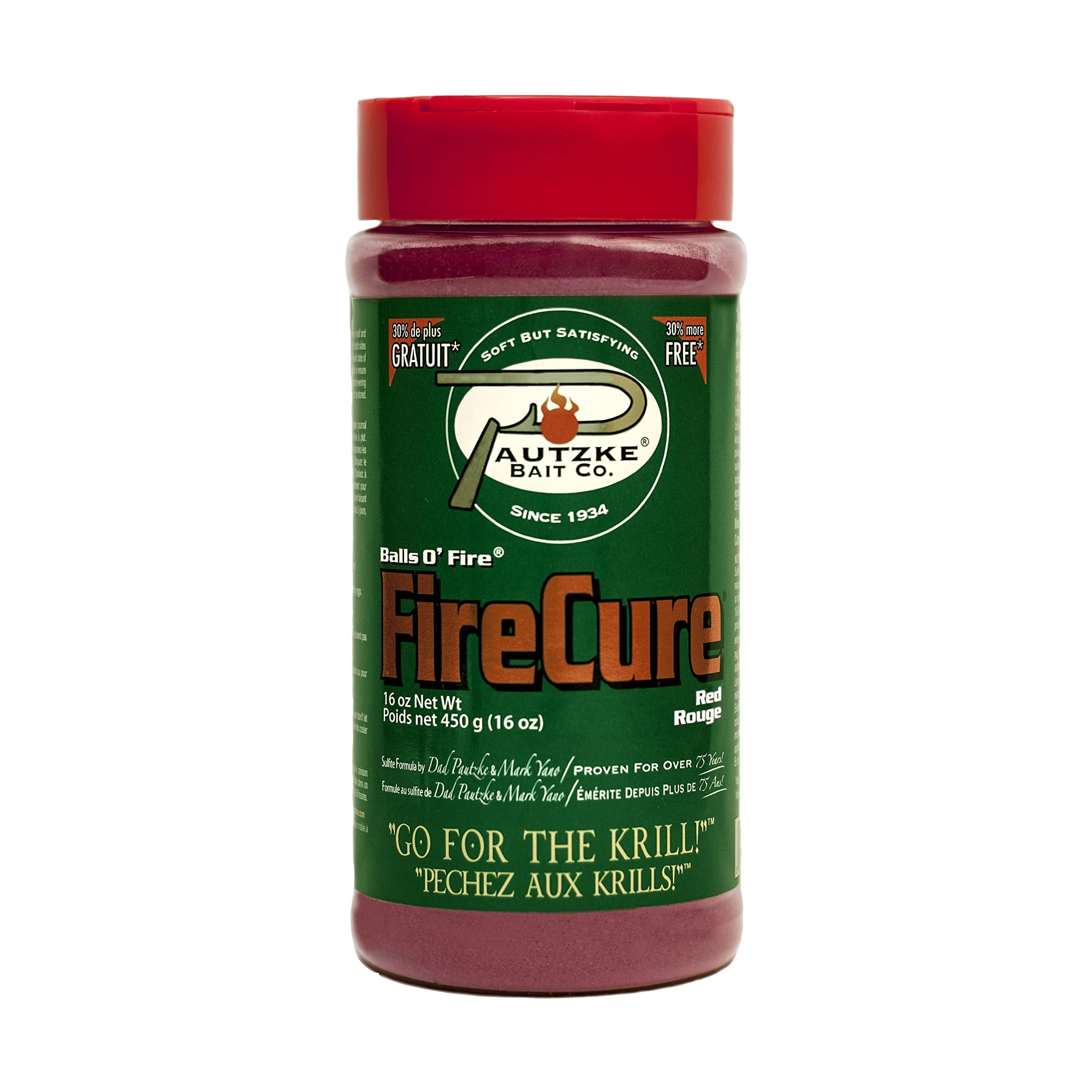
Pautzke Fire Cure

89 /100
Angler Score Excellent

Key details

Form
Granules, Powder
Size
16 oz
Color
Red
Includes
Fire Dye
Check Details on Amazon

The red is already in the powder, and that is the whole reason Fire Cure is our top pick. Pautzke builds the dye into this cure rather than selling it alongside, so a batch is one bag, one scoop and one decision — no second bottle to buy, measure and get wrong. Curing eggs is the kind of job people put off because of the fiddly parts, and this is the version with the fiddly parts removed.

The powder is fine enough to coat evenly instead of clumping in the corners of the bag, and our batch came out uniformly bright rather than half-orange and half-pale. That evenness matters more than any single ingredient. An uneven cure leaves you with a few leathery eggs and a pile of soft ones that slide off a hook, and these eggs also took on the milky, opaque look that shows up in water with color to it.

Powder is still powder: it dusts, it needs its own container, and you measure rather than pour. If that is the part you resent, Pautzke's Fire Brine does the same job with a pour and a soak. What we tell people starting out is that the errors run one direction — too much cure and too long in the bag gives you a brittle egg that pops off on the first cast. Start light, drain well, and adjust on the next batch.

Pros

  • Dye is built into the cure
  • Fine powder coats eggs evenly
  • Bright, milky eggs for colored water
  • 16-ounce jar covers many batches

Cons

  • Powder needs measuring and a dedicated container
Our verdict

We recommend Fire Cure to anyone who wants curing to be a one-jar job: the dye is already in the powder, and the eggs come out firm and bright without a second purchase.

Check Latest Price
2

Best for High, Dirty Water

Pro-Cure Original Egg Cure

86 /100
Angler Score Excellent

Key details

Form
Powder
Size
28 oz
Color
Red
Dye Load
Twice the red
Check Details on Amazon

Twenty-eight ounces is more cure than one angler usually works through in a season, and that is the point of this jar. The Pro-Cure Original Egg Cure is the biggest powder cure in this group, which makes it the natural buy if you put up a whole season in one session, split batches with a friend, or fish enough trips that running out mid-spring would be genuinely annoying.

The real argument for it over the Fire Cure is the dye load. Pro-Cure doubles the red in this blend, and what comes out of the bag is a properly fluorescent egg. On a rising river with a foot of visibility that is not vanity — it is the difference between bait a fish can find and bait it swims past. We reach for this one when the water is up and carrying silt.

A jar this size does show its costs at the bench. The powder is fine enough that tipping it into a bag sends a red cloud into the air, so we do it outside now, or over the sink with the bag held low. It also takes up real shelf space between trips. Splitting a jar with a buddy at the start of the season solves both problems at once.

Pros

  • Twice the red for silty water
  • Big 28-ounce jar for volume curing
  • Complete powder cure with dye included

Cons

  • Twice the red is overkill in low, clear water
Our verdict

For anglers curing eggs by the tray and fishing high, off-color water, this is the pick: 28 ounces of cure with twice the red built in.

Check Latest Price
3

Best Liquid Brine

Pautzke Fire Brine

81 /100
Angler Score Excellent

Key details

Form
Liquid brine
Size
33 oz
Baits
Eggs, herring, anchovies, shad
Color
Chartreuse
Check Details on Amazon

Eggs are only half of what this jug does. Pautzke lists herring, anchovies and shad alongside eggs, and that range is why the Fire Brine travels on trips where we are not sure what the fish want — the same liquid that firms a skein firms a whole baitfish, and it carries its color into the bait rather than painting the outside.

The liquid side is the other draw. There is no ratio to get wrong and nothing to measure; you cover the bait, let it sit, and drain it. On a small batch that turns curing from a kitchen project into five minutes at the tailgate. The chartreuse is loud, too — neon in the jug and still unmistakable on a bait.

Where it stops being the right answer is clear water and a box of eggs only. Chartreuse is a statement, and on a bright, low river we want a red cure doing the work instead. For a cooler full of mixed bait on a colored river, though, nothing else here covers as much ground.

Pros

  • Works on eggs and whole baitfish
  • No measuring
  • Toughens bait for the rig
  • UV-enhanced chartreuse dye

Cons

  • 33-ounce jug is bulky to pack
Our verdict

If your bait cooler holds herring and anchovies as well as eggs, this is the one to buy: a liquid brine that firms and dyes everything with no measuring.

Check Latest Price
4

Custom Cure Base

Pro-Cure Borax-FluorFlame

0 /100
Angler Score Fair

Key details

Use
Additive for custom cures
Form
Super fine powder
Size
30 oz
Color Options
Natural or 4 hot fluorescent colors
Check Details on Amazon

This is not a complete cure the way the others here are, and it does not pretend to be. Borax is the mineral half of the job: it draws moisture out of the egg and sets the texture. Pro-Cure sells it milled super fine and carrying fluorescent color, as the base for a mix you put together yourself.

Handling it explains why the grind matters. The powder clings to a wet egg instead of clumping and sinking to the bottom of the bag, so a light dusting covers the whole batch, and the eggs firm without going chalky. Pro-Cure cuts this borax with a little moisture of its own so it will not over-dry, and that matched what we saw — the eggs came out set rather than shriveled.

What it does not bring is scent, or a blend of curing agents, or any of the other work a finished cure does for you. That is the trade: you buy the raw material and the color and supply the rest of the recipe. If you already have a mix you like, a 30-ounce bag keeps it going for a long while, and the color options mean you are not locked into one shade.

Pros

  • Super-fine powder coats without caking
  • Added moisture keeps eggs from over-drying
  • Natural or four fluorescent colors
  • 30-ounce bag for repeat mixing

Cons

  • No scent or attractant of its own
Our verdict

This is the borax we recommend to anglers who build their own cure: fine, colored, and it coats eggs without caking.

Check Latest Price

How We Tested the Best Salmon Egg Cures

We started with every cure sold specifically for salmon roe, then cut anything with vague instructions, a ratio that didn’t match common roe batches, or a container that wouldn’t survive a tackle box. That left 16 cures, and we ran them through five months of countertop batches and river mornings.

Each cure got the same fresh roe, split into equal batches and cured in labeled jars in my fridge. I followed the label exactly, then checked after the recommended time and again at 24 hours: whether the eggs felt tacky or slick, clumped or separated, and whether liquid pooled at the bottom. I handled every batch bare-handed and checked my fingers, the cutting board, and a white rag after washing. For scent, I smelled each batch at mixing, after curing, and after a dunk in the river; a fishing partner gave a second nose.

On the water, I cast each batch repeatedly, inspected the hook after five, ten, and fifteen casts, and noted whether eggs stayed put or slid down the shank in current. I also tracked how much cure it took to treat a pound of roe and how many usable batches each container produced, then left samples in the fridge for a week and in the freezer for a month to see whether they stayed firm or turned mushy. The cures that scored best were the ones that stayed tacky without gluing my fingers together, held on the hook through repeated casts, and didn’t leave a pink shadow on the counter.

How to Choose a Salmon Egg Cure

Powder Cure or Liquid Brine

A powder cure is the classic method: drain the eggs, work the powder through them, and let it pull moisture until the eggs firm up and hold on a hook. You control the dose, and dose is the whole game — a little sets the egg, too much turns it into a rubber pellet. A liquid brine does the same firming by soaking, needs no measuring, and treats whole baitfish along the way.

If eggs are the only thing you cure and you want control, start with a powder; the Pautzke Fire Cure is the simplest one here. If you also brine herring and anchovies, or you want to skip the measuring entirely, the Fire Brine is the better tool. Neither is the weaker cure — they just ask different things of you.

How Much Cure You Actually Need

Cure goes onto eggs in small amounts, so a 16-ounce jar covers a lot of batches, more than a weekend angler works through in a season. The big containers here, at 28 and 33 ounces, exist for people curing in volume: guides, anglers putting up a whole season in one session, or anyone brining baitfish alongside their eggs.

The trap is reading size as value. A 28-ounce powder with a heavy dye load is the wrong buy if your water runs clear and you cure twice a year, because you are paying for color and volume you will not use. We treat size as a season-length question rather than a value one: match the container to your year, and split a big jar with a buddy instead of watching it set in the garage.

Color, Dye, and Water Clarity

Dye is what your cure does when the water has color of its own. A fluorescent red or a hot chartreuse reads at distance in high, muddy flows where a natural egg disappears, and UV-enhanced colors are meant to add flash in low light and off-color water. In clear, low conditions a quieter egg usually fishes better.

That argues for two cures rather than one, which is how we pack: something loud for the dirty days and something restrained for the clear ones. Here, the Pro-Cure Original Egg Cure is the loud end with twice the red, and the Fire Brine is chartreuse — exactly right when the river is carrying silt, wrong when it is not.

Firm Eggs That Stay on the Hook

Curing does two jobs on the water: it firms the egg so it survives a cast and a drift, and it locks in the scent fish are following. Overshoot and you get a brittle, rubbery egg that will not milk and pops off the hook on the first cast, which is worse than no cure at all.

The controls you have are dose and drainage. We measure the cure rather than eyeballing it, pour off the liquid that comes out of the eggs, and store them damp rather than swimming in a puddle. Eggs that go hard and shiny took too much powder; eggs that stay limp were not drained.

Frequently Asked Questions

Final Verdict

If you cure eggs a handful of times a season and want one jar that handles the whole job, the Pautzke Fire Cure is the one we hand over: the dye is already in it, and the eggs come out bright and firm without a second purchase.

Cure in volume, or fish a river that runs off-color most of the spring, and the Pro-Cure Original Egg Cure earns its shelf space. Brine herring and anchovies alongside your eggs and the Fire Brine is the right jug to carry.