Best Shaky Heads of 2026

A shaky head is about as simple as bass tackle gets: a hook, a weight, and a keeper that pins a finesse worm so its tail stands off the bottom and quivers. I've lost count of the ones that looked fine in the package and then let me down — bait sliding down the screw, a hook point rolled over on the first rock, a head that wouldn't stand up at all. That gap doesn't show until you're dragging one across a windy point.

Over five months, my team and I fished 16 shaky heads on pressured lakes, farm ponds, and one windy reservoir. The same things separated them every trip: a hook that's sharp out of the pack and stays that way, a keeper that holds a worm through a dozen casts, and a head that lands nose-up instead of rolling onto its side. Weight matters more than most shoppers expect — 1/8 to 3/16 ounce covers nearly every finesse situation on spinning gear. The picks below are the ones that earned a spot in the box.

1

Best Overall

Reaction Tackle Stand-Up Shaky Head

90 /100
Angler Score Outstanding

Key details

Weights
1/16 to 1/4 oz
Material
Lead
Pack Size
5 per pack
Kit Option
20 pieces, five of each size
Check Details on Amazon

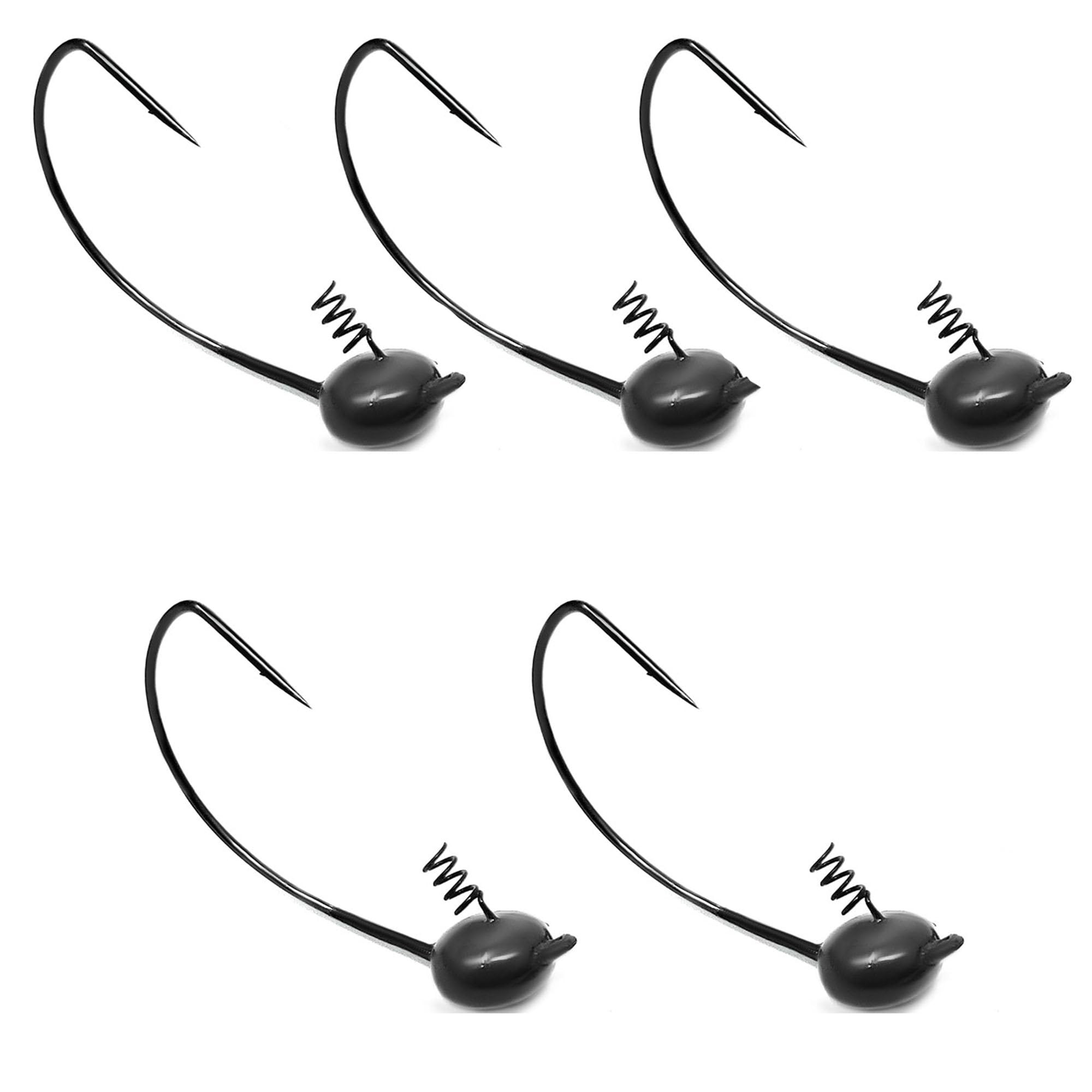
What sold us on this head is the pause. A shaky head only works if the worm is still standing after the jig settles, and the flat bottom here props a finesse worm up nose-down with the tail quivering instead of rolling onto its side. We fished it on a medium-light spinning rod with a straight-tail worm, and the attitude held through short shakes and long dead sticks alike.

The size ladder is the other half of the case: 1/16, 1/8, 3/16, and 1/4 ounce, or a 20-piece kit with five of each. One box covers a shallow flat where a light head falls slower and a windy point where you need the quarter-ounce to stay in contact. At every weight the head stays compact for lead, so you feel rock and wood through the line instead of dragging a blob.

The hook is a spear point on a jig hook, sharp out of the pack and still biting after a morning of casts and hooksets — we paid attention to whether we were reaching for the file, and we weren't. A bait retainer at the collar holds the worm's nose well enough that we stopped checking it after every cast.

The trade-off is the material. Lead is dense, but it isn't tungsten dense, so a quarter-ounce head here is visibly bigger than a tungsten head of the same weight, and a bigger head finds more rock in a jagged stretch. Over gravel, grass, and open rock that costs you nothing. In chunk rock, it's the reason our tungsten pick exists.

Pros

  • Flat-bottom head stands a worm up on the pause
  • Four weights, or a 20-piece kit with five of each
  • Compact head keeps bottom contact readable
  • Sharp hook holds its point

Cons

  • Lead head runs bigger than tungsten at the same weight
Our verdict

Our default shaky head: four weights, a 20-piece kit option, and a flat-bottom head that keeps a worm standing on the pause for less than the tungsten picks here.

Check Latest Price
2

Best for Skipping Docks

Buckeye Spot Remover Pro

90 /100
Angler Score Outstanding

Key details

Hook
Black nickel 90-degree
Size
1/8 oz
Pack Size
5 per pack
Bait Keeper
Heavy-duty built-in spring
Check Details on Amazon

Skipping a shaky head under a dock is where most heads fail: the bait slides down the shank on the cast, or the head lands wrong and the hook comes back bare. The Spot Remover Pro is built around that problem. A heavy-duty spring grabs the worm's nose, and a black nickel 90-degree hook keeps the bait standing on end underneath.

The spring is what we keep coming back to. It's heavier wire than the screw locks on most budget heads, so it bites into a bait collar and stays there cast after cast, and the head skips flat instead of tumbling. For what a five-pack costs, it's one of the best values in this group.

The limit is where you fish it. A 1/8-ounce head with a spring and a 90-degree hook is a shallow-cover tool — docks, laydowns, the shaded edge of a weedline — and a denser tungsten head is the better answer when you need to feel jagged rock in 20 feet of water. This listing is also one size and one color, so anglers who want a range will be placing more than one order.

Pros

  • Heavy-duty spring grips and holds the bait nose
  • 90-degree hook stands baits on end
  • Built for skipping under docks and overhangs

Cons

  • Single size and color in this listing
Our verdict

The dock-skipping pick: a heavy spring and a 90-degree hook keep a worm standing where screw locks let go.

Check Latest Price
3

Best Hook

Owner Ultrahead Shaky Head

91 /100
Angler Score Outstanding

Key details

Hook
Shaky head jig hook, needle point
Size
1/4 oz
Finish
Unpainted
Pack Size
1 per pack
Check Details on Amazon

If you upgrade one thing on a shaky head, upgrade the hook, and that's the whole argument for the Owner Ultrahead. The needle point is as sharp as anything here out of the pack, and it sits on a stout shank that keeps its shape under a hard hookset instead of rolling open.

Everything else is simple on purpose. A round weight, a spring holder for the worm's nose, and a bare unpainted finish with nothing to chip. The round head sinks fast and comes through gravel without a flat face grabbing, where the stand-up heads here cock the bait up off the bottom — a real difference on days when fish want the worm hovering rather than lying down.

The catch is the pack. Every one of these is a single jig head, so there's no bulk buy and no spare rattling in the boat bag; you buy them one at a time and you feel it every time you break one off in rock. For an angler who fishes one weight hard and wants the best point on the line, that's still a trade worth making.

Pros

  • Needle-point hook, sharp out of the pack
  • Stout shank keeps its shape under load
  • Spring holder keeps the worm's nose in place
  • Unpainted head has no finish to chip

Cons

  • Sold as a single jig head per pack
Our verdict

Worth it for the hook alone — a needle point and stout shank — for anglers who buy one head at a time and expect it to hold.

Check Latest Price
4

Best for Big Plastics

Reaction Tackle Tungsten Shaky Head

88 /100
Angler Score Excellent

Key details

Weights
1/16 to 1/2 oz
Material
Tungsten
Pack Size
5 per pack
Hook Options
Standard or EWG
Check Details on Amazon

The extra-wide-gap option is what earns this head a place. Most shaky heads come one way, and if you want to throw a creature bait or a fat worm you make a standard hook work. Reaction Tackle sells this tungsten head with either a standard hook for finesse worms or an EWG for thicker plastics, and the second option rigs a bulky bait Texas-style without crowding the gap.

Tungsten handles the rest. It's roughly twice as dense as lead, so an eighth-ounce head is about half the size of a lead head at the same weight — it slips between rocks instead of wedging into them, and it telegraphs every tick of the bottom. The range runs from 1/16 to 1/2 ounce, which covers a shallow flat and a windy main-lake point out of one pack.

The cost is the catch. Five heads to a pack at the top of this group's price range, and the same money buys a lot of lead. If you fish open gravel and grass, our top pick does the job for far less. This one earns its keep in rock, deep structure, and any presentation where a bulky plastic needs a wider gap.

Pros

  • Tungsten keeps the head compact for its weight
  • Standard or EWG hook option
  • Sizes from 1/16 to 1/2 oz
  • Slips through rock with fewer snags

Cons

  • Premium price for five heads
  • EWG gap is more than a slim finesse worm needs
Our verdict

The tungsten head for rock and deep structure, with a standard-or-EWG choice that finally rigs a bulky plastic properly.

Check Latest Price
5

Best Bait Keeper

Berkley Fusion19 Shakey Head

88 /100
Angler Score Excellent

Key details

Hook
Forged round bend, needle point
Size
3/0 hook, 1/4 oz
Packaging
Resealable clamshell
Bait Keeper
Detached talon-style keeper
Check Details on Amazon

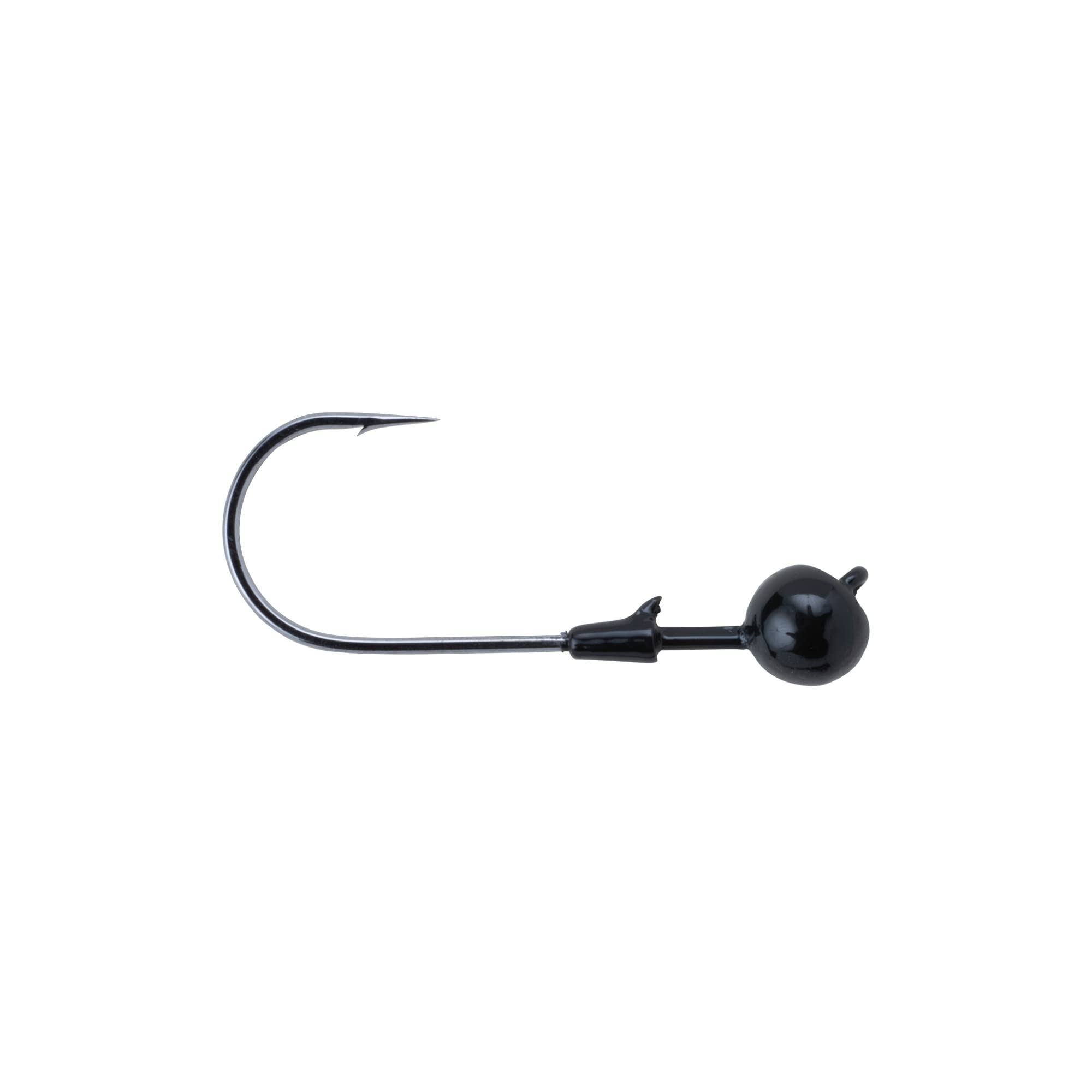
The keeper on the Fusion19 isn't a screw or a spring — it's a detached talon on the hook shank that grabs the bait's nose from the side. Push a worm onto it and the plastic locks. The hook stays where you rigged it cast after cast, which is more than we can say for a plain barbed shank.

Of everything here, this is the one we hand someone whose bait keeps sliding. The 3/0 forged round-bend hook is sharp, the head stands a straight-tail worm up, and the resealable clamshell keeps the spares from ending up loose in the bottom of a tackle bag. The single size in this listing is the limit — 1/4 ounce on a 3/0 hook covers a standard shaky head, but it isn't a range.

Pros

  • Talon keeper grips the bait nose hard
  • Forged round-bend hook with a needle point
  • Resealable clamshell keeps spares tidy
  • Worm stands up on the pause

Cons

  • One size listed: 3/0 hook, 1/4 oz
Our verdict

Buy it for the keeper: a talon that grips the bait nose and keeps a straight-tail worm where you rigged it.

Check Latest Price
6

Pinning Worn Baits

Harmony Tungsten Shakeyhead

85 /100
Angler Score Excellent

Key details

Size
3/16 oz
Material
97% tungsten
Pack Size
5 per pack
Bait Keeper
Screw-in holder plus 10 bait pegs
Check Details on Amazon

Ten bait pegs come in the pack, and they're the reason we keep this one in the rotation. Push a peg through a bait's nose and it locks the plastic against the hook shank, so a worm that has lost its grip — or a head whose screw-in keeper has stripped — still fishes.

The rest is a proper tungsten head: 97 percent tungsten, a matte black oxide finish that doesn't chip the way paint does, and a screw-in holder for rigging. At 3/16 ounce it's a weight that suits a finesse rod — heavy enough to stay in contact on a windy bank, light enough to fall slowly on the pause.

The corkscrew is the part to watch. A screw-lock keeper takes the abuse on every rigging, and once it strips you're leaning on the pegs — which is exactly why those ten extras matter. If you fish big worms or need a quarter-ounce and up, our tungsten pick covers more ground. If you want tungsten at the weight you throw most, this is the pack.

Pros

  • Ten bait pegs included for locking baits on
  • 97 percent tungsten keeps the head small
  • Matte black oxide finish resists chipping
  • Screw-in holder rigs soft plastics fast

Cons

  • One weight in this listing: 3/16 oz
Our verdict

Ten bait pegs and a small tungsten head make this the pack for anglers tired of re-rigging a worm that keeps slipping.

Check Latest Price
7

Bulk Starter Kit

OJYDOIIIY 15-Pack

88 /100
Angler Score Excellent

Key details

Hook
4/0 wide gap, thick shank
Weights
1/8, 3/16, 1/4, 5/16 oz
Pack Size
15 per pack
Bait Keeper
Detachable twist lock
Check Details on Amazon

Fifteen heads in one box is a different way to buy shaky heads. Instead of a five-pack in one weight, this kit spreads 1/8, 3/16, 1/4, and 5/16 ounce across the box, all built on a 4/0 wide-gap thick-shank hook with a twist-lock keeper you can unscrew and remove.

The flat head stands up the way a shaky head should, and the twist lock does its job — screw a bait nose on until it meets the head and the plastic holds through a drag-and-shake retrieve. The 4/0 gap is generous enough for a tube or a chunkier worm, and we didn't expect a 5/16-ounce option in a kit at this price; that's the weight for a windy point without going to tungsten.

The keeper is the fussy part. A bait with a soft or oversized nose won't always catch the coil, and then the plastic slides down the shank on the cast. Trim the nose so the coil bites, or add a drop of glue at the collar, and the problem goes away.

For rigging four rods before a trip, or for a new angler building a tackle box, this is the value pick of the group — every weight you need in one order. Buy it as a kit rather than as a replacement for a specific size, because the pack comes assorted.

Pros

  • Fifteen heads across four weights
  • 4/0 wide-gap hook handles bulky baits
  • Flat head stands baits upright
  • Bulk pricing undercuts the five-packs here

Cons

  • Assorted weights only, no single-size pack
  • Hooks can rust if stored wet
Our verdict

The kit we hand a new shaky head angler: four weights, fifteen heads, and a wide-gap hook that handles a bulky bait.

Check Latest Price

How We Tested Shaky Heads for Bass

We started by pulling together roughly 40 shaky heads — the ones we already fish, the tungsten options that keep coming up in finesse conversations, and a few budget five-packs — then cut the list by hook style and gap, keeper design, head shape, available weights, and cost per head. Anything that came in only one heavy size, or that hung a light-wire hook under a chunk of lead, got dropped before it ever hit the water.

Sixteen heads fished with us for five months, from the spring prespawn through the summer drawdown, on pressured public lakes, a farm pond, and one windy reservoir. We threw them on medium-light spinning rods with 8-pound fluorocarbon, dragging finesse worms over rock points, skipping them under docks, and hopping them down bluff banks. Every fish that ate got logged: whether the point drove home, whether it stayed home, and how the bait sat afterward.

Sharpness we checked the old-fashioned way, dragging the point across a thumbnail out of the pack and again after an hour of bouncing off rock. To see how each head actually stood, we dropped them into a clear stock tank and watched which ones landed nose-up and which fell over. We counted casts before a worm slid past the keeper, and noted whether the collar tore the plastic on the first rigging. Durability showed up in the tray — rust after a rainy day, paint flaking off the head, springs that stretched out. A head that survived a full day of rock and still held a bait was worth what it cost; the ones that didn't, weren't.

How to Choose a Shaky Head Jig

Head Shape Sets the Attitude

A flat-bottom stand-up head props the bait off the bottom and holds it there on the pause, which is the picture most anglers have in their head when they think about a shaky head. A round head sinks faster and comes through gravel without a flat face grabbing, so it suits covering water and dragging a worm down a bank. We keep one of each: flat-bottom for parking a worm on a point, round for hunting. If you buy only one, buy the flat bottom — it does the technique's signature trick.

The Keeper Is Where Heads Fail

Screw locks, springs, talons, and pegs hold a bait differently. A spring or a talon bites into the collar and holds hardest, which matters when you skip docks and when a bass thumps the bait on the fall. A screw lock is quicker to rig and easier to change plastics on.

The trap is grip against bait life. A keeper that grabs hard can tear the nose off a thin finesse worm, and a light one lets the plastic slide down the shank after a few casts. Match the keeper to the bait you throw most, and keep a few bait pegs in the box as insurance on any screw-lock head.

Lead or Tungsten

Tungsten is roughly twice as dense as lead, so a tungsten head is about half the size at the same weight. Smaller heads slip through rock with fewer hangups and telegraph more of what's down there, which is why our tungsten picks cost more and earn it in snaggy water. Lead is cheaper and perfectly good over gravel, grass, and open rock.

One practical check before you order: some waters restrict lead tackle. Confirm your state and lake rules first, because if lead is out, tungsten is the whole answer rather than an upgrade.

Weight for Depth, Wind, and Current

Sixteenth- and eighth-ounce heads are for shallow, calm water, a slow fall, and fish that won't commit; they're also the hardest to feel. Three-sixteenths and a quarter are the do-everything sizes on a spinning rod, and five-sixteenths and up are for wind, current, and deep structure.

The trap is going too light to keep bottom contact. A shaky head is fished by feel, and if you can't tell rock from sand you've lost the point of the lure. Carry two weights of one head you trust rather than one weight of two different heads.

Match the Hook to the Plastic

A standard jig hook suits slim finesse worms and straight-tail plastics. Bulky creature baits, tubes, and fat worms need an extra-wide-gap hook, or the plastic crowds the gap and costs you fish on the hookset. Size follows the same logic: a 3/0 covers most finesse worms, while a 4/0 wide gap is the safer call for anything with a thick body. Forged wire holds up better around cover; thin wire penetrates more easily on a light rod.

Frequently Asked Questions

Final Verdict

The Reaction Tackle Stand-Up is the one we point most anglers to. Four weights, a 20-piece kit if you want all of them, and a flat bottom that keeps a worm standing on the pause — it does the technique's core job without tungsten money.

Fish jagged rock or deep structure and the tungsten version of the same head is worth the step up. Fish docks and laydowns and the Buckeye's heavy spring does more for you than density ever will.