
Best Splitting Axes of 2026

Every splitting axe is a negotiation between mass and speed: the head needs enough weight to drive through a knot, and your arms need to keep it moving for an hour. Go too light and the bit bounces off seasoned oak; go too heavy and you're resting on the block after twenty swings. Getting that balance right — plus an edge that holds, a handle that doesn't rattle loose, and a price that doesn't sting — is what separates a twenty-year axe from one you leave out in the rain.

I've heated with wood on and off for most of a decade, so I came in with opinions; eight months and 12 axes later, a few of them changed. What surprised me is how little the price predicted the outcome — one of the cheapest axes we tested now lives in my truck, while a heavier, pricier model got demoted to loaner. Handle length, head geometry, and how an edge survives a knot matter far more than branding. Here's what earned a spot by the woodpile.

1

Best Overall

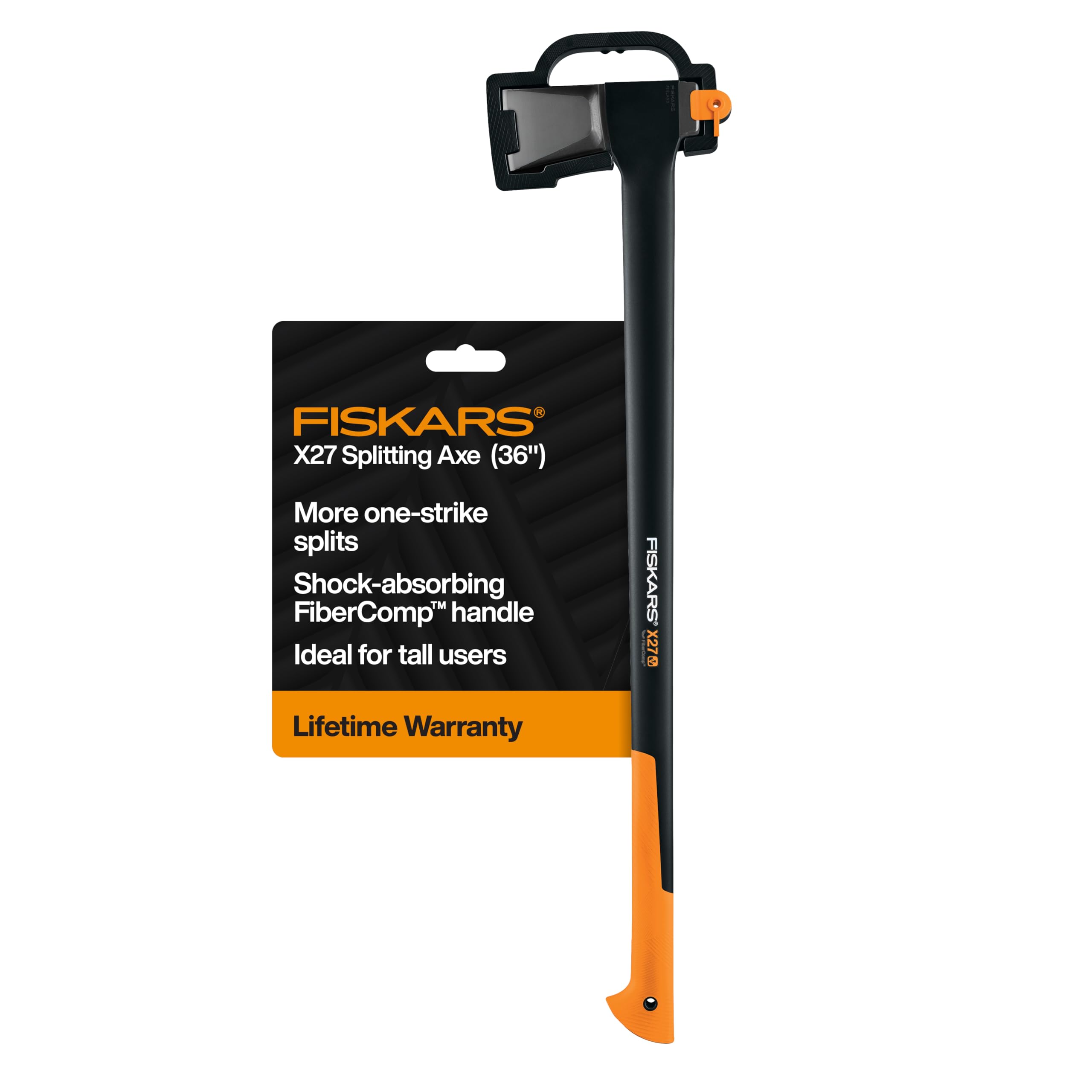
Fiskars X27 Super Splitting Axe

96 /100
Angler Score Outstanding

Key details

Warranty
Full lifetime
Head Weight
4.3 lb
Total Weight
6.3 lb
Overall Length
36 inches
Check Details on Amazon

The X27 is a 36-inch handle driving a 4.3-pound head, and that ratio is the whole argument for it. A long handle gives the head a wide arc to build speed through, so the force comes from swing velocity rather than from sheer mass — which is why a 6.3-pound axe doesn't have us looking for something lighter twenty minutes into a session at the block. Fiskars grinds the head to a convex bevel and coats it to cut friction, and on clean, straight-grained rounds the result is what the shape promises: the bit goes in and the wood comes apart instead of swallowing the head.

That combination is what makes it our top pick: the longest handle here working with a head that carries real mass, rather than one fighting the other. The extra length earns its keep for taller users in particular, because you can stand up over a block and let the axe fall through the round instead of folding yourself into the swing. We also came to appreciate the details that only register on a long session — the textured grip, the flared end that catches an overstrike, and a composite shaft that soaks up the vibration before it reaches your wrists.

The boundaries are about wood, not build. A fast head is superb on straight grain and ordinary on the ugly stuff; knotty crotch pieces and dense cross-grained rounds want mass more than speed, and those are the days a maul and a wedge earn their keep. The edge arrives sharp and holds, but a chip means time with a file, so keep it out of the dirt and off the block. A sheath comes in the box and the warranty runs for life, which is the backup you want on a tool that takes this much abuse.

Pros

  • Long handle builds head speed with less effort
  • One-strike splits on straight, dry rounds
  • Shock-absorbing handle with overstrike protection
  • Sheath and lifetime warranty included

Cons

  • Needs mass, not speed, for knotty or cross-grained rounds
Our verdict

A long handle and a fast 4.3-pound head make straight, dry rounds a one-strike job — the splitter we point most buyers to.
Check Latest Price
2

Best for Kindling

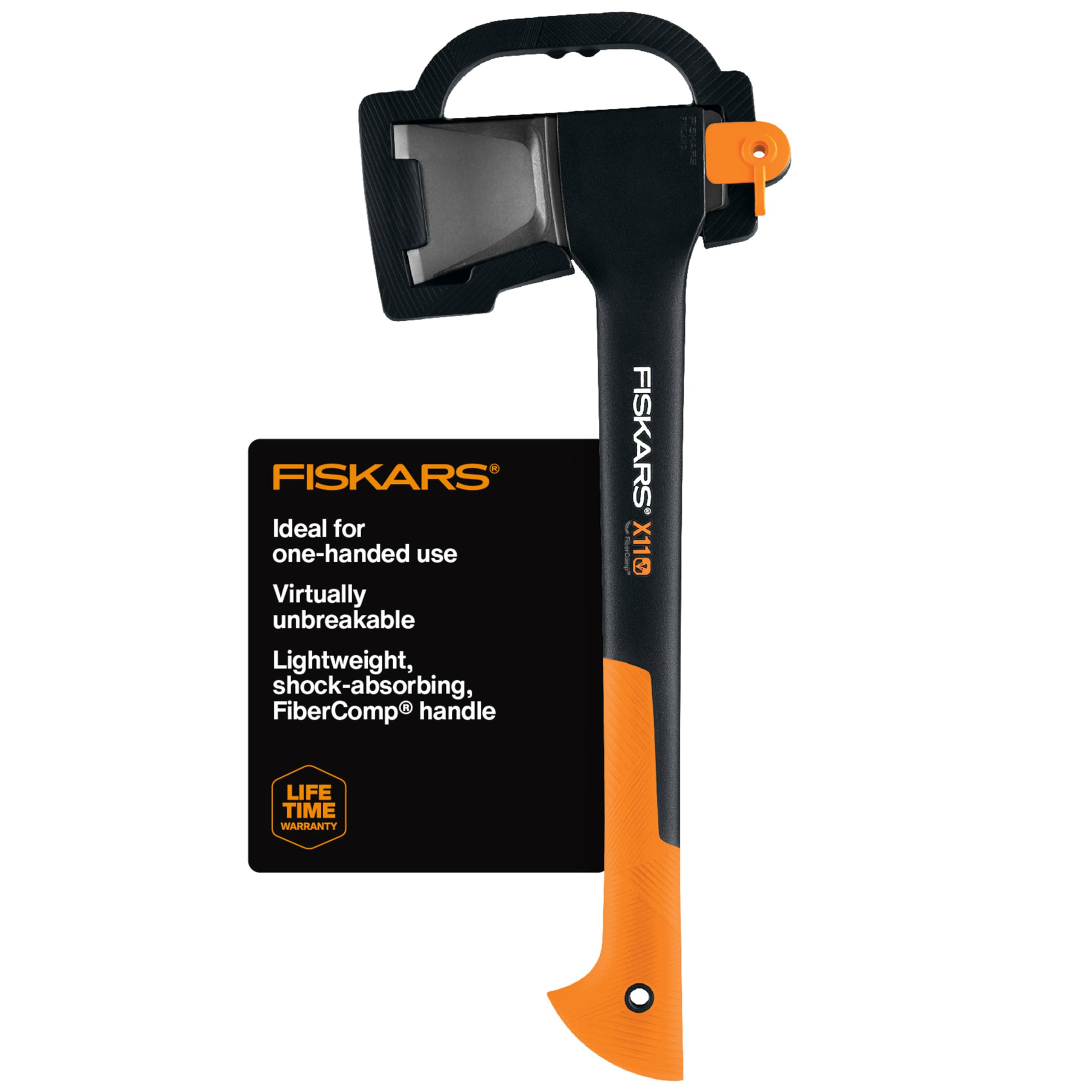
Fiskars X11 Splitting Axe

95 /100
Angler Score Outstanding

Key details

Weight
2.2 lb
Warranty
Lifetime
Blade Length
5.99 inches
Overall Length
17 inches
Check Details on Amazon

Kindling is a different job from firewood, and the X11 is the tool that admits it. At 17 inches and 2.2 pounds it's short enough to swing accurately one-handed at a low block or beside the stove, and the head — the same wide, convex wedge as its bigger siblings, scaled down — pops small rounds apart with a flick rather than a heave. That precision is the point: you aren't trying to generate force, you're trying to place a split cleanly on a piece of wood that's already small.

The balance is what sells it. Fiskars puts the mass right where it hits, so the head arrives with more authority than 2.2 pounds suggests, and the FiberComp handle keeps the total weight down without making the axe feel hollow or whippy. A bucket of kindling and a stack of small rounds go quickly with it. The short handle also means less arc to manage, which is why this is the one we keep by the porch and in a camp kit, where a 36-inch axe would be all handle and no room.

What it won't do is stand in for a full-size splitter. There isn't the mass or the arc to drive through a 16-inch round of green hardwood, and forcing it just means swinging harder and landing sloppier. Treat it as the second axe — kindling, small rounds, the stove, the woodpile edge — and it's excellent at all of it. It carries the same lifetime warranty and included sheath as the X27, which makes owning the pair an easy thing to live with.

Pros

  • Precise, controllable one-handed swings
  • Head punches above its 2.2-pound weight
  • Short enough to store by the stove or pack for camp

Cons

  • No substitute for a full-size axe on large rounds
Our verdict

We reach for this one for kindling, small rounds, and porch work, where its short handle and 2.2 pounds are an advantage rather than a compromise.

Check Latest Price
3

Mid-Size Rounds

Lexivon V28s Splitting Axe

93 /100
Angler Score Outstanding

Key details

Handle
Fiberglass composite
Weight
5 lb
Blade Material
Grade-A high carbon steel
Overall Length
28 inches
Check Details on Amazon

Twenty-eight inches is an underrated length for an axe. It's long enough to get both hands into the swing and build real head speed, short enough to control accurately in a cramped yard or off the back of a truck, and at 5 pounds it doesn't wear you out the way a full maul does. That middle ground — between a 17-inch kindling axe and a 36-inch splitter — is exactly where the V28s lives, and it's why it made this list at all.

The head is the good news. It's a wedge profile in heat-treated carbon steel, with the balance point pushed up close to the head so the axe feels quicker than its weight suggests. On straight, dry rounds it behaves the way a splitter should: the wedge starts the split, the flared cheeks lever it open, and the bit comes back out instead of staying buried. Nothing about that shape feels like a budget compromise.

The handle is where the story changes. It's a hollow fiberglass composite with a TPR grip that's genuinely comfortable and easy on the hands, and it's also the part that can let go — the failures worth knowing about are shafts snapping near the head under hard strikes on dense wood. The head and the shaft deserve very different verdicts from us: the steel is a real bargain, the handle is the gamble. Split clean softwood in modest volumes and this is a lot of axe for the money; feed it big knotty hardwood all afternoon and one of the Fiskars will cost you less in the long run.

Pros

  • 28-inch length balances reach with control
  • Wedge head levers splits open cleanly
  • Comfortable, shock-absorbing grip

Cons

  • ⚠️ Handle can snap near the head under hard strikes
  • Basic blade cover compared with the Fiskars sheaths
Our verdict

A well-balanced 28-inch splitter with a strong head and a shaft that can let go — good value for clean softwood, a gamble on dense knotty rounds.

Check Latest Price

How We Tested Splitting Axes, From the Woodpile to the Workbench

We started with a list of roughly 40 splitting axes sold by hardware, farm-supply, and outdoor retailers, then narrowed it by head weight, handle length, steel and handle material, whether a sheath came in the box, and price. The goal was the spread a real shopper faces: short one-handed axes for kindling, 28-inch generalists, and full 36-inch splitters built for big rounds. Twelve made the cut, and we bought every one at retail so nobody was testing a hand-picked sample.

Testing ran eight months, from early fall through late spring, which meant real firewood instead of clean test rounds: a cord and a half of seasoned oak and ash in my driveway, a stack of knotty elm a neighbor was glad to be rid of, and kindling duty at the woodstove on cold mornings. I split with each axe for at least an hour before forming an opinion, and two taller testers and one shorter one did the same, which is how we sorted out which handle lengths suited which swing. We counted the strikes it took to halve a 16-inch oak round and noted whether the bit stuck, bounced, or sailed through.

Back in the garage we weighed every axe on a kitchen scale to see how the claimed numbers matched reality, then pressed each head into a stump to feel for flex in the handle. We ran every edge across a knot to watch for rolling or chipping, and checked the head-to-handle fit after each session, marking the first wobble or lifted wedge. By spring we knew which edges still bit after a cord of oak, which ones needed a file every few outings, and whether the gap between the cheapest and priciest axe bought anything you could actually feel in your hands.

How to Choose a Splitting Axe

Match Handle Length to the Block and the Wood

The long-handle argument is simple: a 36-inch handle gives the head a wider arc to accelerate through, so a 4.3-pound head arrives faster than the same head on a short shaft. That's why full-size splitters let you stand upright over a block and work through a cord without wrecking your back. Short handles trade speed for control — work you can do at a low block, at a stove, or off a tailgate.

The trap is buying length without checking the space. A 36-inch axe swung at a low block or inside a cramped shed puts the whole arc down by your feet. Size the handle to where you actually split, and to your own height: taller users get the most out of the long ones, while shorter users often swing a 28-inch axe more accurately.

Pick Head Weight for Your Wood, Not for Ego

Mass splits ugly wood; speed separates the easy stuff. A heavy head powers through knotty crotch pieces and dense cross-grained rounds, but it also ends a session early. A lighter, faster head is the better tool for a pile of straight, dry rounds — most of what most of us burn — and the difference shows up in the last half hour, when a maul starts landing sloppily and a fast splitter still hits where you look. If your pile is all big dense rounds, buy weight and accept the fatigue. Otherwise choose speed.

Check That the Head Is a Splitter, Not a Chopper

A splitting axe carries a wide, convex wedge with flared cheeks: it pushes the grain apart and then releases. A felling or camp axe carries a thinner bit ground for cutting across the grain. They look similar on a rack and behave nothing alike, and a camp axe sold as a splitter will bury itself in a round and stay there. Look for a wedge profile and a low-friction coating, which is what keeps the bit from seizing halfway into wet wood.

Treat the Handle as the Wear Part

Composite handles — fiberglass, FiberComp, reinforced nylon — soak up shock, survive an overstrike, and don't need oiling. They also can't be re-hafted, so the join between head and shaft is the thing to inspect before you buy and again before each session. Wood is repairable and traditional, and far less forgiving of a miss. Whatever the material, a flared end or overstrike guard is worth having, because a swing that lands short is a matter of when, not if.

Frequently Asked Questions

Final Verdict

Buy the Fiskars X27. Thirty-six inches of handle behind a 4.3-pound head is the combination that makes straight, dry rounds a one-strike job, with a shock-absorbing shaft that keeps a long session comfortable and a lifetime warranty behind it. If your wood runs knotty and heavy, budget for a maul alongside it rather than a second axe.

For kindling, small rounds, and porch work, the X11 is the better second tool — short, light, and precise where the X27 is powerful. The Lexivon V28s is the value option for clean softwood in modest volumes, as long as you're buying it for the head rather than the handle.