Best Tournament Weigh Bags of 2026

The worst time to discover your weigh bag has a weak zipper is when you're lifting a limit of bass onto the scale. A tournament weigh bag is basically a leakproof, puncture-resistant sack with handles—but the wrong one can cost you a fish, a penalty, or a weigh-in. I learned that the hard way when a borrowed bag split at the seam during a club tournament, so our team spent six months putting 14 bags through real fishing days, from dark-thirty launches to afternoon weigh-ins. We looked at size, zipper smoothness, durability, and whether the bag actually felt worth the money.

The best bags solved the small stuff: a zipper that didn’t catch on the lip of the bag, seams that held water without weeping, and a 24-by-24-inch interior that fit standard weigh tubs without swallowing the fish. Value isn’t just the sticker price—it’s how many seasons the bag survives before a handle tears or a seam gives out. The picks below earned their place on the boat, and the testing notes show exactly where each one stood out.

1

Best Overall

Buffalo Gear Weigh-In Bag

89 /100
Angler Score Excellent

Key details

Seams
Heat-sealed, welded
Closure
Waterproof airtight zipper
Bag Size
25 x 23 inches
Drain Valve
Included
Check Details on Amazon

Two things decide whether a weigh bag works, and they are the two you cannot see in a product photo: the seam and the zipper. Buffalo Gear heat-seals and welds this one rather than stitching it, then closes the top with an airtight zipper — the construction we trust most in this group. The drain valve at the bottom corner turned out to be the detail we reach for every time, because the water goes where you point it instead of down your leg at the dock.

Twenty-five by twenty-three inches is our idea of the right middle. There is room for a full limit of bass without the corners folding in on the fish, and the bag still tucks under an arm when it is empty. That balance is why this one is our top pick: it handles the ordinary tournament day properly, and it does it for mid-range money rather than premium money.

The adjustable shoulder strap is wide and breathable, which matters more than it sounds on the walk from the dock to the scale with a full bag. Cleanup takes a minute: rinse the smooth interior, open the valve, and invert the bag over a rail to dry. At about a pound and a half empty it folds down flat, so it lives under a seat without complaint.

One thing to plan around is color. The shell is black, and black is the wrong thing to leave sitting in the sun at a July weigh-in — park it in the shade while you wait and the bag's other advantages cover for it comfortably.

Pros

  • Heat-sealed, welded seams, not stitched
  • Airtight zipper holds water in
  • Built-in drain valve for emptying and rinsing
  • Wide, breathable adjustable shoulder strap

Cons

No notable drawbacks to flag.

Our verdict

The bag we point most tournament anglers to: welded seams, an airtight zipper, and a drain valve, all at a price in the middle of this group.

Check Latest Price
2

Best for Big Catches

Fitzgerald Mega Weigh-In Bag

91 /100
Angler Score Outstanding

Key details

Carry
Shoulder strap and web handle
Closure
Industrial zipper
Bag Size
26 x 23 inches
Weight Capacity
40 lb
Check Details on Amazon

If your limits run heavy, start here instead of with our top pick. The Mega is the biggest bag in this group at 26 by 23 inches, and Fitzgerald rates it for 40 pounds of fish — a figure no other bag on this list puts on paper.

Room is the whole argument. Big smallmouth and a kicker do not stack neatly, and a bag that is short at the corners has you folding fish to get the zipper closed. The welded seams and industrial zipper are built for the same scale of load, and the shoulder strap takes the weight on the walk up. We also like that both a strap and web handles come standard, so two people can lift a full bag onto the platform.

Gray is not a cosmetic choice on a summer weigh-in. Fitzgerald builds the exterior light specifically to keep water temperature down, the same approach Vexan takes, and it is the detail we appreciate most on a hot afternoon with the bag sitting on the deck.

It costs more than our top pick and less than the aerated Vexan, which is about right for a bag this size. If your limit regularly needs the room, that is money well spent; the trade is footprint, and you will want to measure your locker before you commit.

Pros

  • Roomiest cut here at 26 x 23 inches
  • Rated for 40 pounds of fish
  • Light gray exterior aimed at cooler water

Cons

  • Largest footprint here
Our verdict

The one we reach for when the limit is heavy: the roomiest bag here, and the only one with a stated 40-pound capacity.

Check Latest Price
3

Best Budget

KastKing EliteTote Weigh Bag

91 /100
Angler Score Outstanding

Key details

Handles
3mm neoprene-padded
Storage
Folds flat
Bag Size
24 x 22 inches
Drain Valve
Built-in
Check Details on Amazon

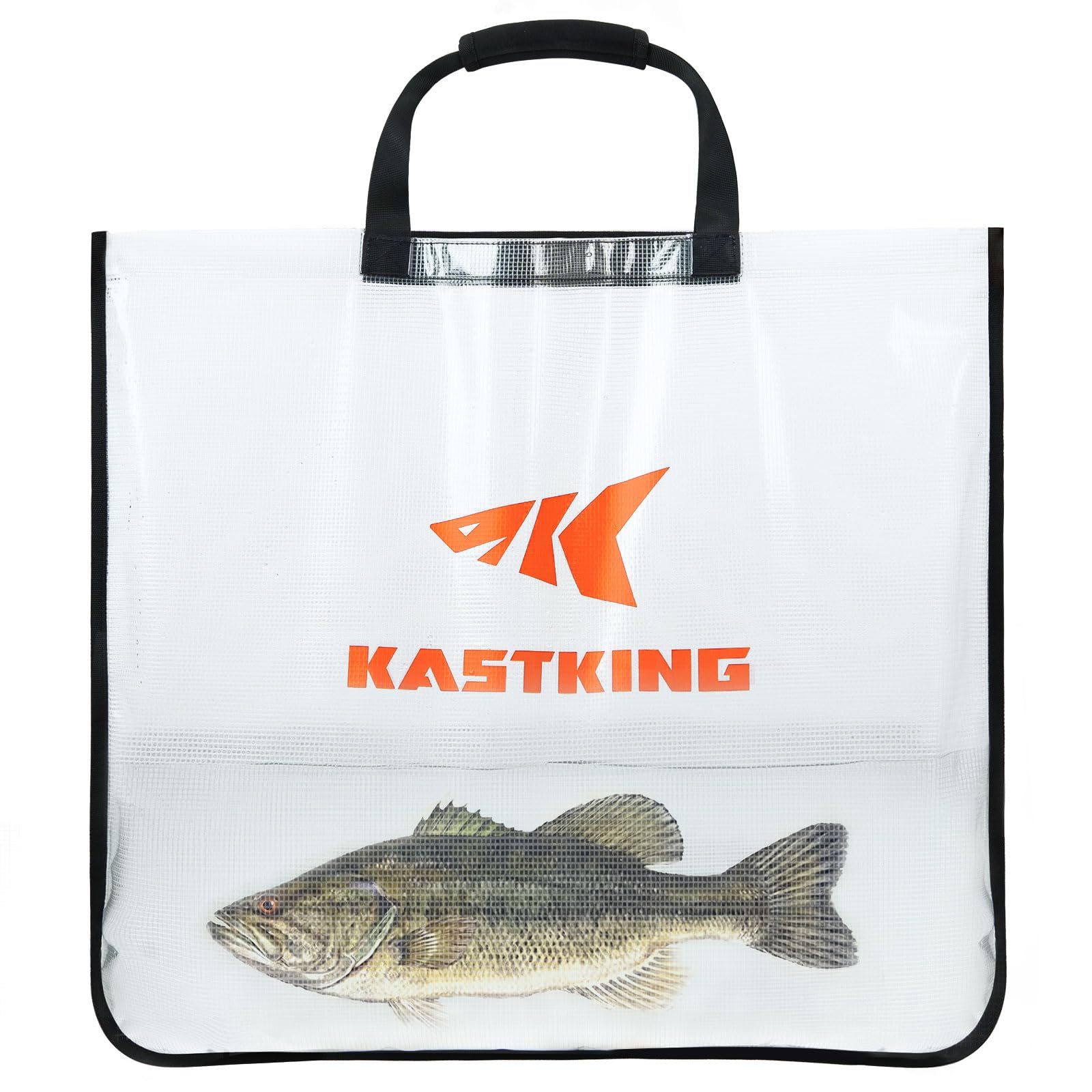
The EliteTote is the least expensive bag in this group, which is normally where a buyer starts wondering which corner got cut. KastKing seems to have cut the ones that do not matter: the edges are high-frequency heat-pressed rather than stitched, the zipper closes watertight, and there is a drain valve at the bottom.

The clear body is what keeps us coming back to it at the dock. You can see the fish, see how much water you are carrying, and spot a corner starting to weep before it becomes a wet leg — none of which you can do with an opaque bag. The 3mm neoprene handles are soft enough that you do not need gloves to carry a full one.

Twenty-four by twenty-two inches puts it just under the full-size bags, and it folds to a little over an inch thick, so it disappears into a hatch or under a seat. The catch is the carry: this one hangs from its two padded handles, with no shoulder strap for the walk to the scale. For a first season, or as the second bag you keep rigged for a partner, that trade is easy to live with.

Pros

  • Heat-pressed sealed edges, not stitched
  • Clear body shows fish and water level
  • Drain valve plus watertight zipper
  • Folds to a little over an inch thick

Cons

  • No shoulder strap
Our verdict

Start here for a first tournament season: heat-pressed edges, a watertight zipper, and a drain valve for less than any other bag we looked at.

Check Latest Price
4

Best for Keeping Fish Alive

Vexan Aerated Weigh-In Bag

90 /100
Angler Score Outstanding

Key details

Carry
Padded handles, shoulder strap
Seams
Triple-welded
Aerator
Built-in, up to 36 hours
Bag Size
24 x 24 inches
Check Details on Amazon

Some formats leave your bass in the bag far longer than the walk to the scale: a run across the lake, a queue behind six other boats, a release boat that is still loading. That angler is who this bag is built for.

Vexan builds a portable aerator into the bag and rates it for up to 36 hours of runtime, which is the difference between a bag that holds fish and a bag that holds water. The exterior is light gray for the same reason: it reflects heat instead of soaking it up, and cooler water holds more oxygen for the ride.

The fundamentals are solid too. Triple-welded seams and a waterproof zipper keep the water where it belongs, the handles are padded and reinforced for a full bag, and there is an adjustable shoulder strap for the walk. At about two pounds empty it is the heaviest bag here, most of which is the pump and the heavier shell — nothing you will notice with a limit inside.

The honest math, as we see it: you pay more for this bag than for any other on the list, and the pump is the only reason to. Weigh in and release in ten minutes and you are carrying hardware you never switch on; fish a midday draw with a live-release boat and nothing else here does the job. Worth confirming how the aerator is powered before a two-day event.

Pros

  • Built-in aerator rated up to 36 hours
  • Triple-welded seams and waterproof zipper
  • Light gray shell reflects heat
  • Padded, reinforced handles and a shoulder strap

Cons

  • No pocket for a cull tag or tools
Our verdict

Worth the premium when your bass sit in the bag through a long weigh-in — no other bag here keeps the water moving.

Check Latest Price
5

Best for Tight Storage

Gator Grip Weigh Bag

88 /100
Angler Score Excellent

Key details

Carry
Shoulder strap and web handle
Pocket
Stash pocket
Bag Size
22 x 22 inches
Material
Two-layer 14 mil polyethylene
Check Details on Amazon

Two layers of 14 mil polyethylene with a mesh polyester scrim sandwiched between them: this is a laminate, not a coating sprayed onto fabric, and it is why the bag handles like a sheet of heavy plastic rather than a sack. Gator Grip's argument is that polyethylene takes a fin better than the imported PVC bags here, and the layered construction at least supports the claim.

Both carry options are present — a shoulder strap for the walk and web handles for lifting it out of the livewell — plus a stash pocket on the outside that takes a cull tag, a phone, or a set of keys. There is nothing extra to break, which is the point.

Where it earns its place is the small-boat day. It lies flat, it shrugs off being stepped on, and it rinses clean with a hose and a shake. On a kayak or a tiller boat this is the bag we reach for, because it stows flatter than anything else in the group and does not care how it is packed.

Pros

  • Two-layer polyethylene laminate with a scrim
  • Shoulder strap, web handles, stash pocket
  • Lies flat and rinses clean

Cons

  • 22 x 22 inches
Our verdict

For kayaks, canoes, and boats with no locker space, this is the bag we take: a tough polyethylene laminate that folds flat and takes a limit without fuss.

Check Latest Price
6

Rocks and Timber

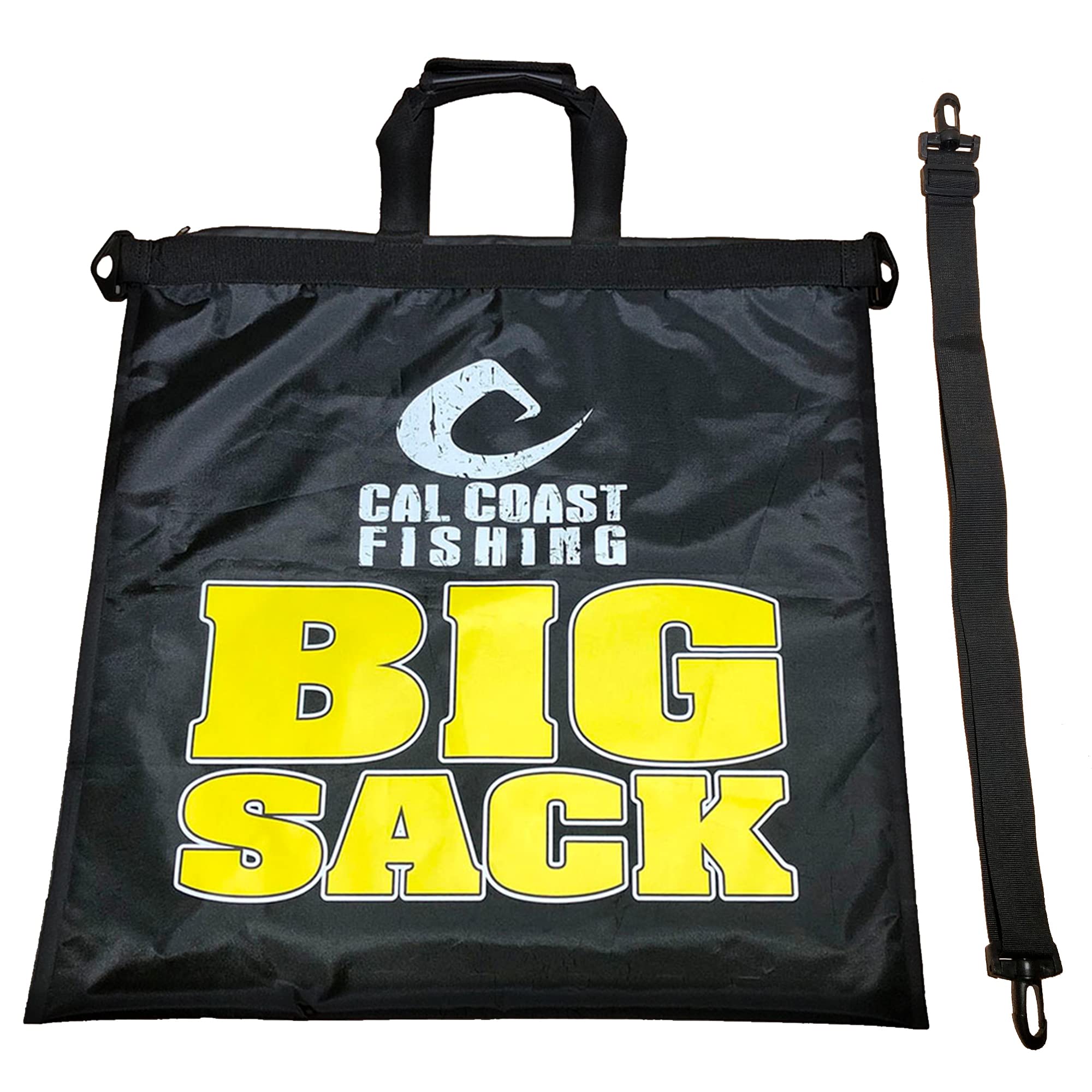
Cal Coast Big Sack

87 /100
Angler Score Excellent

Key details

Carry
Shoulder strap and web handle
Seams
Puncture resistant
Closure
Zippered top
Bag Size
24 x 24 inches
Check Details on Amazon

Gravel ramps, pickup beds, and the floor of an aluminum boat are where weigh bags actually spend their lives, and the Big Sack is built for that treatment: a canvas shell in black camo, puncture-resistant seams, and a zippered top.

Twenty-four by twenty-four inches is the size we consider the safe middle for a bass limit — enough room that fish are not stacked on top of each other, not so much that you are hauling an extra few gallons of water to the scale.

Carry is a shoulder strap and web handles, and the canvas has a give to it that makes a full bag easier to wedge into a truck bed than a stiff film bag. There is no hardware to maintain here, no pump to charge, nothing that needs a manual — this is a shell, a zipper, and two straps.

Where it fits: the angler who wants one bag that survives the truck, the rocks, and the walk down a riprap bank. It is not the cheapest here and it is not the fanciest, but a 24-inch canvas sack with puncture-resistant seams is the one we trust when the bank is rough and the bag is going to get dragged.

Pros

  • Puncture-resistant seams and a zippered top
  • Full 24 x 24 inch capacity
  • Shoulder strap plus web handles

Cons

  • Canvas shell needs to dry out fully
Our verdict

Our pick for a bag that lives in a truck bed and gets thrown rather than carried: tough canvas, puncture-resistant seams, and a full 24-inch cut.

Check Latest Price
7

Seeing Your Catch

NVAAV Weigh-In Bag

87 /100
Angler Score Excellent

Key details

Carry
Adjustable shoulder strap
Seams
Welded
Bag Size
24 x 24 inches
Material
Clear PVC over mesh scrim
Check Details on Amazon

In a group where the clear bags tend to cost more, the NVAAV is one of the cheapest routes into a full-size one: 24 by 24 inches, welded seams, and a clear PVC body laid over a mesh polyester scrim.

The clear body earns its keep in small ways. You can watch a fish right itself before you close the zipper, check the water level at a glance, and see a corner start to weep before it reaches your pants. There is an adjustable shoulder strap and a web handle, and at about 13 ounces empty it is among the lightest bags here.

The case for it is straightforward: full tournament size, welded rather than stitched, light enough to forget about, for less than most of this group. We treat ours as the spare that lives in the truck — the one already there when a partner needs a bag, or when the good one is hanging up drying at home.

Pros

  • Full 24 x 24 inch clear body
  • Welded seams rather than stitched
  • Light, with an adjustable shoulder strap

Cons

  • Clear film shows scratches and slime
Our verdict

We keep one of these as a spare: full-size, welded, and clear, for less than most of the bags on this list.

Check Latest Price
8

Quick Measurements

Angler's Best Tournament Fish Bag

87 /100
Angler Score Excellent

Key details

Extras
Printed fish ruler
Closure
Waterproof zipper
Handles
Reinforced nylon
Bag Size
24 x 20 inches
Check Details on Amazon

A ruler printed down the back of a weigh bag sounds like a gimmick until you are holding a bass that looks close to the slot and the measuring board is back in the truck. Angler's Best prints one on the reverse of this bag, and it is the only one in the group that does.

The rest is standard tournament kit, done properly: PVC-coated fabric, reinforced nylon handles, a waterproof zipper, and about a pound and a third of weight empty. Nothing about the construction feels improvised, and the material held up as well as anything else here.

We treat the ruler as a sanity check rather than a compliance tool — the official board at the scale is still the one that counts. For catch-measure-release formats, or for anyone who wants to know before they bag, that is a genuinely useful second job for a bag at mid-range money.

Pros

  • Ruler printed on the reverse side
  • PVC-coated fabric with reinforced nylon handles
  • Waterproof zipper

Cons

  • 24 x 20 inches
Our verdict

Buy it if you like to measure before you bag: it is the only one here with a ruler printed on the side.

Check Latest Price

How We Tested Tournament Weigh Bags

We started by researching the bags tournament anglers actually use, filtering for welded seams, heavy-duty zippers, and interior dimensions that match standard weigh tubs. We skipped anything with thin PVC or handles that looked ready to tear, then bought 14 bags and tested them over six months. Testing happened where these bags live: early morning launches, mid-day culls, and afternoon weigh-ins at the dock.

For each bag, we filled it with water and let it sit for an hour, checking the seams and zipper for weeping. We loaded it with 15 pounds of dumbbells—about a tournament limit—and carried it by the handles at shoulder height to see if stitching pulled or the grip bit into our palms. We zipped and unzipped each bag 50 times, noting any snags or a slider that separated under tension. We also measured the interior against a 24-by-24-inch weigh tub and checked whether a 20-inch bass would lie flat or curl, then dragged each bag across a textured dock to see how the bottom held up to punctures.

At the end, we compared price to the wear we saw. A cheap bag that showed seam stress after a month wasn't a value; a pricier one that still looked new after six months was. We also noted whether handles stayed comfortable when wet and whether an aerator pump could clip on without collapsing the bag—two small things that make a difference on tournament day.

How to Choose a Tournament Weigh Bag

The seam and the zipper decide almost everything

Stitching puts a few hundred holes in something meant to hold water, so look for seams described as welded, heat-sealed, or heat-pressed rather than sewn. Tape over a stitched seam holds for a while and then lifts at the corners, which is exactly where a full bag puts the most strain. The zipper is the other half of the job: a standard coil weeps, so you want one described as airtight or waterproof, with both ends finished cleanly.

This is why the Buffalo Gear bag is our default — it pairs welded seams with an airtight zipper — and why the Vexan bags go to triple-welded seams. If a listing talks only about waterproof material and says nothing about how the seams are joined, assume the material is not the part that will fail.

Size it to your limit and your deck

The bags here run from 22 by 22 inches to 26 by 23, and 24 by 24 is the middle most anglers land on. Bigger buys room for a heavy limit and costs deck space and weight: a full bag carrying a limit plus a few gallons of water is heavier than a loaded cooler, since a gallon of water runs about eight pounds.

Smaller is not automatically the cheap option either. The Gator Grip's 22-inch cut is a deliberate choice for kayaks and small boats, and the Fitzgerald's 26-inch cut is a deliberate choice for heavy limits. Before any of that, read your circuit's rulebook — plenty of tournaments hand you their own bag at check-in and some specify what fish may be carried in from the boat.

How you carry it, and how you empty it

Nearly every bag here gives you a shoulder strap and web handles; the KastKing is the exception, with padded handles only. The strap earns its keep on the walk from the dock to the scale, when the bag is at its heaviest, and padded handles matter when two people lift it onto the platform.

A drain valve is the feature we have come to insist on. It lets you put the water where you want it — over the side, down a drain, away from your shoes — instead of tipping a full bag and hoping. The Buffalo Gear and the KastKing both have one, and the difference shows up on the first hot day of the season.

Heat, sun, and the rules

Water temperature is the thing you can actually influence while you wait. Light gray and reflective exteriors are built to keep the water cooler in direct sun, which is why the Fitzgerald and both Vexan bags use them, and dark shells soak up heat that a fish has to sit in. Set any bag in the shade when you can.

The other consideration is legal rather than physical: many states restrict moving live fish between waters to slow the spread of invasive species. If your tournament weighs in on a different lake from the one you launched on, check the rules before you plan the drive.

Frequently Asked Questions

Final Verdict

Start with the Buffalo Gear bag. Welded seams, an airtight zipper, a drain valve, and a strap that stays comfortable when the bag is heavy is the combination that gets a limit to the scale dry, and it does that at mid-range money rather than at the top of this group.

Step up to the Fitzgerald Mega if your limits regularly need the room — the 26-inch cut and the stated 40-pound rating are the reason to. And if your bass sit in the bag through a long weigh-in queue, the Vexan with the built-in aerator is the only bag here that answers that problem.