Best Transom Savers of 2026

A transom saver is a simple piece of gear: a strut that bridges your trailer frame and the lower unit of your outboard so the motor's weight rides on the trailer instead of hanging off the back of the boat. Without one, every pothole sends that weight into the transom, which is how gelcoat gets stress cracks and a cheap part turns into an expensive fiberglass repair. Simple doesn't mean solved, though — mounts and adjustment ranges vary enough that plenty of them only sort of fit, and a loose one rattles against the lower unit the whole way to the ramp.

I've towed with savers that looked right in the box and disappointed by mile twenty. Over eight months, my team and I ran 11 of them behind three boats, from a light aluminum rig up to a pontoon, and the differences that mattered were consistent: how much adjustment range you actually get, whether the hardware stays put when you pull the pin, and whether it holds its setting after a few hundred highway miles. What you're buying is a motor still sitting where you left it when you back down the ramp — and the savers that managed that are the ones worth your money.

1

Best Overall

Attwood SP-400 Transom Saver

91 /100
Angler Score Outstanding

Key details

Weight
2.6 lb
Mounting
Roller and trailer brackets
Motor Rating
Up to 100 HP
Adjustable Length
23 to 35 inches
Check Details on Amazon

The Attwood SP-400 earns the top spot because it solves the first fit question before you leave the driveway: the box includes both a roller cradle and a trailer bracket. That means it can work with either mounting style, so you aren't hunting for a separate bracket because your trailer has the wrong hardware. We value that flexibility more than a small gain in claimed capacity, especially on a first transom saver.

The adjustable shaft reaches from 23 to 35 inches, and the composite head is rated for outboards up to 100 hp. The 2.6-pound aluminum-and-composite build is light enough to move from the garage to the trailer without feeling like a chore, and the head is shaped to hold the lower unit without metal-to-metal contact. For a small or mid-size outboard with power trim or tilt, that's a sensible set of priorities.

The installation is deliberately simple: set the length, settle the head against the lower unit, and pin the bar to the bracket you've chosen. There are no extra adapters to keep track of and no separate tools beyond the basics. It's the kind of saver that stays on the trailer for the season and takes a few seconds to fit at the ramp.

Pros

  • Dual roller and trailer mounts
  • Adjustable 23-to-35-inch span
  • Light 2.6-pound build
  • Composite head rated to 100 hp

Cons

  • Cast head can break under hard knocks
  • 100 hp ceiling limits larger outboards
Our verdict

For most outboards up to 100 hp, the Attwood is the easiest complete saver to fit and live with.
Check Latest Price
2

Best for Roller Trailers

Extreme Max Straight Transom Saver

90 /100
Angler Score Outstanding

Key details

Mounting
Trailer rear roller
Construction
Steel with rubber V-block
Motor Rating
Up to 150 HP
Adjustable Length
21 to 31 inches
Check Details on Amazon

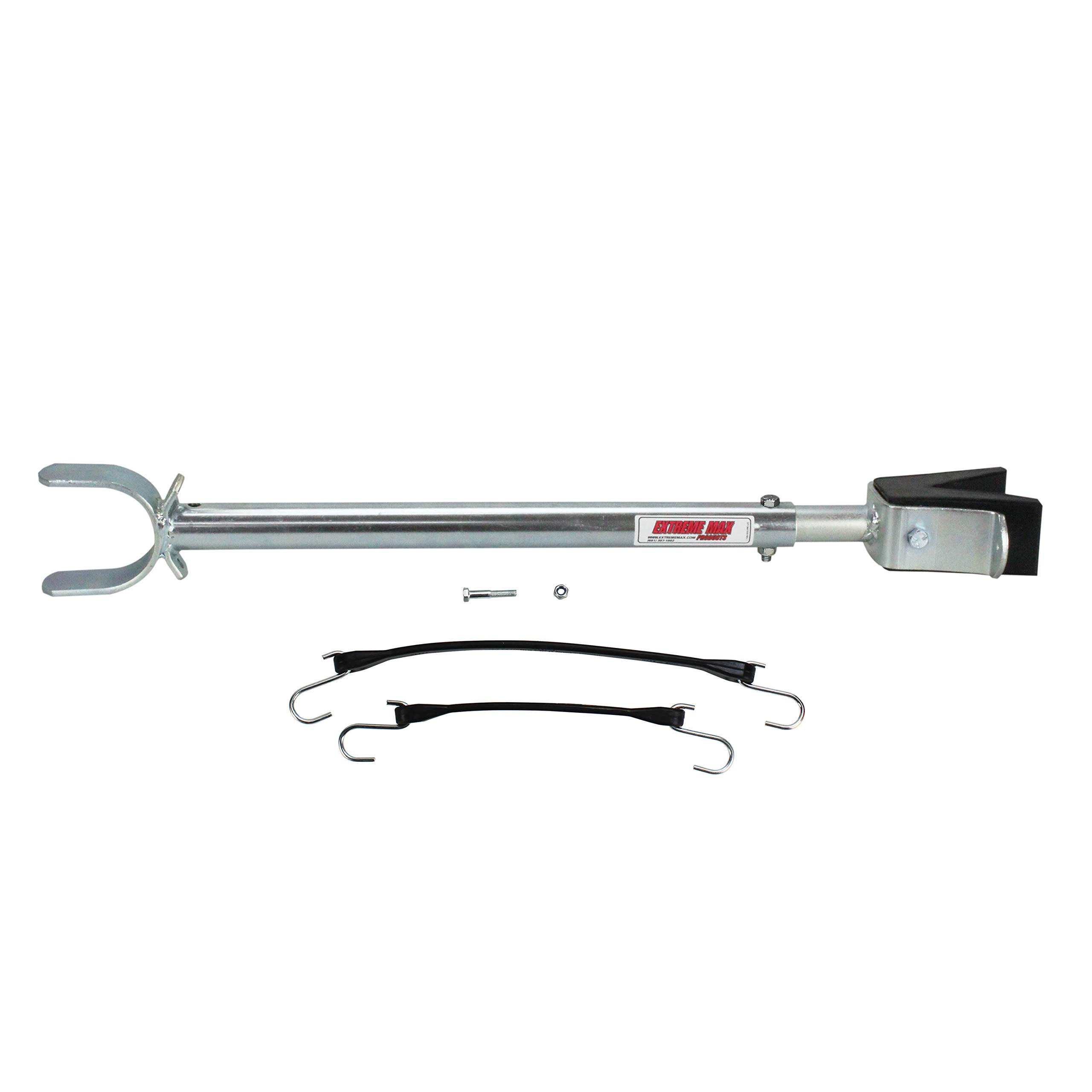
The 3005.3852 is a straight steel bar with a rubber V-block, and that simple layout is why we reach for it on a roller trailer. The bar drops over the trailer's rear roller, the V-block cradles the lower unit, and the supplied bungees keep the ends from walking. There's very little to adjust or lose.

The 5.69-pound steel body feels substantial, and the saver is rated for outboards up to 150 hp. We don't mind the weight on a piece that stays with the trailer; the payoff is a bar that holds the motor steady over rough pavement. The rubber V-block is also a friend to a painted lower unit, with no metal edges digging into the finish.

Once the bar is seated, there isn't much to think about. The bungees at each end keep it from walking off the roller, and the V-block holds the lower unit in a broad, padded cradle. The bungee hooks are the small detail worth having, because they give you a positive place to anchor the strap instead of improvising.

Pros

  • Steel build with rubber V-block
  • Rated up to 150 hp
  • Bungees secure both ends
  • Strong stability on rough roads

Cons

  • Needs a trailer with a rear roller
  • Short 21-to-31-inch span limits larger rigs
Our verdict

For a compact roller trailer and an outboard up to 150 hp, this heavy steel saver is the one we trust.

Check Latest Price
3

Best 3-Ram Wedge

M-Y Wedge 3-Ram Motor Support

91 /100
Angler Score Outstanding

Key details

Material
Plastic
Mounting
Trim/tilt ram
System Fit
3-ram trim/tilt
Check Details on Amazon

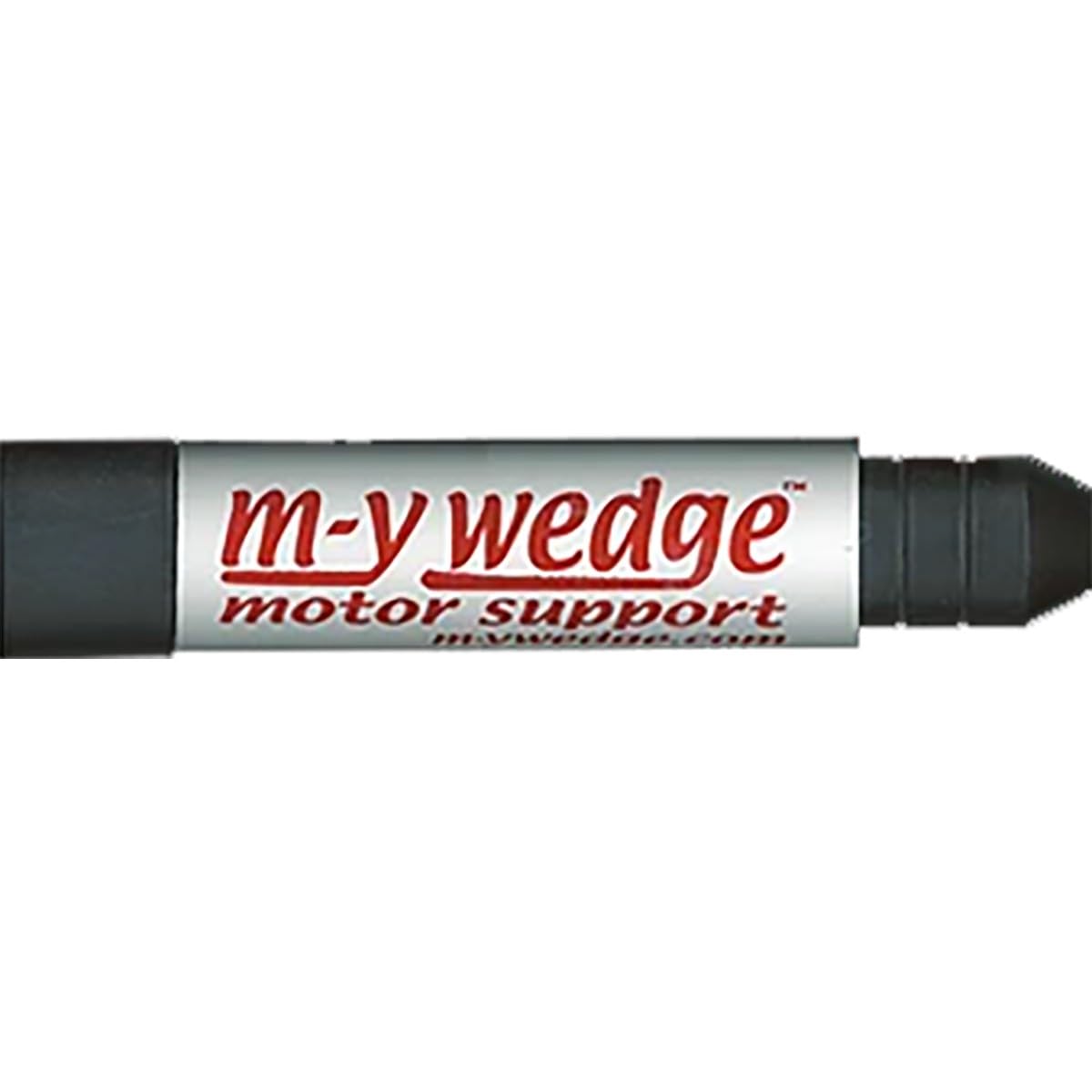
The M-Y Wedge takes a different route to the same goal, and we find it the cleaner one for a three-ram motor: it supports the motor at the trim/tilt ram instead of tying the lower unit back to the trailer. You tilt the motor up, press the wedge onto the ram, and trim down until the motor rests on it. There's no bracket to bolt on and no bar to line up at the ramp.

That division of labor suits us. The wedge is small, it lives with the boat, and it takes the bounce out of the motor without adding a long lever between the trailer and the engine. For a trailered bass boat or bay boat with a three-ram unit, it's a neater routine than a conventional bar.

The fit is specific. M-Y publishes fit notes for a reason: the wedge has to seat squarely on the ram. Read them against your exact model before ordering, and check the seating position the first time you trim down. A wedge that doesn't sit fully is worse than no wedge at all.

Pros

  • No drilling or trailer bracket
  • Quick tilt-in installation
  • Keeps the motor stable in transit

Cons

  • Only fits 3-ram trim/tilt systems
Our verdict

The M-Y Wedge is the no-drill answer for three-ram outboards, as long as your model is on the fit list.

Check Latest Price
4

Best for Rough Roads

Attwood SP-421 Transom Saver

91 /100
Angler Score Outstanding

Key details

Weight
4.2 lb
Mounting
Roller and trailer brackets
Shock Absorption
Integrated springs
Adjustable Length
27 to 36 inches
Check Details on Amazon

The SP-421 is the Attwood bar for the owner who tows over rough pavement. Its coil springs sit in the arm and absorb some of the road impact before it reaches the lower unit, while the heavy-duty head grips the engine. That's a more complex piece of hardware than the standard bar, and it's aimed at a different job.

It adjusts from 27 to 36 inches, so it reaches a little farther than the standard Attwood, and it includes both roller and trailer mount brackets. The 4.2-pound build is still manageable. For a big outboard on a long highway run, the extra mass feels purposeful.

We think the springs earn their keep on washboard gravel, expansion joints, and long days at highway speed. They don't turn a trailer into a cloud, but they give the lower unit one more layer between the road and the transom. That's the reason to choose this one over a standard bar. The spring arms are the part to inspect each season; that's where the extra hardware lives.

Pros

  • Springs damp road vibration
  • 27-to-36-inch span
  • Dual mounting brackets
  • Heavy-duty head

Cons

  • Heavier than the standard Attwood
  • Costs more than a basic bar
Our verdict

For rough pavement and long tows, the spring-damped Attwood is worth the extra weight and cost.

Check Latest Price
5

Best for Single-Ram Outboards

Mangrove Single-Ram Transom Saver Wedge

89 /100
Angler Score Excellent

Key details

Material
EPDM rubber
Dimensions
5.2 x 2.13 x 2.13 inches
System Fit
Single-ram trim/tilt
Compression Rating
Over 2,000 lb
Check Details on Amazon

Single-ram outboards don't get as many wedge options as three-ram motors, and that's the gap the Mangrove block fills. It sits on a single trim/tilt ram, compresses against the motor, and keeps the lower unit from bouncing without adding a metal bar between the trailer and the engine.

The EPDM rubber formula is rated for more than 2,000 pounds of compression, and the block is small enough to keep in a splash well or a dry box. What sold us on this one is the no-drill routine: tilt the motor up, press the block into place, and trim down until it seats. There's no bracket to bolt on and nothing left hanging on the trailer.

The fit guide is the important part of the purchase. The block is made for single-ram systems and listed against several major outboard brands, but the year and model still matter. Check the listing against your exact motor before you order, then test the seating position the first time you trim down.

Pros

  • No drilling or trailer bracket
  • EPDM rubber spreads the load
  • Over 2,000-pound compression rating
  • Quick tilt-in installation

Cons

  • Can shift or deform on long, rough tows
Our verdict

The Mangrove wedge is the simple no-drill pick for single-ram outboards, with a useful compression rating.

Check Latest Price
6

Best for Long Trailer Spans

Extreme Max Heavy-Duty Transom Saver

92 /100
Angler Score Outstanding

Key details

Weight
9.2 lb
Construction
Alloy steel
Motor Rating
Up to 150 HP
Adjustable Length
28 to 59 inches
Check Details on Amazon

The Extreme Max 3001.1068 is built for the trailers that make a short saver useless. It reaches from 28 to 59 inches, so it can bridge a long setback between the trailer and the lower unit and still leave room to adjust. It's rated for outboards up to 150 hp and made from alloy steel.

The alloy steel construction is built for the long pull, and the two-year warranty is a useful backstop on a piece that takes a beating. This is a universal-fit bar, but universal doesn't mean fit-free: the length range is the reason to choose it, not a substitute for checking your trailer.

Installation is straightforward: choose the bracket position, set the length, and pin the bar in place. The long body gives you plenty of adjustment, and the steel arm gives the lower unit a firm anchor. For a deep-drop trailer or a big outboard, that's the kind of support that makes the tow less stressful.

We keep this one for the long-span job. On a compact trailer, the extra reach is wasted; on a deep-drop trailer, it's the difference between a supported motor and a bar that doesn't reach. The adjustment range is the whole point, and it's why this bar earns a place for the big-rig buyer.

Pros

  • 28-to-59-inch adjustable reach
  • Rated up to 150 hp
  • Alloy steel construction
  • Two-year warranty

Cons

  • 9.2-pound bar is heavy to handle
  • Can kink at the bend under hard impacts
Our verdict

The Extreme Max long-reach saver is the right bar when a short transom saver leaves a gap.

Check Latest Price
7

Budget Setups

JY Performance Adjustable Transom Saver

87 /100
Angler Score Excellent

Key details

Mounting
Trailer bracket
Motor Rating
Up to 100 HP
Adjustable Length
23 to 35 inches
Included Hardware
Two straps and clevis pins
Check Details on Amazon

The JY Performance saver comes with the small parts that often go missing: two 23-inch rubber straps with S-hooks, two clevis pins with retainers, the telescoping bar, and a trailer-mount bracket. We appreciate a kit that arrives ready to install instead of sending you back to the hardware bin.

The bar adjusts from 23 to 35 inches and is rated for outboards up to 100 hp. The aluminum shaft and composite head keep it light, and the head is designed to hold the lower unit without scratching it. For a small or mid-size motor, the basics are all here.

The completeness of the kit is the appeal. The bar is simple, the adjustment range is broad, and the straps and pins give you a finished installation without a trip to the hardware store. For a small or mid-size outboard on the right trailer, that's a sensible budget package. The clevis pins have retainers, so there's less loose hardware to lose in the truck bed.

Pros

  • Includes two straps and clevis pins
  • 23-to-35-inch adjustable span
  • Rated for outboards up to 100 hp
  • Light aluminum shaft

Cons

  • Trailer-mount bracket only
  • 100 hp ceiling limits larger outboards
Our verdict

A complete budget bar for small and mid-size outboards, with the straps and pins ready to install.

Check Latest Price
8

Budget Buyers

Sebnux Adjustable Transom Saver

90 /100
Angler Score Outstanding

Key details

Material
Aluminum
Warranty
2 years
Motor Rating
Up to 100 HP
Adjustable Length
23 to 35 inches
Check Details on Amazon

The Sebnux saver leads with a two-year warranty, which is one of the longer coverage terms in this group. That's a meaningful vote of confidence for a budget bar, especially when the rest of the package is familiar: an aluminum shaft, a composite head, and a trailer-mount bracket.

It adjusts from 23 to 35 inches and is rated for motors up to 100 hp, so it covers the same small and mid-size outboards as several bars here. The composite head is designed to hold the engine without scratching the lower unit, and the two-year coverage gives you a reason to keep the receipt.

We see it as a budget alternative rather than a top pick. It covers the same 23-to-35-inch window and 100-hp ceiling as the JY, so the warranty is the main separator. The composite head is shaped to hold the lower unit without scratching it, which is the right touch on a painted motor.

We rank it as an also-consider because it covers the basics without a standout mounting advantage. The two-year warranty is the reason to choose it, and that's enough for a first boat or a spare saver. The rest is ordinary in a good way.

Pros

  • Two-year warranty
  • Adjustable 23-to-35-inch span
  • Rated up to 100 hp
  • Composite head protects finish

Cons

  • Bungee and hardware can rust or dry-rot
  • Instructions leave bracket and strap routing unclear
Our verdict

A budget 23-to-35-inch saver with a two-year warranty, a sensible spare or first-boat choice.

Check Latest Price

How We Tested Transom Savers on Three Boats for a Full Season

A saver only works if it actually reaches, so we started with a tape measure. On three boats — a 17-foot aluminum with a 90, a 20-foot fiberglass with a 150, and a pontoon running a single-ram setup — we measured from the trailer crossmember to the lower unit with the motor trimmed for towing, then kept only savers whose adjustment range overlapped that distance with room to spare. From there we ordered 11, weighted toward the different mount styles and toward units rated for the horsepower we were actually running.

Testing ran eight months, April into November, with two or three launches most weekends. Each saver went on in a quiet driveway first, then again at a ramp with a line of trucks behind us, where we timed the install and noted whether it took one hand or two, whether the pin stayed tethered to the frame, and whether anyone had to climb back in the truck to bump the trim.

Underway, every saver logged the same 60-mile highway run at 65 mph, a washboard gravel road into a state launch, and the railroad crossing near our storage lot. At fuel stops we checked whether the roller had walked off the pad, whether the bolts had backed off, and whether the motor had crept down. Back home we looked for what a season does: rust bleeding at the welds, rubber pads chewed through, bent pins, slop developing in the adjustable joint, and whether the head truly cradled the lower unit or just pressed against one edge of it. Value came down to what shipped in the box — hardware, clips, straps — and whether mounting it required a hardware-store run.

How to Choose a Transom Saver

Start With the Mounting Style

The first fork in the road is whether you want a bar that reaches from the trailer to the lower unit or a wedge that supports the motor at the trim/tilt ram. A bar like the Attwood SP-400 needs a roller or trailer bracket and gives you a visual connection to the trailer; a wedge like the M-Y is quicker but only fits the ram system it was shaped for.

We put mounting style first because it eliminates more products than any horsepower number. Match the hardware to the trailer you own, then use the motor rating to narrow the remaining choices.

Measure the Span Before You Buy

Every adjustable saver has a working range, and that number matters only if it matches the distance between your trailer's mounting point or rear roller and the lower unit in its towing position. A 23-to-35-inch bar covers a different set of trailers than a 28-to-59-inch bar.

Measure that gap with the motor trimmed to the height you actually tow at, then leave a little adjustment in reserve. If you're near the top of a bar's range, choose the longer model rather than forcing the fit. Extra length adds weight, so don't buy a long bar for a short span.

Match Horsepower and Material to the Boat

Ratings of 100 hp and 150 hp are not interchangeable marketing numbers; they tell you how much cantilevered motor weight the saver is built to control. Stay within the rating, even if the bar feels stout. Steel bars are heavier and generally shrug off road abuse; aluminum and composite designs are easier to handle and kinder to painted lower units.

We like aluminum for a small outboard and steel for a big one, but the mounting hardware and fit matter more than the metal alone. Pick the rating first, then choose the material you can live with.

Plan the Launch Routine

A transom saver is a trailering tool, not a running accessory. The bar comes off before the boat goes in the water, and a trim-ram wedge comes out before you operate the motor. The practical test is simple: if the saver is still in place when you reach the ramp, you need a reminder.

A strap around the winch post, a note on the trailer jack, or a set place in the tow vehicle all work. Check bungees and rubber parts before each season; they are the parts that age first.

Frequently Asked Questions

Final Verdict

The Attwood SP-400 is the transom saver we point most trailer-boat buyers toward. Its dual mounting brackets and 23-to-35-inch span answer the two questions that decide whether a saver is useful, and the 100-hp ceiling covers a broad range of small and mid-size outboards. That combination makes it the safest default before you start shopping for a specialty design.

If your trailer has a rear roller and you want heavier steel rated to 150 hp, choose the Extreme Max 3005.3852. If you have a three-ram outboard, the M-Y Wedge is the cleaner daily routine. Those two exceptions cover the needs that most often pull a buyer away from the Attwood.