Best Vacuum Sealers of 2026

Freezer burn doesn't announce itself. It shows up months later as a pale, leathery patch on a pork chop you paid good money for. A vacuum sealer pulls the air out before sealing, and with no air inside, there's nothing for ice crystals to form around. That's the whole trick — and it's why the machine earns permanent counter space.

The trouble is that the category is uneven. I've had a sealer quit mid-cycle with marinade still inside the bag, and a seal so weak the bag sighed open in the freezer. Over six months we ran 12 machines through real meal prep — raw meat, soup, coffee, the last of the tomatoes — and the keepers share a few traits: a seal that holds on wet food, controls you can work one-handed, and a footprint that doesn't take over the counter. Something first-timers don't expect: the bag matters nearly as much as the machine, and a wider seal bar forgives a lot of sloppy filling. Here's how they sorted out.

1

Best Overall

Gasbye VS5166

91 /100
Angler Score Outstanding

Key details

Bag Prep
Built-in roll storage and cutter
Seal Type
Double heat seal
Included Bags
Two rolls, five quart bags
Suction Power
95kPa
Check Details on Amazon

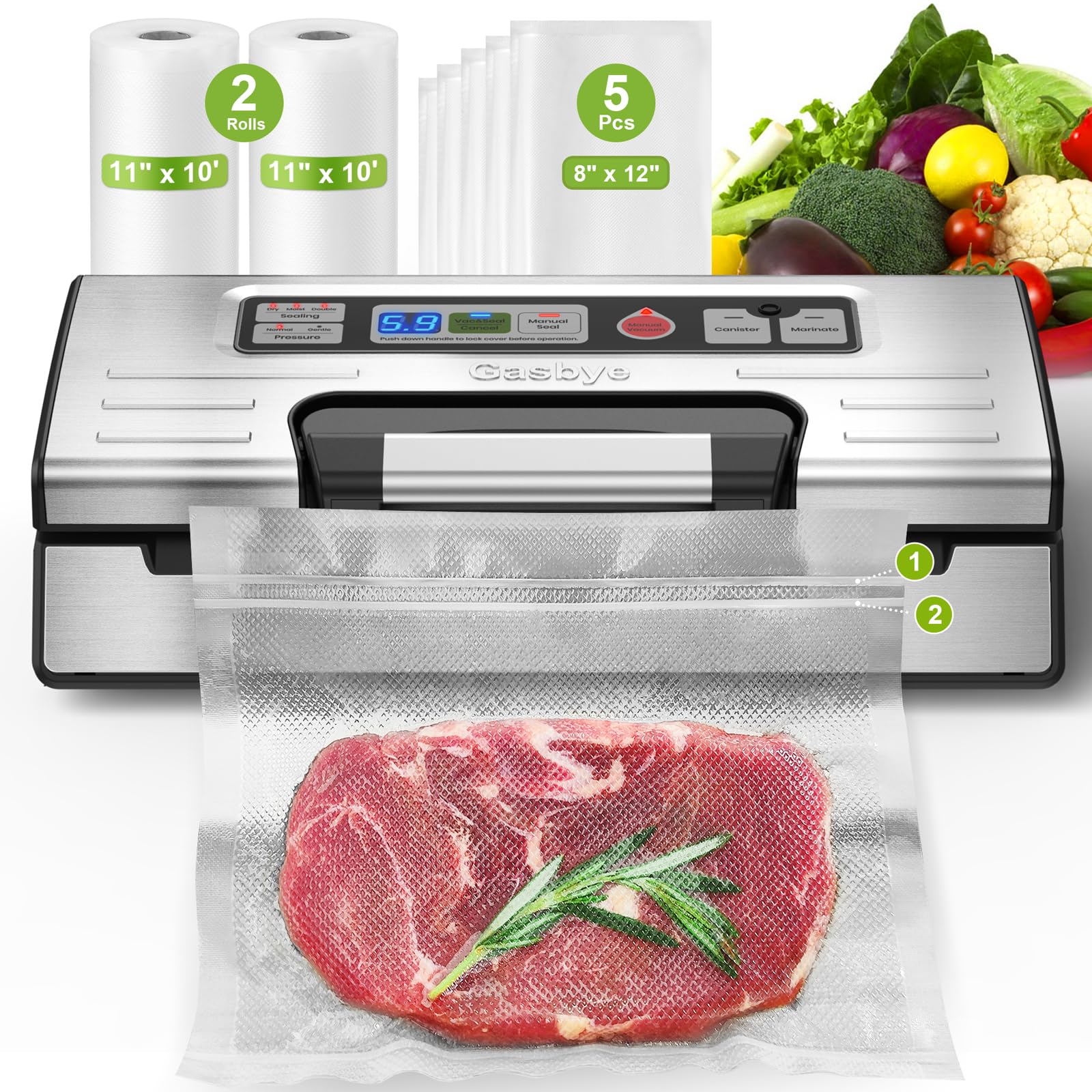
The 95kPa dual-pump rating is the first thing that separates the Gasbye VS5166 from the budget machines here, but what sold us is the way the suction, double heat seal, and bag station work as one routine. We loaded a roll, cut a bag to length, and moved from raw meat to a wet marinade without the usual stop-and-wipe dance. The pulse control lets you pull down gradually, which is the setting we reach for when a bag is close to full.

The double seal is the feature we trust most for sous vide and freezer bags. Two sealing strips give you a backup pass, and the removable drip tray means a spill does not turn into a cleanup project. The external hose is a real bonus if you already own compatible containers: it lets you pull air from a marinade without dragging liquid through the bag channel. At 6.5 pounds, it has enough heft to stay put when you press the lid, though it is not the machine to tuck into a drawer.

What keeps it from being perfect is the footprint. At 15.7 inches long, it wants a real slice of counter, and there is no automatic bag detection, so you position the bag yourself. Neither is a dealbreaker for a machine that handles weekly bulk buys and sous vide so well. If you want the same 95kPa class with a more hands-off loading routine, the Fresko is the alternative; if you mostly reseal leftovers, go handheld.

Pros

  • 95kPa dual-pump suction
  • Double heat seal for wet or dry food
  • Built-in roll storage and cutter
  • External hose for containers

Cons

  • Long 15.7-inch footprint
  • No automatic bag detection
Our verdict

Our top pick for most kitchens: the Gasbye combines 95kPa suction, a double heat seal, and a built-in bag station in a machine that handles wet and dry food without fuss.

Check Latest Price
2

Best Automatic

Fresko V2

91 /100
Angler Score Outstanding

Key details

Operation
Automatic bag detection
Seal Strip
0.2-inch widened strip
Included Bags
10 pre-cut bags
Suction Power
95kPa dual pump
Check Details on Amazon

Automatic bag detection is the quiet luxury here: you slide the bag in, close the lid, and the Fresko V2 takes over. That hands-off routine is why it earns a place ahead of cheaper manual machines. The 95kPa dual pump and 140W motor are not just numbers on a page; they give this compact sealer enough pull to handle weekly meal prep without the long, noisy cycle we associate with budget units.

The widened 0.2-inch heating strip is a practical detail for moist food. It gives the seal more contact area, and the bag-mouth clamp keeps the bag from shifting while the cycle runs. We also like the pulse and extended-seal controls: they let you stop short of pulling liquid into the pump and add a second pass when a bag feels stubborn. The machine is only 4 pounds, so it is easy to move out of the way.

The trade-off is the bag system. Fresko ships with 10 pre-cut bags and two vacuum accessories, but there is no roll storage or built-in cutter, so you are not getting the cut-to-size convenience of the Gasbye or Bonsenkitchen. Air removal can also stumble if the bag mouth is wrinkled or overfilled; smooth it flat and leave headspace. For a small kitchen and a mostly automatic routine, that is a fair swap.

Pros

  • Automatic bag detection
  • 95kPa dual-pump suction
  • Widened heating strip for moist food
  • Compact 4-pound body

Cons

  • No roll storage or cutter
Our verdict

If you want the least fiddly sealing routine without paying premium money, the Fresko's automatic bag detection and 95kPa pump make it our hands-off pick.

Check Latest Price
3

Best for Bulk

Bonsenkitchen VS4100

89 /100
Angler Score Excellent

Key details

Pumps
Four vacuum pumps
Bag Prep
Cutter and bag storage
Batch Speed
50 bags in 20 minutes
Noise Level
65dB
Check Details on Amazon

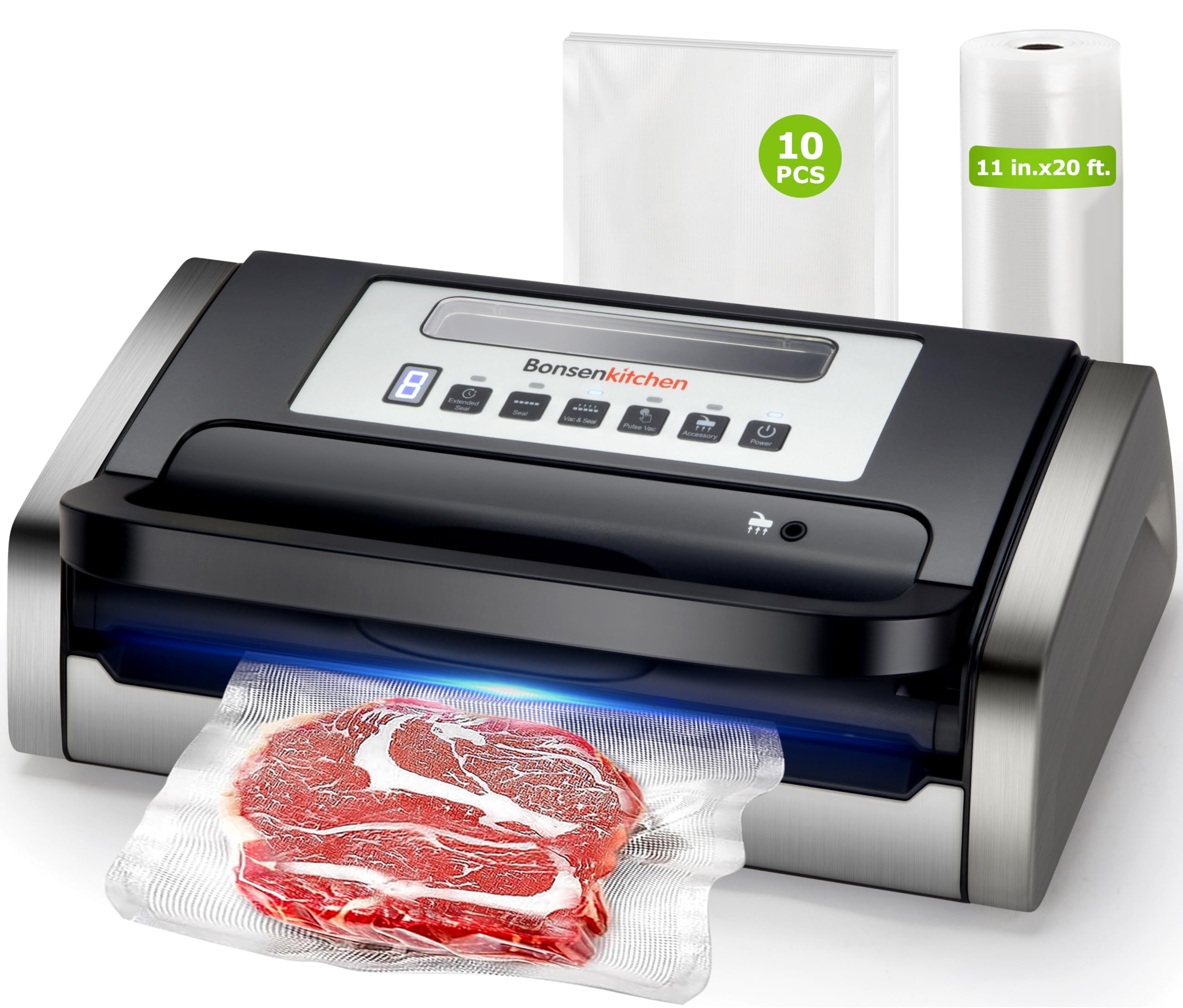
Four pumps and a 65dB noise rating are the headline, but the reason the Bonsenkitchen VS4100 earns a spot is throughput. The maker rates it for 50 bags in 20 minutes, which is the kind of pace that matters when you come home with a bulk order and a freezer to fill. We also noticed the easy-lock handle: one lever press locks the lid, instead of pushing down on both sides and hoping the bag stays put.

The built-in cutter and bag storage keep a long session moving. You pull a roll, cut, seal one end, fill, and repeat without hunting for scissors or a loose roll. The mode set covers the useful basics — vac and seal, pulse, seal only, extended seal, and accessory — and the accessory mode works with the included hose for containers. It is a 5.8-pound machine with a 16-inch body, so it needs a counter slot rather than a drawer.

Our reservation is the lack of automatic bag detection. You still line up the bag and close the lid yourself, and a wet bag mouth can interrupt the seal; wipe the inside edge dry before you lock it. For bulk buying and quiet operation, though, the four-pump design is the reason to choose this over the Fresko. It is the one we reach for when the job is volume, not a single leftovers bag.

Pros

  • Four-pump bulk sealing
  • 65dB quiet operation
  • Easy-lock handle
  • Built-in cutter and bag storage

Cons

  • No automatic bag detection
Our verdict

For big freezer sessions, the Bonsenkitchen's four-pump speed, quiet motor, and easy-lock handle make it the bulk-buying pick.

Check Latest Price
4

Best Portable

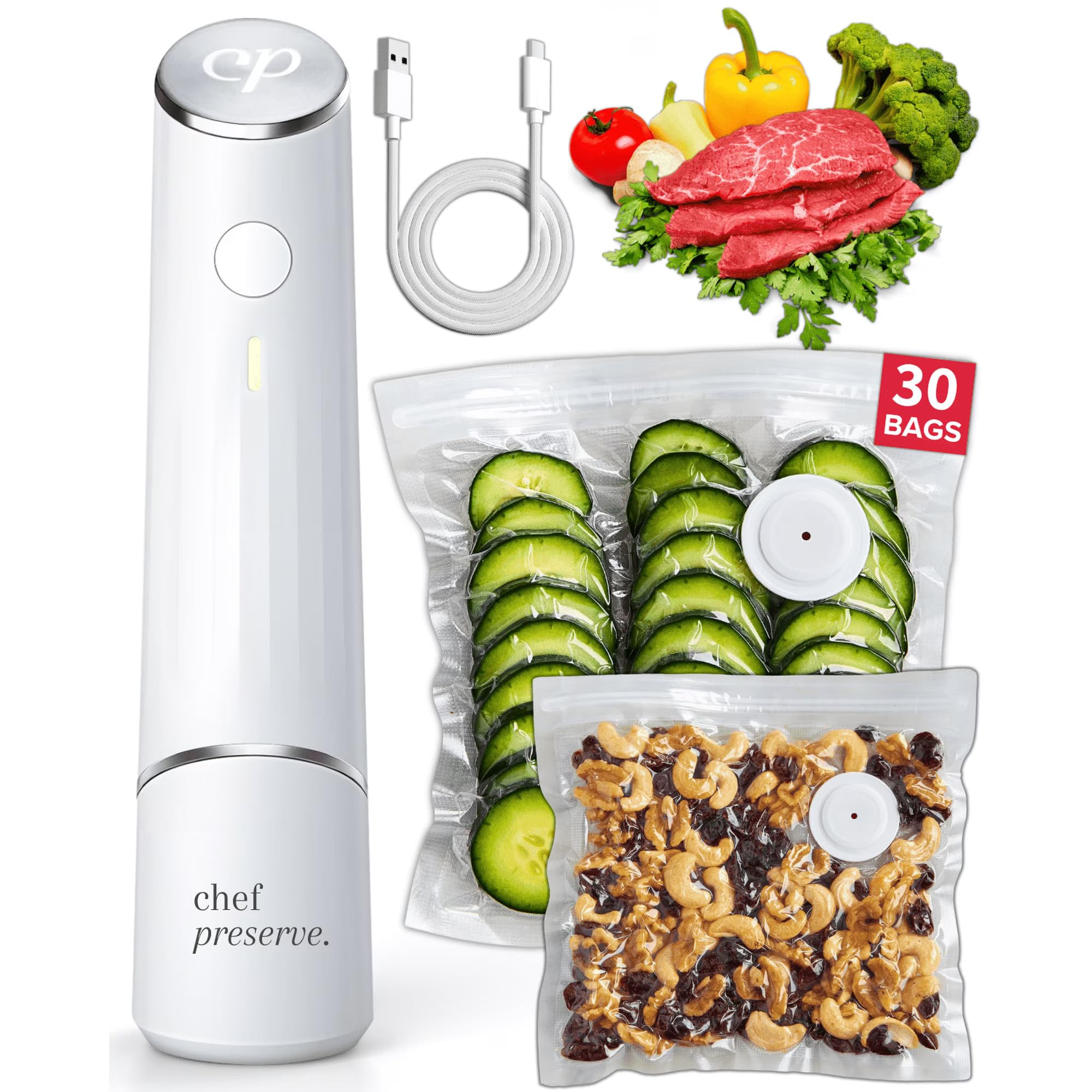
Chef Preserve

93 /100
Angler Score Outstanding

Key details

Cycle Claim
5-second cycle
Item Weight
2.2 lb
Power Source
Rechargeable battery
Included Bags
30 reusable bags
Check Details on Amazon

The Chef Preserve is the one that lives in a drawer, not on the counter. At 2.2 pounds, it is light enough to pull out for a single leftover portion and put away before the counter clutter returns. The rechargeable battery is the other half of the appeal: no cord, no outlet hunt, and a claimed 1,000 bags per charge. We did not run it to that number, but the five-second cycle is quick enough that a lunchbox packing session does not turn into a project.

It is not a heat-seal machine. The Chef Preserve pulls air from reusable zipper bags, then you close the zip; the 30 included bags are dishwasher, freezer, and microwave safe, and the zipper clip helps you get a clean closure. That makes it brilliant for cheese, coffee, cut fruit, and travel snacks, and less suited to packing a week of raw chicken. The bags need washing between uses, which is the real ongoing chore.

Sealing performance is the place to pay attention: the bag has to be zipped flat and the valve clear, or the suction will not take. When it works, the routine is genuinely fast, and the compact body is easier to live with than a full-size sealer. We treat it as a second machine for small jobs, not the only sealer in a household that buys in bulk.

That is the buyer it suits: someone with a small fridge, a habit of resealing partial packages, and no patience for a countertop appliance. For that person, the Chef Preserve earns its place. For a freezer full of bulk meat, the Gasbye or Bonsenkitchen is the better tool.

Pros

  • Five-second handheld cycle
  • Rechargeable, cordless design
  • 30 reusable vacuum bags
  • Drawer-friendly 2.2-pound body

Cons

  • Not a heat-seal roll machine
  • Reusable bags need washing
Our verdict

A rechargeable handheld that makes resealing leftovers and travel snacks genuinely easy, though it is a companion to a heat-seal machine, not a replacement.

Check Latest Price
5

Best Accessory Ecosystem

FoodSaver FM2100

91 /100
Angler Score Outstanding

Key details

Bag Prep
Roll storage and cutter
Warranty
5-year limited
Seal Type
Dual heat strips
Accessory Port
Hose included
Check Details on Amazon

The accessory port is the reason to look at the FoodSaver FM2100 before the cheaper machines. If you already own FoodSaver containers or the handheld sealer, the included hose turns the FM2100 into the hub for those extras, and that is a more useful kind of compatibility than another mode button. The dual heat sealing strips are the other practical draw: a second pass gives you a better shot at an airtight seal on a full bag.

The roll storage and cutter are built in, so you can make custom bags without scissors, and the starter kit gets you sealing right away. We found the one-touch operation straightforward, and the machine is easy enough to clean around the sealing strip. The 16.3-inch body and 6.6-pound weight make it a countertop appliance, not something you stash in a cupboard between sessions.

Sealing is where it can test your patience. Wet or overfilled bags are the usual culprits, and the machine benefits from a dry bag mouth and a little headspace. The five-year limited warranty is the reassurance here; it is longer cover than most of the machines in this group, and it matters on an appliance with a motor and a heating strip. If you want the accessory ecosystem, this is the pick; if you want the most consistent seals in our top tier, the Gasbye is stronger.

Pros

  • Accessory port and hose
  • Dual heat sealing strips
  • Roll storage and cutter
  • Five-year limited warranty

Cons

  • Accessory advantage is FoodSaver-specific
  • Long 16.3-inch footprint
Our verdict

Choose the FoodSaver if you already own its containers or handheld sealer; the accessory port and dual heat strips make it the ecosystem pick.

Check Latest Price
6

Freezer Inventory

Beelicious Pro VSP801

90 /100
Angler Score Outstanding

Key details

Labeling
Built-in label printer
Seal Type
Double heat seal
Suction Power
98kPa dual pump
Label Supplies
Two thermal rolls
Check Details on Amazon

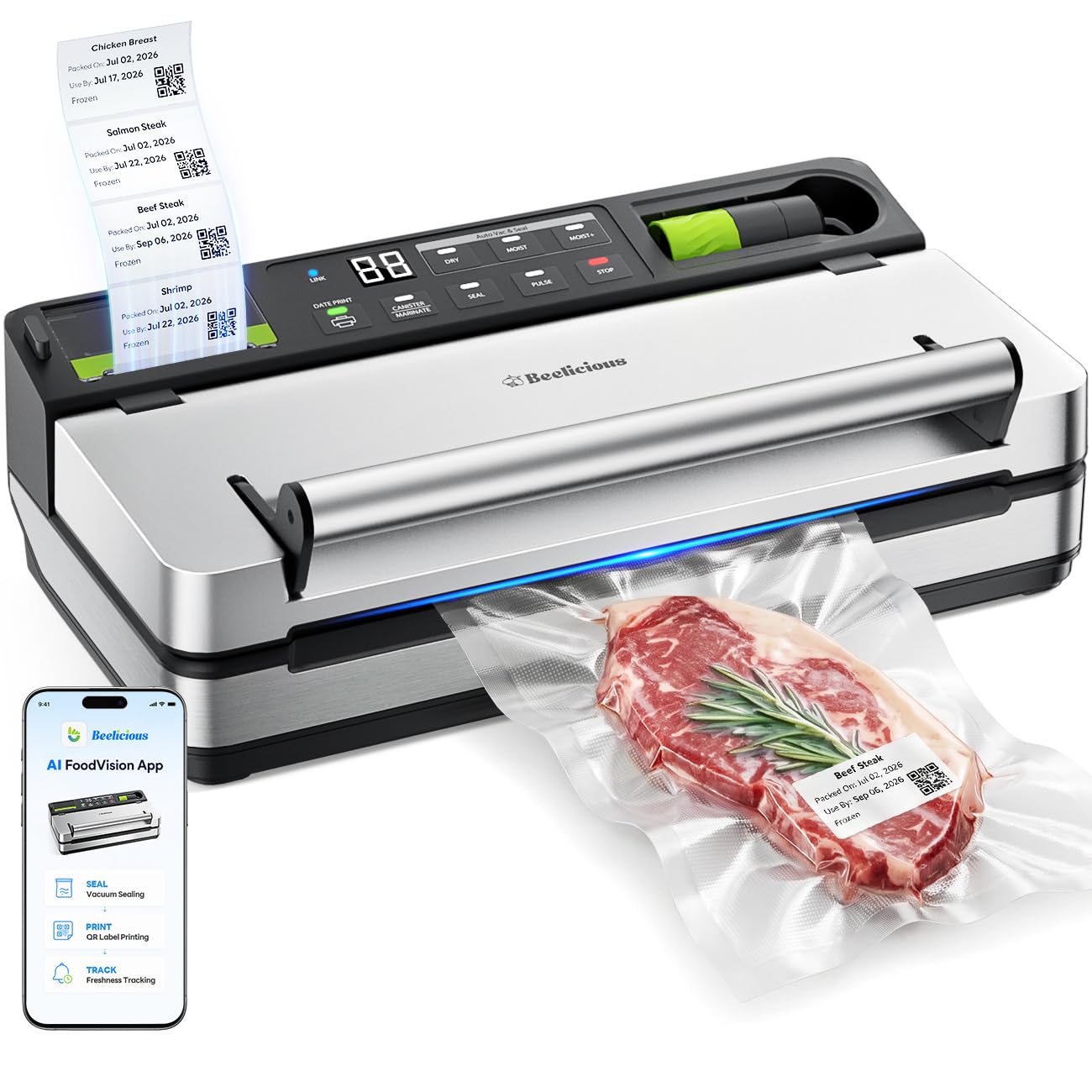
The built-in label printer is the detail that makes the Beelicious Pro VSP801 more than another 98kPa sealer. Press a button and it prints a label for the bag; the app then keeps a record of what is in the freezer and when it went in. We like this for the same reason we like a well-labeled pantry: it turns a pile of anonymous bricks into something you can actually plan dinner from.

Under the smart surface, it is a serious machine. The 98kPa dual pump and widened dual heating strips give it the suction and seal hardware to handle moist foods, and the Extra Moist mode is there for marinated meat and fish. The wider easy-lift handle is a small thing, but it makes a loaded lid easier to manage. The double seal is the kind of redundancy we want on a bag headed for sous vide.

The smart features are also the reason to pause. Label rolls are another supply to restock, and the app only helps if you actually use it; for a single bag of leftovers, the extra step can feel like ceremony. The machine is 5.9 pounds and nearly 16 inches long, so it wants counter space. If freezer inventory is a real problem in your house, those trade-offs are easy to accept; if not, a simpler sealer will do the same job.

Pros

  • Built-in label printer
  • 98kPa dual-pump suction
  • Extra Moist mode
  • Double heat seal

Cons

  • Label rolls add a recurring supply
  • App adds steps for simple jobs
Our verdict

If freezer inventory is your problem, the Beelicious prints labels and tracks bags in its app while delivering 98kPa suction and a double seal.

Check Latest Price
7

Tiny Kitchens

MZROT 301E

86 /100
Angler Score Excellent

Key details

Modes
6-in-1
Display
Digital countdown
Included Bags
10 heat-seal bags
Suction Power
75kPa
Check Details on Amazon

At 75kPa, the MZROT 301E is not trying to compete with the 95kPa machines on raw suction. What it offers instead is a genuinely small body and a digital countdown timer that makes the cycle feel less like a guess. If your sealing jobs are single portions, dry goods, and the occasional jar, that trade-off makes sense. It is the sealer for the person who wants the job done without dedicating a cabinet shelf to it.

The six modes cover the basics: moist and dry, vac and seal, seal only, external vacuum, and a cutter function. The external hose is useful for jars, canisters, and wine preservation, which is more accessory flexibility than we expect at this end of the range. The starter kit includes 10 heat-seal bags in two sizes, plus an extra gasket. We appreciated the spare gasket because it is the part that most often causes a weak vacuum when it wears or gets dirty.

The lower suction is the limitation. It is fine for a chicken breast or a block of cheese, but it is not the machine for a large, wet roast or a marathon bulk session. The digital timer helps you keep an eye on the cycle, and the double-seal option adds a little insurance. For a tiny kitchen and small portions, we think it is the right budget compromise; for a chest freezer, step up to a 95kPa model.

Pros

  • Very compact cabinet footprint
  • Digital countdown timer
  • External hose for jars and wine
  • Extra gasket included

Cons

  • Lower 75kPa suction than top picks
Our verdict

A tiny, inexpensive sealer for small portions and tight counters, as long as you accept 75kPa suction instead of the 95kPa class.

Check Latest Price
8

Quiet Compact Sealing

JLHSWENND VS9312

93 /100
Angler Score Outstanding

Key details

Bag Prep
Cutter and roll storage
Seal Type
Double heat seal
Noise Level
Under 70dB
Suction Power
95kPa
Check Details on Amazon

The JLHSWENND VS9312 reads like a machine built for a tight counter: 95kPa suction, a 130W motor, double heat seal, built-in cutter and roll storage, and a noise rating under 70dB. Those are the numbers we look for first in a countertop sealer, and they put it in the same conversation as the Gasbye on paper. The gunmetal finish also gives it a more considered look than the usual white plastic box.

The double heat seal is the feature we care about most for sous vide and freezer bags. A second wire gives you a backup pass, and the built-in cutter means you can make a custom bag without a drawer full of tools. The under-70dB rating is a real plus in an open kitchen; vacuum sealers are not quiet appliances, and a lower noise floor makes a batch session less grating. It is also listed as ultra-compact, which matters if the machine has to stay out.

What we cannot do is pretend this one has the same track record as the established picks. It is a newer model with a one-year warranty, and that is shorter cover than the FoodSaver's five-year limited warranty or the Bonsenkitchen's three-year commitment. The specs are strong, but long-term support is the question mark. If you want the most proven choice, the Gasbye is safer; if the compact, quiet design is what sells you, this one deserves a look.

The buyer here is someone who values a small, quiet machine and is comfortable trading warranty length for the feature set. We do not call it the default for a busy kitchen, but it is a sensible spec-led alternative for a small household that seals in short sessions.

Pros

  • 95kPa suction and 130W motor
  • Double heat seal
  • Built-in cutter and roll storage
  • Under-70dB noise rating

Cons

  • One-year warranty is shorter cover
Our verdict

A compact, quiet 95kPa machine with double seals and a built-in cutter, best for shoppers who value specs and can live with a one-year warranty.

Check Latest Price

How We Tested the Vacuum Sealers

We started with spec sheets and owner reviews for more than 40 machines, then filtered down to 12 based on suction pressure, seal bar width, whether there was a dedicated moist setting, onboard bag storage and a cutter, footprint, and price. Those 12 spent six months on my counter and my team's counters, not in a lab.

Most of the testing looked like an ordinary Sunday: portioning chicken breasts and ground beef, sealing half a batch of chili, packing cheese, coffee beans, and the last of the garden tomatoes. We weighed each bag before and after two weeks in the freezer, then looked for ice crystals and dull, dried patches on the food itself. With marinades and stews we watched whether liquid got pulled into the seal bar and left a channel — a failure you only discover when the bag floats in a water bath. We counted the steps too: how many buttons a cycle took, whether the lid latched with one hand, how straight the built-in cutter actually cut, and whether the machine crept across the counter while it ran.

To check the seals directly, we filled bags with two cups of water, sealed them, and left them on a towel for 24 hours to see which ones wept. Then we ran each machine through back-to-back cycles until it needed a cool-down, which is roughly what a bulk haul of fish demands in August. Durability showed up in small ways over the months — latches that stiffened, seal bars that left thin spots, cords that never wound back into their channel. We measured footprints, checked whether each unit stood upright in a cabinet, and tracked what bags actually cost, including whether generic rolls fit, since a machine that only takes proprietary bags is a subscription in disguise.

How to Choose a Vacuum Sealer

Start With Suction and Seal Quality

Suction is usually listed in kPa, and the number is a useful shortcut, not the whole story. A 95kPa dual-pump machine has more pull for dense or wet foods; a 75kPa unit can be fine for small dry portions, but it will work harder on a large roast. Just as important is the seal: a double heat strip and a moist or pulse setting give you a better chance of closing a bag without pulling liquid into the channel. For weekly raw meat or sous vide, we prioritize 95kPa and a double seal over extra presets.

Do not buy by kPa alone. A high number with a narrow seal bar or a bag clamp that shifts can still produce a weak seal. Look for a wide strip, a flat bag path, and a pulse control you can stop mid-cycle.

Decide Between Countertop and Handheld

A countertop heat sealer makes its own bag from a roll, pulls a strong vacuum, and is the right tool for bulk meat, meal prep, and sous vide. A handheld unit works with reusable zipper bags and is better for leftovers, cheese, coffee, and travel. The trap is assuming a handheld can replace a countertop machine: it cannot heat-seal a roll bag, and the reusable bags need washing between uses. Buy handheld as a second tool, not as a substitute for a freezer-filling session.

Look at the Bag System

The bag system decides how pleasant the machine is to live with. Built-in roll storage and a cutter let you make any size bag without scissors; pre-cut bags are simpler but less flexible and can waste space on small portions. Check the bag width the sealing strip accepts and whether the machine needs textured-channel bags. Factor in the ongoing cost of rolls or reusable bags, especially if you seal several times a week.

Plan for Cleanup and Counter Space

Vacuum sealers pull moisture and crumbs toward the seal bar, so a removable drip tray and an accessible gasket matter more than a long feature list. Wipe the bag mouth dry, leave headspace, and clean the gasket when suction drops. Measure the counter slot, not just the machine: a compact body can still need clearance for the lid and the bag path. If the machine has to go in a cabinet, check the height with the handle up.

Weigh Warranty and Support Against Features

These are motor appliances with heating strips, and the warranty is part of what you are buying. A longer limited warranty and easy access to replacement gaskets or drip trays can matter more than a label printer or an extra mode. We look for a brand that sells consumables and spare parts, because a cheap gasket is often the difference between a weak vacuum and a machine that works like new. If two sealers are close on performance, we take the one with the better support path.

Frequently Asked Questions

Final Verdict

The Gasbye VS5166 is the sealer we recommend first. It covers the weekly raw-meat, sous vide, and leftover jobs with 95kPa suction, a double heat seal, and a built-in bag station, and it does so without making you fight the machine.

If automatic bag detection matters more than a double seal, the Fresko V2 is the better fit. If you mostly reseal leftovers and travel snacks, the Chef Preserve is the drawer-sized alternative.