Best Work Gloves of 2026

Work gloves are a negotiation. The padding that saves your palms from splinters is the same padding that makes picking up a screw impossible, and the pair that keeps your fingers warm through a January morning is usually the pair you peel off to answer a text. The right glove doesn't eliminate that tradeoff — it lands on the right side of it for the work you actually do, so your hands come back intact and still able to handle the small stuff.

Over the past five months, my team and I have rotated through 16 pairs — leather, knit, coated nitrile, insulated — on real chores instead of a test bench. The thing that surprised me most: gloves aren't sized like shoes. A large in one brand fits like a medium in another, and most of the complaints I hear about uncomfortable work gloves trace straight back to that mismatch. Fit drives everything else, from dexterity to warmth to how long the seams hold, which is why we measured hands before we rated anything. The picks below are the ones that earned a permanent spot by the door.

1

Best Overall

WZQH Leather Work Gloves

95 /100
Angler Score Outstanding

Key details

Care
Machine washable
Heat Rating
350°F
Palm Material
Split cowhide leather
Abrasion Rating
ANSI level 4
Check Details on Amazon

The cheapest glove in this group is the one we keep reaching for. Split cowhide, a cotton lining, and an adjustable wrist for a fraction of what the premium leather picks cost — we expected to keep this pair as a spare and instead it took over the yard work, the firewood, and a summer of tree trimming.

Cowhide is the reason. The palm and fingers are split leather, the working half of the hide: thick enough that blackberry canes and rose thorns stop at the surface, and rated ANSI level 4 for abrasion. The keystone thumb is cut as one piece, so there's no seam running down the inside of your grip where a handle would rub it open. They're rated to 350°F, which covers hot parts and light hot work rather than sustained welding.

Inside, the cotton lining is what we noticed first, because leather gloves at this price usually feel like a paper bag. These don't. They start firm the way leather does and soften over a few wears, and the pair that went through the wash came out softer still. The wrist cinch pulls tight enough to keep sawdust and soil from running down into the glove, which matters more than it sounds when you're working overhead.

What you won't get is touchscreen fingertips or the feel for a small fastener. That's the trade for abrasion resistance this good, and it's why a thin coated pair lives in the same bucket as these on our bench.

Pros

  • Serious thorn and abrasion protection
  • Soft cotton lining and a cinchable wrist
  • Machine washable without going stiff
  • Least expensive glove in this group

Cons

  • Not water resistant
  • Runs snug for broad hands
Our verdict

The glove we hand people first: split cowhide that stops thorns and abrasion, a soft cotton lining, and a price that makes a second pair painless.

Check Latest Price
2

Best for Dexterity

Mechanix Wear Original Covert

95 /100
Angler Score Outstanding

Key details

Care
Machine washable
Touchscreen
Yes
Palm Material
0.8 mm synthetic leather
Abrasion Rating
ANSI level 3
Check Details on Amazon

Threading a nut onto a bolt is the test we run on any glove that claims dexterity, and the Original passes it. The palm is 0.8 millimeters of synthetic leather, thin enough to roll a washer between your fingers, padded just enough at the heel to soak up the sting of a struck tool, and the fingertips work a phone screen without you peeling the glove off.

For wrench work, loading, and hauling, that combination is hard to beat. The welded Lock Ring panel takes the wear where you actually grip, the mesh back vents heat on a warm afternoon, and the hook-and-loop cuff pulls snug so the glove doesn't shift when you lean into something. Rated ANSI level 3 for abrasion, and they go in the washing machine, which is more than the leather pairs here will tolerate.

Where they come up short is abrasion over the long haul. Rough concrete, block, and splintery lumber chew through the fingertips, and these are a light-duty glove wearing a tough-looking shell. Go by a measured hand size rather than the size you wear in other brands, because the fit is close and there isn't much slack to give.

Pros

  • Touchscreen fingertips that actually work
  • Thin palm with real feel for fasteners
  • Padded heel and reinforced thumb
  • Machine washable

Cons

  • Fingertips wear through on rough material
Our verdict

Buy these when your fingers need to feel the work — thin, padded where it counts, and touchscreen-friendly, but not a glove for rough concrete.

Check Latest Price
3

Best for All-Day Wear

MaxiFlex Nitrile-Coated Knit Gloves

96 /100
Angler Score Outstanding

Key details

Care
Machine washable
Liner
Seamless nylon knit
Palm Coating
Micro-foam nitrile
Check Details on Amazon

Eight hours in a glove is a different test from eight minutes. Anyone who handles boxes, parts, or trays all shift knows the failure isn't a tear — it's heat, sweat, and a palm that stops gripping by two in the afternoon. This is the glove built for that shift: a seamless nylon knit with a micro-foam nitrile palm, thin enough to pick a screw off a bench.

Breathability is what we noticed most. The knit lets air move across the back of the hand, so hands stay drier than they do in a coated glove with a solid back, and the foam nitrile stays tacky on dry and lightly oiled parts instead of slicking over after an hour. They machine wash and come back without going baggy at the wrist.

Two things to weigh before you commit. It's the most expensive listing in this group, so check how many pairs are in the pack before you put it up against anything else on this page. And while the name says cut resistance, no cut level is attached to it — for sheet metal or glass, confirm the rating rather than trusting the word.

Pros

  • Breathable knit back for long shifts
  • Tacky micro-foam grip that holds
  • Thin enough for small parts
  • Machine washable

Cons

  • Most expensive listing in this group
  • Cut resistance claimed without a stated level
Our verdict

For a full shift of handling and assembly, nothing here breathes better; the premium price buys comfort and consistency rather than armor.

Check Latest Price
4

Best Heavy-Duty Leather

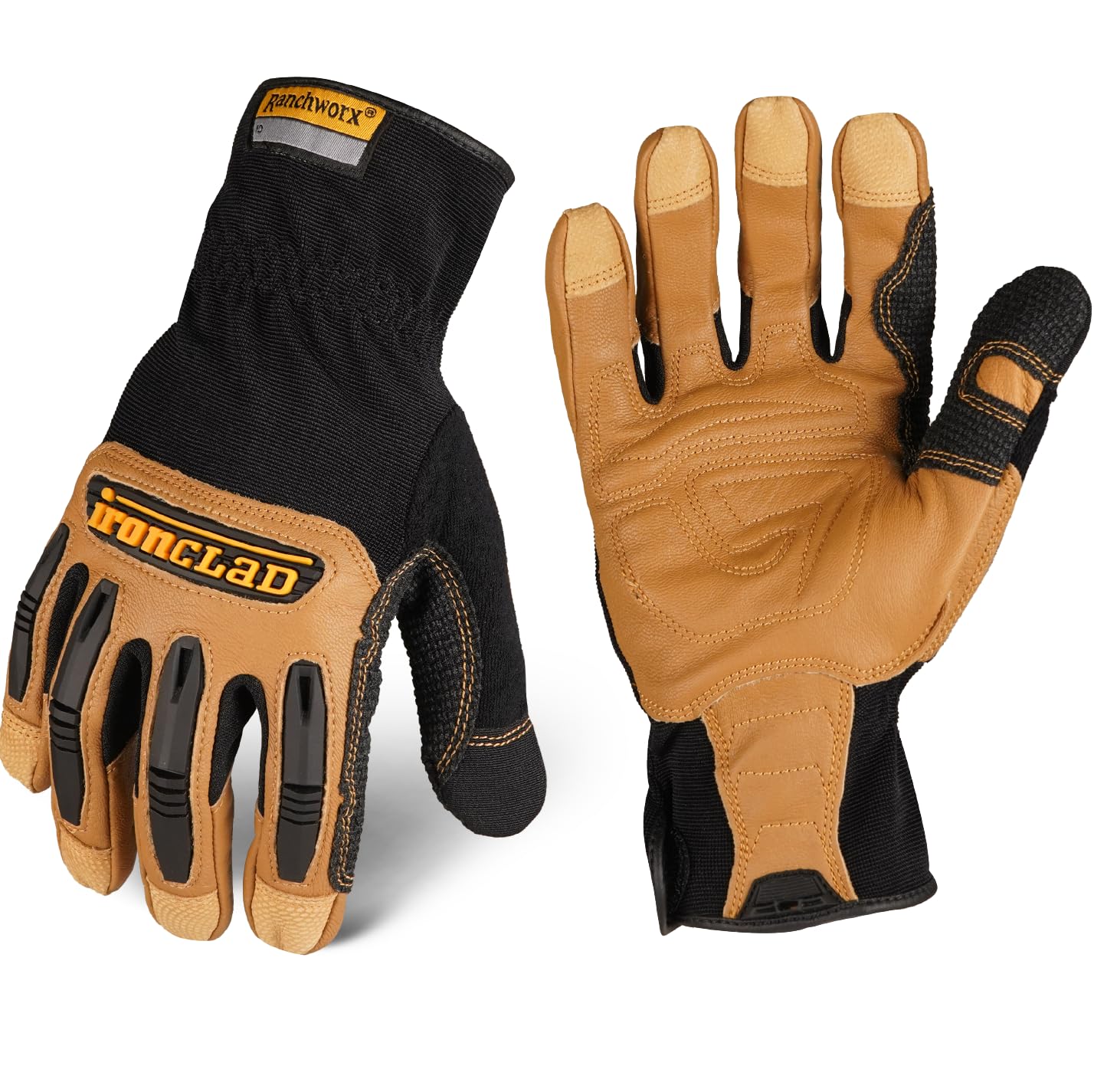
Ironclad Ranchworx RWG2

93 /100
Angler Score Outstanding

Key details

Weight
4.8 oz
Fingertips
Rolltop seamless with Kevlar
Palm Material
100% goatskin leather
Abrasion Rating
ANSI level 3
Check Details on Amazon

The detail that sold us sits at the end of the fingers. Instead of a seam running across the wear point, Ironclad rolls the leather over it and reinforces the critical areas with Kevlar, so the spot that dies first on every other pair is the spot this one is built to protect.

Paired with a goatskin palm, that makes these the leather gloves we take when the work is heavy — fencing, firewood, cable, brush. Goatskin stays soft in heat where cowhide stiffens, the stretch nylon back doesn't bind across the knuckles, and at under five ounces they don't carry themselves like a leather glove at all. The terry thumb is there for your forehead, and the rubber cuff puller gets a wet hand into the glove in one pull.

Grip is the compromise: goatskin on smooth wet steel slides more than a nitrile palm does, and these are happiest on rope, timber, and brush where there's texture to bite. They also cost more than the plain cowhide pair that opens this guide, which is the honest trade for reinforced fingertips and a fit this close.

Pros

  • Reinforced rolltop fingertips
  • Goatskin palm that stays soft in heat
  • Terry thumb wipe and pull-on cuff
  • Light for a leather glove

Cons

  • Average grip on slick, wet surfaces
Our verdict

The leather glove we take for heavy outdoor work: soft goatskin, Kevlar-reinforced rolltop fingertips, and a thumb built for a sweaty forehead.

Check Latest Price
5

Best for Cold, Wet Days

Carhartt Waterproof Insulated Glove

93 /100
Angler Score Outstanding

Key details

Cuff
Knit cuff
Weight
7.2 oz
Insulation
Insulated
Water Resistance
Waterproof construction
Check Details on Amazon

Sleet, slush, and a cold wind off the water are what these gloves exist for, and it's why a pair lives in the truck from November through March. Insulated, waterproof, with a knit cuff that seals against a jacket sleeve — pull them on and your hands stop being the thing you're thinking about.

The waterproofing is real, and so is what it costs you. The insert keeps the weather out but doesn't breathe, so a hard morning's work leaves hands damp from the inside even though nothing got through. Dry them inside out overnight and it never becomes a problem; wear the same pair three days straight and it will.

One habit worth building: pull these off by the fingers rather than dragging a wet hand out, because the liner can come out with it and seating it again is fiddly. Warmth and dry hands are what you're buying, and through a winter of outdoor work they deliver both.

Pros

  • Warm in freezing conditions
  • Keeps weather out in slush and sleet
  • Knit cuff seals against a sleeve
  • Tough enough for daily outdoor work

Cons

  • Runs small; long hands need a size up
Our verdict

For cold, wet work this is the pair that keeps your hands in the job — insulated, waterproof in slush, and warm enough to stay out in it.

Check Latest Price
6

Budget Multi-Pair

DEX FIT FN330 Nitrile Gloves

91 /100
Angler Score Outstanding

Key details

Pack
3 pairs
Palm Coating
Foam nitrile
Palm Thickness
0.5 mm
Abrasion Rating
ANSI level 4
Check Details on Amazon

Three pairs arrive in one order, and that's the whole idea: a glove you can leave in the truck, the toolbox, and the garage without thinking about what it costs to lose one.

The fit is the selling point. A 15-gauge nylon and spandex knit pulls on like a sock, the foam nitrile palm is half a millimeter thick, and you can pick up a nut, a zip tie, or a utility knife without taking them off. Six sizes, from extra small to double extra large, and the knit holds its shape at the wrist through a shift.

Grip is why these end up on warehouse and shop floors: the foam nitrile is tacky on wet and oily parts and doesn't slick over after an hour of handling. The fingertips are where they go, thinning and then splitting, so treat a pair as a consumable with a known lifespan rather than something you hand down.

That's the trade and we're happy to make it. A pair in each place you work means you're never hunting for gloves, and the abrasion rating — ANSI level 4 — is respectable for a coated glove at this end of the market.

Pros

  • Three pairs per order
  • Snug second-skin fit in six sizes
  • Grip on wet and oily parts
  • ANSI level 4 abrasion resistance

Cons

  • Touchscreen response is unreliable
Our verdict

Three tacky, thin gloves for roughly the price of one leather pair — the sensible way to own a glove you're going to wear out.

Check Latest Price
7

House and Yard

Ironclad General Utility GUG

93 /100
Angler Score Outstanding

Key details

Fit
Performance fit
Care
Machine washable
Pack
1 pair
Check Details on Amazon

This isn't the glove you reach for to drag brush or haul block, and Ironclad doesn't pretend otherwise. It's a general utility glove — knit back, padded synthetic palm, enough feel to pick up a dropped screw — built for the projects that fill a weekend rather than a shift.

On that job it's easy to like. The back breathes on a warm afternoon, the palm padding takes the sting out of a lopper handle, and it goes in the wash when it gets greasy. For yard cleanup, painting, and light repairs, that covers most of what you need.

The seams are what let it down. Stitching between the fingers and along the palm edge comes apart before the glove looks worn, and sizing runs inconsistent enough that two pairs in the same size can feel different on the same hand. It's a good glove for house and yard projects; it isn't the one to buy if you want a pair that outlasts the job.

Pros

  • Breathable knit back for warm days
  • Padded palm cushions handles
  • Machine washable
  • Sensible price for general use

Cons

  • Seams split between the fingers
  • Sizing varies between pairs
Our verdict

A breathable, washable glove for weekend projects, provided you accept that the seams will quit before the job does.

Check Latest Price

How We Put 16 Pairs of Work Gloves to the Test

We started with the styles our editors and their crews already reach for, then read through what buyers keep praising and complaining about — comfort and versatility on one side, stitching and sizing on the other. From there we filtered by palm material, seam construction, cuff style, the size range each pair came in, and price, and cut anything that couldn't be bought in a genuine range of sizes. Sixteen pairs made it through, spanning leather, knit, and coated nitrile, and we've been wearing them for five months.

Every pair went into rotation on actual chores: splitting and stacking firewood, hauling lumber, pressure-washing a deck, spreading mulch, moving a stack of boxes, changing oil, and walking the dog on freezing mornings. We logged hours rather than outings, so a glove that felt fine for twenty minutes got worn for six hours straight to see what happened to the seams between the fingers. We also timed how long each pair took to pull on and off with cold or damp hands, since that's usually where a glove gets abandoned in a drawer.

Fit came first. We measured palm circumference and middle-finger length before picking a size, then noted where each pair pinched, twisted, or left the fingertips short. Construction got the same scrutiny: we turned every glove inside out to look at seam type and stitching, and checked the palm and thumb crotch for thinning at 20 hours and again at the end. Water resistance was a one-minute run under a faucet followed by a squeeze test on the lining, warmth was a set of early-morning dog walks in subfreezing weather, and touch sensitivity was a text typed, a phone unlocked, and a dime picked off a workbench without pulling the glove off.

How to Choose Work Gloves

Start With the Palm, Not the Price

Leather and coated knit do different jobs, and most disappointing purchases are one of them wearing the other's work. Leather — cowhide or goatskin — handles abrasion, thorns, splinters, and hot parts, and it keeps its bite on rough material; it also stiffens when it soaks and takes a while to dry. A nitrile-dipped knit palm gives you feel, a tacky grip on oily parts, and all-day breathability, but it isn't thorn-proof and it won't take hot work.

If your week includes both, buy both. Our top leather pick and a thin coated pair cover nearly everything between them, and each one lasts longer for not being asked to do the other's job.

Read the Rating, Not the Wording

Glove listings love the phrase cut resistant. What you can check is the number: an ANSI abrasion level and, where the job needs it, a cut level and a heat rating. The gloves here that state one run from level 3 to level 4, and that gap shows up when you're handling block, sheet metal, or cable. Choose the level by the material you handle, not by price — cheap leather with a stated abrasion rating beats an expensive coated glove that only says heavy duty.

For welding or hot parts, look for an actual temperature rating before you trust any leather.

Size for the Glove You're Buying

Sizing isn't consistent between brands, and it isn't consistent between materials within a brand. Measure around the palm of your dominant hand just below the knuckles and use that number against the maker's chart, not the size you wear in a dress glove. Leather stretches a little and molds to your hand; knit doesn't, so a coated glove has to be right on the first wear — a loose fingertip is a snag waiting to happen.

Insulated gloves run small more often than not, and the Carhartt pair here does, so size up if you're between sizes or have long fingers.

Plan for Water, Sweat, and Washing

Waterproof is not the same as dry. An insulated waterproof glove keeps sleet out and traps sweat in, so a hard morning leaves your hands damp from the inside; dry them inside out overnight and keep a second pair in rotation. Soaked leather stiffens as it dries, so keep leather for dry work and a coated knit for wet.

Check the care line before you buy. Machine-washable gloves get worn more often, and a hand-wash-only pair that sits dirty in a bucket is a pair you quietly stop reaching for.

Frequently Asked Questions

Final Verdict

Our pick is the WZQH split cowhide pair. It's the least expensive glove here, it stops thorns and abrasion better than gloves costing far more, and it goes in the washing machine at the end of the week. For brush, firewood, and site work, that's the pair to buy first.

If your work is small parts and wrenching rather than block and brambles, the Mechanix Original gives you the feel those jobs need. If the day starts below freezing, the Carhartt pair is the one that keeps your hands in the job. Start with the leather, then add the specialist your work actually asks for.