
Best Hiking Gloves of 2026

The trouble with most winter gloves is that they keep your hands warm by taking your fingers away. Thick insulation turns a bootlace, a sternum strap, or a quick map check into a clumsy negotiation. A good hiking glove splits the difference: warm enough for a gusty ridge, thin enough to work a zipper without stripping down. That balance, more than raw warmth, is what separates a pair you forget you're wearing from one you rip off after twenty minutes.

I've owned gloves that were toasty and useless the moment the trail tilted upward. Over five months, my team and I hiked in 16 pairs — dawn trailheads, gusty ridgelines, wet roots, a lot of pack straps — and the keepers got three things right: a close fit, real grip on a pole or a rock, and a price that matched what they delivered. Fit turns out to matter more than the label suggests. A snug glove keeps its touchscreen pad under your fingertip, while a loose one slides and you end up jabbing at your phone through a mitten.

1

Best Overall

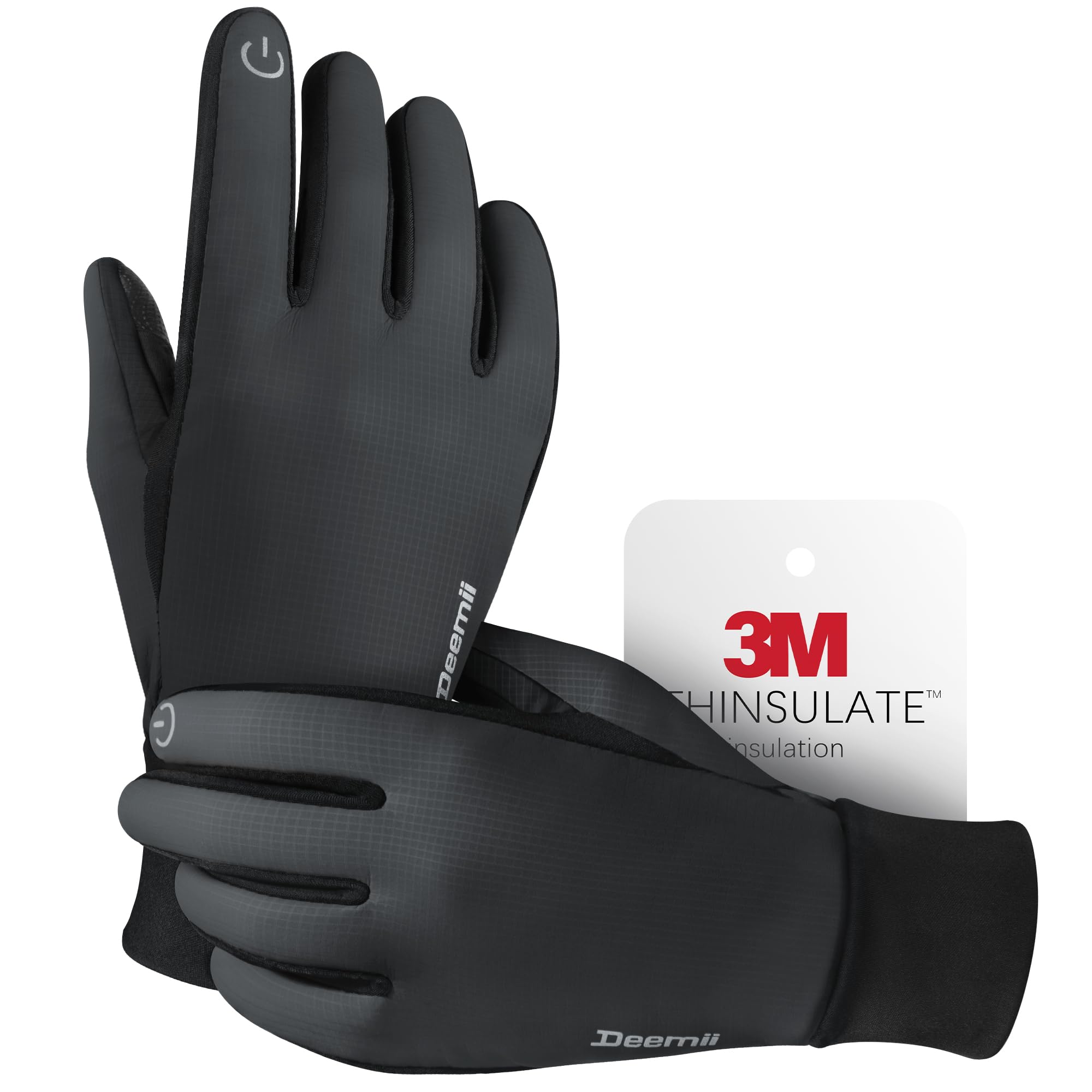
Deemii 3M Thinsulate Winter Gloves

89 /100
Angler Score Excellent

Key details

Weight
0.13 kg (size Large)
Insulation
3M Thinsulate C40
Touchscreen
Thumb and index finger
Water Resistance
Water- and wind-resistant
Check Details on Amazon

The Deemii pair is built around 3M Thinsulate C40, and that is the first thing we noticed on a cold, breezy morning: the insulation takes the edge off without turning the glove into a ski mitt. The shell is listed as water- and wind-resistant, and it shrugged off light trail spray and a damp wind on the walk in. The touchscreen panels sit on the thumb and index finger only, which is the right compromise for hiking: you can check a map without baring your hand.

The reason we kept choosing it is the balance. We could grip a trekking pole, work a jacket zipper, and pull a snack out of a hip belt without feeling like we were wearing boxing gloves. The fingers are cut with enough room to flex, and the snug stretch around the wrist kept cold air from creeping in. Compared with the Aegend, the Deemii is the warmer, more weather-ready glove; compared with the TRENDOUX, it is the one we trust when the forecast is less than perfect.

The listed weight is 0.13 kg in size Large, which is light enough to carry as a spare but substantial enough to feel protective. We also appreciate that the touchscreen pads are placed where we actually tap and swipe, though they are not as precise as a bare finger for typing. The care label says hand wash only, a small chore that is worth respecting if you want the seams and insulation to hold up.

The cuff is the detail that stayed with us: it pulls on easily with cold fingers, then sits close enough to seal out drafts. That is the kind of small advantage you notice every time you put a glove on, and it is why this pair kept ending up by the door.

Pros

  • 3M Thinsulate warmth without ski-glove bulk
  • Water- and wind-resistant shell for light weather
  • Touchscreen thumb and index fingertip
  • Close, comfortable fit across S-XXL

Cons

  • Water resistance weakens in sustained rain
Our verdict

We recommend the Deemii first for cold-weather hiking: its 3M Thinsulate warmth, secure fit, and touchscreen fingertips make it the most balanced pair here.
Check Latest Price
2

Best Lightweight

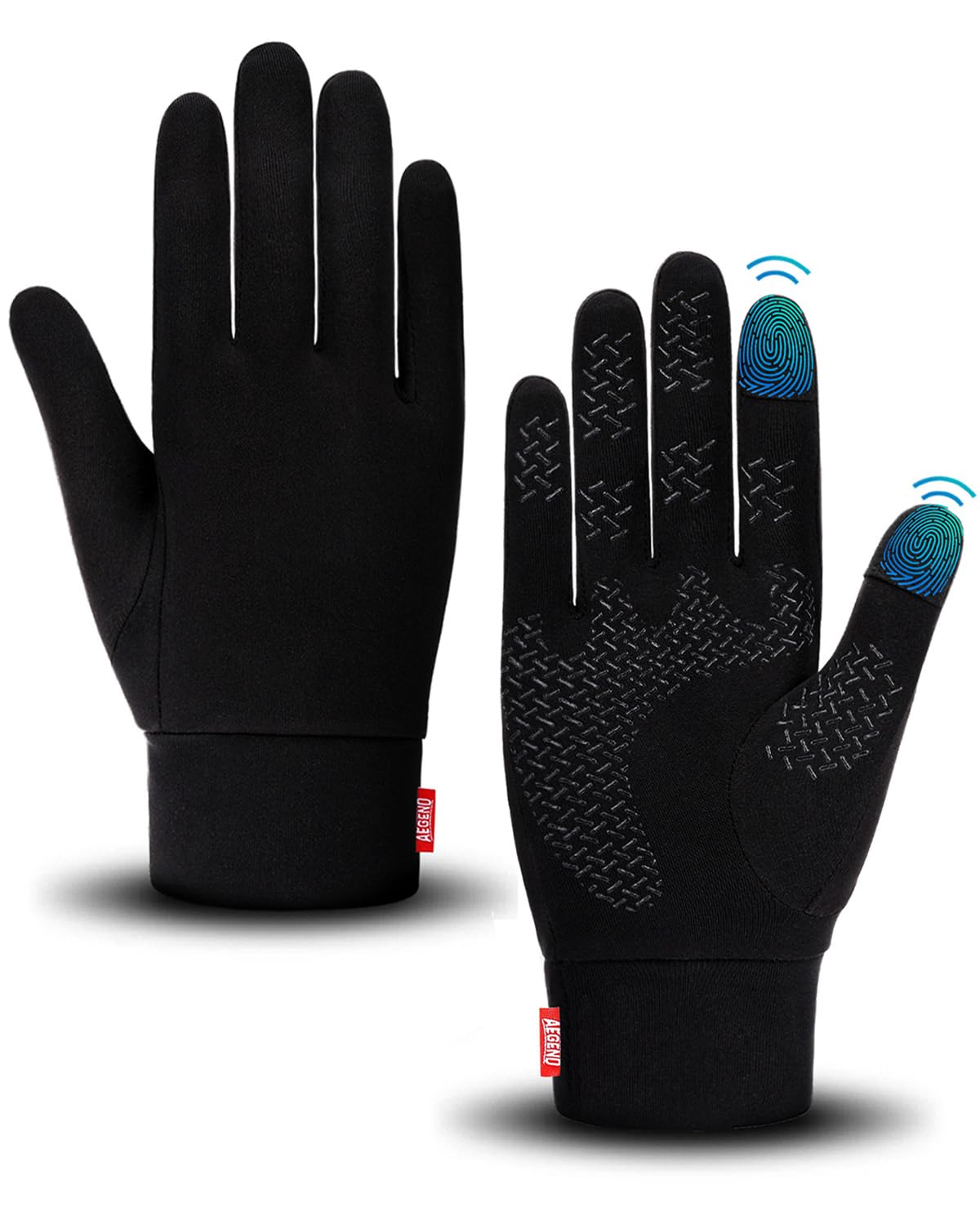
Aegend Lightweight Winter Gloves

89 /100
Angler Score Excellent

Key details

Cuff
Elastic cuff
Grip
Non-slip palm
Design
Lightweight glove or liner
Touchscreen
Touchscreen fingertips
Check Details on Amazon

There is not much glove to the Aegend, and that is exactly why we kept reaching for it on fast, mild-weather hikes. The stretchy shell and elastic cuff sit close to the hand, and the non-slip palm gives you something to hold onto when you are gripping a pole or a water bottle. It is the pair we treat as a lightweight glove first and a liner second: thin enough to slide under a shell, but capable enough to wear on its own when the day is cool rather than freezing.

On the move, the thinness works in your favor. We never felt a buildup of heat on a climb, and the glove disappeared into a jacket pocket when we stopped for a snack. The touchscreen fingertips handled a quick map check without baring a hand, though they are not the pair for typing out a long message.

The limit is warmth. On a freezing summit stop, we wanted more insulation, and the thin shell let cold air through once we stopped moving. That is not a flaw for the use we have in mind; it is the reason the Aegend is our lightweight pick. It is at its best in cool weather, high-output hikes, and layering.

The pair rolls into a small bundle in a hip-belt pocket, which is why it stayed in our pack even after the weather warmed. The elastic cuff is the detail we appreciated most: it pulls on easily with cold hands and stays put without pinching.

Pros

  • Thin, stretchy shell for high-output hikes
  • Non-slip palm and elastic cuff
  • Works alone or as a liner
  • Packable spare for mild weather

Cons

  • Sizing can run large or small
  • Seams can separate at the thumb
Our verdict

We reach for the Aegend on mild-weather hikes when a thin, grippy glove makes more sense than insulation.

Check Latest Price
3

Best Budget

TRENDOUX Winter Knit Gloves

89 /100
Angler Score Excellent

Key details

Weight
2.82 oz
Material
Thermal knit
Touchscreen
Touchscreen fingertips
Check Details on Amazon

The TRENDOUX pair makes sense on the kind of cold, dry morning when you want warm hands without a technical shell. The thermal knit stretches around the hand, and the palm grippers give you something to hold onto when you are carrying a pole or a leash. We also like the look: it is a simple knit glove that does not announce itself as gear, which makes it easy to wear from the trailhead into town.

At 2.82 oz, the pair disappears into a jacket pocket, and the knit has enough give that we could flex our fingers without feeling restricted. The cuff pulls on easily with cold hands, and the palm grippers are placed where you actually grip a pole. It is a warm glove for steady movement, and the knit stays soft against the skin.

What we keep coming back to is the palm grip. It holds a trekking pole securely, and the knit stays soft enough that we forgot we were wearing a glove by the end of a walk. The glove also looks less like hiking gear and more like something you would wear into town, which is not a performance feature but is a real reason it gets picked up. The TRENDOUX is a simple glove done well, and simple is often the right answer when the forecast is dry and cold.

Pros

  • Warm thermal knit for dry cold
  • Palm grippers improve grip on poles
  • Lightweight at 2.82 oz
  • Simple look works on and off trail

Cons

  • Touchscreen response is inconsistent
  • Knit shell lets wind through
Our verdict

We think the TRENDOUX is the budget pair to grab for dry cold days, as long as you treat the touchscreen as a bonus rather than a guarantee.

Check Latest Price

How We Tested Hiking Gloves, From Trailhead to Ridgeline

We started by pulling together every pair that claimed to be warm and dexterous at the same time — insulated knits, lined softshells, liners sold as stand-alone gloves — and cut anything that was really a ski mitt or a fashion glove with no grip. From that pool we bought 16 pairs and put them into rotation.

Testing ran five months, from late fall into early spring, and the gloves went where gloves actually go: a trailhead before sunrise, a long climb that takes hands from numb to sweating, an exposed ridge with wind coming sideways, and the fumbling that happens at a pack — buckles, zippers, a water bottle, a phone pulled out to check the route.

Each pair got the same chores. We stood at a cold rest stop until our fingers complained and noted how long that took. We typed a message with the glove on, counting how many jabs it took for the touchscreen pad to register. We gripped trekking poles, wet rock, and a steering wheel on the drive home. Water resistance got the faucet treatment: two minutes under a running tap, then a check for damp palms.

After each trip the gloves went back in a pack, got washed, and came out again — durability is the one thing you can't judge on day one, so we checked seams, pilling, and whether the touch pads still worked after a few cycles, and noted how they looked after a month of that. Fit we measured against our own hands and against each other's; a glove that bunched at the palm or left a gap at the cuff failed on the trail, not on the size chart. Value came last: whether the pricier pair actually did anything the cheaper one couldn't.

How to Choose Hiking Gloves

Match warmth to the hike, not the calendar

A hiking glove has to cope with changing output. You might start cold, climb hard, and stop on a windy summit, so the warmest glove is not automatically the best one. For fast, mild-weather hikes, a thin glove like the Aegend gives you dexterity and lets heat escape; for colder days and slower paces, the Deemii's 3M Thinsulate is the more sensible starting point. If you run hot, size your glove for movement and plan to stash it rather than wearing a heavier pair all day.

Decide how much weather protection you need

Water-resistant and waterproof are not the same promise. A water-resistant shell can handle light rain, snow, and trail spray; sustained rain will eventually soak through, which is the caveat we attach to the Deemii. A knit glove like the TRENDOUX is best kept for dry cold. If your hikes regularly cross wet brush or long exposed ridges, choose a glove with a proven shell, bring a dry spare, and do not treat any water-resistant glove as a rain glove.

Prioritize grip and dexterity over padding

The best hiking glove lets you work a zipper, grip a pole, and open a map without taking it off. Too much insulation turns fingers into sausages and makes the small tasks slower. We look for a palm that stays put on a trekking pole, a cuff that seals without cutting off circulation, and fingertips that let you feel what you are holding. Touchscreen pads are a convenience, not a substitute for dexterity; most designs put them on the thumb and index finger only, so plan for quick checks rather than typing.

Get the fit right, especially if you layer

A hiking glove should be snug enough to keep cold air out but loose enough to flex. If you plan to wear a liner, size the outer glove with that layer in mind; a thin liner like the Aegend can add warmth without much bulk, but a tight shell will bunch at the fingers. Check the size chart rather than assuming your everyday size, especially with stretchy knits, and make sure the cuff works with your jacket sleeve. The glove should disappear once you start moving.

Check the wear points before you commit

Seams, fingertips, and the thumb crotch take the most abuse on a hiking glove. Look for tight stitching and a palm that feels bonded rather than printed on, and avoid treating a thin glove as a work glove. If you are hauling firewood or scrambling on rock, expect more wear no matter what the label says. A glove that fits well but has loose seams will let you down sooner than one with a simpler design and cleaner construction.

Frequently Asked Questions

Final Verdict

The Deemii is the pair we recommend first for cold-weather hiking: it has the warmth, weather resistance, and dexterity to handle a full day without feeling like a ski glove. For mild, high-output hikes, the Aegend is the lighter, packable alternative we keep in reserve; for dry cold days on a budget, the TRENDOUX is the simple knit glove that earns its place.

Start with the conditions you actually hike in, not the coldest forecast you can imagine. That decision will point you to the right glove faster than any feature list.