Best Action Cameras of 2026

An action camera exists to catch the shot you'd never risk a phone for: the wave, the ridge line, the kid's first solo ride. What nobody warns you about is that the footage is only half the purchase. I've come home with cards full of clips that were shaky on the descents, muddy in low light, or cut short because the battery quit an hour before the good part. The right camera fixes all three — footage that stays steady when you don't, controls you can work with gloves on, and enough juice to outlast the outing.

My team and I have spent the past eight months putting 12 action cameras through surf, singletrack, and a great many ordinary Tuesdays, and the gaps between them show up fast. One thing first-time buyers rarely consider: the mount matters nearly as much as the camera, and a box of adapters you'll genuinely use beats a marginally better sensor you'll never notice. The ones that earned a permanent spot in my bag are below.

1

Best Overall

DJI Osmo Action 5 Pro

92 /100
Angler Score Outstanding

Key details

Weight
5.15 oz
Sensor Size
1/1.3-inch
Battery Life
240 minutes
Video Resolution
4K
Check Details on Amazon

The Action 5 Pro is the one we hand to someone who wants one camera for a week of fishing, road trips, and family clips. Its front and rear OLED screens make framing quick when the camera is mounted on a chest rig or boat rail, and the 1/1.3-inch sensor gives it more low-light headroom than the smaller budget cameras here. We like that the body is waterproof without a case and still weighs 146 grams, so it does not drag on a hat or chest mount. The 1950mAh battery is rated at up to four hours, which is the longest here alongside the Action 6.

Stabilization is the reason it earns the top spot. RockSteady and HorizonSteady keep the horizon level when you are moving, and the magnetic quick-release mount makes switching from a chest mount to a tripod less fussy than threading a thumbscrew. We also appreciated the dual screens for checking exposure without pulling out a phone. It is not the sharpest or most feature-packed camera in this set—the Action 6 adds 8K and a variable aperture—but the Action 5 Pro is the better default because it balances image quality, battery, and size without asking you to manage a new workflow.

For a first serious action camera, that balance matters more than a spec-sheet win. We found the Action 5 Pro easy to live with: the controls are legible, the mount system is quick, and the files are straightforward to move to a phone. If you shoot a lot of 360 or need the extra resolution for cropping, look at the Insta360 picks; if you want the simplest all-rounder, this is the one we keep coming back to.

Pros

  • Waterproof without a case
  • Dual OLED screens simplify framing
  • Four-hour battery rating
  • Quick-release mounting

Cons

  • No 8K recording
  • Premium price versus budget picks
Our verdict

For most anglers and travelers, the Action 5 Pro is the action camera we recommend first: waterproof, quick to mount, and balanced across image quality, battery, and size.
Check Latest Price
2

Best 8K

DJI Osmo Action 6

90 /100
Angler Score Outstanding

Key details

Weight
5.26 oz
Sensor Size
1/1.1-inch
Battery Life
4 hours
Video Resolution
8K
Check Details on Amazon

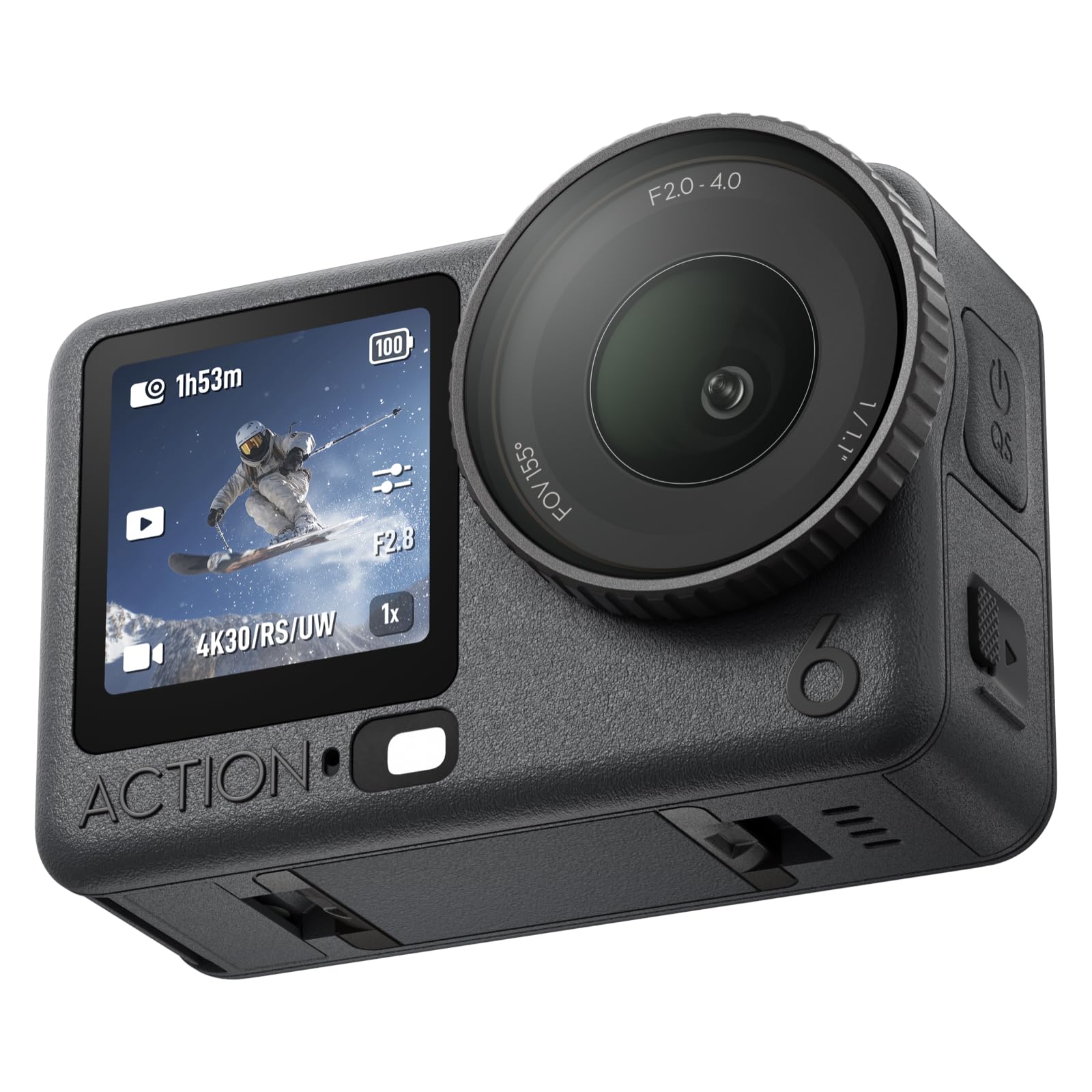
The Action 6 is what happens when DJI pushes the Action 5 Pro toward low-light and high-resolution work. The headline is the variable f/2.0–f/4.0 aperture and 8K video from a 1/1.1-inch square sensor, which gives you more room to crop and more control when the light drops. We think that makes it the pick for someone who wants the most detailed footage in this group, not necessarily the easiest all-rounder.

The extra resolution is real, but so is the workflow cost: an 8K file is heavier to store and edit. We appreciated the four-hour battery rating and the gesture and voice controls when the camera was mounted out of reach, though we still reach for the physical buttons first. The 360° HorizonSteady is genuinely useful on a boat or bike, where the horizon rarely stays put.

If you mostly post clips to a phone, the 8K sensor is overkill; the Action 5 Pro will feel quicker. But for low-light fishing footage, night shots around camp, or any situation where you want to crop into a 4K frame, the Action 6 earns its premium. We like that DJI did not make the extra resolution the only story—the stabilization and battery are still competitive with the top pick.

Pros

  • 8K video with crop room
  • Variable aperture helps low light
  • Four-hour battery rating
  • Strong horizon stabilization

Cons

  • 8K files fill cards quickly
  • Higher price than the top pick
Our verdict

Choose the Action 6 if you want the sharpest, most crop-friendly footage in this set and will use 8K; otherwise the Action 5 Pro is the easier buy.

Check Latest Price
3

Best 360

Insta360 X5

92 /100
Angler Score Outstanding

Key details

Weight
1.1 lb
Sensors
Dual 1/1.28-inch
Battery Life
208 minutes
Video Resolution
8K
Check Details on Amazon

The X5 is the camera for the shot you did not know you were taking. Its two lenses capture 360 degrees, so you can mount it on a boat rail, a selfie stick, or a helmet and choose the framing later. The invisible selfie stick effect is the headline: the camera records everything, and the stick disappears in the reframed footage, leaving a third-person view that looks impossible from a normal action cam.

That flexibility comes with a workflow. We found the 360 footage needs reframing in Insta360's app or Studio software, and that step takes longer than trimming a standard clip. The 8K30fps capture and dual 1/1.28-inch sensors give you more detail to work with than the older X3, especially in low light, and the replaceable lens is a sensible safeguard for a camera that will live near rocks and saltwater.

Battery life is rated at 208 minutes, which is generous for a 360 camera, and the body is waterproof without a case. The X5 is not the one we put on a hat; it is the one we mount on a stick or a rail and leave running. We also like the built-in wind guard for fishing and biking clips, where wind noise can ruin otherwise good footage.

The catch is price and patience. The X5 is the most expensive camera in this group, and the 360 workflow is not for someone who wants to press record and post. But if you shoot fishing, biking, or travel footage where the action moves around you, the ability to reframe after the fact is worth the extra step. Choose it over the X3 when low light and 8K detail matter; the X3 remains the cheaper way into the same idea.

Pros

  • 8K 360 footage with reframing freedom
  • Invisible selfie stick effect
  • Waterproof without a case
  • Built-in wind guard

Cons

  • Reframing adds editing time
  • 0.5 kg body is heavy for hat mounts
Our verdict

The X5 is the 360 camera to beat here if you want 8K detail and the freedom to reframe later; budget for the editing time and the premium price.

Check Latest Price
4

Best Value 360

Insta360 X3

93 /100
Angler Score Outstanding

Key details

Weight
7.05 oz
Screen Size
2.29 inches
Video Resolution
5.7K 360°
Single-lens Video
4K30fps
Check Details on Amazon

The X3 is the lower-cost way into 360. It still captures 5.7K 360 video and 4K single-lens footage, and the 2.29-inch touchscreen makes it easier to set up than the tiny cameras here. We like it for someone who wants the reframing freedom of the X5 without paying for 8K.

The trade-off is age and polish. The battery door and lens are the parts we check before a trip, and the older body does not feel as refined as the newer DJI and Insta360 models. The FlowState stabilization and Horizon Lock still do the important work, keeping the footage level when you are moving.

For daylight fishing clips and travel footage, the gap is smaller than the price difference suggests. The X3 is easier to mount than a full-size 360 camera because it is lighter, and the single-lens mode gives you a normal action-cam shot without reframing. We think it is the right 360 pick for a first-time user who wants to learn the workflow before spending X5 money.

Pros

  • 5.7K 360 capture
  • 4K single-lens mode
  • Large 2.29-inch touchscreen
  • FlowState stabilization

Cons

  • Less low-light detail than the X5
  • No 8K 360 mode
Our verdict

The X3 is the value 360 pick here: 5.7K capture and a big touchscreen make the reframing workflow approachable without the X5's premium.

Check Latest Price
5

Best Budget

AKASO EK7000

89 /100
Angler Score Excellent

Key details

Weight
2 oz
Battery Life
90 minutes
Video Resolution
4K
Waterproof Depth
131 ft with case
Check Details on Amazon

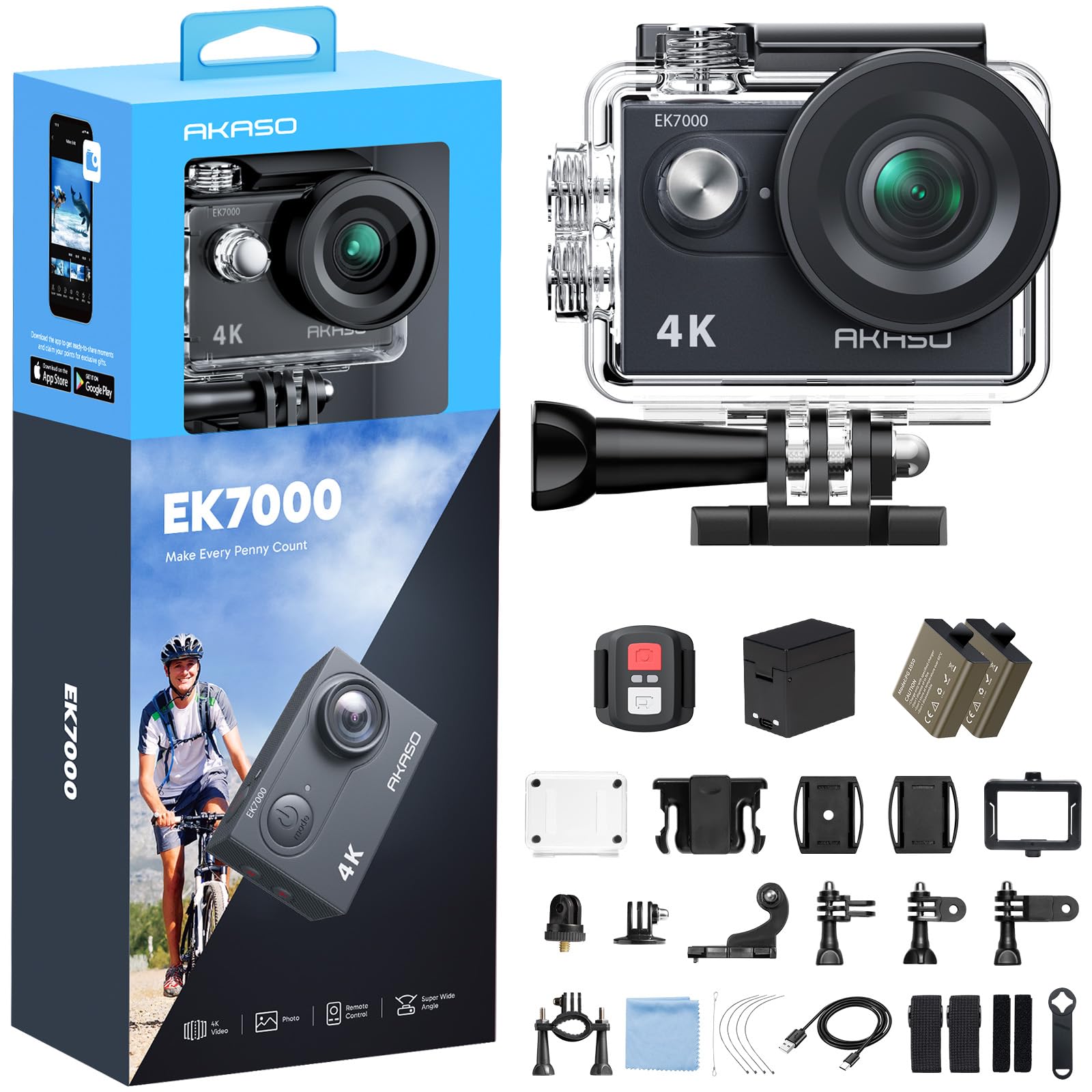
The EK7000 is the camera we hand to someone who is not sure they need an action camera. At the budget end, you get a 4K30 camera, a waterproof case rated to 131 feet, a wrist remote, and two batteries. That kit is the reason it stays in this guide: it removes the fear of taking a camera near water or mud.

The compromises show up in low light and stabilization. The electronic stabilization smooths out walking and boat vibration, but it is not in the same class as the DJI or Insta360 systems here. The 90-minute battery rating is modest, which is why the second battery in the box matters. We like the wrist remote for framing a shot when the camera is mounted on a rod holder or helmet, and the case is the reason it can go to 131 feet; just check the seal before every trip.

The image quality is best in good light. Colors are punchy rather than natural, and the fisheye lens makes everything look farther away than you expect. For fishing clips, family videos, and a first POV setup, that is an acceptable trade. We think it is the budget pick to beat here, as long as you go in expecting a starter camera rather than a GoPro replacement.

Pros

  • Complete kit with waterproof case
  • Two included batteries
  • Wrist remote for mounted shots
  • 4K30 video

Cons

  • No 4K60 recording
  • Waterproof case adds bulk
Our verdict

The EK7000 is the budget action camera we recommend for occasional daylight clips and first-time POV setups, with a complete waterproof kit and two batteries.

Check Latest Price
6

Best Tiny POV

Sixmou i3

84 /100
Angler Score Excellent

Key details

Weight
1.26 oz
Battery Life
150 minutes
Video Resolution
4K
Waterproof Depth
131 ft with case
Check Details on Amazon

The i3 is smaller than your thumb and weighs 35.7 grams, so it changes where you can put a camera. Clip it to a shirt, hang it from a lanyard, or stick it to a metal surface with the magnet, and you get hands-free POV footage without a chest rig. For fishing, that means you can rig a rod or net a fish without a full-size camera in the way.

The 4K footage is surprisingly crisp for the size, and the 150-minute battery rating is longer than several bigger cameras here. The waterproof case takes it to 131 feet, and the included mounts cover more situations than the tiny body suggests. The catch is that the small sensor and digital stabilization struggle when the light drops or the action gets rough.

We like it as a second camera, not the only one. The tiny body gives you fewer controls than a full-size action cam, and the mount is not as set-and-forget as a tripod. But for a lightweight POV angle during a day on the water, the i3 is the least intrusive camera in this group. It is the one we clip on when we want the footage to feel like it was shot by someone doing the thing, not holding a camera.

Pros

  • Thumb-sized and 35.7 grams
  • Magnetic mount and lanyard clip
  • 150-minute battery rating
  • Waterproof case included

Cons

  • Magnetic mount needs metal or thin cloth
Our verdict

The i3 is the tiny POV pick we reach for when a full-size camera would get in the way, with a 35.7-gram body and a 131-foot waterproof case.

Check Latest Price
7

Night Clips

GoPro LIT Hero

82 /100
Angler Score Excellent

Key details

Weight
3.28 oz
Stabilization
HyperSmooth
Video Resolution
4K
Waterproof Depth
16 ft
Check Details on Amazon

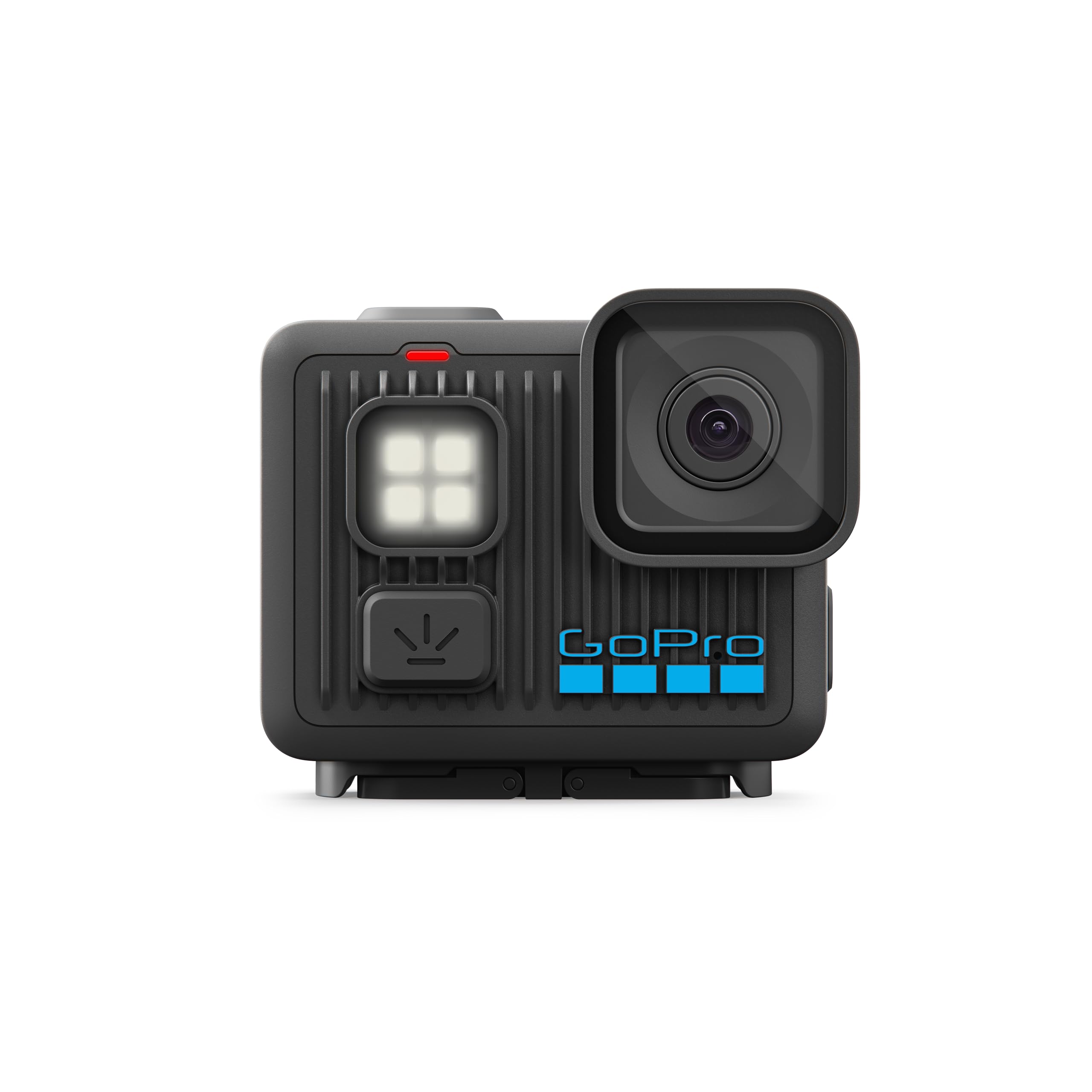
The LIT Hero is the odd one out, and that is why it is here. A built-in light sits above the lens, so it can illuminate a dark cockpit, a night release, or a shadowed tackle box when the other cameras are just recording black. At 93 grams, it is light enough to clip to a hat or pocket, and the 4K60 video and HyperSmooth stabilization are familiar GoPro territory.

The waterproofing is the biggest limitation. It handles rain, splashes, and a quick dunk, but it is not a diving camera, and the built-in light is not a substitute for a proper video light. The simplified controls are easy to pick up, and the 1.76-inch screen is enough for basic framing.

We think the LIT Hero makes sense for a very specific buyer: someone who wants a rugged, pocketable GoPro for shallow-water and low-light clips and does not need 360, 8K, or a deep-water housing. It is not the camera we recommend as an all-rounder, and the Action 5 Pro is the better default for most people. But the built-in light is a genuinely useful idea that no other pick here offers.

Pros

  • Built-in light for dark scenes
  • Light 93-gram body
  • 4K60 video
  • HyperSmooth stabilization

Cons

  • Waterproof only to 16 feet
Our verdict

The LIT Hero is the pick for shallow-water, low-light clips where a built-in light matters more than deep waterproofing or top-tier stabilization.

Check Latest Price

How We Tested 12 Action Cameras, From Surf to Singletrack

We started with spec sheets, not samples: waterproof depth without a case, sensor size, whether the battery swaps out, what's actually in the box, and price. Anything that needed a separate housing to go underwater, or that locked you into one brand's mounts, got cut. That left 12 cameras, from palm-sized 4K models to full 360 rigs.

Those 12 lived on handlebars for a weekly singletrack loop, on a chest harness in the surf and a community pool, on a helmet for a rainy five-mile commute, and in a dim climbing gym. We recorded until each battery died and logged the minutes, noted which cameras ran hot enough to shut themselves down, and timed battery swaps with cold, gloved hands.

For video and picture quality, we played everything back on a phone and a 4K TV, checking highlight detail at noon on water and snow, shadow noise at dusk, and stabilization over washboard gravel — smooth, not soupy. Stills and slow motion got the same scrutiny.

Ease of use we tested on people: a friend who had never touched an action camera was timed from power-on to recording, then asked to change a setting without the manual. We pulled clips to a phone and cut a 60-second edit in each app, and counted which accessories we reached for twice. For reliability, cameras were dropped on pavement, dunked in salt water, and left in a hot car, then rechecked months later for fogged lenses, swollen batteries, and corroded ports.

How to Choose an Action Camera

Start with the mount, not the megapixels

A standard action camera like the DJI Osmo Action 5 Pro is the easiest all-rounder: it mounts on a chest rig, tripod, or handlebar and frames a normal forward view. A tiny camera such as the Sixmou i3 trades controls and a screen for a body you can clip to a shirt or hat, which is better for close-up POV shots. A 360 camera like the Insta360 X5 or X3 captures everything around it, so you choose the angle later. Pick the body that fits the shot you actually want, then compare image specs.

Waterproofing: native body or sealed case

A native waterproof body is simpler for rain, splashes, and shallow submersion. The DJI and Insta360 picks here are built to go in the water without a housing; the GoPro LIT Hero is rated to 16 feet, which covers a dunk but not diving. The AKASO EK7000 relies on its case to reach 131 feet, so the seal becomes part of your setup. Decide the depth first, then check whether the camera needs a case to get there.

Battery and heat are the real limits

Rated runtime is measured in ideal conditions, and high frame rates, cold water, and a sealed case all shorten it. The DJI Action 5 Pro and Action 6 claim up to four hours, the Insta360 X5 lists 208 minutes, and the AKASO EK7000 lists 90 minutes. Carry a spare battery for any full day, record in shorter clips when the camera is sealed or stationary, and give the body airflow between takes. A second battery is cheap insurance on the water.

Resolution and sensor size before 8K

4K is still the practical choice for phone edits and social clips. A larger sensor, such as the 1/1.3-inch unit in the DJI Action 5 Pro, does more for low-light footage than a resolution bump. The DJI Action 6 adds 8K and a variable aperture, which gives you crop room and better control in changing light, but it also means bigger files and a heavier edit. Choose 8K only if you will use the extra pixels.

360 or standard framing

A standard action camera records the frame you point it at, which keeps editing simple and battery use predictable. A 360 camera records the whole scene, so you can reframe a fish strike, a pass, or a conversation after the fact. The Insta360 X5 is the high-detail option; the X3 is the lower-cost way into the same idea. If you want to post quickly and rarely revisit an angle, stay with a standard camera.

Frequently Asked Questions

Final Verdict

For most people, the DJI Osmo Action 5 Pro is the action camera to buy. It is the most balanced camera here: waterproof without a case, quick to mount, easy to frame on dual OLED screens, and rated for four hours. That combination matters more than an 8K badge when you are managing a rod, a net, and a moving boat.

Choose the DJI Osmo Action 6 if you want 8K footage and a variable aperture for low light, or the Insta360 X5 if you want to reframe the whole scene after the fact. The AKASO EK7000 remains the budget way onto the water with a case and two batteries. Start with the top pick unless one of those specific needs is yours.