Best Thermal Monoculars of 2026

A thermal monocular doesn't show you light — it shows you heat, painting a warm body bright against cold ground where your eyes would otherwise see nothing at all. That sounds like magic until you set two side by side: one gives you a clean, readable silhouette at 300 yards, and the next smears into a gray blob the moment you pan. What you're paying for isn't the size of the housing — it's how clean the image stays when the temperature gap is thin and the light is gone, which is exactly the night you need it to work.

I've carried these on dark field edges, in sleet, and at 5 a.m. in February, and the spec sheet rarely tells the whole story. The thing first-time buyers miss is that a modest sensor behind a good lens with a fast refresh beats a big sensor that smears every time you sweep the treeline. Over seven months my team and I put eight of them through real nights, and the priciest wasn't the one I reached for first — the picks below earned their spot in the truck.

1

Best Overall

TOPDON TS004

88 /100
Angler Score Excellent

Key details

Battery Life
Up to 11 hours
Refresh Rate
50Hz
IR Resolution
256 x 192
Weather Rating
IP67
Check Details on Amazon

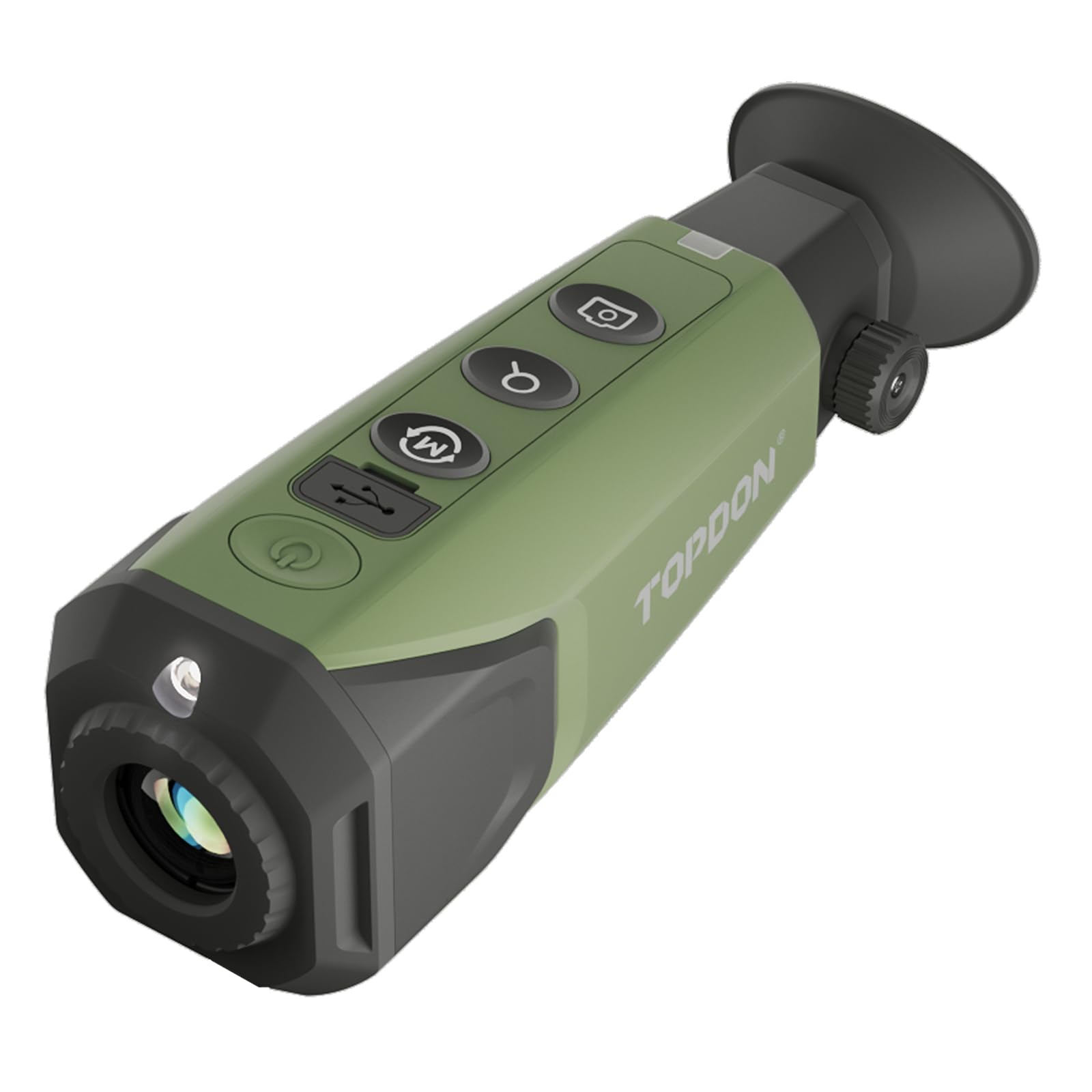
The one we reach for when the night's plan is still open is the TS004: a scan of a treeline, a check around camp, or a slow walk back from the truck. Its 256 x 192 sensor and 50Hz refresh will not out-resolve the 384 x 288 RIX Pocket K3, but the image moves smoothly, and the 13mm lens gives a useful mix of width and reach. That balance is why it is our top pick.

The 5,000mAh battery is rated for up to 11 hours, and the IP67 housing is the kind of detail we appreciate once the grass is wet and the forecast turns. We also like that the silicone armor and 2-meter drop rating let it live in a pack without a hard case. It is not the smallest unit here, but it is the one we worry about least.

Phone connectivity is the sleeper feature. The TopInfrared app mirrors the view and lets you capture stills and video with audio, which is handy for showing someone else what you are seeing without passing the monocular back and forth. Five viewing modes give you options for contrast, and switching them one-handed becomes second nature.

The trade-off is thermal detail at the edge of the range. The 256 x 192 core is plenty for spotting warm bodies, but the advertised 100-yard clear-identification figure is optimistic in poor conditions; treat it as a detection tool first and close the distance when you need to judge antlers or ear tags.

Pros

  • Balanced 50Hz thermal image
  • Up to 11 hours of battery
  • IP67 sealing and drop protection
  • App mirroring and capture

Cons

  • Long-range detail claim is optimistic
Our verdict

We recommend the TS004 as the best all-around thermal monocular here: it pairs smooth 50Hz viewing with long battery life, weather sealing, and app control for mixed night use.

Check Latest Price
2

Best Image Detail

RIX Pocket K3

84 /100
Angler Score Excellent

Key details

Lens
15mm
Weight
7.52 oz
Refresh Rate
50Hz
Sensor Resolution
384 x 288
Check Details on Amazon

A 384 x 288 sensor is the reason to look at the Pocket K3. It is the highest native thermal resolution in this group, and with a 50Hz refresh rate and 800 x 600 OLED display it gives you more pixels to work with than the 256 x 192 units here. The 15mm lens and 17.5-degree horizontal field of view also put it in the sweet spot between a wide scanner and a long-range identifier.

What surprised us is how much the electronic image stabilization contributes. Thermal images get swimmy when you are breathing hard or bracing against a fence post, and EIS takes the edge off that movement without making the view feel artificial. The pocket body measures about 4.9 by 1.8 by 2.9 inches and weighs 7.52 ounces, so it disappears into a jacket pocket. The 1/4-inch thread is a small detail with real payoff: it lets you mount the K3 on a window mount or tripod when you want to scan without holding it.

We think this is the pick for the hunter or wildlife watcher who needs to identify rather than just detect. The trade is a higher price and a small eyepiece that takes some settling against your brow; if you plan to glass for an hour, a larger display is easier. But when you need detail at distance, the K3 is the one in this set that gives you the most to work with.

Pros

  • Highest native sensor resolution here
  • Smooth 50Hz image with stabilization
  • True pocketable body
  • Tripod and window-mount ready

Cons

  • Small eyepiece tires long glassing
Our verdict

Choose the Pocket K3 when detail matters more than budget: its 384 x 288 sensor is the highest native resolution here, with 50Hz refresh and stabilization.

Check Latest Price
3

Best Battery Life

MiLESEEY TNV10 Pro

81 /100
Angler Score Excellent

Key details

Battery Life
Up to 12 hours
Refresh Rate
50Hz
Built-in Storage
32GB
Native Resolution
320 x 240
Check Details on Amazon

Twelve hours is the number that separates the TNV10 Pro from most of this group. The 4,500mAh battery is rated for up to 12 hours of continuous use, and the 30- or 60-minute auto-off helps preserve that when you set it down. For a cabin security check, a long night in a blind, or a camping trip where charging is uncertain, that runtime is more useful than another line of resolution.

We also appreciate that the 320 x 240 sensor is a true native array rather than a super-resolution label. It sits between the 256 x 192 and 384 x 288 units here, and the 50Hz refresh keeps the image fluid. The five palettes and 32GB of built-in storage are practical extras: you can record a clip and review it later without carrying a card. That combination is why we pick it for long nights.

The image is serviceable rather than exceptional. In low-contrast conditions it can look soft, and the 13mm lens is not a long-range identifier. If you need the cleanest detail at distance, the RIX K3 is the better tool. If you need to stay out longer, though, the TNV10 Pro makes a persuasive case.

Pros

  • True 320 x 240 sensor
  • Up to 12 hours of battery
  • 32GB built-in storage
  • Five viewing palettes

Cons

  • Image can look soft in low contrast
Our verdict

The TNV10 Pro is our long-night pick: a true 320 x 240 sensor, 50Hz refresh, and up to 12 hours of runtime make it a steady companion for security and camp scanning.

Check Latest Price
4

Best Pocket Carry

RIX Pocket K2

85 /100
Angler Score Excellent

Key details

Lens
9mm
Weight
7.05 oz
Refresh Rate
50Hz
Sensor Resolution
256 x 192
Check Details on Amazon

A 200-gram body that disappears into a jacket pocket is the K2's whole argument. At roughly 4.9 by 1.8 by 2.9 inches, it is small enough to forget in a pack, and the integrated lens cover slides open with a finger instead of dangling on a tether. That sounds minor until you have lost one more lens cap in the dark.

Its 256 x 192 sensor and 50Hz refresh are the same class as the top pick, but the 9mm lens and 19.4-degree field of view tilt it toward close and mid-range work. In our use, that wide view makes it easy to pick up movement in brush or around a campsite; at longer distances, the image turns into warm blobs sooner than the 15mm K3. We think that is the right trade for a pocket scanner, especially with the five-year warranty behind it.

The 800 x 600 OLED display is sharp for its size, and the RET processing does a decent job of cleaning up the image. Zoom is where it falls apart: pushing in makes the picture softer, so scan at base magnification and close the distance instead. For a first thermal or a second unit that lives in the truck, that is easy to live with.

Pros

  • 200-gram pocket body
  • Smooth 50Hz imaging
  • Integrated sliding lens cover
  • Five-year manufacturer warranty

Cons

  • Zoom softens the image
Our verdict

The Pocket K2 is the thermal we hand to someone who wants a real scanner in a jacket pocket: it is light, simple, and backed by a five-year warranty.

Check Latest Price
5

Best Budget

GOYOJO G210

85 /100
Angler Score Excellent

Key details

Battery Life
Over 6 hours
Refresh Rate
25Hz
Weather Rating
IP65
Sensor Resolution
256 x 192
Check Details on Amazon

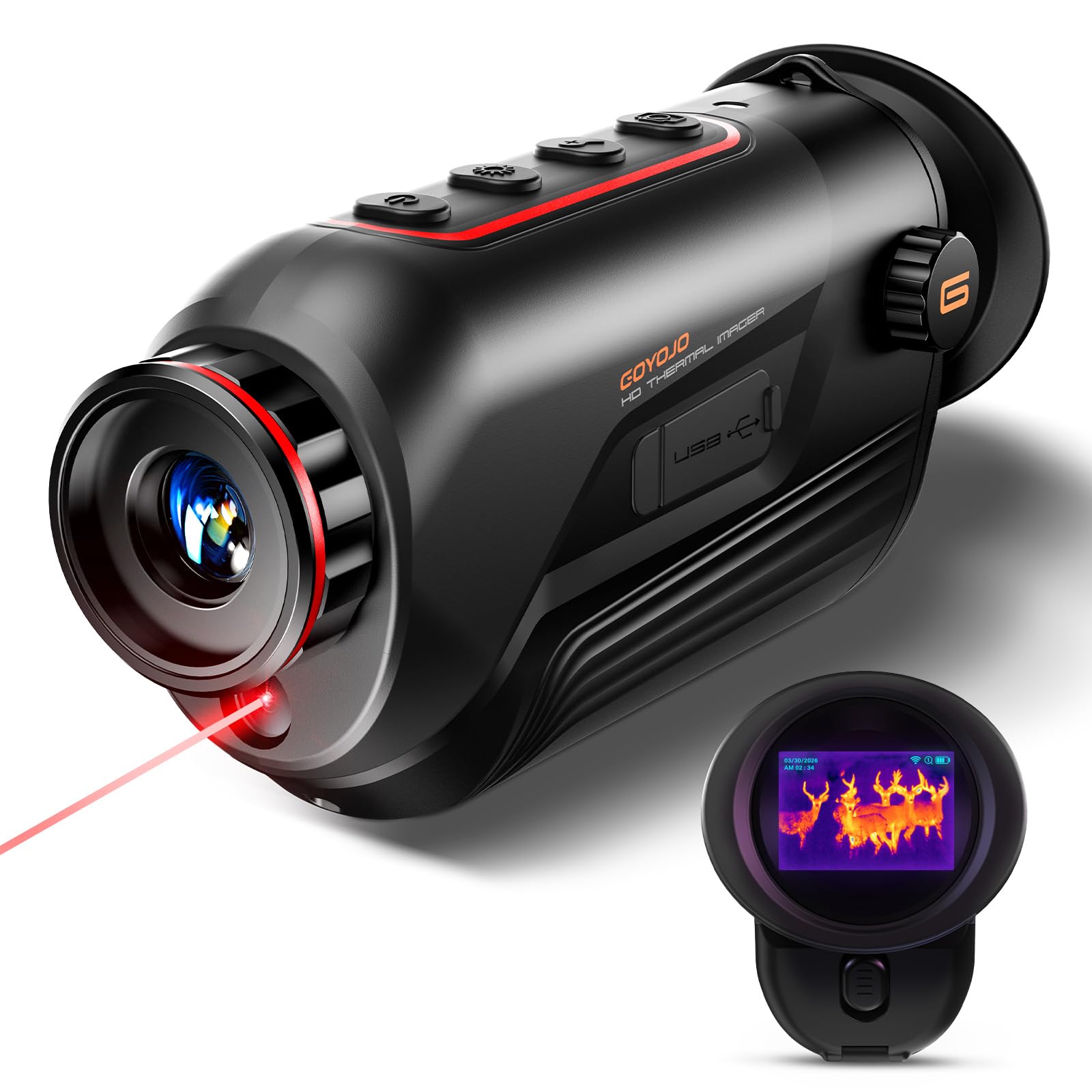
A fixed budget does not have to mean a toy thermal. The G210 pairs a 256 x 192 sensor and 10mm lens with six color palettes, app connectivity, and replaceable batteries rated for over six hours. It is not the smoothest unit here, but it is a serious scanner for the money.

Six palettes sound like a gimmick until you are trying to separate a warm body from sun-baked rock. White-hot and black-hot do different work depending on the background, and the app makes it easy to show someone else the screen. The replaceable battery is another practical touch: you can carry a spare and swap it instead of nursing a charge.

The image is not as sharp as the pricier 320 and 384 options, and the 25Hz refresh makes fast movement look a little steppy. For checking a field edge, watching game from a stand, or keeping an eye on the yard, that is a fair trade. If you need clean identification at distance, spend for the K3 or the TNV10 Pro; if you need a capable entry point, the G210 earns its place.

Pros

  • 256 x 192 heat detection
  • Six color palettes
  • Replaceable batteries
  • App connectivity

Cons

  • 25Hz refresh looks steppy on moving game
Our verdict

The G210 is the budget thermal we recommend for casual scouting: it detects heat well, offers six palettes, and runs on replaceable batteries, as long as you accept 25Hz refresh.

Check Latest Price
6

Best with Rangefinder

ATN OTS XLT

77 /100
Angler Score Very Good

Key details

Lens
25mm
Battery Life
10+ hours
Refresh Rate
50Hz
Smart Rangefinder
Built in
Check Details on Amazon

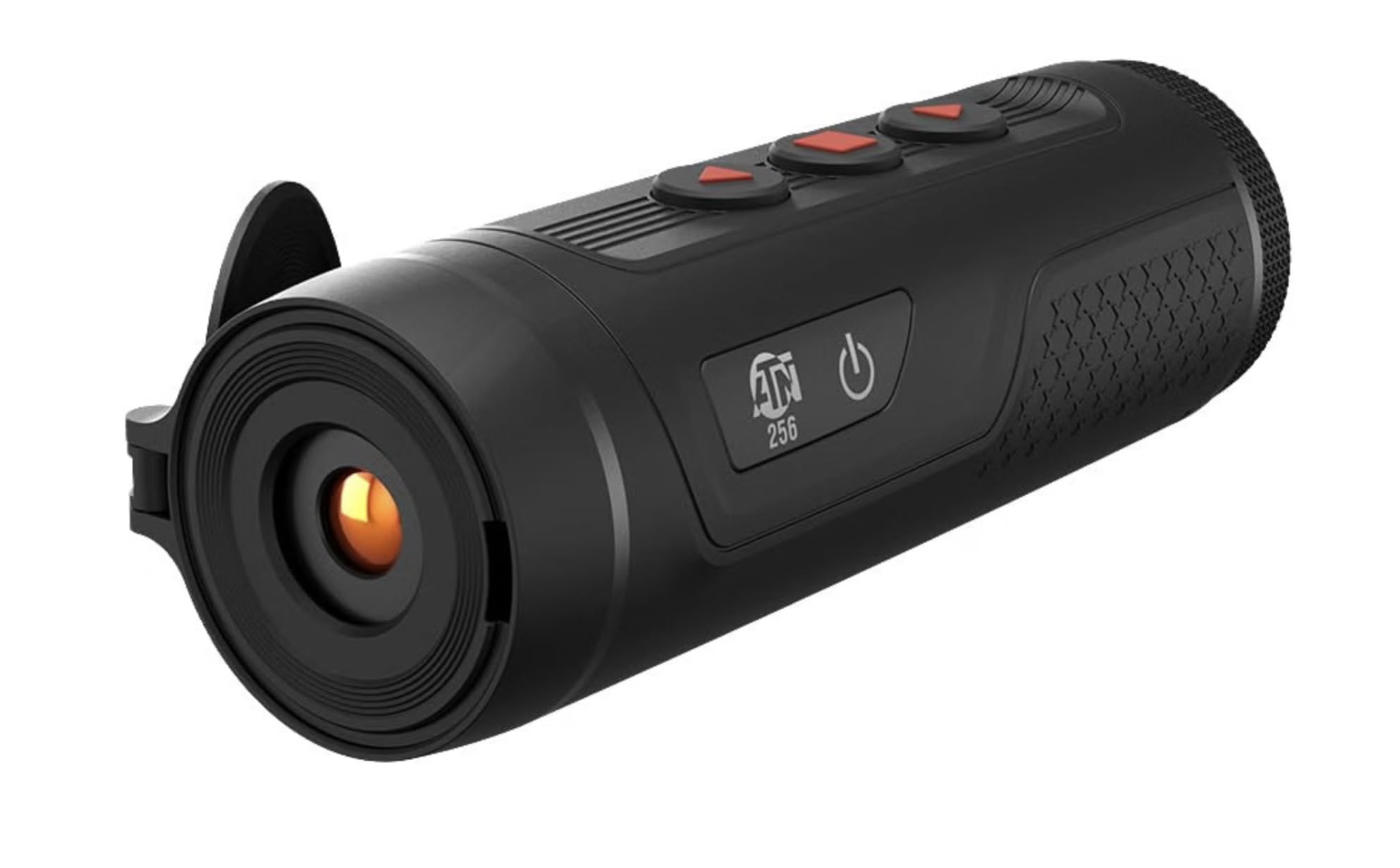
A rangefinder built into the eyepiece is the OTS XLT's reason for being here. Instead of estimating distance from a fence line or a trail marker, you can range a heat source and keep both pieces of information in the same view. The 25mm lens is also the longest in this group, and the 50Hz refresh keeps the image stable while you pan.

The body is light at 0.8 pound and compact enough for a coat pocket, and ATN's controls are simple enough to learn without a manual. We appreciate the 2-8x zoom for checking a distant shape, though the sensor resolution is not specified, so pixel count is not the reason to choose it. The 10-hour battery rating is useful, but runtime is one of the areas where this unit can disappoint.

We think the OTS XLT makes sense for the hunter who wants ranging built in and does not want to carry a separate rangefinder. The image quality is not the strongest here, so this is a ranging tool first. For the right buyer, the combination is still compelling.

Pros

  • Built-in smart rangefinder
  • Long 25mm lens
  • Light 0.8-pound body
  • 2-8x zoom range

Cons

  • Battery can fall short of the rating
Our verdict

The OTS XLT earns a place for its built-in rangefinder and 25mm lens, but we recommend it as a specialist tool rather than the default thermal.

Check Latest Price
7

Recording and Value

Teslong TTS260

81 /100
Angler Score Excellent

Key details

Battery Life
Up to 8 hours
Refresh Rate
25Hz
Native Resolution
256 x 192
Enhanced Resolution
512 x 384
Check Details on Amazon

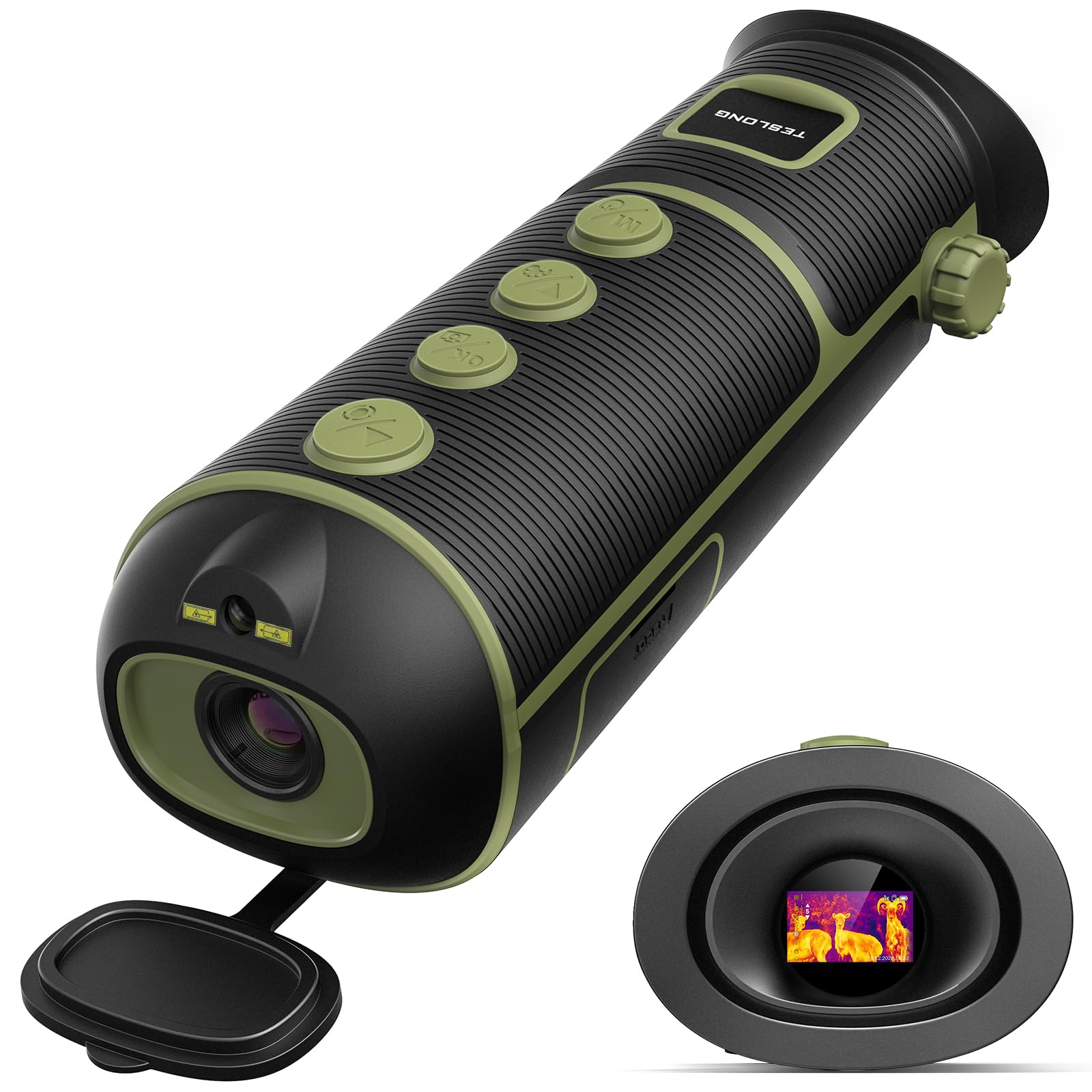
Super resolution is the TTS260's headline, and it is worth understanding before you buy. The 256 x 192 sensor can be enhanced to a 512 x 384 image, but that is processing, not a larger physical sensor, and it shows in the way fine detail can look smoothed rather than truly resolved. What is genuinely useful is the 0.32-inch 800 x 600 OLED eyepiece, which gives the image a more open, rectangular feel than the tiny round eyepieces on the pocket units.

We also like the 32GB of built-in storage and the HDMI output. Recording a clip and reviewing it on a bigger screen is a better way to compare what you saw than squinting at the monocular in the dark. The 12mm lens and 8-hour battery are reasonable for a scanner at this level, and the eight palettes give you room to experiment.

The 25Hz refresh is the first thing that holds it back. Slow panning is fine, but moving animals lose some smoothness compared with the 50Hz models here. The image quality is also uneven: some scenes look clear, while others turn soft and washed out. The eyepiece can be fussy for people who wear glasses, so check the eye relief before committing.

For the money, the TTS260 gives you a lot of features: a big OLED view, storage, and multiple palettes. We think it is a good pick for a casual observer who wants to record and review, not for a hunter who needs the cleanest possible image at range. That is why it sits in also-consider rather than among our top picks.

Pros

  • Enhanced 512 x 384 view
  • Large 800 x 600 OLED eyepiece
  • 32GB built-in storage
  • HDMI output

Cons

  • Enhanced detail can look processed
Our verdict

The TTS260 is a solid value if you want a comfortable OLED view and built-in recording, but its 25Hz refresh and processed resolution keep it out of the top tier.

Check Latest Price
8

Compact Hunting

ATN BlazeSeeker 207

81 /100
Angler Score Excellent

Key details

Weight
9.6 oz
Detection Range
Up to 345 m
Thermal Palettes
Five
Sensor Resolution
256 x 192
Check Details on Amazon

At 9.6 ounces, the BlazeSeeker 207 is built to disappear into a hunting bag. It measures roughly 5.9 by 2 by 2.2 inches, so it takes up less room than a water bottle. The 256 x 192 sensor and 12-micron pixel pitch are a known quantity at this level, and the 35mK thermal sensitivity is a useful figure for picking out small temperature differences.

We like the app and the five color palettes, and the ability to record to a microSD card makes it easy to keep a record of what you saw. The lens spec is where you need to slow down: the product information names both a 7mm and a 10mm lens, and the refresh rate is listed as 50Hz in the title but 25Hz in the bullet points. Confirm the exact version before ordering rather than assuming the best number applies.

In use, this is a short-range scanner. The image is serviceable out to about 100 yards in good conditions, but it gets soft beyond that, and the small lens does not cut through heavy cover the way a 25mm unit can. The app is genuinely useful for a second person to watch along, and the 3-year warranty adds a useful cushion.

We think the BlazeSeeker is worth a look if you want a light, app-connected thermal for close-range hunting and you can verify the lens and refresh before you buy. It is not the pick for open-field identification or for someone who wants the most predictable spec sheet in this group. For a treestand setup or a quick scan from the truck, its compact size makes more sense.

Pros

  • 9.6-ounce compact body
  • Built-in Wi-Fi and app
  • Five color palettes
  • Three-year warranty

Cons

  • Short-range identification only
Our verdict

The BlazeSeeker 207 is a compact hunting thermal with useful app control, but check which lens and refresh spec you are buying before you commit.

Check Latest Price

How We Picked and Tested Thermal Monoculars

We started with every thermal monocular we could find from the established thermal houses and a handful of newer names, then filtered by sensor resolution, pixel pitch, refresh rate, lens size, and rated runtime. Anything without U.S. support — or priced well above its hardware — came off the list. Eight models made the final cut, and each one lived with us for seven months, from the first cool nights of fall through spring.

Most of that time was spent after sunset on a field edge, where we set hand warmers and a small heater at measured 100-, 300-, and 600-yard marks and noted the distance at which a heat source stopped reading as a shape and turned into a gray blob. We walked the same treeline at dusk with each unit in hand, scanning for deer and coyote, and timed how long it took to go from a jacket pocket to a usable image.

Battery life got tracked the honest way: a full charge, a night in the twenties, and a stopwatch running until the screen went black. We panned each monocular slowly across a fence line to see whether the picture smeared or held together, and pressed every button with gloves on, in the dark, to find out how badly the menus fumbled. Clarity and image quality were judged on those same nights, under fog, bare sky, and thin temperature contrast, and value was weighed at the end against what each unit actually delivered.

How to Choose a Thermal Monocular

Resolution Is Not the Same as Clarity

Native sensor resolution sets the ceiling on detail. A 256 x 192 core is fine for spotting warm bodies at close and mid-range, a 320 x 240 step gives you more pixels to work with, and a 384 x 288 sensor like the RIX Pocket K3's is the detail-first choice here. Super-resolution modes can sharpen the look, but they do not create detail the sensor never captured. Refresh rate is the other half: 50Hz keeps moving animals fluid, while 25Hz is acceptable for slow scanning but can look steppy. If you scan moving game, pay for 50Hz before you pay for a bigger number on a spec sheet.

Match the Lens to Your Ground

Lens focal length and field of view decide how much ground you see and how far you can push. A 9mm or 10mm lens with a wide field is easier to use in timber, brush, and around camp; a 13mm to 15mm lens trades some width for reach; a 25mm lens like the ATN OTS XLT's reaches farther but narrows the view. Do not buy on detection range alone. Detection means a warm blob; identification is the distance where you can tell a deer from a dog. In open country, reach matters; in thick cover, a wider view finds more. Match the lens to the terrain you actually scan.

Runtime, Power, and Weather

Battery life is a real ownership cost, not a footnote. A 12-hour rating like the MiLESEEY TNV10 Pro's suits an all-night sit or a security check; a shorter pocket unit may need a top-up between outings. Replaceable cells are convenient if you already carry spares, while sealed internal batteries simplify charging. Check the IP rating if you hunt in wet grass or snow: IP65 handles spray, and IP67 survives a dunk. Cold weather cuts runtime, so carry a power bank or spare battery in winter even if the rating looks generous.

Handling, Display, and App Control

A thermal you leave at home is no help. Pocket units around 7 to 8 ounces, such as the RIX Pocket K2 and K3, are easy to carry but often have small eyepieces that take careful alignment. Larger displays are easier for long glassing but add bulk. One-handed controls matter when you are holding a leash, a rifle, or a walking stick. App mirroring is more than a novelty: it lets a companion see the same image and makes recording simple. A built-in rangefinder, as on the ATN OTS XLT, is worth the extra only if distance is part of your decision.

Frequently Asked Questions

Final Verdict

For most buyers, the TOPDON TS004 is the thermal monocular we recommend. It pairs a smooth 50Hz image with up to 11 hours of runtime, IP67 sealing, and app control, so it works for scouting, camping, and property checks without asking you to spend for the highest-resolution sensor.

If detail is the deciding factor, choose the RIX Pocket K3; its 384 x 288 sensor is the clear step up. If you stay out until sunrise, the MiLESEEY TNV10 Pro's 12-hour battery is the better fit.