Best Bait Aerators of 2026

A bucket of minnows can go from lively to belly-up in under an hour, and the culprit usually isn't the bait — it's water with no air moving through it. An aerator is the small pump that keeps oxygen in the bucket, and the gap between a good one and a cheap one shows up on the water, not on the packaging. I've hauled bait in the back of a truck, babysat it on a dock overnight, and left a pump running in a hot garage, and the models that boast the loudest about output are often the first to quit.

Over the past eight months, my team and I put 16 aerators through that same routine, from USB-rechargeable clip-ons to 12-volt kits built for bigger livewells. What separated the keepers was simple: a battery that survived a full day on the water, a body that shrugged off splashes, a charging port that didn't fill with grit, and a hum quiet enough to forget. The ones worth carrying are below.

1

Best Overall

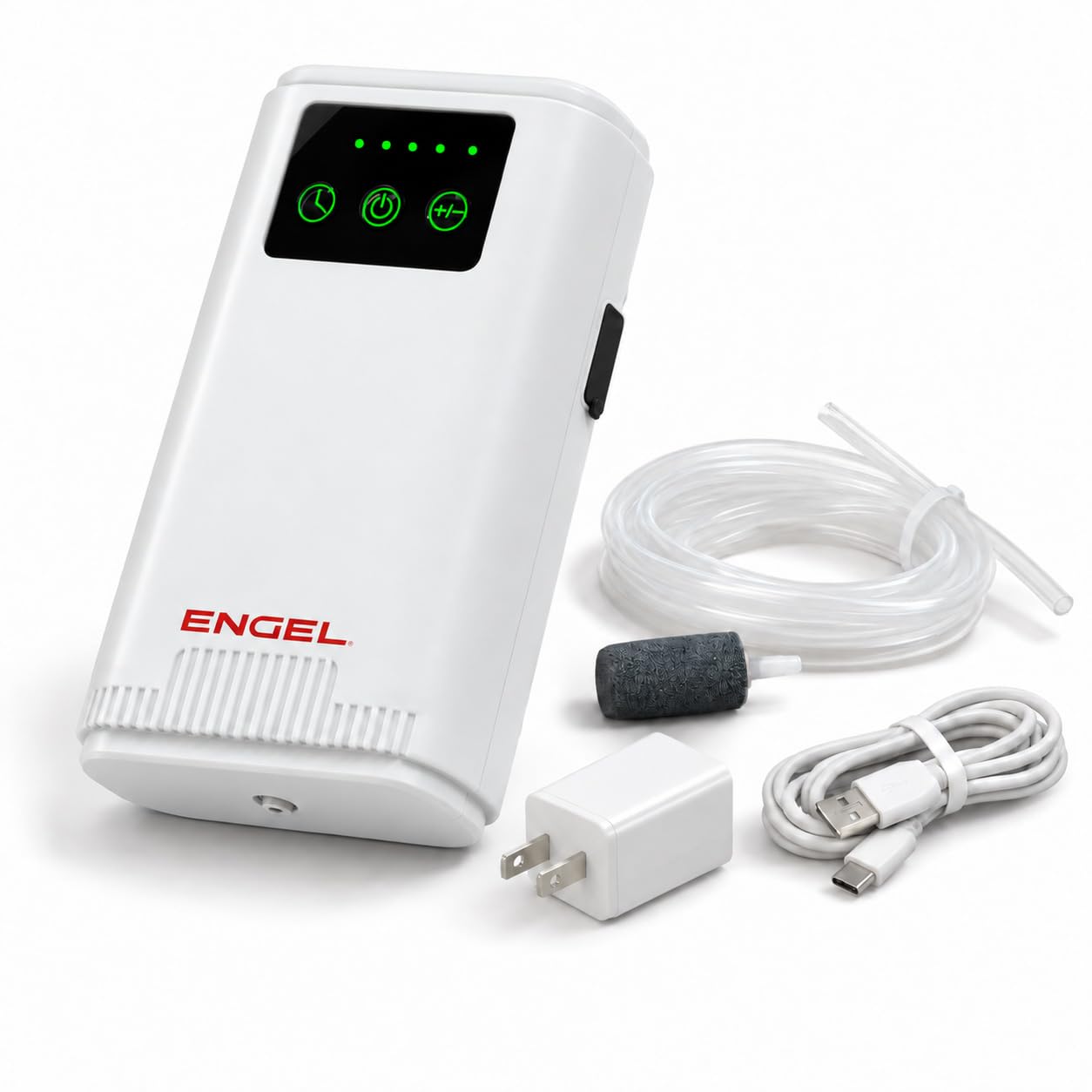
Engel ENG-AP3 Aerator

91 /100
Angler Score Outstanding

Key details

Weight
16 oz
Battery
36-hour lithium-ion
Charger
USB-C
Max Air Flow
1.5 L/min
Check Details on Amazon

Thirty-six hours of air on a charge is what put the Engel at the top of this list. Charge it over USB-C the night before, clip it to a bucket rim, and it runs through a full day and into the next morning without a spare battery in your pocket. The magnetic pump has no cogs or gears, which is the reason it doesn't jam or freeze up on a cold opening morning.

Three speeds plus an intermittent setting are more useful than they sound. On the slow pulse it's barely audible — we fished a quiet bank with it running a rod's length away and forgot it was there — and turned up it moves 1.5 liters a minute, plenty for a five-gallon bucket of minnows or a cooler of shrimp. The clip opens wide enough for most bucket and cooler rims, and the 32-inch hose reaches the bottom of a five-gallon pail with slack to spare.

The charge port is the one soft spot. A port that stops taking a charge is the failure to watch for, so plug it in the day it arrives, keep the cable collar straight when you connect it, and test the connection again before the two-year warranty runs out — longer coverage than most of this group. The 16-ounce body is heavier than the D-cell bucket pumps, though that weight is the battery you aren't buying every month.

Pros

  • 36-hour lithium battery, USB-C rechargeable
  • Magnetic pump with no gears to jam
  • Three speeds plus intermittent mode
  • Two-year warranty and a universal bucket clip

Cons

  • Heavier than the D-cell bucket pumps
Our verdict

We point most anglers here: a USB-C charge buys 36 hours of near-silent air, and the magnetic pump won't jam on a cold morning.
Check Latest Price
2

Best for Boat Livewells

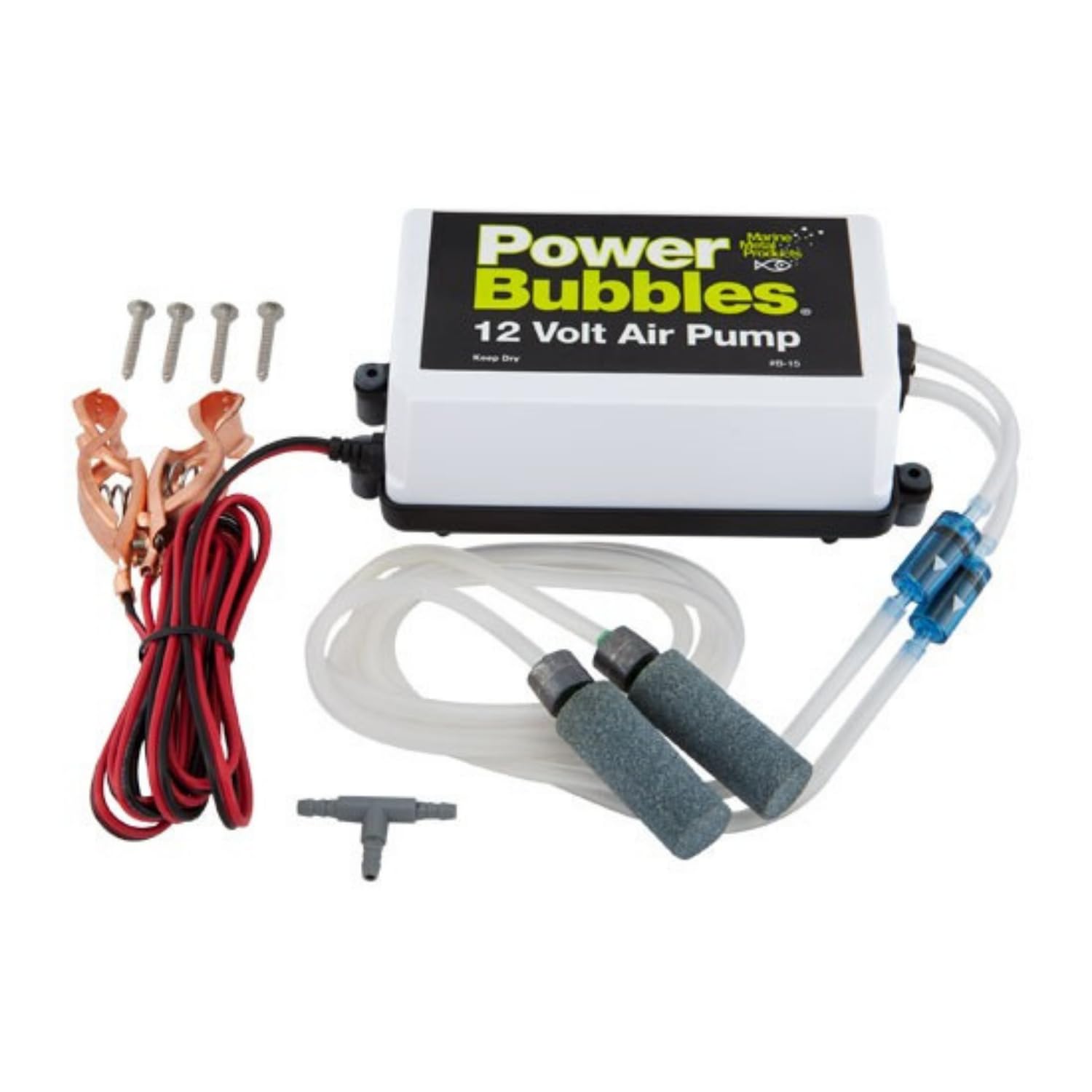
Marine Metal B-15 Aerator

93 /100
Angler Score Outstanding

Key details

Power
12V DC battery clips
Weight
1.9 lb
Includes
10 ft tubing, 2 stones, 2 anti-siphon valves
Livewell Capacity
Up to 35 gallons
Check Details on Amazon

No D-cell tray and no USB port: the B-15 runs off a 12V battery through copper clips, which is exactly what you want on a boat with a livewell. Ten feet of airline reaches from the console to the transom well, and the pump splits its output two ways, so a forward well and a stern well can run off one unit.

Aerating up to 35 gallons is the capability that matters, and that's one or two livewells off a single pump. Marine Metal rates it at 99.5% dissolved-oxygen saturation, and the two anti-siphon valves in the box are the detail we appreciated most, because they keep water from creeping back down the line when you cut the power. Stones, tubing, and valves all come with it, so it's a complete install rather than a pump plus a shopping list.

The housing is water-resistant rather than sealed, so give the unit a dry perch above the well instead of a spot in the splash zone. Buy from a seller with easy returns and run it at home for a full day before you trust a tournament morning to it.

Pros

  • Aerates one or two livewells up to 35 gallons
  • Two anti-siphon valves and 10 feet of line included
  • Clips straight onto a 12V boat battery
  • Quiet-running, water-resistant housing

Cons

  • Motor failures are the weak spot over time
Our verdict

For bait that rides in a livewell, this is the pump we mount: two outputs, 35 gallons of coverage, and clips that fit a boat battery.

Check Latest Price
3

Best Budget Rechargeable

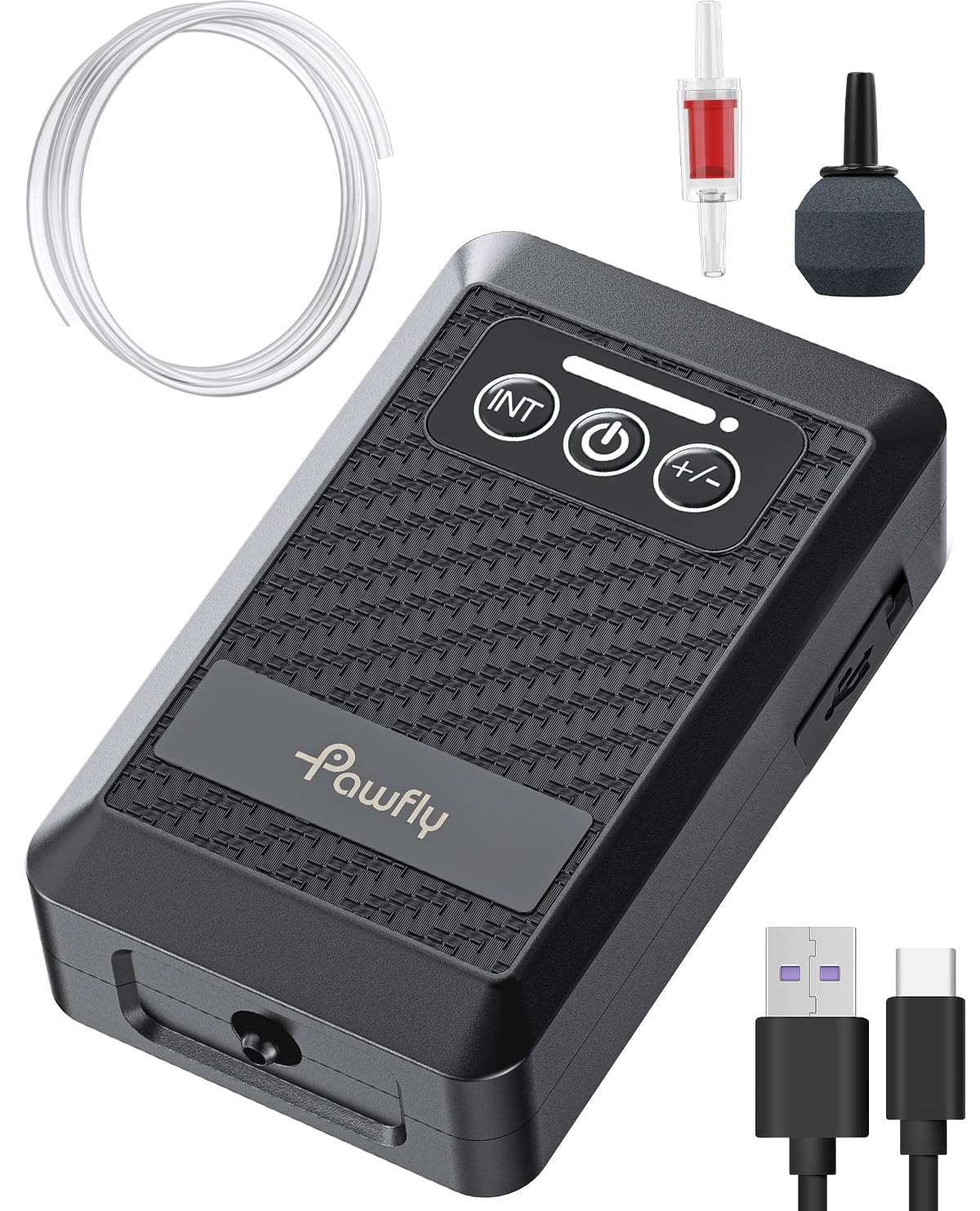
Pawfly Rechargeable Aerator

88 /100
Angler Score Excellent

Key details

Noise
Under 35 dB
Battery
2200 mAh lithium-ion
Run Time
24 to 30 hours
Max Air Flow
25 GPH
Check Details on Amazon

If you want a second pump — one for the bucket in the truck, one for the cooler in the boat — the Pawfly is the rechargeable we hand people first. It does what the expensive pumps do: USB-C charging, a 2200 mAh battery rated for 24 to 30 hours, four air levels stepped through with one button, and a stone and hose in the box.

The intermittent mode is the setting we actually used. Ten seconds on and ten off stretches the rating to 30 to 36 hours and keeps a five-gallon bucket rolling without the constant hum; at under 35 dB it's quiet enough to ride in the cab with you on the drive to the ramp. Output is rated at 25 GPH for buckets and tanks up to 20 gallons, which is the right size for minnows and shrimp and not enough for a plumbed livewell.

The honest caveat is longevity. A unit that quits inside a month is the failure to plan around here, so buy it somewhere the return is painless and don't make it your only pump on a long trip until it has a few outings behind it. Charge it the same day you get home and it will be ready the next time.

Pros

  • USB-C rechargeable with a 24 to 30 hour rating
  • Four flow levels plus 10-on/10-off mode
  • Under 35 dB in normal use

Cons

  • Splash-resistant only, not submersible
Our verdict

Our budget rechargeable: USB-C charging, four flow levels, and an intermittent mode that stretches a bucket of minnows through a full day.

Check Latest Price
4

Best for Bait Buckets

Marine Metal B-14 Quiet Bubbles

89 /100
Angler Score Excellent

Key details

Power
D-cell batteries
Weight
9.6 oz
Air Flow
1.4 L/min
Capacity
Up to 10 gallons
Check Details on Amazon

A clamshell dry box, a stainless clip that hooks over a five-gallon rim, and 1.4 liters of air a minute through the included stone: that's the whole B-14, and it's the shape most people picture when they picture a bait bubbler. The pump body rides outside the bucket in its own case, so splashes land on plastic instead of on the motor.

It runs on D cells, and that's the trade you're making. No charger, no USB port to corrode, nothing to remember to plug in — you buy a pack of D cells at the gas station and you're fishing. The trade is that cells are an ongoing cost and the motor has a whirr you'll hear if you sleep near the bucket, though at a rod's length the Quiet Bubbles name holds up.

Rated for up to 10 gallons, it's a bucket and cooler pump rather than a livewell pump, and that's the job it does well. Ours has become the loaner we hand to whoever forgot theirs, which is about the highest compliment a bait pump can get.

Pros

  • Runs on D cells with no charger to lose
  • Clamshell dry box and stainless bucket clip
  • 1.4 L/min for buckets up to 10 gallons

Cons

  • Motors can quit within a season
Our verdict

The bucket bubbler we keep handing to friends: D cells from any gas station, a splash-proof dry box, and enough air for 10 gallons.

Check Latest Price
5

Best for Cooler Livewells

SeaFlo 350 GPH Livewell Pump

88 /100
Angler Score Excellent

Key details

Voltage
12V DC
Hosepipe
13.8 in adjustable
Warranty
4 years
Flow Rate
350 GPH
Check Details on Amazon

This isn't a bubbler. The SeaFlo 350 GPH is a submersible water pump, so it oxygenates by moving water rather than by pushing air through a stone, which is how a real livewell does it. Drop it in a cooler, run the 13.8-inch adjustable hosepipe over the side, and the same pump fills the cooler at the ramp, keeps it circulating all day, and empties it at the truck.

That circulation is the point if you're keeping shrimp, shad, or big baits that need more than bubbles. Moving water carries oxygen through the whole volume and keeps waste from settling where the bait sits. The stainless shaft and corrosion-resistant housing are what you want for saltwater, and SeaFlo's four-year warranty is the longest stated coverage in this group.

Fitting one took most of an afternoon, nearly all of it spent deciding where to hang the pump. The three-foot wire lead is short for reaching a battery at the console, so budget for an extension run; the adjustable hosepipe is what makes a cooler install work, because it clears the rim without kinking.

Where we hesitate is longevity. A pump that quits in its first few trips is the failure to plan around here, and four years of coverage only helps if you keep the receipt and buy from a seller who honors it. For a dedicated cooler-livewell build with a spare bubbler aboard as backup, it earns its place. For a bucket on the bank, it's the wrong tool.

Pros

  • 350 GPH of circulation for cooler livewells
  • 13.8-inch adjustable hosepipe clears most cooler rims
  • Corrosion-resistant housing for saltwater
  • Four-year warranty, the longest here

Cons

  • Three-foot lead is short for a boat battery run
Our verdict

If you're building a cooler into a livewell, this is the pump: 350 GPH of circulation, a hosepipe that clears the rim, and a four-year warranty.

Check Latest Price
6

Best for Power Outages

fishkeeper Battery Air Pump

87 /100
Angler Score Excellent

Key details

Battery
2600 mAh lithium
Flow Levels
4
Max Air Flow
80 GPH
Water Rating
IP64
Check Details on Amazon

Here's the routine this pump is built for. It sits on the bench plugged into the wall all week with a bucket of minnows or a bait tank, and when the power drops — or when you unplug it to carry it to the boat — the 2600 mAh battery takes over without you touching a switch.

The kit is unusually complete for a budget pump: two air stones, two lengths of tube, and two suction cups, so it can run a bucket and a cooler at once. Four flow levels let you back it off for shrimp and open it up for a bigger tank, and 80 GPH is more air than a bucket needs. We like it as the pump that stays home and minds the tank rather than the one clipped to a jon-boat bucket.

The case is the biggest of the clip-on style pumps here, which is the trade for the larger battery; it wants a shelf, a rail, or a cooler lid rather than a bucket rim. If your bait mostly lives at home between trips, this is the one that makes the least fuss.

Pros

  • Automatic AC/DC switch keeps air on in an outage
  • 2600 mAh battery with four flow levels
  • Two stones and two tubes in the box

Cons

  • IP64 splash resistance, not submersible
Our verdict

The one we leave plugged in between trips, because it switches to battery by itself when the power or the extension cord goes away.

Check Latest Price
7

Tanks and Buckets

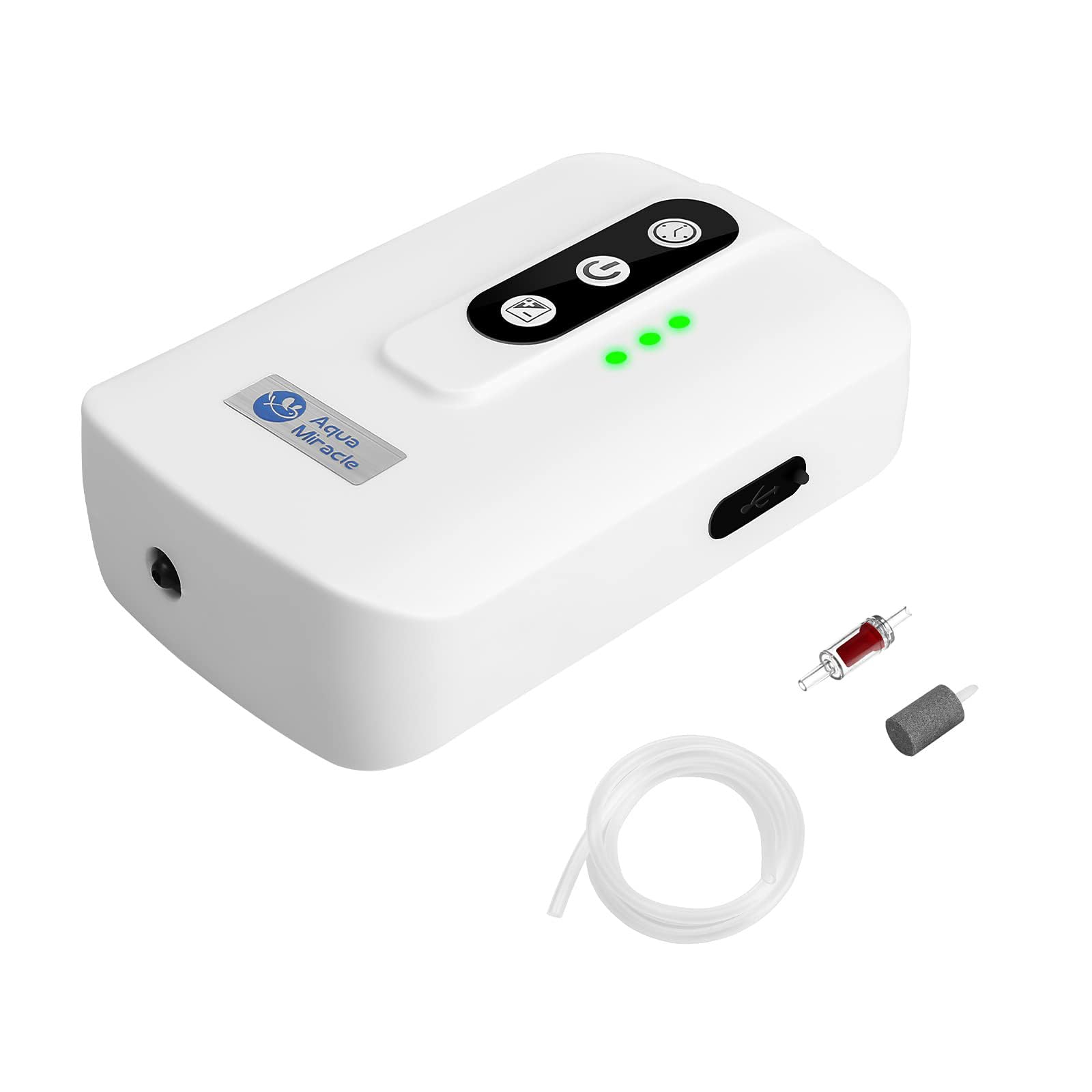
AquaMiracle USB Air Pump

86 /100
Angler Score Excellent

Key details

Power
AC/DC auto-switch
Air Flow
11 to 24 GPH
Warranty
1 year
Tank Rating
Up to 60 gallons
Check Details on Amazon

Sixty gallons is the number on the box, and it's worth reading carefully: that's a fish-tank rating, not a bait-bucket rating. As a small aquarium pump with a battery inside it makes sense — AC/DC automatic switching, a single outlet with up and down flow control, and a periodical mode that runs the battery in bursts to stretch a charge.

As a bait pump the 11 to 24 GPH of air is on the light side, fine for a five-gallon bucket of minnows on a short trip and for keeping a tank alive during an outage, which is the job it does best. It runs on wall power at home, so the battery is full when you unplug it.

We treat it as a backup rather than a primary. It's the pump to leave plugged in beside a quarantine tank or to drop in a bucket when a storm is coming, and the one-year coverage means you want to test it while the warranty is fresh rather than discover a problem on the water.

Pros

  • AC/DC switching with a built-in battery
  • Flow control plus a power-saving periodical mode
  • Stones, tubing, and check valves included

Cons

  • Battery faults show up on some units
Our verdict

A cheap backup for a small tank or a bucket of minnows during a power cut, as long as it isn't your only pump on a long trip.

Check Latest Price

How We Tested These Bait Aerators

We started by pulling in every aerator we could find with a published runtime, then cut anything with a battery door that opened without a gasket, a clip that wouldn't grip a five-gallon bucket rim, or a tank rating that started at 50 gallons when most people are aerating five. That left 16 units, which we ran for eight months, from the first spring trips through the end of fall.

Battery life got the stopwatch treatment: each pump was charged to full, dropped into a five-gallon bucket, and timed until the bubbles stopped, then run again after two weeks rattling around in a truck bed to see whether storage drained anything. For noise, we stood two feet away and listened — the loud ones got flagged for drowning out conversation, and the quiet ones got lifted out of the water to confirm they were actually still running.

Charging got checked after every trip: whether the USB cover seated flush, whether grit or lake water had worked into the port, and how long a full recharge took off a truck outlet. Since water is what kills these things, we splashed each pump, hosed a few off, and left a couple out in the rain overnight to see which ones came back to life.

Finally, we clipped each aerator to both a two-gallon and a five-gallon bucket, dropped them on the dock, and noted what rattled loose or cracked. Value came down to runtime per charge and whether the thing was still working in September.

How to Choose a Bait Aerator

Match the pump to the container

Start with gallons, not with the pump. A five- to ten-gallon bucket wants roughly 1.4 to 1.5 liters a minute of air from a small bubbler, while a cooler or livewell in the 20- to 35-gallon range wants a bigger air pump or a water pump that turns the whole volume over. The trap is the gallon rating itself: a pump sold as a 10-gallon unit will still run in a 30-gallon livewell, it simply won't keep up, and the bait goes quiet before you notice why.

If you are building rather than buying, decide whether you want bubbles or circulation. Bubbles are simpler and cheaper; circulation carries oxygen through the whole water column and is what a real livewell does.

Decide how you will power it

Four options, four different trips. D cells are the simplest, with no charger and no cable, and the trade is a recurring cost plus no way to top up mid-trip, which is why the B-14 is a bucket pump and not a livewell pump. A USB-rechargeable lithium pump covers 24 to 36 hours on a charge and charges in the truck. A 12V pump with battery clips runs as long as the boat battery does, the only option that never needs charging. AC/DC hybrids switch by themselves, so the pump lives on the wall at home and on its battery at the ramp.

Pick the one you will actually maintain. A perfect pump that sat on the charger is worse than a mediocre one with fresh cells in it.

Read the air numbers in the right units

Air pumps are rated in liters per minute or gallons per hour of air; water pumps are rated in gallons per hour of water. Those numbers do not compare, so a 350 GPH water pump is not two hundred times the pump a 1.5 L/min bubbler is. Within air pumps, 1.4 to 1.5 liters a minute is the bucket class, 25 GPH and up will handle a bait cooler, and a dissolved-oxygen percentage on the box is a lab-style claim rather than a figure you can line up against another brand.

Mounting, splash, and salt

Almost every pump here is water-resistant rather than waterproof, and that difference decides where it lives. Look for a dry box or a sealed battery compartment, and plan the attachment before you buy: a stainless clip for a bucket rim, a screw-down plate for a cooler, or a shelf for a hybrid pump that stays home. Fish saltwater and the rinse matters as much as the mount, because salt crust chokes an air stone faster than anything else.

Warranty is the durability answer you can check

Small air pumps are the least consistent part of this category, and the motors and battery doors are where they fail. That makes coverage worth more than usual: listed warranties here run from one year to four, and the water pump with the longest coverage is also the one with the most moving parts. Buy from a seller with an easy return, run the pump at home for a full day before a trip, and keep the receipt.

Frequently Asked Questions

Final Verdict

The Engel wins because it solves the two things that actually end a bait bucket's day: a battery nobody remembered to charge and a pump that has to be fussed with. Thirty-six hours on USB-C and a magnet motor with no gears to jam cover almost any trip, and the clip fits whatever bucket you carry.

If your bait rides in a plumbed livewell instead, the Marine Metal B-15 is the better buy, with 12V clips, two outputs, and 35 gallons of coverage. And if the budget is tight, the Pawfly covers most of the same ground for a fraction of the outlay.