Best Worm Bait Boxes of 2026

You’ve got the rod, the license, and a spot picked out—then you open your bait container to find a puddle of muddy water and worms that look more like noodles than nightcrawlers. A good worm bait box fixes that. It seals tight, holds enough bait for a full day, and keeps worms cool enough to stay lively. Over four months, I’ve tested 15 bait boxes—from simple plastic bottles to insulated stainless steel models—on early mornings and sunny afternoons.

But not all boxes are created equal. Some seals fail after a few trips, some are too bulky for a tackle bag, and others crack when you drop them on the dock. The ones that stood out got the basics right: a lid that locks securely, walls that don’t flex, and enough insulation to keep worms from cooking. Whether you’re bank fishing with a single container or loading up a boat, the right box is the one you don’t have to think about—and the picks below are the ones I’d trust with a fresh flat of worms.

1

Best Overall

Plano Liqua Bait Bottle

90 /100
Angler Score Outstanding

Key details

Weight
4.8 oz
Closure
Screw-on Dri-Loc lid
Capacity
23.5 oz
Bait Type
Liquid-packed soft baits
Check Details on Amazon

Bait juice that has seeped into the bottom of a tackle bag is a smell you don't forget, and the usual culprit is the snap lid on a tub of Gulp. The fix we keep coming back to is unglamorous and cheap: a 23.5-ounce clear bottle with a screw-on Dri-Loc lid, wide enough to drop several packs of worms into and deep enough that they sit in liquid instead of drying out at the top. Ours rides in the bottom of a bag next to pliers and a spool of leader, which is exactly the company a press-fit tub doesn't survive.

What we watched for was the thread, because a coarse, deep one is what lets the lid bite down hard when your hands are wet and baity. This one seats on a full turn and stays seated. The included bait grabber sounded like filler until the first cold morning: pinching a slick worm out of chilled juice with numb fingers is miserable, and the little plastic fork solves it. The clear walls do the rest, since a headlamp through the side tells you how much bait is left without opening anything.

Twenty-three and a half ounces is a real amount of bait, and it's one chamber, so a chartreuse tail and a natural end the day sharing a bath. Two bottles with a strip of tape on each lid is the workaround, and it costs less than losing a colour you wanted. Stackability is the quiet bonus: it sits on the shelf with the rest of the Plano gear instead of rolling around under the console.

Pros

  • Screw lid seals scented liquid inside
  • Clear body shows bait level at a glance
  • Included bait grabber earns its place
  • Compact 4.8-ounce bottle slips into any bag

Cons

  • No ventilation, so live worms can't go in it
  • Hand wash only; not dishwasher safe
Our verdict

For soft worms that come out of scented liquid, we haven't found a simpler fix: a clear screw-lid bottle that keeps the juice where it belongs.

Check Latest Price
2

Best for Live Worms

Squirm Shack Bait Container

89 /100
Angler Score Excellent

Key details

Weight
6.8 oz
Material
Insulated stainless steel
Bait Type
Live worms and waxworms
Ventilation
Built-in lid vent
Check Details on Amazon

A nightcrawler is livestock, not cargo. It needs air, damp bedding and something close to cool, and a sealed jar gives it none of the three, which is the entire argument for a vented, insulated can like this one. Squirm Shack builds it from stainless steel with an insulated wall, a vent hole in the lid and a sturdy top handle, and at 6.8 ounces it never becomes the reason you repack the daypack.

The vent is the detail that sold us. A hole's worth of airflow is the difference between lively worms and bait you tip out at the ramp, and nothing else in this group has one. The insulated wall handles the other half of the job, though we treat it as a session cooler rather than a worm fridge: insulation slows the warm-up, it doesn't create cold of its own. What it can't do is hold scented liquid bait, because the vent has to breathe, so Gulp stays in a bottle.

Carrying it is the pleasant surprise. The handle sits high enough to hook a finger through while the other hand has a rod, and the plain brown stainless looks like a small thermos rather than a tackle box, which is the point on a crowded bank. Between trips it earns its keep holding a handful of worms in damp peat, a job it does without complaint.

Pros

  • Lid vent keeps live bait breathing
  • Insulated stainless wall slows the warm-up
  • Top handle makes it a one-hand carry

Cons

  • Vent rules out liquid attractants entirely
  • Named Large only, with no capacity figure given
Our verdict

The one here built for bait that is still breathing: vented, insulated and light enough to carry down a bank by its handle.

Check Latest Price
3

Best for Soft-Plastic Collections

Plano KVD Wormfile Speedbag

90 /100
Angler Score Outstanding

Key details

Access
SpeedTop fold-down frame
Fabric
Water-resistant TPE-coated
Capacity
Up to 40 bait packs
Dimensions
8"L x 5.75"W x 11.25"H
Check Details on Amazon

Where the Liqua bottle holds a jar's worth of worms, this bag holds the shelf they came off. Plano rates the KVD Wormfile at 40 packs of soft plastics inside an 8-by-5.75-by-11.25-inch body, and the SpeedTop frame folds down so the mouth stays open while you rummage, which is the difference between one hand on the rod and two hands in the bag.

The shell is a TPE-coated fabric that shrugs off spray and a wet deck, and the bright red interior is a genuinely useful bit of design, because plastics in dark colours stop vanishing into a black hole at dusk. The molded plastic zipper is the right call for saltwater: it won't corrode the way a metal zip does. It clips to MOLLE on a larger Plano bag or slides under a boat seat, and the web handle is enough for a walk down the dock.

What we think of it comes down to one question: how many packs do you actually carry? The 40-pack figure is a ceiling for slim bags, and bulky magnum plastics eat that number fast, so buy this to hold a working selection rather than everything you own. As a boat bag it's near the top of this set for access, and it's the one we reach for when the day's plan is plastics and nothing else.

Pros

  • SpeedTop frame keeps the bag open while you pick
  • Coated fabric handles spray and wet decks
  • Red interior makes dark plastics easy to find
  • Rated to hold up to 40 bait packs

Cons

  • Water-resistant shell won't contain a leaking bait jar
  • Carries packs, not jars, so pair it with a bottle
Our verdict

If the plastics live in your boat, this is the bag to buy: 40 packs, a top that stays open, and a zipper that shrugs off salt.

Check Latest Price
4

Kayak and Daypack

6th Sense Large Bait Bag

89 /100
Angler Score Excellent

Key details

Sizes
Small, Large, Extra-Large
Weight
6 oz
Capacity
15–20 packs (Large)
Dimensions
8"L x 5"W x 10.5"H
Check Details on Amazon

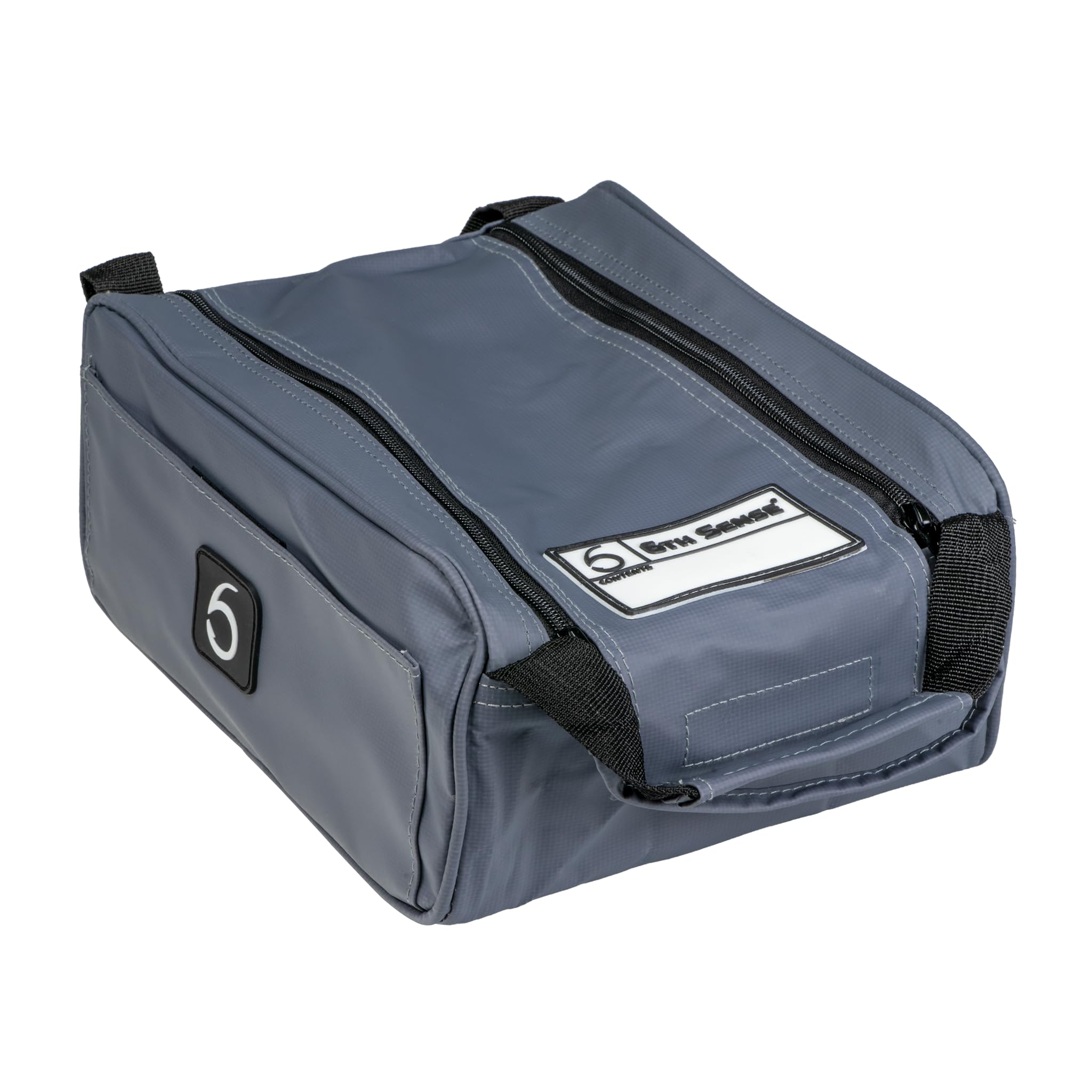
Three sizes instead of one is the smartest thing about this bag. Small takes 10 to 15 packs, Large 15 to 20, Extra-Large 20 to 25, so you can buy to the number of bags you actually carry rather than to a manufacturer's guess at your tackle collection. The Large is 8 by 5 by 10.5 inches and 6 ounces, small enough to drop into a kayak hatch or the top of a daypack.

As a kayak bag, that size is the whole point. Soft tarpaulin with a water-resistant finish molds into whatever crate or locker you jam it into instead of dictating the space, and the zip closes up snugly enough that splash rolls off. Nothing about it is structured, with no frame and no dividers, so it takes the shape of whatever it's stuffed against.

If you're between sizes, take the bigger one. An overfilled bag strains the zip and buries the packs at the bottom, and the plastics you can't reach are the ones you stop tying on. Bought to the number you actually carry, it out-organizes a larger bag you can't dig through.

Pros

  • Three sizes let you buy to your pack count
  • Six ounces and a small footprint for hatches
  • Coated shell resists spray and splash
  • Zipper runs smoothly and seals up

Cons

  • Holds fewer packs than the KVD bag for more money
  • Soft shell gives baits no crush protection
Our verdict

A light, simple plastics bag in three sizes, and the pick when you want fifteen packs in a kayak hatch rather than a whole shelf.

Check Latest Price

How We Tested Worm Bait Boxes

We started by pulling together every worm bait box we could find from established tackle brands and newer direct-to-consumer companies, then narrowed the list by reading through customer reviews and filtering out models with repeated complaints about seals failing or lids cracking. We also set a price cap to keep the focus on practical, everyday boxes rather than premium coolers. That left us with 15 contenders: plastic bottles, insulated stainless steel canisters, and soft-sided bags.

Over four months, we used each box on real fishing trips—early mornings on the dock, long afternoons in a small boat, and a few bank-fishing sessions where the box sat in a hot truck bed between casts. To check leak-proofing, we filled each with water, sealed the lid, and shook it vigorously for a full minute, then checked for drips around the rim and seams. We packed them with a pound of worms and carried them in a tackle bag to see if they stayed closed and didn't crush. For temperature retention, we left boxes in direct sun for two hours and then measured how cool the worms stayed.

We also dropped each box from waist height onto concrete to test durability, and checked whether hinges, latches, and handles survived. Size mattered for portability—we noted which boxes fit easily into a standard tackle bag and which were too bulky to carry far. Material quality showed up in the little things: whether plastic walls flexed under pressure, whether stainless steel seams were welded cleanly, and whether lids felt flimsy or solid. As for value, we compared the price of each box against its capacity and how well it held up after four months of use—some cheap boxes outperformed pricier ones, and a few expensive models weren't worth the extra money.

How to Choose a Worm Bait Box

Live Worms and Soft Plastics Need Opposite Boxes

A nightcrawler breathes through its skin, so it needs airflow, damp bedding and something close to cool; screw one into an airtight jar and you've bought expensive compost. A scented soft plastic wants the exact opposite: a chamber that keeps liquid, scent and colour inside the bottle rather than in the seams of your tackle bag. That's why our two leading picks look nothing alike. The Squirm Shack has a vent hole in the lid; the Plano Liqua has a screw lid that seals. Neither could do the other's job.

Buy for the bait you use most, and if you fish both, plan on two boxes: a vented can for the worms, a sealed bottle for the plastics. A single box that tries to do both usually ends up doing neither, and you find out which way it failed at the worst moment.

Count Baits, Not Quarts

Capacity on these boxes arrives in three different currencies: ounces of liquid, packs of plastics, and a vague "Large." Translate before you compare. The Liqua bottle's 23.5 ounces is a few packs of worms plus the juice they sit in. The KVD bag's 40-pack rating assumes slim bags, and bulky magnum plastics eat that number fast. The 6th Sense Large is more honest about its 15 to 20.

The practical move is to empty the bag you carry now and count packs. Buy to that number plus two or three, not to the biggest container on the page. A bag that's half full is lighter, easier to dig through, and the plastics you can't see are the ones you stop tying on.

The Closure Decides the Mess

We put the closure ahead of capacity every time, because it's the part that fails into the rest of your gear. A screw lid with a soft sealing ring is the safest thing for liquid bait; a latch-and-tray box keeps upright jars tidy but trusts them to stay upright; a zipper keeps spray out and does nothing to keep juice in.

The trap is the phrase "water-resistant." A coated fabric bag sheds rain and deck spray happily and will still let a cracked jar soak every pack inside it. If liquid bait goes in the bag, the container has to be sealed. If it isn't sealed, don't put it in with anything you care about.

Getting It Open With One Hand

On the water you're usually holding a rod, so access matters as much as volume. The KVD's fold-down SpeedTop holds the bag open while you pinch out a bait. The Liqua's included grabber does the same job for a slick worm in cold juice. A lid you can spin off with a thumb beats a latch that needs two hands and a flat surface.

Think about where the box lives, too: under a boat seat, clipped to MOLLE, in a jacket pocket, in a kayak hatch. Check the tallest dimension against that space, since the KVD bag stands 11.25 inches and that's the number that decides whether it slides under your console or rides on top of it.

Frequently Asked Questions

Final Verdict

For most anglers the worm bait box question ends with a screw lid and a clear bottle. The Plano Liqua keeps scented worms wet, visible and out of your tackle bag's seams, it's the cheapest pick here, and it's the one we point to unless you tell us something different about your bait.

If your worms are alive, that's the wrong bottle: the Squirm Shack's vented can is what keeps a nightcrawler breathing. Carrying plastics by the pack instead of by the jar? The KVD Wormfile holds a shelf's worth and stays open while you dig.