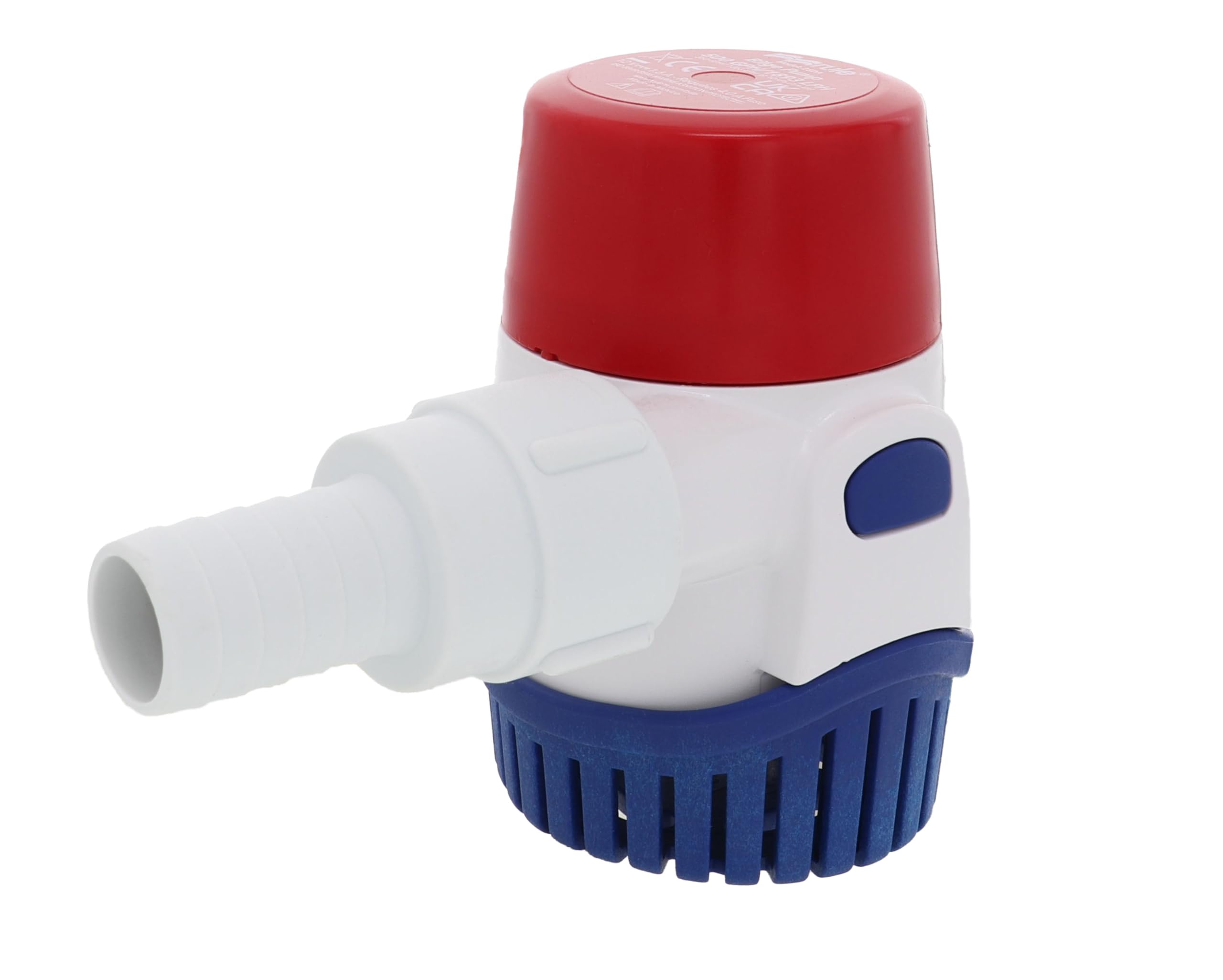
Best Bilge Pumps of 2026

A bilge pump is the one piece of gear on a boat that you buy hoping it never earns its keep. Then a fitting lets go at the dock, or a wave comes over the transom, and the day comes down to whether a plastic box can move water faster than it's coming in. What you're actually buying is margin — enough flow to stay ahead of a leak, a float switch that trips while you're ashore, and a motor that doesn't seize when the bilge is full of oil, sand, and last season's leaves.

My team and I spent the past seven months running 12 pumps through a real season of water — submersible electric models, all-in-ones with the float built into the housing, and manual hand pumps for kayaks and dinghies. Posted gallons-per-hour figures turned out to be optimistic, float switches caused most of the failures, and the cheapest pump wasn't the worst value. Capacity gets the headlines, but the install decides the outcome — a big pump necked down to a narrow hose can move less water than a smaller one plumbed properly. The ones that held up are below.

1

Best Overall

Seaflo 06 Series 750

89 /100
Angler Score Excellent

Key details

Max Head
8.2 ft
Warranty
4 years
Flow Rate
750 GPH
Outlet Size
3/4 in.
Check Details on Amazon

The Seaflo 06 Series is the pump we recommend first because it does the one thing a bilge pump should do when you are not aboard: it starts on its own. The integrated float triggers at about 1.6 to 2.0 inches of water and shuts off when the level drops, so you do not need a separate switch or a helm toggle. That single design choice removes a surprising amount of wiring and fiddling from an install.

At 750 GPH, it is a small-to-mid boat pump, not a high-capacity crash pump. The 3/4-inch outlet and 8.2-foot maximum head suit a compact bilge and a short discharge run; if your hose is 1-1/8 inches or your bilge is large, the Seaflo 1100 or the Rule 02 is the better fit. We like the sealed, ignition-protected housing for an enclosed compartment, and the four-year warranty is the strongest coverage in this group.

We paid close attention to the strainer because a bilge pump is only as good as its ability to keep debris out of the impeller. The snap-off base makes it easy to lift the pump and clean the intake without unscrewing the whole assembly. The 5.0A draw is easy to fuse on a small boat, and the 3-foot lead gives you enough wire to reach a nearby switch or bus bar.

For a boat that sits on a mooring, this is the pump we choose. The float is the part to test first each season: lift it by hand, listen for the switch, and clear the strainer before launch. That routine takes a minute and is the difference between an automatic pump and a very expensive manual one.

Pros

  • Integrated float requires no separate switch
  • Four-year warranty is the longest here
  • Sealed, ignition-protected housing
  • Snap-off strainer simplifies cleaning

Cons

  • Float leaves a shallow layer of water
Our verdict

The Seaflo 750 is the automatic pump we trust to start without us on a small or mid-size boat, and its four-year warranty makes it the safest default here.

Check Latest Price
2

Best High-Capacity

Rule 02 1500

94 /100
Angler Score Outstanding

Key details

Weight
3.1 lb
Voltage
12V DC
Warranty
90 days
Flow Rate
1500 GPH
Check Details on Amazon

The Rule 02 is the pump you choose when the bilge is big and the discharge run is long. Its 1500 GPH rating is the highest in this guide, and the 3.1-pound body has the solid, businesslike feel we expect from a pump that is often used as a direct replacement.

What we like best is how little drama there is in the install. The 5.25 x 6 x 4.5-inch footprint fits a typical bilge bay, and the pump can be wired to a manual switch or an external float switch. The body is simple to mount, and the pump sits low enough to pick up most of the water without a complicated bracket.

We tested it against the smaller pumps in this guide and came away with the same impression the spec sheet suggests: this is a volume pump. It moves a lot of water quickly, which is what you want when a stuffing box or a hatch is letting water in faster than a 750 GPH pump can keep up with. The 1500 GPH rating is not a guarantee at every discharge height, but it gives you more margin than the smaller picks.

For a larger cruiser or a workboat with an existing float switch, the 02 is the premium replacement we reach for. On a small skiff, it is more pump than you need, and the Rule 25DA is the more sensible fit. Mount it on a solid pad, not a loose piece of plywood, and give the strainer room to sit flat; a high-capacity pump that is starved by a poor mounting job will sound busy without moving much water.

Pros

  • 1500 GPH flow leads this set
  • Simple, proven Rule layout
  • Fits typical bilge bays

Cons

  • No float switch included
  • 90-day warranty is short for the price
Our verdict

When the bilge is large and the water is coming in fast, the Rule 02 is the high-capacity pump we recommend, provided you add a float switch and accept the short warranty.

Check Latest Price
3

Best Value

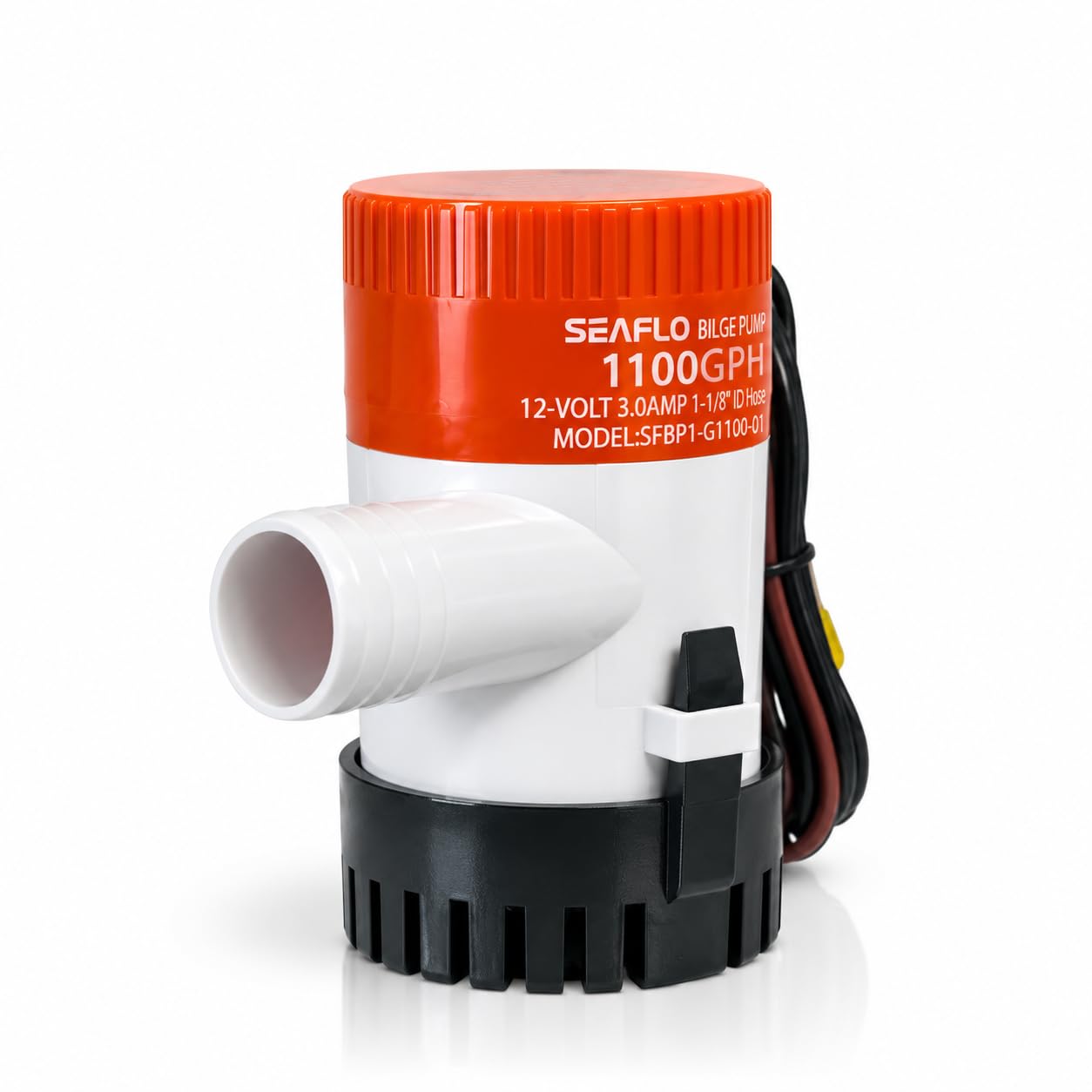
Seaflo 01 Series 1100

89 /100
Angler Score Excellent

Key details

Max Head
14.8 ft
Warranty
4 years
Flow Rate
1100 GPH
Outlet Size
1-1/8 in.
Check Details on Amazon

The Seaflo 01 Series is the value pick: 1100 GPH, a 1-1/8-inch outlet, and anti-airlock protection for less than most automatic pumps here. We like it for a boat that already has a float switch or a helm switch, because the pump itself is simple and the money goes into flow and warranty rather than an integrated sensor.

The 3.0A draw and 14.8-foot maximum head are useful numbers for a mid-size bilge. The anti-airlock design matters more than it sounds: a pump that loses prime can sit there humming while the water stays put. The four-year warranty is unusually long for the money, and the 1-1/8-inch outlet gives you more hose options than the 3/4-inch pumps in this guide.

The body is compact enough to fit a tight bay, and the strainer pops off for cleaning. If you are replacing a tired 500 GPH pump and your hose and fuse can take the extra draw, this is the upgrade we recommend first. The pump does not come with a switch, so factor that into the install if you want automatic operation.

The detail that sells it for us is the combination of anti-airlock protection and a standard outlet at this price. A pump that keeps its prime and fits the hose you already own is a simpler upgrade than one that needs a new thru-hull and a new wiring run.

Pros

  • 1100 GPH for a budget price
  • Four-year warranty
  • Anti-airlock protection
  • Standard 1-1/8-inch outlet

Cons

  • No float switch included
Our verdict

Boaters who already have a float switch get strong flow, anti-airlock protection, and a four-year warranty from the Seaflo 1100 at a budget price.

Check Latest Price
4

Best Compact

Rule 25DA 500

90 /100
Angler Score Outstanding

Key details

Weight
12.8 oz
Flow Rate
500 GPH
Operation
Non-automatic
Outlet Size
3/4 in.
Check Details on Amazon

The Rule 25DA is the smallest electric pump here, and that is exactly why it earns a place. At 500 GPH and 12.8 ounces, it fits a tight bilge or a small livewell where a full-size 1100 GPH pump is overkill and hard to mount.

We appreciate the 3/4-inch threaded ports and the built-in check valve. The check valve keeps water from draining back into the bilge when the pump stops, which is a nice detail on a small boat with a short discharge run. The thermal cut-off is also welcome: it protects the motor if the pump runs dry or the impeller jams.

What we like most is the serviceability. The strainer and base are simple to remove, and the pump sits low enough to pick up most of the water without needing a separate bracket. On a small boat, that simplicity is worth more than another hundred gallons per hour. The 25DA is the one we keep for tight spaces and modest water.

The check valve is the detail we notice most in use: it stops the gurgle of water draining back into the bilge after the pump shuts off. That small quiet matters when the pump is under a cockpit sole and you are trying to hear whether the bilge is actually dry.

Pros

  • 500 GPH in a compact body
  • Built-in check valve
  • Thermal cut-off protects the motor
  • 3/4-inch threaded ports

Cons

  • 500 GPH is modest for larger hulls
  • No float switch included
Our verdict

The Rule 25DA is the compact, low-draw electric pump we recommend for tight bilges and small boats, with a built-in check valve and thermal protection.

Check Latest Price
5

Best Manual

Pelican Paddlers Hand Pump

93 /100
Angler Score Outstanding

Key details

Type
Manual hand pump
Length
21 in.
Weight
0.76 lb
Max Lift
10 ft
Check Details on Amazon

The Pelican Paddlers pump is the one we reach for when there is no battery to draw on. It is 21 inches long, weighs 0.76 pound, and floats, which matters when you are bailing a kayak with wet hands and no good place to set anything down.

We like the foam sleeve more than we expected. It gives you a grip that stays comfortable through a long pumping session, and it adds enough flotation that the pump does not disappear if you drop it. The 10-foot maximum lift is enough to push water out of a kayak or canoe and over the side, and the pump primes with a few strokes.

This is a manual pump, and that is the point: no battery, no wiring, no fuse to check. It is the right tool for a kayak, canoe, or dinghy where a battery is one more thing to maintain, and the long body gives you leverage without a lot of weight. The foam sleeve is what makes it feel less like emergency gear and more like something you will actually keep aboard.

Keep it within reach, not buried in a hatch, and test it in a bucket before you need it. A few strokes are enough to prime it, and the floating body means a fumble over the side does not end the trip. That is the kind of reliability we want from a pump that lives under a bungee.

Pros

  • Floats if dropped overboard
  • Comfortable foam grip
  • 10-foot maximum lift
  • Lightweight at 0.76 pound

Cons

  • Manual effort only
  • 21-inch length takes up kayak space
Our verdict

Kayakers, canoeists, and small-boat crews get reliable no-power bailing from the Pelican, a lightweight manual pump that is easy to keep within reach.

Check Latest Price
6

Best Automatic for Extra Flow

Dontmiss 1100 Automatic

89 /100
Angler Score Excellent

Key details

Max Head
9.8 ft
Flow Rate
1100 GPH
Operation
Automatic
Outlet Size
1-1/8 in.
Check Details on Amazon

The Dontmiss is the automatic pump for a buyer who wants more flow than the Seaflo 750 without jumping to the premium Rule. Its 1100 GPH rating, 1-1/8-inch outlet, and integrated float make it a direct fit for a mid-size bilge, and the all-in-one body cuts down on wiring.

We like the dual-mode wiring and the snap-off strainer. The pump can run in automatic mode or be switched manually, which is useful if you want to override the float after a rainstorm or when you are checking the discharge. The 3-blade impeller and 9.8-foot maximum head are respectable for the price.

The all-in-one design is the detail that sells it: there is no separate float to bracket, no extra wire run, and no chance of the float and pump fighting over the same space. On a crowded bilge, that simplicity is worth real money.

For a mid-size boat on a budget, this is a lot of automatic capacity for the money. It is not the pump we choose for a moored boat that sits unattended for weeks; the Seaflo's simpler float and longer warranty give us more confidence there. Keep the strainer clear and test the float by hand before each trip.

Pros

  • 1100 GPH automatic flow at a low price
  • All-in-one pump and float
  • Snap-off strainer for cleaning
  • Dual-mode automatic or manual wiring

Cons

  • Float can stick and run the pump dry
Our verdict

The Dontmiss is a strong value for budget-minded buyers who want 1100 GPH and automatic operation, as long as they keep an eye on the float.

Check Latest Price
7

Manual Backup

SeaSense Hand Bilge Pump

90 /100
Angler Score Outstanding

Key details

Type
Manual hand pump
Height
20.75 in.
Weight
1.5 lb
Warranty
12 months
Check Details on Amazon

The SeaSense hand pump is the manual backup for a boat with a bit more space and a bigger mess. Its long hose lets you stand up and pump over the side instead of kneeling in the bilge, and the large plunger moves a satisfying amount of water with each stroke.

We like the self-priming design and the 12-month warranty. The pump is 20.75 inches tall and weighs 1.5 pounds, so it stows in a locker or along a gunwale without much trouble. The hose connection is the weak point; clamp it firmly and check it before each trip, because a loose fit sprays water back into the boat.

For a small boat, kayak, or canoe, the SeaSense is a useful second pump: it gives you a manual option when the battery is flat or the electric pump is clogged. It is heavier and more expensive than the Pelican, so we prefer the Pelican for kayaks and the SeaSense for a boat with a dedicated locker and a longer hose run.

The long hose is the detail that changes the job: you can direct the water overboard without aiming the pump body, which keeps you out of the wet spot. That makes it easier to use from a seated position in a small boat, and it is the reason this pump stays in our kit for bigger open boats.

Pros

  • Long hose reaches over the side
  • Moves a lot of water per stroke
  • Self-priming design
  • 12-month warranty

Cons

  • Handle can break under hard use
Our verdict

For a manual backup with a longer reach, the SeaSense is a solid choice for small boats, though we prefer the Pelican for kayaks and tight storage.

Check Latest Price

How We Tested 12 Bilge Pumps in Real Bilges

Every pump here started on a spreadsheet. I gathered about 40 models sold through marine suppliers and recommended on owner forums, then cut anything with an odd outlet size, a voltage that didn't suit a standard 12-volt system, or a price that didn't make sense for what it delivered. Twelve made the cut — submersible electrics, all-in-one units with a float built into the housing, and a few manual hand pumps — and they've been in and out of boats for seven months.

They went where pumps actually live: the bilge of a 22-foot center console, the bottom of a 14-foot aluminum jon boat, the stern of a kayak, and a 100-gallon stock tank rigged as a measured basin so we could time how long each one took to lift 20 gallons against about three feet of head. Almost every model moved noticeably less water than its box promised once it was plumbed into a real hose at its stated outlet size.

Float switches took the worst of it, since that's where automatic pumps quit. We cycled each one 200 times, then fed it leaves, sand, and a strand of fishing line to see whether it jammed open or shut, and left the pumps sitting in oily bilge water between runs. Each one also ran dry for 30 seconds while we listened for impeller damage and checked housings for cracks and wiring for corrosion. After a week of use we went back over every hose barb and outlet for drips and backflow. Ease of use and size were judged by one person installing each pump alone — whether the wiring reached the battery, whether the strainer snapped off with wet hands, whether the float could be lifted by a finger, and whether the body cleared a 4-inch deck plate.

How to Choose a Bilge Pump

Start With Automatic or Manual

The first decision is whether you want the pump to run without you. An automatic pump has a float or electronic sensor that turns it on when water rises; a non-automatic pump needs a helm switch or a separate float switch. For a boat that sits on a mooring or in a slip, we put a premium on automatic operation because the pump has to work when no one is aboard.

Automatic does not automatically mean better. A separate float switch can be mounted where it senses water earlier, and a manual pump never needs power. For kayaks and canoes, a hand pump is the simplest answer. For a small boat with a battery, the Seaflo 750 is the automatic default we recommend; the Rule 25DA is the compact non-automatic choice for a tight bilge.

Match Flow and Head to the Bilge

Flow rate is the headline number, but it is measured at open discharge. Every foot of vertical lift and every bend in the hose reduces the real-world flow, so a 1100 GPH pump with a long, high run may deliver less than you expect. Match the pump to the discharge height, not just the bilge size.

A 500 to 750 GPH pump suits a small boat, tender, or kayak; 1100 GPH is the useful middle ground for a mid-size bilge; 1500 GPH and up is for larger hulls or a serious leak. The Rule 02 is the high-capacity pick here, while the Seaflo 1100 is the value step up from a 500 GPH pump.

Check the Outlet, Wiring, and Mounting

The outlet size has to match your hose and thru-hull fitting: 3/4 inch and 1-1/8 inch are the common sizes, and adapting between them adds restriction. Check the current draw against your fuse or breaker, and use marine-grade tinned wire. A pump that browns out on a long wire run is not going to move the water you need.

Mount the strainer flat and low, with enough clearance for the float to move through its full travel. A pump that is cocked on a lumpy pad can vibrate, clog, or hang up. The snap-off strainers on the Seaflo and Dontmiss make it easier to clean the intake without pulling the whole hose.

Test It Before You Need It

A bilge pump is emergency equipment, so test it with water, not just by flipping a switch. Put the pump in a bucket, let it prime, and watch the discharge. For an automatic pump, lift the float by hand and listen for the click. Clean the strainer and check the hose clamps at the start of every season.

Carry a manual backup if you go far from shore. The Pelican hand pump weighs 0.76 pound and stows easily; the SeaSense gives you a longer hose for a bigger boat. Neither replaces a bailer or a radio, but a second way to move water is cheap insurance.

Frequently Asked Questions

Final Verdict

For most small and mid-size boats, the Seaflo 750 automatic is the pump we recommend: it starts without you, carries a four-year warranty, and fits a 3/4-inch discharge. If your bilge is larger, step up to the Rule 02 1500 for the extra volume. Kayakers and canoeists should keep the Pelican hand pump aboard as a no-power backup.

The right choice is the one that matches your hose, your bilge size, and the way you use the boat. A premium pump with the wrong outlet or no float switch is less useful than a modest one that fits and runs when the water rises.